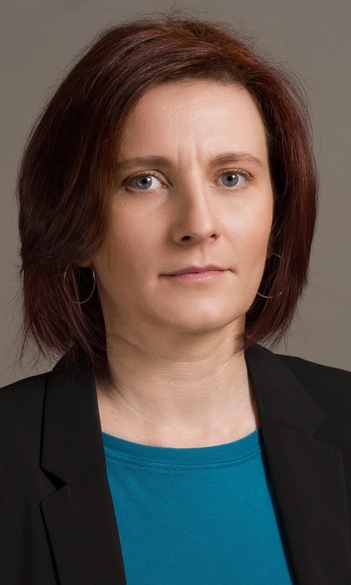
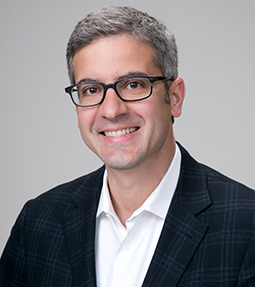
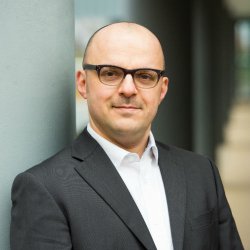
Teréz Vincze is an Assistant Professor at the Department of Film Theory and Film History within the Faculty of Humanities at Eötvös Loránd University (ELTE). She holds additional roles as an habilitated assistant professor and has been teaching at ELTE since 2004. Her work bridges film theory , historical analysis , and gender studies , with a focus on self-reflexive cinema and trauma representation . B.A. in Hungarian Language and Literature (ELTE, 2000) M.A. in Aesthetics (ELTE, 2001) Ph.D. in Aesthetics (ELTE, 2009, summa cum laude) Habilitation in Film Studies (ELTE, 2024) Vincze's research spans European cinema , with particular emphasis on Hungarian and East Asian films , modernist techniques , and cultural memory . Her publications analyze authorship , spatial concepts , and body politics in post-communist and transnational contexts. Key trends in her film analysis include self-reflexivity , trauma phenomenology , and gender representation . Her works examine directors like István Szabó , Ferenc Kósa , and Hong Sang-soo , alongside comparative studies of Bollywood and Taiwanese cinema . She has served as editor for the journal Metropolis since 1999 and as editor-in-chief (2003–2009). Her recent habilitation (2024) solidifies her expertise in film theory and contemporary cinema , with ongoing research into cinematic space and political allegory .
Annamária Szőke is an Associate Professor at the Institute of Art History , Eötvös Loránd University, specializing in Modern and Contemporary Art within the Hungarian context. She focuses on interdisciplinary approaches at the intersection of art, education, and theory. Role: Faculty member in Modern and Contemporary Art Department Contact: szoeke@ludens.elte.hu | +36-1-2258 | Room 111, 1st floor, 1088 Budapest, Múzeum körút 6–8 Her research emphasizes artistic creativity practices , performance art , and theoretical frameworks for Hungarian avant-garde movements. Notable work includes studies on the Indigo group and Bertalan Székely's ceiling theories , reflecting her interest in spatial and conceptual art dimensions. Key publications analyze Miklós Erdély's educational experiments (2008), performance art history (2000), and art-science intersections (2007). While no explicit awards are listed, her scholarly output demonstrates sustained contributions to art historical discourse.
Mikko Saikku is a Professor at the University of Helsinki, holding the McDonnell Douglas Professorship of American Studies within the Department of Cultures at the Faculty of Arts. He serves as Director of the Environmental Humanities Hub and is affiliated with multiple research organizations including the Helsinki Institute of Sustainability Science and Helsinki Institute of Urban and Regional Studies (Urbaria). Saikku also supervises doctoral students in the Doctoral Programme in Political, Societal and Regional Change and the Doctoral Programme in Gender, Culture, and Society, and holds the title of Docent in Faculty Common Matters. His research focuses on North American Studies, Environmental History, and Southern Studies, with particular emphasis on the intersections between American cultural history and environmental perspectives. Saikku's work explores how national identities form around wilderness and nature conservation, examining the cultural dimensions of environmental policy in both American and Finnish contexts. His research demonstrates how environmental narratives shape national identities and how cross-cultural comparisons can reveal different approaches to sustainability challenges. The trends in Saikku's recent publications show a growing emphasis on environmental humanities, with increasing attention to Finnish environmental history alongside his longstanding expertise in American environmental history. His work bridges cultural studies and environmental history, examining topics like wilderness conservation, national identity formation, and cross-cultural environmental perspectives. Recent publications increasingly address contemporary environmental challenges while maintaining historical depth. Saikku actively supervises doctoral students across multiple programs and has been involved in significant research projects including the Helsinki University Humanities Program and 'Luonto taiteessa, kulttuurissa ja historiassa' (Nature in Art, Culture, and History). His academic leadership extends to organizing conferences like the Second Environmental History Day of Finland and participating in international academic networks. He maintains strong international connections through academic visits to institutions including the University of Mississippi, University of North Alabama, and the American Historical Association. His expertise is frequently sought by media outlets, with 91 press/media appearances documented, particularly regarding US politics and environmental issues.
Jean Pierre Crousse serves as Associate Professor at the Pontificia Universidad Católica del Perú (PUCP) where he directs the Master Program in Architecture. He maintains an active academic presence as a visiting professor at prestigious institutions including Harvard Graduate School of Design (2015, 2022), Yale School of Architecture (2019, 2021), and University of Virginia (2020). As a foreign member of the French Académie d'Architecture, his academic career spans over two decades with significant contributions to architectural education. His research interests center on the integration of architecture with landscape, cultural heritage conservation, and the development of contemporary architectural responses to traditional practices. Crousse explores the complex relationship between built environments and cultural memory, particularly in the Andean context. His work examines how architecture can mediate between production systems and tourism while preserving cultural integrity, as demonstrated in his studio work on the Maras Salt Mine in Peru's Sacred Valley. He investigates critical conservation approaches that allow heritage sites to remain living, productive landscapes rather than frozen monuments. Crousse's architectural practice, Barclay & Crousse, has produced award-winning projects including the Place of Remembrance in Lima (2015), University Facilities at UDEP in Piura (2016), and the Paracas Museum (2016). These projects demonstrate his interest in creating spatial experiences that connect contemporary design with cultural memory and environmental context. His firm's work has been recognized with the Mies Crown Hall Americas Prize (2018), Oscar Niemeyer Prize (2016), and multiple Peruvian National Architecture Prizes. Foreign member of the French Académie d'Architecture Mies Crown Hall Americas Prize 2018 Oscar Niemeyer Prize 2016 Peruvian National Prize of Architecture 2014 Peruvian National Prize of Architecture 2018 Latin America Prize 2013 As an educator, Crousse has developed influential design studios that challenge students to reconcile contemporary architectural interventions with living heritage sites. His 2024 Yale studio on the Maras Salt Mine examines how architecture can integrate production systems with tourism while preserving cultural practices. He has published extensively on his architectural philosophy, including the book 'Barclay & Crousse: Landscapes of Intimacy' (2021), which presents twelve exemplary projects demonstrating how their work binds technological advances with designs centered on quality of life. His architectural practice serves as a laboratory for exploring how design specific to developing country conditions can inform global architectural conversations.
Anne Cormier is a Full Professor at the School of Architecture within the Faculty of Planning at Université de Montréal, where she served as Director from 2007 to 2015. She is a founding member of Atelier Big City since 1987, an architectural studio focused on developing innovative intervention strategies and exploring the potential of public spaces through competitions, idea calls, exploratory studies, and direct commissions. Her work has earned numerous distinctions including the Prix de Rome from the Canada Council for the Arts and the Grand Prix d'Excellence from the Ordre des Architectes du Québec. She holds an architecture degree from McGill University and studied urban architecture under Jean-Louis Cohen at the Unité Pédagogique d'Architecture Paris-Villemin in France. Her professional experience includes teaching invitations at Cornell University, Rensselaer Polytechnic Institute, University of Toronto, and University of Calgary. She has served on the Bureau of the Ordre des Architectes du Quebec (1993-1995), editorial boards of journals ARQ (1993-present) and Trames (1990-95), and currently serves on the OAQ Competitions Committee (since 2009) and the Advisory Committee on Urban Planning, Design and Real Estate of the National Capital Commission (Ottawa) (since 2008). Cormier's research focuses on social housing as a space for creation, innovation, and criticism in Canadian city centers and contemporary architectural projects. Her work combines relevant thematic research with inventive use of materials and assemblies, guided by Atelier Big City's slogan 'Make architecture a public policy,' emphasizing architecture's public dimension. She is deeply involved in documenting and analyzing contemporary architectural design approaches, particularly in competition settings, with a focus on Canadian and Quebec cultural contexts. Her recent publications demonstrate consistent engagement with social housing, urban architecture, architectural competitions, and the relationship between architecture and public policy. The recurring themes across her work include the exploration of social housing as a creative space, the integration of architecture into urban environments, and the critical examination of architectural practice through competitions and design processes. Her publications span architectural theory, social housing, urban design, and architectural competitions, reflecting her commitment to making architecture a public policy. Her scientific recognition includes: Prix de Rome du Conseil de Arts du Canada Grand Prix d'excellence de l'Ordre des Architectes du Québec Prix Margolese National Design for Living (2017) Multiple Governor General's Medals Canadian Architect Excellence Awards Cormier has supervised PhD students including Shannon Pirie (2016) on 'Finding the idea of home,' and has secured significant research funding including SSHRC Partnership Grants for 'Quality in Canada's Built Environment: Roadmaps to Equity, Social Value and Sustainability' (2022-2028) and 'Potentiels de la qualité architecturale' (2022-2027). Her work bridges academic research, professional practice, and public engagement, contributing significantly to architectural discourse in Canada and internationally. She is actively involved with LEAP (Laboratoire d'étude de l'architecture potentielle), where her research focuses on social housing as a space for creation, innovation, and criticism in Canadian urban centers. The laboratory's work examines contemporary architectural projects through four research axes: reasoned digital documentation and analysis of architectural projects, critical history of contemporary Canadian architecture, development of research-creation works, and development of pedagogical devices for architectural design teaching and reflective practices in planning.
Lissa L. Roberts is a scholar specializing in the intersection of history of science and labor history. She has co-authored significant works exploring how labor has been historically erased from scientific narratives and how these fields can be brought together for more comprehensive historical analysis. Her research interests focus on the political economy of science, examining how scientific work is embedded within broader labor systems and social structures. Roberts investigates the spatial dimensions of scientific labor, recovery of invisibilized workers in scientific history, and the connections between scientific practice and political economy. Roberts has contributed to important scholarly conversations about how a labor history of science can help us understand contemporary challenges in academic labor, knowledge production, and the relationship between scientific work and other forms of labor. Her work emphasizes making visible the contributions of technicians, assistants, enslaved peoples, and other marginalized workers in the history of science. As an active researcher in the field, Roberts has collaborated with scholars across disciplinary boundaries to advance the project of integrating labor history and history of science. Her recent publications reflect a commitment to examining science as ordinary work rather than exceptional knowledge production.
Darrin Martin serves as Professor of Art and Co-Chair of the Department of Art and Art History at the University of California, Davis within the College of Letters and Science. Appointed in 2005 with formal education including an M.F.A. from UC San Diego (2000) and B.F.A. from Alfred University (1992), he maintains an active studio practice alongside academic responsibilities. His research centers on synesthetic perception through video, sculpture, and print-based installations, specifically exploring accessibility through tactility, sonic analogies, and audio descriptions informed by personal experiences with hearing loss. Key research trajectories include disability representation in contemporary art, audio description as generative artistic practice, and speculative educational frameworks examining post-apocalyptic scenarios. Analysis of Martin's recent publications reveals consistent engagement with disability aesthetics and sensory translation, particularly through sound-based works exploring breath and resonance. His 2023-2024 output demonstrates significant institutional recognition including SFMOMA's acquisition of 'Crash Satellite' and MIT List Visual Arts Center commissioning 'Steel Tongue Accordion Ears.' Scientific Recognition: SFMOMA Permanent Collection Acquisition (2024) Honorable Mention, Chicago Underground Film Festival (2013) Recology San Francisco Artist Residency (2023) Electronic Arts Intermix Collaboration (2023) Martin actively mentors emerging artists including alum Torreya Cummings (2022 Recology residency recipient) and maintains significant collaborative relationships, notably with Torsten Zenas Burns on projects like 'ARK3: The Workshop Scenarios.' His curatorial work with Electronic Arts Intermix examines disability representation in media archives, while his Ann Arbor Film Festival programming explores accessibility frameworks. Through residencies at Cité Internationale des Arts, Eyebeam, and Experimental Television Center, Martin develops installations that have exhibited internationally at venues including The Kitchen (NY), University of Toronto, and Grand Central Art Center. His current research investigates breath politics through projects like 'Resistance & Respiration' at Contemporary Calgary.
Alessandro Armando is an Associate Professor in the Department of Architecture and Design at Politecnico di Torino, specializing in architectural design theory and practice. His research explores the theoretical foundations of architectural projects as both bureaucratic document systems and symbolic representations within public discourse. With international collaborations across Manchester, Berlin, Belgrade and Rijeka, he contributes significantly to architectural theory through publications, editorial work, and academic leadership. Armando's research interests focus on architectural design theory, examining projects as integrated document systems within bureaucratic procedures and as symbolic components of collective representations. His work investigates project action development using methodological contributions from Actor-Network Theory and Science and Technology Studies, with particular attention to diagrams and maps as research tools. He founded the Class A journal 'Ardeth' in 2018, establishing an international platform for discussions on architectural design as scientific research and interdisciplinary intersection. His scholarly output demonstrates consistent engagement with architectural theory, design practice, and urban morphology, with recent publications exploring the relationship between architecture, philosophy, and political dimensions of urban form. The research trajectory shows increasing integration of digital technologies in architectural practice and deeper exploration of theoretical frameworks connecting design methodology with social and political contexts. Koos Bosma Prize in Planning History Innovation (2022) from International Planning History Society Scientific Committee member, Italian Institute for Advanced Studies in Torino 'Umberto Eco' - Scienza Nuova (2019-) Scientific Coordinator, Labont – Center for Ontology / Ontology of Architectural Design (2016-) Effective member, ProArch, National Coordination of Architectural Design Professors (2012-) As an academic advisor, Armando supervises multiple PhD candidates working on diverse topics including urban morphology, architectural criticism, and design theory. His teaching portfolio includes courses on architectural design theory, critical approaches to architectural reasoning, and practical strategies for architects. He has been actively involved in the PhD program 'Architettura. Storia e Progetto' at Politecnico di Torino since 2017. Armando leads research activities through tdpLAB (DAD) and collaborates internationally through networks such as Social Integration through Urban Growth Strategies – SINERGI and Memory & the City. His editorial work spans multiple publications including Ardeth (since 2017), where he helps shape contemporary discourse on architectural theory and practice.
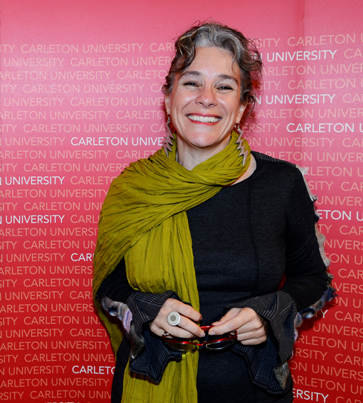
Jill Carrick is a distinguished academic specializing in 20th Century art history and cultural theory at Carleton University's Department of Art History and Institute for Comparative Studies in Literature, Art and Culture. Her research focuses on Neo-dada movements in 1960s France and Europe, particularly the works of Daniel Spoerri and François Dufrêne. Her educational background includes a BA and MA from the University of Melbourne and a Ph.D. from Bryn Mawr College. Following her doctorate, she held a Killam Postdoctoral Fellowship at the University of British Columbia before joining Carleton University. Carrick's research interests span Neo-Dada Art , Nouveau Realisme , 20th Century European Art , Feminist Art Theory , and Postmodern Cultural Studies . Her work examines the intersection of artistic experimentation, everyday materiality, and theoretical frameworks, with particular attention to how 1960s avant-garde movements continue to influence contemporary practice. Her scholarly output demonstrates consistent engagement with French art theory, material culture studies, and interdisciplinary approaches, reflected in publications spanning five decades with increasing focus on networked artistic practices and topographical analyses. Killam Postdoctoral Fellowship (Post-PhD) SSHRC Insight Grant (2012-2017) for ongoing research Visiting Researcher at Institut National d'Histoire de l'Art (France, 2010) Sugden Fellow at University of Melbourne Queen's College (2011) Carrick has organized significant international events including the 2018 'Topographies de Daniel Spoerri' conference in Paris and the 2017 'Art Brut and Materiality' colloquium at Université Paris Ouest Nanterre. Her teaching spans undergraduate to doctoral levels with courses on 20th Century art history, contemporary international art, feminism, and interdisciplinary theory.
Elvis Richardson is a Lecturer in Graphics/Graphic Design at the School of Arts and Humanities, part of the Faculty of Education and Arts at Australian Catholic University. His work spans diverse creative disciplines including visual art installations, multimedia projects, and critical cultural studies. Richardson's research interests focus on contemporary art practices, urban studies, gender representation, and material culture. He has exhibited widely across Australia in venues such as the Hugo Michell Gallery, Sydney College of the Arts Gallery, and Gippsland Art Gallery. His creative works explore themes like migration narratives in 'Settlement and the gatekeepers' (2020), gender politics in 'FEMMO' (2014), and urban sociology in 'National Housing Search Key creative outputs include 'The Invisible Hand' (2014, Chapel installation), 'Slide Show Land' series (2009-2013), and 'Art and Text Women and Men' (2013). His work often interrogates contemporary issues through provocative visual and textual mediums, blending academic rigor with artistic innovation.
Mark Davidson is a Professor of Geography at the Graduate School of Geography, Clark University. He holds a PhD and BA (Hons) in Geography from King’s College London. His research focuses on urban theory, municipal finance, gentrification, and urban sustainability, with a particular emphasis on the intersections of justice, policy, and spatial dynamics. Davidson has received grants from the National Science Foundation (NSF) and the International Olympic Committee (IOC), and a recent Research Incentive Award from Clark University (2025–2026). He is affiliated with Clark’s Department of Geography and has held fellowships at the Nelson A. Rockefeller Centre for Public Policy and Social Science (Dartmouth College) and the Urban Research Centre (University of Western Sydney). Education: Ph.D. in Geography, King’s College, University of London, 2006 B.A. (Hons) in Geography, King’s College, University of London, 2002 Research Interests: Davidson’s work bridges urban geography and political theory, addressing topics such as gentrification, fiscal policy, climate risk, and the moral dimensions of urban development. His book *Justice and Cities: Metro Morals* (2023) explores how justice theories (e.g., Utilitarianism, Marxism) shape understandings of urban problems like segregation and housing affordability. His recent studies analyze municipal debt management, participatory budgeting, and post-recession urban governance. Grants & Awards: Research Incentive Award, Clark University (2025–2026) Henry Halloran Trust Grant (2017–2020) NSF and IOC funding for urban policy research Key Contributions: Davidson’s interdisciplinary approach integrates critical urban theory with empirical analysis, influencing debates on urban sustainability, fiscal crisis, and democratic innovation. His work on municipal bonds, pension policies, and post-bankruptcy governance has informed urban policymakers globally.
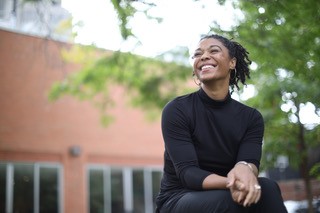
Lauren M. Cramer is an Assistant Professor in the Cinema Studies Institute at the University of Toronto, affiliated with Innis College. Her work focuses on the aesthetics of Blackness, hip-hop visual culture, and spatial practices, with a particular emphasis on digital visual culture. She is a founding member of the liquid blackness research collective and co-editor of the liquid blackness: journal of aesthetics and black studies (Duke University Press). Her current book project explores hip-hop visual culture and Black spatial practices. Dr. Cramer’s research has been published in Journal of Cinema and Media Studies , Black Camera , and Los Angeles Review of Books , among others. She has co-edited special journal issues including “Close-Up: Contemporary Black Horror” (2023) and “ Modes of Black Liquidity: Music Video as Black Art” (2020). Her writing critically examines topics such as racial representation in cinema, anti-Black violence, and the intersections of art and Black studies. Awards include the 2020 Connaught New Researcher Award. She holds a PhD from Georgia State University, an MA from Emory University, and a BA from Villanova University. Her interdisciplinary approach bridges film studies, cultural theory, and visual arts, with a focus on Black creative practices and their socio-political dimensions.
Siân Adiseshiah is a Professor of Literature, Politics and Performance and Head of English at Loughborough University. She previously held roles at the University of Lincoln, Open University, and University of Birmingham. Her research focuses on contemporary theatre, utopianism, age studies, and political drama. She serves as Editor-in-Chief of the Open Library of Humanities' C21 Literature journal, and leads editorial roles in multiple academic series. Her academic journey includes a PhD on Caryl Churchill's plays (2003, University of Birmingham), and she has held leadership roles in the British Association for Contemporary Literary Studies (BACLS). She was appointed to the AHRC Peer Review College in 2020. Her scholarship bridges theoretical frameworks with critical analysis of contemporary performance and literature. Her recent publications explore ageing narratives, utopianism in drama, and political resistance in modern plays. Her work frequently engages with interdisciplinary approaches to theatre studies, gender studies, and sociocultural dynamics.
Andrew S. Gold is a Professor of Law at the University of California, Irvine School of Law with a joint appointment in the Department of Philosophy within the School of Humanities. His scholarly work has established him as a leading voice in legal philosophy, particularly in the areas of private law theory, fiduciary law, and corporate law. He has held prestigious academic positions including the Bruce W. Nichols Visiting Professorship at Harvard Law School, an HLA Hart Visiting Fellowship at the University of Oxford, and a Fulbright Visiting Research Chair at McGill University. JD from Duke University School of Law BA in English and Philosophy from Dartmouth College Professor Gold's research focuses on the philosophical foundations of private law, with particular emphasis on fiduciary relationships, corporate governance, and the intersection of equity and corporate law. His work often examines law as a complex system, exploring how legal concepts form deep structural frameworks that shape rights and obligations. He has made significant contributions to understanding loyalty concepts in fiduciary law, the role of equity in corporate governance, and the theoretical underpinnings of private law remedies. His recent publications reveal a trend toward increasingly sophisticated theoretical frameworks that integrate insights from philosophy, systems theory, and institutional analysis. Gold's scholarship demonstrates a consistent focus on the structural elements of private law while expanding into broader examinations of legal concepts as deep structures that govern social and economic relationships. His collaborative work with Henry Smith on modularity, complexity, and information costs in private law represents an important methodological innovation in the field. Canadian Fulbright Award Two Excellence in Scholarship Awards (2013, 2007) Excellence in Teaching Award (2010) Co-founder of the North American Workshop on Private Law Theory Member of the American Law Institute Professor Gold has been actively involved in mentoring and academic leadership, having served as associate director of the Center for the Study of Business Law and Regulation and director of the Program on Private Law at Brooklyn Law School prior to joining UC Irvine. His upcoming events include co-organizing major conferences on good faith and loyalty at Notre Dame Law School (June 2025), presenting at the Legal Reasoning: System in the Law Conference at Harvard (June 2025), and participating in the Obligations XI Biennial Conference at Harvard Law School (July 2025). He is also co-organizing a conference honoring Deborah A. DeMott's 50-year career at Duke Law School (September 2025). Professor Gold maintains an active research agenda through participation in multiple academic workshops and collaborations, particularly with scholars like Henry Smith on projects examining the structural elements of private law. His work continues to shape theoretical discussions in private law through his editorial roles with major publications and his leadership in organizing significant academic conferences that bring together leading scholars in the field.
Dr. S. Alireza Behnejad is an Associate Professor in the Department of Civil and Environmental Engineering at the University of Surrey, UK. He holds a PhD in Geometry of Spatial Structures (2018) and serves as Director of the Spatial Structures Research Centre founded in 1963. His roles include Programme Leader for Undergraduate Civil Engineering and member of the University Ethics Committee. Behnejad is Editor-in-Chief of the International Journal of Space Structures and a key member of the International Association for Shell and Spatial Structures (IASS), including organizing the 2020/21 virtual IASS conference. Behnejad’s research focuses on spatial structures, bamboo engineering, and pedagogical methods. Notable projects include the Bamboo For Sustainable Construction initiative (with global partners) and the DAD Project , promoting hands-on learning through physical models. He has been awarded the Vice-Chancellor's Teacher of the Year (2021) for enhancing student learning. His work bridges historical architectural forms (e.g., Iranian Karbandi vaults) with modern engineering challenges, emphasizing sustainability and education. Behnejad collaborates with institutions worldwide, including Brazil’s University of São Paulo and China’s Southwest Jiaotong University. He supervises postgraduate students on topics like spatial structure conceptual design and leads efforts to improve engineering education through full-scale physical models and international student exchanges.