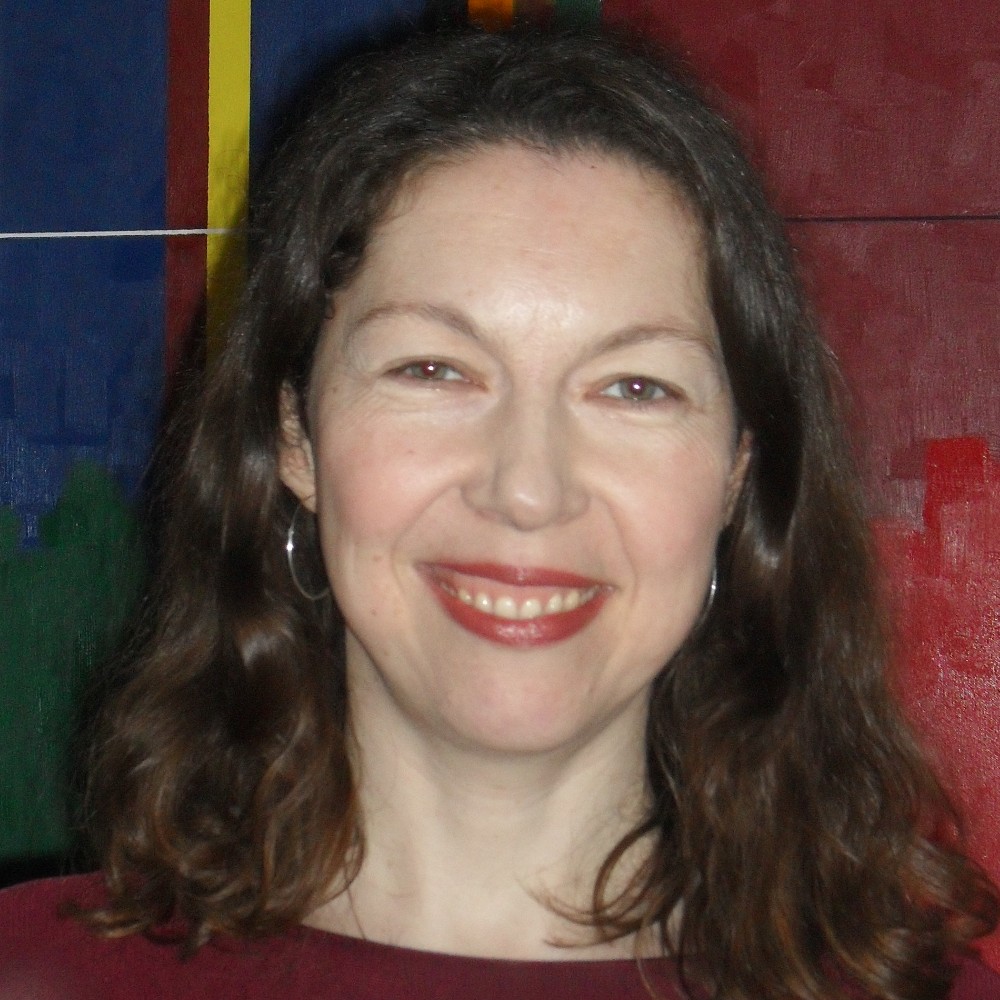
Molly Bendall is a Professor (Teaching) of English at the University of Southern California. She holds M.A. in Poetry from Johns Hopkins University (1987) and M.F.A. in English/Creative Writing from the University of Virginia (1986). As a poet and educator, she teaches courses in poetry workshops , Contemporary American Poetry , and Poetry of Women Around the Globe . Her research and creative work focus on ecopoetics , animal-human relations , and experimental forms . Her acclaimed collection Watchful interrogates human-nature boundaries through fragmented lyricism, while Under the Quick explores transient joy in linguistic innovation. Recent collaborations include Waterways and Dwellings with composer Molly Pease (2022). Key awards include the Gertrude Stein Award (2006-2007) and Pushcart Prizes . She serves as a judge for the Wonderland Awards (Doheny Library, 2016–2024) and organizes creative writing events for USC students, including career-focused lunch meetings and readings with alumni.
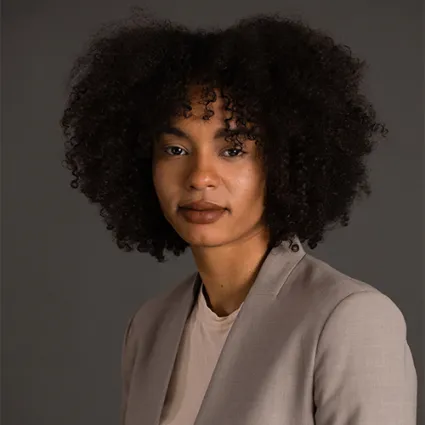
Anaiis Cisco serves as Assistant Professor of Film & Media Studies at Smith College, where she teaches digital video production courses focusing on the emotional and internal journeys of Black characters. Her work confronts intimate moments of violence and trauma within diverse story worlds while centering underrepresented racial, ethnic, queer, and gendered identities. Her research interests span Black Cinema, Gender Representation, and Documentary Filmmaking, with particular focus on Black womanhood and embodiment Race and identity in visual media Queer narratives and representation Social justice through film Intersectional approaches to storytelling Experimental moving image production Cisco's creative work demonstrates consistent thematic focus on marginalized experiences, particularly exploring the complexities of Black life through narrative and documentary forms. Her filmography reveals a trajectory examining police brutality, domestic violence, gendered experiences, and the fluidity of Black identity across different contexts. Notable recognition includes numerous awards for her short film Breathless (2017), which addresses the murder of Eric Garner through a powerful cinematic lens. Professor Cisco is currently on leave for the 2024-25 academic year while continuing development of her thesis film Drip Like Coffee , which explores Black womanhood, desire, and spatial relationships while rendering the Black female body as fluid.
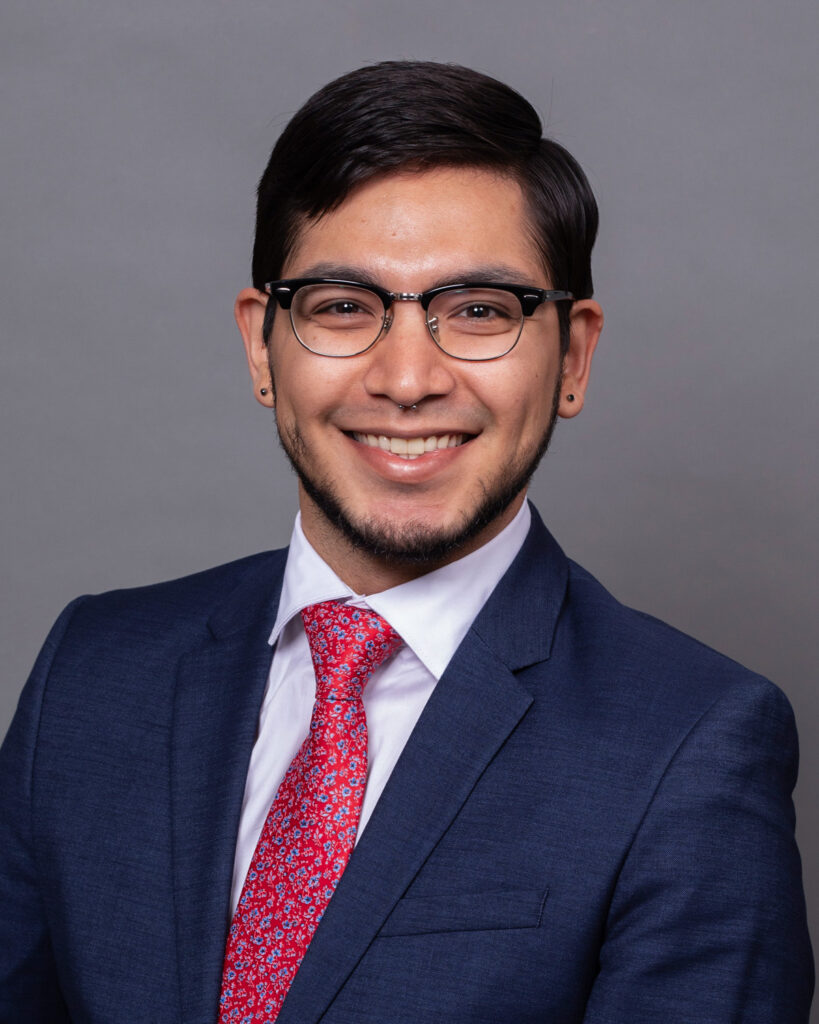
Michael Salinas is a postdoctoral research fellow at Texas A&M University's Chapkin Lab & Single Cell Data Science Core within the College of Agriculture & Life Sciences . His work bridges nutrition science with cancer biology and biophysics. Education B.S., Texas A&M University, Nutritional Sciences, 2016 Ph.D., Texas A&M University, Nutrition, 2022 Research Focus His research explores how dietary factors influence disease mechanisms through plasma membrane biophysical changes. Graduate work focused on high-fat diet-induced obesity and colorectal cancer via membrane dysregulation. Current postdoctoral projects analyze human milk oligosaccharides' impact on infant gut health using single cell RNA sequencing and spatial transcriptomics . Scientific Awards NSF LSAMP BTD Fellowship (2016-2018) Hagler Institute HEEP Graduate Fellowship (2021) Technical Expertise Specializes in plasma membrane biophysics , macropinocytosis , nanocluster formation , and cell-cell communication analysis. Utilizes advanced techniques like imaging flow cytometry and spatial transcriptomics to decode dietary influences on cellular signaling.
Daniel Pettitt serves as a Lecturer in Fine Art Painting at the University of Brighton's School of Art and Media since 2024, following his Freelands Painting Fellowship at the same institution in 2022. He maintains an active presence through visiting lectureships at the Royal College of Art, Bath Spa University, Chelsea School of Art, and Oxford Brookes University. His academic credentials include a Master of Arts from the Royal College of Art (awarded 2017) and a BA (Hons) in Fine Art from Bath Spa University (awarded 2008): MA: Royal College of Art (2015-2017) BA (Hons): Bath Spa University (2005-2008) Pettitt's artistic practice explores allusive and speculative abstraction through a dynamic interplay of theatrical signage, modernist poetry, queer slang, and post-conceptual art. His work investigates the tension between index and fragment, constructing environments where metaphor and memory intersect. Through deliberate manipulation of color, texture, and composition, he creates provisional fields where images congeal and dissolve, challenging traditional representation while inviting active viewer participation in meaning-making. This approach reveals the fluidity of visual language and the transient nature of perception. His extensive exhibition history (58 research outputs documented) demonstrates consistent thematic development across solo and group shows. Recent works increasingly engage with queer perspectives and cultural references while maintaining core interests in abstraction and materiality. The progression reveals deepening exploration of fragmentation, indexicality, and memory construction within contemporary painting practice, with notable institutional recognition through collections like Soho House and Paul Smith Ltd. His scientific recognition includes: Freelands Painting Fellowship (2022) Pettitt actively contributes to academic discourse through invited talks including "Why Artists Should Teach" and participation in mentorship programs like the Freelands Fellowship Mentors Roundtable. His work circulates internationally through private collections in the UK, China, Germany, Italy, Canada, and the USA, alongside institutional holdings at Bath Spa University and the Royal College of Art. He maintains strong connections with London's contemporary art ecosystem through regular exhibitions at venues like PALFREY, Attercliffe™, and Galerie Sabine Kunst, while his university affiliation positions him within Brighton's vibrant creative community centered around CCA Brighton and the School of Art and Media.
Mark-David Hosale is an Associate Professor and Chair of Computational Arts at York University's School of the Arts, Media, Performance & Design (AMPD). He holds a BA in Music Composition from UC Santa Barbara. His work bridges computational art, performance, and architecture, focusing on worldmaking through interdisciplinary collaborations. Education: BA - Music Composition (UC Santa Barbara) Key Roles: Chair of Computational Arts, nD::StudioLab Director Research Labs: nD::StudioLab Research interests include the intersection of virtual and physical worlds, using digital fabrication and hardware/software integration to create immersive art. His theoretical practice centers on worldmaking —artworks that propose ontological alternatives through sensory experiences. Notable collaborations include the IceCube Neutrino Observatory and the PACIS project. His exhibitions span venues like SIGGRAPH, Dutch Electronic Art Festival, and Venice Biennale. Labs/Teams: nD::StudioLab, PACIS collaboration Grants: Multiple undisclosed research grants Labs include the nD::StudioLab, an experimental space for ArtScience research-creation.
Stephanie Weber is a Lecturer in Media Education and Communication at the Department of Social Work, Niederrhein University of Applied Sciences since 2022. Holding an MA in Applied Media Education and a diploma in Social Work, she specializes in gender studies, intersectionality, and antidiscrimination pedagogy with 15 years of experience in adult education and queer educational work. Her expertise includes designing workshops, exhibitions, and games to challenge gender norms. M.A. in Applied Media Education (TH Köln & Uni Krems, 2016) Diploma in Social Work (HS Niederrhein, 2007) Certified Anti Bias Multiplikator:in Weber's research focuses on gender as performance, digital media in education, and intersectional approaches to social cohesion. She integrates theatrical methods like political cabaret and drag into educational frameworks to explore identity politics. Her recent work emphasizes creating inclusive spaces for non-binary and queer youth through media-based pedagogy. Her publications include articles on drag workshops, gender deconstruction, and intersectional games. Collaborations with institutions like Deutscher Volkshochschulverband and Gunda-Werner-Institut highlight her interdisciplinary approach. Weber's teaching modules cover digital communication, discrimination-critical approaches, and performative engagement with diversity.
Anne Hyde is the David L. Boren Professor of History at the University of Oklahoma and Editor-in-Chief of the Western Historical Quarterly . She serves on the University of Oklahoma Press Editorial Board and the Fred Jones Jr. Museum of Art Faculty Board, and recently participated in the VP and Provost search committee. Her leadership extends to national historical organizations, having served as President of the Pacific Coast Branch of the American Historical Association (AHA) and on the elected councils of both the AHA and Western History Association. Hyde's research centers on the 19th Century North American West, with groundbreaking work on Native American history, race, and mixed-descent communities. Her scholarship interrogates how regional identities formed through environmental forces, spatial dynamics, and cultural encounters. She challenges traditional frontier narratives by emphasizing indigenous agency, environmental constraints, and the fluidity of racial categories in shaping the American West. Her recent publications (2022-2024) reveal persistent engagement with spatial theory, regional identity construction, and the intersection of race with environmental history. Articles analyze everything from Native survivance in borderlands to climate's role in historical imagination, demonstrating how western history provides critical frameworks for understanding contemporary issues like nationalism, cultural conflict, and spatial justice. Her scholarly excellence has been recognized with: The Bancroft Prize for Empires, Nations, and Families: A New History of the North American West, 1800-1860 (2012) Pulitzer Prize finalist status for the same work Hyde directed the AHA's "Tuning the History Discipline" project to reform history curricula nationwide and continues shaping the field through editorial leadership. Her recent monograph Born of Lakes and Plains: Mixed-Descent Peoples and the Making of the American West (2022) further establishes her as a transformative voice in western historiography.
Professor Róisín Ryan-Flood is Professor of Sociology and Director of the Centre for Intimate and Sexual Citizenship (CISC) at the University of Essex's Department of Sociology and Criminology. Her academic leadership spans intersectional feminist research on gender, sexuality, citizenship, and digital intimacy within the UK's leading social sciences institution. Her educational background includes: PhD from London School of Economics and Political Science MPhil from Trinity College Dublin BA from University College Cork Ryan-Flood's research program centers on intersectional feminist approaches to sexual citizenship, with particular focus on kinship formations, migration patterns among LGBTQ populations, and digital intimacy practices. Her scholarship critically examines how marginalized communities navigate state structures, social norms, and technological transformations while asserting their rights to intimate citizenship. Current projects explore physical affection among LGBTQ couples in public spaces, online romance fraud recovery mechanisms, and identity disclosure through DNA testing among donor-conceived individuals. Her publication trajectory reveals consistent innovation in feminist methodology and LGBTQ studies, evolving from foundational work on lesbian motherhood to contemporary investigations of digital intimacy and transnational sexual citizenship. Recent scholarship increasingly engages with consent frameworks, trans experiences, and the political economy of intimacy across diverse cultural contexts. Key recognitions include: NIHR Mental Health Research Leader Award (2025) Longstanding co-editorship of Sexualities: Studies in Culture and Society since 2012 As an academic supervisor, Ryan-Flood has mentored 17 doctoral students to completion across sociology, criminology, and clinical psychology, with current supervision spanning LGBTQ migration experiences, technology-facilitated sexual violence, and therapeutic approaches to gender-affirming care. Her research program has secured substantial funding from the ESRC, British Academy, Brocher Foundation, and UCU, including multiple projects examining donor conception identity disclosure and LGBTQ experiences in higher education. The Centre for Intimate and Sexual Citizenship operates as a dynamic hub for critical sexuality research, fostering collaborations across Europe, North America, and Southeast Asia through conferences, visiting scholar programs, and public engagement initiatives.
Stefan Sauer is a Professor for Empirical Social Research at Kempten University of Applied Sciences since March 2023. He is affiliated with the Faculty of Social Sciences and Health and serves as a Program Coordinator for the Social Economics and Social Management Bachelor’s programs. His research focuses on self-organization, project management, social sustainability, recognition and trust, and qualitative methodology.
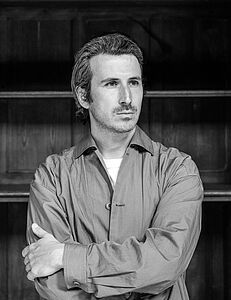
Alessandro Gess is a University Professor for Design, Space and Building Theory at HafenCity University Hamburg, appointed in 2024. He simultaneously maintains an active architectural practice as partner at l'AUC in Paris. His academic career includes teaching positions at EIVP - Université Gustave Eiffel in Paris, Institut Méditerranéen de la Ville et des Territoires in Marseille, and he served as Guest Professor at Karlsruhe Institute of Technology during 2023/24. Professor Gess's research critically examines how architectural spaces can adapt to societal changes, challenging traditional boundaries between buildings and their environments. His work focuses on: Designing buildings for long-term adaptability Spatial qualities facilitating user appropriation Reconciling architectural determinism with societal fluidity Extending transformations beyond individual buildings to urban relevance Challenging conventional notions of building lifecycle and typology He approaches architecture as an urban discipline engaging with social, ecological, and economic challenges through transversal, multi-scalar methodology. His research examines the interplay of context, society, and space both discursively and through design practice. Professor Gess has received significant recognition including: Patrick Abercrombie Prize for Urban Planning and Design His selected projects demonstrate practical application of his theories across Europe, including the Transformation of the World Trade Center in Brussels, Extension of French National Archives, Urban plan for Cergy-Pontoise, and Cancer Research facility for Institute Gustave Roussy. He has also authored 'How to Not Demolish a Building' published by Ruby Press, reflecting his philosophy on architectural transformation. At HCU, Professor Gess leads research on transformation processes, neutral-use spaces, and collective spaces as social infrastructure. His team includes research associates Giulia Biondi, Felix Schuschan, and Antonia Lembcke who contribute to projects exploring architectural adaptability and urban potential.
Alessandro Gess is a Visiting Professor at the Karlsruhe Institute of Technology (KIT) Faculty of Architecture and co-founder of the Paris-based architecture firm l'AUC. He holds degrees in architecture and urban planning from the Technical University of Munich, École Nationale Supérieure d'Architecture de Versailles, and a postgraduate master's in urban planning and governance from Sciences Po Paris. Key Affiliations: Visiting Professorship of the Wüstenrot Foundation Co-founder, l'AUC (Paris-based architecture and urban planning firm) Research Focus: His work explores architectural transformation, adaptive reuse of built environments, and circular design strategies. Projects challenge conventional hierarchies of scale and discipline through: Strategic long-term urban planning Reimagining public spaces and transport hubs Flexible architectural structures and volumes Metropolitan spatial planning frameworks Hybridization of architectural typologies Reconciling deterministic forms with societal fluidity Scientific Contributions: l'AUC's research engages with urban metamorphosis through case studies in major cities like Paris, Brussels, and Shenzhen, emphasizing: Post-occupancy building potential City-scale transformation approaches Interdisciplinary design methodologies Sustainable urban development Awards: Recognized with the Grand Prix de l'Urbanisme (2021) and Patrick Abercrombie Prize (2023).
Markus Grebe serves as Professor and Head of the Department of Plant Physiology at the Institute of Biochemistry and Biology, University of Potsdam, where he leads a research group investigating fundamental mechanisms of plant cell polarity and development. His laboratory, located in building 20, room 0.08, focuses on molecular processes governing root morphogenesis and cellular organization in Arabidopsis thaliana. Research priorities include: Establishment of planar and tissue polarity in root systems Auxin signaling networks and polarized transport mechanisms Lipid domain organization and membrane dynamics ROP GTPase-mediated cytoskeletal regulation Cell plate assembly during cytokinesis Protein trafficking in polarized growth contexts Analysis of recent publications reveals consistent emphasis on integrating advanced imaging with genetic approaches to dissect how lipid microdomains, cytoskeletal elements, and signaling pathways coordinate to establish cellular asymmetry. The group has pioneered methodologies for visualizing membrane order and protein dynamics during root hair initiation and cell division. Professor Grebe has mentored fifteen graduate students to completion, including nine PhD candidates and four Master's students, while currently supervising two doctoral researchers. His laboratory utilizes state-of-the-art infrastructure including LSM 880 Airyscan microscopy for high-resolution live imaging of developmental processes.
Laura op de Beke is an Assistant Professor of Interactive Media, Screens, and Interfaces at Utrecht University , specializing in Media and Culture Studies . She actively bridges game studies and environmental humanities through her research on ecogames and climate crisis representation in digital and analogue games. Co-organizer of the Ecogame Playtesting Series (2024/25, 2025/26) with the Utrecht Game Lab and Network for Environmental Humanities. Co-designed board game hacking workshops for RMA students, focusing on ecological thinking and critical redesign of games like Monopoly and the Norwegian Game of Oil and Gas. Her research explores dark seasonality , beaver-play as a metaphor for spatial transgression, and climate larps in Nordic LARP contexts. Her publications analyze games as tools for premediating climate futures, critiquing extractive systems, and fostering more-than-human cartographies. Projects include the STRATEGIES initiative for sustainable game industries and the Open Mind educational game , blending playful design with social and philosophical inquiry.
Katharina Gerstenberger is a Professor in the Department of World Languages and Cultures at the University of Utah. She served as Chair of the department from 2012–2018 and held the 2019/21 Research Professorship in Environmental Humanities. Her scholarship focuses on German literature, ecocriticism, and disaster narratives. PhD in German Studies, Cornell University (1993) Her research spans post-Wall German literature, intertextuality, and environmental humanities, often addressing how culture responds to catastrophes like Chernobyl and Fukushima. Recent publications include analyses of Adolf Muschg’s post-Fukushima fiction and Peter Handke’s nature writing. Gerstenberger’s work has been recognized with the Environmental Humanities Professorship (2018) and the Distinguished Scholar Award (2022). She co-edits German Studies Review and has served on MLA and DAAD committees.
Hannah B. Higgins is Professor of Intermedia and Avant-Garde Art and Culture at the University of Illinois Chicago, where she also serves as Founding Director of the IDEAS BA program in the School of Art and Art History. Her scholarly work bridges historical avant-garde movements with contemporary digital art, emphasizing the humanistic value of multi-sensory experiences. Ph.D. in Art History, University of Chicago (1994) M.A. in Art History, University of Chicago (1989) B.A. in Art History, Oberlin College (1988) Research Interests cover a broad spectrum of 20th-century avant-garde art, including Dadaism, Surrealism, Fluxus, Happenings, performance art, food art, and early computer art. Her work explores how intermedial practices and multi-modal sensory experiences challenge traditional art historical frameworks. Article Trends reveal a consistent focus on the intersections between artistic experimentation and technological evolution, tracing the lineage from Fluxus' conceptual works to contemporary digital art practices. Her publications examine how grid structures, computational experiments, and transnational artistic networks have shaped modern visual culture. Scientific Awards & Fellowships UIC University Scholar Award DAAD Fellowship Getty Research Institute Fellowship Philips Collection Fellowship Emily Harvey Foundation Fellowship Professional Contributions include co-editing Mainframe Experimentalism with Douglas Kahn (2012), authoring monographs on Fluxus and grid structures, and serving as a key voice in debates about curatorial practice, sensory culture, and intermedia theory. She maintains strong connections with Fluxus through her role as co-executor of the Estate of Dick Higgins and Something Else Press.