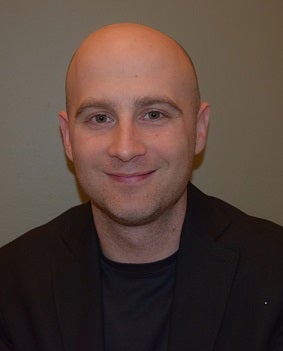
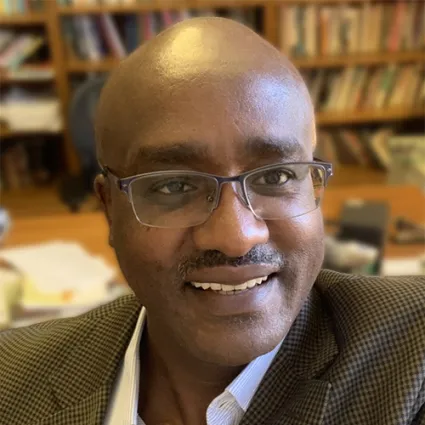
Dr. Eve Klein is an Associate Professor and Senior Lecturer in Music Technology and Popular Music at The University of Queensland (UQ) School of Music. She leads a research cluster in interactive composition, focusing on virtual/augmented reality works and guiding postgraduate composers. Her work bridges classical music traditions with digital innovation, addressing themes like gender in technology, identity, and participatory cultures. Dr. Klein holds a PhD in Music and Sound and has pioneered immersive art music experiences for festivals such as MONA FOMA and VIVID Sydney. Her artistic works include Vocal Womb (a laryngoscopy-based opera exploring voice and power) and City Symphony (an AR soundwalk overlaying Brisbane’s CBD). She is a recipient of the 2023 Art Music Award for Experimental Practice and the IASPM 2016 Open Publication Prize. Her research spans music technology curriculum design, future work skills in the arts, and epistemic fluency through transdisciplinary collaboration. She co-founded the Touch Ensemble, a technology-focused performance group collaborating with engineering students. Dr. Klein’s work frequently addresses social justice themes, including gendered violence and climate change. Education: PhD in Music and Sound Awards: 2023 Art Music Award, IASPM 2016 Prize, UQ Program Innovation Award Her articles critically examine virtual orchestras’ impact on classical norms, while her creative works challenge traditional performance boundaries. Klein collaborates internationally with festivals, scientists, and NGOs to create transformative cultural projects.
Alejandra Magana serves as the W.C. Furnas Professor in Enterprise Excellence of Applied and Creative Computing and Professor of Engineering Education at Purdue Polytechnic, Purdue University. She directs the ROCkETEd Lab and holds significant editorial roles including Deputy Editor for the Journal of Engineering Education and Co-Editor of the Education Department for IEEE Computer Graphics & Applications. Her leadership extends to multiple editorial boards in engineering and science education journals. Ph.D. in Engineering Education, Purdue University (2009) Post-doc in Engineering Education, Purdue University (2010) M.S. in Educational Technology, Purdue University (2007) M.S. in Electronic Commerce, Instituto Tecnologico y de Estudios Superiores de Monterrey (2003) B.S. in Information Systems Engineering, Instituto Tecnologico y de Estudios Superiores de Monterrey (2000) Magana's research focuses on how students develop computer and data science self-regulated learning skills through computational cognitive apprenticeship and authentic modeling practices. She investigates how learning analytics and AI can support student learning in computing-intensive domains and engineering thinking in K-12 education. Her work bridges educational theory with practical applications in STEM fields, emphasizing the integration of computational thinking across disciplines. She employs design-based research methodologies to create and evaluate innovative learning environments that leverage simulation, visualization, and emerging technologies. Analysis of Magana's recent publications reveals a strong emphasis on collaborative learning in digital environments, with growing attention to AI applications in education. Her work spans multiple domains including virtual reality for STEM education, teamwork dynamics in software development, AI ethics education, and computational thinking assessment for teachers. A consistent theme is the development of representational competence through modeling and simulation practices, with increasing integration of learning analytics to understand student cognition and team processes. Fellow Member, American Society for Engineering Education (2024) Fulbright Specialists Appointment (2024) Purdue Polytechnic Charles B. Murphy Outstanding Undergraduate Teaching Award (2021) W.C. Furnas Professorship (2020) Purdue University Faculty Scholar (2016) ASEE-ERM Apprentice Faculty Grant (2012) Magana leads multiple significant research grants totaling over $15 million, primarily from NSF, focusing on computational education, AI in learning environments, and engineering education transformation. Her ROCkETEd Lab serves as the hub for these research activities, which often involve interdisciplinary collaborations across engineering, computer science, and education. She has mentored numerous graduate students who appear as co-authors on her publications, though specific advising relationships aren't explicitly documented. Her research program demonstrates strong continuity from foundational work on modeling and simulation to current projects integrating generative AI and immersive technologies. The ROCkETEd Lab (Research in Organizing Computational Knowledge for Engineering Thinking and Education) functions as Magana's primary research unit, focusing on computational cognitive apprenticeship approaches. The lab investigates how students develop representational fluency through modeling and simulation practices, with recent expansion into AI-enabled learning environments. Current projects examine hidden curricula in computer science education, high-performance computing virtual environments for AI education, and culturally relevant programming learning experiences. The lab maintains strong industry and international partnerships, particularly with institutions involved in advanced manufacturing and educational technology development.
Chiara Spironelli is an Associate Professor at the University of Padua, Italy. Her research focuses on cerebral plasticity in neurological patients, language lateralization using EEG, and electrophysiological correlates of emotional processing and visuo-spatial attention. She explores how empathy modulates emotional stimulus processing and investigates brain structural alterations in psychiatric disorders like schizophrenia and major depressive disorder. Her work integrates neuroimaging techniques (fMRI, EEG) to study functional connectivity, particularly between cognitive networks and the cerebellum. Key interests include gender differences in affective processing, the role of posture on brain activity, and the impact of mood induction tasks on neural responses. She has contributed to understanding linguistic reorganization in aphasia and the neurobiological basis of psychopathic traits. Publications emphasize EEG-based analyses of emotional responses, resting-state connectivity, and clinical applications in neuropsychiatric conditions. Her research highlights interdisciplinary approaches bridging cognitive neuroscience, clinical psychology, and neurology.
John Quarles is a Professor at the University of Texas at San Antonio, specializing in Virtual Reality (VR) and Human-Computer Interaction. His research focuses on accessibility in immersive technologies, cybersickness mitigation, and inclusive design. He has contributed over 100 publications across top venues like IEEE VR, ISMAR, and IEEE Transactions on Visualization and Computer Graphics. His work addresses challenges faced by users with disabilities, such as balance impairments and mobility limitations, through innovative feedback systems and adaptive algorithms. Quarles has co-authored influential papers on cybersickness prediction, VR accessibility for persons with Multiple Sclerosis, and disability simulations to reduce societal bias. He has held leadership roles including Program Chair for IEEE VR 2023, demonstrating his influence in academic and industrial VR communities. His research spans interdisciplinary applications in healthcare, education, and rehabilitation, with notable collaborations on datasets like 'Mazed and Confused' and frameworks like SmoothRide. Key themes include multimodal feedback methods, user-centric design principles, and leveraging AI for personalized VR experiences.
Thomas G. Hansford is a Professor of Political Science at the University of California, Merced, where he also currently serves as Vice Provost for Academic Personnel. He is affiliated with the School of Social Sciences, Humanities and Arts and the Department of Political Science. Hansford earned his Ph.D. in 2001 from the University of California, Davis and his B.A. in 1993 from St. Mary's College of Maryland. Hansford's research focuses on American politics with particular emphasis on judicial politics, interest group involvement in courts, Supreme Court precedent, public opinion on courts and law, and elections and voting behavior. His work examines how courts interact with other political institutions, how public perceptions of courts are formed, and how legal precedent evolves within judicial hierarchies. He has developed innovative methodologies for measuring interest group ideology through amicus brief analysis and has explored the dynamics of judicial agenda setting across court levels. His research reveals that precedent dynamics operate not just top-down but also bottom-up, with lower court implementation of precedent providing valuable information to higher courts. Hansford's publications span top political science journals including the American Political Science Review, American Journal of Political Science, Journal of Politics, and many others. His research reveals important insights about bottom-up influence in judicial hierarchies, the role of interest groups in Supreme Court decision making, and how public perceptions of the judiciary are shaped by various factors including state court structures. Hansford is the coauthor of "The Politics of Precedent on the U.S. Supreme Court" (Princeton University Press) and is a creator of the Amici Space Project, which develops spatial models of interest group ideology based on amicus briefs filed with the Supreme Court. Throughout his career, Hansford has conducted extensive research using survey experiments to understand public perceptions of courts and has employed sophisticated statistical methods to analyze judicial behavior and precedent dynamics. His work on the informational dynamics of vertical stare decisis has provided new insights into how lower court implementation of precedent informs Supreme Court decision making.
Silke Melanie Göbel is a Professor II at the Department of Special Needs Education, University of Oslo (since 2019) and an Associate Professor at the Department of Psychology, University of York, UK (since 2015). She holds a DPhil in Experimental Psychology from the University of Oxford (2003), supervised by Professors Vincent Walsh and Matthew Rushworth. Her research focuses on mathematical cognition, including the neural correlates of numerical processing, developmental dyscalculia, and cross-linguistic influences on numerical skills. She leads the Numerical Cognition Lab at the University of York and directs the MSc course in Developmental Cognitive Neuroscience. Her work employs methods like fMRI, EEG, and rTMS to investigate how cultural and linguistic factors shape numerical understanding. She has published widely on topics such as arithmetic development, language effects in number processing, and the cognitive foundations of mathematical difficulties. Her research highlights the interplay between education, language, and numerical competence. She has contributed to understanding how reading direction and number word structure influence counting and arithmetic. Key interests include identifying predictors of arithmetic fluency and examining the role of executive functions in mathematical learning. Her recent work addresses longitudinal studies of numerical development and interventions for mathematical learning disabilities. Dr. Göbel’s articles span cognitive neuroscience, developmental psychology, and education, emphasizing cross-cultural comparisons and translational research. She has co-authored textbooks like An Introduction to Mathematical Cognition and edited volumes exploring cultural and linguistic impacts on numerical cognition. Her projects, such as iSeeNumbers , investigate individual differences in numeracy development linked to motivation and well-being.
Carmen I. Carrión, PsyD, ABPP is an Associate Professor of Neurology at Yale School of Medicine specializing in neuropsychology. She serves in the Department of Neurology with affiliations at the Alzheimer's Disease Research Center (ADRC) and the Center for Brain & Mind Health. Dr. Carrión is a bilingual (English/Spanish) neuropsychologist with over ten years of experience serving diverse communities throughout the United States. Her academic journey includes a PsyD in Clinical Psychology from Roosevelt University (2016), a fellowship at the University of Michigan (2018), and an internship at Jackson Memorial Hospital/University of Miami (2016). She also holds an MA in Clinical Psychology from Roosevelt University (2013), an MA in Experimental Psychology from Brooklyn College (2010), and a BS in Psychology and Health and Nutrition Sciences from Brooklyn College (2008). Dr. Carrión's research centers on memory and neurodegenerative disorders, with particular focus on how demographic factors influence the manifestation of neurological syndromes. Her work addresses critical healthcare disparities, cultural diversity in cognitive assessment, and social determinants of health. She is committed to increasing representation of diverse groups in research and clinical trials. Analysis of her recent publications (2023-2024) reveals a strong emphasis on developing normative data for neuropsychological tests in Spanish-speaking populations in the United States. Her work addresses language-based disparities in cognitive assessment and diagnosis of neurocognitive disorders, with particular attention to healthcare access and diagnostic accuracy for Spanish-speaking individuals. Site Principal Investigator for the multi-center, NIH-funded Neighborhoods Study examining community-level differences in cognitive and brain health outcomes Active researcher addressing representation of diverse populations in clinical trials Focus on culturally informed neuropsychological evaluations for individuals with varying degrees of English proficiency Dr. Carrión works to bridge gaps in neuropsychological assessment for diverse populations, particularly focusing on Spanish-speaking communities, and advocates for equitable healthcare delivery through both clinical practice and research initiatives.
Heidi Diefes-Dux is Professor of Engineering Education at the University of Nebraska-Lincoln, specializing in discipline-based education research within the College of Engineering. Her scholarship develops evidence-based approaches for authentic engineering education across K-16 environments, particularly through model-eliciting activities and standards-based assessment frameworks. Educational background includes: Ph.D. Agricultural and Biological Engineering (Purdue) M.S. Food Science (Cornell) B.S. Food Science (Cornell) Research foci: Authentic engineering activity design Standards-based grading efficacy Early engineering concept development STEM education translation mechanisms Publication trends reveal sustained investigation into assessment methodologies, with works exploring reflection practices, grading system impacts, and peer review calibration. Research shifts show increasing focus on temporal factors in learning and conceptual frameworks for engineering foundations. Academic leadership includes coordinating first-year engineering programs and developing unified Ph.D. specializations in engineering education research. Laboratory groups pioneer model-eliciting activities connecting authentic engineering problems with classroom practice.
Evan F. Risko is a Professor and Associate Chair (Graduate Affairs) at the University of Waterloo. His research focuses on Distributed Cognition, Effort Perception, and applying cognitive psychology principles to improve education and training. He holds the Canada Research Chair in Embodied and Embedded Cognition and has received multiple awards including Early Career Awards from the Psychonomic Society, Canadian Society for Brain, and Outstanding Performance Awards from the Province of Ontario. His work is funded by NSERC, SSHRC, and other major grants. He leads the Cognition and Natural Behaviour Laboratory, exploring how humans integrate body and environment to enhance thinking. Recent studies examine lecture design, cognitive offloading effects, and metacognition in digital contexts. Education: B.A., M.A., Ph.D. from the University of Waterloo in Cognitive Psychology. His research bridges theoretical and applied domains, with a focus on optimizing learning through lecture video design, understanding effort perception, and mitigating cognitive biases. Scientific Awards: Canada Research Chair in Embodied and Embedded Cognition Early Career Award (Psychonomic Society) Early Career Award (Canadian Society for Brain, Behaviour, and Cognitive Science) 2014 & 2018 Outstanding Performance Awards (Province of Ontario) Advising & Grants: Supervises graduate students in cognitive science and education research. Major grants include NSERC Discovery Grants, SSHRC Insight Development Grants, and Canada Foundation for Innovation funds. His work on video lectures and cognitive offloading has implications for educational technology and workplace training. Labs & Teams: Director of the Cognition and Natural Behaviour Lab, collaborating on projects like 'Distributed Metacognition' and 'Effort Perception in Technology Use'. Current initiatives explore how external tools (e.g., smartphones) shape cognitive processes and learning efficacy.
Dr. Karen Zwanch is an Associate Professor of Mathematics Education at Oklahoma State University (OSU), within the School of Teaching, Learning and Educational Sciences. She holds a PhD in Curriculum & Instruction from Virginia Tech (2019), an M.Ed. in Mathematics from Millersville University (2011), and a B.S. in Secondary Education with a Mathematics focus from Penn State University (2004). Her research focuses on middle-grades students' numerical reasoning strategies in algebraic contexts and the efficacy of instructional routines. She has received grants such as the SecurAIty Nexus (2024–2027) and Building Mathematic Fluency Through Middle Grades (2023–2024). Dr. Zwanch teaches courses including Methods for Teaching Mathematics in the Primary Grades , Learning and Instructional Theory in Mathematics and Science Education , and Teaching Algebra and Mathematical Tasks . Her funded projects emphasize teacher training in STEM and mathematics fluency. Her work spans over 30 peer-reviewed articles, exploring topics like manipulative use, Notice and Wonder routines, and units coordination in spatial reasoning. Key awards or honors are not explicitly listed, but her contributions to mathematics education research are evident through her extensive publication record and grant activity. She leads initiatives to enhance teacher education and student engagement in mathematics, with a focus on equity and effective pedagogical strategies.
Srdan Medimorec is a Senior Lecturer in Psychology at Teesside University's SSSHL Psychology department, affiliated with the Institute for Collective Place Leadership. His research focuses on memory, language, implicit learning, and cognitive processes such as offloading and metacognition. Education: He holds a Master's degree from Arizona State University and a PhD from the University of Waterloo. Research Interests: His work spans Memory and Language, Language Production/Comprehension, Implicit Learning, Cognitive Offloading, and Metacognition. He explores how these areas intersect with educational practices and behavioral science. Key Projects: He leads projects on metacognition, language and memory, and improving second-language learning. Collaborative work includes studying gambling behavior linked to sports group identification. Publications: His recent work includes studies on children’s cognitive offloading, social identity interventions, and eye movement effects on spatial learning. Datasets include studies on letter fluency and temporal ambiguity resolution. Awards: While no formal awards are listed, his active research portfolio demonstrates significant contributions to cognitive psychology and linguistics. Advising & Grants: He coordinates multiple research projects and has contributed to datasets, reflecting his role in academic leadership and collaborative research.
Anthony Gabriele is an Associate Professor in the Department of Educational Psychology and Foundations at the University of Northern Iowa. He has held this position since 2003, following seven years as an Assistant Professor. His work focuses on mathematics education, teacher development, and student achievement. Key research areas include teacher efficacy, reform-based pedagogy, and curriculum design. His research explores how educators can enhance student outcomes through innovative strategies like measurement estimation and collaborative problem-solving. He has also examined the role of teachers in dropout prevention and the integration of mathematics into health education. Notable contributions include studies on preservice teacher training and the application of educational research in classroom practices. Dr. Gabriele’s publications span over three decades, with a focus on improving teaching methods and student engagement. His work often bridges theoretical frameworks with practical classroom applications, emphasizing evidence-based approaches to education.
Katwiwa Mule serves as Professor of World Literatures at Smith College, where he has taught since 1999. His institutional affiliation centers on the Department of World Literatures within Smith's academic structure. Mule maintains active engagement through current Fall 2024 office hours and recent scholarly publications. Academic Background: Ph.D. in Comparative Literature (minor in Women's Studies), Pennsylvania State University M.A. and B.Ed., Kenyatta University, Nairobi, Kenya Research Focus: Mule's scholarship critically examines African women's theater, childhood narratives across the African diaspora, and postcolonial translation theory. His work consistently explores intersections between regional storytelling traditions and European literary influences, with particular attention to how African women playwrights navigate colonial legacies through gendered performance spaces. Recent publications demonstrate evolving emphasis on human rights frameworks applied to East African literature. Teaching Practice: Courses reflect his research expertise, including postcolonial adaptations of Shakespeare's Tempest , South African literature and film, and childhood representations in African narratives. His pedagogy integrates multilingual perspectives informed by fluency in Kikamba, Kiswahili, English, Gikuyu, and Kiembu. Publication Trends: Analysis of his 15 most recent articles reveals sustained commitment to feminist postcolonial critique, with increasing focus on human rights discourse (2021-2023) and methodological innovation in translation studies. Key recurring themes include narrative erasure of women's experiences, dialectical tensions between local and global influences, and reclamation of indigenous performance traditions.
Sarah Hopkins is an Associate Professor in the Faculty of Education at Monash University , dedicated to reducing educational inequalities through interdisciplinary research in Mathematical Cognition and inclusive education. Her work integrates cognitive psychology and mathematics education to address learning difficulties, particularly among students from disadvantaged backgrounds and those with intellectual disability. Developed the Keyboard , a visual-spatial tool to enhance arithmetic strategy development Coordinated the Keep on Learning (KoL) Program for adults with intellectual disability Current ARC Discovery Project examines classroom applications of the Keyboard for lower primary students Research Interests span mathematical cognition, retrieval strategies, procedural flexibility, and inclusive pedagogy. Her projects often involve collaborations with the Spencer Foundation , ARC , and Ecstra Foundation , focusing on tool development, assessment design, and teacher training. Methodological Expertise includes Rasch analysis, microgenetic approaches, and mixed-methods research. She works with interdisciplinary teams to validate measurement scales and analyze longitudinal learning outcomes, particularly for marginalized groups.
Dennis Rodgers serves as University Professor and Excellence Research Chair at Aix-Marseille University, France, based in the MESOPOLHIS laboratory (UMR 7064 AMU-CNRS-Sciences Po Aix). He concurrently holds a Faculty Associate position at the Centre on Conflict, Development and Peacebuilding (CCDP) of the Geneva Graduate Institute. His scholarly focus centers on urban conflict dynamics and gang-related violence across Latin America, South Asia, and Europe. Rodgers' research examines how political marginalization, economic precarity, and spatial segregation fuel urban violence through longitudinal ethnographic engagement. His fieldwork spans Nicaragua, Argentina, India, France, and Switzerland, emphasizing methodological innovation in high-risk contexts. Key contributions include reframing gang phenomena as embedded in broader socio-political transformations rather than pathological deviations. His extensive publication record reveals consistent thematic evolution from localized gang studies toward global comparative frameworks. Recent works like Ethnography as Risky Business (2019) pioneer reflexive approaches to fieldwork ethics, while articles in Journal of Peace Research and Theory, Culture & Society demonstrate interdisciplinary reach spanning political anthropology, urban sociology, and critical criminology. Rodgers secured significant funding including a European Research Council Advanced Grant for the "Gangs, Gangsters, and Ganglands" project (2019-2024), facilitating multi-sited ethnography across five continents. He co-leads "The Chicago School Re-considered" initiative, re-examining foundational urban sociology through archival research and collaborative ethnography. Based at the MESOPOLHIS laboratory—a hub for historical and social sciences—he bridges European and Global South perspectives through trilingual fluency (English, French, Spanish). His CCDP affiliation at the Geneva Graduate Institute enables direct engagement with international peacebuilding policy communities.