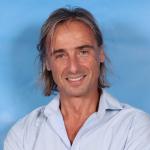
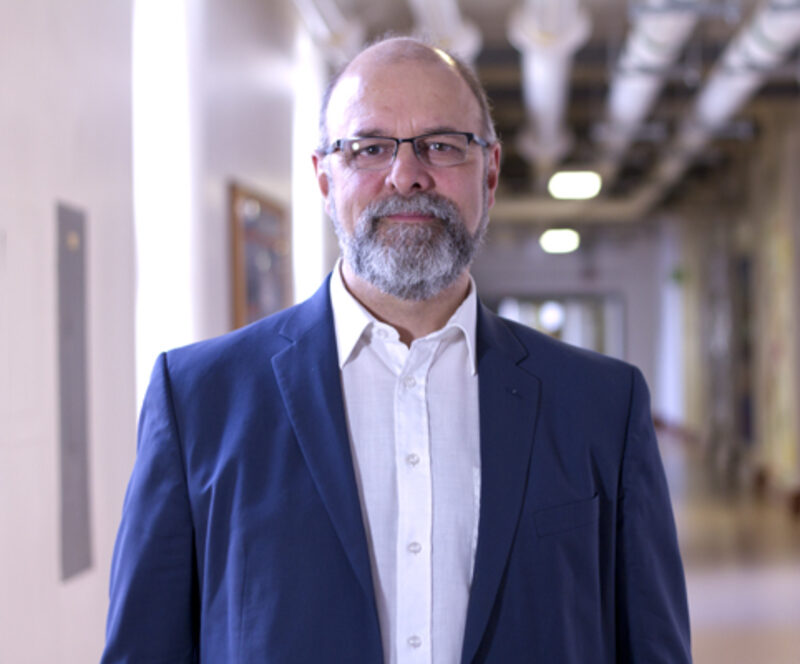
Ilaria Berteletti is an Associate Professor and Dean of the Faculty at Gallaudet University. She serves as the PEN Program Director for the Ph.D. in Educational Neuroscience, leads the Numeracy and Educational Neuroscience (NENS) Lab, and oversees university partnerships. Her academic journey includes roles as an Assistant Professor at Gallaudet (2016–2022), postdoctoral research at the University of Illinois and Northwestern University, and a PhD in Cognitive Science from Università degli Studi di Padova (Italy). Her research focuses on numerical cognition, the impact of language modality on mathematical processing, and educational neuroscience. Notable grants include NSF funding for studies on bilingual numeracy and neural correlates of arithmetic. She has advised numerous PhD students and contributed to initiatives like the Bilingual ASL-English Summer School in Cognitive Neuroscience. Berteletti's work spans developmental psychology, neuroimaging, and educational interventions. She holds leadership roles in academic societies, including Secretary of the Mathematical Cognition and Learning Society. Her lab explores how language and sensory experience influence mathematical learning, with findings published in top journals.
Natalie Spence is a Lecturer affiliated with the Faculty of Science and Engineering. Her work emphasizes interdisciplinary educational practices, innovative assessment methodologies, and the design of collaborative learning environments. She focuses on developing frameworks for interdisciplinary collaboration, epistemic fluency, and problem-solving in academic settings. Her research spans topics such as: Interdisciplinary research methodologies Educational assessment systems Knowledge creation in collaborative groups Curriculum design for interdisciplinary learning Educator professional development Recent work highlights trends in: Toolkit development for interdisciplinary collaboration Assessment on demand models in engineering Educational frameworks for postdigital learning environments No scientific awards or grants were explicitly mentioned in the provided texts. Natalie has not listed advisees or active research teams in the materials provided.
Armando Miguel Caseiro Pires Remondes holds a tenured Professor position in Physiology and Pharmacology and Therapeutics at Lusófona University's Faculty of Veterinary Medicine (FMV-ULHT), alongside an invited Assistant Professor role in Physiology at the University of Lisbon's Faculty of Medicine (FMUL) and research affiliation with iMM-JLA. His career bridges clinical veterinary practice and neuroscience research, with 15 years of prior work at Caltech and MIT. Educational background includes: DVM from the University of Lisbon PhD in Neuroscience at California Institute of Technology (Caltech) under Erin Schuman Postdoctoral training at MIT's Brain and Cognitive Sciences Department with Matthew Wilson His research centers on neural circuit mechanisms in memory and learning, with emphasis on hippocampal and entorhinal cortex functions. Key methodologies include electrophysiology, optogenetics, and behavioral analysis. The fingerprint analysis from his publications shows dominant focus areas: Hippocampus (100%), Synapse (64%), Information Processing (64%), and Entorhinal Cortex (52%), alongside synaptic plasticity and behavioral neuroscience. Recent publications (2021-2024) reveal three thematic clusters: opioid addiction memory traces (2024), cognitive control under processing fluency (2022-2023), and neural timing mechanisms (2021). His interdisciplinary work spans rodent models, electrophysiology, and even environmental virology during the pandemic. Scientific awards: No specific prizes, fellowships, or medals are documented in the source material. Remondes established and leads the Circuits/Systems Neuroscience Lab at FMV-ULHT from its inception in 2014, personally training students in electronics, micromechanics, computer analysis, animal surgery, electrophysiology, animal behavior, and optogenetics. The lab operates with a multidisciplinary team focused on neural circuit dynamics, though no grant details are provided. Lab infrastructure includes custom-built systems for electrophysiology and optogenetics, supporting research on memory encoding and behavioral outputs. His collaborative network spans neuroscience and marine science, as evidenced by the SARS-CoV-2 study referenced in policy sources.
Sally Walker is a Senior Lecturer in Classical Performance (Woodwind) at the School of Music, Australian National University. Her expertise spans historical performance practice, music physiology, and composer-performer collaborations. She holds a Doctor of Musical Arts from the University of Sydney and advanced degrees from European conservatories, including Munich and Hannover. Research focuses include fluency in modern/historical flute techniques, nonverbal communication in performance, and music's role in health initiatives. Notable projects include 1:1 CONCERTS (a pandemic-era initiative with 5-star Limelight acclaim) and collaborations with the Australian Chamber Orchestra and Omega Ensemble. Her work bridges academia and practice, with outputs in peer-reviewed journals and international festivals. Recent articles analyze studio dynamics, pandemic performance adaptations, and historical performance revival. Awards/grants include outcomes presented at the Karajan Symposium and UNSW Forces of Music Series. She actively contributes to community music projects, emphasizing accessibility and social impact.
Dr. René van Egmond is a researcher at the Faculty of Industrial Design Engineering at Delft University of Technology, where he works in the Department of Industrial Design. His research is centered on human-centered design and perceptual intelligence, with a strong focus on improving user interfaces in automated vehicles and healthcare systems. His research interests lie at the intersection of cognitive ergonomics and interactive technology. He investigates how drivers perceive and understand automation in vehicles, particularly through visual and auditory interfaces. His work also extends to healthcare, where he applies user-centered principles to design ICU patient monitoring systems tailored to nurse profiles. These efforts reflect a broader commitment to designing intuitive, safe, and trustworthy interactions between humans and intelligent systems. The recent publications demonstrate a consistent trend in studying trust, acceptance, and comprehension in automated environments. His work spans both mobility and health domains, using multimodal interfaces to enhance user experience and system transparency. Themes include driver state awareness, interface customization, and perceptual fluency in complex systems. Dr. van Egmond is actively involved in significant research initiatives, including the Mediator project (MEdiating between Driver and Intelligent Automated Transport systems on Our Roads), the Hadrian project (Holistic Approach for Driver Role Integration and Automation Allocation for European Mobility Needs), and the Interreg ENERGE project focused on reducing greenhouse gas emissions through education. He contributes to academic education through teaching in cognitive ergonomics and supervising student research, though specific advisees are not listed. His collaborative work includes researchers from various institutions, indicating strong interdisciplinary engagement. He is associated with research labs focusing on Perceptual Intelligence and Human-Centered Design at TU Delft, contributing to the university’s leadership in design innovation for complex socio-technical systems.
Gabriel Matney, Ph.D., is a Professor at Bowling Green State University (BGSU) within the School of Inclusive Teacher Education. He has been a faculty member since August 2011 and serves as the AYA Math Coordinator. Education : Ph.D. in Mathematics Education (University of Oklahoma, 2004), M.S. in Applied Mathematics (University of Oklahoma, 2000), B.S. in Mathematics Education with Computer Science endorsement (Oklahoma Baptist University, 1997). Matney specializes in K-12 Mathematics Education, focusing on authenticity in mathematical practices, fluency, and teacher professional development. His research examines how cultural contexts influence learning, as seen in studies from Thailand, China, New Zealand, and Fiji. He has also explored innovative teaching methods like peer mentoring and role-playing pedagogical strategies. His publications analyze tools for assessing mathematical practices, curriculum design for proportional reasoning, and cross-cultural comparisons of teaching approaches. He has contributed to professional development frameworks and validated instruments for evaluating teacher efficacy. Matney actively engages in editorial and leadership roles, including Vice-President for Publications at the Research Council on Mathematics Learning (RCML) and editorial board membership for Investigations in Mathematics Learning . He has reviewed manuscripts for multiple journals and served on conference committees. He coordinates programs such as Mathematics Camps to enhance preservice teacher efficacy and collaborates with regional networks like the Ohio Department of Education. His service includes roles in the Northwest Ohio Center of Excellence in Science and Mathematics Education and the Math Teacher Circles initiative. Personal interests include designing innovative learning experiences, soccer, skydiving, and exploring intersections between hobbies like video games and education.
Lauren Mark serves as Assistant Professor in the Department of Communication at the State University of New York at New Paltz, with office JFT 320 and contact details (845) 257-3438 and markl@newpaltz.edu. Her research critically examines intersections of culture and communication through transformational frameworks, utilizing theories of rhythm, time, and relationality to investigate contextual influences on communicative interactions. She specializes in analyzing foregrounded and backgrounded cultural expectations across research methodologies, face-to-face encounters, and mediated representations, with particular focus on Asian perspectives, identity performance, and storytelling. Recent publications (2016-2024) demonstrate interdisciplinary reach across communication studies, cultural theory, and performance, with recurring themes in somatic education, post-qualitative methodologies, model minority critiques, virtual community building, and neurodiversity. Her work consistently bridges theoretical rigor with practical applications in education and social justice contexts. Awards include: 2021 Outstanding Graduate Teaching Award (Hugh Downs Department of Human Communication) 2020-2021 Fulbright Semi-Finalist 2019 Dessie Larson Graduate Fellowship in Performance Studies Dr. Mark's collaborative projects like Storyscope indicate active community engagement, while her Fulbright recognition and fellowship demonstrate competitive research funding success. Her mentorship extends through philosophical mentoring frameworks and multi-authored publications across diverse topics. Current creative initiatives focus on virtual performance adaptation during crises and embodied communication pedagogy, reflecting commitment to evolving communication challenges in digital and pandemic contexts.
Jessica Shumway is an Associate Professor at the Emma Eccles Jones College of Education and Human Services at Utah State University, affiliated with the School of Teacher Education & Leadership . Her research focuses on integrating mathematics and computer science in early childhood education, leveraging coding toys and digital technology to enhance computational thinking and mathematical reasoning. Her work emphasizes expansive framing corporeal comfort in STEM norming "novelty" in elementary CS robotics-based learning spatial and numerical literacy . Recent publications highlight trends in cross-curricular teaching , digital tool design , and formative assessment for computational thinking. While no explicit awards or student advising details are listed, her research addresses pedagogical gaps in technology-supported K-12 mathematics and coding instruction.
Martin Kindt is a Lecturer in Mathematics Education at the Freudenthal Institute, Faculty of Science, Utrecht University. He has maintained an active presence in mathematics education research and practice since at least 2001, with particular focus on geometry, algebra, and historical perspectives in mathematics teaching. His research interests include: Geometry and spatial reasoning, particularly symmetry and regularity in plane and space Algebraic thinking and conceptual understanding pathways History of mathematics and its application to modern educational practices Integration of geometry and algebra in teaching frameworks Real-world mathematical applications, especially in engineering contexts Curriculum development for secondary mathematics education Kindt's scholarly work demonstrates a distinctive approach that connects historical mathematical developments with contemporary educational challenges. His presentations on figures like Albrecht Dürer and ancient systems like Babylonian mathematics reveal a consistent theme of using historical context to illuminate modern teaching practices. The progression of his work shows increasing sophistication in connecting geometric visualization with algebraic structures, as evidenced by titles like 'Geometry and Algebra, a Happy Marriage' and 'Regularity in Plane and Space.' His international engagement is notable, with presentations delivered across multiple continents including Asia, South America, and Europe. This global perspective informs his contributions to the field of mathematics education, particularly through the lens of Realistic Mathematics Education, which originated in the Netherlands.
Mehmet Kiliç serves as an Associate Professor in the Department of Foreign Language Education at Gaziantep University's Faculty of Education. His academic journey includes a Doctorate in English Language Education from Çukurova University (2008-2013), a Master's from Gaziantep University (2005-2007), and undergraduate studies at Boğaziçi University (2001-2005). Current Rank: Associate Professor (2020-present) Previous Positions: Doctor Lecturer (2013-2020), Lecturer (2005-2013) Administrative Roles: Department Head (2018-2020), Institute Deputy Director (2018-2020), Erasmus Coordinator (2013-present) His research spans English Language Teaching with emphasis on second language acquisition mechanics, particularly phonetic phenomena like pausing patterns and lexical stress in cross-linguistic contexts. Key interests include teacher identity construction, language learning strategies, foreign language anxiety, and the impact of L1 on L2 acquisition. His work integrates psycholinguistic analysis with educational applications, examining how speech patterns correlate with proficiency and how teacher development affects classroom outcomes. Kiliç's publication trends reveal sustained focus on empirical linguistic analysis (40% of recent work), teacher development (30%), and language learning psychology (30%). His research increasingly incorporates cross-cultural comparisons (Turkish, Iraqi, Swahili, Hausa speakers) and examines technology's role in language education. The 2020-2024 period shows growing emphasis on AI integration in ELT and refugee language acquisition. As a thesis supervisor, he has guided 17 master's students to completion and currently oversees 2 doctoral candidates. His administrative contributions include journal editorships for Gaziantep University Journal of Social Sciences and Educational Sciences. Current teaching responsibilities include Linguistics, Teaching Language Skills, and Psychological Foundations of Language Education courses at graduate and undergraduate levels. Professional activities include frequent conference presentations at international venues like GlobELT and ULEAD Congress. His editorial work focuses on advancing Turkish scholarship in language education through national journal development.
Landerl Karin is a full Professor at the Institute of Psychology , Faculty of Natural Sciences, University of Graz. Her research focuses on reading development , dyslexia , numerical cognition , and cross-linguistic educational psychology , particularly in Germanic languages. She has served as associate editor and editorial board member for prominent journals like Scientific Studies of Reading and Reading and Writing (2008–2021). Her recent work investigates the interplay between reading, arithmetic, and cognitive skills , with genome-wide studies on reading/language-related genetic variation. Email: karin.landerl@uni-graz.at Research Networks: Brain and behavior, BioHealth, Complexity of Life
Dr. Roselina Johari Bt Md. Khir is an Associate Professor and Senior Lecturer at the School of Communications and Creative Arts, University of Wollongong Malaysia. She concurrently serves as a lecturer of Performing Arts at ASWARA and University Malaya. Her academic affiliations include external examiner roles for postgraduate theses at multiple Malaysian universities and editorial responsibilities for the Tirai Panggung journal. Her research explores interdisciplinary intersections between performing arts, education, and cultural preservation. Primary interests include: Theatre for young audiences and drama-based pedagogy Malaysian cultural heritage through contemporary performance Puppetry and animation for social awareness campaigns Site-specific and immersive theatre experiences Arts-mediated language acquisition and soft-skill development Publications consistently address cultural identity, educational innovation, and performance methodologies. Recent works demonstrate strong trends in digital performance adaptation, heritage tourism, and cross-cultural storytelling, with frequent focus on marginalized communities like the Iban people and rural ESL learners. Awards include the Cannes Award for Animation of People of the Forest , recognizing her cultural preservation impact. She has secured significant research funding including: Global Funding Bid Seed Grant (2023) for heritage performances FRGS grant (2020) for multicultural service learning Ministry of Culture grant (2013-2016) for youth theatre engagement Dr. Roselina actively supervises graduation projects, guiding students in experimental productions that blend traditional arts with contemporary themes. She also conducts academic workshops on creative research methods and arts pedagogy.
Johannes Ziegler is a CNRS Research Director and Director of the Convergences Institute 'Language, Communication, and the Brain' at Aix-Marseille University. He chairs the Internal Scientific Council of the Pilot Center for Research in Education (AMPIRIC) and serves on France's National Education Scientific Council (CSEN). His research bridges cognitive neuroscience, psychology, and education, with a focus on reading mechanisms, dyslexia, and computational modeling. Ziegler's work emphasizes: Cerebral basis of reading across languages Computational models of normal/pathological reading Development of digital literacy tools (GraphoGame, Hibou) Interventions for learning disabilities in underprivileged schools His recent publications (2021-2025) demonstrate strong trends in: Neurobiological foundations of dyslexia using fMRI/neural imaging Predictive processing and statistical learning in reading Morphological/semantic influences on word acquisition Technology-assisted literacy interventions Awards: CNRS Bronze Medal (prestigious French research award) Knight of the National Order of Merit (national honor) Leadership & Projects: He directs multidisciplinary teams at ILCB and CRPN labs, overseeing ANR-funded initiatives like the GraphoGame adaptation for French students and the 'Language, Communication, and the Brain' convergence institute.
Marc Lavoie is a full Professor of Psychology and Mental Health in the Department of Human Sciences, Letters and Communication at TÉLUQ University (since May 2023), and a research professor of Psychiatry and Neuroscience at the University of Montréal. He serves as the founding director of the Cognitive and Social Psychophysiology Laboratory at the research center of the Institut Universitaire en Santé Mentale de Montréal (CR-IUSMM), where he also holds emeritus researcher status. His academic journey spans over 25 years with significant contributions to understanding neurophysiological aspects of movement and compulsive disorders. Bachelor of Psychology (Université de Moncton, 1985-89) Masters in Psycho-Education (Université de Montréal, 1990-92) Doctorate in Biomedical Sciences, Psychiatric Sciences option (Université de Montréal, 1993-97) Post-doctorate in Neuropsychology (Université de Montréal, 1997-99) Post-doctorate in Psychophysiology (Université de Lille, France, 1999-2000) Lavoie's research focuses on cognitive psychophysiology with particular emphasis on Tourette syndrome, obsessive-compulsive disorders, and body-focused repetitive behaviors. His work investigates physiological changes following treatment, emotional regulation processes, and brain imaging correlates of these conditions. He has pioneered research on the impacts of psychotherapies on brain activity in tic disorders, bridging clinical psychology with neuroscience. His laboratory examines the relationship between brain functions, behavior, and cognition in neurodevelopmental and habit disorders using psychophysiological methods including event-related potentials and quantitative EEG. Analysis of his recent publications (2022-2024) reveals a strong focus on electrophysiological markers of treatment response in tic disorders, gender differences in Tourette syndrome, and comparative neurophysiological studies across OCD spectrum disorders. His work increasingly integrates multimodal approaches examining both temporal ('when') and spatial ('where') aspects of neural processing in these conditions. 2019 Concours des mobilités académiques et scientifiques (Université de Lille, France) 2011 Top 10 des chercheurs de l'Université de Montréal les plus cités dans les médias en 2011 (8e rang) 2003 Chercheur-boursier Junior 1 (Fonds de recherche du Québec – Santé) 2002 Bourse de chercheur invité (Fondation Nationale Alfred Kastler, France) 2000 Concours Relève-Médecine 2000 (Fondation de Louis-H. Lafontaine) Over 25 years, Lavoie has supervised more than 80 students at all graduate and undergraduate levels in psychology, neuroscience, and psychiatry. His research has been supported by major funding bodies including the Canadian Institutes of Health Research (CIHR) and the Fonds de recherche du Québec. He collaborates extensively with the Center for Studies on Obsessive-Compulsive Disorders and Tics and the TICTACTO GÉ group at CR-IUSMM. His current projects include evaluating cognitive psychophysiological treatments for Tourette syndrome and investigating theta brain rhythms in emotional regulation among schizophrenia patients. Lavoie directs the Cognitive and Social Psychophysiology Laboratory at CR-IUSMM and serves as coordinator of the Neuroscience and Mental Health research axis. He also holds leadership roles including vice-president of the Research Ethics Committee, Mental Health Section of the CIUSSS de l'est-de-l'ile-de-Montréal. His laboratory continues to be a hub for interdisciplinary research bridging clinical practice with neuroscientific investigation of compulsive and tic disorders.
Andrew Middleton is Professor of Active Learning and Deputy Head of Anglia Learning & Teaching at Anglia Ruskin University (ARU), renowned as a National Teaching Fellow for advancing academic innovation in student-centered learning. He spearheads ARU's Active Curriculum development and leads cross-institutional collaborations on strategic educational initiatives including Active Learning, Design for Life, Simulation-based Learning, and Digital Fluency. His educational credentials feature a PhD completed between 2017-2022 on The situated agency of studio learning and its value for non-studio disciplines . This foundational work informs his research trajectory exploring the interplay between physical and digital environments in education. Middleton's scholarly focus centers on transforming higher education through active learning frameworks, spatial fluency concepts, and digital pedagogy. He pioneers approaches like Studio for All for cooperative learning and Design for Life for graduate capital development, emphasizing authentic challenges, intrinsic feedback, and multimodal learning spaces. His work bridges theoretical innovation with practical toolkits for curriculum enhancement across disciplines. Analysis of his 2013-2021 publications reveals an evolving emphasis from foundational mobile learning and audio feedback research toward integrated spatial-digital frameworks and employability-focused curriculum design. His recent work demonstrates increasing sophistication in connecting physical learning environments with digital fluency, while maintaining consistent focus on student agency and inclusive pedagogical practices across all output. His distinguished recognition includes the prestigious National Teaching Fellowship. National Teaching Fellowship As Deputy Head of Anglia Learning & Teaching, Middleton actively supervises research while leading institution-wide projects including OfS-funded simulation facilities across three campuses. His grant-funded initiatives span curriculum transformation, digital fluency implementation, and employability integration, often developed through collaborative networks involving faculty, Student Life Services, and external partners. He champions staff-student co-creation in educational development. He directs ARU's Active Learning Network, co-hosts the Exquisite Corpse podcast exploring innovative teaching, and chairs the UK Media-Enhanced Learning Special Interest Group (MELSIG) – organizing over 30 national events. These platforms foster communities of practice for pedagogical innovation, connecting educators across institutional boundaries to advance media-enhanced and spatially-aware teaching methodologies.