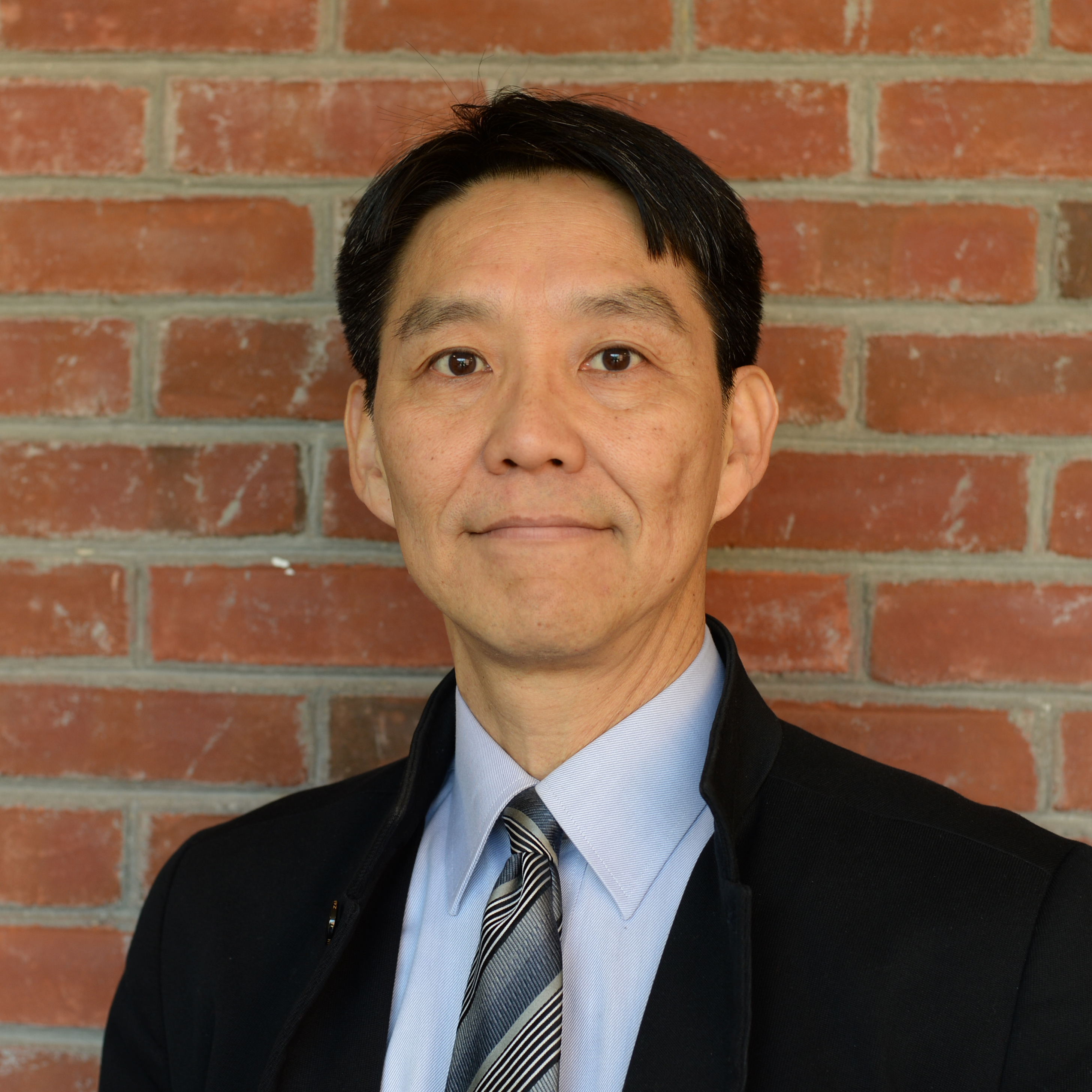
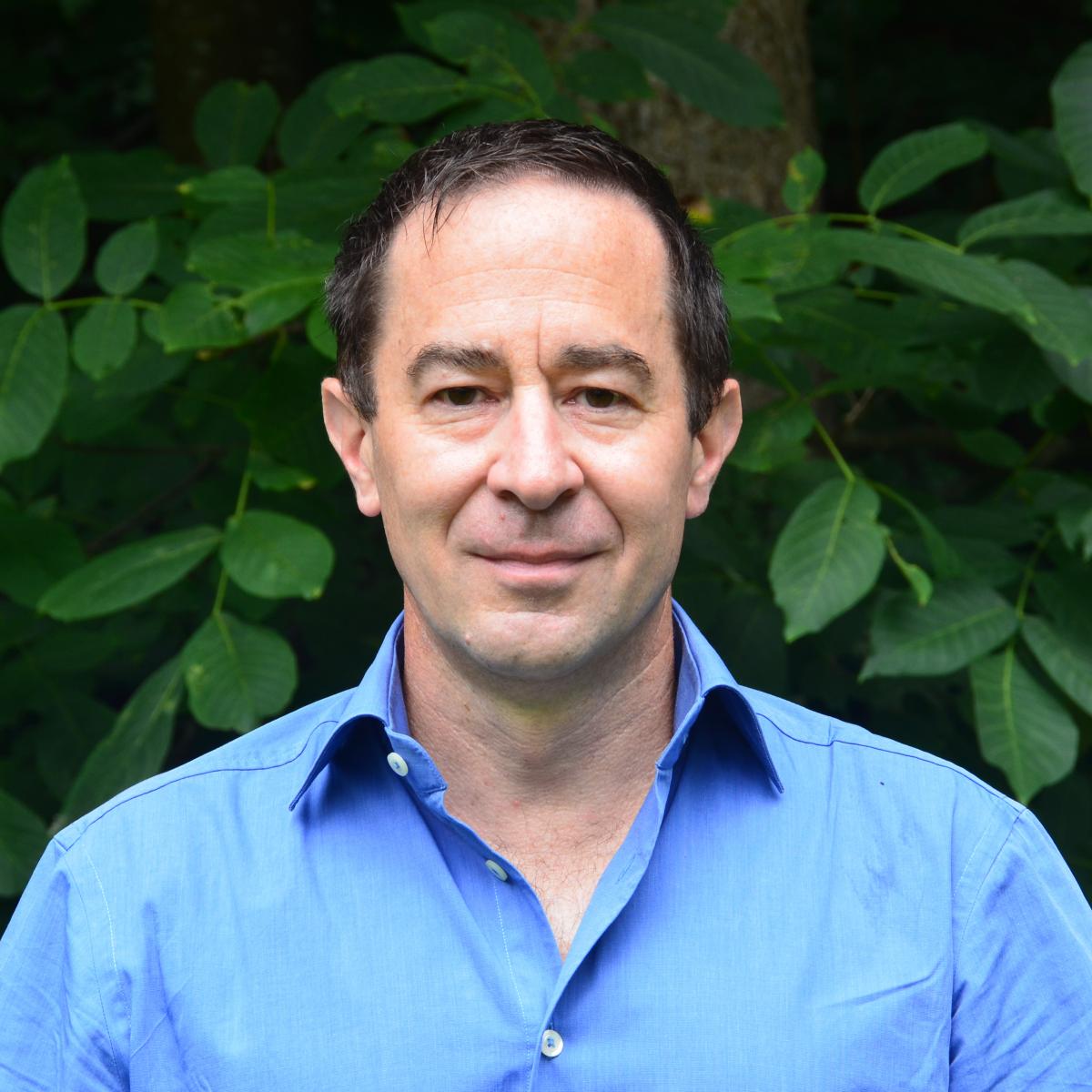
Dr. Leanne Archer is a Researcher in the School of Geographical Sciences at the University of Bristol, specializing in hydrology and climate change impacts. Her work focuses on flood risk assessment in Small Island Developing States, extreme rainfall events, and the application of convection-permitting climate models. She collaborates with experts like Prof. Paul Bates and Dr. Jonty Rougier on interdisciplinary projects addressing tropical cyclone hazards and climate adaptation strategies. Her research interests include analyzing flood exposure in vulnerable regions, soil moisture dynamics in urban flooding, and improving global flood forecasts for humanitarian operations. Archer’s publications emphasize the implications of climate change on rainfall-driven disasters, particularly in Puerto Rico and East Africa, using high-resolution climate projections to evaluate future risks under 1.5° C and 2° C warming scenarios. Recent work explores innovations like the Surface Water Ocean Topography Mission for flood modeling and evaluates the suitability of TanDEM-X data for inundation studies in island nations. Her contributions bridge environmental science with policy, aiming to enhance disaster preparedness and resilience in climate-sensitive regions.
Maile Arvin is a Kanaka Maoli feminist scholar and Assistant Professor at the Department of Ethnic Studies, University of Hawaiʻi at Mānoa. Her research and teaching focus on Indigenous relationships to land, histories of race and settler colonialism in Hawaiʻi, Oceania, and the United States. Previously, she was faculty in History and Gender Studies at the University of Utah and founding director of the Center for Pasifika Indigenous Knowledges. PhD in Ethnic Studies, University of California San Diego (2013) MA in Ethnic Studies, University of California San Diego (2009) BA in English, Swarthmore College (2005) Her research examines: Colonial production of racial categories, particularly Polynesians as an 'almost white race' in historical social science History of incarceration of Native Hawaiian children in government institutions (1865–1960s) Intersection of settler colonialism and Indigenous feminisms Critique of eugenics and genomic studies in the Pacific Community-engaged memorialization projects in Hawaiʻi Recent scholarly trends include analyses of Indigenous sovereignty, critiques of settler colonial whiteness, and interdisciplinary studies of race-gender dynamics. Arvin's publications explore Polynesian racialization, decolonial feminism, and the socioeconomic impacts of colonial institutions. NEH Chair's Grant for Nā Lei Poina ʻOle ACLS Digital Justice Seed Grant Arvin leads Nā Lei Poina ʻOle (Beloved Children Never Forgotten), a community history project about reformatories and industrial schools in Hawaiʻi. In collaboration with Kawela Farrant and the North Shore Community Land Trust, this project uses archival and oral histories to confront the legacy of child incarceration. She also critiques the nonprofit-industrial complex's role in limiting Indigenous sovereignty.
Professor Jason Rentfrow is a Professor of Personality & Individual Differences and Director of Graduate Education at the University of Cambridge's Department of Psychology. His research focuses on geographical psychology, exploring how regional environments shape personality, cultural differences, and societal outcomes. He also serves as Director of Studies in Psychology at Fitzwilliam College, Cambridge. Key research interests include the psychological effects of geography on traits like openness, conscientiousness, and neuroticism; the role of music preferences in personality expression; and the impact of socioeconomic status on self-concept. He has pioneered studies linking personality to political behavior, urban planning, and public health responses to crises like the 2020 pandemic. His work combines large-scale data analysis with spatial methodology, examining datasets from over 133 nations. Notable contributions include frameworks for measuring regional personality differences and their implications for innovation, entrepreneurship, and electoral outcomes. He has also developed psychometric tools like the Test of Attribute Preferences (TAP) for studying musical preferences. Recent research highlights include analyzing how Roman historical legacies influence modern German well-being disparities, the psychological roots of Brexit and Trump voter behavior, and the link between childhood trauma and adult empathy levels. His interdisciplinary approach spans psychology, sociology, economics, and geography. Professional activities include supervising graduate students, reviewing for top journals, and advising on cultural policy. He maintains an active lab focused on personality-environment interactions and their societal consequences.
Ruth Mostern is Associate Professor of History at the University of Pittsburgh and Director of the Institute for Spatial History Innovation (ISHI). She is Vice-President and President-Elect (2025-2026) of the World History Association and leads the award-winning World Historical Gazetteer project. Education Ph.D. in History, University of California, Berkeley, 2003 Research Interests Mostern is an interdisciplinary historian specializing in world, Chinese, environmental, and spatial history. She investigates long-term human–environment interactions at continental and millennial scales, focusing on how societies organize space, resources, and risk. Her work integrates GIS, digital gazetteers, and environmental science to reconstruct historical geographies of empire, water management, and ecological change. Current projects include: Place: A Global History – a study of itineraries, gazetteers, and databases as technologies of spatial knowledge. The Medieval Climate Anomaly and the Global Medieval Era – cultural adaptations to climate change c. 950-1250 CE. Research Trends Her recent publications span digital environmental humanities, historical GIS, Song-dynasty political economy, and pre-industrial Asian political ecology. A dominant theme is the coupling of state power with environmental transformation, exemplified by her 2021 book The Yellow River: A Natural and Unnatural History (Yale), winner of the 2023 Joseph Levenson Prize. Awards & Honors Joseph Levenson Prize, Association for Asian Studies, 2023 NEH Digital Humanities Advancement Grant, 2023-2025 Digital Humanities Awards 2021 – Best DH Tool (World Historical Gazetteer) Fudan University Fellowship for Studies of Chinese Civilization, 2019 NEH Humanities Connections Implementation Grant, 2018-2020 Chiang Ching-kuo Foundation Summer Institute Grant, 2015-2016 NSF Collaborative Research Grant, 2013-2015 ACLS Digital Innovation Fellowship, 2011-2012 Advising & Grants Mostern welcomes graduate students interested in environmental, global, Asian, or digital history. She has directed multiple externally funded projects, including the NSF-funded Center for Historical Information and Analysis and NEH-supported initiatives on water in Central Asia and global historical gazetteers. Labs & Teams She directs the Institute for Spatial History Innovation (ISHI) at the University of Pittsburgh, a hub for interdisciplinary research integrating spatial technologies with historical inquiry. ISHI hosts the World Historical Gazetteer , providing open tools and datasets that link knowledge about historical places across world regions.
Lance Freeman is the Penn Integrates Knowledge (PIK) Professor of City and Regional Planning and Sociology at the University of Pennsylvania's School of Arts & Sciences. His research focuses on neighborhood dynamics, gentrification, urban poverty, housing policy, and the interplay between the built environment and public health. He holds a Ph.D. in City and Regional Planning from the University of North Carolina at Chapel Hill (1997), an MRP in Regional Planning (1991), and a B.S. in Business Administration from SUNY Buffalo (1987). Prior to academia, he worked at Mathematica Policy Research and as a City Planner at the New York City Housing Authority. Freeman teaches courses on urban planning theory, quantitative methods, and community development at Columbia University and the University of Delaware. His research interests include understanding neighborhood change, leveraging social media and technology for urban analysis, and promoting equitable urban development. Key publications include There Goes the Hood: Views of Gentrification from the Ground Up (2006), A Haven and a Hell: The Ghetto in Black America (2019), and co-authored Planning and Control of Land Development (2020). He has contributed to debates on inclusionary zoning, racial equity planning, and the impacts of urban policies on marginalized communities. Freeman's work intersects urban sociology, policy analysis, and spatial demography. His recent studies explore gentrification migration patterns, the role of social media in neighborhood change, and historical segregation dynamics. He advocates for evidence-based planning to address urban inequality and spatial injustice.
Charles Rahal is an Associate Professor in Data Science and Informatics at the University of Oxford, with additional affiliations as an Associate Member of Nuffield College and Researcher at the Gradel Institute, New College. He serves as a Co-Investigator at the ESRC Centre for Care and sits on the Steering Group of Reproducible Research Oxford. His academic career includes previous roles as a Senior Departmental Research Lecturer at the Leverhulme Centre for Demographic Science and a British Academy Postdoctoral Fellow. Dr. Rahal completed his PhD in 2016 and has established himself as a prominent social science methodologist and applied social data scientist with expertise in high-dimensional econometrics. His research spans multiple domains, focusing particularly on unique Big Data origination processes and their relationship to social inequality, mobility, and stratification. He is deeply engaged in machine learning methods, civic technology, spatial and time series econometrics, model uncertainty, and scientometrics. His recent publications reveal a strong trend toward computational social science, with significant contributions to understanding prediction limits, pandemic impacts, healthcare systems, and environmental sustainability. The articles demonstrate his interdisciplinary approach, bridging traditional social science with cutting-edge computational methods, particularly in the analysis of large-scale datasets and development of novel metrics like the InterModel Vigorish for model comparison. Dr. Rahal is actively involved in teaching and mentoring, co-convening courses in Demographic Analysis, Life Course Research, and the Oxford Partner site of the Summer Institute in Computational Social Sciences. He has developed workshops on machine learning, command line interfaces, and LaTeX, reflecting his commitment to methodological training in social science. He leads the Metrics and Models lab and maintains several open-source projects including the GWAS Diversity Monitor and RobustiPy. His editorial roles include Associate Editor-in-Chief at the Journal of Social Computing and Associate Editor at ACM Transactions on Social Computing, highlighting his influence in shaping computational social science methodology.
Professor Alexandra M. Schmidt is a leading academic in Biostatistics at McGill University, holding an endowed University Chair. She specializes in spatial and spatio-temporal modeling, particularly in epidemiology and environmental health. Previously, she served as a Full Professor at the Federal University of Rio de Janeiro (2012–2016). Her research focuses on Bayesian methodologies for analyzing complex processes, including disease spread, environmental hazards, and socio-economic disparities. She has authored influential books such as Spatio-Temporal Methods in Environmental Epidemiology with R (2023) and contributed to over 150 peer-reviewed articles. Key awards include the ISBA Fellowship (2024), ASA Fellowship (2020), and the Abdel El-Shaarawi Award (2008). Education: PhD in Statistics (2001, University of Sheffield, UK), MSc and BSc in Statistics (Federal University of Rio de Janeiro, Brazil). Research interests span Bayesian inference, spatial statistics, and environmental epidemiology. She has advised numerous PhD/MSc students and collaborated on projects linking statistical methods to public health challenges, such as modeling dengue outbreaks and air pollution impacts. Active in academic service, she has chaired major conferences (e.g., 2022 ISBA World Meeting) and serves on editorial boards of top journals like Bayesian Analysis and Canadian Journal of Statistics . Teaching includes advanced courses on generalized linear models, spatial epidemiology, and Bayesian analysis. Her work bridges theoretical statistics with practical applications, addressing global health issues through innovative spatio-temporal modeling techniques.
Aylwyn Scally is a researcher at the Department of Genetics, University of Cambridge, specializing in human evolutionary genetics and ancestry. His work focuses on computational and mathematical models of genome evolution, leveraging population-scale datasets and archeogenetic evidence to explore ancient human populations and their spatial dynamics. University: University of Cambridge Department: Department of Genetics Fields of Interest: Human Evolutionary Genetics, Population Genetics, Ancestry Analysis, Paleobiology, Environmental Genomics, Genome Evolution Scally's research integrates spatial dynamics into genetic models, offering insights into demographic, social, and cultural factors in ancient populations. His methodologies have broader applications for studying other species as genomic data becomes available. Recent publications highlight his work on mutation rate analysis, historical migration patterns, and ancestral population structures. These studies often employ computational simulations and large-scale genomic datasets to address evolutionary questions. He is associated with the Cambridge NERC Doctoral Landscape Awards (CREATES) and C-CLEAR DTP, contributing to training and collaborative research in genetics and environmental genomics.
Chris Darimont is a Professor and Raincoast Research Chair in Applied Conservation Science within the Department of Geography at the University of Victoria's Faculty of Social Sciences. His work bridges natural and social sciences to address urgent conservation challenges, with a geographic focus on British Columbia's Central Coast (Great Bear Rainforest) but designed for global relevance. His research spans three primary domains: landscape ecology at the marine-terrestrial interface, conservation biology of harvest management, and conservation ethics. Darimont maintains deep collaborations with First Nations communities and conservation organizations like the Raincoast Conservation Foundation (where he previously served as Science Director) and Hakai Institute. His work frequently integrates Indigenous Knowledge with scientific methods, exemplified by projects like the Nuxalk Sputc (Eulachon) initiative and Heiltsuk bear monitoring. Darimont's publication record shows consistent focus on human-wildlife interactions, particularly bear-salmon ecosystems, trophy hunting ethics, and Indigenous-led conservation. His highly cited 2009 PNAS paper "Human predators outpace other agents of trait change in the wild" and 2015 Science paper "The unique ecology of human predators" established foundational frameworks in conservation science. Recent work increasingly emphasizes decolonial approaches and Two-Eyed Seeing methodologies. As an educator, he teaches GEOG 391 (Contemporary Topics in Coastal Conservation) and GEOG 353 (Coastal and Marine Resources), prioritizing student mentorship as his "favourite form of outreach." His research is regularly featured in high-profile media including National Geographic and The New York Times, reflecting his commitment to science communication and public engagement.
Professor Mark Scott is a Full Professor of Planning and Dean of the School of Architecture, Planning and Environmental Policy at University College Dublin (UCD), where he has served since 2002. He is a leading scholar in rural planning and environmental policy with over 25 years of academic experience. His leadership roles include Dean (2020-2025), Head of School, and various subject leadership positions within UCD. Mark Scott earned his BSc, Diploma in Town Planning, and PhD in Environmental Planning from Queen's University Belfast. Prior to joining UCD, he worked at the University of Ulster and Queen's University Belfast, and also had planning practice experience. He has held visiting appointments at the University of Pisa and the University of New South Wales. His research focuses on the environmental and sustainability dimensions of spatial planning theory and practice, with specific expertise in rural planning, land-use governance, climate action, green infrastructure, and natural and built heritage. Professor Scott has published extensively in these areas with over 150 journal articles and book chapters, and has authored several influential books including 'Rural Planning Futures' (2025) and 'Postcapitalist Countrysides' (2025). His work demonstrates a strong focus on contemporary challenges in rural planning, climate adaptation, and sustainable development, bridging theoretical frameworks with practical policy applications. Professor Scott has received significant recognition for his contributions to the field: Elected Fellow of the Academy of Social Sciences (2024) Fellow of the Regional Studies Association Shortlisted for the Patsy Healey Award for Academic Excellence (2025) With research funding totaling approximately €6 million from various national and international sources, Professor Scott actively engages with policy and practice. He serves on the Board of the Heritage Council (2023-present), chairs the Historic Monuments Council in Northern Ireland (2025-30), and has advised numerous governmental bodies including Oireachtas Committees, the UK House of Lords, and the OECD. His leadership extends to editorial roles, having served as editor of Planning Theory & Practice (2008-2015 & 2018-2024) and currently on the editorial board of Town Planning Review. Professor Scott leads several significant research initiatives including the Wildfire Resilient Cultural Heritage project (funded by JPI Climate and JPI Cultural Heritage), CO-Bioecon (funded by Department of Agriculture, Food & Marine), and the Rural Planning in the 2020s project (funded by the Royal Town Planning Institute).
Jun Uchida is the Asian Cultures and Society Professor and Professor of History at Stanford University, holding dual appointments in the Department of History and the Center for East Asian Studies. His research focuses on modern East Asian history, Japanese colonialism, migration, and diaspora. He has served as Director of the Center for East Asian Studies (2016-2019) and currently leads the Asian Cultures and Society program. Uchida holds a Ph.D. from Harvard University and has held fellowships at institutions including the Weatherhead Center for International Studies and the Social Science Research Council. His current book project traces the transpacific diasporic activities of Ōmi merchants from Shiga Prefecture, examining their roles in Japan’s imperial expansion. Key research areas include Japanese settler colonialism, colonial Korea, and transnational migration patterns. Uchida has authored influential works like Brokers of Empire (2011), which won the John K. Fairbank Prize, and has contributed to journals such as the Journal of Japanese Studies and Past & Present . Education: Ph.D. in History, Harvard University (2001) M.A. in History, University of California, Berkeley (1996) B.A. in History, Cornell University (1995) Uchida’s teaching spans modern Japanese history, colonial studies, and transpacific themes. He advises doctoral candidates and chairs graduate admissions committees. His awards include the NEH Fellowship (2019-2020) and the Stanford Pattee Fellowship (2013-2014). He maintains active roles in professional organizations such as the American Historical Association and the Association for Asian Studies.
University of California, Los AngelesUnited States
Min Zhou is a Distinguished Professor of Sociology and Asian American Studies at UCLA, and Director of the UCLA Asia Pacific Center. She holds the Walter & Shirley Wang Endowed Chair in U.S.-China Relations and Communications. A member of both the National Academy of Sciences and the American Academy of Arts and Sciences, her work focuses on migration studies, race and ethnicity, and Chinese diasporas. She previously directed the UCLA Asian American Studies Department (2001-2005) and served as Tan Lark Sye Chair Professor at Nanyang Technological University, Singapore (2013-2016). Her research explores transnationalism, immigrant entrepreneurship, ethnic supplementary education, and China’s internal migration dynamics. Notable publications include Chinatown (1992), The Asian American Achievement Paradox (2015), and Contemporary Chinese Diasporas (2017). She has received major awards such as the 2017 ASA Distinguished Career Award and the 2016 Bourdieu Prize for sociology of education. Education: Ph.D., Sociology, State University of New York at Albany Key Grants: Russell Sage Foundation grants (2005-09), Singapore Ministry of Education Tier 2 grant (2016-21) Labs/Teams: Directs the UCLA Asia Pacific Center; collaborates with global scholars on projects like 'Immigration and Integration in the Pacific Rim'
Hiroyuki Iseki is Associate Professor of Urban Studies and Planning at University of Maryland's School of Architecture, Planning and Preservation, and Research Affiliate with the National Center for Smart Growth. His work examines interactions between transportation, land use, equity, and environmental sustainability. Research focuses on: Transit-oriented development impacts on firm location Equity in public transit finance Climate policy implementation in urban planning Active transportation infrastructure analysis Recent publications analyze post-pandemic transit demand shifts, campus multimodal conflicts, and bicycle accessibility modeling. Methodological strengths include spatial econometrics, GIS analysis, and longitudinal data approaches. Work increasingly addresses climate adaptation in transportation planning and EV charging grid impacts. Research contributes to urban policy through WMATA collaborations and Japanese municipal climate planning studies. Current PhD program directorship advances urban planning analytics training.
Christof Bigler is an Adjunct Professor at ETH Zurich's Department of Environmental Systems Science, where he also serves as Deputy Group Head of the Professorship of Forest Ecology and Senior Scientist. He leads the ETH Tree-Ring Laboratory and teaches courses in dendroecology, applied statistics, and forest ecology. His research focuses on tree mortality, climate impacts on forests, disturbance ecology, and phenology, with a strong emphasis on quantitative methods and long-term data analysis. Bigler holds a PhD in Forest Ecology from ETH Zurich (2003), awarded the ETH Medal for his thesis on tree mortality modeling. He has conducted postdoctoral research in Switzerland and the University of Colorado Boulder, exploring disturbance interactions and dendroecology. He has supervised numerous PhD and master's students, contributing to over 150 publications in top journals like Nature Climate Change and Ecology . His work integrates dendrochronological techniques with statistical modeling to understand forest responses to climate change, including drought effects, tree competition, and mortality patterns. He serves on editorial boards for journals like Agricultural and Forest Meteorology and reviews proposals for national and international science foundations. His research also includes managing forest reserves and studying natural forest dynamics in the Alps and beyond. Education: PhD in Forest Ecology, ETH Zurich (2003) Postdoctoral Research: University of Colorado Boulder (2004–2005) Diploma in Biology, ETH Zurich (1998) Key Awards: ETH Medal for PhD thesis (2003) Professional Roles: Member of the Tree-Ring Society, Editor for Frontiers in Forests , and Commission for Phenology and Seasonality (KPS). Bigler's lab and fieldwork emphasize long-term datasets, including analyses of tree-ring records from Swiss National Park and other reserves. His research highlights the critical role of historical climate data in predicting future forest resilience and adaptation strategies.
Elizabeth Bruch is an Associate Professor of Sociology and Complex Systems at the University of Michigan, serving as Associate Director of the Institute for Data and AI in Society. She holds External Faculty status at the Santa Fe Institute and is affiliated with the Center for Population Studies. With a Ph.D. from UCLA and an M.S. in Statistics, her research integrates choice modeling, network science, and agent-based simulations to study individual decisions in social environments. Key areas include residential segregation, dating markets, and higher education. Education: Ph.D. and M.S. in Sociology/Statistics (UCLA), B.A. in Sociology (Reed College) Affiliations: Santa Fe Institute, Institute for Advanced Study Berlin Her work has been published in Science , PNAS , and American Journal of Sociology , earning awards like the ASA Methodology Innovation Prize and the Merton Prize. Her upcoming book Date Like a Local (Princeton, 2026) explores urban influences on romantic behavior. Bruch’s research addresses societal challenges through computational methods, including pandemic modeling during the 2020 crisis and algorithmic analysis of dating markets. She serves on Santa Fe Institute’s Science Steering Committee and collaborates across disciplines to advance complexity science.