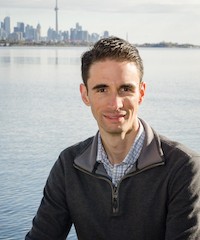
Matthias Sweet is an Associate Professor and Co-Director of the TransForm Research Laboratory at Toronto Metropolitan University's School of Urban and Regional Planning. He holds a PhD and advanced degrees in related fields. His research focuses on transportation policy, travel behavior, urban economics, and the integration of Big Data/GIS methods into planning practice. Key research interests include the future of mobility (e.g., automated vehicles, telework, and ride-sharing), transportation-land use interactions, and sustainable urban development. He leads applied projects analyzing emerging mobility technologies and their societal impacts. Publications highlight trends in AV adoption, telework geography, and policy implications of shared mobility. His work bridges academic research with practical planning challenges, emphasizing evidence-based strategies for congestion resilience and equitable urban growth. Teaching includes advanced planning theory, transportation policy, and quantitative research methods. Students collaborate in TransForm Lab on projects addressing contemporary urban mobility challenges.
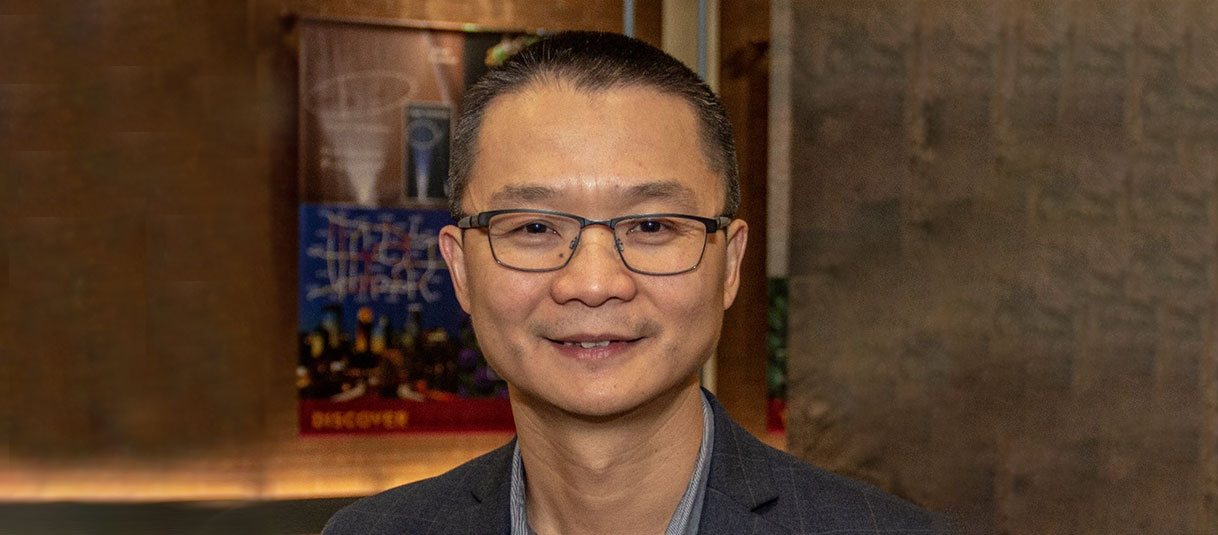
Marco Nie is a Professor and Chair of the Department of Civil and Environmental Engineering at Northwestern University, where he has been a faculty member since 2006. His research focuses on Transportation Systems Analysis, emphasizing interdisciplinary approaches that integrate optimization, network science, traffic flow theory, economics, and statistics to address complex interactions between human activities, infrastructure, and urban networks. He teaches three courses: an undergraduate/graduate introduction to transportation engineering, and two graduate courses on analytical and computational tools for surface transportation systems design. Education: Marco Nie earned a BS in Structural Engineering from Tsinghua University (Beijing), followed by graduate studies in Transportation at the National University of Singapore (NUS), and a PhD in Transportation from the University of California, Davis. Research interests include improving transportation efficiency, sustainability, and equity through policy and technology. Recent work explores autonomous vehicles, modular transit systems, congestion pricing, and data-driven solutions for EV charging and ride-hail platforms. He has expressed challenges in securing research funding, noting its critical role despite inherent flaws in evaluating research impact through monetary metrics. Scientific Awards: He received the 2021 Transportation Science Meritorious Service Awards . Marco also serves on editorial boards, including Service Science (2023), and actively publishes on topics like urban mobility, freight logistics, and policy analysis. Advising & Grants: While no specific students or grants are listed, he highlights the importance of funding mechanisms for research. His work often involves collaborations with sponsors and stakeholders to address real-world transportation challenges. Labs/Teams: Affiliated with the Center for Science and Protection of Engineered Environments and engages in interdisciplinary research groups focusing on sustainable and equitable urban systems.
Devrim Murat Yazan is an Associate Professor at the University of Twente, affiliated with the Department of Industrial Engineering & Business Information Systems and the Digital Society Institute. He holds a PhD from the Interpolytechnic School of Doctorate (Politecnico di Bari, Politecnico di Milano, and Politecnico di Torino, 2011, Italy). His research focuses on sustainable supply chain management, circular economic business models, industrial symbiosis networks, and decision-making frameworks for transitioning to a circular economy. Methodologies include input-output modeling, game theory, and agent-based simulation. He leads the 'Sustainable Circular Economy' research group, supported by a Horizon 2020 grant (€725k contribution from UT). The group explores decision-making in industrial symbiosis, efficient network operations, and cost/benefit-sharing mechanisms. Recent work includes developing matchmaking platforms for circular construction ecosystems and analyzing greenwashing impacts on brand perception. Awards include the CIOB Award (2024). His teaching includes courses like 'Sustainable Business Development' and 'Sustainable Supply Chains for Consumer Products'. His work contributes to UN Sustainable Development Goals related to responsible consumption and production (SDG 12) and climate action (SDG 13). Grants and collaborations involve EU Horizon 2020 and diverse institutions. Research outputs span 62 peer-reviewed articles, with a focus on circular economy implementation, industrial symbiosis dynamics, and decision-support tools.
André Longtin is a Full Professor in the Department of Physics at the University of Ottawa, affiliated with the Faculty of Science. He co-directs the Centre for Neural Dynamics & Artificial Intelligence and holds cross-appointments in Cellular and Molecular Medicine, Mathematics and Statistics. His research focuses on nonlinear dynamics, stochastic systems, and computational neuroscience, with applications to sensory processing, neural coding, and thermodynamic principles in biological systems. Education: B.Sc. (Honours Physics, Université de Montréal), M.Sc. (Physics, Université de Montréal), Ph.D. (Physics, McGill University, 1989). Postdoctoral training at Los Alamos National Laboratory. Research Interests: Theoretical biophysics, neural modeling, entropy production in biological systems, delayed dynamical systems, and interdisciplinary applications of nonlinear science. His group explores computations in hippocampus and zebrafish pallium, epilepsy mechanisms, neural coding in electrosensory systems, and autonomous stochastic rhythms. Recent Work: Articles highlight entropy dynamics in humans, myelin plasticity effects on neural networks, and reservoir computing with delayed loops. Awards include APS Fellowship (2003) and the NSERC Brockhouse Prize (2017). Editorial Roles: Biological Cybernetics, Frontiers in Computational Neuroscience, and others. Collaborations span systems neuroscience, clinical specialties, and engineering.
PD Dr. Kaspar Riesen is the Head of the Pattern Recognition Group at the Institute of Computer Science, University of Bern. His research focuses on graph-based methods for pattern recognition, with applications in document analysis, environmental modeling, and healthcare. Key interests include graph matching, neural networks, and spatio-temporal modeling. His work spans structural pattern recognition, graph embeddings, and keyword spotting in historical documents. Recent projects involve river network analysis using graph regression and hypoglycemia prediction via LSTM-GNN hybrid models. Publications emphasize graph theory advancements, such as normalized graph compression and geometric similarity learning. Collaborations include developing specialized algorithms for automated error detection and improving decision-making in simulated sports. Labs/Teams: Pattern Recognition Group (PRG) at the University of Bern.
Dr. Freek van Ede is an Associate Professor at the Faculty of Behavioural and Movement Sciences, Vrije Universiteit Amsterdam, specializing in Cognitive Psychology. He leads the Proactive Brain Lab, focusing on how the brain prepares for upcoming behavior through attention and working memory. His research employs EEG, eye-tracking, and virtual reality to study dynamic cognitive processes. Education: PhD in Cognitive Neuroscience (Cum Laude), Radboud Universiteit Nijmegen (2014) MSc in Cognitive Neuroscience (Cum Laude), Radboud Universiteit Nijmegen (2009) BSc in Psychology, University of Utrecht (2007) Research Interests: His work investigates how attention and working memory interact with anticipation, timing, and action. Key methodologies include EEG, eye-tracking, and virtual reality. Recent projects explore stimulus-driven selective attention and how visual working memories are prepared for action. Grants & Awards: NWO Vidi Grant (2023–2028, €800,000) ERC Starting Grant (2020–2025, €1.5 million) Young Investigator Award, CNS (2023) Early Career Awards from BACN and NVP (2023, 2022) Lab & Teams: He directs the Proactive Brain Lab, emphasizing innovative experimental designs and interdisciplinary approaches. The lab welcomes motivated students at all levels.
Giorgia Cona is an Associate Professor at the Department of General Psychology, University of Padova. Her research focuses on cognitive psychology, neuropsychology, and neuroimaging, with particular emphasis on prospective memory, aging-related cognitive changes, and neural mechanisms underlying temporal and spatial cognition. She investigates the effects of neurodegenerative diseases, sensory modalities, and environmental factors on cognitive processes. Her work integrates behavioral experiments with advanced neuroimaging techniques like MEG and EEG. Her research interests include the architecture of cognitive dimensions using network analysis, the impact of indirect trauma and media exposure, and the application of virtual reality in cognitive rehabilitation. She has explored the effects of transcranial stimulation (tACS/tRNS) on neural activity and cognitive performance. Her studies often address gender differences in decision-making and the interplay between emotion and cognition. Key research themes include: prospective memory mechanisms, neural correlates of temporal and spatial processing, cognitive changes in aging/Parkinson’s disease, and the role of cortical gradients in cognitive functions. She has also contributed to methodological advancements like the PECANS statement for cognitive/neuropsychological research quality. Giorgia Cona collaborates on interdisciplinary projects including Brainhack initiatives promoting open neuroscience practices. Her work frequently examines pandemic-related cognitive impacts and mental health vulnerability factors, as seen in studies on 2020 lockdown effects and 2023 Turkey earthquake trauma exposure.
Neil McRoberts is a Professor of Plant Pathology at the University of California, Davis, and Director of the Western Plant Diagnostic Network. His research focuses on plant disease epidemiology, systems modeling, and bio-economic analysis of plant diseases. He investigates strategies for managing invasive pathogens, optimizing disease detection methods, and understanding the socio-economic dimensions of agricultural disease management. McRoberts has contributed extensively to studies on Huanglongbing (citrus greening), grapevine leafroll disease, and spinach downy mildew, emphasizing collective action challenges in plant health provision. His work integrates molecular diagnostics, spore trapping, and behavioral economics to address both technical and institutional barriers in disease management. His research spans multiple scales from molecular diagnostics to global crop health assessments, with a focus on translating scientific insights into actionable policies and practices. McRoberts collaborates with growers, policymakers, and international organizations to develop sustainable solutions for crop disease challenges. Notable contributions include frameworks for optimizing phytosanitary thresholds and evaluating the economic impacts of disease management strategies. His lab (QBELab) emphasizes interdisciplinary approaches combining epidemiology, modeling, and social science perspectives. Key Areas: Disease forecasting, collective action in agriculture, citrus disease management, spore dispersal modeling Affiliations: Western Plant Diagnostic Network, UC Davis Plant Pathology Department Methodologies: Systems modeling, economic analysis, citizen science surveillance McRoberts' recent work highlights the critical role of volunteer networks in early disease detection and the importance of aligning economic incentives with sustainable agricultural practices to combat invasive pathogens effectively.
Zhong-Lin Lu is a Distinguished Professor of Psychology and Social and Behavioral Science at The Ohio State University, holding concurrent appointments in Optometry and the Translational Data Analytics Institute. He directs the Center for Cognitive and Brain Sciences and the Center for Cognitive and Behavioral Brain Imaging. Previously, he held the William M. Keck Chair in Cognitive Neuroscience at the University of Southern California. He earned his Ph.D. in Physics from New York University (1992), following an M.S. (1991) and B.S. in Theoretical Physics from the University of Science and Technology of China (1989). His research bridges computational neuroscience, vision science, and cognitive psychology, focusing on visual perception, attention, perceptual learning, and functional brain imaging. Key methods include fMRI, EEG, and hierarchical Bayesian modeling. His work addresses clinical applications in amblyopia, myopia, and glaucoma, alongside foundational studies on decision-making and neural plasticity. He has developed novel techniques like the quantitative Contrast Sensitivity Function (qCSF) and quasiconformal mapping for retinotopic brain mapping. His labs emphasize translational research linking computational models to real-world applications. Awards: APS Fellow (2007), Society of Experimental Psychologists Early Investigator Award (2003) Leadership: Directed USC's Dornsife Cognitive Neuroscience Imaging Center (2004–2011) Interdisciplinary roles: Co-Director of OSU's Humanities/Cognitive Sciences Summer Institute Current research explores visual processing across lifespan, neural mechanisms of perceptual learning, and optimizing fMRI data through advanced computational methods. His work integrates basic science with clinical and applied domains, influencing driver safety, vision correction, and neurotechnology development.
Mark Reed is a Professor of Rural Entrepreneurship and Director of the Thriving Natural Capital Challenge Centre at Scotland’s Rural College (SRUC). He holds visiting professorships at the University of Leeds, Birmingham City University, and Newcastle University (pending). His research focuses on environmental governance, research impact, and sustainable agricultural systems. He has led over £4M in projects as Principal Investigator and contributed to £30M in collaborative research. His work emphasizes transdisciplinary approaches, particularly in peatland restoration, ecosystem markets, and UN policy engagement. Key Roles: Research Manager for IUCN UK Peatland Programme, Member of UKRI-BBSRC’s Sustainable Agriculture Advisory Panel, and UN Global Peatlands Initiative. Education: PhD completed in 2005, with extensive post-doctoral contributions across 30+ countries. Reed’s research interests span environmental decision-making frameworks, participatory technologies, and decolonizing engagement language. He has authored/co-authored over 100 journal articles, 3 books, and 60 reports, with a Google Scholar H-index of 64. His work has been cited over 20,000 times, including 4 papers with >1,000 citations. He advises international bodies like the IPCC, IPBES, and UK Government on climate policy, land use, and peatland conservation. His company, Fast Track Impact, trains researchers globally to enhance societal impact. Recent projects include the Wet Horizons initiative and Greenhouse Gas Removal via Peatlands. Awards: ESRC Michael Young Prize (2008), Royal Society Award for Changing Research Culture (2018), and multiple shortlistings for environmental accolades. Grants & Funding: Led 19 projects as PI; contributed to over 30 initiatives. Notable grants include RESAS 22-27 (Scottish Government) and Global Peatlands Research Funding. Labs & Teams: Thriving Natural Capital Challenge Centre, IUCN Peatland Programme, and UN Global Peatlands Initiative.
Cynthia Lin Lawell is an Associate Professor and holds the Robert Dyson Sesquicentennial Chair in Environmental, Energy and Resource Economics at Cornell University's Charles H. Dyson School of Applied Economics and Management. She is a prominent economist with expertise spanning environmental, energy, and resource economics, using advanced econometric methods to address critical policy questions. Dr. Lin Lawell earned her Ph.D., A.M., and A.B. from Harvard University, where she pursued a multidisciplinary major in Environmental Science and Public Policy. Her undergraduate thesis in atmospheric chemistry won the Thomas Temple Hoopes Prize and led to peer-reviewed publications. She has received numerous prestigious awards including the Harvard University Stone Fellow Award, the International Society for New Institutional Economics Award for the Best Ph.D. Dissertation, and the UC-Davis Hellman Fellowship. Her research focuses on environmental, energy, and resource economics, with particular expertise in structural econometric modeling of dynamic games, applied econometrics, and policy analysis. She has published in top journals including the Review of Economics and Statistics, Journal of Environmental Economics and Management, and Energy Journal. Her work examines strategic decision-making in resource extraction, effectiveness of environmental policies, energy efficiency, water management, and renewable energy development. Dr. Lin Lawell's research has been widely featured in major media outlets including the New York Times, Washington Post, and Guardian. Her analysis of Danish wind energy policy demonstrated that government policies, rather than technological advantages, drove Denmark's leadership in wind energy. Her work on Chinese energy policies revealed mixed effectiveness across different policy instruments. Harvard University Stone Fellow Award for Best Paper Written by a Doctoral Student in Environmental and Resource Policy International Society for New Institutional Economics Award for the Best Ph.D. Dissertation 2011 UC-Davis Hellman Fellowship for promising young faculty RePEc Top 3% Female Economists Based on Publications in Last 10 Years 2017 Cornell University Knowledge Matters Fellow Dr. Lin Lawell directs two major research initiatives at Cornell: the Dynamics, Economics, Econometrics, Policy, and Games: Rigorous Environmental, Energy, Natural Resource, Agriculture, and Development Analysis and Research (DEEP-GREEN-RADAR) and the Think-tank for Resources, Energy, and the Environment: Science and Policy-related Economic Analysis and Research (TREESPEAR). She also serves as President of the U.S. Association for Energy Economics Bay Area Chapter and has received multiple grants supporting her research on agricultural-to-energy land use conversions and sustainable resource management.
Prof. Cecilia Wong is a Professor of Spatial Planning at The University of Manchester, affiliated with the Department of Planning and Environmental Management. She holds key roles including Director of the Spatial Policy & Analysis Lab at the Manchester Urban Institute and Co-Editor of Town Planning Review . Her expertise spans urban planning, policy analysis, and sustainable development, with a focus on China-UK comparative studies. Education: BSocSc (Hons) in Sociology/Geography (Chinese University of Hong Kong), MCD in Town Planning (University of Liverpool), PhD in Town and Country Planning (University of Manchester). Research interests include quantitative indicators for policy evaluation, urban regeneration, housing markets, and spatial planning frameworks. She leads projects on eco-urbanization in China, migration patterns in urban China, and sustainable urban development. Key achievements include the 2021 University of Manchester Researcher of the Year Award and Fellowship in the UK Academy of Social Sciences. Her work contributes to UN SDGs on sustainable cities and climate action through interdisciplinary projects like the TRUUD initiative on urban health policy. Current initiatives include the Spatial Policy & Analysis Lab, Methods for Cities research, and collaborative projects with institutions like The Chinese Academy of Sciences. She advises on national spatial policies and chairs the 2021 UK REF Sub-panel for Architecture and Planning.
Prof. Dr.-Ing. Danijela Markovic-Bredthauer is a Professor at the Faculty of Economics and Social Sciences, Hochschule Osnabrück - University of Applied Sciences. She holds a PhD in Civil Engineering from the University of Kassel. Her research focuses on applied statistics, climate change, conservation ecology, water resources, econometrics, and banking, with a strong emphasis on data mining techniques and statistical modeling. Education: PhD in Civil Engineering (University of Kassel). Professional Background: Previously worked as a business consultant in IT, risk management, and financial consultancy before returning to academia. Led a research group and contributed to projects like ECOPOTENTIAL and STATY. Research Interests: Biodiversity conservation, freshwater ecosystems vulnerability, climate impacts on land cover, and statistical modeling applications across environmental and economic domains. She developed the STATY web app to enhance data literacy in education and research. Funding & Projects: Key projects include SQM-funded STATY, DFG-supported climate vulnerability studies, and EU Horizon 2020's ECOPOTENTIAL, focusing on Earth observations for ecosystem management. Future Work: Continues advancing interdisciplinary research in climate change adaptation, freshwater conservation, and data-driven decision-making tools for education and industry.
Sayahnika Basu is an Assistant Professor in the Economics Department at James Madison University (JMU), affiliated with the College of Business. She holds a Ph.D. in Economics from Arizona State University (2021), an M.A. from Jadavpur University (2015), and a B.S. from St. Xavier's College (2013). Prior to JMU, she was a Postdoctoral Scholar at the University of California, San Diego (UCSD) and remains an external faculty affiliate at UCSD’s 21st Century India Center. Her research focuses on environment and natural resource economics, development economics, urban economics, and applied microeconomics, with a particular emphasis on climate change impacts, environmental justice, and agricultural resilience in developing economies. Her academic contributions address critical questions such as how environmental policies influence economic outcomes, the socioeconomic effects of climate disasters like droughts, and gendered labor dynamics in resource-dependent regions. She co-organizes a virtual junior scholar seminar on the Indian Economy, fostering interdisciplinary dialogue on South Asian economic challenges. Education: Ph.D., Economics, Arizona State University, 2021 M.A., Economics, Jadavpur University, Kolkata, India, 2015 B.S., Economics, St. Xavier's College, Kolkata, India, 2013 Awards: Teaching Excellence Award, ASU Graduate & Professional Student Association (2019) Professional Activities: External Faculty Affiliate, 21st Century India Center, UC San Diego Virtual Junior Scholar Seminar Co-Organizer (Indian Economy) Her work integrates empirical methods to analyze policy interventions and their equity implications, with a focus on marginalized populations. She has contributed to understanding how environmental degradation exacerbates economic disparities and shapes household decision-making in agrarian and urban settings.
Melanie Zhang is an Assistant Professor in Real Estate at Northumbria University's School of Architecture and Built Environment. Her research focuses on real estate investment strategies, financial market networks, and urban economic impacts of flexible work patterns. She actively contributes to academic service through peer reviews and conference organization. Urban Studies PhD, University of Reading (2020) MSc in Financial Management, University of Reading (2015) BA in Economics, Central University of Finance and Economics (2014) Her research explores international real estate investment strategies, financial stability, and urban economics impacts of flexible working. Recent work examines co-working space location choices, pandemic-induced real estate changes, and cross-border investment patterns. Key research areas identified through publication topics include Investors (100%), Real Estate (93%), Markets (70%), London (50%), UK (46%), and Real Estate Market (42%). Fellow of the Higher Education Academy (FHEA) IPF Research Award 2021 Melanie has guest-taught at University of Manchester and London School of Economics, presented at major international conferences (AREUEA, ARES, ERES), and published in top journals like Regional Studies and Journal of Real Estate Finance and Economics.