Anna Ftouli (née Stamatiou) is a Lecturer at the Department of Regional and Economic Development (DRE) of the Agricultural University of Athens (AUA). She holds a degree in Finance from the TEI of Chalkida and a Postgraduate Diploma in Informatics and Applications from the School of Engineering at the University of West Attica. With over 25 years of experience in higher and secondary education, she has also served in executive roles in Communication and Financial Management within the private sector. Education: Degree in Finance (TEI of Chalkida), Postgraduate Diploma in Informatics and Applications (University of West Attica) Administrative Roles: Departmental head of the Erasmus+ Program in Vocational Education and Training Her research and teaching focus on economics, tourism, communications, databases, and informatics. She has supervised numerous graduate theses in these areas and is involved in quantitative methods for regional spatial analysis, accounting, and financial reporting.
Paris Mastorocostas is a Professor at the University of West Attica, specializing in computational intelligence, signal processing, and algorithmic data mining. His research focuses on neuro-fuzzy systems, deep learning applications, and their integration into domains like energy systems, transportation networks, and industrial automation. He has pioneered methodologies for short-term load forecasting, telecommunications fraud detection, and adaptive noise cancellation in medical signals. Key research themes include: Neuro-fuzzy modeling for dynamic systems Machine learning in energy and transportation Data warehouse development using Python/MySQL UAV-based inventory quantification Graph neural networks for urban metro flow His work demonstrates a strong interdisciplinary approach, combining algorithm design with practical industrial applications. Notable contributions include the ReNFuzz-LF model for electricity load forecasting and TMD-BERT for transportation mode detection. His publications span over 25 years, showing sustained innovation in computational intelligence techniques and their real-world implementation.
Chrisa Tsinaraki is a Lecturer at the School of Electrical and Computer Engineering (ECE) of the Technical University of Crete. She specializes in interdisciplinary research areas including Citizen Science, Artificial Intelligence, Semantic Web technologies, and Data Management. Her work bridges technical innovation with societal applications, particularly in environmental policy, public health, and smart spaces. Her research portfolio includes contributions to the Web of Things (WoT), analyzing mobile apps during health crises, and leveraging citizen science for biodiversity conservation. She has collaborated with institutions like the European Commission’s Joint Research Centre (JRC) on projects involving spatial data analysis, semantic interoperability, and multimedia content management. Key Projects: CoCoMA (Content & Context-Aware Multimedia Systems), MoM-NOCS (Mobile Multimedia Nature Observation Management) Technical Expertise: SPARQL/XQuery integration frameworks, OpenAPI semantics, and ontology-driven data systems Her publications emphasize practical applications of emerging technologies in public sectors, policy-making, and crisis management. She has authored over 50 peer-reviewed articles, contributing to both technical advancements and policy-oriented analyses.
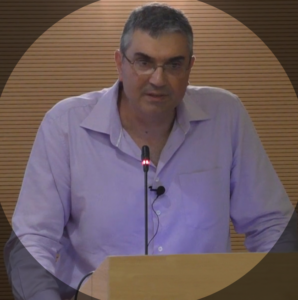
Christos Doulkeridis is a Professor at the Department of Digital Systems, University of Piraeus, Greece. He specializes in parallel and distributed query processing, large-scale data management, and spatio-temporal data systems. His work focuses on optimizing big data frameworks for mobility analytics and distributed knowledge discovery. He holds a PhD from Athens University of Economics and Business (2007) and has been involved in several EU-funded projects like EMERALDS, Green.DAT.AI, and MobiSpaces as Principal Investigator or Coordinator. Education: PhD in Informatics (2007), Athens University of Economics and Business M.Sc. in Information Systems (2003), Athens University of Economics and Business Diploma in Electrical and Computer Engineering (2001), National Technical University of Athens Awards: Best Paper Awards at SIGSPATIAL, SSTD, EuroVA Marie-Curie and ERCIM Fellowships SemEval 2017 Task 4 & 6 competition wins His research interests include scalable data processing frameworks, mobility data analytics, and spatio-temporal query optimization. He leads projects like MobiSpaces (Horizon Europe), aiming to create energy-efficient data spaces for mobility data. He has published over 100 papers in top venues like EDBT, SIGMOD, and ICDE, focusing on distributed systems, query processing, and machine learning applications in data management. Teaching: He teaches undergraduate and graduate courses in data structures, data analysis, big data processing, and database systems at the University of Piraeus. His courses integrate practical tools like Spark and Hadoop for real-world data challenges.
Nikos Pelekis is a Lecturer at the Department of Statistics and Insurance Science and a researcher at the Information Management Group in the Department of Informatics at the University of Piraeus. His research specializes in mobility data management, spatiotemporal databases, and knowledge discovery from moving objects. Research Focus: Design of trajectory database engines (HERMES) Semantic-aware mobility data mining Privacy-preserving techniques for sensitive trajectory data Key Achievements: Best Paper Award at ER'13 and IEEE ICDM'09 Author of "Mobility Data Management and Exploration" monograph Principal researcher in EU projects including GeoPKDD and MODAP
Christos Doulkeridis is a Professor at the Department of Digital Systems, University of Piraeus. Specializing in big data management, distributed systems, and mobility analytics, he has led projects such as CHOROLOGOS (ELIDEK-funded) and contributed to EU initiatives like datAcron and Track&Know. He holds Marie-Curie and ERCIM fellowships, and his work emphasizes energy-efficient data architectures and semantic trajectory analysis. Education: PhD in Informatics, Athens University of Economics and Business (2007) MSc in Informatics, Athens University of Economics and Business (2003) Diploma in Electrical & Computer Engineering, National Technical University of Athens (2001) Research Interests: Big data analytics, cloud computing, spatiotemporal query processing, mobility forecasting (e.g., traffic patterns, maritime monitoring), and semantic trajectory modeling. His work bridges theory with practical applications in smart cities and environmental sustainability. Awards: Winner of SemEval’17 Task4 (sentiment analysis) Best Paper Award at EuroVA’19 Michalis Dertouzos Award (2004) for Human Face of Computing Grants & Projects: Principal Investigator for CHOROLOGOS (semantic spatiotemporal data) Core contributor to datAcron (maritime data ontology) European projects: BigDataStack, RoadRunner (ARISTEIA II) Labs & Teams: Leads research teams developing frameworks like SPARTAN (semantic integration) and ARGO (trajectory prediction). Collaborates on open-source tools like ST_VISIONS (spatiotemporal visualization) and NoDA (unified NoSQL access).
Vasileios Megalooikonomou serves as a Professor at the Department of Computer Engineering and Informatics within the School of Engineering at the University of Patras. He directs the Multidimensional Data Analysis and Knowledge Management Laboratory and maintains active teaching responsibilities across undergraduate and postgraduate programs. His research spans several interconnected domains in computer science and information systems. Dr. Megalooikonomou's work focuses on foundational database technologies while extending into advanced applications through Intelligent Information Systems and Data Mining . His expertise encompasses both theoretical frameworks and practical implementations in Pattern Recognition and Data Compression , with specialized applications in Biomedical Informatics and Multimedia systems. This multidisciplinary approach bridges traditional database theory with contemporary computational challenges. Within the University of Patras infrastructure, he leads the Multidimensional Data Analysis and Knowledge Management Laboratory , which serves as the operational hub for his research activities. His teaching portfolio includes core database courses (Databases I, Databases II, Database Laboratory), advanced algorithmic instruction (Data Mining and Learning Algorithms), and specialized postgraduate topics focusing on Spatial and Temporal Databases and Knowledge Mining. Office hours are maintained on Monday 11:00-13:00 and Wednesday 13:00-14:00 for student consultation.
Christos Chalkias serves as Professor and Vice-Rector for Research, Development and Lifelong Learning at Harokopio University's Department of Geography. Based in Athens, Greece, his academic office is located in the Library Building (Office 4.5). His educational background includes a Degree in Geology (1991) and PhD in Physical Geography & Geoinformatics (1996), both completed at the National and Kapodistrian University of Athens. His research encompasses diverse geospatial domains with particular emphasis on: Geographic Information Systems & Science – Developing spatial analysis methodologies Applied Geography – Solving real-world environmental and societal challenges Spatial Analysis – Examining geographic patterns and processes Environmental Modeling – Simulating physical phenomena Health Geography – Analyzing spatial health disparities Digital Cartography – Innovating map visualization techniques Recent publications (2023-2025) demonstrate strong focus on geospatial applications in health epidemiology, environmental monitoring, and disaster management. His work frequently employs remote sensing, spatial statistics, and GIS technologies to address Mediterranean-region challenges including cardiovascular disease patterns, light pollution, soil degradation, and earthquake impacts. Distinct research trends include historical geospatial reconstruction, nocturnal earth observation, and community-engaged environmental sensing.
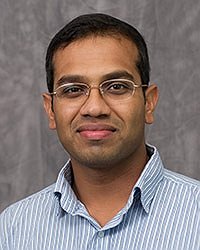
Anil Madhavapeddy is the Professor of Planetary Computing at the University of Cambridge Computer Laboratory, where he co-leads the Energy & Environment Group and is a member of the Systems Research Group. He is also a Fellow at Pembroke College where he serves as Director of Studies in Computer Science. Madhavapeddy completed his PhD from the University of Cambridge in 2003 and his BEng in Information Systems Engineering from Imperial College in 1999. He holds a JM Keynes Fellowship since 2022 for his work combining computer science with economics, and serves on the management committee of the Cambridge Conservation Initiative where he co-directs 4C (Cambridge Centre for Carbon Credits) and the Centre for Earth Observation. His research spans computer systems and programming languages with a strong focus on applying these technologies to global conservation, biodiversity, and climate change challenges. He leads the OCaml Labs group and has made significant contributions to open-source projects including OCaml, Docker, Xen, and OpenBSD. His work often bridges computer science with environmental science, developing computational approaches to address planetary-scale challenges. Madhavapeddy's recent publications demonstrate a clear trajectory toward integrating programming language research with environmental monitoring and conservation. His work spans from foundational programming language techniques to applied geospatial computing systems, with increasing emphasis on biodiversity measurement, carbon credit systems, and planetary-scale environmental monitoring. JM Keynes Fellowship (2022-present) As an educator, Madhavapeddy teaches undergraduate courses including Foundations of Computer Science, Software & Security Engineering, and Cloud Computing. He mentors MPhil and PhD students and co-founded the award-winning book 'Real World OCaml' (2nd Edition, 2022). He has co-founded several companies including Unikernel Systems, High Energy Magic, Segfault, and Tarides to translate research into real-world impact. Madhavapeddy leads the OCaml Labs group at Cambridge and works closely with the Energy & Environment Group, collaborating with colleagues from Plant Sciences, Zoology, Economics, and NGOs including UNEP-WCMC and the IUCN. His current efforts are primarily focused on conservation technology through partnerships with organizations like Canopy PACT.
Mayur Naik is the Misra Family Professor in the Department of Computer and Information Science at the University of Pennsylvania's School of Engineering and Applied Science. He holds office in Room 642B, Amy Gutmann Hall and maintains an active research program focused on the intersection of programming languages and artificial intelligence. Before joining UPenn, he was faculty at Georgia Institute of Technology and a researcher at Intel Labs, Berkeley. Naik received his PhD in Computer Science from Stanford University in 2008 under Alex Aiken, a Masters from Purdue University in 2003 under Jens Palsberg, and a Bachelors from BITS Pilani in 1999. He grew up in Goa, India. His primary research interests center around neurosymbolic programming, which combines symbolic reasoning with machine learning to create more accurate, interpretable, and domain-aware AI systems. His group develops language design, learning algorithms, and compiler optimizations in this space, with their most mature effort being the Scallop neurosymbolic programming language and compiler toolchain. He also conducts research in trustworthy AI for healthcare applications and AI-enabled programming tools that improve programmer productivity. Analysis of his recent publications shows a strong trend toward neurosymbolic programming frameworks (Scallop, TorchQL), LLM-assisted program analysis (IRIS), and applications of these techniques to security, healthcare, and computer vision. His work consistently bridges theoretical foundations with practical implementations, often releasing open-source systems. Misra Family Professor (endowed chair, effective July 2024) Multiple distinguished paper awards (PLDI 2019, FSE 2015, PLDI 2014) Test-of-Time Paper Awards (FSE 2013, FSE 2012, EuroSys 2011) His student Elizabeth Dinella won the 2025 ACM SIGSOFT Outstanding Dissertation award Naik has advised numerous PhD students who have gone on to faculty positions at top institutions including Peking University, University of Toronto, Ashoka University, Bryn Mawr College, and Johns Hopkins University. His research is supported by grants from NSF, Google, Amazon, and other industry partners. His lab maintains active collaborations with clinicians and bioinformatics researchers to apply neurosymbolic programming to healthcare problems. His research group, which includes current PhD students and postdocs, develops practical open-source systems and applies them to diverse domains including computer vision, cybersecurity, medicine, and bioinformatics. The group maintains strong industry connections with Google, Microsoft, Amazon, and other tech companies.
Maria Halkidi is an Associate Professor in the Department of Digital Systems at the University of Piraeus, Greece, where she conducts cutting-edge research in data mining and machine learning with over two decades of academic experience. Her educational background includes: Bachelor's degree in Informatics from the University of Piraeus (1997) Master's degree from Athens University of Economics and Business (1999) Ph.D. from Athens University of Economics and Business (2003) Dr. Halkidi's research focuses on fundamental and applied aspects of data mining, particularly recommender systems, graph data mining, cluster validity assessment, and distributed data mining. Her work bridges theoretical frameworks with practical implementations in sensor networks, social media, and real-time analytics, contributing significantly to algorithmic development in these domains. Analysis of her recent publications reveals a strong trajectory toward fairness and diversity optimization in recommender systems, alongside innovative approaches to graph clustering quality assessment and scalable sentiment analysis. Her research consistently addresses real-world challenges in dynamic data environments, with increasing emphasis on multi-stakeholder optimization and privacy-aware recommendation frameworks. Scientific awards: No specific awards or honors were documented in the provided materials. Dr. Halkidi has participated extensively in National and European-funded research projects, including a prestigious Marie-Curie fellowship at the University of California, Riverside. She serves on program committees for major international conferences in data mining and machine learning, demonstrating active community engagement. While specific graduate students aren't listed in the source materials, her professorial role indicates ongoing mentorship of Master's and Ph.D. candidates. She maintains active research affiliations with the Network oriented systems & services lab and the DataStories research group at the University of Piraeus, where she collaborates on interdisciplinary projects involving big data analytics, social network analysis, and distributed systems.
Dimitrios Karapiperis serves as an Academic Scholar at the School of Science and Technology, International Hellenic University (IHU), specializing in Entity Resolution and Privacy-Preserving Record Linkage. Previously, he held a post-doctoral position at the Hellenic Open University. He earned his PhD from the Hellenic Open University and his MSc from the University of York (UK). His doctoral thesis was featured in the IEEE Intelligent Informatics Bulletin of August 2017, highlighting its significance in the field. Dr. Karapiperis' research centers on developing advanced algorithms for entity resolution, including similarity measures, data structures, and scalable distributed solutions using randomization techniques. His work extends to privacy-preserving methods for record linkage with applications in electronic health records, cryptocurrency analysis, and social media sentiment. He has made significant contributions to efficient record linkage in data streams and spatio-temporal data through innovative blocking techniques and approximation schemes. His recent publications (2020-2022) reveal a consistent focus on scalable and privacy-aware record linkage, with increasing applications in financial technology and affective computing. Collaborations with prominent researchers like V.S. Verykios have resulted in numerous publications in top venues including IEEE Big Data and IEEE TIFS, demonstrating expertise in both theoretical foundations and practical implementations. Scientific Recognition Doctoral thesis featured in IEEE Intelligent Informatics Bulletin (2017) Research Projects University of York: Development of Java servlets for converting VisioXML into GSML within the High Integrity Systems Engineering research group University of Macedonia: Standardization of distance learning systems University of Macedonia: Establishment of a data bank for the fur sector in Kastoria University of Macedonia: System for organizing business processes of the Ministry of Macedonia and Thrace Dr. Karapiperis has collaborated with research teams across multiple institutions, contributing to diverse projects from healthcare data integration to government business process optimization, while maintaining active research in scalable entity resolution methodologies.