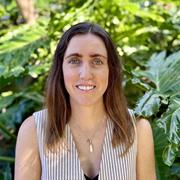
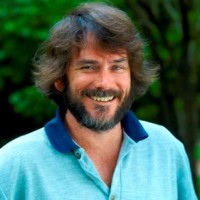
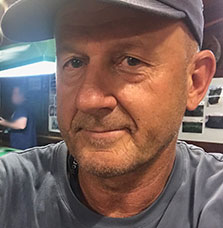
Kyungmi Joanne Lee is a Senior Lecturer at James Cook University (JCU), Australia, specializing in Computer Science and Artificial Intelligence. She holds a PhD in Computer Science from Griffith University (2007) and previously served as a Lecturer at Charles Sturt University (2007–2008). Her research focuses on machine learning, algorithm optimization, neural networks, data mining, and applied AI. Key projects include developing real-world scheduling systems for mining operations, ultrasonic signal classification, and spatio-temporal trajectory analysis. Teaching responsibilities include modules like Database Modelling, where she coordinates and lectures. She currently supervises 5 PhD students, with 3 nearing completion. Her work spans diverse applications, such as emergency management through geospatial data analysis and curriculum development via text mining. With 58 publications across journals and conferences, her contributions highlight interdisciplinary approaches to data-driven solutions.
Dr. Shovanur Haque is an Associate Lecturer in the School of Mathematical Sciences and a Postdoctoral Research Fellow in the School of Public Health & Social Work at Queensland University of Technology (QUT). She holds a PhD in Statistics (2018) from QUT, focusing on developing the MaCSim method for evaluating record linkage accuracy. Her work spans academia and government, including roles at the Australian Bureau of Statistics and Queensland Department of Environment and Science. Currently, she leads a Centre for Data Science (CDS) project investigating spatial data aggregation effects on medical decision-making. Her research interests include Bayesian modeling, spatial data analysis, machine learning, and record linkage. Key research projects involve assessing Modifiable Areal Unit Problem (MAUP) impacts on epidemiological inference, modeling infectious disease transmission dynamics, and developing climate-driven early warning systems for public health. She contributes to interdisciplinary collaborations, combining statistical methods with health, environmental, and social sciences. Education: PhD in Statistics (QUT, 2018) Research Focus: Spatial epidemiology, Bayesian methods, record linkage, and MAUP analysis Affiliations: Centre for Data Science, Centre for Immunology and Infection Control Her recent publications (2021–2025) emphasize Bayesian structural time series modeling, spatial aggregation effects in health data, and cross-border disease surveillance networks. She actively engages in methodological advancements for public health analytics and data-driven policy decisions.
Dr. Maria Beger is an Honorary Associate Professor at the School of the Environment, University of Queensland. Her work bridges marine conservation, spatial planning, and climate change adaptation, with a focus on coral reef resilience and biodiversity. She employs interdisciplinary approaches, including environmental DNA and trait-based ecology, to address global marine challenges. Research Focus Beger's research integrates ecological, genetic, and socioeconomic dimensions to enhance conservation outcomes. Key themes include: Marine Spatial Planning : Designing connected reserve networks for climate resilience. Coral Reef Dynamics : Assessing impacts of warming, bleaching, and species range shifts. Innovative Monitoring : Using eDNA and functional traits to track biodiversity. Policy Integration : Linking customary governance with conservation frameworks in Indo-Pacific regions. Publication Trends Her recent articles (2023–2025) emphasize climate adaptation, conservation technology, and reef fisheries sustainability. Studies frequently analyze trait-based resilience, connectivity, and human impacts across tropical-to-temperate gradients, reflecting a focus on actionable science for policy. Collaborations Beger leads international teams on projects spanning Australia, Indonesia, and the Pacific. Notable collaborations include IUCN initiatives and multidisciplinary consortia like the SEA-UNICORN COST Action for marine connectivity.
Hassan Al Razi is a Bangladeshi zoologist and biodiversity conservationist currently pursuing his Doctor of Philosophy at the School of Human Sciences, University of Western Australia. His research focuses on primate behavioral ecology, with particular emphasis on endangered species in Bangladesh including Bengal slow lorises, hoolock gibbons, and Phayre's langurs. Affiliated with the university's research programs, he contributes to multiple international conservation initiatives addressing primate conservation challenges. His educational background includes a Master of Science in Wildlife and Biodiversity Conservation (2017) and a Bachelor of Science in Zoology (2016), both from Jagannath University in Bangladesh. His thesis work examined Population Status, Habitat Preference and Threats of Phayre's Leaf Monkey in Satchari National Park. Al Razi's research interests span primate behavioral ecology, primate morphology and evolution, conservation biology, and biodiversity management. His work particularly emphasizes loris and chimpanzee conservation, with field studies conducted in Bangladesh's tropical forests. His fingerprint analysis reveals significant contributions to National Parks management, Lorisidae conservation, Anura studies, New Species discovery, Hylobatidae research, Nycticebus conservation, Sciuridae studies, and Tropical Forest ecology. Analysis of his 15 most recent publications (2021-2025) reveals a strong focus on primate conservation challenges in Bangladesh, with particular attention to road infrastructure impacts, wildlife trafficking, habitat fragmentation, and community-based conservation strategies. His work spans multiple primate species including hoolock gibbons, slow lorises, and langurs, with increasing emphasis on digital monitoring of wildlife trade and climate change adaptation strategies. His scientific recognition includes the award for Population Status, Threats, and Conservation of Bengal Slow Loris (Nycticebus bengalensis) in Northeast Bangladesh (2017), which received significant media attention with coverage from 9 news outlets, mentions by 3 X users, and 5 readers on Mendeley. Al Razi actively collaborates with international researchers across multiple countries, contributing to global conservation initiatives including the Global Primate Roadkill Database. His work aligns with UN Sustainable Development Goals related to biodiversity conservation and environmental protection. While specific lab affiliations aren't detailed in the provided text, his research involves extensive fieldwork in Bangladesh's forest ecosystems and collaboration with international conservation networks.
Professor Greg Jordan is a faculty member at the University of Tasmania's School of Natural Sciences, specializing in Biological Sciences. He holds a PhD and BSc(Hons) from the University of Tasmania. His research focuses on plant responses to environmental change over timescales from years to millions of years, integrating fossil evidence, plant physiology, and phylogenetics. He has supervised 30 PhD and 35 honours students. Key research areas include palaeoecology, plant systematics, and climate change impacts on vegetation. Notable projects include studies on leaf anatomy, conifer evolution, and forest management practices. He has secured over $16 million in grant funding for projects like drought resilience and forest biodiversity conservation. Awards include the 2005 Bullard Fellowship at Harvard. Teaching responsibilities include courses on plant ecology, evolution, and field botany. Administrative roles include former Head of Biological Sciences (2018–2021). Research highlights include groundbreaking work on Tasmanian palaeoendemic flora and the use of LiDAR for forest structure analysis. Collaborations span institutions like the University of Adelaide and University of Otago. Current projects explore leaf cuticle-environment links and conifer hydraulic vulnerability.
Myles H.M. Menz is a researcher at James Cook University (JCU) with a focus on insect ecology, conservation biology, and technological applications in ecological monitoring. His work spans diverse topics including insect migration patterns, pollination dynamics, and the impacts of environmental stressors like pesticides and light pollution. He collaborates internationally on projects involving radar entomology, animal-borne sensors, and ecological genetics. Key research interests include the migration strategies of insects such as hoverflies, moths, and dragonflies, as well as conservation challenges facing endangered species like the orchid Caladenia xanthochila. His studies often integrate cutting-edge technologies (e.g., radar tracking, genomic analysis) to understand ecological processes at both individual and community levels. Notable contributions include demonstrating how hoverflies use sun compass navigation during autumn migration and revealing how insecticide exposure alters gene expression in honeybees. Menz also emphasizes interdisciplinary approaches, such as developing global databases for metacommunity ecology and advocating for landscape-scale ecosystem restoration frameworks. His work bridges applied and theoretical ecology, addressing critical issues like pollinator decline, urban biodiversity, and the ecological consequences of human activities.
Dr. Melissa Wartman is a Senior Research Fellow at RMIT University’s School of Science, leading interdisciplinary research at the Centre for Nature Positive Solutions . Her work focuses on advancing nature-based climate solutions, particularly in coastal wetland restoration, to enhance biodiversity, ecosystem services, and climate resilience. She designs restoration strategies, evaluates blue carbon ecosystems, and develops policy-relevant tools for decision-making. Her research integrates field data, innovative monitoring techniques, and multi-sector partnerships to bridge science and practice. Key areas include blue carbon science, ecosystem service valuation, and spatial prioritization for restoration projects. She is actively involved in the UN Sustainable Development Goals 13 (Climate Action), 14 (Life Below Water), 11 (Sustainable Cities), and 15 (Life on Land). Recent publications emphasize quantifying coastal wetlands’ protective benefits, landholder engagement in restoration, and modeling blue carbon dynamics. Her work aims to empower communities and governments through evidence-based solutions that balance ecological, economic, and social outcomes. Advising: Open to supervising Masters/PhD students in restoration ecology, blue carbon economics, and policy integration. Labs/Teams: Centre for Nature Positive Solutions.
Dr. Andrew Baird is a Professorial Research Fellow and Chief Investigator at the ARC Centre of Excellence for Coral Reef Studies, James Cook University. His career spans over two decades, with roles including ARC Future Fellow (2010–2013), Principal Research Fellow, and Senior Research Fellow. He holds a Ph.D. and B.Sc. (Honours) in Marine Ecology from James Cook University. His research focuses on coral reef systematics, biogeography, and resilience to climate change. Key interests include coral reproductive strategies, bleaching mechanisms, and the impacts of environmental disturbances on reef ecosystems. Baird has contributed to landmark studies on coral spawning patterns, species delimitation, and the consequences of mass bleaching events. He has authored over 100 peer-reviewed articles, including seminal works in Nature , Science , and Annual Review of Ecology . Notable awards include the ARC Future Fellowship and leadership in global coral reef monitoring networks. His work bridges taxonomy, ecology, and conservation, emphasizing the urgency of addressing climate-driven threats to reefs. Awards: ARC Future Fellow (2010–2013), ARC Australian Postdoctoral Fellow (2002–2005) Education: Ph.D. (JCU), B.Sc. (Honours) in Marine Ecology (JCU) Labs/Teams: ARC Centre of Excellence for Coral Reef Studies, Reef Ecology Lab Baird advises seven graduate students and collaborates internationally on projects like the Coral Spawning Database and BioTIME biodiversity initiative. His current work explores genomic adaptations to warming and the functional consequences of reef degradation.
Associate Professor Todd Robinson is affiliated with Curtin University's School of Earth and Planetary Sciences (EPS), part of the Faculty of Science and Engineering. His roles include lecturing on Geospatial Analysis, Spatial Modelling, Spatial Databases, and Algorithms, while serving in the Office of the Provost. His research focuses on remote sensing of vegetation, geospatial data analytics, and applications of airborne lidar, with emphasis on ecological hypothesis testing. Key areas include species distribution modeling (especially rare/invasive species), rangeland condition monitoring, geostatistics, and conservation strategies in biodiverse regions like south-western Australia. Recent work explores groundwater-dependent vegetation dynamics and mineral potential modeling via floristic surveys. Research interests span conservation biology, landscape genetics, and arid land ecology. Over 30 peer-reviewed articles since 2003 demonstrate his impact in remote sensing applications, spatial data analysis, and ecological restoration. His methodologies integrate UAV imagery, GIS tools, and genetic sequencing to address pressing environmental challenges such as invasive species control and climate adaptation. Publications highlight interdisciplinary approaches, combining field data with computational models to advance practical solutions in biodiversity conservation and sustainable land management. His work bridges ecological theory and applied conservation practices, particularly in vulnerable ecosystems like Mediterranean jarrah forests and Banded Iron Formation ranges.
Ariana Lambrides is a Senior Lecturer in Archaeology and ARC DECRA Fellow at James Cook University (JCU), specializing in historical ecology and ichthyoarchaeology. Her research focuses on Indigenous fisheries and human-environment interactions in island and coastal settings, particularly the Great Barrier Reef. She holds a PhD from The University of Queensland (2017) and has led projects in Australia, the Pacific Islands, and Micronesia. Education: PhD in Archaeology, The University of Queensland (2012–2017) Research Interests: Her work integrates zooarchaeological methods with environmental and cultural studies, emphasizing long-term Indigenous resource management. Key areas include: Historical ecology of Pacific and Australian coastal regions Ichthyoarchaeological analysis of fish remains Impact of human activities on island biodiversity Prehistoric maritime technologies Recent Projects: ARC DECRA project on Holocene Indigenous fisheries and Great Barrier Reef management "Fishboneviz": Open-access 3D database for fish remains analysis Re-excavation of the Freshwater Bay Midden (Lizard Island) Awards: Dean’s Commendation for Outstanding Research Higher Degree Thesis (2017) Advisory Roles: Editor-In-Chief, Australian Archaeology Journal (2022–2024) Associate Investigator, ARC Centres of Excellence (2021–2024) Labs/Teams: She leads JCU’s archaeology program and collaborates with the ARC Centre of Excellence for Australian Biodiversity and Heritage.
Dr. Xiangmin Zhou is a Senior Lecturer at the School of Computing Technologies, RMIT University, located at City Campus Australia. His research focuses on artificial intelligence, data management, distributed computing, and multimedia systems. He actively supervises Masters and PhD students in areas such as fairness-aware task recommendation in spatial crowdsourcing and adaptive multi-participant analytics. His teaching interests include social media analysis, multimedia databases, query optimization, and cloud data management. Dr. Zhou’s research interests span information systems, AI-driven recommendation frameworks, privacy-preserving techniques, and distributed computing solutions. His work emphasizes context-aware systems, ethical AI, and scalable data processing. Recent publications highlight innovations in federated learning, privacy preservation, and social media-based disaster detection. He is open to supervising students interested in his core research areas and collaborative projects. Dr. Zhou’s academic contributions include developing novel algorithms for recommendation systems, social media analysis, and real-time event detection. His projects often bridge theory and practice, addressing challenges in spatial crowdsourcing, video novelty detection, and multi-platform coordination. His work aligns with RMIT’s focus on technology-driven solutions for societal challenges.
Dr. Frederik Saltre is a Senior Lecturer in Ecology and Biogeography at the University of Technology Sydney and a Research Scientist at the Australian Museum . He leads the Biogeography, Ecology & Modelling (BEAM) Lab and serves as Chief Investigator in the ARC Centre of Excellence for Indigenous and Environmental Histories and Futures. His career spans institutions including Flinders University (2017–2024), University of Adelaide (2013–2017), and Oregon State University (2011–2013). Education: PhD in Biology Geosciences Agro-resources and Environment, University Montpellier 2 (2010) MSc in Biology Geosciences Agro-resources and Environment, University Montpellier 2 (2006) BSc in Biology of Organisms, University Montpellier 2 (2004) Research Interests: Dr. Saltre specializes in global change ecology , paleoecological modeling , and species distribution dynamics . His work integrates stochastic demographic models , biomechanical constraints , and machine learning to study species responses to climate change, extinction mechanisms, and human-environment interactions. Key methodologies include process-explicit models , trophic network analysis , and radiocarbon calibration techniques . Publications & Tools: With over 50 peer-reviewed articles, his research spans megafauna extinction cascades , monsoon dynamics , and environmental watering strategies . He co-developed the R package Rextinct for extinction time estimation and CRIWM algorithm for radiocarbon chronologies. Scientific Awards: Visiting Scholarship, University of Colorado Boulder (2019) Environment Institute Grant, University of Adelaide (2014) Biogeography Society Travel Grant (2013) Assistant Professor Fellowship, France (2010) Supervision: Current: 8 PhD/Honours students Past: 2 MSc/Honours students Leadership: Coordinator, Global Ecology Laboratory Member, Weisbecker Lab Grant Reviewer: NSF, ERC, SNF, BES
Dr. Marie Morelato is a Senior Lecturer at the University of Technology Sydney (UTS), affiliated with the School of Mathematical and Physical Sciences and the Centre for Forensic Science. She holds a PhD in drug intelligence from UTS (2015) and a prestigious Chancellor’s Postdoctoral Research Fellowship (2015–2019). Her research focuses on forensic intelligence, illicit drug data analysis, and organized crime systems, emphasizing data triangulation from sources like cryptomarkets, seizures, and wastewater. She teaches courses such as Forensic Intelligence and serves as Course Director for the Bachelor of Forensic Science program. Marie has received awards including the UTS Teaching and Learning Award (2022) and recognition for contributions to student learning (2024). She leads grants on drug surveillance, including the Residue and Post Overdose Substance Testing (RePOST) project and studies on opioid-related harms. Her editorial roles include Associate Editor for Forensic Science International and contributions to the International Association of Forensic Sciences. Her work bridges forensic science with intelligence-led policing, advancing methodologies like machine learning for crime scene analysis and portable NIR drug detection. She collaborates with agencies like the Australian Federal Police and emphasizes interdisciplinary approaches to tackle complex criminal systems.
Professor Elaine Baker holds the UNESCO Chair in Marine Science at the University of Sydney and directs the GRID-Arendal office, a UNEP collaborating center. She specializes in marine governance, environmental policy, and sustainable development, focusing on continental shelf delineation, mercury pollution, and waste management. Her work bridges academia with global policy, contributing to UN reports like the GEO-6 and leading initiatives such as the Pacific Maritime Boundaries project. She has advised on maritime boundary disputes, mine safety protocols, and coral reef conservation. Key roles: UNESCO Chair, Director (GRID-Arendal), Lead Author (GEO-6 Report) Research interests: Climate change, ocean governance, mine tailings safety, and coral reef resilience Global collaborations: UN Environment Programme, Pacific Islands States, Norwegian Ministry of Foreign Affairs Her research emphasizes real-world impact, including policy frameworks for waste management and coastal ecosystem preservation. She co-founded the Pacific Maritime Boundaries initiative, aiding over 60 nations in maritime jurisdiction claims. Awards include the 2015 Australian Financial Review Women of Influence recognition. Recent work focuses on coral reef island stability under climate threats, mine tailings safety databases, and the human health dimensions of environmental degradation. She collaborates on interdisciplinary projects through the Sydney Institute of Marine Science, integrating GIS and marine data analysis into education and policy. Grants and projects: UN Environment’s Global Environmental Outlook for Cities, Basel Convention guidelines, African Development Bank wastewater studies Labs/teams: GRID-Arendal research unit, Pacific Shelf Programme, Global Tailings Review advisory panel
Adjunct Associate Professor Nick Reid is an emeritus academic at the University of New England (UNE), specializing in Australian Aboriginal linguistics and language revitalization. He retired in 2019 but continues research on Daly River languages (NT), including Ngan'gikurunggurr and Ngan'giwumirri. His work bridges descriptive linguistics, ethnomusicology, and environmental science, notably linking Indigenous oral traditions to sea-level chronologies. A pioneer of online education, he co-developed UNE's Master of Applied Linguistics and created multimedia resources like the Phonetics: An Interactive Introduction CD-ROM. Reid holds a BA (Hons) and PhD from ANU, with research interests spanning morphosyntax, nominal classification systems, and Indigenous language maintenance. He collaborates with institutions like the Northern Institute (CDU) and the University of Melbourne on projects blending linguistics with environmental science. Awards include the Carrick Citation (2006) for student learning innovations and UNE's Vice-Chancellor's Award (2000) for teaching excellence. His publications emphasize language documentation, including grammars and curriculum resources for Aboriginal communities. Recent work focuses on collaborative projects with the Ngan’gi Schools Network and coastal inundation studies with Patrick Nunn. He has supervised numerous higher-degree students and remains active in eResearch initiatives, such as digitizing the Ngan’gi language collection.