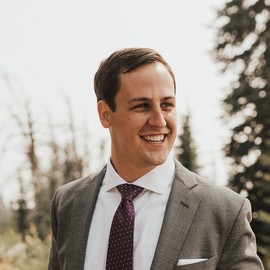
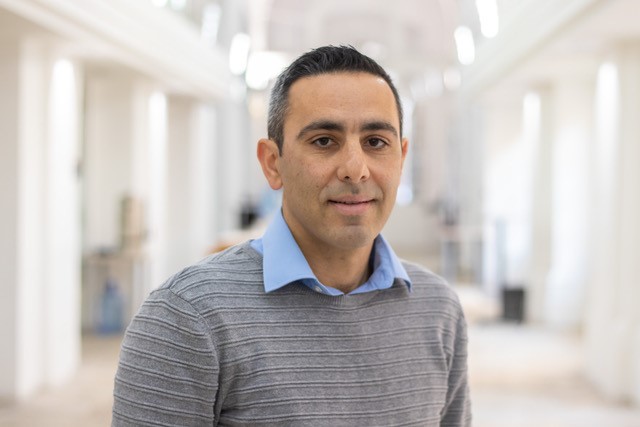
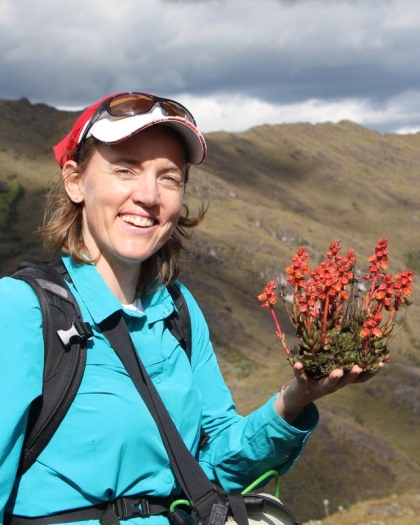
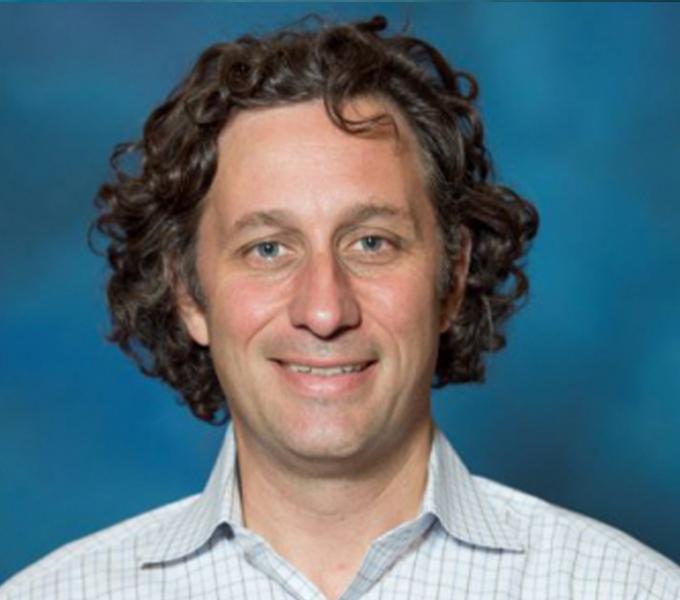
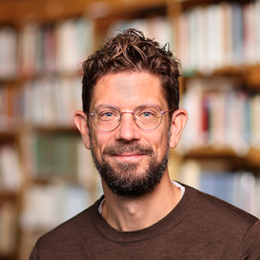
Çağlar Akkaya is an Associate Professor at the Disaster Management Institute of Istanbul Technical University , focusing on seismic risk assessment, disaster management, and earthquake resilience. Their work bridges structural engineering with urban planning, addressing housing affordability post-disasters and impact chain analysis. Research Themes : Seismic risk modeling in megacities, remote sensing for damage assessment, post-earthquake housing affordability, and systemic effect analysis. Recent Projects : Leading a 2024-2027 TUBITAK-funded project on multi-scale recycling techniques for concrete waste after earthquakes. Collaborations : Frequently collaborates with institutions like Springer Science and researchers such as Kundak, Arslanlı, and Asıcı on disaster preparedness and urban resilience. Key publications highlight Istanbul's seismic vulnerabilities, the 2023 Türkiye earthquakes' economic impacts, and advancements in earthquake-resistant construction. Current research emphasizes integrating field and remote sensing data for rapid post-disaster assessments.
Dr. Krijn Paaijmans is a leading researcher at ISGlobal (Barcelona Institute for Global Health) and heads the Entomology Platform at the Manhiça Health Research Centre (CISM) in Mozambique. His work bridges medical entomology, climate science, and public health to combat vector-borne diseases, with primary focus on malaria transmission dynamics and control strategies in resource-limited settings. His academic foundation includes: MSc in Biology (2002) from Wageningen University PhD in Medical Entomology (2008) from Wageningen University, where he investigated climate-mosquito population relationships in western Kenya Dr. Paaijmans' research spans four critical domains: climate-vector disease interactions, insecticide resistance mechanisms, novel malaria prevention technologies, and entomological surveillance for elimination campaigns. His work demonstrates how microclimatic variations critically influence vector behavior and intervention efficacy, revealing that temperature fluctuations make ectothermic vectors more vulnerable to climate change than static models predict. This research has redefined optimal transmission temperature thresholds and exposed limitations in standard insecticide testing protocols. Analysis of his publication record shows consistent innovation in integrating environmental science with vector control. His studies document alarming insecticide resistance in Mozambican Anopheles funestus populations, demonstrate how local microclimate affects intervention outcomes, and establish lower thermal limits for malaria transmission. These findings directly inform WHO guidelines and malaria elimination strategies across Africa. As head of CISM's Entomology Platform, Dr. Paaijmans leads field and laboratory operations for vector surveillance, resistance monitoring, and novel tool evaluation. His team's work provides essential data for Mozambique's national malaria control program and supports global efforts to adapt vector control strategies to changing environmental conditions.
Rob Liddiard is a Research Associate at University College London's Bartlett School Env, Energy & Resources. His work focuses on identifying and classifying energy use patterns in non-domestic buildings through the 3DStock model , a geospatial representation of the UK building stock. He contributes to dynamic energy models like SimStock and collaborates with organizations such as the Valuation Office Agency (VOA) and Ordnance Survey AddressBase Premium.
Paul A. Parker is an Assistant Professor in the Department of Statistics at the University of California, Santa Cruz, specializing in Bayesian methodology, official statistics, and modeling of dependent data structures. His work bridges advanced statistical theory with critical applications in government surveys, environmental monitoring, and social sciences. Education: Ph.D. in Statistics, University of Missouri, 2021 M.A. in Statistics, University of Missouri, 2018 B.S. in Applied Mathematics, University of Idaho, 2014 Dr. Parker's research integrates Bayesian frameworks with modern machine learning to address challenges in spatial, temporal, and functional data analysis. He develops innovative models for small area estimation under informative sampling, with significant contributions to official statistics through applications like the U.S. Census Bureau's Household Pulse Survey and soil health assessment protocols. His methodological work enables more accurate analysis of complex survey data while accounting for heteroskedasticity and non-Gaussian structures. Recent publications reveal a strong pattern of applying spatial deep learning and heterogeneous modeling to environmental monitoring (soil carbon mapping) and government statistics (health insurance coverage estimation). His work consistently focuses on computational efficiency for real-world implementation in federal statistical systems. Scientific Awards: U.S. Census Bureau Dissertation Fellowship University of Missouri Population, Education and Health Center Interdisciplinary Doctoral Fellowship Dr. Parker actively mentors graduate researchers including current PhD candidates Ethan Pawl, Qi Wang, and Sho Kawano, and former MS students Adam Slivinsky and Jacobo Pereira-Pacheco. His research is supported by grants from federal statistical agencies, particularly the U.S. Census Bureau, focusing on improving small area estimation methodologies for national surveys. He collaborates extensively with agricultural scientists through the Soil Health Assessment Protocol and Evaluation (SHAPE) project, developing statistical frameworks for dynamic soil health indicators. His work with the U.S. Census Bureau's Center for Statistical Research and Methodology continues to influence methodological standards for official statistics, particularly in longitudinal survey design and spatial modeling of environmental data.
Christophe Claramunt is a distinguished researcher affiliated with the Naval Academy Research Institute in Brest, France. His work spans interdisciplinary domains at the intersection of Geographic Information Systems (GIS) , spatial data science , and human mobility analysis . He has pioneered hierarchical graph-based models for maritime and urban systems, semantic trajectory frameworks, and spatiotemporal approaches for urban soundscapes and shipping networks. Research Themes: GIS modeling, maritime transportation analytics, urban conflict analysis, semantic trajectories, geospatial data infrastructures Methodologies: Graph theory, machine learning, knowledge graphs, spatiotemporal databases, remote sensing Applications: Port network resilience, demining systems, tourist behavior analysis, cadastral digitization His recent publications focus on graph neural networks for spatial analysis, knowledge-driven competitive intelligence , and maritime network cascading failures . Collaborative work includes contributions to global container shipping modeling and urban acoustic environments. While no formal academic rank is listed in the source data, his extensive publication record and leadership in interdisciplinary projects confirm his status as a full faculty researcher.
Mario Aquilina is a Senior Lecturer in the Department of English within the Faculty of Arts at the University of Malta. He holds a BA (Hons) and MA in English from the University of Malta and earned his PhD in English Studies from the University of Durham, UK in 2013. His academic work spans literary theory, electronic literature, and style studies, with particular focus on continental philosophy's intersection with literary analysis. His research interests prominently feature Critical Theory, Literary Theory, Electronic Literature, and Digital Humanities. Aquilina has made significant contributions to understanding style in literature through the lens of thinkers like Blanchot and Gadamer, while also exploring the emerging field of electronic literature and its theoretical implications. His work on the relationship between literature and digital games represents an innovative interdisciplinary approach that bridges traditional literary studies with contemporary digital culture. Aquilina's publication pattern reveals a strong trajectory in theoretical literary studies, with recent work increasingly engaging with digital humanities methodologies and big data approaches to literary analysis. His scholarship demonstrates consistent engagement with continental philosophy while progressively incorporating computational and digital perspectives on literature. As an educator at the University of Malta, he teaches within both the Department of English and the Centre for English Language Proficiency. His professional experience includes extensive work as an editor for international publishers, with particular expertise in managing multi-author projects and navigating cross-cultural editorial challenges. His academic contributions include editing multiple volumes on the history of the essay and serving as co-editor for the CounterText special issue on Electronic Literature. He maintains an active research agenda that bridges traditional literary scholarship with contemporary digital approaches, reflecting the evolving nature of literary studies in the 21st century.
Stefanos Papadakis serves as a Research Staff Scientist at the Telecommunications and Networks Laboratory (TNL) of the Institute of Computer Science at Foundation for Research and Technology-Hellas (FORTH) and holds an Adjunct Lecturer position in the Department of Computer Science at the University of Crete. Since 2001, he has pioneered hardware and software prototyping at TNL-FORTH, currently leading the Software Defined Radio (SDR) group he established to drive vertical integration from physical layer design to application development. His educational foundation includes a Physics degree (2001) and M.Sc. (2004) and Ph.D. (2009) in Computer Science, all earned at the University of Crete. Teaching responsibilities encompass core courses CS-330: Introduction to Telecommunication Systems Theory and CS-435: Network Technology & Programming. Papadakis' research spans wireless innovation frontiers including software-defined/cognitive radios, spectrum sharing, heterogeneous networking, position location, radio propagation modeling, and emergency communications. His work emphasizes practical implementation, yielding functional prototypes across the entire communications stack. Notable contributions include GPU-accelerated SDR frameworks, robust spectrum virtualization techniques, and emergency response communication systems validated through international competitions. Analysis of his 15 most recent publications (2010-2016) reveals dominant themes in SDR optimization for IoT and critical communications, with significant focus on GPU parallelization, interference management in dense networks, and real-time spectrum sharing mechanisms. His experimental approach consistently bridges theoretical models with hardware validation, particularly in emergency response and heterogeneous network scenarios. Key recognitions include: Ericsson Award of Excellence in Telecommunications for position location research First place in PENED doctoral proposal competition Fourth place in IEEE DySPAN 2015 5G Spectrum Challenge Second place in Virginia Tech ShaRC 2016 with the 'Skynet' cognitive radio system Mentorship spans 16 undergraduate projects (11 completed), 8 M.Sc. students (3 completed theses), and 1 Ph.D. candidate. His research is sustained through major EU and national projects including REDComm (emergency communications), EU-MESH (metropolitan networks), RERUM (IoT security), and Heraklion smart city initiatives. The SDR group maintains critical infrastructure like the Heraklion metropolitan wireless network, FORTH campus network, and specialized mobile emergency nodes equipped with multi-radio SDR platforms, satellite transceivers, and high-performance computing resources.
Jonas van Ouwerkerk is a Researcher at the Chair for Electrochemical Energy Conversion and Storage Systems within the College of Engineering at RWTH Aachen University . He leads the Section Battery Grid Integration and Storage System Analysis , focusing on large-scale battery systems for energy trading and grid stability. Current research areas include Battery Storage Systems , Renewable Energy Integration , and Data-Driven Energy Modeling Key projects involve the CARL Center and 5 MW Battery Storage initiatives Recent publications highlight his work on optimizing battery operations, analyzing renewable investments for prosumers, and modeling grid-scale storage systems. He contributes to open-source energy system modeling frameworks and comparative studies of power system models. While no explicit scientific awards are documented in the provided texts, his leadership in battery integration projects underscores his significance in energy storage research.
Balandino Di Donato is a Lecturer in interactive audio at Edinburgh Napier University's School of Computing Engineering and the Built Environment. His research focuses on soundscapes in mountaineering environments and embodied human-computer interaction in music. He led AHRC-funded projects on Sound Design Pipeline for Cross-platform 360 Virtual Productions BSL in Embodied Music Interaction and chaired the Audio Mostly 2023 conference. Education includes a 2021 PhD from Royal Birmingham Conservatoire (Birmingham City University) in Designing Embodied Human-Computer Interactions in Music Performance . Prior academic roles featured collaborations with Goldsmiths (ERC BioMusic project), De Montfort University (Creative AI Dataset), and University of Leicester (INCITE project). Research spans Mountain soundscape analysis Accessible audio-visual-haptic systems Biosignal-driven musical instruments 360 audio design British Sign Language integration Interactive sound art installations Scientific achievements include Biennale awards (2018, 2019) Audio Mostly steering committee Conference chair and session roles EPSRC and AHRC grant reviewer
Lais Barbudo Carrasco is a Senior Lecturer in Archival and Information Science at Mid Sweden University's Department of Communication, Quality Technology and Information Systems (KKI). Her academic credentials include a 2019 PhD in Information Science and a 2024 Master's by Research in Media and Communication Science from MIUN. Bachelor's in Library and Information Science Master's in European Digital Media and Cultural Heritage Studies Her research focuses on digital representation , metadata , and cultural heritage with active participation in international initiatives like: Europeana Data Model (EDM) CIDOC CRM Interest Group International Council on Archives (ICA) RiC Model Current projects emphasize Indigenous data governance , exploring: CARE Principles (Collective Benefit, Authority to Control, Responsibility, Ethics) Local Contexts Labels for culturally appropriate data management Participatory approaches to Indigenous knowledge systems Parallel research examines AI ethics and algorithmic bias , addressing: Power dynamics in digital systems Justice-driven technological frameworks Human-centered information governance She applies social constructionist and DEI (Diversity, Equity, Inclusion) perspectives in: Strategic communication for cultural organizations Transformative meaning-making practices Digital preservation ethics
Frank Reinhold serves as Professor of Mathematics Education at the University of Education Freiburg (Pädagogische Hochschule Freiburg), where he leads the Institute for Mathematical Education. His academic career spans research, teaching, and leadership roles focused on mathematics education and digital learning environments. Previously, he held postdoctoral positions at both the University of Education Freiburg and Technical University of Munich, where he completed his PhD in Mathematics Education in 2018. His educational background includes a PhD from Technical University of Munich (2018), State Examination for Gymnasium Teaching in Mathematics and Physics from University of Regensburg (2012), and undergraduate studies in Mathematics and Physics Education at University of Regensburg (2007-2012). Before his academic career, he worked as a high school teacher at Wilhelm-Hausenstein-Gymnasium Munich (2014-2017). Reinhold's research centers on mathematics education with emphasis on digital tools, fraction learning, cognitive processes, and teacher training. His work explores how technology-enhanced learning environments impact mathematical understanding, particularly in fraction concepts and statistical reasoning. He investigates cognitive processes through methods like eye-tracking and process data analysis from digital learning environments, examining how students develop conceptual understanding and how teachers can effectively diagnose and address misconceptions. His research portfolio includes significant projects such as Di.ge.LL2 (Digital teaching-learning settings for cognitive activation), eye-teach-stats (teacher training with eye-tracking vignettes), frACTIONs (learning fractions with digital tools), and MINT-ProNeD (professional networks for adaptive innovations in STEM teacher education). These projects collectively address how digital tools can enhance mathematical understanding while considering individual differences among learners. Scholarship for postdoctoral researchers 2021 from Daimler and Benz Foundation GDM Dissertation Award 2020 for outstanding mathematics education dissertation Nomination for Polytechnik-Preis 2019: Dealing with Diversity in MINT Education As a mentor, Reinhold guides doctoral students and emerging researchers in mathematics education. His research is supported by substantial funding from organizations including the German Federal Ministry of Education and Research (BMBF), Baden-Württemberg Ministry of Science, Research and Art, and Erasmus+. He serves as scientific advisor to the State Institute for School Quality and Educational Research (ISB) Munich and participates in expert panels for educational initiatives in Baden-Württemberg. Reinhold co-leads the working group 'Mathematics Education and Digital Tools (AK MdW)' of the Society for Didactics of Mathematics (GDM) and contributes to the development of educational standards for digital mathematics instruction. His collaborative work spans international partnerships with institutions in Germany, the Netherlands, Belgium, and Colombia, reflecting a commitment to advancing mathematics education through both theoretical insight and practical classroom applications.
Suzette Flantua is a Researcher at the Department of Biological Sciences (BIO) , University of Bergen, Norway. She leads the PPF-Alpine project (2022-2026), funded by the Trond Mohn Foundation and the University of Bergen, integrating biology, geography, and climatology for mountain biodiversity conservation. Her research focuses on Global change ecology through macroecology, biogeography, and paleoecology Climate-biodiversity dynamics across past, present, and future time scales GIS and remote sensing applications in spatial analysis Historical environmental impacts on tropical mountain ecosystems Recent studies highlight 2025: Advancing paleoecological data standardization for global biomes 2024: Quantifying fire regime changes and bridging ecological disciplines through publishing guidelines 2023: Investigating diurnal temperature effects on plant elevation ranges and anthropogenic pollen indicators She contributes to Outreach via video communication about sustainability and has been featured in Science , Nature Geoscience , and J. Biogeography papers, with media coverage from Smithsonian Tropical Research Institute and Phys.org . Her work spans fieldwork in Andean expeditions, teaching university courses in GIS and global change, and organizing scientific events.
Stephen J. Quigley serves as a Teaching Professor in the Department of English at the University of Pittsburgh's Dietrich School of Arts & Sciences, where he teaches in the Digital Narrative and Interactive Design (DNID) Program. His academic affiliations include Homewood CEC, Pitt Cyber, Remake Learning, and the STEM Coding Lab. Quigley's research centers on digital rhetoric and basic coding education, with particular focus on craft theory applications in digital composition. His work bridges woodworking craftsmanship principles with digital pedagogy, emphasizing scaffolded learning approaches where technical skills inform theoretical development. Key projects include Open Fuego web tools for classroom coding integration and My Nature Study for environmental digital literacy. His publication portfolio demonstrates consistent contributions to digital humanities journals including Kairos , Reflections , and Computers and Composition Online . Recent work analyzes multimodal environmental education frameworks and digital archiving practices, showing strong interdisciplinary connections between rhetoric, computer science, and environmental studies. Quigley actively participates in educational technology initiatives, serving on the Senate Computing Committee and contributing to NSF-funded Computer Science for All (CSforALL) projects. His teaching portfolio spans technical communications, digital composing, usability studies, and project-based design courses that integrate writing with computational thinking.
Staffan Bergwik , Professor at Stockholm University 's Department of Culture and Aesthetics , specializes in the cultural history of modern natural sciences . His research intersects themes of temporality , science-society dynamics , and visual-sensory epistemologies . 2025-2027: Leading Temporalities of Science project funded by Riksbankens Jubileumsfond 2024: Published Terranauterna on aerial exploration technologies 2022: Co-edited Times of History, Times of Nature with Anders Ekström His methodological innovations include teaching theory/practice courses for humanities and STEM students, while anthology work redefines temporal analysis frameworks. Current focus on postwar scientometric policies reveals how measurement systems shaped scientific futures. Google Scholar publications (2014-2025) demonstrate chronotopic expertise across: Scientific emotion studies Expeditionary visualization Interdisciplinary temporal analysis Historiographic methodology Science education evolution As Science and Modernization program participant (2013-2018), he connected STS frameworks to engineering pedagogy while maintaining 100% data ownership research ethics.
Dr. Melike Schalomon serves as Dean of the Faculty of Arts and Science and Professor in the Department of Psychology at MacEwan University, Edmonton, Alberta. Her enduring commitment since completing her PhD has shaped the university's academic trajectory and research infrastructure, particularly through pioneering animal research programs. Her academic foundation includes advanced training in neuroscience: PhD, University of Alberta M.Sc., University of Alberta B.Sc., Laurentian University Dr. Schalomon's research centers on behavioural neuroscience using zebrafish models to investigate anxiety, memory, and neuropharmacological mechanisms. She develops innovative behavioural paradigms to assess pharmaceutical impacts on neural function, bridging neuroanatomy, psychopharmacology, and animal methodology. Her secondary research explores human sexuality in autism spectrum disorder, examining sexual orientation dynamics in neurodiverse populations. Analysis of her publication history reveals a dominant focus on zebrafish behavioural pharmacology since 2016, with increasing sophistication in anxiety and memory testing methodologies. Earlier work (2012-2014) established foundational contributions to autism and sexuality research, while recent publications (2023-2024) demonstrate methodological innovation in behavioural assessment and cross-disciplinary educational studies. Her distinguished contributions include: Distinguished Teaching Award, MacEwan University (2010) Dr. Schalomon actively mentors honours students and supervises senior independent research projects. Her institutional leadership spans multiple high-impact committees including Academic Planning and Quality Assurance (2020-present), Crisis Management Team (2018-present), Deans' Council (2018-2019, 2020-present), and Strategic Enrolment Management Steering Committee (2023-present), reflecting deep engagement in university governance. Her research operations involve specialized zebrafish behavioural neuroscience facilities at MacEwan, supporting collaborative work in anxiety pharmacology and memory mechanisms through standardized testing protocols developed within her team.