Chiara Longoni is an Associate Professor in the Department of Marketing at Bocconi University in Milan, Italy. Her interdisciplinary research examines consumer responses to artificial intelligence applications in healthcare, government services, and sustainability, as well as drivers of societal well-being. She has received multiple scientific awards including the 2023 MSI Young Scholar award and 2022 Journal of Consumer Research Best Article Award. Ph.D. in Marketing from New York University’s Stern School of Business M.S. (summa cum laude) from Bocconi University M.A. (Honors) in Psychology from NYU M.Phil. in Marketing from NYU Stern Her research spans two primary domains: AI Adoption: Investigates psychological responses to artificial intelligence in healthcare, recommendation systems, and governance. Sustainability: Analyzes behavior change mechanisms and climate action drivers through global interventions involving 63 countries. Key publication venues include Journal of Consumer Research , Journal of Marketing , Nature Human Behavior , and Science Advances . Current editorial roles as Associate Editor for the Journal of Consumer Research and reviewer for top journals across marketing, management, and medicine.
Andrea Garzelli is a Full Professor at the University of Siena's Department of Information Engineering and Mathematical Sciences. His research focuses on remote sensing image processing, particularly in optical and SAR sensor technologies, image fusion, and spatial resolution enhancement. He holds teaching roles in 'Fundamentals of Signal Processing and Telecommunications' and 'Statistical Signal Processing.' He earned his Ph.D. in Computer Science and Telecommunication Engineering from the University of Florence. Notably, he was recognized as a World's Top 2% Scientist by Stanford University for 2019–2023 and his career-long contributions. He served as President of the University of Siena's Quality Assurance Committee (2016–2021) and currently coordinates the graduate program in Computer and Information Engineering. Research interests include satellite data analysis (e.g., Sentinel-2, PRISMA), hypersharpening techniques, and environmental monitoring. His work bridges theoretical advancements (e.g., pansharpening algorithms) and practical applications like urban land classification and vegetation index enhancement. Recent articles emphasize reproducibility, meta-analysis, and synthetic data generation through GANs. Awards: World's Top 2% Scientists (2019–2023 & career). Grants/Advising: Supervises remote sensing theses; no specific grants mentioned. Labs/Teams: Leading research in the department's remote sensing and signal processing groups.
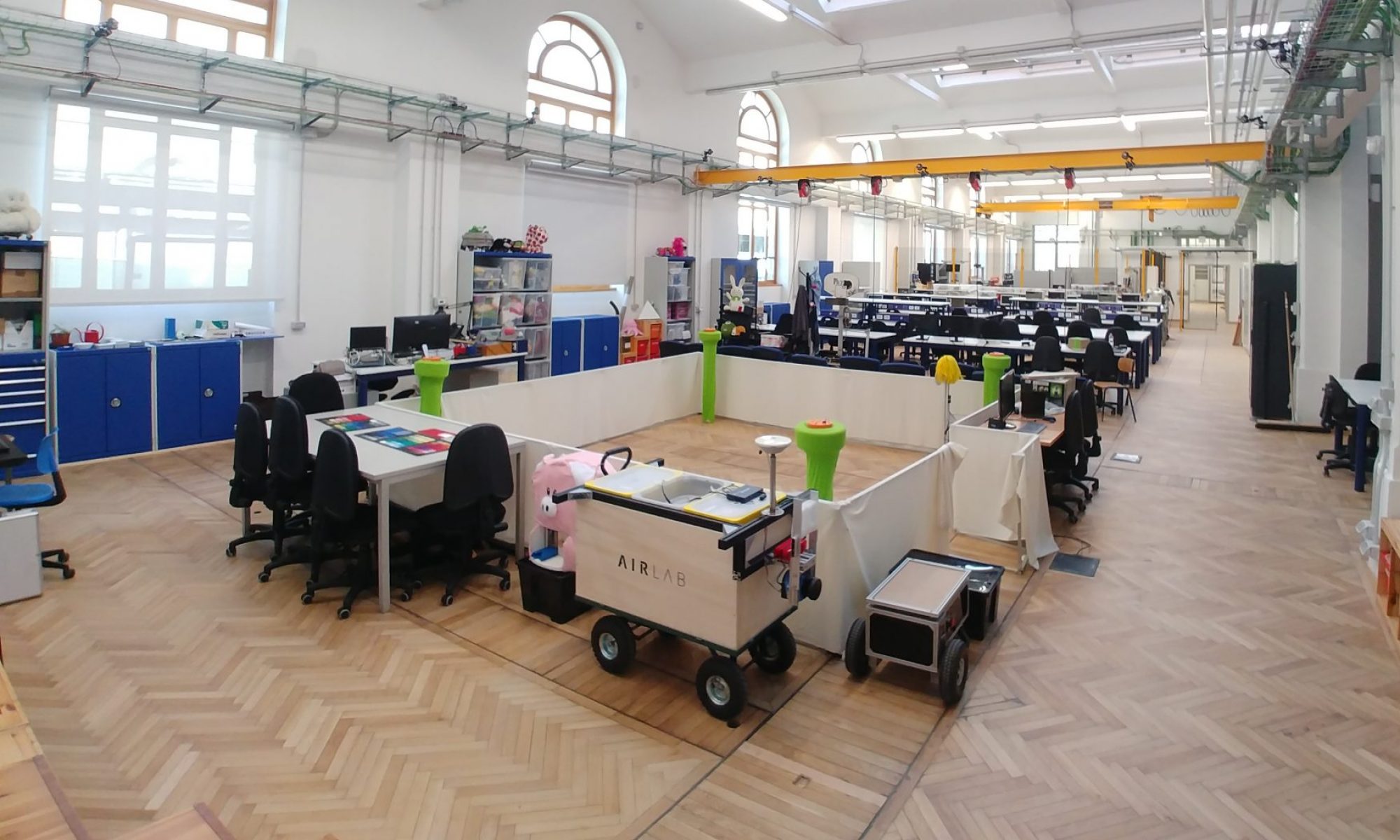
Andrea Bonarini is a Professor at the Department of Electronics, Information, and Bioengineering (DEIB) within the School of Industrial and Information Engineering at Politecnico di Milano. His research focuses on Artificial Intelligence , Robotics , and Human-Robot Interaction , particularly in assistive technologies for children with disabilities and autism therapy. Key Research Areas: Reinforcement Learning, Social Robotics, Affective Computing, Accessibility in Robot Design Notable Projects: Development of frameworks like Mushroomrl and datasets like POLIMI-ITW-S for robotics research His recent publications highlight advancements in playful robotics for neurodevelopmental disorders, emotion projection in non-bio-inspired robots, and safety experiments for small social robots interacting with children. He also contributes to ethical, social, and psychological challenges in robotics applications.
Emma Colamarino is a Researcher at the Department of Computer, Control and Management Engineering "Antonio Ruberti" of Sapienza University of Rome. She holds an M.Sc. in Biomedical Engineering (2014, cum laude) and a Ph.D. in Bioengineering (2019). Since 2015, she has been a research collaborator at the Neuroelectrical Imaging and Brain-Computer Interfaces Lab of IRCCS Fondazione Santa Lucia in Rome and served as a Visiting Ph.D. student at Imperial College London (2018). From 2019 to March 2023, she was a Post-Doctoral Fellow at Sapienza University. Her research focuses on Advanced electroencephalographic (EEG) and electromyographic (EMG) signal processing Brain-Computer Interface (BCI) protocols for cerebral function recovery Machine learning in neurorehabilitation Hybrid BCIs integrating cortico-muscular networks Recent publications address stroke rehabilitation, BCI design, spectral graph theory, and EMG-EEG integration. Her work spans biomedical data analysis, neuroengineering, and rehabilitation technology validation. Scientific awards include multiple grants from Sapienza University and the Italian Ministry of Health, a Student Award at the 7th International BCI Meeting (2018), and recognition as a Subject Expert (2019). She has supervised/co-supervised 18 MD theses across Biomedical, Management, and Robotics Engineering disciplines.
Cristina Coscia is an Associate Professor at the Department of Architecture and Design (DAD), Polytechnic University of Turin, and serves as Contact Person for the Master's Degree in Architecture and City Construction. Her research focuses on heritage economic enhancement, strategic evaluation for decision-making, and sustainability science. Scientific Director for EU-funded projects (CULTURALITY 2024-2028, Erasmus+ 2017-2020) Member of ENCATC (2012-2016) and Scientific Councils for international conferences Her work integrates ICT into cultural heritage management, emphasizing participatory platforms, stakeholder mapping, and multicriteria modeling. She applies data-driven techniques (e.g., Market Basket Analysis, Item Response Theory) to cultural consumption patterns. 2015 : SIForAge Social Innovation Prize 2011 : La Metamorfosi International Design Prize Coscia supervises doctoral students in architectural heritage and contributes to editorial boards ( Sustainability , Territorio Italia ). She leads collaborations with municipalities (Lagnasco, Valdieri) and NGOs (Barriera Design District).
Andrea Maurino is a Full Professor at the University of Milano-Bicocca and leads the Insid&s LAB. His research focuses on data quality, knowledge graphs, machine learning, and their applications in healthcare, finance, urban planning, and organizational analysis. He explores cutting-edge techniques like Large Language Models (LLMs) for decision support systems and semantic annotation of tabular data. Key research interests include improving data quality frameworks for large RDF datasets, developing enterprise knowledge graphs for organizational insights, and applying AI to social media analysis and hate speech detection. His work bridges theoretical advancements with real-world applications such as smart city mobility prediction and nutritional strategies for healthy aging. Notable contributions include scalable tools like ABSTAT-HD for knowledge graph profiling and the 3d-clost mobility prediction model. Maurino’s interdisciplinary approach integrates data science with fields like psychology (ICD-11 decision support) and environmental science (ESG activity detection in financial texts). His lab collaborates on projects like Food NET, combining nutrition science with social network analysis. While no formal awards are listed here, his prolific publication record reflects sustained innovation in data-driven methodologies.
Marco Martino Rosso is a Research Fellow at the Department of Structural, Building and Geotechnical Engineering (DISEG) at the Polytechnic University of Turin, where he also serves as an external lecturer and teaching assistant in both DISEG and the Department of Mathematical Sciences (DISMA). He is affiliated with the Doctoral School (SCDOTT) and completed his PhD under the supervision of Professor Giuseppe Carlo Marano. His academic work bridges civil engineering with advanced computational methods, focusing on structural health monitoring, optimization, and machine learning applications. His research interests center on Structural Health Monitoring , Machine Learning in Civil Engineering , Earthquake Engineering , Structural Optimization , Operational Modal Analysis , and AI-driven diagnostics for infrastructure. He applies deep learning, neural networks, and hybrid modeling techniques to problems such as damage detection, post-earthquake assessment, tunnel and bridge monitoring, and dynamic analysis of timber and concrete structures. His recent publications, spanning from 2023 to 2025, demonstrate a strong trend toward integrating artificial intelligence with structural engineering, particularly in automating modal analysis, optimizing structural forms, and enhancing seismic resilience. These works appear in journals like Mechanical Systems and Signal Processing , Computers & Structures , and Bulletin of Earthquake Engineering , as well as in proceedings of international conferences such as IOMAC and EWSHM. Marco Rosso has not received any explicitly mentioned scientific awards in the provided text. However, his extensive publication record and active role in research projects indicate strong recognition in his field. He has contributed to teaching as a course collaborator in subjects including Dynamic Identification of Structures , Statistics , Construction Techniques , and Safety Assessment and Retrofitting of Structures . He has also been involved in the ARTISTE 2025 Summer School, indicating engagement in advanced training programs. While no formal lab or team name is specified, his frequent collaborations with researchers such as Angelo Aloisio, Giuseppe Carlo Marano, and Jonathan Melchiorre suggest he is part of a vibrant research group focused on intelligent structural systems and data-driven engineering at Politecnico di Torino.
Anna-Maria Meister is a Professor at the Karlsruhe Institute of Technology (KIT) and Lise Meitner Group Leader at the Kunsthistorisches Institut in Florenz (KHI), a Max Planck Institute. Her work bridges histories of architecture and technology, focusing on the political, social, and aesthetic consequences of design processes and standardized systems. Born from PhD at Princeton, Master's at Columbia, and Diploma at TUM Co-director of saai Archive for Architecture and Engineering Executive Board Member of 'Das große kleine Haus' housing cooperative Research Focus: Investigates 'coded objects' as intersections of design, bureaucracy, and technology, including: Proto-algorithmic thinking in pre-digital architecture Metadata's role in archival knowledge systems Material consequences of standardization regimes Entangled temporalities in design processes Her article trends (2020–2025) reveal cross-disciplinary analysis of: Material epistemologies in 20th-century Germany Algorithmic traces in modernist pedagogies Archival fragility as design method Postwar normative design systems Scientific Awards & Roles: Lise Meitner Fellowship (2022–present) Max Planck Institute for the History of Science Fellow (2020s) Co-curator of 'Radical Pedagogies' research project Advising & Collaborations: Co-director of saai Archive (KIT) with international impact DFG-funded Impact Research Network Collaboration with Center for Critical Studies in Architecture (CCSA)
Luca D'Acci is an Associate Professor in Sustainable Urban Forms and Evaluations at the Polytechnic of Turin, affiliated with the Interuniversity Department of Territorial Sciences, Planning and Policies (DIST). He holds additional affiliations as a Senior Research Fellow at the University of Portsmouth and as a member of research networks at the University of Birmingham and Erasmus University Rotterdam. His academic journey includes international roles such as Head of Urban Environment at Erasmus University Rotterdam and visiting researcher positions at the University of Oxford, University of Cambridge, and ETH Zurich. Education: MSc in Architecture-Science of Cities, Polytechnic of Turin (2003, cum laude) PhD in Economic Assessments, Polytechnic of Turin (2007) BSc in Mathematics, University of Turin (2007) BSc in Construction Engineering, Polytechnic of Turin (2009, cum laude) Post-PhD in Urbanism, University of Campinas (2010) Anthropology, University of Oxford (2020, 20 credits) Luca D'Acci’s research focuses on urban morphology, urban allometry, isobenefit urbanism, and the socio-economic-environmental impacts of urban form. His work bridges humanistic and quantitative approaches, integrating engineering, architecture, economics, and anthropology. He investigates how urbanicity, urban form, and spatial configuration influence well-being, sustainability, and resilience. His recent publications (2023–2025) reveal a strong trend toward computational modeling and simulation of urban growth, particularly through the lens of isobenefit urbanism —a concept he has pioneered. These works combine cellular automata, agent-based modeling, and morphogenetic frameworks to simulate sustainable urban futures. He also explores fractal patterns in housing markets, the psychology of urban living, and the mental costs of urbanicity. His research spans disciplines including urban science, environmental psychology, urban economics, and complex systems. Scientific Awards and Honors: Fellow, Erasmus Happiness Economics Research Organisation (EHERO), Erasmus University Rotterdam (2022–) Senior Research Fellow, University of Portsmouth (2017–) Fellow, Cluster for Sustainable Cities, University of Portsmouth (2017–2020) Fellow, Urban Morphology Research Group, University of Birmingham (2016–2021) Member, Cambridge Networks Network, University of Cambridge (2016–) Honorary Fellow, University of Birmingham (2016–) Luca D'Acci actively advises PhD students as a member of the Doctoral Collegium for Urban and Regional Development at Politecnico di Torino (2020–2024). He has secured and contributed to significant research grants, including projects funded by the World Bank, Asian Development Bank, European Commission, EPSRC, Lincoln Institute of Land Policy, and University College London (Future Urban Growth Lab). His editorial roles include membership on the boards of PLOS ONE , PLOS Mental Health , and Humanities & Social Sciences Communications . Labs and Research Networks: Future Urban Growth Lab (UCL, 2019–) LEUr Urban Ecology Lab (UFSC, 2022–) URban Evolution Morphology (UReM, 2024–) Erasmus Universiteit Rotterdam (EHERO, 2022–2024) Spatial Intelligence Unit (SPIN Unit), Estonia (2013–) International Society of Biourbanism (2013–)
Michele Gattullo serves as an Assistant Professor within the Department of Mechanics, Mathematics & Management at the Polytechnic University of Bari, Italy, specializing in design methods for industrial engineering (ING-IND/15). His research bridges cutting-edge extended reality technologies with practical industrial applications, focusing on human-centered solutions for manufacturing, maintenance, and workplace design. Dr. Gattullo's research portfolio centers on Augmented Reality, Virtual Reality, and Biophilic Design, with significant contributions to Human-Computer Interaction in industrial contexts. He investigates how nature-inspired elements in virtual workspaces enhance employee well-being and productivity, while simultaneously developing practical AR tools for assembly guidance, technical documentation, and maintenance support. His work uniquely integrates ergonomics, cognitive psychology, and industrial engineering to optimize human-technology interaction in complex production environments. Analysis of his 15 most recent publications reveals two dominant research trajectories: biophilic design frameworks for virtual/metaverse workspaces (2023-2025) and industrial AR authoring methodologies. The biophilic stream establishes evidence-based guidelines for digital nature integration, while the AR stream delivers validated tools like ADAM and minimal AR approaches that streamline technical documentation creation. Both trajectories emphasize user experience validation through rigorous industrial studies, demonstrating strong interdisciplinary impact across computer science, industrial engineering, and environmental psychology. Scientific Awards: No awards or honors were documented in the available sources. Advising and Grants: The provided materials contain no information regarding graduate student supervision, research grants, or funding sources. His academic profile emphasizes publication output over mentoring activities or project financing details. Laboratories and Teams: While Dr. Gattullo's research involves advanced XR technologies, the source text does not specify laboratory facilities, research groups, or collaborative teams associated with his work at Politecnico di Bari.
Igor Simone Stievano is a Full Professor at the Polytechnic University of Turin , affiliated with the Department of Electronics and Telecommunications (DET) and the Interdepartmental Center Ec-L - Energy Center Lab . He holds a PhD in Electrical Engineering and has supervised numerous students in disciplines spanning electromagnetic compatibility, machine learning, and multi-energy networks. His research interests include: Modeling and simulation of integrated circuits Machine learning for signal integrity Multi-energy network resilience Stochastic analysis of electrical systems Electromagnetic compatibility Key projects include the EU-funded SHIMMER initiative on hydrogen injection in gas networks and commercial contracts for high-speed I/O macromodeling. He serves as a chair and committee member at major conferences like the IEEE Workshop on Signal and Power Integrity. Scientific recognitions : IEEE Senior Member Recipient of the 2013 Futuro in Ricerca grant Editorial Board member of ENERGIES (2020-) Stievano actively participates in PhD college evaluations for Mathematical Sciences and Metrology programs at Politecnico di Torino, while teaching courses in Electrical Engineering and Digital Technologies across biomedical, computer, and media engineering curricula.
Carlo Fezzi is an Associate Professor at the Department of Economics and Management, University of Trento. His research focuses on econometrics, environmental economics, and climate change impacts, particularly in policy design and integrated modeling. Teaches Applied Econometrics and Econometrics for Behavioral and Applied Economics and Mathematics programs. Leads workshops in the Market Analysis Laboratory (G3-2), emphasizing data-driven market understanding. Fezzi’s research integrates econometric methods with environmental policy, addressing biodiversity, climate adaptation, and energy economics. Recent work explores land use optimization under climate change, electricity demand forecasting, and coral reef valuation. His publications span topics like carbon trading, agro-environmental modeling, and non-market valuation techniques. Fezzi’s 15 most recent articles highlight trends in econometric applications to environmental challenges, including climate policy, energy demand modeling, and biodiversity conservation. His methodologies combine linear/nonlinear models, neural networks, and spatial analysis to address global issues like food security, carbon emissions, and ecosystem resilience.
Andrea Perna is an Assistant Professor at the IMT School for Advanced Studies in Lucca, Italy, with a background in theoretical biology and biophysics. Previously, he held a Senior Lecturer position at the University of Roehampton, UK, and conducted research across Europe and Australia. His work focuses on collective animal behavior, pattern formation in biological systems, and ecology, combining experimental, computational, and mathematical approaches. Education: Degree in Biological Sciences from Scuola Normale Superiore and University of Pisa (Italy), followed by a PhD in Psychophysics (neurobiology) from Scuola Normale Superiore, Pisa. Research Interests: Collective behavior in fish schooling, termite nest architecture, biophysical principles of animal group cohesion, and the interplay between individual behavior and ecosystem properties. Notable projects include modeling trail networks in ants and exploring how environmental factors influence nest construction in termites. Labs/Teams: Leads the Networks Unit at IMT School, collaborating with institutions like the Hawk Conservancy Trust and international researchers in ecology, mathematics, and physics. Active in mentoring PhD and post-doctoral researchers in complex systems and ecological modeling. Grants/Funding: Secured funding for post-doctoral positions studying termite nest evo-devo and collaborative projects on raptor flight mechanics.
Maria Grazia Alaimo is a Researcher in the Department of Earth and Marine Sciences at the University of Palermo . Her work focuses on environmental geochemistry, atmospheric pollution analysis, and biomonitoring using plants, lichens, and human biological matrices. She has conducted extensive studies on trace element distribution in urban and industrial areas of Sicily. Current affiliation: University of Palermo Academic rank: Researcher Research Interests: Her research spans trace element geochemistry , urban air quality , and human exposure to heavy metals . Key areas include: Atmospheric pollution dynamics Soil and plant interactions Biomonitoring techniques Industrial contamination effects Health risk assessment Recent publications demonstrate expertise in PM10/PM2.5 analysis , lichen biomonitoring , and heavy metal accumulation in mushrooms and human hair . While no explicit awards or students are listed in available data, her work contributes to environmental health and pollution mitigation strategies.
Provvidenza Rita D'Urso is a Fixed-term Assistant Professor at the University of Catania's Department of Agriculture Food and Environment (Di3A), specializing in Rural Buildings and Agro-forest Land Planning within the School of Agriculture. Her current position runs from March 1, 2023 to February 28, 2026, as part of the SAMOTHRACE project funded by the European Union through NextGenerationUE. She maintains an office in the Engineering Area at Via Santa Sofia, 100, and conducts research focused on environmental monitoring in agricultural settings. Dr. D'Urso earned her PhD in Agricultural, Food and Environmental Science from the University of Catania in 2022 with a thesis on measuring ammonia and GHG concentrations in dairy housing systems. She holds dual qualifications as both a Civil and Environmental Engineer (2017) and an Agronomist and Forestry Doctor (2020), demonstrating her interdisciplinary expertise. Her educational background includes two Master's degrees earned cum laude : one in Agricultural Sciences and Technologies (2018) and another in Building Engineering and Architecture (2016). Her research interests center on environmental monitoring in agricultural contexts, particularly focusing on ammonia and greenhouse gas emissions from livestock housing systems. She investigates innovative measurement techniques using infrared photo-acoustic multi-gas analyzers and low-cost devices, while also exploring mitigation strategies including green wall systems and bio-acidification treatments. Her work bridges agricultural engineering with environmental protection, addressing critical challenges in sustainable farming practices. Analysis of her recent publications reveals a strong focus on precision environmental monitoring in agricultural settings, with particular emphasis on spatial and temporal distribution of gaseous emissions in dairy barns. Her research demonstrates methodological rigor in measurement techniques while maintaining practical applications for emission reduction in livestock farming. She frequently employs geospatial analysis and contributes to systematic literature reviews that advance understanding of environmental impacts across agricultural sectors. National Scientific Qualification as Associate Professor (2023) PhD awarded with honors (unanimous decision by Committee, 2022) Multiple Master's degrees earned 110/110 cum laude Active member of the Italian Society of Agricultural Engineering (AIIA) Dr. D'Urso serves as an academic advisor and collaborator on multiple research projects, frequently working with Professor Claudia Arcidiacono as primary supervisor. Her research group focuses on developing practical solutions for environmental challenges in Mediterranean agricultural systems, with particular attention to measurement methodologies and mitigation strategies that can be implemented in real-world farming operations. She maintains active collaborations with European research institutions through COST Training School programs.