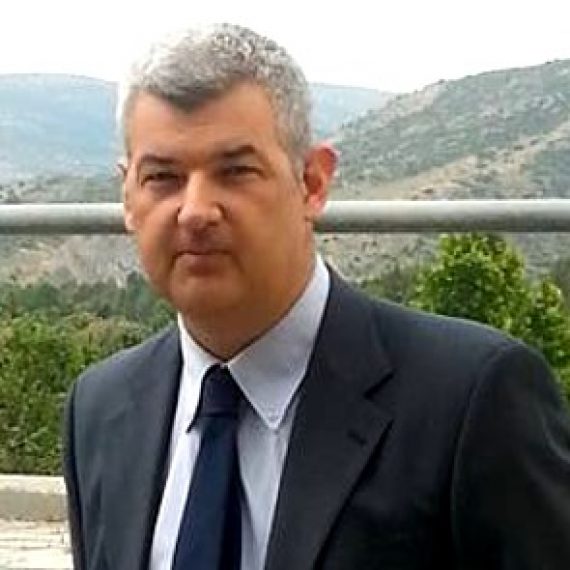
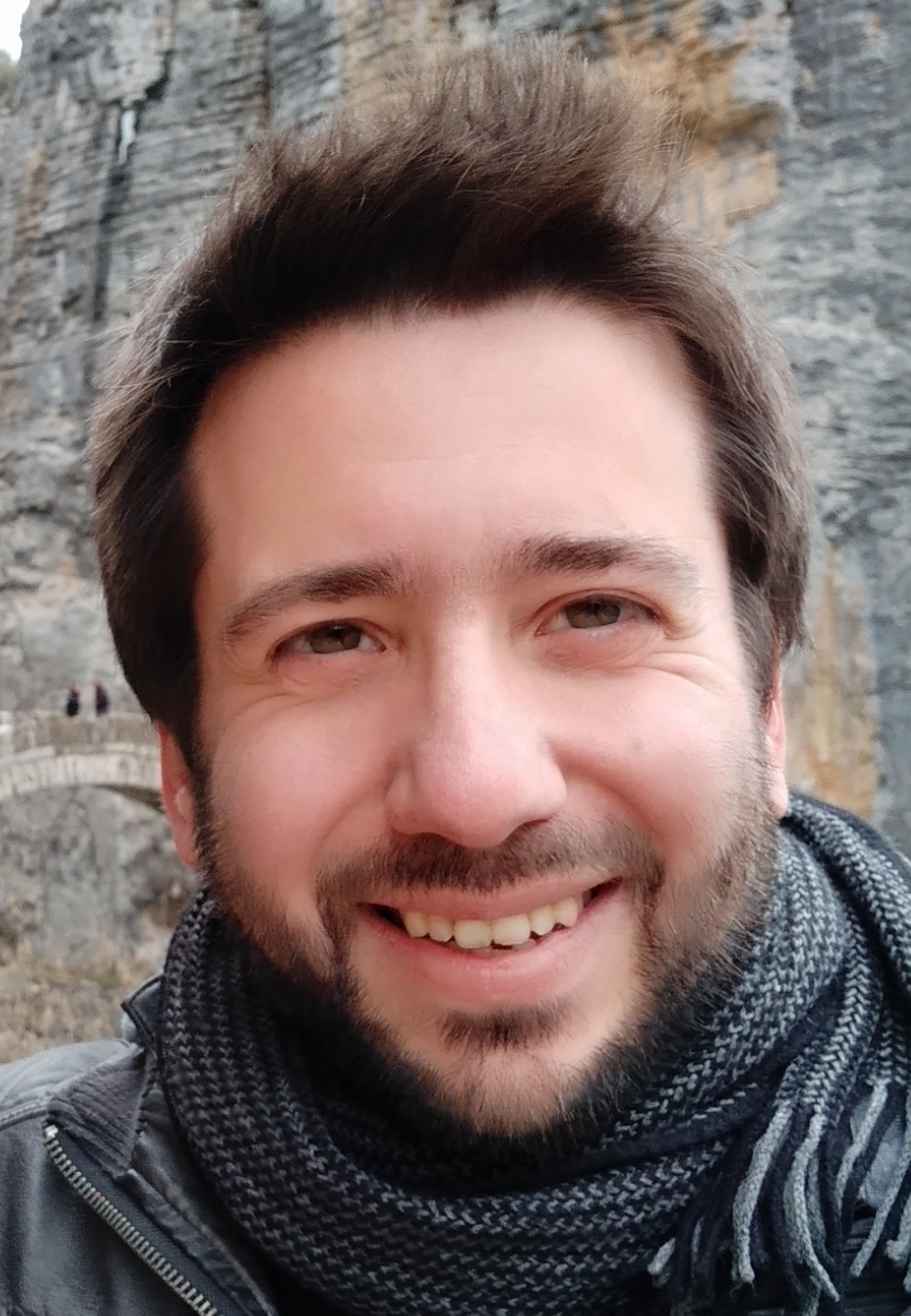
Prof. Dimitra-Theodora Kaklamani is a Professor at the School of Electrical and Computer Engineering (SCE) of the National Technical University of Athens (NTUA), where she has held roles including Lecturer (1995), Assistant Professor (2000), Associate Professor (2004), and Professor (2009). She specializes in microwave systems, wireless communications, and computational electromagnetism, with over 300 publications and a Springer book on computational techniques. Education: PhD in Electrical & Computer Engineering from NTUA (1992). Research Interests: Focus on microwave theory, antenna design, distributed processing, security, and machine learning applications in telecommunications. Her work includes developing software for modeling information transmission systems, coordinating EU projects, and advancing computational methods for electromagnetic applications. Key Contributions: Published extensively on MIMO systems, federated learning in 5G/6G networks, intelligent metasurfaces, and IoT security. Active in standardization efforts for DVB-T networks and wireless protocols. Labs/Teams: Involved in projects like inCASA (remote healthcare monitoring) and advanced antenna array optimization using stochastic algorithms. Collaborates on interdisciplinary initiatives blending machine learning with telecommunications.
Associate Professor Dimitris Zisis leads the Smart Move Laboratory at the University of the Aegean's Department of Product & Systems Design Engineering, focusing on autonomous vessels and marine robotics. His research spans maritime informatics, trajectory analytics, and Big Data applications. He has published over 80 works with 3,900+ citations, including a top-0.1% cited paper on cloud computing security. As a Horizon Europe National Representative for Cluster 4 (Digital, Industry, Space), he advises EU digital policy. He previously led BDVA's Data Science/AI Task Force and participated in EU High-Level Expert Groups on B2G data sharing. He chairs the IEEE's maritime systems committees and edits Elsevier's Future Generation Computer Systems journal. Projects: Horizon 2020 VesselAI, INFORE, BigDataOcean Awards: Top 2% scientist in Information Systems (2019-2021) Memberships: IEEE Senior Member, Hellenic Institute of Marine Technology Fellow His lab develops advanced maritime systems, including the Accu-Waves platform for port safety and the Ro-Boat Race for autonomous vessel innovation. Recent work emphasizes federated learning for vessel location forecasting, scalable maritime event detection, and digital twin applications.
Dimitris Stathakis is a Professor at the University of Thessaly's School of Engineering, Department of Urban Planning and Regional Development Engineering. He directs the Spatial Analysis, Geographic Information Systems and Thematic Cartography Laboratory and chairs the Hellenic Land Registry since 2019. His research specializes in geospatial technologies for urban monitoring, notably using night-time satellite imagery to analyze urban sprawl, population dynamics, and economic activity. Education includes: PhD in Urban Planning (University of Thessaly, 2003) MSc in Geodetic/GIS (University College London, 1995) Engineering degree (University of Thessaly, 1994) Research focuses on GIS-driven urban analytics , including satellite-based population estimation, land use pattern evaluation, and spatial metrics for urban compactness. His work integrates AI techniques (neural networks, fuzzy logic) with geospatial data. Key projects include: Fulbright-funded work at Yale (2016-2017) on urban expansion EU Joint Research Centre postdoc (2004-2008) on food security applications Leading €150K project on seasonal population estimation via night lights (2018-2021) Awards: Fulbright Fellowship (2016-2017). Teaches courses in GIS, thematic cartography, and informatics.
Geropanta Vasiliki is an Associate Professor at the Technical University of Crete, affiliated with the School of Architecture. Her research focuses on smart cities, urban planning, architectural design, and sustainable development. She integrates information technologies into architectural pedagogy and urban projects, emphasizing vertical greening systems, urban biodiversity, and post-pandemic urban design. Her work includes studies on marginal urban areas, public space inclusivity, and the application of machine learning in urban health. She is based in the School of Architecture's Department of Architecture, reachable at vgeropanta@tuc.gr. Her research interests span smart city frameworks, ICT in urban spaces, and the intersection of architecture with environmental and social challenges. She has explored AR applications for cultural heritage, IoT in smart homes, and spatial theories related to urban well-being. Recent projects include optimizing vertical gardening systems and analyzing periurban development in Quito. Geropanta’s articles highlight trends in urban regeneration, digital technologies for public engagement, and sustainable urban strategies. She emphasizes interdisciplinary approaches, combining architectural design with computational tools and sociological insights. Her work contributes to global discussions on equitable urban development and climate-responsive architecture. While no awards are explicitly noted, her extensive publication record reflects impactful contributions to architectural and urban studies. Her advising and grant activities are not detailed in available texts, but her projects often involve collaborations with local municipalities and international case studies, such as Chania’s municipal market and Quito’s periurban zones.
Giorgos Sfikas is an Assistant Professor at the University of West Attica and a researcher at the National Centre for Scientific Research 'Demokritos'. He holds a PhD in Image Processing and Computer Vision (University of Strasbourg, 2012), MSc in Computer Science (University of Ioannina, 2007), BSc in Computer Science (2004), and a BA in History & Archaeology (2014). His research focuses on Computer Vision, Machine Learning, Document Image Processing, and applications in Cultural Heritage. He has authored over 50 peer-reviewed publications, including best paper awards in biomedical imaging and bioengineering. Notable contributions include work on quaternionic neural networks, GANs for document processing, and the Bessarion dataset for medieval Greek inscriptions. Teaching includes courses on Computer Graphics, Machine Learning, and Photogrammetry. He leads projects in multispectral imaging, historical document analysis, and AI-driven archaeology.
Professor Georgios Kouroupetroglou is a leading academic at the National and Kapodistrian University of Athens (NKUA), serving as Professor in the Department of Informatics and Telecommunications. He holds significant roles including President of the Association for the Advancement of Assistive Technology in Europe (AAATE) and membership in the European Academy of Sciences and Arts. His research focuses on digital accessibility, voice processing, assistive technologies for disabilities, and music computing. He has pioneered initiatives such as the 'Accessibility Unit' and the Speech and Accessibility Research Laboratory at NKUA. Education: B.Sc. in Physics and Ph.D. in Communications and Signal Processing. He has held administrative roles including Chairman of the Department of Informatics and Telecommunications, Director of Postgraduate Studies, and Director of the M.Sc. Programme in 'Language Technology'. Research interests span: Computer Accessibility & Voice User Interfaces Accessibility of Documents and Mathematics Music Computing and Ancient Instruments Gesture-Based UIs and Haptics Inclusive Education Technologies Publications highlight innovations in: Assistive tech for mobility and motor disabilities Audio-tactile interfaces for blind users Accessibility in higher education Acoustic modeling of historical instruments He has authored over 180 papers and books, reviewed numerous EU projects, and teaches courses on accessibility, signal processing, and assistive tech. His work bridges clinical science and technology, emphasizing sustainability and global inclusivity.
Διον. Παναγιώτης Δημόπουλος is a Professor in the Department of Plant Biology at the University of Patras, Greece. His research focuses on biodiversity conservation, plant ecology, and ecosystem assessment in Mediterranean regions. He teaches undergraduate courses (Plant Biology, Ecology, Biodiversity Conservation) and graduate modules on ecosystem monitoring and environmental management. Education: Ph.D. in Biology, University of Patras (1993) B.Sc. in Biology, University of Patras (1987) Research Interests: His work integrates taxonomic, functional, and phylogenetic diversity to address conservation challenges. Key areas include: Mapping and assessment of ecosystems and their services Climate-change impacts on endemic species and habitats Restoration of degraded ecosystems using seed banks Phytosociology and vegetation ecology in Greece and Cyprus Research Projects (2010-2020): LIFE-IP 4 Natura: Ecosystem Services Mapping in Greece (2017-2025) MAIA (H2020): Integrated Ecosystem Accounting (2018-2022) ESMERALDA (H2020): Ecosystem Services Mapping for Policy (2015-2018) European Red List of Habitat Types (2013-2016) He leads the Botany Laboratory and coordinates national assessments for Natura 2000 sites. No awards or supervised students are mentioned in the source.
Panitsa Maria serves as an Associate Professor in the Department of Plant Biology at the University of Patras , focusing on biodiversity assessment, conservation biology, and Mediterranean flora. Education : Degree and PhD in Biology from University of Patras Her research interests span: Taxonomic, functional, and phylogenetic diversity of plants Island biogeography and habitat conservation Citizen science applications in ecological monitoring Vegetation dynamics in disturbed and protected areas Recent publications emphasize: Climate change impacts on Mediterranean biodiversity Conservation strategies for cliff and lake island ecosystems Data quality in citizen science initiatives Historical and elevational drivers of plant endemism She supervises doctoral and master’s theses while contributing to: Undergraduate courses like Plant Biology I/II and Biogeography Postgraduate programs in Environmental Management Departmental committees and research networks
Ramfos Alexios is an Associate Professor at the Department of Animal Biology within the Department of Biology , University of Patras . His research focuses on marine ecosystems, zooplankton dynamics, and environmental impact assessments. Education : PhD and MSc in Marine Biology from University of Patras, Graduate of Agricultural Biology & Biotechnology from Agricultural University of Athens. Research Interests : Study of benthic organisms, aquaculture impacts, zooplankton ecology, habitat mapping, and bioinformatics tool development. Key Contributions : Published extensively on Mediterranean plankton communities, software development for ecological data analysis, and habitat classification methodologies.
Christos A. Karavitis serves as a Professor at the Agricultural University of Athens , affiliated with the School of Environment and Agricultural Engineering and the Department of Natural Resources Management and Agricultural Engineering . His research addresses critical environmental challenges in Mediterranean ecosystems, particularly focusing on drought monitoring, desertification vulnerability, and sustainable water resource management in Greece. His research program centers on developing innovative environmental indices (such as the Factual Drought Index and Water and Land Resources Degradation Index) that integrate geospatial technologies with climate data to assess land degradation. Key methodologies include satellite remote sensing (IMERG), GIS spatial analysis, and composite indicator frameworks for evaluating climate vulnerability across Greek islands and Mediterranean landscapes. Current work emphasizes operational decision support tools for policymakers managing water scarcity under climate change. Analysis of his 2020-2025 publications reveals three dominant research trajectories: (1) advanced drought monitoring systems using multi-source climate data, (2) desertification risk mapping through composite indicators, and (3) renewable-powered water security solutions for island communities. His work consistently bridges technical innovation with practical policy applications, particularly in Greece's drought-prone regions and vulnerable island ecosystems.
Dionysios Gasparatos is a Professor of Soil Science at the Agricultural University of Athens , affiliated with the School of Environment and Agricultural Engineering. He has been internationally recognized as among the top 2% of scientists in his field worldwide (2023). His research focuses on soil nutrient management, degradation mitigation, heavy metal dynamics, and soil conditioning through biochar and organic amendments. Over 65 publications with an h-index of 21 Active in international/national conferences and field research Teaches undergraduate courses on Problematic Soils, Soil Science, and Applied Soil Science His recent work emphasizes biochar remediation, biostimulant applications, and heavy metal risk assessment in Mediterranean soils. He has contributed technical definitions to biochar research via IUPAC standards. Scientific accolades include: Elsevier Top 2% Scientist (2023) Recognition in Digital Commons Data Repository Gasparatos' laboratory integrates soil chemical analysis, remote sensing validation, and field-scale remediation strategies for sustainable agriculture.
Orestis Kairis serves as Assistant Professor in the Department of Land Management & Geology at the Agricultural University of Athens (AUA), operating under the School of Environment and Agricultural Engineering. His academic appointment focuses on Land Mapping and Assessment, with teaching responsibilities spanning both undergraduate and postgraduate programs in soil science, land degradation, and geospatial analysis. Kairis maintains active research leadership through his role as elected member of Greece's National Committee for Combating Desertification since 2021. His educational background demonstrates deep institutional roots at AUA: BSc in Natural Resources and Agricultural Engineering (2001), MSc in Soil Resources and Agricultural Engineering (2003), and PhD from the same department (2015) with thesis on land degradation and desertification factors. This progression reflects his specialized expertise in Mediterranean soil systems. Research interests center on critical environmental challenges including soil mapping methodologies (integrating digital and conventional approaches), agricultural suitability assessment , and desertification risk modeling . His work uniquely bridges field soil survey techniques with advanced geospatial analysis, particularly examining soil erosion mechanisms and environmental sensitivity indicators under climate stress. Current projects emphasize practical applications for sustainable land management in vulnerable Mediterranean ecosystems. Publication trends reveal consistent focus on Mediterranean environmental challenges through 15+ recent articles (2017-2025), with increasing emphasis on digital soil mapping validation , climate dataset applications for agriculture , and mining impact assessments . His work demonstrates strong methodological diversity, combining field measurements, remote sensing, and simulation modeling to address land degradation. Kairis has directed significant research infrastructure as scientific director for 2 projects and deputy director for 3 others, participating in over 30 European and Greek State-funded initiatives. His project leadership spans soil health assessment in mining areas, desertification monitoring systems, and agricultural land capability evaluations, demonstrating practical implementation of his research frameworks. His technical capabilities include advanced soil survey methodology, erosion risk modeling using PESERA/RUSLE systems, and integration of CORINE/NDVI data for land sensitivity mapping. Current work focuses on developing decision support tools for land management policy implementation, particularly through the DRAST framework for desertification risk assessment.
Akrivi Krouska serves as Assistant Professor in the Department of Informatics and Computer Engineering at the University of West Attica, Greece, while concurrently holding a PostDoc Researcher position in Intelligent Social Information Systems within the same department. Her academic trajectory spans teaching undergraduate and postgraduate courses at both the University of West Attica and University of Piraeus, complemented by prior experience as a Computer Science Teacher in Greek public schools under the Ministry of Education. Her academic foundation includes: PhD in Informatics from the University of Piraeus MSc in Information Systems from the University of Athens BSc in Informatics from the University of Piraeus Dr. Krouska's research program centers on Artificial Intelligence Systems with emphases on Adaptive Software and VR/AR Systems for educational contexts. Her work bridges Multimedia Applications and Social Networking Services to develop personalized learning technologies, consistently integrating pedagogical theories with computational approaches to enhance user engagement and knowledge transfer. Analysis of her recent publications (2021-2025) reveals dominant themes in AI-driven adaptive learning systems, where fuzzy logic, neural networks, and reinforcement learning enable dynamic personalization. Significant focus exists on virtual/augmented reality applications for skill development, alongside investigations into digital escape rooms and human-AI collaboration frameworks that merge cognitive science with educational technology. Her scholarly recognition includes: Academic performance scholarships Multiple Best Paper awards at international computer science conferences Dr. Krouska actively contributes to academic leadership through editorial roles as Guest Editor for journals including Frontiers in Artificial Intelligence and Entropy, alongside program committee engagements for conferences such as ITS and PCI. Her review activities span numerous publications in the research community. Based at the Laboratory of Educational Technology and e-Learning Systems (K10.124), her work environment supports innovation in educational software design, with particular emphasis on creating immersive, adaptive learning experiences grounded in empirical user studies.
Athanasios Koutras is an Associate Professor at the Department of Electrical and Computer Engineering, University of Peloponnese. He holds a PhD in Electrical and Computer Engineering from the University of Patras (2001), focusing on blind speech separation. His career includes roles as Deputy Head and Head of the Department of Informatics and Media at TEI of Patras (2008–2018) and academic positions at institutions like the University of Ioannina and Aristotle University of Thessaloniki. He has supervised over 160 theses and teaches courses in digital signal processing, biomedical engineering, and multimedia technologies. Research Interests: Digital sound/image processing, biomedical signal analysis, machine learning, computer-aided diagnosis, EEG/MEG analysis, deep learning, brain-computer interfaces (BCI), and tourism data forecasting. Founding Director of the Signal, Image Processing & Pattern Recognition (SIPPRE) Research Group, he explores applications in healthcare, audiovisual technologies, and smart cities. His work spans interdisciplinary collaborations, including medical neuroscience and tourism analytics. Awarded editorial roles in journals like Advances in Signal Processing and MDPI Electronics , he actively mentors through IEEE programs. Office hours: Monday 13:00–14:00, Tuesday 11:00–13:00 (Teams).
Nikolaos Depountis is an Assistant Professor at the University of Patras, Department of Geology within the Faculty of Science. His educational background includes a BSc from the University of Patras, and MSc and PhD degrees from Cardiff University, UK. Research interests center on geotechnical challenges including landslide mechanisms, soil erosion modeling, and coastal vulnerability assessment. His work integrates field studies with geospatial technologies, focusing on: Geotechnical investigations for infrastructure projects Physical/mechanical properties of geological materials Landslide monitoring and early-warning systems Coastal erosion quantification using multi-sensor approaches Geohazard assessment in archaeologically sensitive areas Publication analysis reveals strong emphasis on geohazard prediction (75% of recent works) with methodological focus on GIS, remote sensing, and 3D modeling. Coastal processes and soil erosion constitute 60% of research outputs since 2020. Teaching responsibilities include Engineering Geology, Rock Mechanics, Geotechnical Engineering, and specialized courses on natural hazards and marine geology.