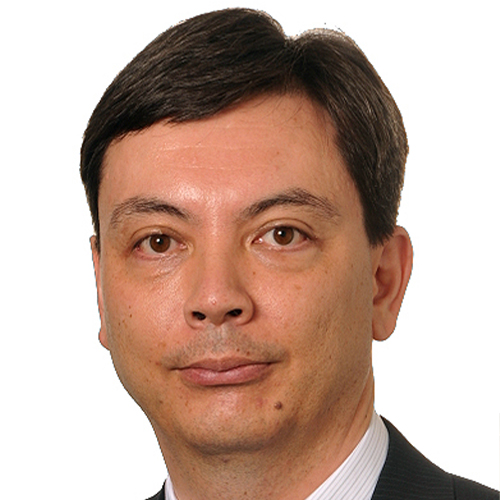
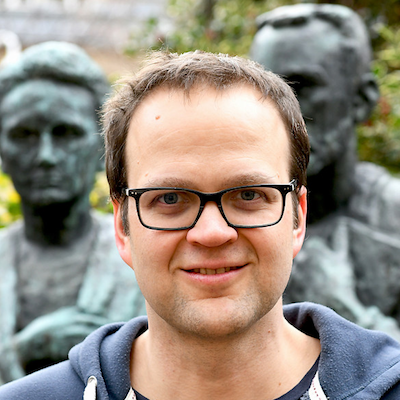
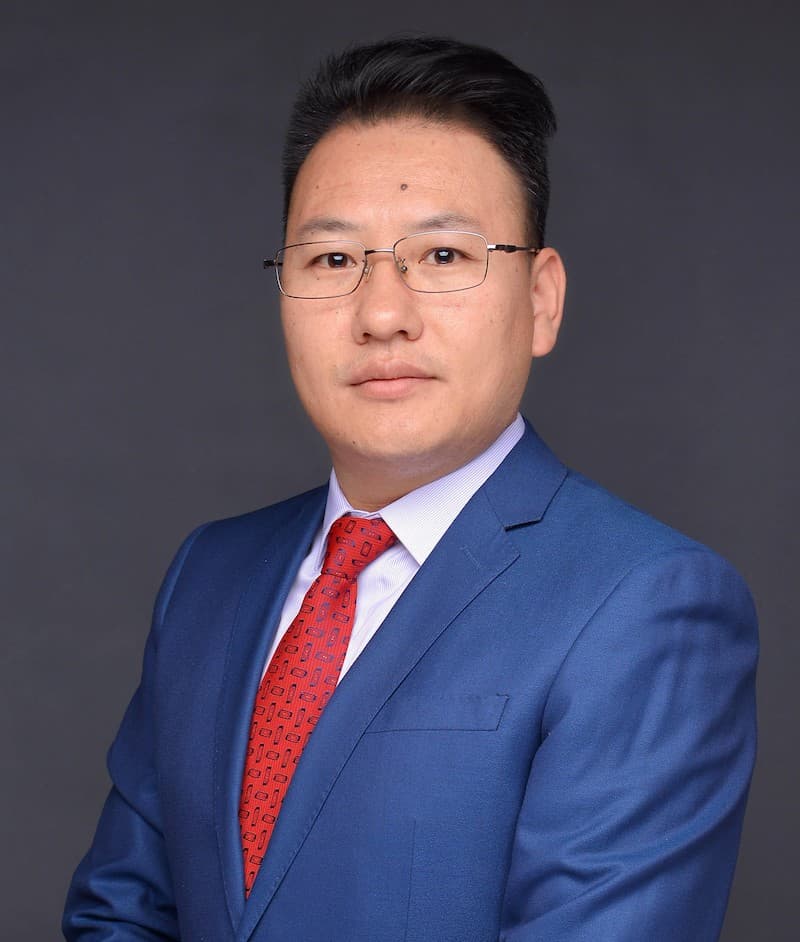
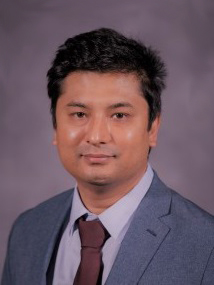
Anup Basu is a Professor in the Department of Computing Science at the University of Alberta. His research focuses on computer graphics, computer vision, and multimedia communications. He holds an B.S. in Math & Statistics from the Indian Statistical Institute (1980), an M.E. in Computer Science from the Indian Statistical Institute (1983), and a Ph.D. in Computing Science from the University of Maryland (1990). His work emphasizes Quality of Service (QoS) in multimedia delivery for e-commerce and telelearning, adaptive bandwidth monitoring, and 3D visualization tools. He pioneered foveated image compression and stereo visualization techniques, contributing to MPEG-4 coding standards. He leads major initiatives like the ASRA/TelePhotogenics/IBM 3D Medical Imaging project ($2M+ funding) and developed patented SHR Stereo/3D scanning technologies. Awards include the American Neurological Association Fellowship. He has held leadership roles as General Chair for IEEE International Conferences on SMC (2017), Multimedia & Expo (2013), and SMC (2014). His research integrates interdisciplinary collaborations across universities and industry partners, leveraging advanced equipment like the CAVE system for immersive visualization.
Ning Ai is an Associate Professor at the University of Illinois Chicago (UIC), holding a joint appointment in the Department of Urban Planning and Policy and the Institute for Environmental Science and Policy. Her expertise lies in urban sustainability, material/waste management, and urban metabolism. She joined UIC in 2011 with a Ph.D. from Georgia Tech, an MIT Master's, and dual bachelor's degrees from Tsinghua University and Renmin University of China. Her research integrates life cycle perspectives and data-driven approaches to environmental planning, emphasizing sustainable transportation and waste management. Notable projects include studies on food recovery programs, electric vehicle battery recycling, and neighborhood-level traffic impact analysis in Chicago. She has served on the ACSP Committee on Diversity and led the Air & Waste Management Association’s Sustainability Division (2020-2022). Teaching spans courses like Environmental Planning and Policy, Urban Economics, and System Methods for Environmental Policy. Her work bridges academia and practice, collaborating with entities like the World Bank and Georgia’s Department of Natural Resources. She leads a team advancing eco-friendly product adoption through projects like PFAS-free food service initiatives. Publications focus on sustainable urban systems, waste management frameworks, and policy design. Her research addresses both broad sustainability challenges and localized solutions, emphasizing interdisciplinary collaboration and community engagement.
Dan Edelstein is the William H. Bonsall Professor of French at Stanford University, with courtesy appointments in History and Political Science. He serves as Faculty Director of Stanford Introductory Studies and as a University Fellow in Undergraduate Education. Department of French and Italian Stanford Introductory Studies Humanities + Design Research Lab Center for Spatial and Textual Analysis (CESTA) His research spans eighteenth-century French literature, political thought, and digital humanities, focusing on natural rights, revolutions, and Enlightenment ideologies. He has led groundbreaking projects like Mapping the Republic of Letters and Writing Rights , leveraging tools like Palladio and Data Pen for network analysis. Scientific awards include the 2009 Oscar Kenshur Book Prize, the Walter J. Gores Award (2006), and the Dean's Distinguished Teaching Award (2011). He has directed the Stanford Summer Humanities Institute and co-directs the Humanities Core program.
Tina Eliassi-Rad is Professor and the Inaugural Joseph E. Aoun Chair at Khoury College of Computer Sciences, Northeastern University in Boston. She serves as Core Faculty at the Network Science Institute and holds External Faculty positions at both the Santa Fe Institute and Vermont Complex Systems Institute. Additionally, she maintains Affiliated Faculty status across six Northeastern University institutes including the NULab for Digital Humanities and Computational Social Science, Global Resilience Institute, Cybersecurity and Privacy Institute, Institute for Experiential AI, and Internet Democracy Initiative. Her research spans: Data Mining & Machine Learning Network Science & Complex Systems Artificial Intelligence & Society She leads two major research initiatives: Trustworthy Network Science , which addresses explainability, transparency, stability, and robustness in network science ML algorithms; and Just Machine Learning , which examines broader complex systems where ML operates to understand and mitigate risks. Her work bridges theoretical foundations with societal applications. Dr. Eliassi-Rad's publication record demonstrates consistent focus on applying network science to critical societal challenges. Her recent research examines pandemic mobility patterns and cybersecurity threats using network-based approaches that combine epidemiological modeling with network analysis techniques. She actively mentors doctoral students through her RADLAB research group, currently advising PhD candidates Wan He (Network Science) and David Liu (Computer Science), along with PhD students Zohair Shafi and Samantha Dies (Computer Science). Her research has secured funding from prestigious organizations including the National Science Foundation, Department of Defense, Defense Advanced Research Projects Agency, Army Research Lab, and others. As leader of RADLAB, she directs research at the intersection of data science, network analysis, and societal impact, with particular emphasis on ensuring that technical advances in AI and network science serve societal needs responsibly and equitably.
Dieu Tien Bui is a Full Professor in the Department of Business and IT at the University of South-Eastern Norway (USN) School of Business. His research focuses on Geospatial Artificial Intelligence Machine Learning GIS and Remote Sensing Natural Hazard Modeling Environmental Problems (landslides, floods, soil salinity, biomass) . He has contributed to over 15 recent publications in journals like Science of the Total Environment , Remote Sensing , and Geomorphology , emphasizing hybrid AI models for landslide and flood susceptibility. His work spans Vietnam, India, China, and Iran with applications in climate change adaptation and disaster management. Scientific Awards: Global Highly Cited Researcher PhD Supervision: He has supervised 8 PhD students at institutions including USN, NTNU, and Vietnamese universities.
Christopher G. Healey is the Goodnight Distinguished Professor of Analytics in the Institute for Advanced Analytics and a Professor in the Department of Computer Science at North Carolina State University. His research spans visualization, data analytics, text analytics, sentiment analysis, machine learning, cognitive psychology, computer graphics, and social media analytics. He has graduated 15 Ph.D. and 26 master's students and secured over $6 million in research funding from agencies including the National Science Foundation, Department of Defense, National Security Agency, Army Research Office, and various industry partners. He has published over 100 peer-reviewed articles and is a senior member of both IEEE and ACM, as well as a member of the NC State Academy of Outstanding Teachers. His research focuses on developing visualization techniques that leverage visual perception to support rapid, accurate, and effective analysis of large, complex datasets. More recently, he has been investigating machine learning for natural language processing and text analytics. His work includes projects on visualizing election results, sentiment estimation for social media, and wildfire narratives using large-scale social media data. His publications demonstrate a strong trend toward integrating machine learning with visualization, particularly for text analytics and social media analysis. He has made significant contributions to visualizing deep neural networks, cyber situation awareness, and pandemic response analytics, showing how visualization can enhance understanding of complex systems and large datasets across multiple domains. IBM Faculty Award (2007, 2008, 2010, 2011, 2012) Senior member, Association of Computing Machinery (ACM) (2007) Senior member, Institute of Electrical and Electronics Engineers (IEEE) (2007) NC State Academy of Outstanding Teachers inductee (2003) National Science Foundation Faculty Early CAREER Award (2001) He has successfully mentored numerous graduate students and secured significant research funding across multiple projects. His work with the Laboratory for Analytic Sciences, National Science Foundation, and Department of Defense demonstrates strong industry and government partnerships. His recent projects focus on visualizing social media narratives, deep neural networks for text understanding, and predictive analytics for large document collections. He leads research groups focused on visualization and analytics, working with teams to develop innovative approaches for data exploration and analysis. His current work continues to push the boundaries of how visualization can be used to enhance understanding of complex data across domains including public health, cybersecurity, and social media analysis.
Thomas Walter is a Professor at Mines ParisTech and Director of the Centre for Computational Biology (CBIO) , a research group affiliated with the Institut Curie and INSERM . His work focuses on applying Machine Learning and Computer Vision to biomedical image analysis, particularly in high-content screening and computational pathology . He also serves as Deputy Director of the Computational Oncology (U1331) unit and leads the Statistical Learning and Modeling of Biological Systems team. PhD in Medical Image Analysis (2003, Mines ParisTech) Postdoctoral work at EMBL (European Molecular Biology Laboratory) Director of CBIO since 2018 Holder of a PRAIRIE Chair (Paris Artificial Intelligence Research Institute) since 2019 Dr. Walter's research bridges biomedical imaging , machine learning , and cancer genomics . Key areas include: Statistical reconstruction of biological networks Prediction of tumor progression at genomic/transcriptomic levels Development of deep learning methods for cell cycle analysis Integration of multi-omics data for precision oncology Tools for spatial transcriptomics (e.g., autoFISH, RNA2seg) Recent publications highlight his work in spatial transcriptomics , immunotherapy outcome prediction , and deep learning for digital pathology . His team has developed open-source tools like FISH-quant and pyHiM for single-molecule RNA imaging analysis. Scientific Honors: PRAIRIE Chair (2019) for AI research in life sciences Dr. Walter actively contributes to teaching deep learning for image analysis in multiple graduate programs across France, including courses at Mines ParisTech , Université Paris-Saclay , and Institut Curie . His software tools (FISH-quant, pyHiM) and methodological frameworks (e.g., Cut-Detector, PointFISH) have become standard resources in bioimage informatics.
Sainyam Galhotra is an Assistant Professor in the Department of Computer Science at Cornell University. His research focuses on developing data science tools for effective and responsible analytics, leveraging techniques from causal inference, data management, theoretical computer science, machine learning, and human-computer interaction to address challenges in trustworthy system design including robustness, explainability, and fairness. Education: Postdoc: University of Chicago PhD: University of Massachusetts Amherst (supervised by Barna Saha) BTech: Indian Institute of Technology Delhi (IIT Delhi) (supervised by Prof. Amitabha Bagchi) Research Interests: Dr. Galhotra's research spans several interconnected areas in data science and artificial intelligence. His work primarily focuses on Responsible Data Science , where he develops methods to ensure that data-driven systems operate fairly and transparently. Within this broad area, his specific interests include: Causal Inference techniques for understanding cause-effect relationships in complex data Algorithmic Fairness approaches to mitigate bias in machine learning systems Explainable AI methods that make black-box models more interpretable Data Management systems for efficient and reliable data processing Entity Resolution techniques for integrating data from multiple sources Trustworthy System Design that addresses robustness, explainability, and fairness His recent publications demonstrate a clear trend toward developing frameworks that combine causal reasoning with practical data management systems, particularly focusing on how to make data-driven decisions more transparent and equitable. The intersection of database systems with fairness considerations appears to be a particularly active area of his research. Scientific Awards: Rising Star in Data Science at the Data Science Institute, UChicago (Oct 2021) Computing Innovation Fellowship Award Recipient (by CRA, CCC and NSF) (Apr 2021) DAAD AInet Fellow (Feb 2021) ACM SIGMOD Entity Resolution Programming Contest – Top 5 finalist (May 2020) Most reproducible paper award in SIGMOD 2018 and 2019 (Jun 2019) First recipient of Krithi Ramamritham Computer Science Scholarship (Jun 2019) Best paper award in SIGSOFT FSE 2017 (May 2017) Dr. Galhotra is actively seeking students to collaborate with on his research projects. His work has been supported by various fellowships and awards, including the prestigious Computing Innovation Fellowship. He has mentored several students through his research projects, with a focus on developing the next generation of data scientists who can build responsible and trustworthy systems. His research group appears to focus on the intersection of database systems and responsible AI, developing tools like HypeR for causal reasoning, Ver for view discovery, and Nexus for correlation discovery in spatio-temporal data. This work suggests a cohesive research agenda centered around making data systems more transparent, fair, and user-friendly.
Dr. Zhibao Mian is a Lecturer in the School of Computer Science at the University of Hull, UK, and previously held an Associate Professor position at Northwest Normal University. He specializes in trustworthy AI, machine learning, and intelligent maintenance systems. His research integrates AI with IoT, blockchain, and digital twins in Industry 4.0/5.0 contexts. He leads projects on predictive maintenance for offshore wind turbines and AI-driven sustainable energy solutions. Dr. Mian holds a PhD from the University of Hull and an MSc from the University of Nottingham. Research interests include AI ethics, model-based safety analysis, and RCM. He has secured grants such as the CPHC-funded study on AI in software education and oversees multiple PhD scholarships. Notable roles include Editorial Board member of the American Journal of Artificial Intelligence and Reviewer for high-impact journals/conferences like JSS and IEEE. He is a Senior Fellow of the Higher Education Academy and received the Royal Academy of Engineering's 2024 Exceptional Talent designation. Recent publications (2023-2025) focus on ordinal networks, outlier detection, Belt and Road trade analysis, and carbon emissions modeling. He actively advises PhD students on topics like UAV-based anomaly detection and predictive maintenance frameworks.
Dr. Arpan Man Sainju is an Assistant Professor and Internship Coordinator in the Department of Computer Science at Middle Tennessee State University (MTSU). He holds a PhD (2021) and MS (2020) from the University of Alabama, and a B.E. (2011) from Tribhuvan University. His research focuses on spatial big data analytics, spatiotemporal data mining, and GIS applications in environmental modeling, disaster management, and geospatial science. He develops innovative algorithms for Earth imagery segmentation, flood inundation mapping, and physics-aware machine learning models. Education: PhD in Computer Science, University of Alabama (2021) MS in Computer Science, University of Alabama (2020) B.E. in Computer Science, Tribhuvan University (2011) Key research interests include deep learning for geospatial tasks, semi-supervised learning with limited labels, and parallel computing for big spatial data. His work bridges computer science and environmental science, addressing challenges in hydrology, urban safety, and disaster response. He has published extensively in top journals like ACM TIST, IEEE TKDE, and Environmental Modelling & Software, focusing on applications like flood modeling, road safety analysis, and 3D shape analysis. Dr. Sainju collaborates on interdisciplinary projects involving physics-guided models, hidden Markov structures, and GPU-accelerated algorithms. His research has been applied to real-world scenarios such as hurricane flood analysis and malware detection through Windows log analysis.
Jianhua Zhang is a Professor of Computer Science and founding deputy head of the AI Lab at the Department of Computer Science, OsloMet - Oslo Metropolitan University, Norway. He holds affiliations with the Faculty of Technology, Art and Design. His career includes roles as Scientific Director at Vekia (France), Head of Machine Learning Lab, and Professorships at East China University of Science and Technology and Beijing University of Technology. He has held visiting positions at TU Berlin, TU Dresden, and the University of Catania. Educations: PhD in Electrical Engineering and Information Sciences (Ruhr University Bochum, 2005), Postdoctoral Research at the University of Sheffield (2005-2006). Research focuses on artificial intelligence, computational intelligence, cognitive human-machine systems, neuroergonomics, affective computing, and AI-driven neuroergonomics. Applications span engineering, biomedicine, finance, and business. He has led over 20 large-scale projects and published extensively (4 books, 13 chapters, ~200 papers). Leadership roles include Chair of IFAC Technical Committee on Human-Machine Systems (2017-2023), Vice Chair of IEEE Norway Section, and editorial roles at journals like Frontiers in Neuroscience and Cognitive Neurodynamics . He organized major conferences like IFAC HMS2025 (Beijing) and ICMLT 2024 (Oslo). Awards: Stanford/Elsevier Top 2% Scientists (2023/2024), Senior Research Fellowship (CSC, 2012), Max Planck Fellowship (2011), Shanghai Pujiang Talent (2007), DAAD Scholarship (2002-2004). Grants and advising: PI for 20+ projects, advising PhD students in AI, machine learning, and control systems. Teaching includes courses on computational intelligence, IoT, and fuzzy systems at both undergraduate and graduate levels. Labs/Teams: AI Lab at OsloMet, Machine Learning Lab (Vekia), and collaborations with institutions globally. Current work emphasizes AI ethics, neuroergonomics in smart cities, and adaptive human-machine systems.
Dr. Teresa Wang is a Senior Lecturer in Data Science at Monash University's Faculty of Information Technology, specializing in entity/user modeling, relational/structural machine learning, and graph/network analysis. She holds a Ph.D. from the University of Queensland and degrees from Nanjing University. Currently, she directs the Master of Data Science Program and teaches courses like FIT5201 Machine Learning. Her research focuses on social, e-commerce, and health data modeling, with notable projects including the Knowledge Enriched Approach for Effective Personalization (2025–2027) and collaborations on AI in Mental Health and Site Safety. Dr. Wang has co-authored over 59 publications, emphasizing areas like ontology matching and multimodal data analysis. She actively supervises PhD students and contributes to initiatives like the CSIRO Next Generation Graduates Program for clean energy and sustainability. Education: Ph.D. in Computer Science (2017), University of Queensland Master of Computer Science (2013), Nanjing University Bachelor of Software Engineering (2010), Nanjing University Research Interests: Entity modeling, spatio-temporal data analysis, graph mining, recommender systems, and health/medical records mining. She explores applications in social media, e-commerce, and healthcare sectors. Projects: "Knowledge Enriched Approach for Effective Personalization" (2025–2027) "AI for Clean Energy and Sustainability" (2023–2027) "CSIRO Next Generation Graduates Program: AI in Mental Health" (2023–2027) "Large-scale multimodal knowledge management" (2022–2025) Grants & Collaborations: Engaged with CSIRO, Crank Group, and Pola Practice Pty Ltd. Her work aligns with UN SDGs in education and sustainable energy systems. Labs/Teams: Part of the Monash Energy Institute and Monash Data Futures Institute, contributing to interdisciplinary AI and energy research.
Junier Oliva is an Assistant Professor in the Department of Computer Science at the University of North Carolina at Chapel Hill and Lead Faculty of the Master of Applied Data Science program. His research focuses on machine learning, artificial intelligence, and nonparametric statistics, particularly in high-dimensional density estimation, sequential modeling, and learning from complex/structured data. He holds a B.S., M.S., and Ph.D. in Computer Science from Carnegie Mellon University, with prior industry experience at Yahoo! and Uber ATG. Research Interests: Machine learning, artificial intelligence, nonparametric statistics, deep learning, statistical data mining, signal processing, kernel methods, and scalability. His work bridges machine and human learning via collective approaches, emphasizing simple yet flexible models for massive datasets. Awards/Grants: $592K AIM-AHEAD/NIH Grant for Human+AI Collaboration $594K NSF Grant for Scientific Discovery $500K NSF Grant for 'Machine Detectives' Project ACM BCB Best Paper Award (2022) for transparent single-cell classification work Labs/Teams: Director of the LUPA Lab, which develops machine learning techniques for holistic data understanding across domains like healthcare, earth science, and computer vision.
Goran Avlijaš is a researcher affiliated with Singidunum University in Belgrade, specializing in project management, operations research, and retail logistics. He holds a Doctorate in Engineering Management (2011–2016) from Singidunum University, a Master’s in Project Management (2008–2009) from the Faculty of Organizational Sciences, and a Bachelor’s in Management (2003–2007) from the same institution. His research focuses on optimizing project schedules through methods like Earned Value Management and Monte Carlo Simulation, analyzing supply chain efficiency, and exploring gig economy impacts on well-being in Balkan countries. Key research areas include: Project Management Innovation: Developing risk analysis tools (e.g., Event Chain Methodology) and applying earned value metrics to construction projects. Retail Operations: Investigating automated replenishment systems and inventory management challenges in retail environments. Social-Economic Dynamics: Studying gig economy effects on workforce well-being and regulatory impacts on entrepreneurship. His work spans 30+ peer-reviewed articles and conference papers, including contributions to Management , Sustainability , and Frontiers in Psychology . He co-authored textbooks like Project Management and Entrepreneurship for Singidunum University’s curriculum. Active in academic events such as Sinteza and FINIZ conferences, he bridges theoretical research with practical industry applications.
Emma Mercier is an Associate Professor and Associate Head & Director of Graduate Programs in the Department of Curriculum & Instruction at the University of Illinois, Urbana-Champaign's College of Education. She also holds a secondary appointment in the Department of Educational Psychology, demonstrating her interdisciplinary approach to educational research. Dr. Mercier's research focuses on the relationship between social interaction and learning, with particular emphasis on collaboration and computer-supported collaborative learning (CSCL) in classroom settings. Her work examines how technology influences group interactions and learning, especially through the use of multi-touch tables in classrooms. She investigates between-group and whole-class interactions, device ecologies, teacher tools, and classroom contexts that shape learning opportunities in technology-enhanced environments. Her research spans K-12 and higher education settings, with significant contributions to engineering education and the design of collaborative learning spaces. Analysis of Dr. Mercier's recent publications reveals a strong focus on orchestration tools that support instructors in facilitating collaborative learning, the role of technology (particularly augmented and virtual reality) in collaborative problem solving, and the design of effective collaborative tasks in engineering education. Her work bridges educational theory with practical classroom applications, often employing design-based implementation research methodologies. A notable trend is her increasing focus on machine learning applications to analyze and support collaborative interactions in real-time classroom settings. Dr. Mercier has been actively involved in mentoring graduate students and teaching courses related to educational research methods, child development and technology, and advanced study of education. Her work has involved significant collaboration with researchers across institutions and disciplines, particularly in the fields of educational technology, learning sciences, and engineering education. Her research has been supported through various projects, including the CSTEPS (Collaborative Support Tools for Engineering Problem Solving) initiative, which has developed and evaluated tools to support collaborative learning in engineering classrooms. This work has involved partnerships with teaching assistants, course assistants, and faculty to implement and refine collaborative learning approaches in undergraduate engineering courses.