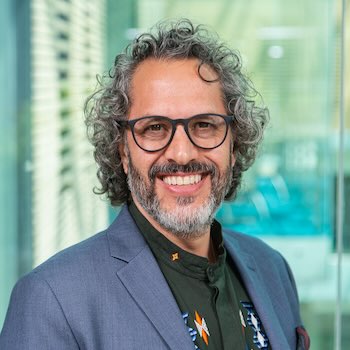
Prof. Wim Desmet is a full professor at the Faculty of Engineering Science and head of the Department of Mechanical Engineering at KU Leuven . His research focuses on advanced modeling techniques for mechanical systems, including: noise and vibration control in automotive and industrial systems computational acoustics and interval field uncertainty modeling metamaterials for broadband vibroacoustic performance AI-driven diagnostic systems in renewable energy and manufacturing Current research projects address challenges in electric vehicle drivetrains, wind turbine monitoring, and multi-physical digital twin development. He actively contributes to academic governance as: Managing Director of KU Leuven Head of Subdivision HIST Chair of multiple executive committees Member of 15+ academic and administrative councils
Stephen Waterman is a Clinical Professor at the Herbert Wertheim School of Public Health & Human Longevity Science at UC San Diego. His work focuses on vector-borne disease epidemiology, particularly dengue and Zika viruses, with a strong emphasis on public health preparedness and surveillance. He has conducted extensive research in Puerto Rico and other regions, investigating transmission dynamics, risk factors, and control strategies for mosquito-borne illnesses. Key research areas include: 1) Dengue vaccine efficacy and implementation, 2) Zoonotic disease surveillance, 3) Community-based interventions for vector control, and 4) Cross-border health issues. Over 150 peer-reviewed articles document his contributions to understanding disease epidemiology, clinical outcomes, and public health policy. Recent work addresses challenges in diagnosing dengue amidst the COVID-19 pandemic, optimizing Zika surveillance strategies, and evaluating vaccination cost-effectiveness. He collaborates with CDC, NIH, and global health agencies on outbreak investigations and policy development.
Toby Davies is an Associate Professor in Criminal Justice Data Analytics at the University of Leeds, School of Law. His work focuses on quantitative criminology, spatial analysis, and computational methods to inform crime prevention. He holds a Mathematics degree from the University of Oxford (2008) and a PhD from University College London (UCL), followed by postdoctoral research on the EPSRC-funded Crime, Policing and Citizenship project. Before joining Leeds in 2023, he was at UCL’s Department of Security & Crime Science. His research spans interdisciplinary topics including urban form and crime, crime modeling, social networks, and cybercrime. He has collaborated with police agencies (West Yorkshire, Thames Valley, West Midlands Police) and governmental bodies (UK Home Office, London Mayor’s Office). A strong advocate for Open Science, he co-founded JDI Open to promote open practices in crime science. His recent work emphasizes policy interventions like phasing out pointed kitchen knives to reduce knife crime, leveraging data-driven approaches. He publishes widely in criminology, physics, network science, and general science journals, and has guest-edited special issues. His applied research aims to bridge theory and practice, developing tools deployed operationally in policing. Current interests include financial crime dynamics, social contagion of crime, and street network configurations’ impact on crime patterns.
Kurt Waldman is an Assistant Professor in the Department of Global Development at Cornell University, part of the College of Agriculture and Life Sciences. His research focuses on environmental decision-making, particularly in climate adaptation, food security, and sustainable agricultural practices. He holds a Ph.D. in Sustainability from Michigan State University (2014), an M.S. in Applied Economics from Cornell University (2009), and a B.A. in History from Earlham College (2000). Waldman’s work integrates behavioral experiments, econometrics, and environmental data to study cognitive biases and heuristics in environmental decision-making. His geographic focus includes arid regions of Africa, the U.S., and globally. He leads a NSF-funded grant (BCS-2215426, $400,000, 2022–2026) investigating spatial and cognitive dimensions of farmer climate adaptation, collaborating with co-PI Meha Jain (University of Michigan). His research interests span social-environmental systems, judgment under uncertainty, and policy design for sustainable outcomes. He teaches Environmental Decisions and is affiliated with the Ostrom Workshop, Cognitive Science Program, and Sustainable Food System Science initiative. Waldman’s recent publications address food security measurement, smallholder adaptation strategies, and spatial data applications. His work emphasizes interdisciplinary approaches to address climate and food system challenges.
Ignacio Castillo is a Professor and Associate Dean of Business (Graduate Academic Programs) at the Lazaridis School of Business and Economics, Wilfrid Laurier University. His expertise spans facility location optimization, supply chain management, and sustainable operations. He holds a leadership role in graduate academic programming and teaches courses in operations and statistics. Research focuses on optimizing facility layouts, material handling systems, and closed-loop supply chains. He has developed frameworks for multi-objective facility design and advanced packing optimization algorithms. His work bridges theoretical models with real-world applications in manufacturing and retail sectors. Publications emphasize nonlinear optimization techniques, packing problems, and supply chain coordination strategies. Recent work explores irregular object configurations and retail category space optimization. His textbooks include Business Statistics for Contemporary Decision Making and Operations Management , emphasizing practical decision-making tools. Office: LH4001M | Languages: English, Spanish
Katherine Bowers is an Associate Professor and Canada Research Chair in the Department of Central, Eastern, and Northern European Studies at the University of British Columbia. She directs the Centre for European Studies and leads the Eurasia Research Cluster, specializing in Russian literature, digital humanities, and Gothic studies. Bowers holds a PhD from Northwestern University (2011) and completed postdoctoral research at the University of Cambridge. Her award-winning monograph 'Writing Fear' (2022) established Gothic fiction's influence on Russian realism. Current digital projects include 'Digital Dostoevsky' analyzing the writer's corpus through computational methods. As Acting Department Head (2024-25), Bowers promotes comparative studies of Central/Eastern European cultures. Her teaching spans Russian literature, European magic tales, and digital humanities methodologies. Honors include the International Dostoevsky Society Service Award (2023) and Killam Research Fellowship (2023). Bowers co-founded the feminist DH collective 'Data-Sitters Club,' developing accessible text analysis guides. Her forthcoming 'Oxford Handbook of Global Realisms' (2025) reexamines literary realism through transnational perspectives.
Dr. Lin Wei is a Professor and Graduate Coordinator in the Department of Agricultural and Biosystems Engineering at South Dakota State University (SDSU). He holds a B.S. in Agricultural Engineering from China Agricultural University, M.S. in Mechanical Engineering (Guangxi University), and M.S./Ph.D. in Biological Engineering (Mississippi State University). His research focuses on biomass conversion, bioenergy production, smart agriculture, and food safety. He leads projects on biochar-based fertilizers, cold plasma food safety technologies, and AI-driven precision farming. Dr. Wei has authored over 80 peer-reviewed papers and secured $7M+ in grants. He chairs multiple professional committees (ASABE Renewable Energy, USDA-S1075, ISO-WG6) and serves as editor for journals like Agricultural Engineering and Transactions of the ASABE. Recent grants include biochar soil health studies ($583K USDA) and nanobubble dairy waste management ($22K SD WRI). His team develops smart sensors for crop monitoring and biopolymer nanocomposites for food packaging. Notable awards include 2024 Outstanding Researcher (College of Agriculture) and 2022 Excellence in Editing (ASABE). Ongoing work integrates thermochemical processes with AI to enhance biofuel production efficiency and environmental sustainability.
Fatih Eren is an Associate Professor in the Department of Urban and Regional Planning at Istanbul Technical University's Faculty of Architecture. He holds a PhD from the University of Sheffield (2007-2013), focusing on Istanbul's real estate market internationalization. His career includes roles as Director of the Urban Studies Center at CESRAN (2010-2016) and Editor-in-Chief of the International Journal of Architecture and Planning (ICONARP). Expertise: Urban Planning, Real Estate, Digital Twin Cities, Platform Urbanism Leadership: Over 20 years in academia, managing projects on AR technology, psychometric tests, and urban acupuncture Research Interests : GIS-driven urban data management Property market dynamics Innovative urban redevelopment strategies Awards : Emerald Outstanding Reviewer (2023), Autodesk DesignNext Award (2014), and multiple teaching/research grants (EELISA, Erasmus+). Recent projects include strategic planning for Çayırova and digital platform analysis of Istanbul's urban morphology. Active in international conferences and serves on editorial boards for journals like ICONARP.
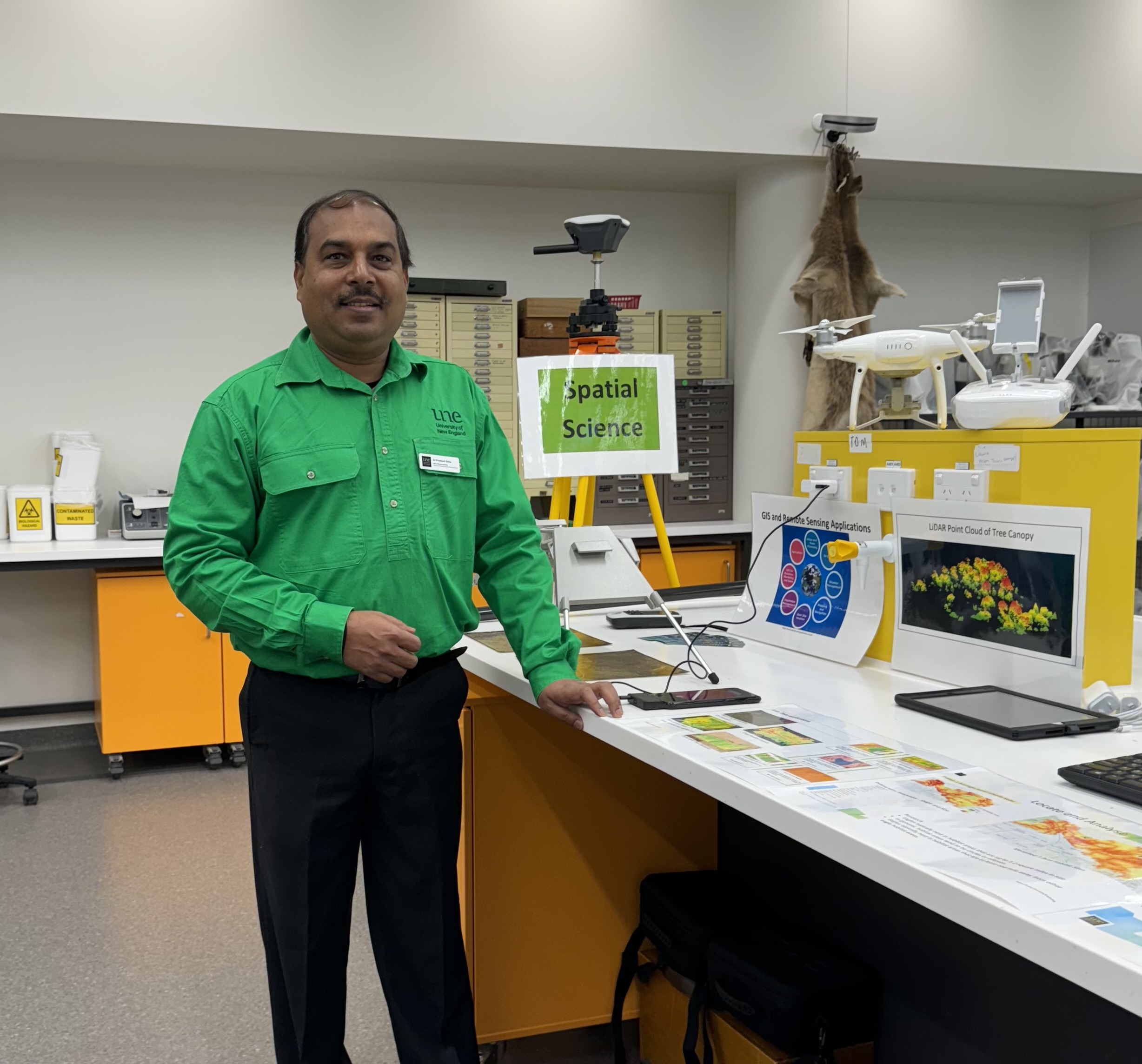
Dr. Priyakant Sinha is a Senior Lecturer in Spatial Science at the University of New England's School of Environmental and Rural Science, with over 20 years of research experience in remote sensing and geospatial science. He specializes in applying remote sensing technologies to agriculture, environmental monitoring, and natural resource management. His research focuses on: Advanced agricultural remote sensing and precision agriculture Time-series crop monitoring and yield prediction UAV/Drone-based 3D imaging for farm management Vegetation species mapping and change detection Hyperspectral and LiDAR data analysis Dr. Sinha teaches courses in GIS, spatial analysis, precision agriculture, and remote sensing applications. He has successfully supervised multiple PhD students in areas ranging from flood hazard mapping to drought monitoring using earth observation data. Technical expertise includes advanced digital image processing, GIS analysis and modeling, and specialized software including ENVI, ArcGIS, QGIS, and Pix4D. He develops innovative methods for temporal change analysis using machine learning and Google Earth Engine.
Joel Hartter is a Professor in the Department of Environmental Studies at the University of Colorado, where he also served as the founding director of the Masters of the Environment and Outdoor Recreation Economy programs. With dual BS degrees in Mechanical Engineering and German from the University of Michigan, an MS in Forest Engineering from Oregon State University, and a PhD in Geography from the University of Florida, his expertise bridges sustainability science, policy, and practice. His research focuses on private sector engagement in sustainability, ESG frameworks, climate action, and the Sustainable Development Goals (SDGs), with particular attention to net-zero strategies, bioeconomy implementation, and nature-based solutions. Dr. Hartter’s work emphasizes stakeholder engagement, inclusive decision-making, and bridging science with practical applications in conservation, climate resilience, and economic development. He has led projects globally in Africa, South America, and the US, addressing challenges such as wildlife conservation, sustainable supply chains, and community-based natural resource management. As a National Geographic Explorer and advisor to Fortune 500 companies, NGOs, and governments, he integrates sustainability into organizational strategies to drive innovation and competitive advantage. His teaching reaches over 20,000 students annually through courses on sustainability leadership and workforce development. Dr. Hartter’s interdisciplinary approach combines geospatial analysis, participatory methods, and behavioral science to address complex socio-ecological issues. His research spans topics like climate migration, household vulnerability, and the impact of conservation policies on communities. Notable projects include studying land-use changes in Uganda’s Albertine Rift and evaluating the effects of oil exploration on protected areas in Murchison Falls Conservation Area. Dr. Hartter collaborates closely with communities, governments, and international organizations to create equitable, actionable sustainability solutions.
Aaron Maxwell is an Associate Professor in the Department of Geology and Geography at West Virginia University (WVU). He serves as the principal investigator of West Virginia View, a member of AmericaView, and director of the WV GIS Technical Center. His research focuses on spatial predictive modeling, geohazard mapping, machine/deep learning applications in remote sensing, and thematic map accuracy assessment. He holds degrees from Alderson Broaddus University (B.S. in Biology, Chemistry, Environmental Science) and WVU (M.S. and Ph.D. in Geology), with a GIS Professional (GISP) certification. Education: Bachelor of Science in Biology, Chemistry, and Environmental Science – Alderson Broaddus University Master of Science in Geology – West Virginia University Doctor of Philosophy in Geology – West Virginia University Research Interests: Dr. Maxwell’s work emphasizes computational methods to extract insights from geospatial data. Key areas include: Deep learning for geomorphic feature extraction (e.g., LIDAR-based semantic segmentation) Machine learning applications in forest fuel load estimation and slope failure modeling Best practices for assessing deep learning outputs in remote sensing Synthetic data generation for predictive modeling Community flood resiliency and participatory GIS Publications: His recent work highlights advancements in geospatial deep learning (e.g., the geodl R package), accuracy assessment metrics for imbalanced datasets, and modeling post-mining landscape evolution. Articles often blend theoretical frameworks with applied case studies across environmental and geotechnical domains. Grants & Funding: Supported by NSF (CAREER Award) and AmericaView, his work trains students and develops open-source geospatial tools. Current projects include synthetic forest stand modeling and flood resiliency initiatives. Labs & Teams: Leads WV View, fostering remote sensing education and data sharing. Collaborates on geospatial workforce development and open-source software initiatives (e.g., GIScience courses, ArcGIS Pro labs).
Lenka Benova is a Researcher at the Institute of Tropical Medicine, Antwerp , where she serves as Unit Head in Reproductive and Maternal Health. She is a quantitative population health scientist with interdisciplinary training in management, economics, Middle East studies, demography, and epidemiology . Her career includes project coordination with Médecins Sans Frontières in Nigeria, West Bank, and South Sudan, as well as leading health pillar design in Egypt's conditional cash transfer program (2008-2010). Education: MA in Middle East studies (American University in Cairo) MSc in Demography and Health (London School of Hygiene & Tropical Medicine) PhD in Population Health (London School of Hygiene & Tropical Medicine) Her research focuses on health-seeking behavior in low- and middle-income countries, particularly reproductive/maternal health , with methodological interests in innovative data capture, self-reported indicator validity, and geospatial modeling . Her recent work examines maternal healthcare provision discontinuities in urban Sub-Saharan Africa through system dynamics and geospatial approaches. She teaches on Masters course modules and supervises PhD students , contributing to projects like: modeling maternal care accessibility in Guinea, analyzing fertility transitions in DR Congo, and evaluating hospital data utility for community epidemiology. Her research appears in journals such as Bioinformatics , BMC Pregnancy and Childbirth , and Scientific Reports , focusing on public health, maternal care, and health equity.
Jeremy Edwards serves as a Professor in the Department of Chemistry at the University of New Mexico, where he maintains an active research program at the intersection of pharmaceutical chemistry, genomics, and computational biology. His work spans multiple disciplines with a particular focus on developing innovative technologies for DNA sequencing and analysis. Professor Edwards' research interests center around Pharmaceutical Chemistry, Quantitative Biology, and Genomic Technologies. His work has significantly contributed to the fields of metabolic engineering, genome sequencing, and systems biology. He has pioneered approaches in nanopore sequencing technology and developed computational frameworks for analyzing complex biological systems. His research group has made notable contributions to understanding metabolic networks through flux balance analysis and in silico modeling, with applications ranging from bacterial metabolism to mammalian systems. Analysis of Professor Edwards' publication record reveals a strong trend toward developing cutting-edge genomic technologies and computational approaches for biological analysis. His recent work focuses on spatial transcriptomics, nanopore sequencing innovations, viral genome surveillance, and target illumination for drug discovery. The publications demonstrate a consistent trajectory from foundational metabolic modeling work toward increasingly sophisticated genomic technologies and applications in drug target identification and validation. Professor Edwards has established himself as a leader in computational genomics with an extensive publication record including highly cited papers such as "In silico predictions of Escherichia coli metabolic capabilities are consistent with experimental data" (1297 citations) and "The Escherichia coli MG1655 in silico metabolic genotype: Its definition, characteristics, and capabilities" (1295 citations). His work on metabolic modeling has been particularly influential in systems biology. As an active researcher, Professor Edwards has mentored numerous students and collaborators, though specific student names aren't documented in the available materials. His research has attracted significant funding supporting the development of genomic technologies and computational approaches. His laboratory appears to focus on the intersection of bioinformatics, molecular biology, and engineering, with particular emphasis on next-generation sequencing technologies and their applications. Professor Edwards leads a research group that integrates computational modeling with experimental approaches to tackle challenges in genomic analysis and metabolic engineering. His team has developed innovative tools like the Sentieon Genomics Tools, described as "a fast and accurate solution to variant calling from next-generation sequence data." The group's work spans from fundamental research on DNA sequencing technologies to applied projects in viral surveillance and drug target identification.
Dr. Oksana Buzhdygan is a Senior Researcher in Theoretical Ecology at the Department of Biology, Faculty of Biology, Chemistry, Pharmacy at Freie Universität Berlin. She holds a PhD in Ecology from Chernivtsi National University and has held postdoctoral positions at institutions including the University of Georgia (USA) and Freie Universität Berlin. Her research focuses on biodiversity-ecosystem functioning links, multitrophic interactions, and ecological network analysis. Education: BSc, MSc, and PhD in Ecology (2000–2008), Chernivtsi National University, Ukraine Postdoctoral Fellowships: University of Georgia (2010–2012), Freie Universität Berlin (2013–2021) Research Interests: Environmental change impacts on biodiversity and ecosystem functions Ecological network analysis of multitrophic systems Food web dynamics in grasslands and freshwater ecosystems Publications reflect her expertise in biodiversity effects on energy flow, human impact on ecosystems, and plant diversity drivers. Her work bridges theoretical ecology with applied conservation challenges, particularly in grasslands and agroecosystems. Labs/Teams: Member of the Tietjen Group (Theoretical Ecology at Freie Universität Berlin), collaborating widely in international projects on biodiversity and ecosystem services.
Eric Jessup is a Research Professor and Director of the Freight Policy Transportation Institute at Washington State University's School of Economic Sciences. He holds a Ph.D. in Agricultural Economics from WSU (1998), an M.S. and B.S. in Agricultural Economics from the University of Kentucky (1992, 1988). His career includes roles at Informa Economics, Albert-Ludwig-University (Germany), and American Express. His research focuses on transportation modeling, freight systems, applied econometrics, and geo-spatial analysis. Notable awards include the 2008 Transportation Research Forum Best Paper Award and recognition as an Eno Fellow (1994). Research interests emphasize optimizing freight logistics, transportation policy, and infrastructure investment. Recent work addresses pandemic impacts on global trade, truck parking safety, and rail rate dynamics. He has directed major freight policy initiatives, including the Freight Policy Transportation Institute and the PacTrans Workforce Development Institute. Over 80 publications span journals like Transportation Research Forum and Journal of the Transportation Research Forum , with a focus on GIS applications, supply chain resilience, and safety critical events. Education: Ph.D. Agricultural Economics, WSU, 1998 M.S. Agricultural Economics, University of Kentucky, 1992 B.S. Agricultural Economics, University of Kentucky, 1988 Awards: 2008 TRF Best Paper Award 2006 Best Paper Award (Italy) 1996 Northwest UTC Student of the Year 1994 Eno Transportation Fellowship Labs/Teams: Leads the Freight Policy Transportation Institute and collaborates with the Transportation Research Group at WSU. Engaged with national initiatives like PacTrans and the Idaho Statewide Freight Data Project. Grants and advising are central to his work, though specific student advisees are not listed. His research bridges academia and industry, addressing real-world challenges in freight logistics, environmental policy, and transportation safety.