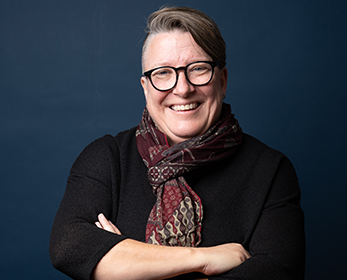
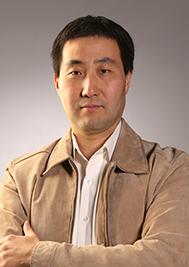
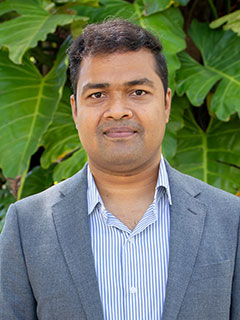
Angelo Corallo is an Associate Professor at the Department of Experimental Medicine, University of Salento, specializing in technologies and methodologies for collaborative processes in industrial systems. His research spans Digital Business Ecosystems , Cybersecurity , and Collaborative Product Design , focusing on the interplay between technology and organizational dynamics. He leads interdisciplinary research divisions in Open Networked Business Management , Learning and Innovation , and Collaborative Product Design . Research Interests : Corallo's work integrates Information and Communication Technologies (ICT) with Business Management, particularly in Digital Twins for healthcare and manufacturing Knowledge Modeling and Ontology Engineering Industry 4.0 and Smart Manufacturing Agri-Food Sustainability through digitalization Scientific Contributions : His recent articles explore trends in Cybersecurity for Industrial IoT Metaverse Applications in business models Traceability Systems in food supply chains Collagen-Based Biomaterials from aquaponics
Ajay Agarwal is an Associate Professor in the Department of Geography and Planning at Queen’s University, affiliated with the School of Urban and Regional Planning and the Faculty of Arts and Science. He specializes in urban spatial structure, generational mobility patterns, and sustainable urban development. Education: PhD in Planning, University of Southern California (2009) M.Pl., University of Southern California (2003) M.Tech. in Planning, CEPT University (1997) B.Arch., Lucknow University (1995) Research focuses on urban mobility trends, particularly Generation Y’s travel behavior, public transit use, and land-use policies. His work integrates spatial analysis and policy evaluation to address urban challenges. Recent articles emphasize sustainable transportation strategies and polycentric urban development. Prior to academia, he practiced architecture in India. Advising and grants: No specific student advisees or grants mentioned in the provided texts. However, his teaching includes Physical Planning, Healthy Communities, and Employment Analysis.
Enver Erdinç DİNÇSOY is an Associate Professor at Trakya University's Faculty of Applied Sciences. He holds a Doctoral Degree from Okayama University (2010) and a Master's Degree from the same institution (2004). His research focuses on regional development, spatial planning, and agricultural economics with specialization in Turkey and Japan. Education: PhD in Regional Development (Okayama University, 2010), MSc in Economics (Okayama University, 2004) Research interests include regional GDP disparities, sustainable development, agricultural land use, tourism inventory analysis, and econometric modeling of macroeconomic factors. He has published extensively on topics such as Japan-Turkey comparative studies, Thrace regional development, and agricultural production trends in Okayama Prefecture. His work analyzes spatial dimensions of economic growth, tourism impacts, and policy effectiveness in regional development projects. Recent publications (2018-2020) focus on inflation-economy relationships, Kosovo trade dynamics, and commercial banking strategies. Grants and advising details are not explicitly stated in provided texts. He has contributed to multiple international conferences and authored/co-authored books on regional development and banking sector analysis.
Professor Mary O'Mahony is a Professor of Applied Economics at King's Business School, King's College London, and serves as Research Director at the Productivity Institute. She previously held a professorship at the University of Birmingham. Her research focuses on productivity measurement, technology impacts, human capital formation, and public service performance analysis. She has led major EU-funded projects like SERVICEGAP and INDICSER, and coordinates the EU KLEMS initiative. Her work bridges economic theory with policy, emphasizing accurate data measurement for evidence-based decisions. Her research explores how intangible assets (e.g., R&D, organizational capital) drive productivity across sectors, particularly in Europe. Notable contributions include analyzing the digital economy's effects, labor market dynamics, and regional disparities in creative industries. She collaborates with institutions like NIESR and contributes to policy frameworks through projects addressing skill mismatches and regional inequality. Recent publications examine aircraft pollution's health benefits, IoT productivity impacts, and labor share declines due to capital heterogeneity. She has secured funding from the European Commission and ESRC, leading projects such as the Arkwright & Bright Institute for Productivity. Her work is cited in policy reports and contributes to UN Sustainable Development Goals related to economic growth and infrastructure. Professor O’Mahony’s advisory roles include visiting fellowships and collaborations with statistical agencies to improve economic data methodologies. Her research emphasizes the importance of accurate measurement in guiding investments and policies for productivity growth in the digital age.
Dr. Abdur Forkan is a Senior Research Fellow in AI and Machine Learning at Swinburne University of Technology's School of Science, Computing and Emerging Technologies. He also holds honorary research positions at Peter MacCallum Cancer Centre and Northern Health. His work focuses on applied AI and machine learning across digital health, Industry 4.0, FinTech, AgriTech, and supply chain optimization. He has led over a dozen industry projects, delivering impactful solutions such as AI-driven healthcare systems, manufacturing efficiency tools, and agricultural disease prevention models. Education: PhD in Computer Science, RMIT University (2016) B.Sc. in Computer Science and Engineering, Bangladesh University of Engineering and Technology (2007) Research Interests: Data Science and Health Informatics Pervasive Computing and IoT Applications AI in Healthcare and Industry Awards: 2023 iAwards National Winner (Government/Public Sector Solution) 2023 iAwards VIC Winner (Technology Platform Solution) RMIT CSIT Publication Award (2015) Grants & Collaborations: Lead on projects with industry partners like VidVersity, Sphere Holdings, and Northern Health Focus on digital twin technologies, AI in clinical decision support, and healthcare platform development Teaching & Supervision: Sessional academic at RMIT and Swinburne Supervising HDR students on topics like AI in healthcare, greenspace health impacts, and chronic disease management
Jan-Henrik Haunert is a Professor at the University of Bonn, affiliated with the Institute of Cartography and Geoinformatics within the Faculty of Civil Engineering and Geodetic Science. His research focuses on map generalization, geographic information systems (GIS), and optimization techniques in cartography. He has contributed to projects funded by the German Research Foundation (DFG), particularly in deriving scale-dependent representations of geographic data. His work emphasizes logical consistency, semantic accuracy, and quality assessment in geospatial data processing. Key research areas include land cover map generalization, spatial data integration (e.g., volunteered geographic information), and rule-based incremental generalization. He has developed methodologies leveraging mixed-integer programming and straight skeleton algorithms for cartographic automation. His publications span peer-reviewed journals like GeoInformatica and Photogrammetrie - Fernerkundung - Geoinformation , as well as conference proceedings such as AGILE and ACM-GIS. Haunert’s contributions address challenges in geospatial data quality, including polygon simplification and river dataset matching. He has also explored applications in vehicle localization and virtual reality systems like the GeoScope for urban planning. His work bridges theoretical GIScience with practical applications in cartography and geoinformatics.
Professor Marnie Campbell serves as the Executive Dean of the School of Science at Edith Cowan University (ECU), overseeing disciplines including Biology, Chemistry, Computing, Cyber Security, and Mathematics. She leads four research centers: the Centre for Artificial Intelligence and Machine Learning, the Centre for Marine Ecosystems Research, the Conservation and Biodiversity Research Centre, and the Centre for Securing Digital Futures. Her academic journey includes a BSc(Hons) and PhD from Murdoch University (2000). Marnie’s career spans 18 years in higher education, with 14 years in leadership roles, including Head of the School of Life and Environmental Sciences at Deakin University. She balances active research with policy translation, emphasizing stakeholder collaboration to address environmental challenges. With 12 years in non-academic roles (government, consultancy, CSIRO), she applies cross-sectoral insights to academic leadership. Her research focuses on marine biosecurity, invasive species management, and environmental policy. Notable contributions include frameworks integrating social, cultural, and ecological values in biosecurity and strategies to mitigate marine debris impacts. She has pioneered educational initiatives aligning academic programs with industry/community needs. Marnie’s honors include the 2007 Peter Morris Prize for maritime biosecurity contributions and a Queensland Smart Futures Fellowship (2012–2015). She advises international organizations like the UN and has led projects in the Galapagos Islands and Palau. Her work emphasizes bridging science and policy to address global challenges like biodiversity loss and climate change. Her leadership extends to strategic initiatives like ECU’s Centre for People, Place & Planet. She advocates for innovative education and adaptive governance models to prepare future environmental leaders. Current efforts focus on AI applications in ecological research and securing digital futures amid emerging threats.
Yoonjung Ahn is an Assistant Professor in the Department of Geography & Atmospheric Science at the University of Kansas. She specializes in health and medical geography, spatial analysis, and GIS, focusing on environmental hazards' disproportionate impacts. Her research integrates spatial modeling and big data to address health inequities, built environment dynamics, and climate change effects. She holds a PhD in Geography from Florida State University, an MS in Landscape Architecture from Seoul National University, and a BS from Sanmyung University. Research Focus: Dr. Ahn’s work explores intersections between social determinants of health, environmental justice, and extreme weather. Notable projects include the HISDAC-US dataset tracking 200 years of U.S. settlement evolution and studies on heat stress disparities and air conditioning ownership in Florida. Teaching: She teaches courses like GEOG 316 (Data Analysis), GEOG 358 (GIS Principles), and GEOG 571 (Health Geography). Her 2024 GEOG 316 course was enhanced through a Research-Intensive Course Mini-Grant. Grants & Projects: Awards include University of Kansas grants supporting research-intensive pedagogy. Ongoing work includes presentations at the American Association of Geographers (AAG) on urban heat and pollution analysis in Chicago. Labs & Teams: Collaborates on interdisciplinary teams for spatial data compilation (HISDAC-US) and heat action planning, emphasizing community engagement and evidence-based policy solutions.
Dr. Liang (Leon) Dong is an Associate Professor in the Department of Electrical and Computer Engineering at Baylor University, where he conducts research and teaches in the areas of signal processing, wireless communications, and artificial intelligence. He leads the Laboratory of Signal Processing, Communications, and Artificial Intelligence, fostering innovation in next-generation communication systems, IoT, and AI-driven applications. PhD, Electrical & Computer Engineering, The University of Texas at Austin (2002) MS, Electrical & Computer Engineering, The University of Texas at Austin (1998) BS, Applied Physics with Minor in Computer Engineering, Shanghai Jiao Tong University (1996) Dr. Dong's research focuses on advancing digital signal processing and wireless communications, with strong emphasis on artificial intelligence applications. His work spans NextG wireless systems , IoT and smart cities , cyber-physical system security , and AI in healthcare and industrial automation . He applies deep learning to domains such as autonomous driving and drug discovery, and investigates energy-efficient, secure, and reliable communication protocols. The recent publications highlight a strong trend toward integrating AI into traditional signal processing and communications. Topics include mRNA vaccine stability prediction , smart city infrastructures , secure cyber-physical systems , and deep learning for biomedical and industrial applications . His work bridges theoretical innovation with real-world impact in defense, transportation, and public health. Dr. Dong has earned recognition as a Senior Member of IEEE and a Member of the American Physical Society. He has also served as Faculty Advisor for Baylor University's InterVarsity chapter. Senior Member, Institute of Electrical and Electronics Engineers (IEEE) Member, American Physical Society (APS) He has successfully advised numerous graduate and undergraduate students, many of whom now hold academic and industry positions at institutions like Stanford, Intel, NASA, L3Harris, and Cummins. His research is generously supported by Baylor's VP for Research, the National Science Foundation, NASA, the Department of Defense (TARDEC), the Michigan Department of Transportation, and industry leaders including Intel, L3Harris, ExxonMobil, and Denso. He actively mentors students through research assistantships and senior design projects. Dr. Dong leads the Laboratory of Signal Processing, Communications, and Artificial Intelligence, which provides a collaborative environment for advancing research in signal processing, communications, and AI. The lab supports graduate and post-doctoral researchers and offers opportunities for undergraduate involvement in AI programming, circuit design, and embedded systems.
Carlos Smaniotto Costa (PhD) is a Professor at the Department of Architecture and Urban Planning, Universidade Lusófona, Lisbon. As an integrated member of CIAUD Research Centre, he coordinates national and international projects like the H2020 C3Places and COST Action TU1306 Cyberparks. His work bridges Urban Ecology , Landscape Design , and Digital Technologies for sustainable urban development, with a focus on participatory processes in Portugal, Africa, and Latin America. Education : PhD and Magister in Landscape Architecture and Environmental Planning, University of Hanover His research combines Urban Sociology , Public Space , and ICT integration , analyzing how digital tools transform spatial practices. Publications span books and articles on (re)naturalized rivers, underground heritage, and smart landscapes, with case studies in Angola, São Tomé, Brazil, and Europe. Recent articles (2025–2022) emphasize placemaking pedagogy , digital-physical hybrid spaces , and citizen science for territorial planning. He explores co-creation with teenagers, smart city governance, and heritage valorisation through digital storytelling and geomatics data.
Sarbeswar Praharaj is an Assistant Professor in the Department of Geography and Sustainable Development at the University of Miami's College of Arts and Sciences. He also serves as Director of the MPS in Urban Sustainability and Resilience Program, Associate Dean of Graduate Education at the School of Architecture, and Affiliate Faculty at the Climate Resilience Academy. His work focuses on urban sustainability, climate resilience, geospatial analysis, and smart cities. Praharaj has contributed to global projects including case studies in Morocco and India, emphasizing participatory design and policy integration. His research explores multidimensional poverty measurement, flood susceptibility modeling, pandemic response strategies, and the role of geospatial tools in disaster management. He has published extensively on India's Smart Cities Mission, urban regeneration frameworks, and the socio-spatial impacts of climate change. Notable contributions include developing digital twin platforms for urban projects, co-design toolkits for poverty visualization, and dashboards to combat pandemic-related socioeconomic challenges. Praharaj advocates for inclusive urban policies and community-driven solutions to environmental and health crises.
Xin Wang is a Professor at Fudan University's School of Computer Science, specifically within the Department of Communication Science and Engineering and affiliated with the State Key Laboratory of ASIC and System in Shanghai, China. With 185 publications spanning two decades (2003-2025), Wang maintains an exceptionally active research profile, particularly evident in recent high-output years including 22 publications in 2019, 19 in 2021, and 13 in 2024. The research portfolio demonstrates deep collaboration networks, most notably with Yang Chen (45 co-authored papers), Yangfan Zhou, and Qingyuan Gong. Wang's research spans multiple critical areas in computer science, with significant contributions to networking systems (particularly CDN optimization, HTTP/3 implementation, and IPv6 infrastructure), software engineering (focusing on work rhythms, testing methodologies, and GUI analysis), mobile applications (including healthcare implementations and accessibility features), and security (especially account security and fraud detection in e-commerce). The interdisciplinary nature of the work is evident through applications in healthcare, e-commerce, campus safety, and IoT systems. Analysis of recent publications (2023-2025) reveals a strong trend toward practical system implementations addressing real-world challenges. The research demonstrates a consistent pattern of moving from theoretical foundations to deployable solutions, with particular emphasis on optimizing performance in networking systems, enhancing security in digital platforms, and improving user experience across diverse application domains. The work frequently incorporates machine learning techniques to solve complex system problems while maintaining practical applicability. While specific grant information isn't detailed in the publication records, the extensive collaboration network spanning multiple institutions in China and internationally suggests substantial research funding support. The consistent publication output across top venues including IEEE/ACM Transactions, INFOCOM, SIGCOMM, and ICSE indicates sustained research productivity and impact.
Lorna Philip is a Professor in the Department of Geography and Environment within the School of Geosciences at the University of Aberdeen, where she holds a Personal Chair and continues to be an active academic leader. She has been a faculty member since 1998, progressing through academic ranks to her current position, and serves as a key supervisor for PhD students in human geography and rural studies. Education: MA (Social Science) with First Class Honours in Geography, University of Glasgow, 1993 PhD in Human Geography, University of Glasgow, 2000 Research Interests: Professor Philip's research focuses on rural socio-economic change, with particular emphasis on rural social exclusion, population ageing in rural communities, digital divides, and the long-term impacts of environmental events such as flooding. Her work often explores how policy can better address the unique challenges faced by rural and island populations. She is currently co-investigator on the BRUCES programme grant, a five-year interdisciplinary study on rural-urban healthcare equity in Scotland. Her research is funded by major bodies including the Chief Scientist Office, ESRC, and RCUK. Publication Trends: Her recent publications (2022–2025) demonstrate a strong focus on rural policy, islandness, civic participation among older adults, and the value of qualitative longitudinal methods. She frequently publishes in leading geographical journals such as Scottish Geographical Journal and The Geographical Journal , and produces policy-oriented reports for government and advisory bodies like SEFARI. Scientific Awards: Winner of the Royal Scottish Geographical Society Newbiggin Prize (2002) Advising and Grants: Professor Philip has supervised 11 PhD students to successful completion and currently supervises four doctoral candidates working on topics including Scotland’s National Islands Plan, community land ownership, and intergenerational communication. She has led and contributed to numerous funded research projects, including those funded by CREW, ESRC, and the RCUK dot.rural hub, focusing on rural digital economy, flooding impacts, and retirement migration. Labs and Research Groups: While not directly affiliated with a specific lab, Professor Philip is closely associated with interdisciplinary research initiatives such as the Just Transition Lab and contributes to the broader research culture of the School of Geosciences. Her work often involves collaboration with clinicians, policymakers, and community stakeholders, particularly in health and rural development contexts.
Nicole Kalms is a Professor in the Department of Design at Monash University’s Faculty of Art, Design and Architecture, where she also serves as Associate Dean of Research. She is the founding director of the XYX Lab, a pioneering research group focused on Gender and Place, leading national and international projects on gender equity in urban environments. PhD in Architecture, Monash University (2017) Masters in Landscape Architecture, RMIT University (2006) Bachelor of Architecture (Honours), RMIT University (1998) Nicole Kalms’ research lies at the intersection of urbanism, feminism, spatial practice, and media. Her work critically examines how gender, sexuality, and power shape urban spaces, advocating for design as a tool for social justice. She emphasizes interdisciplinary and co-design approaches to address systemic inequities in cities, particularly for women and marginalized communities. Her recent publications and projects reveal a strong thematic focus on gender-sensitive urban design, digital interventions for public engagement, and inclusive mobility. The 15 most recent works include books, chapters, and research outputs centered on feminist urbanism, crowd-sourced safety mapping, visual communication of gender inequality, and participatory design. These contributions reflect a consistent commitment to translating academic research into public discourse and policy impact. Dean's Award for Research Impact (2018) Premier's Design Awards Finalist – 'SHEcity' (2019) Good Design Award Gold Winner – 'Yours, Mine, Ours' (2020) AGDA Award Distinction – 'HyperSext City' (2021) Designers Australia Award Winner – 'HyperSext City' (2021) Nicole Kalms actively supervises research and leads externally funded projects such as the Safer Cities Crowd Mapping Project and PETAL: Pedalling Towards Active Living. She has secured grants from government bodies and international partners, and her work informs public policy on urban safety, transport, and inclusivity. She regularly serves on advisory boards and contributes to public discourse through media and lectures. She leads the XYX Lab, a dynamic research team dedicated to gender and place, which produces innovative design-led research, public exhibitions, and policy recommendations. The lab fosters collaboration across disciplines and with community stakeholders to co-create equitable urban futures.
Óscar Andrey Herrera Sancho is a Full Professor at the University of Costa Rica and a researcher at the Atomic, Nuclear and Molecular Sciences Research Center. He holds a PhD in Physics from Leibniz University Hannover and has held roles including Head of the Physical Metrology Department at the National Metrology Institute of Costa Rica. His research spans Quantum Optics, Quantum Biology, Surface Physics, and Educational Physics, with interdisciplinary work in art conservation, biophysics, and cultural heritage science. Education: Postdoc Fellowship, Institute for Quantum Optics and Quantum Information, University of Innsbruck (2016) PhD in Physics, Leibniz University Hannover (2012) M.Sc. in Physics, University of Costa Rica (2008) B.Sc. in Physics, University of Costa Rica (2003) Research Interests: His work bridges quantum physics with cultural heritage preservation, including material analysis of historical artifacts, fungal biodeterioration studies, and pedagogical innovations linking literature and science. He also investigates surface physics phenomena relevant to astrophysical ice transitions and quantum gas systems. Scientific Awards: Alexander von Humboldt Foundation Fellow Advising & Grants: While specific grants are not listed, his extensive co-authorship network and leadership roles indicate active collaboration in interdisciplinary research. His work on cultural heritage has involved student teams in material analysis and software development for artifact preservation. Labs & Teams: Leads the Spatially Resolved Ultracold Rydberg Physics group at the 5th Institute of Physics, focusing on quantum systems and their applications in precision measurement and cultural heritage science.