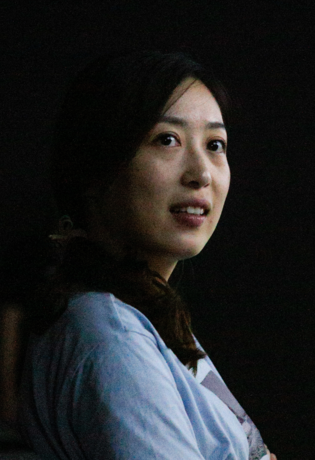
Sean Hanna is a Professor of Design Computing at The Bartlett School of Architecture , University College London , and a member of the UCL Space Syntax Laboratory . His interdisciplinary work bridges architecture, computational modeling, and machine learning.
Martha Tsigkari serves as an Associate Professor at The Bartlett School of Architecture, University College London (UCL), where she bridges architectural practice with cutting-edge computational research. Her position situates her at the forefront of digital transformation in the built environment, with institutional affiliations spanning UCL's Faculty of the Built Environment and direct contributions to UN Sustainable Development Goals 4 (Quality Education), 11 (Sustainable Cities), and 13 (Climate Action). Her research program critically examines the integration of artificial intelligence, machine learning, and cognitive psychology into architectural design processes. Key investigations include spatial and visual connectivity analysis, XR-enhanced collaborative design environments, and AI-driven optimization of building performance. She explores how digital tools reshape creativity, professional identity, and sustainability outcomes in architecture, with particular focus on data commoditization, skills evolution, and human-AI collaboration in design workflows. Her interdisciplinary approach connects architectural theory with computational neuroscience and industrial digitalization trends. Tsigkari's publication trajectory reveals a clear evolution from computational structural analysis (2012-2017) toward AI ethics and professional transformation (2022-2024). Early work established foundations in performance-driven facades and material systems, while recent output confronts existential questions about architectural practice in the AI era. Her scholarship consistently addresses the tension between technological capability and human-centered design values, with growing emphasis on sustainable development frameworks and educational implications. Scientific Awards: No major awards are documented in the available records. Advising and Grants: While specific supervisees and funding mechanisms aren't detailed in current sources, her extensive collaborative network across 30+ publications indicates active mentorship and research leadership. Co-authorship patterns suggest involvement in multi-institutional projects addressing AECO industry digitalization, with potential ties to UK research councils and industry partnerships like RIBA. Labs and Teams: Tsigkari operates within The Bartlett's digital research ecosystem through recurring collaborations with Kosicki, Tarabishy, and Psarras. Her work manifests in experimental toolsets including Glaucon (XR design environment), HYDRA (optimization framework), and SandBOX (conceptual design system), indicating leadership in UCL's computational design labs focused on human-AI interaction and sustainable building technologies.
Jorge Camba is an Associate Professor at the School of Engineering Technology and holds a courtesy appointment in the Department of Computer Graphics Technology at Purdue University . He also serves as a Senior Research Scientist (by courtesy) in the Department of Industrial Engineering at the University of Naples Federico II , Italy. PhD in Systems and Engineering Management (Universidad Politécnica de Valencia, Spain) MSc in Digital Media (East Tennessee State University) MSc in Computer Science (Universidad de Vigo, Spain) His research explores intelligent CAD systems , digital manufacturing , and mixed reality environments , focusing on model quality assurance , design intent communication , and collaborative design tools . Recent work investigates spatial cognition in CAD education , geometric variability analysis , and annotation-driven knowledge management . Key trends in his publications include parametric modeling strategies , 3D annotation systems , and XR applications in design evaluation. Awards include the Purdue Faculty Scholar (2021) and I3B Fellow (2021). He has presented at conferences on topics like Industry 4.0 , space habitat design , and digital product quality .
Ferit Öztürk is a Professor in the Mathematics Department at Bogazici University, specializing in singularity theory, contact topology, and symplectic topology. He leads the Geometry/Topology Seminar and supervises numerous graduate students in these fields. His research bridges topological methods with applications in robotics and dynamical systems. Recent work includes exotic manifold construction, real contact structures on 3-manifolds, and Morse-Bott theory on Lie groups. Dr. Öztürk holds a Ph.D. from Middle East Technical University (2001) and has developed course materials on Morse Theory and Projective Geometry. Student Supervision: 12+ M.S./Ph.D. students in topology and geometry Research Tools: Contact branched covers, real algebraic models, geometric surgery
Toke Haunstrup Bach Christensen is a Senior Researcher at the Department of the Built Environment within the Faculty of Engineering and Science at Aalborg University. He is affiliated with the Sustainable Cities and Everyday Practice Research Group and the Center for Design, Innovation and Sustainable Transitions. His research focuses on the interplay between everyday practices and sustainability, particularly in areas such as resource consumption, smart energy systems, and sustainable mobility. Key roles: Project PI in initiatives like DECODIT and RESPOND Expertise: Practice theory, energy transitions, urban planning Geographic focus: Denmark and Scandinavia Research Interests: Everyday practices and their environmental impacts Integration of technology in domestic and mobility systems Sufficiency strategies and institutional reprogramming Post-pandemic spatial configurations of home and work Articles Trends: Recent work emphasizes smart energy systems, rethinking urban mobility (e.g., MaaS and carsharing), and leveraging practice theory to address climate challenges. A recurring theme is exploring how institutional and material frameworks can be 'reprogrammed' to support sufficiency. Grants/Projects: DECODIT: Empowering citizens for twin transition (€5.2M, 2024–2027) RESPOND: Long-term pandemic impacts (€3.8M, 2022–2026) GECKO: AI co-creation for sustainable transitions (€4.1M, 2021–2024) Labs/Teams: Active in interdisciplinary research groups focusing on sustainable urban development and energy systems innovation.
Dr.-Ing. Nico Palleit is affiliated with the University of Rostock's Institute of Communications Engineering, part of the Faculty of Computer Science and Electrical Engineering. His research focuses on MIMO (Multiple-Input Multiple-Output) systems, channel estimation, and prediction techniques to enhance spectral efficiency. He holds a PhD titled Channel Prediction in Multi-Antenna Systems (2011) and has contributed to advancements in MIMO channel analysis, including frequency/time prediction and interference management. Research Interests: Nico's work addresses challenges in modern radio transmission systems, emphasizing the development of robust channel estimation strategies. Key areas include MIMO channel modeling, non-line-of-sight (NLOS) positioning, and optimizing transmitter-side channel state information. His research bridges theoretical frameworks with practical implementations in wireless communication systems. Publications Overview: His 15+ publications (2006–2012) span topics like MIMO channel prediction, antenna array design, and interference channel optimization. Recent work emphasizes frequency/time-domain channel prediction and power allocation strategies for maximizing system capacity. These contributions highlight interdisciplinary approaches combining signal processing with electrical engineering principles. Affiliations & Labs: As part of the Radio Communication Research Group, he collaborates on projects within the Institute's advanced wireless communication initiatives. His work supports next-generation radio systems through innovative solutions for MIMO-FDD and OFDM-based architectures.
Valeria Minucciani is an Associate Professor in the Department of Architecture and Design (DAD) at the Polytechnic University of Turin, where she has been a faculty member since 2001. She is a member of the Master's and Continuing Education School and serves as the Coordinator of the Level I Master's Program in Interior, Exhibit & Retail Design. Her academic and professional roles include leadership in research, teaching, and institutional governance, such as being an elected member of the Academic Senate and the Council of the Master's School. University: Polytechnic University of Turin School: School of Architecture Department: Department of Architecture and Design Position: Associate Professor Research Focus: Interior Architecture, Exhibition Design, Museography, Well-being in Interiors Her research interests revolve around the interplay between architecture and human experience, particularly in cultural and interior spaces. She investigates how museography can enhance cultural inclusion and how interior design impacts well-being. A significant focus is on the disciplinary contamination between architecture and neuroscience, especially in museum environments, examining emotional responses and spatial cognition. She also explores the musealization of religious and archaeological heritage and accessibility in cultural heritage. The recent publications reflect a strong trend toward integrating neuroscience and technology into architectural and museological practice. There is a clear emphasis on emotional engagement, inclusivity, and accessibility in museum and heritage settings, often using neuroaesthetic and human factors approaches. Her work increasingly employs digital tools like virtual reality and neuropsychological detection to study visitor behavior and design more inclusive spaces. Scientific Awards and Recognition: President of the Scientific Committee, APM National Association of Small Museums Scientific Director, APM (2022–present) European Commission Reviewer for Horizon 2020 and 7th Framework Program Member, Scientific Committee for the new Diocesan Museum of Fossano (2019) Coordinator, Master in Interior, Exhibit & Retail Design (2019–present) She actively mentors PhD students, including Daniel John Mangano and Gianluca D'Agostino, and leads major research projects such as META-MUSEUM and NEURO-MUSEUM, which are funded by competitive EU and national grants. Her collaborative work spans institutions and disciplines, reflecting a strong commitment to interdisciplinary research. She is involved in numerous research agreements with museums and municipalities, demonstrating applied impact. Her leadership in the Interuniversity Research Center on Heterotopia in Architecture (RHeA) underscores her role in fostering academic collaboration. Labs and Research Teams: Lead researcher in projects involving neuroaesthetics and spatial cognition Member of research groups focused on accessibility and inclusion in museums Scientific Director for collaborative agreements with the National Etruscan Museum of Villa Giulia and the Municipality of Chiomonte Coordinator of the RHeA - Centre of Research on Heterotopia and Architecture
Tania Al Saadi is an Associate Professor of Arabic at Stockholm University's Department of Asian and Middle Eastern Studies, where she has taught Arabic language and modern Arabic literature since 2007. She received her PhD in Arabic from Sorbonne-Nouvelle University (Paris III) in 2008. Her primary research focuses on narratology in modern Arabic literature, with particular attention to narrative techniques in Arabic novels. She has conducted extensive research on the beginnings of novels across various 20th century works, examining how narrative openings function within the broader structure. Her scholarly interests also include exile literature, representations of despotic figures, gender and feminism in literature, and contemporary representations of death and cemeteries in Iraqi novels. Dr. Al Saadi's recent publications demonstrate a growing interest in food representation in Arabic literature, culminating in her forthcoming edited volume 'Eating Words: Food in Modern Arabic literature' (2025). Her research shows a consistent pattern of examining how cultural and political realities are reflected through narrative structures and thematic concerns in Arabic fiction, with particular attention to Iraqi and Egyptian literary traditions. Current research project: 'Death in contemporary Iraqi novels' Active contributor to Encyclopaedia of Islam, THREE As an educator, she teaches Arabic language and modern Arabic literature at both undergraduate and advanced levels. Her supervision of student theses demonstrates her commitment to mentoring the next generation of scholars in Arabic studies, with students working on topics ranging from identity in Iraqi literature to food representation in Lebanese young adult fiction.
Dr. Aghdas Badiee serves as a Post-Doctoral Research Associate at Heriot-Watt University's Edinburgh Business School, affiliated with both the Centre for Logistics and Sustainability and the Centre of Sustainable Road Freight. Her academic foundation spans Industrial Engineering with specialized expertise in data-driven decision systems and logistics optimization. Educational Background: B.Sc. in Industrial Engineering - System Planning and Analysis (Grade: 18.07/20), Iran University of Science and Technology M.Sc. in Socio-economic System Engineering - Location-Allocation Optimization (Grade: 19.30/20), Iran University of Science and Technology Ph.D. in Socio-economic System Engineering - Supply Chain Modeling and Sustainable Logistics (Grade: 19.35/20), Iran University of Science and Technology Her research integrates Sustainable Supply Chain Management , Resilient Cold Chain Logistics , and Operations Research methodologies to address complex transportation challenges. Current projects include the Africa Centre of Excellence for Sustainable Cooling and Cold Chain Systems (ACES) and Zero-Emission Cold-Chain initiatives, focusing on food security through sustainable logistics solutions. Her methodological approach combines descriptive, predictive, and prescriptive analytics using simulation, optimization, and data science techniques. Publication trends reveal consistent contributions to high-impact journals like Annals of Operations Research and IEEE Transactions on Fuzzy Systems , with growing emphasis on sustainable cold chain systems (2023-2025). Her work bridges theoretical operations research with practical applications in agri-food distribution, humanitarian logistics, and transportation procurement. Scientific Recognition: Ranked 1st in all academic degrees (B.Sc. 2010, M.Sc. 2012, Ph.D. 2019) Global Talent designation by UKRI (2022) Distinguished PhD Dissertation Award (2019) Reviewer for Annals of Operations Research Journal (2021-present) Member of WORMS (Women in OR/MS) since 2022 Her professional trajectory demonstrates continuous engagement across academia and industry, having served as Lecturer at University of Tehran and Senior Business Analyst at National Iranian Oil Products Distribution Company. Current activities include developing the MILES simulation platform for cold chain optimization and contributing to UN Sustainable Development Goals through sustainable logistics research. She actively participates in professional networks including Production and Operations Management Society while mentoring students in operations research methodologies.
Shoji Makino is a Professor at Waseda University's Graduate School of Information, Production and Systems. He has held academic and research positions at institutions such as the University of Tsukuba and NTT Communication Science Laboratories. His work spans acoustic signal processing, blind source separation, and adaptive filtering. Education: Ph.D., Tohoku University (1993.03) Mechanical Engineering, Tohoku University Graduate School of Engineering (1979.04–1981.03) Engineering, Tohoku University Faculty of Engineering (1975.04–1979.03) Research Interests: His research focuses on acoustic signal processing for speech and audio, including blind source separation (BSS) , beamforming , and adaptive filtering . He pioneered methods for solving permutation alignment in frequency-domain BSS and developed geometrically constrained ICA techniques. Scientific Awards: Hoko Award (2018.10, Hattori Hokokai Foundation) Outstanding Contribution Award of the Institute of Electronics, Information, and Communication Engineers (2018.06) IEEE Signal Processing Society Best Paper Award (2014.01) IEEE Fellow (2004.01) IEICE Achievement Award (1997.05) Committee Memberships: He has served as Chair of the IEEE CAS Society's Blind Signal Processing TC, General Chair of IEEE WASPAA2007, and Associate Editor of IEEE Trans. SAP. He is actively involved in EURASIP, APSIPA, and the Acoustical Society of Japan.
Meta Berghauser Pont is a Professor of Urban Morphology and Urban Planning at Chalmers University of Technology. She leads the Spatial Morphology Group (SMoG), focusing on quantitative analysis of urban form, space syntax, and design theory. Key research themes: urban density, sustainable cities, social-ecological systems, pedestrian movement modeling Authored the 2023 book Spacematrix: Space, Density and Urban Form , redefining density metrics Her work bridges analytical urban morphology with practical urban planning applications, particularly in noise/air quality management, transport infrastructure, and digital twin city modeling. She manages pedagogical development for architecture programs at Chalmers. Active projects include: Digital Twin Cities Centre (EU/VINNOVA) Sustainable Urban Form (Formas) Green Infrastructure Integration (Mistra Urban Futures) Multi-scale Climate Proofing (VINNOVA) Urban Design Calculator (Naturvårdsverket) Her lab develops open-source tools like the Place Syntax Tool (PST) for morphological analysis of cities.
Dr. Can Liu is an Assistant Professor at the School of Creative Media, City University of Hong Kong, where she leads the ERFI Lab (Laboratory of Empirical Research for Future Interfaces). Her research focuses on designing future interfaces for ubiquitous technologies through empirical understanding of human cognition and behavior, with emphasis on multimodal interaction combining physical and digital elements. Education: PhD in Human-Computer Interaction, Université Paris-Sud (France), INRIA labs ex)situ and ILDA MSc in Media Informatics, RWTH Aachen University (Germany) Dr. Liu's research spans three primary domains: AI-assisted Input (using LLMs/NLP to enhance text manipulation and speech interfaces), Spatial Computing (multimodal interfaces for AR/VR and large displays), and Hybrid/Remote Collaboration (supporting intuitive remote interaction through understanding collocated collaboration). Her work integrates empirical user studies with real-world system deployments in public spaces. Recent publications demonstrate strong trends toward LLM-integrated interfaces, wearable computing applications, and novel interaction techniques for foldable devices. Her team consistently publishes at top venues including CHI, UIST, and CSCW, with increasing focus on practical AI integration for everyday tasks. Awards and Recognition: Best Paper Award at ACM CHI 2014 (top 1%) Honourable Mention at ACM CHI 2012 (top 5%) Dr. Liu actively mentors PhD students and researchers while securing substantial research funding including Google Faculty Research Awards, National Natural Science Foundation grants, and RGC Early Career Schemes. She serves on numerous program committees including ACM CHI (Associate Chair 2024, 2022, 2021, 2020, 2019, 2017) and co-organizes research initiatives like the HCIX Summer Research Program. Her laboratory ecosystem includes the ERFI Lab, affiliation with the Augmented Materiality Lab and Kowloon Interaction Center, and active participation in the Greater Bay HCI community, supporting both fundamental research and industry collaboration with partners including Google, Huawei, and Lenovo.
Elif Kısar Koramaz is an Associate Professor at Istanbul Technical University (ITU), Faculty of Architecture, Department of Landscape Architecture. She has been a faculty member at ITU since 2020, where she teaches first-year basic design studios, GIS courses, and graduate-level classes on public open spaces and housing design. Her career includes prior roles as Assistant Professor and Department Head at Istanbul Trade University (2015–2020) and Guest Lecturer at Okan University (2012–2013). PhD in Urban and Regional Planning, ITU (2010) MA in Landscape Planning, ITU (2003) BSc in Urban and Regional Planning, ITU (2000) Her research focuses on housing studies, urban renewal, public spaces, urban green spaces and quality of life, cultural infrastructure, and environmental psychology. Her work examines how spatial configurations in property-led regeneration impact urban environments and social integration, often employing space syntax methodologies. Recent projects include "Planning Strategies and Actions for the Effects of Plot-Level Housing Renewal on the Urban Environment and Quality of Life" (2024–2026, ITU BAP), analyzing housing interior transformations and user evaluations in Istanbul. Her publications highlight interdisciplinary trends in urban studies, including urban parks' contributions to quality of life, coworking spaces' influence on urban dynamics, and ecological planning strategies for districts like Beşiktaş. She is associated with ITU's TETA LAB, contributing to research on disaster-resilient open-green space planning and solar decathlon sustainable housing projects.
James Shackleford serves as Associate Professor and Interim Associate Dean for Enrollment Management and Graduate Education in the Department of Electrical and Computer Engineering at Drexel University. His research bridges medical image processing, high performance computing, and emerging neuromorphic architectures with significant contributions to radiation therapy applications. Education: PhD in Electrical Engineering, Drexel University, 2011 MS in Electrical Engineering, Drexel University BS in Electrical Engineering, Drexel University Research Focus: Professor Shackleford's work centers on GPU-accelerated medical image registration (forming the core of the open-source Plastimatch software), real-time tumor motion management for radiation therapy, and digital spiking neuromorphic systems . His research integrates computer vision, machine learning, and embedded systems to solve clinical imaging challenges. Publication Trends: Recent work (2020-2024) reveals dual research trajectories: (1) advancing deformable image registration through CycleGAN-based domain adaptation for CT auto-segmentation in radiation oncology, and (2) pioneering neuromorphic computing with configurable hardware architectures, dataflow-based compilers, and resource-aware neural network mapping. These streams converge on high-performance solutions for medical imaging and efficient neural processing.
Professor Mikhail Prokopenko is a leading academic in complex systems research at the University of Sydney's School of Computer Science. He holds a PhD in Computer Science (Macquarie University, 2002), MA in Economics (USA), and MSc in Applied Mathematics (USSR). As Director of the Centre for Complex Systems and Theme Co-Leader for Pathogen Emergence and Spread at the Institute for Infectious Diseases, his work focuses on modeling self-organizing systems, computational epidemiology, and AI applications in pandemic control. Roles: Director of Centre for Complex Systems, Theme Co-Leader (Pathogen Emergence), Theme Leader (Complex Systems) Education: PhD Computer Science (2002), MA Economics (USA), MSc Applied Mathematics (USSR) Affiliations: Fellow of Royal Society of NSW, Specialty Editor for Frontiers in Robotics and AI His research addresses challenges in complex systems like power grids, communication networks, and epidemiological models. Notable contributions include: RoboCup World Champion teams (2016, 2019) in Simulation League COVID-19 modeling featured in Nature's Top 50 SARS-CoV-2 articles (2020) Development of AMTraC-19 agent-based pandemic model Key research areas include: Guided self-organization principles Information dynamics in collective systems Thermodynamic efficiency of complex processes He has supervised over 200 publications and patents, with recent focus on pandemic response optimization and urban system resilience.