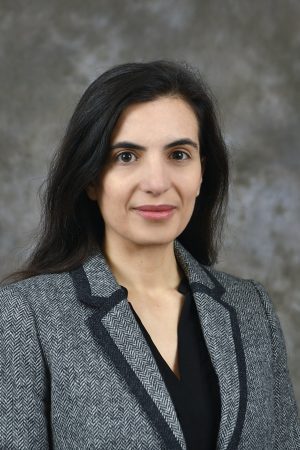
Kamni Gill is an Assistant Professor in the Department of Landscape Architecture at the University of Manitoba's Faculty of Architecture. She holds an undergraduate degree in English Literature, a Master's in urbanism and planning, and a professional degree in Landscape Architecture from the University of Pennsylvania. With over 11 years of global practice experience, her work spans ecological restoration, bioengineering, and urban design, notably at Hargreaves Associates and as principal of POD design in Switzerland. Her teaching philosophy emphasizes critical analysis of seminal projects and hands-on design practice, informed by a commitment to social justice and reconciliation. She was previously an assistant professor at the University of Sheffield (UK) and a Higher Education Academy Fellow. Her research focuses on visual methods in landscape, urban tree systems, and urban soil/infrastructure dynamics. She edits the Journal of Landscape Architecture 's 'Thinking Eye' section, exploring design methodologies. Education: English Literature (Undergraduate), Urbanism/Planning (Masters), Landscape Architecture (Professional Degree). Research Interests: Urban tree typologies, soil configurations, climate resilience, and interdisciplinary art-based methods. Recent Publications: Focus on art-influenced research, urban groves, and temporal/spatial analysis in landscapes. Her work bridges theory and practice, addressing contemporary challenges like climate change through innovative design strategies. Current courses include urban morphology, infrastructure networks, and landscape history.
Scott Mitchell is an Associate Professor in the Department of Geography and Environmental Studies at Carleton University and co-director of the Geomatics and Landscape Ecology Research Laboratory (GLEL). His research investigates spatial patterns in environmental processes, global change impacts on agriculture, biodiversity conservation, and ecosystem services. Mitchell specializes in spatial modeling, remote sensing applications, and uncertainty analysis in environmental monitoring. His work includes developing crop-specific extreme weather indices and spatial scenario modeling frameworks to assess climate change impacts on Ontario's agricultural sector. Recent publications focus on using synthetic aperture radar (SAR) and machine learning for crop classification, biomass estimation, and analyzing the relationship between farmland heterogeneity and biodiversity conservation. Mitchell teaches courses including GEOM 2008 (Pixels and Grids), GEOM 4008 (Advanced Geographic Information Systems), and GEOG 5803 (Seminar in Geomatics). His research group addresses spatial analysis challenges in environmental modeling through open-source GIS tools and multi-scale analysis techniques.
Associate Professor Markos Georganopoulos leads the Meyer/Georganopoulos Research Group at the University of Maryland, Baltimore County (UMBC). He holds a Ph.D. in Astronomy from Boston University (1999) and has expertise in relativistic jets from active galactic nuclei (AGN). His research focuses on understanding black hole accretion processes, particle acceleration in jets, and multiwavelength observations using facilities like Chandra, Hubble, and NuSTAR. Education: Ph.D. Astronomy, Boston University (1999); M.S. Astronomy, Boston University (1991); B.A. Physics, Aristotle University of Thessaloniki (1989). Prior to UMBC, he served as a National Research Council Fellow at NASA/Goddard (2002–2004) and a postdoc at the Max Planck Institute for Nuclear Physics (1999–2002). Research interests include the physics of kiloparsec-scale jets, X-ray emission mechanisms (e.g., IC/CMB scattering), and jet-driven feedback in galaxies. Recent work challenges traditional theories of jet emission variability and spatial distribution. His group has secured NASA and NSF grants to support studies of quasar jets and blazar phenomena. Advising: Supervised students like Agniva Roychowdhury (PhD) and Kaitlyn Szekerczes (Fulbright Fellow). Collaborates on projects like the AXIS Probe Mission, selected for Phase A study by NASA to advance X-ray imaging technology. Labs/Teams: Co-leads the Meyer/Georganopoulos Group, which integrates observational and theoretical approaches to jet physics. Active member of international collaborations analyzing data from Chandra, Hubble, and ground-based observatories.
Jacob Richard Whitehill is an Associate Professor in the Department of Computer Science at Worcester Polytechnic Institute (WPI), with a research focus at the intersection of artificial intelligence and education. He leads a research group dedicated to applying machine learning, computer vision, and affective computing to educational contexts, with particular emphasis on classroom observation, student engagement, and intelligent tutoring systems. His work bridges multiple disciplines including cognitive science, psychology, and learning technologies. Dr. Whitehill earned his BS in Computer Science from Stanford University (2001, Departmental Honors), MS in Computer Science from the University of the Western Cape (2007, Cum Laude), and PhD in Computer Science from the University of California, San Diego (2012). Prior to joining WPI, he served as a research scientist at Harvard University's Office of the Vice Provost for Advances in Learning and co-founded Emotient, a San Diego-based startup specializing in automatic emotion and facial expression recognition. His research program centers on developing AI technologies that enhance educational experiences through automated classroom observation, student engagement analysis, and intelligent tutoring systems. Whitehill's work applies computer vision to track classroom dynamics, speech recognition to analyze student participation, and affective computing to understand emotional states during learning. His approach is highly interdisciplinary, integrating insights from educational psychology, cognitive science, and human-computer interaction to create practical educational technologies. Whitehill's publication portfolio demonstrates a consistent trajectory toward increasingly sophisticated multimodal analysis of classroom environments. His recent work has shifted toward integrating multiple data streams (video, audio, text) to create comprehensive classroom analytics, with particular focus on equitable student participation, teacher-student interactions, and the development of AI systems that support rather than replace human educators. The research increasingly incorporates large language models while maintaining a strong foundation in traditional computer vision and machine learning techniques. NSF Grant: Developing New Scientific Instruments for Classroom Observation (AWD_ID=2046505) NSF AI Institute for Student-AI Teaming (iSAT) Schmidt Futures Grant: Hybrid Human-Agent Tutoring for Middle School Math $299,991 grant with Shichao Liu studying optimal indoor conditions for learning As an advisor, Whitehill mentors several PhD students working on various aspects of AI in education, including classroom observation systems, speech processing for educational contexts, and multimodal learning analytics. His research is supported by significant external funding from NSF and other organizations, enabling his team to develop cutting-edge technologies that detect and boost student engagement. The lab collaborates extensively with institutions including the University of Colorado Boulder on AI education initiatives. Whitehill leads a vibrant research group focused on applying machine learning to educational challenges, with ongoing projects spanning classroom observation technologies, AI teaching agents, and multimodal learning analytics. The group maintains strong connections with educational researchers and practitioners to ensure their technological innovations address real classroom needs.
Seyed Ghorashi is Reader (equivalent to Associate Professor) at the University of East London's Research Institute for Architecture, Computing & Engineering. His research specializes in wireless sensor networks, human activity recognition using Wi-Fi signals, indoor localization, and radar signal processing. Major contributions include CSI-based activity recognition systems, fingerprint localization algorithms, and MIMO radar designs. Recent publications focus on enhancing activity recognition accuracy through edge detection and autoencoders, developing efficient indoor positioning systems using deep learning, and optimizing MIMO radar configurations. Research demonstrates consistent innovation in signal processing and machine learning applications for sensing technologies. Professional service includes editorial roles and conference committees. Teaching and supervision activities center on computer networks, machine learning applications, and wireless communication systems at postgraduate levels, though specific course details are unavailable.
Michele Torregrossa is a Full Professor at the University of Palermo's Department of Hydraulic Engineering and Environmental Applications. He holds a Ph.D. in Sanitary Engineering from Politecnico di Milano and specializes in wastewater treatment technologies. His research focuses on Membrane Bioreactors (MBR), Moving Bed Biofilm Reactors (MBBR), sludge minimization, and sustainable water reuse. Torregrossa's work explores advanced treatment processes like granular bioreactors, foaming control in activated sludge, and organic waste degradation. His recent publications emphasize operational efficiency, risk assessment, and resource recovery in water infrastructure. Key research trends include robustness optimization under challenging conditions, multi-hazard vulnerability mapping, and integrated biopolymer/water recovery systems. He contributes to environmental engineering through international collaborations and experimental validations at pilot scales. Though no awards are documented, his leadership in developing novel treatment methodologies demonstrates significant scientific impact.
Terry Koziniec is a Lecturer in the School of Information Technology within the College of Science, Technology, Engineering and Mathematics at Murdoch University. His research focuses on computer networking, particularly wireless sensor networks, network protocols, and high-speed network interface design. Research Areas: Includes performance analysis of LoRaWAN and HF wireless networks; reliability measurement of enterprise WiFi; design of scalable network interfaces for 100Gbps networking; and traffic characterization in modern enterprise environments. His work bridges theoretical networking concepts with practical implementation challenges. Educational Research: Investigates student perceptions of flipped learning models, contributing to pedagogical innovation in IT education. His extensive publication record demonstrates expertise across networking hardware, wireless technologies, and performance optimization. Publications: Cover a wide spectrum from fundamental network protocols (TCP/UDP at 100Gbps) to specialized applications (ionospheric propagation for HF sensors) and educational methods, reflecting a versatile research profile focused on advancing network reliability, speed, and efficiency.
Herminia Machry is an Assistant Professor in the Department of Interior Architecture at the University of Kansas. She holds a Master’s in Architecture from USP (Brazil) and a PhD in Planning, Design, and the Built Environment from Clemson University. Her expertise lies in evidence-based healthcare design, with a focus on improving safety, engagement, and cognitive outcomes in healthcare environments. Key research areas include ICU design, operating room layouts, and pandemic-preparedness infrastructure. Recent work includes studies on neonatal ICU family engagement and design of PPE doffing spaces during the COVID-19 pandemic. Her educational background includes a Master’s degree from the University of São Paulo (USP) in Brazil and a PhD from Clemson University’s School of Architecture. Prior to joining KU, she worked as an adjunct professor at three universities and contributed to healthcare facility design projects in architectural firms. Her professional experience bridges academic research, clinical practice, and design innovation. Machry’s research emphasizes human-centered design principles, particularly in high-stakes healthcare settings. Her recent articles explore pandemic preparedness strategies, co-design methodologies for assistive technologies, and spatial configurations that optimize clinical workflows. These studies often employ simulation-based modeling and post-occupancy evaluation techniques to assess design efficacy. While no formal scientific awards are listed, her contributions to evidence-based design frameworks for NICUs, operating rooms, and aging-in-place environments reflect significant scholarly impact. Her work bridges architectural practice with clinical outcomes, aiming to create safer and more supportive healthcare spaces. Her teaching and research activities at KU focus on integrating health priorities into design education, emphasizing interdisciplinary collaboration between architects, clinicians, and patients. Current projects include developing decision-support tools for operating room design and evaluating spatial layouts in ambulatory surgical environments.
David Sain is a Lecturer in the Department of Architecture at the University of Kansas' School of Architecture & Design. His professional affiliation is based at Marvin Hall, 1465 Jayhawk Blvd., Lawrence, KS 66045. Research interests could be inferred from his academic role in architecture, potentially focusing on topics like sustainable design methodologies, urban spatial configurations, and contemporary architectural pedagogy. Specific research areas are not explicitly detailed in the provided information. No publications, awards, or grants are listed in the current text. Advising records and lab/teambased activities are also not mentioned.
Gennaro Pescitelli is a Full Professor in Organic Chemistry at the University of Pisa's Department of Chemistry and Industrial Chemistry. His research focuses on molecular recognition processes, structural studies of organic molecules and biomimetic systems, and the development of spectroscopic techniques (e.g., NMR, ECD, VCD, CPL). He collaborates internationally on projects involving chiral functional polymers, natural product configuration assignment, and rhodopsin chiroptical properties. His work integrates experimental and computational methods, including TDDFT simulations and synchrotron-based CD imaging. Notable projects include the study of conjugated polymers' aggregation modes, solid-state CD/TDDFT methods for natural products, and non-reciprocal chiroptical materials. Education: Not explicitly stated in provided texts. Key Research Areas: Chiroptical spectroscopy, conjugated polymers, exciton coupling, and computational stereochemistry. His research emphasizes chiral functional polymers , such as PPV and PPE systems, exploring their supramolecular organization and electronic properties. He also investigates chiral organogelators and their helical structures using microscopy and CD spectroscopy. Collaborations include studies on rhodopsin's CD spectrum with Columbia University and Colorado State University. His team developed CD imaging (CDi) techniques using synchrotron light to map polymer film properties at sub-mm resolution. Scientific contributions span over 150 articles, focusing on chiroptical materials, exciton-coupled systems, and absolute configuration assignments. His lab explores applications in photovoltaics, sensors, and biomedicine. Grants include PRIN projects (2007–2012) and international collaborations with institutions in Germany, the US, and China. Labs/Teams: Active in the Chirality research group at the University of Pisa, collaborating with CNR-ICCOM and global partners in materials science and spectroscopy.
Prof. Miles Turner is a Full Professor at the School of Physical Sciences, Dublin City University (DCU). He holds roles such as Director of the National Centre for Plasma Science and Technology (2004–2020) and Head of the EURATOM-DCU Research Unit. His academic journey includes degrees from Imperial College London (B.Sc., 1986) and St Andrews University (Ph.D., 1990). His research focuses on plasma physics, with expertise in excimer lasers, plasma processing, and fusion energy. Notable contributions include modeling capacitive discharges, multi-frequency excitation effects, and plasma-wall interactions in fusion reactors like JET. He is a Royal Irish Academy member and a Fellow of the Institute of Physics. Education: B.Sc. Physics (First Class Honours), Imperial College London (1986) Ph.D., St Andrews University (1990), thesis on excimer laser kinetics Research Interests: Plasma kinetics and modeling in low-pressure environments Applications of plasma discharges in fusion energy and material processing Multi-frequency excitation effects in capacitive discharges Control algorithms for plasma systems Awards and Roles: Member of the Royal Irish Academy Fellow of the Institute of Physics Chartered Scientist Visiting Professorships at UC Berkeley, Flinders University, and others Labs & Collaborations: Director, National Centre for Plasma Science and Technology Lead at EURATOM-DCU Fusion Research Unit
Dr. Juyeong Choi is an Associate Professor in the Department of Civil and Environmental Engineering at the Florida A&M University-Florida State University College of Engineering. Her research focuses on sustainable infrastructure management, disaster resilience, and systems engineering. She holds a Ph.D. from Purdue University (2018), an M.S. from Purdue (2015), and a B.S. from the University of Seoul (2013). Education: Ph.D., Civil Engineering, Purdue University, 2018 M.S., Civil Engineering, Purdue University, 2015 B.S., Architectural Engineering, University of Seoul, 2013 Her research group, the Sustainable Infrastructure Management (SIM) Laboratory, addresses infrastructure challenges through interdisciplinary approaches, including system dynamics modeling, optimization techniques, and data analytics. Key research areas include: Infrastructure system-of-systems for disaster resilience Construction project management and analytics Sustainable demolition and debris management Transportation system performance for vulnerable populations Dr. Choi advises five graduate students and collaborates on projects funded by NSF and industry partners. She leads the RAPID project studying pandemic impacts on municipal waste systems and serves as a judge for Swift Creek Science Fair. The SIM Lab is located in Tallahassee, Florida, with members affiliated with both FAMU and FSU.
Zygmunt J. Haas is a Professor and Distinguished Chair in the Computer Science Department at the University of Texas at Dallas (UTD), part of the Erik Jonsson School of Engineering and Computer Science. He previously held a Professorship in the School of Electrical and Computer Engineering at Cornell University from 1995 to 2013. Haas earned his B.Sc. (1979), M.Sc. (1985), and Ph.D. (1988) in Electrical Engineering from Stanford University. Before academia, he worked at AT&T Bell Laboratories and AT&T Wireless Center of Excellence, focusing on wireless and optical networking research. His research interests span wireless communications, mobile systems, biologically-inspired networks, and complex systems modeling. Notable projects include the Passive Network of Tags for Smart Spaces (NSF-funded) and contributions to protocols for ad hoc, sensor, and 5G networks. He has authored over 300 papers, holds 21 patents, and served as editor for journals like IEEE Transactions on Wireless Communications and IEEE Communications Magazine. Haas is an IEEE Fellow, IET Fellow, and EAI Fellow. His work emphasizes secure and energy-efficient networking, with applications in smart grids, IoT, and mobile big data systems. He leads the Wireless Networks Laboratory at UTD, advancing innovations in network protocols, security, and resource optimization.
Eric Owen Moss is a Distinguished Professor at SCI-Arc, teaching design studio and history/theory courses. As founder of Eric Owen Moss Architects (1973), he has completed global projects documented in 22 monographs. Recognized with over 150 design awards including the AIA|LA Gold Medal and Jencks Award, his work has been featured in Time Magazine's World's Greatest Places (Vespertine, 2018) and received the AIA Twenty-five Year Award (2020). His academic appointments include positions at Harvard, Yale, Columbia, and Tsinghua University, with a directorship at SCI-Arc from 2002-2015. Research explores experimental spatial configurations and urban interventions.
Dr. Alexia Galati is an Associate Professor in the Department of Psychological Science at the University of North Carolina at Charlotte, leading the Cognition in Interaction Lab. Her research focuses on situated cognition, particularly how perspective-taking unfolds in social and environmental contexts. Key areas include language use, multimodal communication, spatial cognition, and health psychology applications. Education: B.A. Honors in Psychology, Stanford University M.A. in Social Sciences, University of Chicago Ph.D. in Experimental Psychology, Stony Brook University Postdoctoral Researcher at University of Cyprus’s Experimental Psychology Lab Marie Skłodowska-Curie Fellow at UC Merced (2016-2018) Research interests emphasize how individuals adapt linguistic/non-linguistic behavior to coordinate with conversational partners, leveraging grants like NSF’s Perception, Action, and Cognition program. Current work explores interpersonal coordination in collaborative tasks and health-related perspective-taking. Teaching includes courses on cognitive processes, language psychology, and research methods. Grants supported by NSF and EU’s Marie Curie program highlight interdisciplinary focus. No listed formal awards, though her Marie Curie fellowship and NSF grant indicate recognition. Labs/Teams: Directs Cognition in Interaction Lab, collaborates with UCLA’s Co-Mind Lab and University of Cyprus teams on spatial cognition projects.