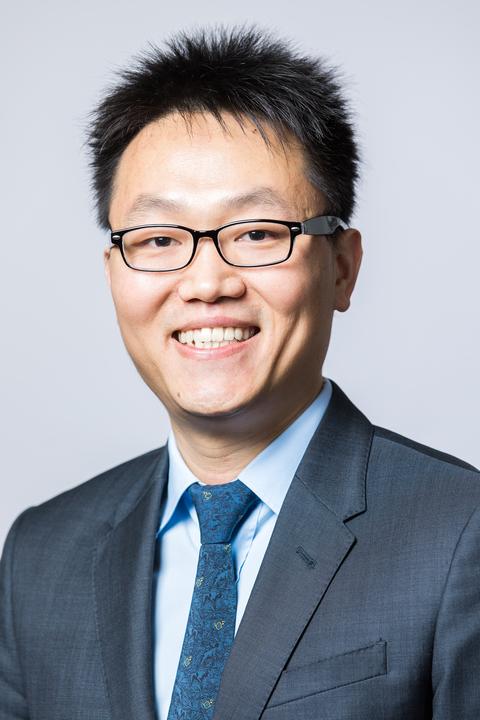
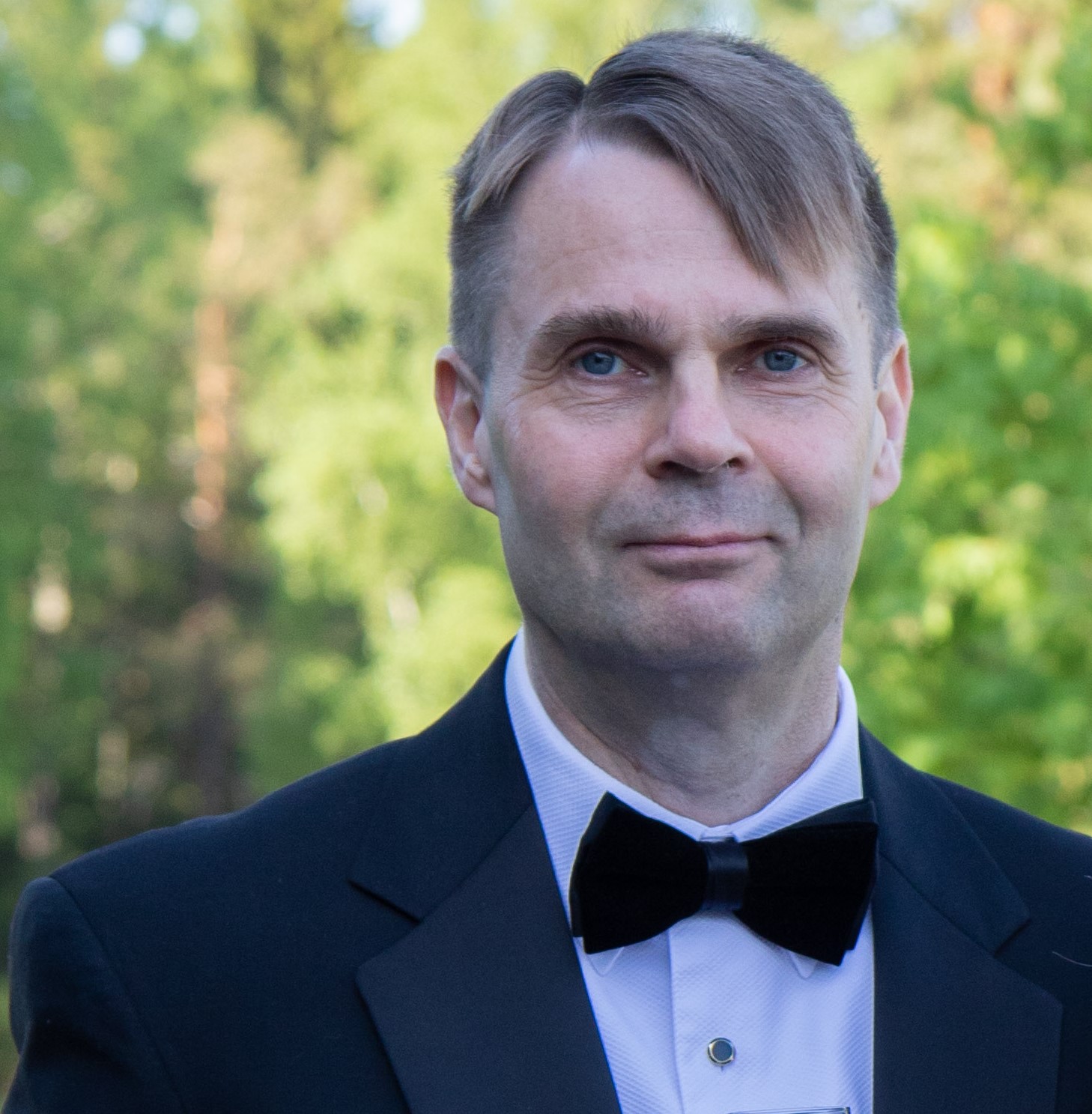
Meta Berghauser Pont is a Professor of Urban Morphology and Urban Planning at Chalmers University of Technology. She leads the Spatial Morphology Group (SMoG), focusing on quantitative analysis of urban form, space syntax, and design theory. Key research themes: urban density, sustainable cities, social-ecological systems, pedestrian movement modeling Authored the 2023 book Spacematrix: Space, Density and Urban Form , redefining density metrics Her work bridges analytical urban morphology with practical urban planning applications, particularly in noise/air quality management, transport infrastructure, and digital twin city modeling. She manages pedagogical development for architecture programs at Chalmers. Active projects include: Digital Twin Cities Centre (EU/VINNOVA) Sustainable Urban Form (Formas) Green Infrastructure Integration (Mistra Urban Futures) Multi-scale Climate Proofing (VINNOVA) Urban Design Calculator (Naturvårdsverket) Her lab develops open-source tools like the Place Syntax Tool (PST) for morphological analysis of cities.
Dr. Elham Delzendeh is an Associate Professor and College Academic Lead for Employability at the College of Built Environment, Birmingham City University. She specializes in Digital Built Environment and Technological Design, with research emphasizing cutting-edge digital technology, building energy performance, occupant behavior, and Building Information Modelling (BIM). Her academic background includes a PhD in Architecture and Built Environment, an MSc and BSc in Architectural Engineering. PhD in Architecture and Built Environment MSc in Architectural Engineering BSc in Architectural Engineering Her research bridges practical and academic expertise in design and construction, focusing on occupant behavior analysis, energy-efficient building simulation, and Industry 4.0 technologies like digital twins. She has contributed extensively to energy performance modeling, occupant-driven systems, and sustainable urban interventions. Selected scientific awards include Fellow of the Higher Education Academy (FHEA) . She has supervised postgraduate research in digital built environments and occupant behavior, integrating real-world industry insights into her pedagogy.
Dr. Nicola Cortinovis is an Assistant Professor in the Department of Economic Geography at Utrecht University's Faculty of Geosciences. His research focuses on regional economic performance, industrial dynamics, and the role of knowledge spillovers in shaping regional development. He explores topics such as smart specialization, green innovation, and the impact of multinational enterprises on local economies. Education: PhD in Economic Geography (2016, Utrecht University) Teaching: Courses include Geographies of Multinationals, Location in a Globalized World, and Methods for Economic Geography. Research interests span institutional drivers of regional diversification, the relationship between spatial structure and productivity, and the application of AI in research data processing. He contributes to initiatives like the LSE GILD Blog and collaborates on projects such as PILLARS (Pathways to Inclusive Labour Markets). Recent work examines green innovation in EU regions, export dynamics in China, and wage inequality in the Netherlands. He is affiliated with the Foundations of Complex Systems and Institutions for Open Societies (IOS) research groups.
Prof. dr. J.H. (Harry) Garretsen is a Professor of International Economics & Business and Director of the 'In the LEAD' center at the University of Groningen's Faculty of Economics and Business. His academic roles include leadership in research and education, with expertise spanning international economics, spatial economics, and leadership studies. He has held prior positions such as Dean of the Faculty of Economics and Business (2011–2016) and Professorships at Utrecht University and Radboud University Nijmegen. Education: BA, MSc, and PhD in Economics from the University of Groningen (1984–1991). His PhD thesis explored Keynesian coordination problems. Research: Focuses on geographical economics, leadership in turbulent contexts, and international business. Key areas include spatial economics, Brexit impacts, and pandemic leadership behavior. He has authored/co-authored textbooks like International Economics and Business and edited journals such as the Journal of Economic Geography . Affiliations: Member of the Bank Council of De Nederlandsche Bank, Domain Board of NWO, and Senior Visiting Fellow at the University of Cambridge. He advises on policy matters including the Dutch Social Economic Council. Teaching: Offers courses in international economics, macroeconomics, and leadership across undergraduate, graduate, and PhD levels. His pedagogical reach extends to interdisciplinary audiences in political science, geography, and law. Grants & Contracts: Involved in projects for the World Bank, Centraal Planbureau, and EU DG-Regio. His work bridges academic research with policy applications in regional development and trade. Labs/Teams: Leads the In the LEAD center focusing on leadership and economic dynamics. Active in international collaborations like the CESifo Research Network and the Cambridge Land Economy Department.
Terry van Dijk serves as a faculty member at the University of Groningen's Faculty of Spatial Sciences within the Urban and Regional Studies Institute. His academic profile demonstrates active engagement in spatial planning research with significant scholarly output including 96 publications and ongoing supervision of PhD candidates like Nika Lindhout. Recent activities include invited presentations at international forums such as the 39e Rencontre d'agences d'urbanisme (2018) and guest lectures on water governance and intercultural perspectives (2015-2016). Dr. van Dijk's research interests span multiple dimensions of spatial planning with particular emphasis on boundary-spanning design approaches, land use challenges, and climate adaptation strategies. His fingerprint analysis reveals dominant expertise in Land Use (100%), Dutch Studies (95%), Spatial Planning (77%), Planning Process (76%), Planning Practice (53%), and Central/Eastern Europe contexts (45%). This multidisciplinary focus connects theoretical frameworks with practical applications in urban development. His recent publications demonstrate evolving research trajectories from traditional spatial planning toward innovative design-led approaches for complex challenges like climate adaptation and child-friendly urbanism. The 2025 publications particularly highlight boundary-spanning competencies in urban climate adaptation and process architecture for consensus-building in land consolidation projects, showing a consistent thread of integrating stakeholder perspectives through spatial design solutions. As a PhD supervisor and academic presenter, Dr. van Dijk maintains active engagement with both scholarly communities and practical planning contexts. His media contributions, including expert commentary on projects like the Lelylijn (2021), demonstrate applied relevance of his research to contemporary spatial challenges in the Netherlands.
Dr. James N. Gilmore is an Associate Professor of Media and Technology Studies and Graduate Coordinator in the Department of Communication at Clemson University's College of Behavioral, Social and Health Sciences. He joined Clemson in 2018 after completing his PhD at Indiana University and has established himself as a leading scholar in media technology studies, with expertise in wearable technologies, datafication, and media infrastructure. Dr. Gilmore's educational background includes: Ph.D. in Communication and Culture from Indiana University (2018) M.A. in Film and Television from University of California, Los Angeles (2013) B.A. in Film and Media Studies from University of South Carolina (2011) His research focuses on the cultural politics of media and communication technologies, particularly how computational technologies convert human behavior to data (datafication). Dr. Gilmore examines how everyday devices like smartwatches, fitness trackers, and body cameras reinforce systems of normalcy, surveillance, and solutionism across health, labor, accessibility, law enforcement, and other domains. His work bridges theoretical frameworks from media studies, cultural studies, and science and technology studies to analyze the social implications of emerging technologies. Dr. Gilmore's publications demonstrate consistent engagement with emerging technologies across multiple domains. His recent work spans wearable technologies, virtual reality, AI platforms like ChatGPT, streaming services, and smart home devices, revealing patterns in how technologies mediate everyday life while raising critical questions about privacy, surveillance, accessibility, and corporate power. His scholarship consistently connects technological developments to broader social, political, and cultural contexts. Dr. Gilmore has received numerous honors and awards for his research and teaching: Top Paper Award, Popular Communication Division, Southern States Communication Association (2024) Outstanding Teaching of the Year (Junior Tenure-Track), College of Behavioral, Social, and Health Sciences (2022-2023) Outstanding research publication award for 'Securing the kids' (2022) Research Faculty Spotlight (Spring 2021) Ray Camp Award for Most Outstanding Research Paper (2018) As Graduate Coordinator, Dr. Gilmore actively mentors students, with numerous co-authored publications featuring graduate and undergraduate researchers. His students have contributed to research on AI adoption, virtual reality, wearable technologies, and platform politics. Dr. Gilmore has secured internal research funding at Clemson University, including recognition through the university's research reporting system. His book projects, including the forthcoming DeGruyter Handbook of Wearable Technologies and Society, represent significant scholarly contributions that bring together international researchers. Dr. Gilmore leads research initiatives focused on wearable technologies and media infrastructure, with his recent book 'Bringers of Order' establishing him as a leading voice in wearable technology studies. He is currently editing a comprehensive handbook that will expand this research area significantly.
Francesca Froy is a Departmental Lecturer for the Master's in Sustainable Urban Development at the University of Oxford's Department for Continuing Education and a Fellow of Kellogg College. She holds honorary positions as Lecturer at the Bartlett School of Planning and Senior Research Fellow at the Bartlett School of Architecture, University College London. Previously, she spent over twenty years in policy analysis, including as a senior policy analyst at the OECD where she led international reviews on local policy implementation, employment strategies, and local governance for the Centre for Entrepreneurship, SMEs, Regions and Cities. Her research focuses on three interconnected strands: Urban morphology and spatial organization of cities Evolutionary economic geography and economic diversification Local governance of economic and spatial complexity She applies these through practical work as an Associate at Space Syntax, a planning and architecture consultancy. Her publications predominantly explore urban complexity through spatial and economic configurations, with recent works examining green industrial transitions (2023), knowledge networks in regional development (2023), and theoretical frameworks for urban systems (2023). Her forthcoming book (2025) synthesizes these themes through a configurational analysis of postindustrial cities. She welcomes doctoral students interested in urban complexity, evolutionary economic geography, nature-based infrastructures, and governance systems. She has extensive international research experience through OECD and European Commission projects.
Dr. Juan Carlos De Luna Ducoing is a Research Fellow at the University of Surrey, specializing in advanced wireless communication systems with a focus on MIMO (Multiple-Input Multiple-Output) technologies. His work integrates neuromorphic computing, quantum annealing, and non-linear processing to enhance the efficiency and scalability of next-generation wireless networks. Research Interests: MU-MIMO detection and precoding Neuromorphic computing applications Quantum computing in wireless systems 6G network architectures Non-linear signal processing Hardware-software co-design (e.g., SWORD platform) Key Publications: His recent work includes NeuroMIMO (2024), which explores neuromorphic principles for power-efficient MU-MIMO detection, and Scalable MU-MIMO User Scheduling (2023), addressing resource allocation in dense networks. He also contributed to quantum annealing-based detection (2022) and Gyre Precoding (2021), achieving significant SNR gains. Collaborations: Works closely with Konstantinos Nikitopoulos and the SWORD research team to develop open-source platforms for rapid prototyping of advanced communication systems.
Dr. Wei Sun is a Chancellor's Fellow (equivalent to Assistant Professor) in Energy Systems Integration at the University of Edinburgh's School of Engineering. His research specializes in low-carbon energy systems with high renewable penetration, utilizing data science and optimization techniques. He contributes to major initiatives like the National Centre for Energy Systems Integration (CESI) and Hydrogen’s Value in Energy Systems (HYVE). Research encompasses network integration of distributed energy resources, climate impacts on renewables, and multi-vector energy systems. Recent publications focus on hybrid energy storage, hydrogen integration, and machine learning applications for system optimization. He holds professional credentials as a Chartered Engineer (CEng) with memberships in IET and IEEE. Teaching includes Hydropower Design Projects and Renewable Energy Fundamentals. Visiting research affiliations include University College London, enhancing collaborative networks in energy systems research.
Robert Fickler is an Associate Professor at Tampere University's Faculty of Engineering and Natural Sciences , leading the Experimental Quantum Optics Group in the Photonics department. His work focuses on quantum photonics, high-dimensional quantum information, and structured light interactions with matter. He holds a PhD from the University of Vienna (2014) and has held postdoctoral positions at institutions like the University of Ottawa and IQOQI Vienna. Fickler is an ERC Starting Grant recipient (2021) and leads the BIQOS project on integrated operations for structured photons. Education: PhD in Physics, University of Vienna (2014) Master’s in Physics, Ulm University (2009) Bachelor’s in Philosophy, Ulm University (2008) Research interests include quantum plasmonics , nonlinear optics , and atom physics . His lab explores structured photons for quantum communication and high-dimensional systems, with breakthroughs like the quantum Gouy phase observation and twisted photon entanglement. Over 55 publications appear in top journals like Science , Nature Photonics , and Physical Review Letters . Awards include the Young Scientist Award from IUPAP (2015) and Springer Thesis Award (2015). His grants include the Academy Research Fellowship (2019) and Banting Postdoctoral Fellowship (2016). Advising focuses on experimental quantum optics, with a lab emphasizing spatiospectral vector beams and multi-plane light conversion . Collaborations span international teams in quantum communication and nonlinear optics.
Sophie Kratschmer is a researcher at the Institute of Zoology of the University of Natural Resources and Life Sciences Vienna (BOKU). Her work focuses on wild bee biodiversity, agroecology, landscape ecology, and pollination dynamics in both urban and agricultural contexts. Research Interests : Kratschmer investigates anthropogenic impacts on wild bee communities, including management intensities in agroecosystems, habitat quality, and nesting resource availability. Her studies integrate spatial ecology, telemetry for tracking bee behavior, and biodiversity monitoring of meadow orchards. She explores interactions between honeybees and wild bees, emphasizing sustainable urban and agricultural planning. Scientific Awards : BOKU Teaching Award 2023 BOKU Talent Awards 2021 BOKU Best Paper Awards 2018 Prize of the Austrian Entomological Society (ÖEG) 2018 Best Poster Award at the 12th Hymenoptera Conference 2016 MA22 Scientific Support Award 2015 Advising : She has supervised master theses on topics such as wild bee-hotspot identification, telemetry studies on rare bee species, soil parameters for bee nesting, and analysis of plant-pollinator interactions.
David Jordhus-Lier is Professor of Human Geography at the University of Oslo's Department of Sociology and Human Geography, specializing in labor geography and social movements. He coordinates bachelor/master programs in Human Geography (2024-2027) and directs UiO's Pedagogical Academy. Previously, he led Oslo Research (2019-2024), a university-municipality collaboration. His research examines trade union adaptation during societal transitions, with projects including WAGE (labor in green economies), PHASE (energy transition in North Sea), and Oil and Gas Transitions. Geographic focus spans Norway, South Africa, Indonesia, and DR Congo. Recent publications analyze labor agency constraints, union roles in climate transitions, and urban informality. Key themes include spatial dimensions of work, trade union strategies in energy shifts, and community resistance to urban restructuring. Methodologically, he employs qualitative case studies across Global North/South contexts. Awards: Accredited Teacher, University of Oslo (2021-2024) PhD Prize, Economic Geography Research Group (2010) Supervision: Advises PhD candidates on green skills in petroleum, Statkraft's Chile expansion, Norwegian shipyard labor, and resistance to neoliberal reforms. Leads multiple EU/Research Council-funded projects on labor transitions.
Assoc. Prof. Dr. Dilek Yıldız Özkan is an Associate Professor at Istanbul Technical University , Faculty of Architecture, Department of Architecture. Her interdisciplinary work bridges Architecture, Neuroscience, and Environmental Psychology , with a focus on human experience in urban spaces. PhD in Architectural Design, Istanbul Technical University Licence in Architecture, Istanbul Technical University (1992) Her research explores how spatial configurations influence social interaction (e.g., cul-de-sacs), emotional responses (via VR studies), and pedestrian behavior in waterfront and commercial areas. Recent articles highlight neuroscience-based methodologies and machine learning applications for evaluating urban safety and ambiance. Awarded the 2024 YÖK Outstanding Achievement Award and 2024 Academic Performance Award , her work also includes the 2022 TUBITAK and BAP grants for projects analyzing visual attention in museums , safe street design , and psychophysiological data in historical spaces . She contributes to Archnet-IJAR and Frontiers of Architectural Research as an expert.
Elif Kısar Koramaz is an Associate Professor at Istanbul Technical University (ITU), Faculty of Architecture, Department of Landscape Architecture. She has been a faculty member at ITU since 2020, where she teaches first-year basic design studios, GIS courses, and graduate-level classes on public open spaces and housing design. Her career includes prior roles as Assistant Professor and Department Head at Istanbul Trade University (2015–2020) and Guest Lecturer at Okan University (2012–2013). PhD in Urban and Regional Planning, ITU (2010) MA in Landscape Planning, ITU (2003) BSc in Urban and Regional Planning, ITU (2000) Her research focuses on housing studies, urban renewal, public spaces, urban green spaces and quality of life, cultural infrastructure, and environmental psychology. Her work examines how spatial configurations in property-led regeneration impact urban environments and social integration, often employing space syntax methodologies. Recent projects include "Planning Strategies and Actions for the Effects of Plot-Level Housing Renewal on the Urban Environment and Quality of Life" (2024–2026, ITU BAP), analyzing housing interior transformations and user evaluations in Istanbul. Her publications highlight interdisciplinary trends in urban studies, including urban parks' contributions to quality of life, coworking spaces' influence on urban dynamics, and ecological planning strategies for districts like Beşiktaş. She is associated with ITU's TETA LAB, contributing to research on disaster-resilient open-green space planning and solar decathlon sustainable housing projects.
Visa Koivunen is a Distinguished Professor of Signal Processing at Aalto University (since 1999), with positions as Academy Professor (2010) and Aalto Distinguished Professor (2020). He holds an honorary D.Sc. (Tech.) from the University of Oulu and has held visiting roles at Princeton University, the University of Pennsylvania, and EPFL. His research focuses on statistical signal processing, wireless communications, radar systems, and integrated sensing and communications (ISAC). He has published over 490 papers, including award-winning works, and advised 31 doctoral theses. Key roles include leadership in conferences (e.g., Asilomar 2018 General Chair) and technical committees (IEEE SPS). Recognitions include the EURASIP Technical Achievement Award (2015), IEEE Signal Processing Society Best Paper Awards (2007, 2017), and EURASIP Fellow status (2020). He co-chairs NATO panels on cognitive radars and ISAC. His research interests span signal processing fundamentals and applications in radar, communications, and machine learning. Recent work emphasizes ISAC, reinforcement learning for resource allocation, and causal inference in federated systems. He has pioneered waveform design techniques using GANs and Bayesian methods for spatial signal analysis. Educations: D.Sc. (Tech.) with honors from the University of Oulu (1994), Primus Doctor Award (1989-1994). Awards: IEEE Fellow, EURASIP Fellow, Member of Academia Europaea. Service: Associate Editor for IEEE Transactions, Chair of IEEE SPAWC and Asilomar conferences. His work bridges theory and practice, addressing challenges in radar-communication coexistence, energy-efficient edge computing, and secure distributed inference. He has delivered over 50 invited talks globally and actively contributes to NATO initiatives on cognitive radar systems.