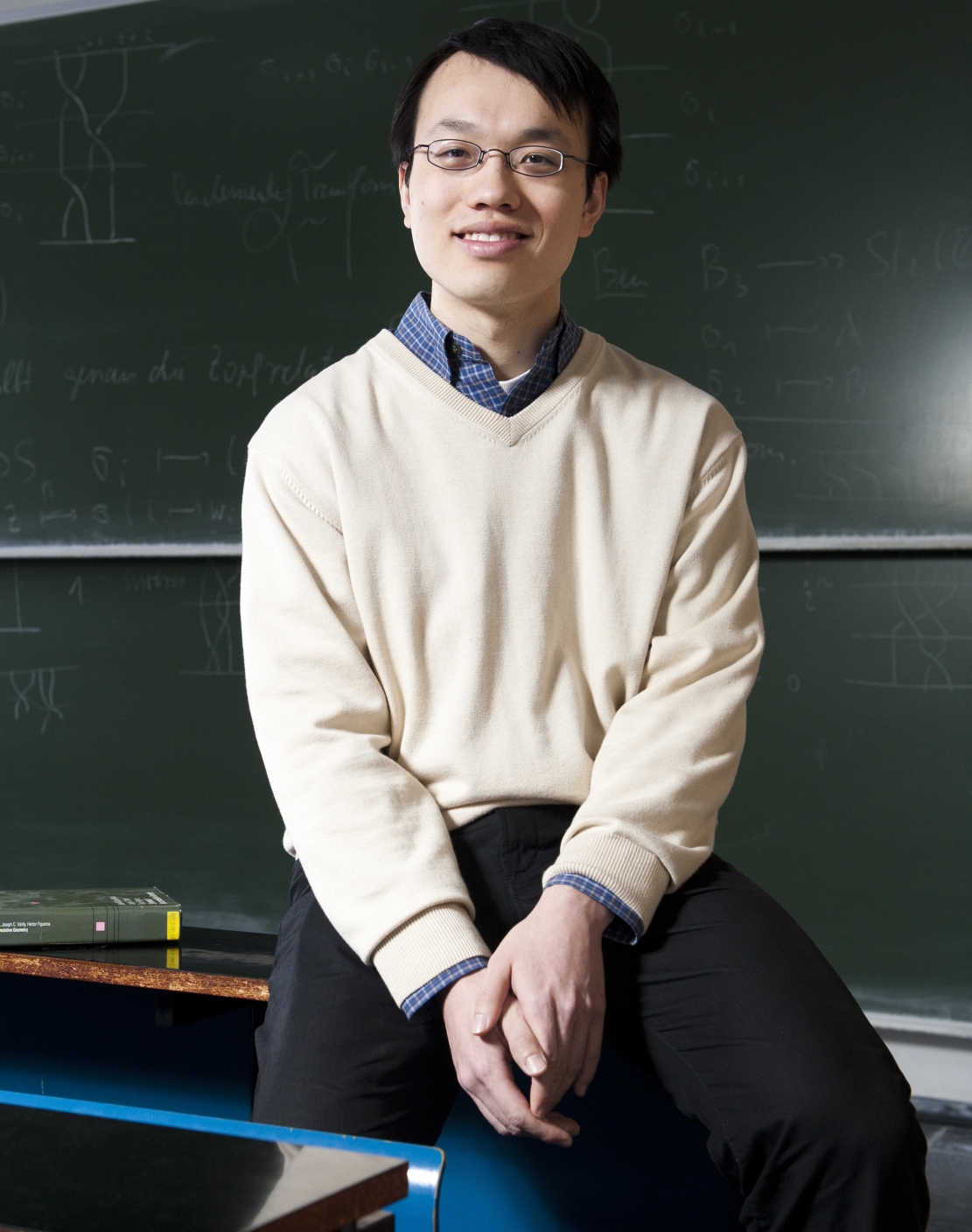
Mengqiu Cao is a Lecturer in Urban Systems Predictive Analytics and Machine Learning at the University College London (UCL) within the Bartlett School of Environment, Energy and Resources . He integrates academia and industry expertise to advance interdisciplinary research at the intersection of transport analysis and urban studies. Research Focus : Sustainable transport, urban mobility, logistics, social equity, and low carbon transitions. Teaching : Coordinates modules on climate sciences, data-driven consumer behavior analysis, and transport policy. Awards : Holds fellowships with the Royal Geographical Society, Royal Statistical Society, and Royal Society of Arts. Publications : Recent works examine green space impacts on mobility, equitable EV charging access, dockless bike-sharing patterns, and 15-minute city frameworks.
Amitabh Mishra is an Adjunct Professor at the University of Delaware. His research focuses on three core areas: computer-communication networks (wireless architectures, cross-layer design, mobile cloud computing), network performance analysis (stochastic models, numerical optimizations), and network security (vulnerability assessments, authentication protocols). He has contributed to interdisciplinary fields including IoT security, smart healthcare frameworks, and socio-technical systems analysis. His work spans technical domains like wireless sensor networks, tactical network management, and quantum dot material studies, alongside applied research in tourism economics, healthcare data analytics, and educational technology. Notable contributions include frameworks for energy-efficient physiological monitoring, secure IoT configurations, and machine learning-driven security protocols. Recent research highlights include: Developing secure mobile cloud computing paradigms Modeling Multipath TCP capacity bounds using stochastic theory Investigating AI applications for deepfake ethics and tourism marketing His publications span technical journals in computer networks, medical IoT systems, and interdisciplinary studies in cultural tourism and climate change resilience.
Stéphane Commend is an Associate HES Professor at the Fribourg School of Engineering and Architecture (HEIA-FR) under HES-SO Valais-Wallis. He also holds a lecturer role at the School of Engineering and Management of the Canton of Vaud. His primary research focuses on geotechnics, numerical simulations, and probabilistic modeling applied to infrastructure projects like tunneling and deep excavations. Education and affiliations include roles across multiple HES-SO institutions, with a strong emphasis on integrating advanced computational methods into geotechnical engineering. Notable projects include the Grand Paris Express tunnel project, Bayesian inference for wood constitutive modeling, and probabilistic risk analysis for urban construction. Research interests span soil-structure interaction, finite element modeling, and uncertainty quantification. Recent work emphasizes Bayesian methods for parameter calibration, machine learning in excavation design, and natural hazard vulnerability assessment. Key contributions include frameworks linking ZSOIL and UQLab for reliability analysis, and prototypes like SLIDE-PM for mudflow impact modeling. Current projects (e.g., iBAG and OptiSoil) focus on optimizing construction methods using AI and data-driven approaches. He leads collaborative teams across HES-SO institutes and academic partners like EPFL and CETU. Key Projects: iBAG Project (2022–2025): Bayesian methods in geotechnics OptiSoil (2019–2025): Machine learning for excavation design TULIP Project: TBM-pile interaction probabilistic analysis
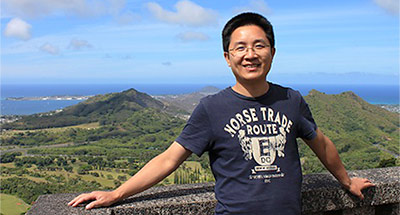
Qi Chen is a Professor in the Department of Geography at the University of Hawaii at Mānoa, specializing in remote sensing and geospatial technologies. His office is located in Saunders Hall, and he teaches undergraduate and graduate courses including GEO 370 (UAV and Aerial Photography), GEO 388 (Introduction to GIS), GEO 470 (Remote Sensing), GEO 489 (Applied GIS), and GEO 762 (Research Seminar: Remote Sensing. His research focuses on transforming earth observation data into actionable knowledge for environmental monitoring. Primary interests include: LiDAR applications for vegetation analysis and biomass estimation Climate change impacts on land cover and coastal systems Machine learning integration with geospatial data High-resolution mapping of agricultural and forest ecosystems Drone and satellite-based environmental assessment Chen's recent publications (2020-2025) demonstrate a strong focus on advancing remote sensing methodologies, particularly through: AI-driven approaches (GANs for vegetation indices, deep learning for marine debris) Multi-sensor fusion (LiDAR with camera systems, hyperspectral-multispectral integration) Novel applications in precision agriculture and infrastructure monitoring Hawaii-specific environmental studies incorporating indigenous knowledge systems He leads the Smart Remote Sensing Lab (smartremotesensing.org) where he mentors graduate students in developing cutting-edge geospatial solutions for ecological and societal challenges.
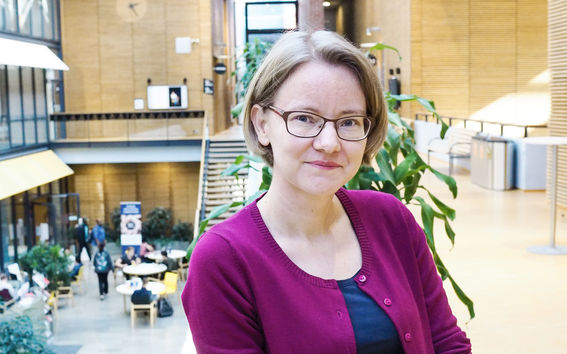
University Lecturer Anu Lehtovuori is affiliated with the Department of Electronics and Nanoengineering at Aalto University, where she actively bridges teaching and research. Her roles encompass academic teaching, project leadership, grant writing (e.g., Academy of Finland applications), and collaboration with doctoral students. She specializes in cutting-edge topics such as antenna design for 5G/6G systems, reconfigurable MIMO architectures, and RF technology for mobile devices. Her research focuses on optimizing antenna performance in compact environments, mitigating interference, and enhancing wireless communication efficiency. Notable areas include wideband antenna systems, decoupling techniques for multi-element arrays, and adaptive antenna-amplifier integration. Lehtovuori emphasizes practical applications, addressing challenges like user interaction effects on mobile antenna performance and minimizing electromagnetic emissions. Research Trends: Dominant themes include 6G IoT antenna solutions, mmWave component integration, and reconfigurable systems leveraging mutual coupling. Grants: Actively pursuing funding through initiatives like the Academy of Finland. Her contributions span both theoretical advancements (e.g., bandwidth optimization algorithms) and industrial applications (e.g., antenna cluster techniques for full-screen smartphones). While no specific awards are documented, her work reflects a strong focus on impactful, industry-relevant innovations.
Professor Xin Li is the Chair of Mathematical Analysis at the School of Mathematics & Statistics, University of Glasgow. His research focuses on interdisciplinary areas at the intersection of mathematical analysis, wireless communication systems, and blockchain technology. He holds a faculty position with expertise in reconfigurable intelligent surfaces (RIS), signal processing, and network optimization. Recent publications highlight his work on RIS-aided information-sensing integrated systems (ISAC), blockchain-based consensus networks in cellular environments, and adaptive beamforming techniques for multipath communication. His research emphasizes practical applications of theoretical mathematical models in telecommunications and distributed systems. Prof. Li's work demonstrates trends in integrating mathematical analysis with emerging technologies like millimeter-wave systems and Byzantine fault tolerance mechanisms. His contributions bridge pure mathematical rigor with real-world communication challenges, addressing both theoretical and applied aspects of modern wireless networks. He currently oversees academic activities within the School of Mathematics & Statistics and maintains an active research program supported by interdisciplinary collaborations. His contact information includes Xin.Li@glasgow.ac.uk and ORCID 0000-0002-2243-3742.
Professor Sophia Psarra is a faculty member at The Bartlett School of Architecture within University College London . Her research and teaching focus on the interplay between spatial configuration, architecture, and sociopolitical dynamics, particularly in parliamentary buildings and urban environments. She directs the Architectural and Urban History and Theory PhD Programme and has authored significant works including Architecture and Narrative (2009) and The Venice Variations (2018), along with co-editing Parliament Buildings: The Architecture of Politics in Europe (2023). PhD in Architecture from University College London (1997) MSc in Architecture (Research) from University College London (1986) Diploma in Architecture from National Technical University of Athens (1985) Her research spans transdisciplinary fields such as architectural history and theory , space syntax , urban morphology , and social/political philosophy . Recent work examines parliamentary architecture and its role in political culture, supported by collaborations with the UCL European Institute and international conferences. Her publications highlight spatial cognition, power dynamics, and the impact of digital media on urban design. Key trends in her recent articles include: Spatial modeling of parliamentary buildings and political culture Space syntax applications in museums and urban environments Interdisciplinary analysis of architecture, language, and institutions Urban resilience strategies during pandemics Scientific recognition includes: First prizes in EUROPAN architectural competitions Parliament Buildings (2023) shortlisted for the Colvin Prize University College London Publication Award (2003) She has supervised 11 PhD students to completion and served as external examiner for 19 PhDs internationally. Her work has received funding from the Leverhulme Trust , NSF (USA) , Onassis Foundation , and UCL Grand Challenges . She collaborates with institutions like the Natural History Museum and Museum of Modern Art to explore spatial design impacts on human experience.
Sean Hanna is a Professor of Design Computing at The Bartlett School of Architecture , University College London , and a member of the UCL Space Syntax Laboratory . His interdisciplinary work bridges architecture, computational modeling, and machine learning.
Martha Tsigkari serves as an Associate Professor at The Bartlett School of Architecture, University College London (UCL), where she bridges architectural practice with cutting-edge computational research. Her position situates her at the forefront of digital transformation in the built environment, with institutional affiliations spanning UCL's Faculty of the Built Environment and direct contributions to UN Sustainable Development Goals 4 (Quality Education), 11 (Sustainable Cities), and 13 (Climate Action). Her research program critically examines the integration of artificial intelligence, machine learning, and cognitive psychology into architectural design processes. Key investigations include spatial and visual connectivity analysis, XR-enhanced collaborative design environments, and AI-driven optimization of building performance. She explores how digital tools reshape creativity, professional identity, and sustainability outcomes in architecture, with particular focus on data commoditization, skills evolution, and human-AI collaboration in design workflows. Her interdisciplinary approach connects architectural theory with computational neuroscience and industrial digitalization trends. Tsigkari's publication trajectory reveals a clear evolution from computational structural analysis (2012-2017) toward AI ethics and professional transformation (2022-2024). Early work established foundations in performance-driven facades and material systems, while recent output confronts existential questions about architectural practice in the AI era. Her scholarship consistently addresses the tension between technological capability and human-centered design values, with growing emphasis on sustainable development frameworks and educational implications. Scientific Awards: No major awards are documented in the available records. Advising and Grants: While specific supervisees and funding mechanisms aren't detailed in current sources, her extensive collaborative network across 30+ publications indicates active mentorship and research leadership. Co-authorship patterns suggest involvement in multi-institutional projects addressing AECO industry digitalization, with potential ties to UK research councils and industry partnerships like RIBA. Labs and Teams: Tsigkari operates within The Bartlett's digital research ecosystem through recurring collaborations with Kosicki, Tarabishy, and Psarras. Her work manifests in experimental toolsets including Glaucon (XR design environment), HYDRA (optimization framework), and SandBOX (conceptual design system), indicating leadership in UCL's computational design labs focused on human-AI interaction and sustainable building technologies.
Dr.-Ing. Nico Palleit is affiliated with the University of Rostock's Institute of Communications Engineering, part of the Faculty of Computer Science and Electrical Engineering. His research focuses on MIMO (Multiple-Input Multiple-Output) systems, channel estimation, and prediction techniques to enhance spectral efficiency. He holds a PhD titled Channel Prediction in Multi-Antenna Systems (2011) and has contributed to advancements in MIMO channel analysis, including frequency/time prediction and interference management. Research Interests: Nico's work addresses challenges in modern radio transmission systems, emphasizing the development of robust channel estimation strategies. Key areas include MIMO channel modeling, non-line-of-sight (NLOS) positioning, and optimizing transmitter-side channel state information. His research bridges theoretical frameworks with practical implementations in wireless communication systems. Publications Overview: His 15+ publications (2006–2012) span topics like MIMO channel prediction, antenna array design, and interference channel optimization. Recent work emphasizes frequency/time-domain channel prediction and power allocation strategies for maximizing system capacity. These contributions highlight interdisciplinary approaches combining signal processing with electrical engineering principles. Affiliations & Labs: As part of the Radio Communication Research Group, he collaborates on projects within the Institute's advanced wireless communication initiatives. His work supports next-generation radio systems through innovative solutions for MIMO-FDD and OFDM-based architectures.
Dr. Aghdas Badiee serves as a Post-Doctoral Research Associate at Heriot-Watt University's Edinburgh Business School, affiliated with both the Centre for Logistics and Sustainability and the Centre of Sustainable Road Freight. Her academic foundation spans Industrial Engineering with specialized expertise in data-driven decision systems and logistics optimization. Educational Background: B.Sc. in Industrial Engineering - System Planning and Analysis (Grade: 18.07/20), Iran University of Science and Technology M.Sc. in Socio-economic System Engineering - Location-Allocation Optimization (Grade: 19.30/20), Iran University of Science and Technology Ph.D. in Socio-economic System Engineering - Supply Chain Modeling and Sustainable Logistics (Grade: 19.35/20), Iran University of Science and Technology Her research integrates Sustainable Supply Chain Management , Resilient Cold Chain Logistics , and Operations Research methodologies to address complex transportation challenges. Current projects include the Africa Centre of Excellence for Sustainable Cooling and Cold Chain Systems (ACES) and Zero-Emission Cold-Chain initiatives, focusing on food security through sustainable logistics solutions. Her methodological approach combines descriptive, predictive, and prescriptive analytics using simulation, optimization, and data science techniques. Publication trends reveal consistent contributions to high-impact journals like Annals of Operations Research and IEEE Transactions on Fuzzy Systems , with growing emphasis on sustainable cold chain systems (2023-2025). Her work bridges theoretical operations research with practical applications in agri-food distribution, humanitarian logistics, and transportation procurement. Scientific Recognition: Ranked 1st in all academic degrees (B.Sc. 2010, M.Sc. 2012, Ph.D. 2019) Global Talent designation by UKRI (2022) Distinguished PhD Dissertation Award (2019) Reviewer for Annals of Operations Research Journal (2021-present) Member of WORMS (Women in OR/MS) since 2022 Her professional trajectory demonstrates continuous engagement across academia and industry, having served as Lecturer at University of Tehran and Senior Business Analyst at National Iranian Oil Products Distribution Company. Current activities include developing the MILES simulation platform for cold chain optimization and contributing to UN Sustainable Development Goals through sustainable logistics research. She actively participates in professional networks including Production and Operations Management Society while mentoring students in operations research methodologies.
Shoji Makino is a Professor at Waseda University's Graduate School of Information, Production and Systems. He has held academic and research positions at institutions such as the University of Tsukuba and NTT Communication Science Laboratories. His work spans acoustic signal processing, blind source separation, and adaptive filtering. Education: Ph.D., Tohoku University (1993.03) Mechanical Engineering, Tohoku University Graduate School of Engineering (1979.04–1981.03) Engineering, Tohoku University Faculty of Engineering (1975.04–1979.03) Research Interests: His research focuses on acoustic signal processing for speech and audio, including blind source separation (BSS) , beamforming , and adaptive filtering . He pioneered methods for solving permutation alignment in frequency-domain BSS and developed geometrically constrained ICA techniques. Scientific Awards: Hoko Award (2018.10, Hattori Hokokai Foundation) Outstanding Contribution Award of the Institute of Electronics, Information, and Communication Engineers (2018.06) IEEE Signal Processing Society Best Paper Award (2014.01) IEEE Fellow (2004.01) IEICE Achievement Award (1997.05) Committee Memberships: He has served as Chair of the IEEE CAS Society's Blind Signal Processing TC, General Chair of IEEE WASPAA2007, and Associate Editor of IEEE Trans. SAP. He is actively involved in EURASIP, APSIPA, and the Acoustical Society of Japan.
James Shackleford serves as Associate Professor and Interim Associate Dean for Enrollment Management and Graduate Education in the Department of Electrical and Computer Engineering at Drexel University. His research bridges medical image processing, high performance computing, and emerging neuromorphic architectures with significant contributions to radiation therapy applications. Education: PhD in Electrical Engineering, Drexel University, 2011 MS in Electrical Engineering, Drexel University BS in Electrical Engineering, Drexel University Research Focus: Professor Shackleford's work centers on GPU-accelerated medical image registration (forming the core of the open-source Plastimatch software), real-time tumor motion management for radiation therapy, and digital spiking neuromorphic systems . His research integrates computer vision, machine learning, and embedded systems to solve clinical imaging challenges. Publication Trends: Recent work (2020-2024) reveals dual research trajectories: (1) advancing deformable image registration through CycleGAN-based domain adaptation for CT auto-segmentation in radiation oncology, and (2) pioneering neuromorphic computing with configurable hardware architectures, dataflow-based compilers, and resource-aware neural network mapping. These streams converge on high-performance solutions for medical imaging and efficient neural processing.
Professor Mikhail Prokopenko is a leading academic in complex systems research at the University of Sydney's School of Computer Science. He holds a PhD in Computer Science (Macquarie University, 2002), MA in Economics (USA), and MSc in Applied Mathematics (USSR). As Director of the Centre for Complex Systems and Theme Co-Leader for Pathogen Emergence and Spread at the Institute for Infectious Diseases, his work focuses on modeling self-organizing systems, computational epidemiology, and AI applications in pandemic control. Roles: Director of Centre for Complex Systems, Theme Co-Leader (Pathogen Emergence), Theme Leader (Complex Systems) Education: PhD Computer Science (2002), MA Economics (USA), MSc Applied Mathematics (USSR) Affiliations: Fellow of Royal Society of NSW, Specialty Editor for Frontiers in Robotics and AI His research addresses challenges in complex systems like power grids, communication networks, and epidemiological models. Notable contributions include: RoboCup World Champion teams (2016, 2019) in Simulation League COVID-19 modeling featured in Nature's Top 50 SARS-CoV-2 articles (2020) Development of AMTraC-19 agent-based pandemic model Key research areas include: Guided self-organization principles Information dynamics in collective systems Thermodynamic efficiency of complex processes He has supervised over 200 publications and patents, with recent focus on pandemic response optimization and urban system resilience.
Evan Pavka is an Assistant Professor in the School of Interior Design at Toronto Metropolitan University. His research explores intersections of power, memory, gender, sexuality, media, and the built environment, often through writing and publishing. He holds a BID (Hons.) and MArch. Pavka has contributed to international journals like Interiors: Design/Architecture/Culture , Azure , Canadian Art , and others, with work presented globally. His academic roles include Associate Editor for Interiors and editorial contributions to national/international platforms. Education : Bachelor of Interior Design (Honors) Master of Architecture Research Interests : Pavka investigates memory, gender, and sexuality through the lens of interior design and architecture. He analyzes how spaces reflect and shape historical narratives, often critiquing normative frameworks in design. His work bridges theory and practice, addressing contemporary discourse on nonmonogamous living, queer spatial practices, and material ecologies. Publications : Pavka's articles and book chapters span topics from queer domesticity to materiality studies. Recent work includes explorations of monumental memory, nonmonogamous spatial configurations, and fluid interior ecologies. His writing bridges academic and popular platforms, emphasizing accessibility in architectural critique. Awards & Grants : No specific awards or grants are listed, though his prolific publication record reflects sustained academic engagement. Pavka frequently presents at international conferences and exhibitions in cities like Banff, Brighton, and Stockholm. Labs/Teams : While no specific lab affiliation is mentioned, his editorial role at Interiors and collaborative publications suggest active participation in academic networks and design communities.