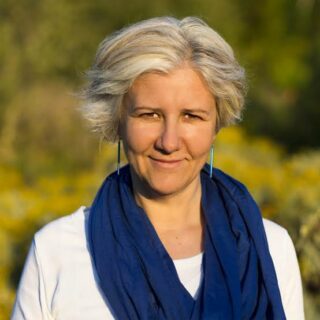
Dr. Zahid Ahmad Butt is an Assistant Professor at the School of Public Health and Health Systems , University of Waterloo, where he combines clinical expertise as a physician with advanced epidemiological research. His work employs a syndemic framework to investigate interconnected epidemics of infectious diseases, social disparities, comorbidities, and substance use through epidemiological, statistical, spatial, and machine learning methods. Key research areas: Digital Health, Global Health, Spatial Epidemiology Editorial roles: Associate Editor for BMC Public Health, Section Editor-in-Chief at IJERPH Recent publications focus on AI applications in outbreak detection, vaccine hesitancy dynamics, emergency department optimization, and harm reduction policy analysis
Dr. Tomislav Medić is a Lecturer and PostDoc at the Department of Civil, Environmental and Geomatic Engineering, ETH Zurich. His research focuses on advanced geospatial technologies, particularly terrestrial laser scanning (TLS) applications in deformation monitoring, sensor calibration, and precision agriculture. MSc in Geodesy and Geoinformation, University of Zagreb, Croatia PhD in Geodesy, Bonn University (IGG), Germany Dr. Medić’s research spans geomatics, remote sensing, and sensor engineering. Key areas include TLS radiometric calibration, point cloud processing for 3D displacement analysis, and multispectral LiDAR applications in agriculture. He contributes to improving geodetic measurement accuracy through innovative calibration strategies. His recent publications emphasize TLS integration with RGB data for geomonitoring (2025), hyperspectral scanning for fruit quality assessment (2024), and calibration field design for panoramic scanners (2023). Articles demonstrate expertise in error modeling, multi-sensor fusion, and environmental monitoring applications. At ETH Zurich’s Geosensors and Engineering Geodesy (GSEG) group, he leads the Alpine Measurement Lab collaboration project. He also participates in PhenoRob, a cluster of excellence in robotics and phenotyping for sustainable crop production at Bonn University.
Olivier Lévêque is a Senior Scientist at the École Polytechnique Fédérale de Lausanne (EPFL), affiliated with the School of Computer and Communication Sciences. He conducts research at the Laboratory of Information Theory (LTHI) and holds teaching responsibilities in both Communication Systems (SSC) and Computer Science (SIN) sections. Additionally, he contributes to the Interface EPFL-Gymnases initiative. Lévêque obtained his Physics diploma (1995) and PhD in Mathematics (2001) from EPFL, with a visiting lectureship at Stanford University's Electrical Engineering Department in 2005-2006. His research explores fundamental aspects of information theory , random matrices , and stochastic calculus , with applications in wireless communications and network theory. Key interests include capacity scaling laws in ad hoc networks, diversity-multiplexing tradeoffs, and mathematical frameworks for communication systems. Recent publications demonstrate broad interdisciplinary engagement, spanning computational thinking assessment (2022), digital education frameworks (2019), satellite positioning systems (2018), and theoretical advances in probability (2018). His work consistently integrates mathematical rigor with practical communication challenges, particularly in wireless network optimization and information-theoretic security. He has supervised four doctoral students at EPFL and teaches courses including Information, Computation, Communication , Markov Chains and Algorithmic Applications , and Cryptography . Lévêque leads research activities within the Laboratory of Information Theory, focusing on theoretical foundations of modern communication systems.
Marc van Oostrum is a molecular neuroscientist and proteomics researcher at the Biozentrum , University of Basel. His work bridges molecular neuroscience , synaptic proteomics , and systems biology to unravel the protein networks governing synaptic function and neuronal circuits. Institution: University of Basel (Biozentrum) Academic Rank: Researcher Key Grants: SNSF Ambizione Fellowship Research Focus: Van Oostrum's group investigates how synaptic protein dynamics determine neuronal connectivity, circuit development, and disease mechanisms. Their approach combines mass spectrometry-based proteomics , fluorescence-activated sorting , and in vivo labeling of synaptic populations. Notably, they explore synaptic diversity in healthy brain function and its dysregulation in neurological disorders. Scientific Contributions: His recent publications address: Proteasome maturation factors' role in transcriptional stress responses Molecular diversity of synapses through spatial proteomics Tissue-specific protein interaction atlases for disease gene discovery Synaptic proteome changes in neurodegenerative disease models Awards & Recognition: Van Oostrum has received the Best Talk Prize (2025) at the Swiss Proteomics Meeting and holds a prestigious SNSF Ambizione Fellowship . Collaborative Network: He collaborates with leaders in proteomics and neuroscience, including Biozentrum colleagues , Erin Schuman , and international teams in synaptic and proteomic research.
Florent Waltz is an SNSF Ambizione Project Leader hosted at the University of Basel's Biozentrum within the Engel Lab, leading research on mitochondrial architecture in photosynthetic organisms using cutting-edge cryo-electron tomography. His work bridges structural biology, evolutionary studies, and cellular energy metabolism with a focus on green micro-algae like Chlamydomonas reinhardtii. His research program explores three interconnected themes: (1) visualizing mitochondrial architecture and remodeling using cryo-ET to understand energy production under environmental changes; (2) investigating mitochondrial evolution across eukaryotes with emphasis on photosynthetic organisms; and (3) examining molecular-level interactions between mitochondria and chloroplasts. His March 2025 Science publication on the in-cell architecture of the mitochondrial respiratory chain represents a landmark achievement in visualizing molecular machines within native cellular contexts. Waltz co-developed TomoGuide, an online resource for cryo-ET workflows, and contributed to major datasets like the 1,829-tomogram Chlamydomonas resource enabling community-driven visual proteomics. His technical innovations include MemBrain v2 for membrane analysis in cryo-ET data. SNSF Ambizione Fellowship (major Swiss early-career award) Featured on Science magazine cover (March 2025) Key contributor to open science resources for cryo-ET community As a collaborative researcher, Waltz participates in international consortia studying mitochondrial biology, plant systems, and cryo-ET methodology development. His work has established new standards for in situ structural analysis of energy-producing organelles while advancing open science through public data sharing and software tools.
Stefan Pichelmann is a Senior Lecturer at the Department of Psychology , University of Fribourg , affiliated with the Faculty of Letters and Human Sciences. His academic work spans cognitive, developmental, and temporal processing research. Contact: stefan.pichelmann@unifr.ch | +41 26 300 7652 | RM 01 bu. C-2.110, Rue PA de Faucigny 2, 1700 Fribourg Research Focus: Pichelmann investigates cognitive mechanisms in spatial perspective-taking, time perception, and sensory integration. His work applies psychometric and experimental methods to analyze how numerical values, spatial tasks, and sensory modalities influence temporal judgments. Key Trends in Publications: Recent studies (2013–2023) emphasize spatial cognition , temporal processing , sensory integration , and cognitive workload . Articles on digit magnitude effects, mental rotation, and multisensory timing highlight interdisciplinary intersections with neuroscience and psycholinguistics. Departmental Affiliation: Active in the Department of Psychology, his research aligns with teams like Cognitive Development and Clinical Psychology, contributing to foundational and applied psychological sciences.
Prof. Dr. Alex Schier is a Swiss/US scientist and Director of the Biozentrum, University of Basel , where he leads research on vertebrate development and sleep regulation . He previously served as the Leo Erikson Life Sciences Professor and Chair of the Department of Molecular and Cellular Biology at Harvard University (2005–2019) and held academic roles at NYU School of Medicine (1996–2005). Research Focus: Embryonic development, sleep/wakefulness mechanisms, single-cell lineage tracing, and Nodal signaling in morphogenesis. Methods: Genetic, genomic, biophysical, and microscopic approaches in zebrafish and mice. Scientific Leadership: He is a member of EMBO, served on editorial boards (Science, Developmental Cell), and directed the Allan Discovery Center for Cell Lineage Tracing . Recent awards include an ERC Advanced Grant (2020–2024) and NIH MERIT/Pioneer Awards. Publications highlight advances in single-cell technologies , sleep-related neuropeptides , and evolutionary developmental biology . His lab collaborates on projects like brain-wide transcriptomics and optogenetic signaling control .
Sofian Bouaouina is a postdoctoral researcher and assistant at the Chair for French and General Linguistics , University of Basel. His work focuses on Interactional Linguistics , Conversation Analysis , and Ethnomethodology , with special emphasis on multimodal conversation analysis and sensoriality-in-interaction . Affiliated with the Department of Linguistics and Literature (Faculty of Humanities) and the Professorship Mondada, he investigates how participants achieve intersubjectivity through spoken language, bodily conduct, and material environments. PhD in General Linguistics (University of Basel, SNSF-funded intSenses project) Current SNSF-funded projects: InterSensoriality , Everybody speaks about the weather , and Human Sociality in the Age of Covid-19 His research explores sensorial practices in diverse settings including cooking activities, museum visits, firefighting training, and athletic performance. Key contributions include analyzing instruction sequences , perceptual restrictions , and Covid-19's impact on social interaction . Publications examine topics like multisensorial communication , touch accountability , and masked discourse . Recent articles investigate sensorial coordination in museum visits, visual impairment interactions, and acrobatic communication . Workshop presentations address data sharing , series organization , and hand-puppet theatre practices. Collaborations include projects on sensoriality , expert practices , and Covid-19 sociality .
Teresa Galí-Izard is a Professor at ETH Zurich where she directs the Being Alive Chair within the Institute of Landscape and Urban Studies (LUS) in the Department of Architecture. She also serves as director of the Master's program in Landscape Architecture at ETH Zurich and is a director at Arquitectura Agronomia, a landscape architecture firm based in Barcelona. As a trained agronomist from the Technical University of Catalonia, she brings interdisciplinary expertise to her work bridging landscape architecture, ecology, and agricultural science. Her research focuses on translating the hidden potential of landscapes through understanding climate and geology as foundational elements for design. She has developed innovative methodologies including the BeingAliveLanguage software integrated with Rhino/Grasshopper that revolutionizes visualization of soil-centric information. Her work emphasizes fieldwork as essential practice, with particular attention to soil systems, geological conditions, and climate patterns as primary matter for landscape design. Professor Galí-Izard leads the global Garden of the XXI Century project with installations in Spain, Switzerland, USA, and Chile, exploring regenerative landscape cultivation and experimental gardening practices. Her publications and research demonstrate a consistent focus on translating landscapes through drawing, cartography, and digital tools while maintaining deep engagement with living systems and their evolutionary processes. Nominated for Schelling Architecture Prize (2024) for revolutionary contributions to landscape architecture understanding President of the Jury of the European Prize for Urban Public Space (2022) Member of the Oberlander Prize Jury She actively supervises student work through foundation studios and seminars at ETH Zurich, with recent projects including 'Regenerative Practices for Exhausted Landscapes' and 'Slow Water: Exploring Keyline Design in Switzerland.' Her Being Alive Chair functions as a laboratory for developing new approaches to landscape architecture that emphasize care, translation, and understanding of living systems. The chair organizes fieldwork weeks, research colloquia, and public lectures that foster interdisciplinary dialogue about landscape practices in the Anthropocene.
Georgiana Bigea serves as a Lecturer in the Department of Computer Science at Lucerne University of Applied Sciences and Arts, based at the Zug-Rotkreuz campus (Suurstoffi 1, 6343 Rotkreuz). Her role encompasses teaching and research within computer science applications at the university's engineering-focused campus. Her research centers on Artificial Intelligence and Fuzzy Logic methodologies applied to Decision Support Systems, particularly in Spatial Planning contexts where public opinions exhibit hesitance. She investigates computational models for aggregating uncertain inputs in economic decision-making processes, bridging computer science with urban planning and policy development. Her recent 2024 publication at the International Conference on Mathematical Methods in Economics demonstrates her interdisciplinary approach, applying three-level aggregation models to fuzzy voting systems in spatial planning. This work reflects emerging trends in computational economics where AI techniques solve real-world public decision-making challenges involving hesitant opinions and spatial data.
Samuel Frei serves as a Lecturer at the Lucerne University of Applied Sciences and Arts – School of Design, Film and Art, where he teaches Visual Communication and Data Visualization across Bachelor's and Master's programs including the Applied Information and Data Science and MA Design curricula. His academic journey began after a career shift from biology and finance, completing a Master's in Design in 2011 followed by dissertation research at University College Dublin's SMARTLab (2012-2020). His research focuses on the intersection of analog and digital media, particularly in immersive technologies (AR/MR/VR) , cultural heritage digitization , and data storytelling . Key projects include the Digital Storytelling Lab, ALE (UNESCO World Heritage mobile experiences), and IDN-Kommunale Energie-Transformation. His work consistently explores how mobile and immersive technologies transform learning in cultural institutions and tourism contexts. Frei's 2024-2022 publications reveal a strong trend toward geospatial data visualization in tourism, cultural heritage preservation through mixed realities , and participatory digital archiving , often involving Swiss parks, museums, and indigenous communities like Amazonian collectives. His work bridges technical development with human-centered design principles. Nomination for Swiss Design Prize 2017 (Research category) Best of Swiss App Award 2016 (2x Bronze for ALE project) As former coordinator (2013-2023) and director (4 years) of continuing education programs, he managed interdisciplinary collaborations with cultural institutions, nature conservation groups, and educational organizations. His current leadership of the Investigative Methods in Research Practice module (2025) demonstrates ongoing curriculum development. Frei also maintains professional practice as an illustrator and concept designer, applying research to real-world projects in conservation and cultural sectors. His Visual Narrative research group serves as the primary laboratory context, producing projects like the Digital Storytelling Lab and Virtuelles Museum that integrate mobile technologies, indigenous knowledge systems, and emerging AI/AR platforms for cultural engagement.
Dr. Patric Wyss is a Research Associate at the School of Applied Psychology, University of Applied Sciences Northwestern Switzerland (FHNW) and concurrently serves as a Research Associate at the Institute for Social and Preventive Medicine (ISPM), University of Bern. His interdisciplinary work bridges psychology, data science, and healthcare, focusing on innovative approaches to health diagnostics and workplace mental health. Dr. Wyss completed his academic training at the University of Bern, Switzerland with a Doctorate in Biomedical Sciences (2019-2022), Master's degree in Statistics and Data Science (2017-2020), Master's degree in Psychology (2014-2017), and Bachelor's degree in Psychology with a Minor in Mathematics (2010-2014). His research interests center on work and health, predicting health variables with complex algorithms, and data-driven personalized health diagnostics. Dr. Wyss has made significant contributions to dementia diagnosis through data-driven approaches, cognitive assessment tools, and digital interventions for mental health. His work often integrates machine learning with clinical psychology to develop predictive models for health outcomes. Analysis of his recent publications reveals a strong focus on neurodegenerative diseases, particularly dementia and cognitive decline in aging populations. His research increasingly incorporates digital health technologies, virtual reality, and algorithmic approaches to develop personalized diagnostic tools. The publications demonstrate a progression from fundamental cognitive neuroscience to applied health diagnostics with practical workplace applications. Dr. Wyss has been actively involved in several significant projects including Digital Balance, Healthy@Work, and work-related stress and mental disorders in the workplace. His current position at the Institute for Mental and Organizational Health at FHNW focuses on how digitalization, social upheavals, and new forms of work present both opportunities and challenges for mental and organizational health. His professional activities include research collaboration across multiple institutions, development of digital assessment tools, and investigation of HR analytics applications for health monitoring. Dr. Wyss has also contributed to the development of serious games for cognitive assessment and rehabilitation, particularly for older adults and patients with neurological conditions.