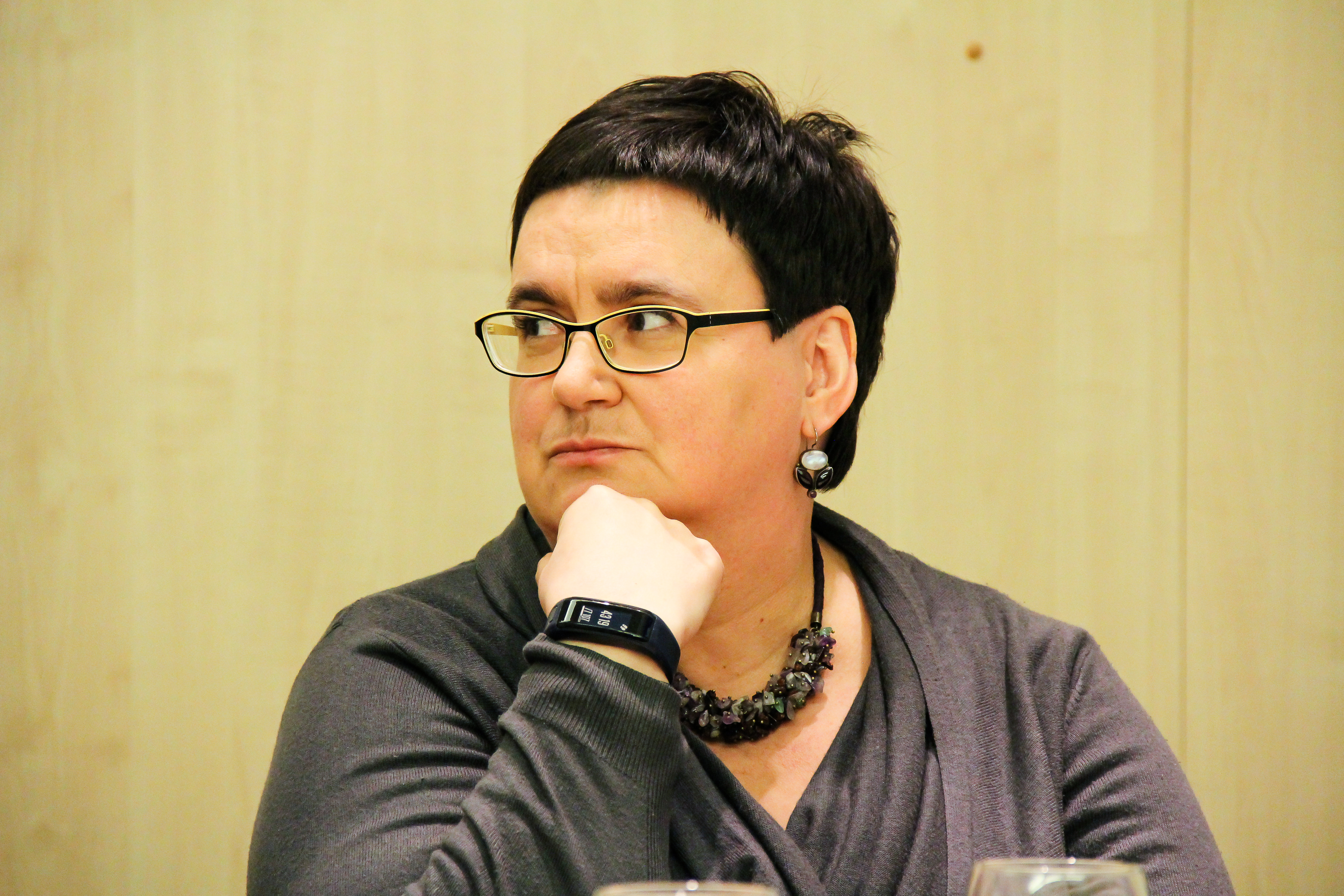
Nicola Amendola is an Assistant Professor of Economics at the Department of Economics and Finance of the University of Rome Tor Vergata. His work focuses on Monetary Theory, Welfare Measurement, and Poverty and Inequality Analysis, with a secondary emphasis on Economic History and composite indices in economics. PhD: University of Rome La Sapienza Research Interests: His research investigates deflation dynamics, spatial cost-of-living disparities, and the methodological challenges of setting consumption-based poverty lines. He also explores the economic implications of digital vs. physical currency and liquidity externalities in monetary systems. Scientific Trends: Recent publications analyze poverty dynamics in Bhutan, cost-of-living adjustments, and the evolution of monetary policy in multilateral exchange systems. His work spans theoretical modeling (e.g., search models of money) and applied policy research.
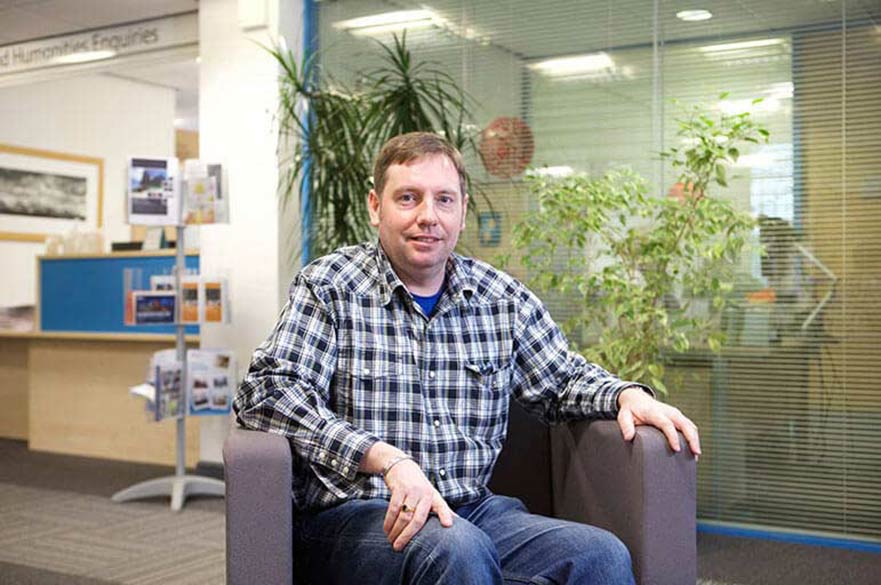
Jan Lindgård is a Researcher at the Department of Structural Engineering , Norwegian University of Science and Technology (NTNU). His work focuses on alkali-aggregate reactions (AAR) and concrete durability, with particular emphasis on alkali-silica reactions (ASR) and pyrrhotite-induced degradation in concrete structures. Key Research Areas: Concrete durability, AAR/ASR mechanisms, accelerated testing methods, alkali leaching, microstructural analysis. Collaborations: Active in RILEM Technical Committee 258-AAA, SINTEF, international institutions. His recent publications analyze pyrrhotite quantification in aggregates, ASR damage assessment in dams, and validation of CEN/RILEM testing standards. He investigates alkali release mechanisms and their impact on concrete performance through both field surveys and laboratory experiments. Scientific activities include: Co-authoring multiple Academic Articles and Technical Reports Contributing to RILEM STAR Reports and Guidelines Participating in Norwegian Infrastructure Projects like COIN and PARTNER Projects address ASR mitigation via low-alkali cements, silica fume additives, and field-lab correlation studies. His work informs Norwegian concrete standards and international AAR prevention strategies.
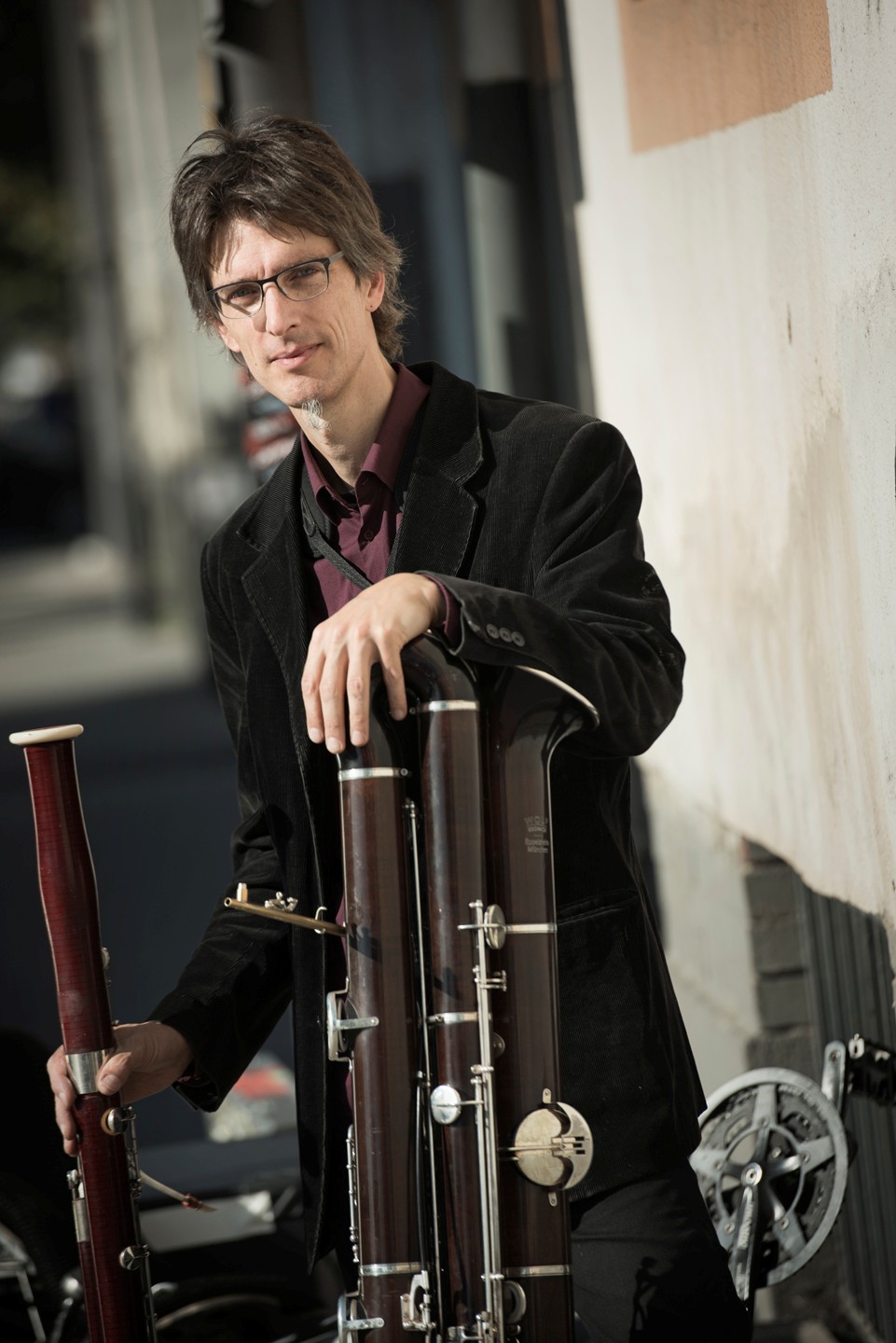
Professor Johannes Schwarz serves as Acting Professor for Contemporary Chamber Music at the University of Music Würzburg since April 2025. He maintains active teaching positions at the Frankfurt and Stuttgart Academies of Music, and regularly conducts workshops at international festivals including those in Lucerne and Darmstadt. As principal bassoonist with Ensemble Modern since 2003, he has established himself as a versatile performer working across diverse musical genres and collaborative projects. Professor Schwarz's research interests span contemporary chamber music performance, bassoon technique innovation, and the integration of live electronics with acoustic instruments. His work bridges traditional classical performance practices with experimental approaches, including free improvisation, period instrument performance, and cross-genre collaborations that extend to heavy metal and electronic music. He has pioneered new techniques for bassoon performance that have expanded the instrument's expressive capabilities in contemporary contexts. His artistic output demonstrates a consistent focus on expanding the bassoon repertoire through commissions and collaborations with leading contemporary composers. The development of the comprehensive digital sound collection for bassoon in 2018 represents a significant contribution to contemporary bassoon performance practice, influencing new compositions worldwide. His performance projects often incorporate multimedia elements, as evidenced by his solo music theater production 'UNA SOLO' (2018/19) and the 2023 performance 'Blow the Mausoleum' in Dessau. During his career, Professor Schwarz has held significant leadership roles including artistic director of the International Ensemble Modern Academy (2013-2018) and organizer of the international chamber music course for the Klangspuren Festival in Innsbruck (2008-2022), where he collaborated with renowned composers such as George Benjamin, Unsuk Chin, and Sofia Gubaidulina.
Dr. Michael Lewis is a Reader (equivalent to Associate Professor) at Cardiff University's School of Psychology, specializing in the cognitive neuroscience of face perception. His research examines face recognition mechanisms, emotional processing, attractiveness perception, and cross-racial identification biases, with applied work in forensic psychology and cosmetic neuroscience. Education BSc in Mathematics and Psychology (First Class Honors), University of Birmingham (1993) PhD in Psychology, Cardiff University (1998) Research Focus Lewis investigates fundamental questions about facial cognition: How humans detect and recognize faces, process emotional expressions, and form attractiveness judgments. His pioneering work includes the Face-Space-R computational model of face memory, studies on Botox-induced emotional changes through facial feedback suppression, and analysis of own-race bias reduction techniques. Current research explores uncanny valley effects in facial distortions and the forensic applications of face-composite construction. Notably, he demonstrated how medical masks paradoxically increase perceived attractiveness and how Navon letter processing influences face recognition. His methodological contributions include critiques of menstrual-cycle effect research designs and stimulus-response frameworks in face-composite studies. Supervision & Roles Lewis directs the MSc Psychology (Conversion) and MSc Psychology of Mental Health programs, coordinates research design/statistics modules, and supervises undergraduate projects on facial cognition. He serves on grant review panels for BBSRC, ESRC, and Leverhulme Trust, and has organized conferences for the British Psychological Society's Cognitive Section.
Carlos Echaves García is a Researcher at Rey Juan Carlos University's Department of Communication Sciences and Sociology. Holding a PhD in Sociology from Complutense University of Madrid (2019), his work critically examines socioeconomic vulnerability, residential emancipation, and urban inequality processes. PhD in Sociology (Complutense University of Madrid, 2019) Accreditation by Spanish National Agency for Evaluation of Academic and Research Activity (ANE) His research focuses on urban vulnerability , residential emancipation , and socioeconomic risk structures , particularly analyzing how financial crises (2008, 2020) and housing policies affect youth independence trajectories. Methodologically combining quantitative census analysis with qualitative focus groups, he investigates spatial segregation patterns and asymmetric vulnerability distributions across Madrid neighborhoods. Notable scientific contributions include the 2019 award-winning thesis on relational vulnerability perception (Madrid City Council Urban Economics Research Awards) and developing composite indicators for educational inequality (2001-2011) and residential opportunity mapping. Recent publications (2021-2025) analyze chronic labor vulnerability, housing policy impacts, and methodological frameworks for urban regeneration evaluation. 4th Urban Economics Research Awards (Madrid City Council, 2019) Collaborative work with researchers like Antonio Echaves García and Margarita Barañano Cid demonstrates his engagement with broader academic networks in urban sociology and social policy analysis.
Nenad Zaric is a Senior Research Associate at the Faculty of Biology, University of Belgrade, specializing in environmental monitoring using honey bees as bioindicators. His research focuses on pesticide metabolism, trace element dynamics, and anthropogenic pollution impacts on bee health. PhD in Biology (2017), University of Belgrade BSc in Biology (2012), University of Belgrade Research Interests: Environmental bioindication with bees Pollution source apportionment Colony nutrition and disease Elemental speciation analysis Urban-rural pollution gradients Sustainable beekeeping practices Recent publications demonstrate expertise in arsenic speciation, lead pollution tracking, and sex-specific toxin accumulation in bees. His work integrates chemical analysis with ecological modeling.
Yvette Janine Jackson is an Assistant Professor in the Music Department at Harvard University, serving as Graduate Advisor in Creative Practice and Critical Inquiry (2021-22) and teaching for Theater, Dance and Media (TDM). Her educational background includes: Studies at the RD Colburn School of Performing Arts BA in Music from Columbia University PhD in Music-Integrative Studies from the University of California, San Diego Her research and creative practice focus on electroacoustic music, narrative soundscape composition, and radio opera. She investigates the impact of darkness, spatial audio, and interactivity on audience engagement, creating immersive experiences that blend storytelling with sound. Her work often addresses social and historical themes, such as homophobia in African American communities and the transatlantic slave trade. Notable creative works include the radio operas 'Destination Freedom' (2018) and 'Invisible People' (2013), which exemplify her innovative approach to narrative in electroacoustic music and her exploration of profound societal issues through sound. Her achievements have been recognized with: San Francisco’s Dean Goodman Choice Award for Sound Design Theatre Bay Area’s Eric Landisman Fellowship As Graduate Advisor in Creative Practice and Critical Inquiry for 2021-22, she mentors graduate students in integrating creative practice with critical inquiry. Previously, she held the position of Joseph E. and Grace W. Valentine Visiting Assistant Professor of Music at Amherst College (2018–2019).
Carlos Morales serves as Associate Professor at Purdue University's Polytechnic Institute, specializing in digital video, animation, and interactive technology for visual training solutions. His research focuses on game-based learning applications in chemistry education and innovative distance learning systems, with significant contributions to educational technology through interdisciplinary collaboration. His primary research domains include: Game-based Learning for STEM education Interactive Educational Technology development Digital Video Production for distance learning Animation Technology pipelines Mobile Learning Applications design Chemistry Education Technology integration Dr. Morales' publication record (2002-2007) demonstrates consistent innovation in chemistry video games and mobile learning solutions, featuring multiple collaborative projects with chemistry educators. His work bridges engineering design and educational theory to create validated tools that enhance student engagement through visual realism and sustained interactivity. As Principal Investigator and Co-PI, he has secured substantial research funding including: National Science Foundation: $539,999 for "Effective Distance Learning Through Sustained Interactivity and Visual Realism" (2003-2006) National Science Foundation: $200,000 for "Game-based Learning in Chemistry" (2003-2006) ITaP MIDC: $15,000 for "Development of Mobile Games for Chemistry" (2006-2007) Discovery Learning Center: $20,000 for Chemistry Video Game Development (2006-2007)
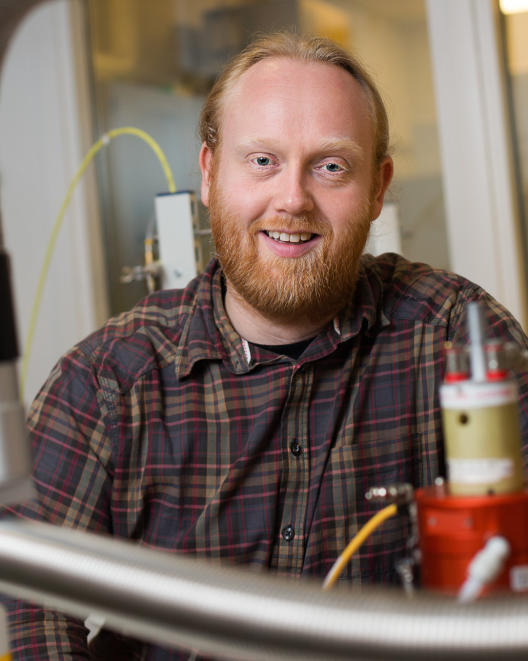
Dr. Matthias Schmid is a Post-Doctoral Researcher at the O'Connor Lab within the School of Natural Sciences at Trinity College Dublin, Ireland. His research investigates seaweed-environment interactions with emphasis on climate change impacts, eco-physiology, and aquaculture applications. Education: PhD from National University of Ireland Galway (NUIG), 2016 Research Interests: Dr. Schmid examines how environmental stressors shape seaweed physiology and nutritional properties, focusing on temperature, light, and nutrient dynamics. His work bridges fundamental marine ecology with applied aquaculture, particularly kelp cultivation for climate mitigation. Key projects include assessing biochemical acclimation potential under seasonal temperature scenarios and fatty acid adaptations to marine heatwaves. Publication Trends: His 2020-2021 publications reveal concentrated research on macroalgae responses to climate stressors, with 75% examining kelp species under thermal/nutrient stress. Dominant themes include acclimation mechanisms (62%), aquaculture applications (38%), and ecosystem service implications (25%), primarily using physiological and biochemical methodologies in temperate and Antarctic systems. Scientific Awards: Australian Endeavour Fellowship Grants and Collaborations: Funded by a German Research Council Grant during his tenure at the University of Tasmania, Dr. Schmid now contributes to Trinity's Beyond Biofuels initiative investigating seaweed aquaculture for climate change mitigation. His collaborative network spans Australian and Irish institutions with Prof. Catriona Hurd's group. Labs and Teams: Core member of the O'Connor Lab at Trinity College Dublin, previously affiliated with Prof. Catriona Hurd's research group at the University of Tasmania. Active participant in the Beyond Biofuels consortium exploring seaweed's role in carbon sequestration and ecosystem services.
Dr. Andrew Taylor is a Senior Lecturer in Creative Writing and English at Nottingham Trent University's School of Social Sciences, Department of Humanities. He serves as course leader for the BA (Hons) Creative Writing programme and supervises PhD creative/critical writing candidates. Taylor is an active member of NTU's Centre for Travel Writing Studies and Critical Poetics Group, and holds Fellowship in the Higher Education Academy. His educational background includes a BA in English and MA in Creative Writing from Edge Hill University, followed by a PhD from Lancaster University with the thesis 'A Poetry of Place, the Flâneur and Adrian Henri'. Prior to joining NTU, he taught at Edge Hill University where he co-founded the Poetry and Poetics Research Group. Taylor's research focuses on experimental poetry, poetics, conceptual writing, the Beat Generation, eco-poetics, and travel writing. His recent scholarly work includes the first monograph on Liverpool poet Adrian Henri titled 'Adrian Henri: A Critical Reading' (2019) and his editorship of Peter Finch's Collected Poems (2022). His creative output demonstrates a strong engagement with place-based poetry, travel narratives, and contemporary British verse, with recurring themes exploring temporal and spatial relationships in both urban and natural landscapes. His publications exhibit a consistent trajectory exploring the intersections of poetry with geography, time, and cultural identity. The works span from early collections like 'Radio Mast Horizon' (2013) through to recent publications such as 'European Hymns' (2024), showing an evolving engagement with European landscapes, particularly in the context of post-Brexit Britain. Fellow of the Higher Education Academy Taylor maintains an active external presence as co-editor of the Liverpool-based poetry journal 'erbacce' and erbacce-Press, editor of the blogzine 'M58', and reviewer for publications including 'Orbis', 'The Ofi Press', and 'The Journal'. His collaborative work extends to partnerships with artists like Edward Chell, Julie Jones, Charlie Baylis, and Nick Power, demonstrating interdisciplinary engagement beyond traditional literary boundaries. He has established significant connections with the literary community through readings, BBC Radio 3 appearances, and active participation in poetry festivals, most notably the European Poetry Festival in Liverpool. His work with Peter Finch's Collected Poems has received critical attention in publications including Nation Cymru, International Times, Buzz Mag, and Poetry and More.
Costas Saitanis is a Professor and Director of the Laboratory of Ecology and Environmental Sciences at the Agricultural University of Athens. His academic career is deeply rooted in environmental science, with particular focus on plant responses to environmental stressors, especially ozone pollution. He has established himself as a leading researcher in the field of plant-environment interactions through extensive publication record and laboratory leadership. Professor at Agricultural University of Athens Director of Laboratory of Ecology and Environmental Sciences Specializes in plant responses to environmental stress Expert in ozone effects on vegetation Professor Saitanis's research interests span multiple dimensions of environmental plant science, with particular emphasis on ozone effects on plants, plant stress physiology, and ecological stoichiometry. His work bridges fundamental plant physiology with practical environmental concerns, examining how air pollutants impact plant growth, nutrient cycling, and ecosystem functioning. He has made significant contributions to understanding how plants respond to ozone at molecular, physiological, and ecosystem levels, while also exploring protective strategies like melatonin application and biostimulants to enhance plant resilience. His research has practical implications for agriculture, urban forestry, and environmental protection policies. His recent publications reveal a strong focus on ozone-plant interactions, with numerous studies examining nutrient stoichiometry in urban trees exposed to ozone, protective effects of melatonin against ozone damage, and innovative approaches to ozone biomonitoring. His work spans from fundamental plant physiology to applied environmental science, with studies conducted across various ecosystems from urban environments to archaeological sites. Professor Saitanis has maintained consistent productivity across decades, with publications dating back to the early 2000s showing his long-standing commitment to environmental science research. Professor Saitanis has contributed significantly to the scientific understanding of ozone effects on vegetation through numerous publications and research projects. His work has helped establish methodologies for ozone biomonitoring and has provided critical insights into plant stress responses that inform environmental protection policies. His research has practical applications for sustainable agriculture and urban forestry in the face of increasing air pollution challenges. His academic leadership as Director of the Laboratory of Ecology and Environmental Sciences demonstrates his commitment to advancing environmental science research and education. Professor Saitanis appears to maintain an active research program with numerous recent publications, indicating ongoing scholarly activity and contribution to his field.
Ana Maria Villa Serrano is a prominent researcher at the Instituto Politécnico de Bragança (IPB) in Portugal, specializing in agricultural entomology with a focus on Mediterranean agricultural ecosystems, particularly olive groves and vineyards. Her work investigates the complex relationships between landscape structure, insect communities, and biological pest control mechanisms. Her educational background includes research on olive pest management, as evidenced by her doctoral thesis "Ecological infrastructures in sustainable olive growing: studies about Prays oleae (Bernard) and its natural enemies" (2016). Her early work also examined traditional agricultural practices, including the study "Estudio del potencial de la palomina como fertilizante en la Región Natural del Nordeste Transmontano (Portugal)" (2009). Villa Serrano's research interests center on agricultural entomology, landscape ecology, and biological pest control. Her work consistently examines how landscape composition and configuration influence pest populations and their natural enemies in olive groves and vineyards. She has made significant contributions to understanding the ecology of the olive moth (Prays oleae), syrphid flies, and vectors of Xylella fastidiosa. Her research demonstrates how conservation biological control approaches can enhance sustainable agricultural practices in Mediterranean ecosystems. Her publication record shows a clear progression from essential oil chemistry in early career (2005-2008) to agricultural entomology and landscape ecology (2012-present), with a significant increase in productivity from 2017 onward. Her most recent work (2022-2023) focuses on landscape effects on insect communities in vineyards and olive groves, functional diversity in protected areas, and vector management for Xylella fastidiosa. Awards and Recognition: Mechanisms of Professor José Covas Lima, awarded by the 10th Integrated Protection National Meeting (2013) Villa Serrano has collaborated extensively with researchers across Portugal and internationally, particularly with José Alberto Cardoso Pereira (78 co-publications) and Maria Villa (42 co-publications). Her work shows strong emphasis on practical applications for sustainable agriculture, including projects like NOVATERRA focused on reducing pesticide use in olive groves. She has contributed to understanding the role of spontaneous vegetation, ground cover management, and landscape connectivity in supporting beneficial arthropod communities within agricultural systems. Her research has established important connections between agricultural practices, landscape structure, and ecosystem services in Mediterranean farming systems, providing valuable insights for developing more sustainable pest management strategies.
Christof Migone is an Associate Professor in the Department of Visual Arts at Western University within the Faculty of Arts and Humanities. He holds a Ph.D. from New York University (2007), an M.F.A. from Nova Scotia College of Art and Design (1996), and a B.A. from Concordia University (1991). Ph.D., New York University, 2007 M.F.A., Nova Scotia College of Art and Design, 1996 B.A., Concordia University, 1991 Migone's research focuses on the intersections of sound, voice, language, and the body within performance contexts. His work explores themes of intimacy, complicity, and endurance, often pushing boundaries between artistic disciplines. He has developed a distinctive approach that blends theoretical inquiry with artistic practice, particularly in the realm of sound art where he examines how voice and language function beyond conventional communication. His practice spans performance, installation, writing, and curation, creating a rich ecosystem of artistic engagement that extends beyond traditional academic boundaries. His publications and artistic output demonstrate a consistent exploration of sonic phenomena and their relationship to embodiment and social dynamics. Over his career, Migone has evolved from early radio and performance works to increasingly complex installations and collaborative projects that investigate the materiality of sound and its cultural implications. His recent work shows a maturation of themes around water, voice, and collaborative processes, particularly evident in his ongoing 'Swan Song' series with Marla Hlady and the 12-year 'You And I Are Water Earth Fire Air Of Life And Death' project. Exhibition Award for 'Volume: Hear Here' (2013) Exhibition Award for 'Seripop: Landscapes Events Reproducted' (2012) Michael Kirby Memorial Prize for Distinguished Doctoral Dissertation (2007) Migone has received commissions from prestigious institutions including the Tate Modern, Kunstradio, Centre for Art Tapes, and New Adventures in Sound Art. He is known for mentoring emerging artists through his curatorial projects and has collaborated extensively with fellow artists including Marla Hlady, Alexandre St-Onge, and others. As a founding member of Avatar (Québec City) and co-founder of Squint Press with Alexandre St-Onge, Migone has been instrumental in building artistic communities and platforms for experimental work. Currently, he is developing a 12-year curatorial project that demonstrates his commitment to long-term artistic exploration. His practice spans performance, installation, writing, and curation, creating a rich ecosystem of artistic engagement that extends beyond traditional academic boundaries. Through his work with the Blackwood Gallery and other institutions, Migone has established himself as a significant figure in Canadian and international sound art communities.
Natalija Arlauskaitė is a Professor and Research Professor at Vilnius University's Institute of International Relations and Political Science (VU TSPMI), where she has been working since 2010. She belongs to the Department of International Relations and participates in the Feminist Policy and Critical Theory Research Group and the Research Group on Afterness. Her academic interests span interdisciplinary fields combining film and visual theories with critical theory and gender studies. She specializes in research on the politics of historical memory and Soviet visuality, Russian Studies, and Propaganda Analysis. Her educational background includes research and internships at institutions including New York, Constanta, Oxford, Krakow, Tbilisi State Universities, the Institute for the Study of Humanities at the University of Edinburgh, and The Russian Museum in St. Petersburg. Professor Arlauskaitė teaches courses including Critical History and Theory of Media, Introduction to Critical Theory, Politics and Cinema, Historical Forms of Memory (photography, cinema, comics), Political Photography, Visuality: practices, techniques, ideologies, and Feminism. Her research consistently explores how visual media shapes historical memory, particularly regarding Soviet and post-Soviet contexts. Her 15 most recent publications reveal a strong focus on visual culture, particularly examining Soviet and post-Soviet historical memory through film, photography, and visual representation. Her work frequently analyzes the Leningrad Siege, Soviet propaganda, gender representations in cinema, and the politics of visual archives. She employs transmedial approaches, connecting film studies with photography, comics, and historical documentation. Professor Arlauskaitė has presented numerous conference papers internationally, with a concentration on visual culture, historical memory, and Soviet/post-Soviet studies. Her work bridges film theory, visual studies, gender studies, and political science, demonstrating how visual media serves as a crucial site for understanding historical trauma and political representation. She actively engages with the public through media appearances, particularly on LRT (Lithuanian National Radio and Television), where she discusses topics related to cinema, historical memory, and visual culture. Her interviews often focus on how contemporary society processes historical events through visual media and the importance of preserving diverse visual archives.
Prof. Dr. Michael Ryan Hansen is a full Professor of Physical Chemistry at the Westfälische Wilhelms-Universität Münster, Germany, where he has led the Hansen research group since 2015. His group focuses on advanced solid-state NMR spectroscopy applied to polymers, supramolecular structures, functional inorganic materials, and energy storage systems. Prior to his current role, he was an Assistant Professor at Aarhus University’s iNANO and Department of Chemistry (2013–2015), and a research group leader at the Max Planck Institute for Polymer Research in Mainz (2010–2013). Education: PhD in Natural Sciences, Aarhus University, Denmark (2006) Cand. scient. (MSc equivalent) in Chemistry, Aarhus University, Denmark (2003) BSc in Physics and Chemistry, Aarhus University, Denmark (2001) Research Interests: Prof. Hansen’s work centers on the development and application of solid-state NMR techniques to study structure–dynamics relationships in materials. His group investigates fluorinated polymers, graphene nanoribbons, ionic conductors, zeolites, and supramolecular systems. A major focus is on energy-relevant materials, including lithium- and sodium-ion conductors, solid-state electrolytes, and thermally stable polymers for battery applications. Method development is another cornerstone of his research, involving advanced pulse sequences, wideline NMR, and the integration of DFT calculations. Scientific Contributions & Awards: Although specific awards are not listed, Prof. Hansen has authored over 150 peer-reviewed papers since 2015 in top-tier journals such as Journal of the American Chemical Society , Angewandte Chemie , and Advanced Materials . His work on pressure-induced dislocations in lithium argyrodites and the synthesis of curved graphene nanoribbons has been highly cited, reflecting significant impact in materials chemistry and energy storage. Research Group & Collaborations: The Hansen group comprises post-docs, PhD students, and master’s students working on projects funded by the German Research Foundation (DFG) and the Federal Ministry of Education and Research (BMBF). Collaborations extend across Europe and include partners such as Aarhus University, MPI Mainz, and international synchrotron facilities. The group operates state-of-the-art solid-state NMR spectrometers (400–850 MHz) and maintains strong ties with the university’s mechanical, electronics, and chemical workshops for custom instrumentation.