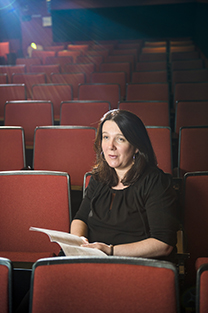
Kelly Medina-López is an Assistant Professor in the Department of Humanities & Communication, focusing on Latinx rhetorics, border studies, and decolonial methodologies. Her work intersects social justice with translingual practices and place-based epistemologies. Key research areas include racioalphabetic ideologies, myth-as-methodology, and the intersection of embodiment and spatial identity. Research Focus: Latinx rhetoric, border rhetorics, feminist/indigenous methodologies Key Concepts: Querencia, rasquache aesthetics, translingual pedagogy Her publications explore the US-Mexico border's rhetorical landscapes and the role of myth in knowledge production. Recent works analyze alternative writing systems as acts of resistance and the cultural significance of New Mexico's place narratives. Advising and grant details are not documented in the provided materials.
Professor Karen E Lury is a distinguished academic at the University of Glasgow , serving as Head of School for the School of Culture & Creative Arts and as a Professor of Film & Television Studies within the Theatre, Film & Television Studies department. She is also the Editor of Screen journal and served as Dean of Research for the College of Arts from 2014 to 2017. Her research interests center on Children's film and media , Screen Performance , and Amateur film and media . These areas are reflected in her editorial projects and publications, which explore the intersection of childhood, authenticity, and media representation. The 10 most recent articles in her bibliography highlight trends in television and film studies, focusing on themes like the role of care in media consumption , postcolonial narratives in British television , amateur film practices , and children's subjectivity in reality TV . Her work bridges theoretical analysis with empirical studies , often incorporating interdisciplinary methodologies. Professor Lury has secured significant grants including a Leverhulme Trust grant (2015, £1.05M) and AHRC research funding (2010, £584k). She has supervised over 10 PhD students to completion, including Anderson, Jack (Bodies of Water and Geographies of Childhood in British Cinema) and Lu, Junwei (Taiwan Childhood Cinema). Her academic service includes membership on the AHRC advisory board since 2015 and editorial roles for journals and book series. She offers office hours by appointment and maintains an ORCID profile for her research outputs.
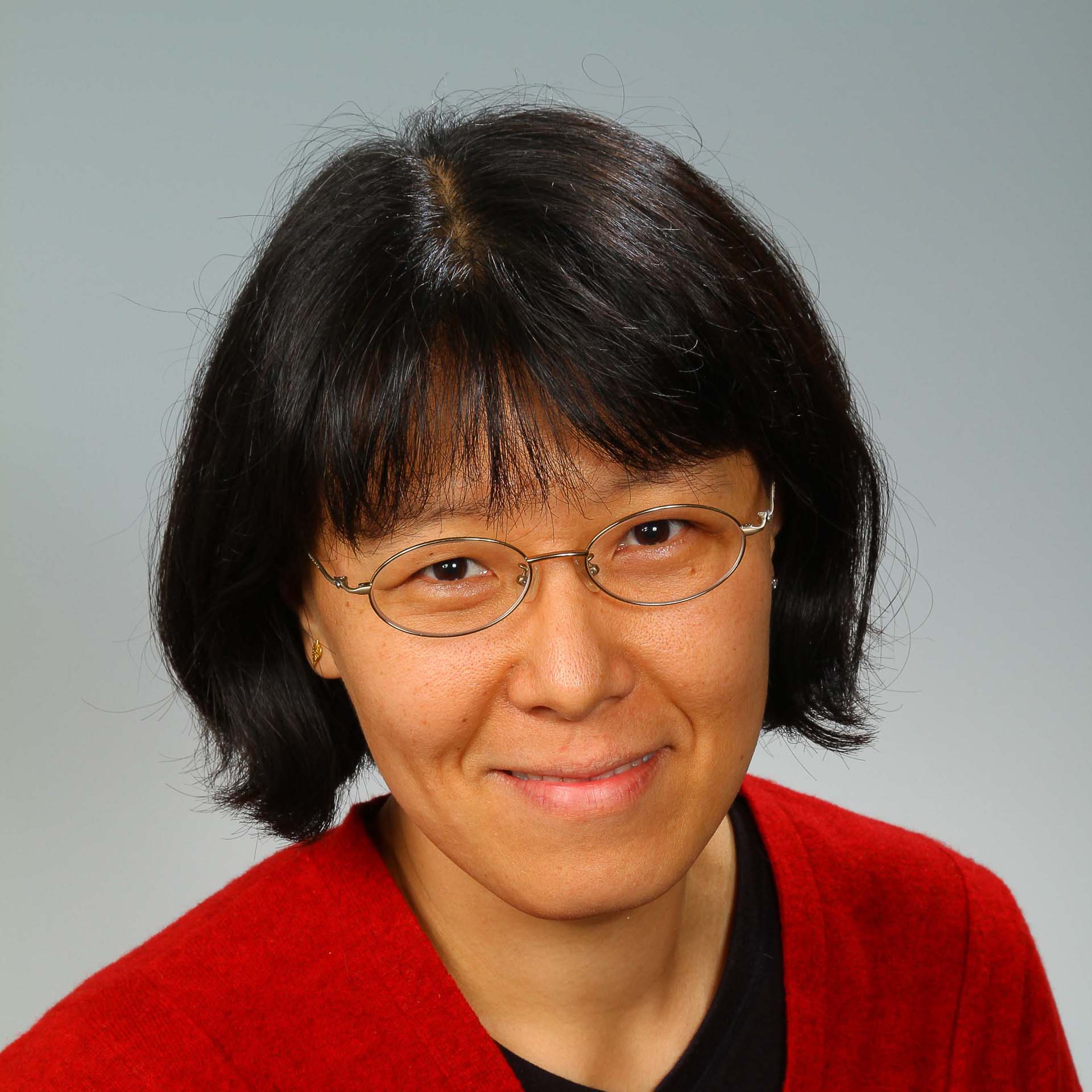
Mi Shih is an Associate Professor and Director of the Urban Planning and Policy Development Program at the Edward J. Bloustein School of Planning and Public Policy, Rutgers University. She holds a Ph.D. from the same institution and prior academic roles include Assistant Professor at the University of Alberta (Canada) and postdoctoral research fellow at the University of Technology Sydney (Australia). Her research focuses on Chinese urbanization, land politics, displacement, and social conflicts arising from urban development. She employs ethnographic and mixed-method approaches to analyze state roles in urban-rural dynamics, planning regulations, and value capture mechanisms. Key themes include land development rights, property rights, and the socio-spatial impacts of urban policies in Taiwan and China. Publications highlight critical topics such as TDR systems, urban governance, and the commodification of land. Her work bridges legal geography, urban sociology, and policy analysis, offering insights into global urban challenges. Education: B.S. and M.S., National Taiwan University Ph.D., Planning and Public Policy, Rutgers University Teaching includes graduate courses on international urbanization and planning methods, and undergraduate courses on global urban systems.
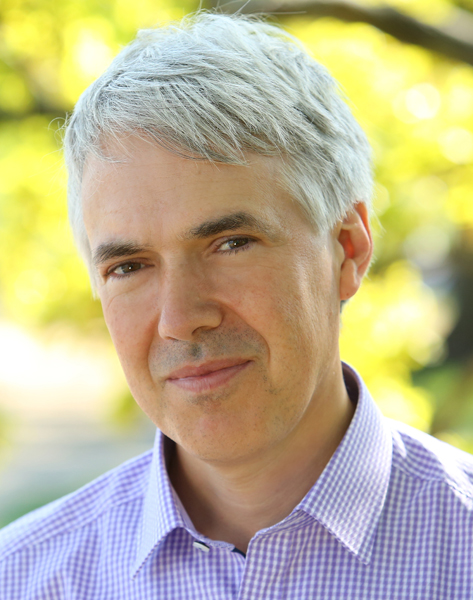
Maneesh Agrawala is the Forest Baskett Professor of Computer Science at Stanford University and Director of the Brown Institute for Media Innovation. His research spans computer graphics, human-computer interaction, and information visualization. Agrawala's lab develops computational tools for visual communication, investigating how design principles improve media effectiveness. Current projects include diffusion models for image and video generation, sketch-based interfaces, and visualization tools for scriptwriting. His team creates systems that enable new forms of content creation and analysis. His publications demonstrate consistent innovation in visual computing, with recent advances in controllable generative models, video understanding, and visualization design. Agrawala has received numerous honors including the MacArthur Fellowship and ACM Fellowship for his contributions to visual computing.
Dr. Teresa Wang is a Senior Lecturer in Data Science at Monash University's Faculty of Information Technology, specializing in entity/user modeling, relational/structural machine learning, and graph/network analysis. She holds a Ph.D. from the University of Queensland and degrees from Nanjing University. Currently, she directs the Master of Data Science Program and teaches courses like FIT5201 Machine Learning. Her research focuses on social, e-commerce, and health data modeling, with notable projects including the Knowledge Enriched Approach for Effective Personalization (2025–2027) and collaborations on AI in Mental Health and Site Safety. Dr. Wang has co-authored over 59 publications, emphasizing areas like ontology matching and multimodal data analysis. She actively supervises PhD students and contributes to initiatives like the CSIRO Next Generation Graduates Program for clean energy and sustainability. Education: Ph.D. in Computer Science (2017), University of Queensland Master of Computer Science (2013), Nanjing University Bachelor of Software Engineering (2010), Nanjing University Research Interests: Entity modeling, spatio-temporal data analysis, graph mining, recommender systems, and health/medical records mining. She explores applications in social media, e-commerce, and healthcare sectors. Projects: "Knowledge Enriched Approach for Effective Personalization" (2025–2027) "AI for Clean Energy and Sustainability" (2023–2027) "CSIRO Next Generation Graduates Program: AI in Mental Health" (2023–2027) "Large-scale multimodal knowledge management" (2022–2025) Grants & Collaborations: Engaged with CSIRO, Crank Group, and Pola Practice Pty Ltd. Her work aligns with UN SDGs in education and sustainable energy systems. Labs/Teams: Part of the Monash Energy Institute and Monash Data Futures Institute, contributing to interdisciplinary AI and energy research.
Paul D. Miller, known professionally as DJ Spooky, That Subliminal Kid, is a Professor of Music and Mediated Art at The European Graduate School (EGS). Based in New York City, he is an experimental electronic and hip-hop musician, conceptual artist, and writer whose work spans music production, film, multimedia installations, and critical theory. He has released over a dozen albums pioneering 'illbient' and trip hop genres, authored influential books including Rhythm Science and Sound Unbound , and exhibited internationally at venues like the Venice Biennale and Andy Warhol Museum. Education: Bowdoin College: Studied philosophy and French literature; thesis on Richard Wagner's Gesamtkunstwerk as precursor to new media. Research Interests: Miller's work centers on remix culture as a postmodern methodology, exploring intersections of sound, image, and technology. His theoretical framework positions the DJ as a 'post-subjective auteur' who creates meaning through layered connections across time, culture, and media. Key projects include Rebirth of a Nation (reworking D.W. Griffith's film to address racial history) and Terra Nova (Antarctica sound recordings addressing climate change), demonstrating his focus on historical reinterpretation and environmental crisis through digital media. Publications: His 14 scholarly articles (2001-2009) analyze remix as cultural practice across domains from album art history ( The Inner Sleeve ) to Baudrillard's philosophy ( Baudrillard: A Remembrance ). The corpus reveals consistent investigation into how sampling, digital layering, and media archaeology reshape narrative, memory, and cultural identity in the information age. Awards: No scientific awards or fellowships were documented in the source text. Advising and Grants: The source text provides no information regarding students supervised, academic advising, or research grants administered by Miller. Labs and Teams: Miller operates through project-based collaborations rather than fixed labs, forming temporary collectives with institutions like the American Museum of Natural History (for Terra Nova ) and artists including Yoko Ono, Ryuichi Sakamoto, and choreographer Francesca Harper. His 'Unfinished Stories' project with Pulitzer-winning critic Margo Jefferson exemplifies his interdisciplinary approach bridging dance, music, and social commentary.
Dr. Abbas Ziafati Bafarasat is a Chartered Town Planner and Senior Lecturer in Town Planning at Oxford Brookes University, managing the Certificate in Spatial Planning Studies. He holds a PhD in Planning & Landscape from the University of Manchester (2015) and conducted postdoctoral research at TU Dortmund, Germany. His expertise spans five national contexts, with a focus on strategic urban design, sustainable cities, and policy integration. He has supervised numerous Master’s and doctoral students and transitioned from private practice to academia. Education: PhD in Planning & Landscape, University of Manchester (2015) Postdoctoral studies at TU Dortmund, Germany MA in City & Regional Planning, AD in Law, BSc in Geography Research Interests: His research focuses on achieving healthy and sustainable cities through frameworks like strategic urban design and behavioral sustainability indicators. He pioneered concepts such as 'start-it-yourself urbanism' and developed a 99-indicator system for healthy cities. His work emphasizes policy integration, regional governance, and community-driven solutions. Advising & Grants: Supervised successful completion of doctoral and Master’s theses External examiner for postgraduate programs Labs/Teams: He contributes to the Planning, Policy and Governance (PPG) research group at Oxford Brookes, focusing on urban sustainability and policy innovation.
Dr. Timothy Fraser is a Computational Social Scientist serving as Ezra Systems Research Associate in Cornell University's Systems Engineering Program and Coordinator for the Center for Transportation, Environment, & Community Health (CTECH). Holding a PhD in Political Science from Northeastern University (2022), he focuses on climate change adaptation, disaster resilience, and energy policy using big data analytics, GIS, and AI. His work bridges computational methods with societal challenges, emphasizing community engagement and policy impact. Education: PhD in Political Science, Northeastern University (2022) MA in Political Science, Northeastern University BA in International and Global Studies, Middlebury College Research Interests: Fraser’s research integrates computational social science with environmental policy, exploring how social networks and governance structures influence cities' climate adaptation strategies. Key areas include renewable energy adoption, disaster evacuation dynamics, and pandemic response mechanisms. He employs mixed methods such as network analysis, statistical modeling, and fieldwork. Grants & Awards: Fulbright Fellowship (2016), Kyushu University Japan Foundation Doctoral Fellowship (2020) USDOT Multimillion Grant Administrator (2022-2023) Teaching & Mentorship: Fraser teaches statistical methods and research design at Cornell, advising over 30+ students in projects published in leading journals. He coordinates capstone teams and mentors researchers in data science and policy analysis. Labs & Projects: Leads the Climate Action in Transportation dashboard initiative (Gao Labs), developing tools for emissions visualization. Collaborates on UNDP social capital mapping projects in Mexico and Paraguay, applying spatial analysis techniques for vulnerable communities.
Prof. Tobias Plieninger holds dual appointments as Professor of Social-Ecological Interactions at the Universities of Kassel and Göttingen, Germany, and currently serves as Dean of Research at Kassel’s Faculty of Organic Agricultural Sciences. He specializes in sustainability science focusing on rural landscape dynamics, ecosystem services, and transformative change processes. His work examines intersections between agriculture, forestry, nature conservation, and natural resource management. Education: PhD in Forest and Environmental Sciences (2004, University of Freiburg), Habilitation in Landscape Ecology (Humboldt-Universität zu Berlin). Prior roles include Associate Professorships at the University of Copenhagen and leadership at the Berlin-Brandenburg Academy of Sciences. Research focuses on biocultural landscapes, agroforestry systems, and participatory methods. Notable projects include coordination of the EU’s HERCULES initiative and leadership in IPBES’ Transformative Change Assessment. Recognitions include Clarivate’s Highly Cited Researcher (2019–2022) and the Henriette Herz Fellowship (2022). Editorial roles: Lead Author for IPBES, Associate Editor at Landscape and Urban Planning and People and Nature . Over 200 publications span topics like ecosystem service synergies, high nature value farming, and rewilding strategies. Active in policy engagement through Germany’s Leopoldina Academy and the Joint Programming Initiative on Cultural Heritage. Research Themes: Landscape sustainability, participatory governance, biodiversity in agricultural systems Key Projects: SINCERE (forest ecosystem services), AGFORWARD (agroforestry innovation) Awards: Clarivate’s Highly Cited Researcher, Alexander von Humboldt Foundation fellowship Current initiatives emphasize transdisciplinary approaches, integrating local knowledge with scientific frameworks to address global sustainability challenges.
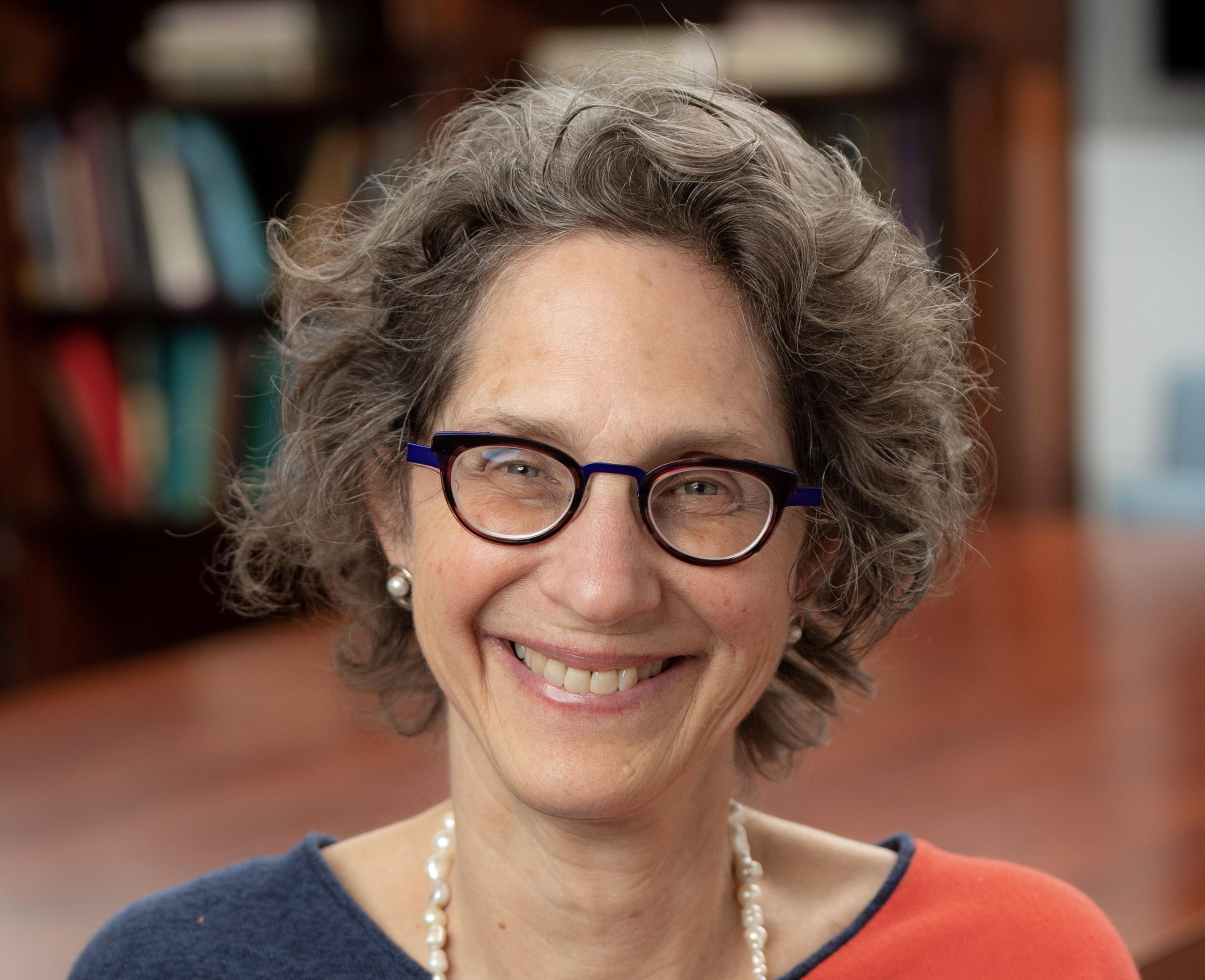
Amy G. Remensnyder is Professor of History and Giancarlo Family Provost's Professor of History at Brown University, where she has taught since 1993. She also holds the Royce Family Professor of Teaching Excellence title, reflecting her commitment to pedagogy. Her research focuses on medieval Europe, particularly the cultural and religious history of the Mediterranean, with emphasis on Muslim-Christian relations, monastic memory, and the global history of captivity. PhD, University of California, Berkeley (1992) A.B. summa cum laude, Harvard University (1983) Additional studies at Cambridge University and École des Hautes Études, Paris Her research interests include medieval Iberia, colonial Mexico, religious symbolism, transcultural history, and the role of memory in identity formation. She explores how religious figures like the Virgin Mary functioned as symbols of conquest, conversion, and interfaith entanglement. Her work bridges medieval and early modern periods, challenging disciplinary boundaries and incorporating insights from art history, anthropology, and literary studies. Her recent articles reveal a sustained engagement with themes of religious coexistence, sacred space, and cross-cultural devotion in the Mediterranean world. She examines how Muslim and Christian sailors shared shrines, how Moriscos developed their own Marian scriptures, and how Mary symbolized both war and diplomacy. Her scholarship combines deep archival research with theoretical sophistication, contributing to fields such as oceanic history, borderland studies, and the history of emotion. Van Courtland Elliott Prize (Medieval Academy of America) Fellow, Medieval Academy of America Berlin Prize, American Academy in Berlin Guggenheim Fellowship ACLS/SSRC/NEH Fellowship William G. McLoughlin Award for Teaching Excellence Remensnyder has directed major research initiatives and served on editorial boards, including Al-Masāq: Journal of the Medieval Mediterranean . She founded and directs the Brown History Education Prison Project, reflecting her commitment to engaged scholarship. She has received funding from the Swearer Center and has developed innovative courses on captivity and medieval lyric. Her leadership includes directing Brown’s Program in Medieval Studies (2010–2012) and serving on the Medieval Academy of America’s council. She is currently working on three book projects: Island of Trust in a Sea of Danger: Lampedusa , a maritime microhistory; Neighbors: Life in a Medieval Borderland , an archival study of Muslim-Christian relations in Iberia; and A Global History of Captivity , a synthetic overview of captivity across time and space.
Dr. Rong-Hao Liang is an Assistant Professor at Eindhoven University of Technology (TU/e), affiliated with both the Future Everyday Group (Department of Industrial Design) and the Signal Processing Systems Group (Department of Electrical Engineering). His research bridges intelligent sensing systems and user interface technology for ubiquitous computing and embodied human-computer interaction . He co-organized international ACM conferences (CHI, UIST, DIS) and has over 70 peer-reviewed publications and 10 patents. PhD in Computer Science (2014) and MSc in Electrical Engineering (2010) from National Taiwan University Founded GaussToys Inc. in 2015, focusing on magnetic-field sensors Cross-appointed to Electrical Engineering in 2021 His research explores intelligent sensing systems , tangible user interfaces , and physiological sensors for real-world challenges. Key trends in his work include ubiquitous health monitoring (e.g., preterm infants), wearable technology , and innovative interaction design . Articles like GaussBits and NFCStack demonstrate his focus on magnetic and RFID-based tangible systems . Scientific awards include the ACM CHI 2013 Best Paper Award , 2014 Honorable Mentions , and the ACM SIGGRAPH Asia 2012 Emerging Technologies Prize . He mentors passion-driven projects in user interface design and embedded systems , emphasizing technical rigor and creativity. His STRAP project (2020–2025) addresses heart disease prevention via big data and AI . Labs and teams include the Future Everyday Group and Signal Processing Systems Group , with collaborations across healthcare , education , and technology startups . His work aligns with UN Sustainable Development Goals , particularly good health and well-being .
Guofeng Cao is an Associate Professor in the Department of Geography at the University of Colorado . His research integrates GIScience , GeoAI , geostatistics , and remote sensing to develop advanced methodologies for analyzing heterogeneous geospatial data and modeling complex spatiotemporal patterns. Focus areas: Uncertainty-aware geographic knowledge discovery, land cover/land use dynamics, spatiotemporal bias analysis, geospatial cyberinfrastructure development Applications: Natural hazards, environmental science, public health, global change studies Recent publications emphasize generative adversarial networks for climate downscaling, neural processes for uncertainty modeling, and fusion transformers for disaster assessment. His work combines deep learning with Bayesian inference to address scalability challenges in geospatial data processing. Scientific Recognition : NASA and USDA grants for spatiotemporal research Advising : Mentoring graduate students in geospatial data science Laboratory : Leads the STAR lab (Spatiotemporal Pattern Analysis & Research)
Harikesh S. Wong is an Assistant Professor of Biology and Core Member at the Ragon Institute of MGH, MIT, and Harvard. His research focuses on understanding how immune responses are controlled in tissues to balance host protection against threats like pathogens and tumors while avoiding excessive damage. He combines immunology, microscopy, computational methods, and gene manipulation to study immune response regulation in intact tissues. Education: PhD in 2016 from University of Toronto; BSc in Biochemistry from McMaster University (2010) His lab investigates mechanisms of immune homeostasis, including regulatory T cell feedback circuits and mesoscale T cell antigen discrimination. Recent work explores autoimmune disease susceptibility linked to IL-2 feedback circuit fragility and the role of commensal bacteria in liver immune zonation. Key findings include demonstrating how local regulatory T cells prune self-activated T cells and how interleukin 2 circuitry variations influence autoimmune risk. Articles highlight interdisciplinary approaches to dissect immune system control mechanisms. No scientific awards explicitly mentioned. Grants and advising details are not provided in the text. Labs/Teams: Wong Lab at the Ragon Institute focuses on immune system design principles and disease-related breakdowns in control mechanisms.
Paolo Sellari is an Associate Professor in the Department of Political Science at Sapienza University of Rome, where he contributes significantly to research and teaching in political and economic geography, geopolitics, and infrastructure security. He is affiliated with the research group Geopolitics of the Sea and plays a key role in the Master in Geopolitics and Global Security , contributing to curriculum development and academic supervision. Department: Department of Political Science University: Sapienza University of Rome Email: paolo.sellari@uniroma1.it His research interests span a broad yet interconnected spectrum, including maritime geopolitics, Mediterranean and Arctic strategic dynamics, Chinese foreign policy (especially the Belt and Road Initiative), infrastructure as instruments of power, and the geopolitics of climate change. He also explores unconventional intersections such as sports and geopolitics. His scholarly work emphasizes spatial dimensions of power, resilience, and connectivity in a rapidly transforming global order. The analysis of his recent publications (2023–2025) reveals a strong thematic consistency focused on maritime routes, infrastructure security, and the evolving geopolitical roles of the Mediterranean and Arctic regions. His work frequently addresses the interplay between physical geography and power projection, with a particular interest in how climate change, technological evolution, and strategic investments reshape global and regional orders. He contributes to both academic journals and reference works, including the Italian Encyclopedia. While specific scientific awards are not listed in the provided texts, his consistent publication record in reputable venues and leadership in advanced academic programs suggest recognition within the academic community. Sellari advises students through the Master in Geopolitics and Global Security and is involved in organizing seminars and educational content. Although no direct mention of grants is made, his editorial roles and institutional leadership imply active engagement in academic projects and collaborations. He supervises thesis work and contributes to academic discourse through prefaces, introductions, and editorial reviews. He is a core member of the Geopolitics of the Sea research group, which focuses on maritime spatial dynamics, naval security, and the geopolitical implications of oceanic infrastructure and climate change. This group serves as a hub for interdisciplinary research connecting geography, political science, and security studies.
Britta Timm Knudsen is a Professor at Aarhus University, affiliated with the School of Communication and Culture, where she contributes to both the Experience Economy and Scandinavian Studies programs. Her research spans critical cultural theory, decolonial practices, digital media, and affective experimentation. University: Aarhus University School: School of Communication and Culture Position: Professor Email: norbtk@cc.au.dk Location: Jens Chr. Skous Vej 2, 8000 Aarhus C, Denmark Her research interests focus on cultural heritage, film and video, aesthetics, colonial legacies, and affective ambivalence. She explores how media and artistic practices engage with decolonial resistance, emotional geographies, and urban cultural memory. Her work often intersects with Indigenous perspectives, digital activism, and experimental methodologies. The recent articles reflect a strong engagement with decolonial visualities, translocal media events (such as the George Floyd video in Denmark), and playful resistance through internet memes. Her scholarship combines critical heritage studies with affect theory, digital culture, and postcolonial critique, forming a cohesive trajectory around memory, power, and representation. Britta Timm Knudsen has been involved in significant research projects such as Playing with Ghosts and ECHOES: European Colonial Heritage Modalities in Entangled Cities . She has supervised visiting PhD students, including Shama Patel, and secured external research funding. Her editorial roles in journals like International Journal of Heritage Studies and Nordicom Review demonstrate her academic leadership. Playing with Ghosts - Affective ambivalence in decolonial art practices (2023–2025) ECHOES: European Colonial Heritage Modalities in Entangled Cities (2018–2021) Emotionel geografi netværk (2008–ongoing) She is actively engaged in public discourse, having contributed to Danish media outlets such as DR P1 and various radio programs, discussing topics ranging from nostalgia in film to existential themes. Her work bridges academic research and public engagement, particularly in the context of colonial heritage and cultural memory.