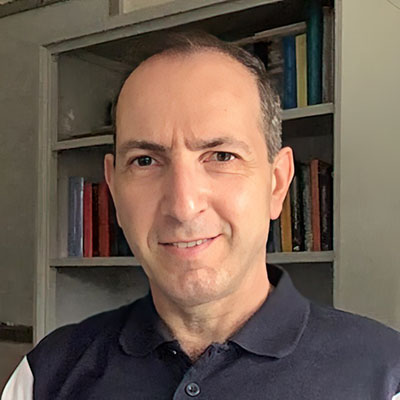
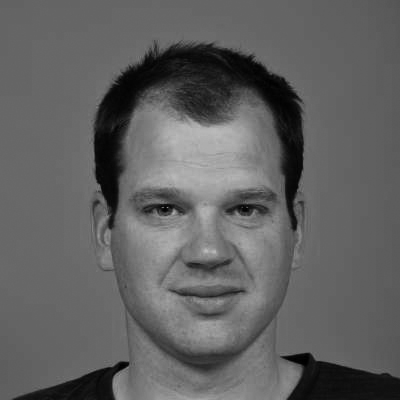
Associate Professor Yan Wang is a faculty member in the School of Science at RMIT University, specializing in Statistics. Her research focuses on ecological modelling using statistical and machine learning methodologies, including species distribution modelling and capture-recapture studies. She has contributed to high-impact work in ecological conservation, with publications in top 5% journals in these fields. Teaching encompasses courses like statistical inference, multivariate analysis, and predictive modelling across disciplines such as ecology, economics, and environmental science. Her interdisciplinary research spans collaborations with experts in ecology, epidemiology, and social sciences. Yan supervises PhD students and postdoctoral fellows in ecological modelling and consults across universities. She holds a prominent role in advancing statistical techniques for ecological applications, emphasizing practical solutions for environmental challenges.
Mirko Liuzzo is an Adjunct Professor at Ca' Foscari University of Venice, affiliated with the Department of Environmental Sciences, Informatics and Statistics. His research focuses on ecology, conservation biology, and zoology, particularly in aquatic and terrestrial ecosystems. He is part of the Research Institute for Green and Blue Growth, contributing to environmental sustainability studies. Key research interests include invasive species dynamics (e.g., Gambusia holbrooki, Trachemys scripta), turtle conservation (Emys orbicularis), and behavioral ecology of aquatic organisms. His work emphasizes molecular techniques, habitat management, and population dynamics. Recent publications analyze temperature effects on shrimp parental care, nesting patterns of European pond turtles, and the ecological impacts of invasive species. His studies often bridge theoretical ecology with practical conservation strategies, particularly in wetland and lagoon ecosystems. Liuzzo collaborates with international teams, as seen in multi-authored publications on Mediterranean killifish and leech-turtle interactions. His research supports biodiversity preservation through empirical field studies and molecular analyses.
Haim Bar is an Associate Professor in the Department of Statistics at the University of Connecticut. His research focuses on high-dimensional data analysis, bioinformatics, and statistical modeling with applications to genomics, proteomics, and public health. He leads initiatives such as the CoCoPUTs project, analyzing codon usage patterns across species and tissues, and develops statistical methods for translational medicine and precision health. Key contributions include the creation of the CancerCoCoPUTs database for cancer-specific codon usage, work on zinc status biomarkers for nutritional interventions, and proteomic-based prediction of immunotherapy responses. His methods address challenges in variable selection, graphical models, and handling missing data in large-scale biological datasets. Bar’s articles span statistical innovation (e.g., graphical models and convex geometry) to applied research in genetics, virology, and oncology. He collaborates across disciplines, integrating computational tools with clinical and ecological data to solve complex biological problems. His lab’s open-source tools like R-CMap advance concept mapping and data visualization.
Torbjørn Håkan Ergon is an Associate Professor at the University of Oslo's Department of Biosciences, working at the Centre for Ecological and Evolutionary Synthesis (CEES). He also serves as the director of the Finse Alpine Research Center and is an associate editor of Methods in Ecology and Evolution. His educational background includes: BSc and MSc from the University of Bergen PhD from the University of Oslo Additional PhD work at the University of Aberdeen, Scotland He completed a post-doctoral fellowship at Patuxent Wildlife Research Centre (Maryland) and University of Tromsø, and has conducted research at University of Otago (New Zealand), University of Wellington (New Zealand), University of California, Berkeley, and Cornell University (NY). Ergon's research focuses on understanding variation in life-history traits and demographic rates within populations and linking this to population level patterns and processes such as delayed density dependence. His work combines theoretical and empirical approaches, with particular emphasis on developing statistical models to estimate (correlated) distributions of latent life-history traits within populations. This research has significant implications for evolutionary processes, especially the evolution of phenotypic plasticity in life-history traits. His broader research interests include long term bird population studies, bioacoustics, and statistical modeling in ecology. His research spans multiple areas including small rodent population dynamics, seabird ecology, and the development of innovative statistical methods for ecological data analysis. Ergon has led and participated in numerous research projects including BIODIVTRENDS, studies on Fennoscandian bird populations, fishing-induced eco-evolutionary changes, and spatio-temporal dynamics of small rodents. Ergon teaches several courses at the University of Oslo: Design and analysis of biological studies (BIOS3000/4000) Alpine Ecology (BIOS5312/9312) Terrestrial Zoology (BIOS2210) Life history strategies and climate effects (BIOS 5112/BIOS 9112) His scientific work has been widely cited, with 78 publications accumulating over 19,000 reads and 2,600+ citations according to ResearchGate. His research has been published in leading journals including Nature, Proceedings of the National Academy of Sciences, Journal of Animal Ecology, Ecology, and Methods in Ecology and Evolution. As an associate editor for Methods in Ecology and Evolution, Ergon plays an important role in advancing methodological approaches in ecological research. His leadership of the Finse Alpine Research Center facilitates important alpine ecosystem studies in Norway.
Kevin Young is a Lecturer in Biology at Utah State University's Brigham City Campus, where he has been actively involved in teaching and research since completing his PhD in 2010. His work spans ecology, anatomy, and physiology, with a focus on ungrading pedagogical approaches to enhance learning. PhD in Biology, Utah State University (2010) BS in Zoology, Brigham Young University (1995) Certificate in Effective College Instruction (ACUE/ACE, 2022) Permaculture Design Certificate (The Permaculture Institute, 2013) His research emphasizes desert ecology and the conservation of sympatric horned lizards, alongside experimental work on mitigating harmful algal blooms. Teaching interests include human anatomy, physiology, and ecology, with a commitment to fostering student-centered learning. He has received recognition for innovative technology use in education and holds a Wood Badge award for leadership in Scouting. Publications include peer-reviewed research in ecology and educational materials on physiology and science teaching. Kevin Young has taught courses such as BIOL 2320 - Human Anatomy (2021-2024), BIOL 2420 - Human Physiology, BIOL 1620 - Biology II, and BIOL 3100 - Bioethics, demonstrating consistent engagement in anatomy and biology education.
Dr. Luke Macaulay is a University of Maryland Extension Wildlife Management Specialist based at the Wye Research and Education Center in Queenstown, MD. His work focuses on applied research and outreach regarding wildlife habitat enhancement and conflict mitigation across agricultural, forested, and grassland systems, with particular emphasis on northern bobwhite quail recovery and white-tailed deer management . He actively shares findings through the monthly Land & Wildlife Speaker Series and social media platforms. Education : Ph.D. and M.S. in Rangeland & Wildlife Management from University of California, Berkeley; B.A. in Spanish and Great Books from University of Notre Dame Research Themes : Working Landscapes : Integrating wildlife conservation with agricultural/forestry practices (33% forest, 18% agriculture, 12% grassland in Maryland) Human Dimensions : Analyzing private landowner behaviors (92% private land in MD) through USDA-funded surveys and state policy analyses Deer Ecology : Using thermal imaging and camera traps to study spatial behavior and food plot preferences Scientific Contributions : Developed uSCR models with continuous environmental covariates for elk population estimation Groundbreaking work on livestock grazing-fire ecology relationships Advancing drone-based wildlife monitoring techniques Professional Roles : President, Maryland-Delaware Chapter of The Wildlife Society Trustee, Natural Resources Extension Education Foundation (since 2023) Affiliate faculty in two departments at UMD
Dr. Roeland Bom is a Postdoctoral Researcher in the Coastal Systems Department at the Royal Netherlands Institute for Sea Research (NIOZ), specializing in marine organism responses to environmental change. His work spans international field sites including Oman's Barr Al Hikman mudflats, Guinea-Bissau's Bijagós Archipelago, and North Sea ecosystems. Dr. Bom's research focuses on migration ecology of shorebirds (particularly Bar-tailed Godwits), intertidal ecosystem dynamics , and climate change impacts on avian populations . His innovative work combines GPS telemetry with historical ecological data to establish baselines for measuring biodiversity change. Recent projects examine how warming climates homogenize migratory bird subspecies and track epic migration routes across three continents. His publication record demonstrates consistent output in marine ecology journals, with recent work published in Journal of Natural History and ZooKeys . Key findings include the discovery of new burrow morphologies in Omani mudflats, documentation of skate recovery in the North Sea, and recognition of a new bar-tailed godwit subspecies. Dr. Bom maintains active collaborations with: University of Amsterdam (climate-bird interactions) Sultan Qaboos University (Oman migration tracking) University of Aveiro (West African fieldwork) WWF (North Sea conservation initiatives) His research methodology integrates cutting-edge telemetry with historical ecological analysis, providing unique insights into ecosystem resilience under rapid environmental change. Current work emphasizes real-time migration tracking through radio transmitters and citizen science platforms, particularly for Bar-tailed Godwits wintering in the Middle East.