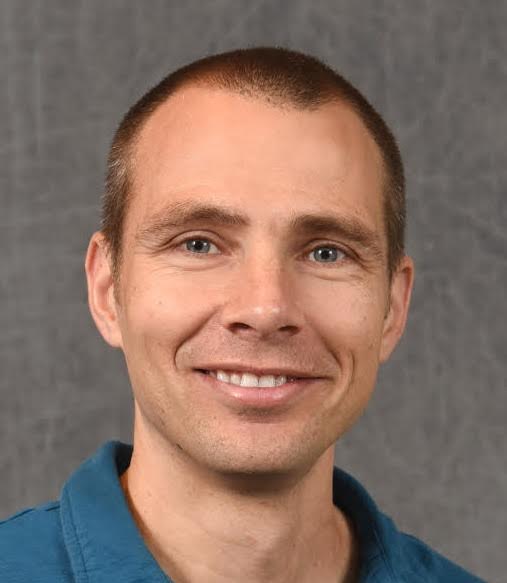
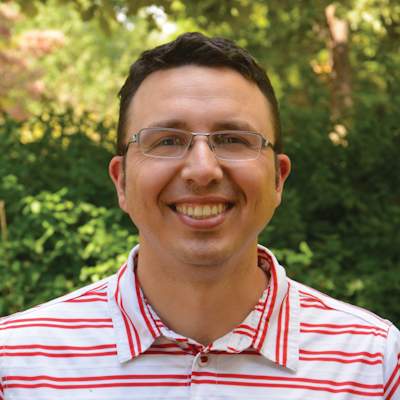
Brian Reich is the Gertrude M Cox Distinguished Professor of Statistics at North Carolina State University. His research focuses on geospatial analytics, spatial statistics, and extreme value analysis, with applications to environmental science, climate change, and public health. He leads the Environmental Statistics Lab, developing computational methods for big spatial data and spatiotemporal modeling. Research Interests: Spatial and Bayesian statistical methods Extreme value analysis and machine learning applications Environmental applications in ecology, epidemiology, and climate science Awards: Gertrude M Cox Distinguished Professorship Grants & Programs: NSF Research Training Group (UQ4Life) NSF REU Site (DRUMS for undergraduates) Carolina Thyroid Cancer Study Labs/Teams: Environmental Statistics Lab Collaborations on marine conservation, wildfire management, and PFAS exposure studies
David Valentín Conesa Guillén is a Full Professor in the Department of Statistics and Operations Research within the Faculty of Mathematics at the University of Valencia. He is an active researcher and a key member of the Valencia Bayesian Research Group (VABAR), focusing on advanced statistical methodologies and their applications. His primary research interests encompass Bayesian Statistics , Statistical Modeling , Operations Research , Epidemiological Modeling , Spatial Statistics , and Ecological Statistics . His work bridges theoretical development with practical applications in public health, environmental science, and financial systems. The trends in his recent publications reveal a strong emphasis on developing and applying Bayesian hierarchical models to complex real-world problems. Key areas include dynamic forecasting of influenza outbreaks, modeling spatial distributions of ecological and bioclimatic data, correcting biases in ecological survival estimates, and analyzing efficiency in sectors like banking and higher education. His methodology frequently involves advanced computational techniques like the Integrated Nested Laplace Approximation (INLA). PhD in Statistics, University of Valencia (2000) Thesis: "Inferencia y predicción en colas con ingresos o servicios en grupos" Supervised by Dr. Carmen Armero Cervera David Conesa has supervised academic work, as indicated by his role as a thesis advisor. His research has been supported by collaborative projects, leading to publications in top-tier journals such as Bayesian Analysis , European Journal of Operational Research , and Journal of Agricultural, Biological, and Environmental Statistics . He has extensive collaborations with researchers across Spain and internationally. His research is conducted within the VABAR (Valencia Bayesian Research Group) , a collaborative team dedicated to Bayesian methodology and its applications. This group provides a platform for interdisciplinary projects and the training of future statisticians.
Esra Ozdenerol is a Professor of Geographic Information Systems (GIS) in the Department of Earth Sciences at the University of Memphis since 2003. She directs the GIS Certificate Program and the Spatial Analysis and Geographic Education Laboratory. Additionally, she is affiliated with the University of Tennessee Health Science Center’s Department of Preventive Medicine and Health Outcome Policy. Previously, she served as Associate Director of the Benjamin L. Hooks Institute for Social Change (2010–2013) and was an Assistant Professor of Architecture at Florida International University (2000–2003). Educations: Ph.D., Geography (Louisiana State University, 2000); MLA, Landscape Architecture (LSU, 1996); BS, Agricultural Engineering: Landscape Architecture (Ankara University, Turkey, 1993). Her research focuses on GIS applications in public health, medical geography, landscape ecology, and gender equity. Notable areas include Lyme disease epidemiology, spatial health disparities, and geospatial analysis of social determinants of health. She also advocates for gender equity in STEM through projects like the ASPIRED initiative. Ozdenerol has consulted for public, government, and international agencies on GIS and spatial analysis. Her recent work addresses pandemic management (e.g., MEMPHI-SYS for COVID-19 data integration) and environmental health (e.g., lead exposure in children). She has collaborated on studies linking land-use changes, wildlife ecology, and public health outcomes. Ozdenerol’s interdisciplinary approach bridges geospatial technologies with community health and policy.
Isabel Cristina Maciel Natário is an Associate Professor in the Department of Mathematics at the Faculdade de Ciências e Tecnologia, Universidade Nova de Lisboa (FCT-UNL). She is an integrated member of the Centro de Matemática e Aplicações (CMA), specifically within the Statistics and Risk Management research group. Her academic and research profile is deeply rooted in statistical theory and applied data analysis, with strong interdisciplinary applications. Her educational background includes a Doctorate in Statistics and Operational Research (2005), a Master’s in Probability and Statistics (1999), and a Bachelor’s in Applied Mathematics and Computation (1995), all from Universidade de Lisboa. Doctorate: Hierarchical Bayesian Models for Epidemiological Analysis of Rare Events, Universidade de Lisboa (2005) Master’s: Spatial, Temporal and Spatio-Temporal Distribution of Rare Diseases, Universidade de Lisboa (1999) Bachelor’s: Avaliação de Erros em Inquéritos: Entrevista/Reentrevista, Instituto Superior Técnico (1995) Her research interests center on Spatio-Temporal Statistics, Bayesian Analysis, Hierarchical Modeling, Stochastic Processes, and Big Data. She applies these methodologies to diverse domains such as environmental risk, fisheries, epidemiology, and climate modeling. Her recent work demonstrates a strong focus on geostatistical inference, stochastic partial differential equations, and risk assessment in maritime and ecological contexts. Her 15 most recent publications reflect a consistent trajectory in advanced statistical modeling, particularly in spatial and spatio-temporal frameworks. The research spans theoretical developments in stochastic processes and Bayesian methods, as well as applied studies in health, marine biology, and environmental science. Key themes include maritime surveillance, species distribution modeling, wind velocity analysis, and clinical outcome prediction using statistical models. She has received no explicitly mentioned scientific awards in the provided text. Isabel Cristina Maciel Natário has supervised or collaborated with several researchers, including Sílvia Isabel Belo Guerra and Paula Cristina Pires Simões. While no formal list of advisees is provided, her collaborative publications and leadership in research groups suggest active mentoring. She has been involved in interdisciplinary research projects, particularly those involving environmental and health data. There is no mention of specific grants, but her sustained publication record and research group affiliation indicate active research funding. She is affiliated with the CMA – Centro de Matemática e Aplicações, a recognized research center at FCT-UNL, where she contributes to the Statistics and Risk Management group. This center supports collaborative, interdisciplinary research in mathematical modeling and statistical applications.
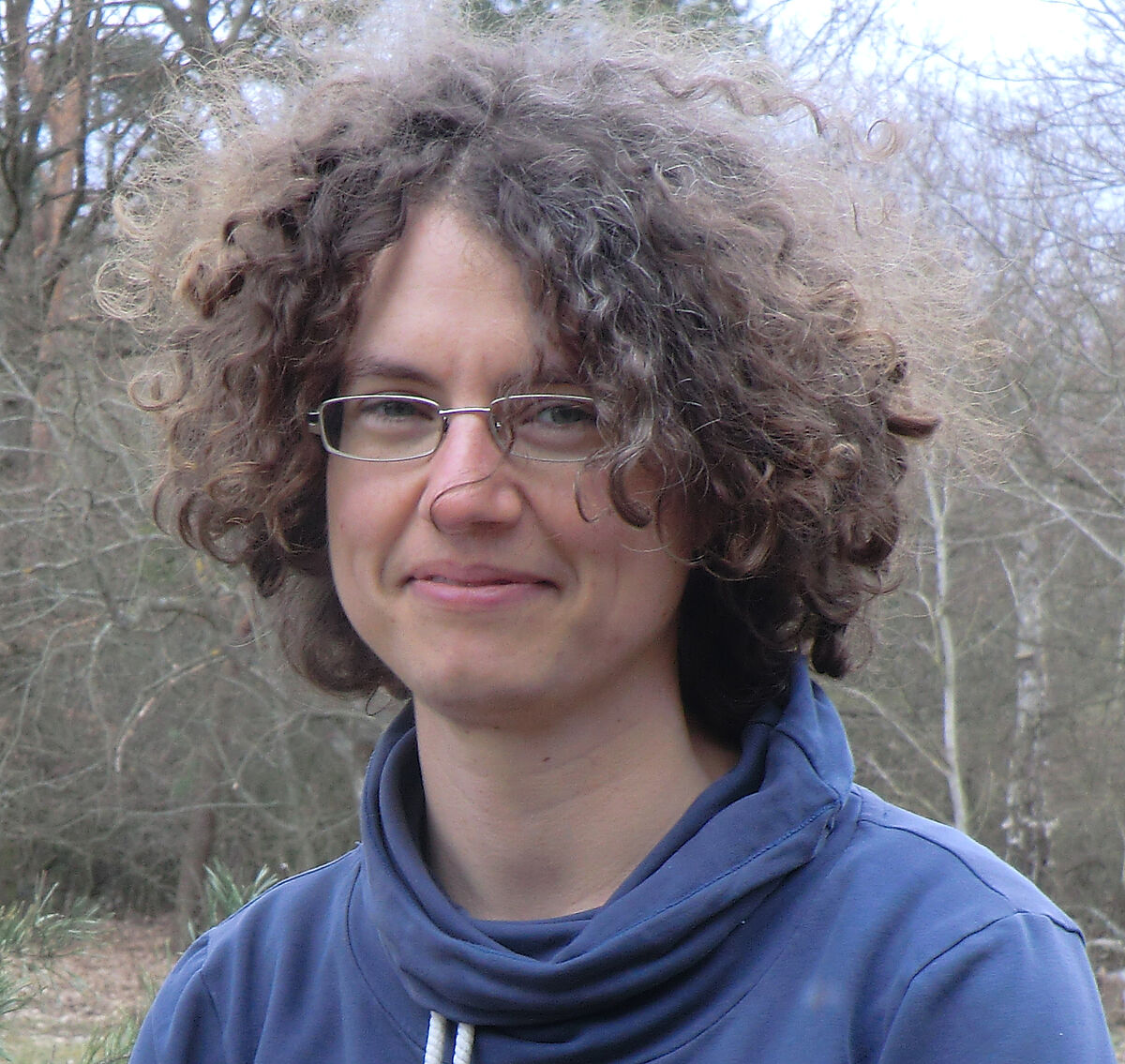
Dr. Saskia Schirmer is a researcher at the University of Greifswald in the Department of Applied Zoology and Nature Conservation. Her research focuses on statistical ecology with particular emphasis on wildlife conservation applications. She works at the intersection of ecological field data collection and advanced statistical modeling to address critical conservation challenges. Research interests: Using mark-recapture modeling for nature conservation, particularly with bat populations where she collaborates with volunteers to analyze long-term datasets Modeling spatio-temporal survival patterns of migrating species including both long-distance migrants (like ospreys) and short-distance migrants (like robins) Developing improved multi-species population indices that can handle rare, disappearing, or newly emerging species Her recent publications (2022) demonstrate expertise in spatial statistics and ecological modeling, with a focus on survival analysis, migratory connectivity, and population dynamics. She has developed innovative approaches to handle observational data from marked animals, particularly those found dead and reported, to better understand survival patterns across space and time. Scientific contributions: Advanced statistical frameworks for analyzing migratory species in continuous space Novel approaches to multi-species population indices that address limitations of existing methods Integration of volunteer-collected data with sophisticated statistical modeling for bat conservation Dr. Schirmer's work bridges the gap between theoretical statistical ecology and practical conservation applications, providing tools that can inform evidence-based conservation policy decisions.
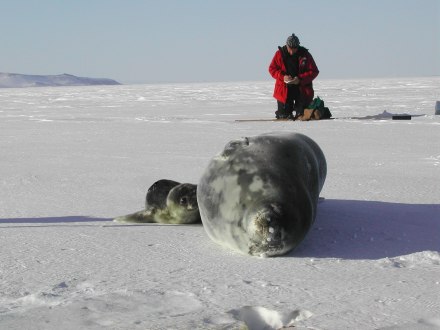
Jay Rotella is a Professor in the Department of Ecology at Montana State University and a core member of the Fish and Wildlife Ecology & Management Program. His research integrates animal population ecology , demographic modeling , and environmental drivers of population dynamics, with a focus on long-lived species like Weddell seals in Antarctica and terrestrial wildlife such as elk. He teaches Ornithology (senior-level) and graduate courses on population dynamics and ecological data analysis . Key Research Themes: Population modeling with capture-recapture methods Individual heterogeneity in survival and reproduction Climate change impacts on Antarctic marine ecosystems Wildlife management and conservation applications His recent publications ( 2023-2025 ) explore topics like senescence patterns in marine mammals, foraging behavior of Weddell seals, and connectivity in white shark populations. He has collaborated extensively with researchers across institutions and disciplines, particularly in demographic studies and environmental monitoring . No scientific awards are explicitly mentioned, and no graduate student opportunities are currently available according to his 2025 update.
Associate Professor Wayne Boardman is a wildlife veterinarian and conservation scientist at the University of Adelaide's School of Animal and Veterinary Science. With qualifications from the Royal Veterinary College (London), his career spans decades of international conservation work including positions at Auckland Zoo, Taronga Zoo, Zoological Society of London, and field projects across Africa and Asia. His expertise includes wildlife anesthesia, endangered species management, and disease ecology. Research Focus: Dr. Boardman's work centers on wildlife health in changing environments, with particular emphasis on: Disease ecology of Australian marsupials (koalas, wombats) Flying fox virology and conservation Antimicrobial resistance in wildlife One Health approaches to conservation Wildlife immobilization techniques Impacts of climate change and wildfires His publications demonstrate strong field-to-lab translational research with conservation applications. Awards & Recognition: Diplomate, European College of Zoological Medicine (Wildlife Population Health) European Registered Veterinary Specialist in Zoological Medicine He maintains active international collaborations and is available for graduate student supervision.
James Peterson is Assistant Professor and USGS Unit Leader at Oregon State University's Department of Fisheries, Wildlife, and Conservation Sciences. His research examines aquatic ecology with emphasis on lotic communities, population dynamics, and conservation applications for fish species. Current work investigates physical/biotic factors affecting stream-dwelling taxa across multiple ecological scales. Research integrates: Population dynamics and community production modeling Taxon-habitat relationships across landscapes Sampling methodology innovation Conservation tool development Recent publications focus on salmonid ecology, habitat restoration tradeoffs, species distribution modeling, and structured decision-making frameworks for water resource management.
Christopher S. DePerno is a Professor in the Department of Forestry and Environmental Resources at North Carolina State University, serving as FWCB (Fisheries, Wildlife, and Conservation Biology) Coordinator. He holds a B.S. from Central Michigan University (1990), M.S. from Purdue University (1994), and Ph.D. from South Dakota State University (1998). His research focuses on population ecology and management of large mammals, particularly black bears, bobcats, and northern bobwhite, with an emphasis on predator-prey interactions, habitat use, and urban wildlife dynamics. Key projects include evaluating the BearWise program’s impact on urban black bear behavior and public perception, studying antibiotic-resistant pathogens in wildlife, and analyzing prescribed fire effects on habitat quality and avian species. He has secured over $2.5 million in grants from agencies like US Fish & Wildlife Service and NC Wildlife Resources Commission. Education: B.S., Central Michigan University, 1990 M.S., Purdue University, 1994 Ph.D., South Dakota State University, 1998 Research interests span wildlife disease ecology, urban wildlife management, and conservation biology. Notable work includes genomic analysis of Listeria in black bears and spatial modeling of coyote behavior in military landscapes. He collaborates on interdisciplinary projects addressing human-wildlife conflict mitigation and ecosystem restoration. Grants and Projects: $842,186 Urban Black Bear Study (2019–2024): Evaluates BearWise program impacts on bear behavior and public compliance. $444,985 Asheville Watershed Urban Bear Study (2016–2019): Assesses urban/suburban bear population dynamics and harvest strategies. $316,038 Fort Bragg Habitat Matrix (2014–2019): Connects management actions to population viability for endangered species. Labs/Teams: Active in the NC State Wildlife and Fisheries program, leading field studies on black bears, river otters, and bobcats. Collaborates with state agencies and military installations on applied conservation projects.
Dr. James Martin is a Professor of Wildlife Education at the University of Georgia's School of Forestry and Natural Resources. He holds a PhD in Forest Resources from UGA (2010) and a B.S. in Environmental Studies from the University of North Carolina Asheville (2003). His research focuses on three core themes: landscape ecology and management, gamebird (particularly quail) ecology, and sustainable agriculture/forestry. He integrates quantitative methods and collaborates with agencies to enhance wildlife conservation in managed ecosystems. His teaching includes courses on conservation decision-making, wildlife habitat principles, and internships. His research emphasizes northern bobwhite populations, predator management impacts, and the ecological effects of forestry practices. Recent studies address translocation success, pathogen surveillance, and the efficacy of monitoring technologies. Dr. Martin leads the SREL Lab and maintains an affiliation with Google Scholar. His work bridges ecological theory and applied land management, with a focus on wildlife-friendly agricultural practices and biodiversity conservation in working forests. Notable contributions include studies on bobwhite density in private forests, gopher tortoise burrow ecology, and the effects of thinning on wildlife habitat. His articles often analyze spatio-temporal dynamics, predation risk, and the economic feasibility of conservation practices. While no formal awards are listed, his prolific publication record reflects his leadership in North American gamebird conservation science.
Alex Sen Gupta is an Associate Professor at the University of New South Wales (UNSW), working at the Climate Change Research Centre (CCRC) and the Centre For Marine Science and Innovation (CMSI). He also serves as a Chief Investigator and program leader for the ARC Australian Centre of Excellence for Antarctic Science (ACEAS) and as an Associate Investigator for the ARC Centre of Excellence for Climate Extremes (CLEX). Dr. Sen Gupta's research focuses on the role of the ocean in the climate system and how it influences regional climate patterns. His work spans several key areas including: Marine Heatwaves: their causes, temporal changes, and impacts on marine organisms Climate modeling to understand ocean circulation changes in a warming world Factors affecting high latitude Southern Hemisphere atmospheric circulation Impacts of climate variability on regional rainfall patterns Modeling the movement of tropical tuna Analysis of climate model biases Effects of temperature variability on marine species He has developed Carbonator, a simple climate model designed for educational use in schools, public outreach, and research applications. This tool helps users understand how human actions affect global warming, sea level rise, and ocean acidification. Dr. Sen Gupta's recent publications demonstrate a strong focus on marine heatwaves, with significant contributions to understanding their mechanisms, global patterns, and ecological and socioeconomic impacts. His work bridges fundamental climate science with practical applications for forecasting and understanding extreme ocean events. As a Chief Investigator for ACEAS and Associate Investigator for CLEX, Dr. Sen Gupta is involved in major collaborative research efforts addressing critical questions in climate science and Antarctic research. His work contributes to both theoretical understanding of climate processes and practical applications for climate adaptation and mitigation.
Monica S. Ruiz is an Associate Professor at George Washington University's Milken Institute School of Public Health, Department of Prevention and Community Health, affiliated since 2008. She also serves as Co-Director of the iMCH Lab. Her work focuses on HIV prevention, substance use, and health disparities in marginalized populations, including LGBTQ+, people who use drugs, and BIPOC communities. Education: Bachelor of Arts in Psychology, Loyola Marymount University (1988) Master of Public Health in Epidemiology, University of California, Berkeley (1996) Doctor of Philosophy in Preventive Medicine, University of Southern California School of Medicine (1995) Research: Dr. Ruiz leads projects such as DC POINTE, examining policy impacts on HIV outcomes in Washington, DC. Her work evaluates syringe exchange programs, addiction treatment access, and the effects of gentrification on harm reduction services. She has held roles at NIH, amfAR, and the Institute of Medicine, emphasizing policy-driven health equity. Teaching: She teaches courses including PubH 1102 (History of Public Health), PubH 6553 (Adolescent Health), and PubH 6559 (HIV Prevention Strategies). Community Service: Dr. Ruiz serves on the Syringe Access Working Group in DC, is active in Team RWB (military veteran support), and volunteers for Dogs on Deployment (military pet care). She contributes to national committees addressing HIV/AIDS research and policy. Labs/Teams: Co-Director of the iMCH Lab, collaborating on harm reduction and policy research.
Natalie Hyslop is Professor of Biology at the University of North Georgia, specializing in wildlife ecology and conservation, particularly for herpetofauna in the southeastern United States. She leads research on Eastern Box Turtles and herpetological diseases. Research Focus: Her investigations examine ecological factors affecting species persistence, habitat requirements for reptiles and amphibians, and conservation strategies for imperiled species like the Eastern Indigo Snake. Current projects include disease ecology studies and spatial behavior analysis of turtle populations. Field research encompasses radio telemetry, population monitoring, and habitat assessment across Georgia ecosystems. Publications demonstrate consistent focus on reptile ecology (70%) and conservation applications (30%). As Principal Investigator for the STEM Scholars Program, she supports academically talented students from underrepresented backgrounds in science education and research training.
Diana Cole is a Senior Lecturer in Statistics at the University of Kent, affiliated with the School of Mathematics, Statistics and Actuarial Science. She earned her PhD in Statistics from the same university in 2003, focusing on stochastic branching processes in biology. Her research interests include ecological statistics, integrated population modeling, identifiability, parameter redundancy, and generalized linear mixed models. She is a core member of the SE@K (Statistical Ecology at Kent) research group and the National Centre for Statistical Ecology (NCSE). Dr. Cole teaches courses such as Statistical Consultancy and Data Presentation (MAST6012) and Data Modelling and Consultancy (MAST7200). She actively supervises PhD students in statistical ecology, emphasizing applications in ecological and environmental data analysis. Her publications span ecological modeling, statistical methodology, and interdisciplinary applications, with a focus on parameter redundancy and identifiability in complex models. Notable contributions include her 2020 book Parameter Redundancy and Identifiability , which provides theoretical and practical insights into model identifiability. Her work bridges statistical theory and ecological applications, addressing challenges in population dynamics, conservation biology, and environmental monitoring. Recent studies explore (e)DNA concentration modeling, state-space approaches for ecological time series, and methodological advancements in capture-recapture and removal models.
Eleni Matechou is an Honorary Academic in Statistics at the University of Kent, affiliated with the School of Mathematics, Statistics and Actuarial Science. Her academic background includes a BSc in Statistics from Athens University of Economics and Business, an MSc in Statistics with Applications in Medicine from the University of Southampton, and a PhD jointly conducted at the University of Kent and the Max Planck Institute for Demographic Research. She has held positions such as Research and Teaching Fellow at Victoria University of Wellington, Departmental Lecturer at the University of Oxford, and is currently a member of the Statistical Ecology @ Kent (SE@K) group and the National Centre for Statistical Ecology (NCSE). Her research focuses on statistical ecology, particularly developing models for wildlife populations, migration patterns, and environmental DNA (eDNA) monitoring. Key areas include Bayesian and frequentist approaches to capture-recapture models, mixture models, and integrating citizen science data for ecological inference. She is actively involved in methodological advancements for biodiversity assessment and conservation, emphasizing the use of innovative technologies like robotics and eDNA. Professionally, Eleni chairs the Environmental Statistics Section of the Royal Statistical Society and serves as Book Reviews Editor for the Journal of Agricultural, Biological and Environmental Statistics . Her work bridges statistical rigor with ecological applications, addressing challenges in monitoring biodiversity and informing conservation strategies. Collaborations span institutions globally, reflecting her interdisciplinary approach to solving ecological problems.