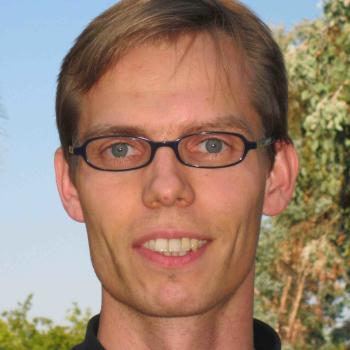
Keunhyun (Keun) Park is an Assistant Professor of Urban Forestry at the University of British Columbia (UBC), affiliated with the Department of Forest Resources Management . He also holds an Adjunct Professor position at Utah State University in the Department of Landscape Architecture and Environmental Planning. Education: BSc and MSc in Landscape Architecture from Seoul National University; PhD in Urban Planning and Design from the University of Utah Research Lab: Faculty lead of the Urban Nature Design Research Lab ( under_lab ) His research focuses on designing healthy, just, and resilient cities through urban nature , with particular emphasis on: Environmental justice and equitable access to urban green spaces Human behavior in public spaces using drone/sensor/VR technology Smart growth urban design impacts on public health and ecological systems Recent publications demonstrate expertise in GIS applications , pedestrian behavior analysis , and urban planning across 20+ studies from 2013-2025. Collaborations include the Vancouver Park Board , Metro Vancouver , and Wasatch Front Regional Council .
John E. Taylor is the Frederick Law Olmsted Professor and Associate Chair for Faculty Development and Research Innovation at the Georgia Institute of Technology's School of Civil and Environmental Engineering within the College of Engineering. His research focuses on the intersection of human and engineered networks, with particular emphasis on creating resilient infrastructure systems that serve society's needs while creating more livable communities. Taylor's research interests span multiple domains including Smart City Digital Twins , Urban Infrastructure Resilience , Network Dynamics , and Building-Occupant Interaction . His work examines how human behavior, infrastructure systems, and environmental factors interact during normal operations and extreme events. He has developed innovative approaches to understanding urban systems through the lens of network theory and computational modeling. His publication record demonstrates consistent contributions to the fields of urban analytics and infrastructure resilience, with a recent focus on digital twin technologies for urban systems. Taylor's work shows a clear trajectory toward increasingly sophisticated integration of AI, network science, and civil infrastructure engineering to address complex urban challenges. His research has particular relevance for cities facing climate change impacts and seeking to build more equitable and resilient communities. Taylor leads the Network Dynamics Lab at Georgia Tech, where he mentors PhD students and postdoctoral researchers. His lab has produced significant work on human-infrastructure interaction, particularly during disasters and extreme events. The lab's research combines computational modeling, data analytics, and field studies to understand and improve urban systems. His work has been applied to real-world challenges including river emergency response systems, urban heat exposure forecasting, and disaster response optimization. Taylor has collaborated with city officials and agencies to implement systems that have demonstrable community benefits, such as the AI-enabled camera system for drowning prevention on the Chattahoochee River and crime reduction systems using mobile cameras guided by AI algorithms.
Leonardo Rosado is an Associate Professor at the Department of Water Environment Technology (School of Architecture and Civil Engineering) at Chalmers University of Technology . His work focuses on Urban Metabolism , developing methods to analyze cities' resource flows through the Urban Metabolism Analyst framework. His research spans: Circular Economy implementation Waste Management systems Household consumption modeling Agent-based urban scenario analysis Recent publications (2025–2021) cover geospatial sharing economy frameworks, behavioral modeling of waste sorting, and machine learning applications for infrastructure analysis. Major funded projects include: Digital Twin Cities Centre (VINNOVA, 2020–2024) CREATE (Swedish Energy Agency, 2022–2025) SEsam (Kamprad Family Foundation, 2020–2023) Contact: rosado@chalmers.se | ORCID
Namkyu Chun is a Lecturer at Aalto University's Department of Design, specializing in fashion and textile futures. With a focus on sustainability, interdisciplinary collaboration, and redefining design practices, Chun's work bridges fashion theory, material culture, and transformative futures. Their research explores the intersection of human/non-human relationships in design, climate-responsive practices, and ethical material engagement. Key research areas: Fashion Design, Sustainable Practices, Design Futures, Interdisciplinary Collaboration Awards: 2024 Ziman Award (CreaTures Project), 2017 Finnish-Danish Cultural Foundation Scholarship, 2017 Helsinki Urban Facts Grant, 2015 Subtle Visibility Award Recent publications examine topics such as '1.5 Degree Lifestyles,' 'Pluriverse' frameworks, and revival of dressmaking traditions. Chun collaborates with institutions like University of Sussex, RMIT, and Superflux, integrating artistic inquiry with systemic change. Their work appears in journals including Fashion Theory , The Design Journal , and Fashion Practice .
Professor Kim Midwood serves as Professor of Matrix Biology and Kennedy Director of Graduate Studies at the University of Oxford's Kennedy Institute of Rheumatology, leading research on extracellular matrix dynamics in inflammatory diseases and cancer. Her academic foundation includes: BSc (Hons) in Biochemistry from the University of Edinburgh (1995) PhD in Pathology from the University of Edinburgh (1999), investigating extracellular matrix changes in arthritis Her research centers on matrix immunology, particularly tenascin-C's role in rheumatoid arthritis, tumor microenvironments, and fibrosis. She examines how tissue-specific matrix composition dictates immune cell behavior through toll-like receptor signaling and chemokine networks, revealing novel therapeutic targets for chronic inflammatory conditions. Publications from 2013-2025 demonstrate evolving focus from arthritis mechanisms to broader applications in cancer immunotherapy and regenerative medicine, consistently highlighting matrix molecules as central regulators of disease progression. Her accolades include: MRC New Investigators Award (2007) Arthritis Research UK Senior Fellowship (2012) She directs the Matrix Immunology research group (established 2004 at Imperial College London, relocated to Oxford in 2011) and founded biotech company Nascient Ltd (2012) to translate matrix-targeting discoveries into clinical therapies.
Jean Laurens is a Group Leader at the Ernst Strüngmann Institute (ESI) for Neuroscience in Cooperation with Max Planck Society in Frankfurt, Germany, where he heads the Laurens Lab. His research focuses on understanding how we sense our own motion and orient ourselves in three-dimensional space through neural mechanisms. His research interests include: Three-dimensional navigation and the neural basis of the 'brain compass' through head-direction cells in the limbic system Sensory signals for spatial navigation and how the brain integrates self-motion signals with visual landmarks Self-motion sensation and how the brain merges multiple sensory signals from the inner ear, vision, and proprioception with motor commands Laurens employs a multidisciplinary approach combining mathematical modeling and extracellular neuronal recordings in behaving Marmoset monkeys. His work spans computational neuroscience, systems neuroscience, and vestibular research, with significant contributions to understanding 3D orientation coding, gravity sensing in neural circuits, and spatial cognition. Recent publications demonstrate his focus on neural attractor networks, multisensory integration, and the representation of spatial orientation relative to gravity. His laboratory team includes researchers Francesca Lanzarini, Farzad Ziaie Nezhad, and Deepak Surendran, with Sogand Ghiasi managing laboratory operations. The Laurens Lab has been featured in media outlets including Süddeutsche Zeitung, with coverage of their work on balance mechanisms published in November 2020 and an article titled 'Du kannst mich Affe nennen' published on August 30, 2024.
Fred Feinberg is the Joseph and Sally Handleman Professor of Marketing and Professor of Statistics (by courtesy) at the University of Michigan, where he is also an Affiliated Faculty member of the Center for the Study of Complex Systems. His work integrates advanced Bayesian methods with large-scale marketing data to illuminate how people make choices under uncertainty. Education Ph.D., Sloan School of Management, Massachusetts Institute of Technology (1989) Doctoral program in Mathematics, Cornell University (1983–84) S.B. Mathematics & S.B. Philosophy, Massachusetts Institute of Technology (1983) Research Focus Feinberg’s scholarship centers on discrete choice models that leverage real-world decisions to infer latent attributes such as demographics, product appeal, and socioeconomic status. Methodologically, he employs Hierarchical Bayes (HB) models and cutting-edge MCMC algorithms to handle massive data sets, while theoretically he advances dyadic utility theory and optimal search under uncertainty. Applications span click-through behavior, menu-based choice, online dating preferences, spatial marketing, and consumer reactions to intangible or aesthetic product features. Recent empirical studies explore the wearout versus weariness effects of online advertising, the impact of data breaches on consumer behavior, and dynamic pricing for digital media subscriptions. Across these projects, Feinberg couples rigorous statistical innovation with actionable managerial insights, bridging marketing science, operations, and engineering. Scientific Awards & Leadership Joseph and Sally Handleman Endowed Professorship Past President, INFORMS Society for Marketing Science Departmental Editor, Production and Operations Management Former Co-Editor, Marketing Science Co-author (with T. Kinnear & J. Taylor) of the textbook Modern Marketing Research: Concepts, Methods, and Cases Grants & Collaborations While explicit grant lists are not provided, Feinberg’s prolific publication record in top-tier journals (e.g., Journal of Marketing Research , Marketing Science , Management Science ) and editorial board service imply sustained external funding and interdisciplinary partnerships, particularly with operations, engineering, and computer-science groups. Laboratories & Teams Feinberg is formally affiliated with the Center for the Study of Complex Systems (CSCS) at the University of Michigan, where he collaborates on network-based choice frameworks and large-scale behavioral data analytics. He maintains active ties to the Ross Marketing faculty and the Department of Statistics, fostering joint workshops and doctoral training initiatives.
Dr. Quirin Thomas Simon Vogel is a Senior Lecturer at the Department of Statistics, University of Klagenfurt. He previously held postdoctoral positions at the Technical University of Munich, New York University Shanghai, and served as an Interim Professor at Ludwig-Maximilians University of Munich. His research bridges probability theory with statistical mechanics and algorithmic applications. Current role: Senior Lecturer (2025) Previous roles: Postdoc (TUM, NYU Shanghai), Interim Professor (LMU Munich) His research focuses on: Random walks and their geometric/stochastic properties Randomized algorithms with applications in statistical models Quantum-inspired probabilistic systems (e.g. interacting bosonic loop soups) Large deviation theory for complex systems Percolation and phase transitions in particle models The articles reflect trends in probability theory, mathematical physics, and algorithmic applications. Key topics include high-dimensional percolation, Bose gas models, neural network theory, and stochastic geometry. The work combines rigorous mathematical analysis with interdisciplinary applications in physics and computer science. Scientific awards and functions cannot be determined from the provided data, as they describe other researchers. The department's research activities include projects on statistical learning, quantum models, and algorithmic probability, though Vogel's direct involvement in these specific funded projects isn't explicitly stated.
Gina Bloom is a Professor of English at the University of California, Davis, with affiliations in the PhD programs in Education and Performance Studies. Her research spans Shakespeare, early modern drama, gender theory, and digital humanities, focusing on games, performance, and educational technologies. PhD, MA, and Certificate in Women's Studies from the University of Michigan BA from the University of Pennsylvania Her work includes the award-winning digital game Play the Knave and a decolonial pedagogy curriculum for teaching Shakespeare. She collaborates with UC Davis’s ModLab and DataLab, emphasizing social justice and immersive learning. Awards include Best AR/VR Game (2022) and Shakespeare Publics Award (2025). Her publications blend game studies, theater history, and feminist theory, with recent articles addressing decolonial education and digital embodiment. Winner, Shakespeare Publics Award (2025) Finalist, GEE! Learning Game Award (2023) Winner, Best AR/VR Game Award (2022)
Bernt-Erik Sæther is a Professor in population ecology at the Department of Biology, Norwegian University of Science and Technology (NTNU), and Director of the Centre for Biodiversity Dynamics (CBD), a Norwegian Centre of Excellence (SFF). His research focuses on integrating ecological and evolutionary processes, particularly in population and community dynamics. He has led major field projects on species like the house sparrow and elk, emphasizing stochastic influences on evolutionary change and population resilience. Education and Background: Sæther has held roles including Professor II at NTNU (20% since 1996), Senior Scientific Advisor at the Norwegian Institute for Nature Research (NINA), and researcher positions at the Directorate for Nature Management and Game Research institutes. His academic journey spans over four decades, with a PhD and early research in wildlife ecology. Research Interests: His work bridges population dynamics, climate change impacts, and conservation strategies. Key areas include density dependence, metapopulation dynamics, and eco-evolutionary feedbacks. He investigates how environmental stochasticity and human activities (e.g., harvesting) affect population stability and biodiversity. Awards and Recognition: He has received the Møbius Prize (2013) for outstanding research, an ERC Advanced Grant (2011–2016), and membership in prestigious academies like the Norwegian Academy of Science and Letters. His contributions to conservation science and ecological modeling are globally recognized. Professional Roles: Sæther chairs the Swedish Research Committee in Wildlife Research and serves on steering boards for environmental research initiatives like NORKLIMA and MISTRA. He advocates for sustainable land-use policies and improved biodiversity monitoring in Norway. Publications: Over 200 peer-reviewed articles, including seminal works on metapopulation ecology, climate-driven demographic shifts, and the evolutionary implications of stochastic processes. Recent studies highlight the effects of harvesting on population fluctuations and the role of telomeres in life-history strategies.
Prof. Coen Teulings is a Professor of Economics at Utrecht University's Department of Economics, part of the Law, Economics, Governance and Organisation faculty. He holds concurrent roles as a Fellow at CEPR, IZA, and CES-Ifo. Previously, he served as Professor of Economics at the University of Cambridge (2013–2017) and part-time Professor at the University of Amsterdam (2004–2017). His professional history includes seven years as President of the Netherlands Bureau for Economic Policy Analysis (CPB), CEO of SEO Economic Research (2004–2006), and Director of the Tinbergen Institute (1998–2004). Teulings earned a Master's degree in Economics (cum laude, 1985) and a PhD (1990) from the University of Amsterdam. He has advised governmental and international bodies, including the Dutch House of Commons Economic Advisors and the UK's Office for Budget Responsibility. His research focuses on labor economics, macroeconomics, urban economics, and policy analysis, with notable work on minimum wages, income inequality, and secular stagnation. He co-edited the 2014 E-book on Secular Stagnation with Richard Baldwin. Teulings' recent publications address topics like agglomeration effects, urban retail dynamics, and wealth distribution. He contributes to policy debates through roles on the AFM Capital Markets Committee and supervisory boards of institutions like the Boekmanstichting. His ancillary activities include a biweekly column in the Financial Daily (FD) and academic governance roles in the Netherlands and Europe.
Dr Zoe M Harris is a Senior Lecturer and Director of the Centre for Environment and Sustainability at the University of Surrey. She specializes in sustainable land use, bioenergy systems, and vertical farming technologies. Her research focuses on minimizing environmental impacts while enhancing food and energy provision, particularly through projects like the Taeda Tech Project (aeroponic biomass cultivation) and VF-UKFSR (vertical farming resilience). She leads the Bioenergy, Land Use and Agri-Innovation Group and holds roles in international committees like the IEA Bioenergy Executive (Head of Communications). Her work spans interdisciplinary collaborations, policy advising, and science communication, including training scientists in theatre-based communication. She also champions diversity in energy research through the IVUGER network. Education: BSc Biology and PhD from the University of Southampton. Previous Roles: Research Fellow at Imperial College London, Science Officer at DEFRA, Policy Adviser at BEIS/DfT. Key Projects: Taeda Tech (£4m), Social Enterprise Food Systems, Serious Games for Energy Solutions. Teaching: Director of Practitioner Doctorate in Sustainability; Fellow of HEA; course leader for Global Sustainability, Earth System Science, and Low Carbon Transitions. Labs/Teams: Leads the Bioenergy, Land Use and Agri-Innovation Group; collaborates with industry and academia on aeroponics, biomass, and circular economy. Awards: Fellow of the Higher Education Academy (FHEA); grants from UKERC, DecarboN8, and BEIS. Her research bridges climate science, ecology, and socio-economic factors, addressing global challenges like BECCS deployment, biodiversity loss, and gender equity in STEM.
Jasmin Richter is a Research Fellow at the University of Oslo, affiliated with the LCE - Literature, Cognition and Emotions and the Social Psychology Research Group. Her academic journey includes a Ph.D. in Psychology from the University of Cologne (2020), followed by postdoctoral positions at the University of Cologne (2020–2021) and the University of Oslo (2021–present). Education & Appointments: 2021–Present: Postdoctoral Fellow, University of Oslo 2020–2021: Postdoctoral Fellow, University of Cologne 2020: Ph.D. in Psychology, University of Cologne 2015–2020: Ph.D. Student, University of Cologne 2015: M.Sc. in Psychology, University of Bonn 2013: B.Sc. in Psychology, University of Giessen Research Interests: Dr. Richter specializes in cognitive and social psychology, focusing on evaluative conditioning, processing fluency, and moralization. Her work explores how repetition, stimulus pairing, and temporal dynamics influence truth/moral judgments, memory consolidation, and affective preferences. Key themes include the role of episodic retrieval in learning mechanisms and the interplay between unawareness and contingency awareness in valence processing. Publications Trends: Her recent work (2021–2025) emphasizes experimental psychology, with contributions to Cognition & Emotion , Journal of Experimental Social Psychology , and Developmental Review . Topics include evaluative conditioning under varying temporal conditions, the effects of simultaneous stimulus pairing, and the cognitive foundations of affective preferences. Labs & Collaborations: Active in interdisciplinary teams, her research integrates experimental designs with neurocognitive frameworks. Collaborations span institutions like the University of Cologne, the University of Bonn, and international co-authors in psychology and cognitive science.
Megan Laura McCain is a Professor of Biomedical Engineering at the University of Southern California (USC), with a secondary appointment in the Department of Stem Cell Biology and Regenerative Medicine at the Keck School of Medicine. She leads the McCain Lab, focused on developing microphysiological systems, particularly heart- and muscle-on-a-chip models, to study disease mechanisms and therapeutic responses. McCain holds affiliations with the Biomedical Engineering Society, American Society for Cell Biology, and American Heart Association. Her education includes a B.S. in Biomedical Engineering from Washington University in St. Louis (2006), a Ph.D. in Engineering and Applied Sciences from Harvard University (2012), and postdoctoral research at Harvard’s Wyss Institute. Notable awards include the American Heart Association Pre-doctoral Fellowship and Harvard’s Derek Bok Certificate of Distinction in Teaching. McCain’s research integrates tissue engineering, stem cell biology, and microfluidics to model complex biological systems. Her work emphasizes understanding how microenvironments influence cellular behavior in diseases like cardiovascular disorders and muscular dystrophy. Recent studies explore paracrine interactions in engineered tissues, sex-based proteomic differences in vascular cells, and hypoxia-induced signaling in cardiac fibroblasts. Her scientific contributions include advancements in 3D bioprinting, microfluidic platforms for disease modeling, and synthetic biology tools for cellular control. McCain’s lab collaborates widely to translate findings into clinical applications, such as personalized medicine and regenerative therapies.
Matthias Ihme is a Professor in the Department of Mechanical Engineering and Photon Science Directorate at Stanford University. His research focuses on large-eddy simulation (LES) of turbulent reacting flows, aeroacoustics, combustion-generated noise, numerical methods, and high-order schemes. He holds a Ph.D. from Stanford University (2008), an M.Sc. in Computational Engineering from the University of Erlangen (Germany, 2002), and a Dipl.-Ing. in Mechanical Engineering from Munich University of Applied Sciences (Germany, 2000). His work bridges computational fluid dynamics, combustion science, and photon science, with notable contributions to supercritical fluid dynamics, machine learning integration in fluid simulations, and high-fidelity atmospheric transport modeling. Recent research emphasizes ultrafast cluster dynamics, shock-induced interface behavior, and stochastic ignition mechanisms in advanced fuel systems. Publications highlight interdisciplinary advancements, including physics-informed ML frameworks for reacting flows and experimental studies using X-ray photon correlation spectroscopy. His projects often involve high-performance computing and collaboration with national labs like SLAC.