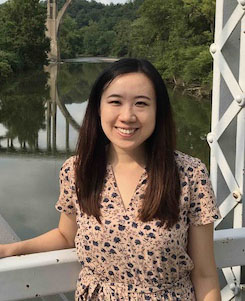
Dr. Chengcheng Huang is an Assistant Professor in the Department of Neuroscience and Mathematics at the University of Pittsburgh. She holds affiliations with the Center for Neuroscience, the Mathematics Graduate Program, and the Program of Neural Computation at the Center for the Basis of Neural Cognition. Her research focuses on computational modeling of neural networks, exploring circuit dynamics and information processing in sensory systems, particularly the role of neural variability in context-dependent responses. Huang's work is supported by grants from the NIH BRAIN Initiative, NSF CAREER Award, Simons Foundation, and PITT Momentum Scaling Award. Education: PhD in Neuroscience from New York University (2015), B.Sc. in Mathematics from Nanjing University (2010). Postdoctoral training included roles at leading institutions. She teaches courses such as Applied Differential Equations and Introduction to Computational Neuroscience. Her lab, the Huang Lab for Neural Dynamics and Computation, investigates neural variability in network models and its implications for neural coding. Current projects include studying functional roles of interneuron subtypes, attentional modulation, and synaptic plasticity. The lab actively recruits postdoctoral fellows, graduate students, and undergraduates. Awards and recognition include prestigious grants and fellowships, reflecting her impactful contributions to computational neuroscience and mathematical biology.
Dr. Anne-Marie Nicol is an Associate Professor of Professional Practice in Health Sciences at Simon Fraser University. Her multidisciplinary research spans health communication, toxicology, social marketing, risk perception, and risk assessment, with emphasis on environmental and occupational health exposures. She leads CAREX Canada, a national carcinogen surveillance program, and has developed public health campaigns including Wash with Care and Tick Talk. Her work focuses on translating scientific information about carcinogens to policymakers and cancer prevention stakeholders. She teaches Human Health Risk Assessment, Toxicology for Public Health, and Health Communication. Her research has been funded by CIHR, Michael Smith Foundation, and Canadian Cancer Society. Current projects include studies on radon exposure, infodemic communication strategies, and community resilience to wildfire smoke. She holds a BA from SFU, MES from York University, and PhD from UBC.
Katherine Johnson is a Professor and Dean of the School of Global, Urban and Social Studies (GUSS) at RMIT University. Her academic leadership spans roles such as Executive Dean, Research Centre Director, and Associate Dean in Australia and the UK. Her research focuses on LGBTQ+ mental health, transgender health, and participatory methods, with a commitment to social equity and environmental justice. She has led projects funded by Horizon 2020/NHMRC, ARC, and VicHealth, and her work bridges policy, practice, and community impact. Awards include the RMIT Vice Chancellor Leadership Award for Inclusion (2024) and the Vice Chancellor Research Impact and Engagement Award (2024). Research Interests: Her interdisciplinary work addresses LGBTQ+ suicide prevention, early mental health interventions for youth, and transformative policy. Key areas include participatory action research, psychosocial interventions, and global collaborations in Europe, Mexico, and the UK. She emphasizes creative and inclusive methodologies to foster social change. Professional Experience: Prior to RMIT, she directed the Centre for Transforming Sexuality and Gender at the University of Brighton. She has held visiting fellowships at institutions like the University of Sydney, Universitat Autònoma de Barcelona, and Universidade Federal de São Paulo. Her industry engagement includes advisory roles with LGBTQ+ organizations and mental health advocacy. Awards & Recognition: RMIT Vice Chancellor Leadership Award for Inclusion (2024) Vice Chancellor Research Impact and Engagement Award (Open) (2024) Grants & Funding: Projects are supported by Horizon 2020/NHMRC, ARC, VicHealth, and international partnerships. Her research often addresses global challenges like LGBTQ+ youth mental health and transgender health equity. Teaching & Supervision: Open to supervising PhD and Masters students in areas such as LGBTQ+ health, participatory methods, and social policy. She champions inclusive pedagogies and transformative student experiences.
Ian Gilby is an Associate Professor at the School of Human Evolution and Social Change, Arizona State University. His research focuses on the social behavior, ecology, and cognition of wild chimpanzees, particularly within the context of long-term studies at Gombe National Park, Tanzania. Gilby investigates topics such as cooperative hunting, dominance hierarchies, social bonding, and the influence of ecological factors on primate behavior. His work bridges primatology, evolutionary biology, and conservation science, with a strong emphasis on understanding the adaptive strategies of chimpanzees in complex social environments. Key themes in Gilby’s research include the evolution of cooperation, reproductive strategies, and the ecological drivers of social behavior. He has contributed significantly to studies on chimpanzee aggression, hunting tactics, and the role of vocal communication in group coordination. His findings highlight the intricate relationship between social structure, ecological conditions, and individual success in primate communities. Notably, Gilby is involved in the Gombe Chimpanzee Project, analyzing long-term datasets to address questions about data sharing in conservation science and the impacts of environmental changes on wildlife. While no formal awards or grants are explicitly mentioned in the provided texts, his extensive publication record underscores his expertise in primate behavior and ecology.
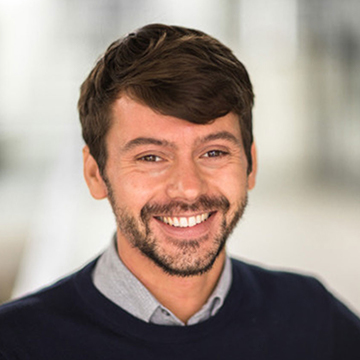
Stefano Caria is an Associate Professor in the Department of Economics at the University of Warwick. He will join the University of Oxford in 2025. His affiliations include J-PAL, CEPR (Development and Labour), BREAD, CAGE, and STICERD's EEE program. He serves as a trustee for the Global Change Data Lab (OWID), IGC lead academic for Ethiopia, and co-chair of J-PAL's Labor Sector. His research focuses on labor markets, development economics, and experimental methods, with recent projects addressing refugee employment in Jordan, garment sector dynamics in Ethiopia, and urban poverty in Bangladesh. Key publications include studies on labor market exclusion in African cities, firm growth constraints, and the impact of childcare subsidies in Egypt. He has received the Leverhulme Prize and contributes to policy through roles like editor at Econometrica and advisor to international organizations. Current work explores social structures in labor markets, climate migration, and adaptive policy interventions.
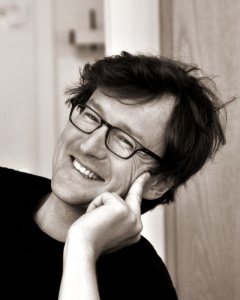
Prof. Laura Busse is a Professor at Ludwig Maximilian University of Munich (LMU), leading the Research Group in the Department of Biology II, Division Neurobiology. She holds roles as a Regular Member of MCN, Full Member of GSN, and Deputy Head of the GSN Examination Board. Her research focuses on cellular and systems neuroscience, particularly investigating how contextual information influences visual perception through neural circuits in mice. Key areas include feedback mechanisms, behavioral state effects, and thalamocortical interactions. Her work employs advanced techniques like high-density extracellular recordings and optogenetics to study active behavior in rodents. Current students include Simon Renner, Gregory Born, and others. Recent research highlights include studies on corticothalamic feedback effects, thalamic spatial integration, and the role of pupil dynamics in neural activity. She leads the Vision Circuits Lab (https://visioncircuitslab.org), exploring how sensory inputs and brain states shape visual processing. Her articles reveal trends in understanding thalamocortical communication, adaptive sensory systems, and the biological basis of neural network models. She coordinates the SPP2411 project on cortico-subcortical loops, emphasizing interdisciplinary neuroscience.
Alison Greig is the Director of Education for Sustainability (EfS) at Anglia Ruskin University and leads the EfS research theme at the Global Sustainability Institute (GSI) . She is also the Course Leader for the MSc Sustainability and is actively involved in research supervision. PhD in Physical Geography (Landslides, Hurricanes) from the University of Wales Swansea BSc (1st Class Hons) in Geography from the University of Wales Swansea PgCert (Higher Education) from Anglia Ruskin University Her research focuses on education’s role in fostering sustainability , emphasizing pedagogical innovation , interdisciplinary learning , and measuring educational impact . She explores how formal and informal education systems can empower individuals to drive sustainable transformations. Alison’s recent publications highlight trends in curriculum reform , transdisciplinary education , and community-based sustainability research . Her work bridges environmental science , educational theory , and policy analysis . Scientific awards and memberships include: National Teaching Fellow Principal Fellow of the Higher Education Academy Chartered Water and Environmental Manager Chartered Environmentalist Alison supervises postgraduate research students and collaborates with institutions like the Global Sustainability Institute to advance sustainability education initiatives.
Oskar Hallatschek is an Associate Professor and McAdams Chair in the Department of Physics and Integrative Biology at the University of California, Berkeley. His research focuses on biological physics and evolutionary dynamics, particularly how collective patterns emerge from heterogeneous microbial populations. He leads the Hallatschek Lab, which maintains collaborations with institutions like the University of Leipzig. Research Emphasis: Microbial systems, population genetics, non-equilibrium statistical physics, evolutionary adaptation, and mechanical interactions in cellular populations. Publications span journals like Nature , PNAS , and Science , with recent work on allele surfing, jamming in microbial colonies, and long-range dispersal effects. Grants: Supported by NIH and NSF, as indicated by institutional logos in the lab web presence.
Elena Serena Piccardi is a Senior Lecturer in Developmental Psychology at the University of East London (UEL), School of Childhood and Social Care. Her research focuses on the early development of sensory perception in infants at elevated likelihood for Autism Spectrum Disorder (ASD) and Attention Deficit Hyperactivity Disorder (ADHD), utilizing EEG to identify neural markers linked to sensory processing and their longitudinal relationships with behavioral and clinical assessments. Education: PhD in Developmental Cognitive Neuroscience, Birkbeck, University of London (2021) Postgraduate Certificate in Teaching and Supporting Learning in Higher Education, Birkbeck & Higher Education Academy (2019) MSc in Cognitive Neuroscience & Clinical Neuropsychology, University of Padova (2015) BSc in Clinical Psychology, University of Bergamo (2013) Elena's research explores how early sensory atypicalities in tactile, auditory, and visual domains impact later social and cognitive development. Her work emphasizes translational foundations for early intervention protocols and cross-institutional collaboration with the Centre for Brain and Cognitive Development (Birkbeck), University of East Anglia, and Cambridge University. Her recent publications span topics like sensory regulation in typical/atypical development, research reproducibility frameworks, and neural markers of tactile processing in infants. She is a Wellcome Trust Research Fellow and Local Lead for the UK Reproducibility Network, advocating for open science practices. Teaching & Public Engagement: Module Leader for PY7160 (Independent Research Dissertation, MSc) Contributor to PY6010, PY5010, and other developmental psychology courses Public dissemination: STAARScast podcast (2022), UEL Women in Science feature (2022), and international media collaborations
Robert Pettersson serves as an Associate Professor and Researcher at Mid Sweden University, affiliated with the Department of Economics, Geography, Law and Tourism (EJT) and the European Tourism Research Institute (ETOUR) in Östersund. His academic career spans over two decades with significant contributions to tourism studies, particularly in indigenous tourism, event management, and outdoor recreation. Pettersson's work bridges theoretical research with practical policy applications, focusing on sustainable development in northern contexts. His research centers on indigenous cultural tourism , where he has pioneered studies on Sami festivals and heritage in northern Sweden; event management , with expertise in hallmark events, social impact assessment, and evaluation frameworks; and outdoor recreation , examining environmental sustainability and social integration through sports and nature-based activities. Pettersson employs innovative spatial analysis techniques including GPS tracking to study tourist mobility and behavior, contributing methodological advancements to the field. His work consistently addresses the tension between cultural preservation and tourism development. Analysis of Pettersson's publication trajectory reveals an evolution from foundational research on Sami tourism (early 2000s) to contemporary studies on event portfolios, non-use value, and immigrant integration through outdoor activities. Recent work emphasizes holistic evaluation tools addressing social, environmental, and economic dimensions of events. This progression demonstrates his responsiveness to emerging challenges in sustainable tourism while maintaining focus on marginalized communities and northern regional development. No specific scientific awards are documented in the provided information. However, Pettersson's leadership in major research projects and extensive publication record in high-impact journals like Journal of Policy Research in Tourism, Leisure and Events and Scandinavian Journal of Hospitality and Tourism underscores his scholarly impact. His co-authored review on event evaluation (2015) remains a seminal reference in the field. Pettersson actively contributes to applied research through projects including Mistra Sport and Outdoors and Östersund CCI (Place development through cultural and creative industries). He has produced practical guides on event evaluation covering social effects (2024), environmental impacts (2023), and tourism economics (2023), translating academic insights into tools for event organizers and policymakers. His collaborative work with organizations like the Nordic Symposium in Hospitality and Tourism demonstrates commitment to knowledge exchange. As a core member of ETOUR, Pettersson participates in a multidisciplinary research environment focused on tourism's role in northern societies. The institute facilitates collaboration between tourism, geography, economics, and law scholars to address complex regional challenges including sustainable resource management and community well-being. Pettersson's ongoing projects continue to explore how events and outdoor activities can drive inclusive regional development.
Professor Shaun Bond is the Frank Finn Professor of Finance at the UQ Business School, University of Queensland. He has held prior positions as the West Shell Professor of Real Estate at the University of Cincinnati (Director of the UC Real Estate Center) and as a lecturer at the University of Cambridge’s Department of Land Economy. He has also served as a visiting professor at Pennsylvania State University and George Washington University. Education: PhD and MPhil in Economics from the University of Cambridge; Bachelor of Economics (First Class Honours) from the University of Queensland. Research Interests: Real estate finance, financial economics, investment and risk management, and financial econometrics. Publications: Over 33 works including 28 journal articles, 2 book chapters, and 2 conference publications, focusing on real estate markets, financial forecasting, and ESG integration. Funding: Current Macoun Research Scholar Program (2021–2025); recent grants from Queensland Government and QIC Limited for short-term rental regulation and investment management research. Supervision: Available for PhD supervision in real estate asset pricing and financial market sentiment.
Carlos Brody is the Wilbur H. Gantz III '59 Professor of Neuroscience at Princeton University, where he leads a research group at the Princeton Neuroscience Institute. His laboratory employs a unique combination of computational, behavioral, and electrophysiological techniques to investigate the neural mechanisms underlying cognitive abilities. Dr. Brody's research focuses on understanding how the brain processes information during cognitive tasks, particularly examining short-term memory, decision-making, and time perception. His lab trains rats to perform complex cognitive tasks while recording neural activity, and develops computational models to explain the experimental findings. They have pioneered the study of 'internal signals' in neural activity that constitute 'the internal conversation of the mind,' with their key discovery being 'nTc' (Neurally-inferred Time of Commitment), a biomarker that indicates decision commitment before overt behavioral responses. Dr. Brody's laboratory has been continuously supported by HHMI (Howard Hughes Medical Institute) with renewal until 2032. They are currently conducting groundbreaking research using multiple Neuropixels probes for large-scale recordings across the brain while rats perform cognitive behaviors, representing what Dr. Brody considers the future of cognitive systems neuroscience that combines advanced recording technology, AI-based analysis, and well-controlled behavioral paradigms. Scientific Awards HHMI Investigator (renewed until 2032) Advising and Research Support Dr. Brody has mentored numerous successful researchers who have secured faculty positions and leadership roles: Marino Pagan (Nature publication, SFARI Bridge to Independence Award) Edward Nieh (faculty position at University of Virginia) Manuel Schottdorf (Nature publication) Sue Ann Koay (publications in Neuron and eLife, Group Leader at Janelia) Brian DePasquale (faculty position at Boston University) Emily Dennis (Group Leader at HHMI's Janelia) Ahmed El Hady (Group Leader at Max Planck Institute) Abby Russo (joined CTRL-Labs startup) Diksha Gupta (Best Paper Award at RLDM conference) His lab is currently supported by HHMI funding and is planning to implement next-generation Neuropixels probes in Spring 2025 to record from 6,000-12,000 neurons simultaneously across multiple brain regions. Research Team and Facilities The Brody Lab features a diverse team ranging from purely computational to purely experimental researchers. The lab emphasizes minimizing barriers between computational and experimental approaches, encouraging researchers to move freely along this spectrum based on their interests. They maintain state-of-the-art facilities for behavioral training, electrophysiological recordings, and computational analysis, with plans to implement next-generation Neuropixels recording technology in Spring 2025.
Serge O. Dumoulin is a Professor of Perception, Cognition, and Neuroscience at Utrecht University and Vrije Universiteit Amsterdam. He leads the Computational Cognitive Neuroscience and Neuroimaging group at the Netherlands Institute for Neuroscience and serves as Director of the Spinoza Centre for Neuroimaging , a collaborative facility involving KNAW, AMC, VUMC, and VU Amsterdam. Education: M.Sc. in Biology (Utrecht University), Ph.D. in Neurology and Neurosurgery (McGill University) Research focuses on the intersection of perception, cognition, and neuroimaging, particularly the human visual system. He employs ultra-high field (7T) fMRI, computational modeling, and behavioral studies to explore neural mechanisms of visual perception, attention, and numerical cognition. His work has applications in clinical disorders and methodological advancements like the pRF method, used globally in 100+ institutions. Publications span neuroscience, neuroimaging, and cognitive processes, with a 2023 Advances in MRI Technology paper emphasizing gray-matter optimized fMRI. His 2018 Neuroimage article discusses systematic pRF variations, while a 2021 PNAS study links divisive normalization to visual hierarchy. Awards: Ammodo KNAW Award (2015), NWO Vidi/Vici grants, Neuroimage Editors' Choice Award (2013) Teaching includes courses at Vrije Universiteit Amsterdam on perception, neuroscience, and fMRI data analysis. He emphasizes coding (Matlab/Python) in student internships.
Johannes Schöning is a Professor of Human-Computer Interaction (HCI) at the University of St. Gallen and leads the Ubiquitous Media Technology Lab . His research focuses on developing user interfaces that empower individuals and communities through data-driven decision-making, with interdisciplinary applications in geographic information science, public health, medical contexts, and extreme environments like space missions. He emphasizes methodological rigor from AI, computer graphics, and cognitive psychology. Organizes AlpCHI 2026 Chair of ACM Eugene Lawler Award Committee Editorial Board, AI Perspectives (Springer Nature) Research Trends : His publications from 2025–2024 reveal a focus on Mixed Reality (autoethnography, weight perception), Accessibility (visual impairment support), Environmental HCI (CO2 eco-feedback), and Geospatial Technologies (navigation externalities, map analytics). Interdisciplinary work appears in journals like Nature and PLOS ONE . Scientific Recognition : ACM Distinguished Member Best Paper & Accessibility Awards (Interact 2019, MobileHCI 2015) Junior Fellow, Gesellschaft für Informatik (2013) Academic Service : Active in conference leadership (SIGCHI Switzerland Chair 2021–2023, ISS 2016 Program Chair) and reviewing for top venues including ACM CHI , Ubicomp , and IEEE VR . Regular reviewer for European science foundations and DFG/BMBF proposals.
Alan Zarychta is an Associate Professor at the University of Chicago Crown Family School of Social Work, Policy, and Practice , where he focuses on the politics of social services in Central and South America, particularly in public health policy and environmental policy . He investigates how institutional reforms can improve local service delivery and strengthen governance systems toward equity and sustainability . His work has been supported by grants from the National Science Foundation , Social Science Research Council , and Spencer Foundation . Education PhD in Political Science, University of Colorado Boulder MA in Public Policy, University of Colorado Boulder BS in Education and Social Policy, Northwestern University His research spans decentralization in public service delivery, street-level bureaucracy in developing countries, and local governance networks in Honduras. Recent projects include analyzing water scarcity and procedural justice in Honduras and studying policy implementation for refugee populations in Turkey. He has published extensively in journals like Journal of Public Administration Research and Theory , Policy Studies Journal , and Public Administration . Scientific Awards Junior Faculty Research Award (2020) Professor Zarychta collaborates with the Honduran Ministry of Health and organizations like Hombro a Hombro and COCEPRADII . He co-organized the Inaugural Latin American Conference on Subnational Governance (LACSUG) in 2025, highlighting his commitment to advancing governance research and international collaboration in public administration.