Dr Tommaso Perego is a Senior Lecturer at the University of East London's College of Arts & Creative Industries. With expertise in audio engineering and multimodal perception, his research focuses on integrating spatial audio, wave field synthesis, and dance choreography. Research Interests Audiovisual perception and multimodal integration Spatial audio and immersive sound technologies Dance technology and interactive performance systems Wave field synthesis applications in creative industries Selected Publications His work demonstrates interdisciplinary approaches combining engineering principles with artistic practice, particularly in developing audiovisual environments for dance performance and spatial audio experimentation.
Matthew Plumlee is a Principal Lecturer in the Department of Computer Science at the University of New Hampshire's College of Engineering and Physical Sciences. He holds a Ph.D. and B.S. in Computer Science from the same institution. His research focuses on data visualization, human-computer interaction, and geospatial systems, with notable contributions to weather display design, marine navigation tools, and underwater behavior visualization of animals like humpback whales. Plumlee has authored numerous articles on topics ranging from hydrographic data processing to 3D visualization techniques in oceanography and robotics. His educational background includes advanced degrees from UNH, and he teaches courses such as Introductory Scientific Programming, Data Structures, and Software Engineering. His work frequently integrates interdisciplinary approaches, combining computer science with marine science and environmental modeling. Key projects include the GeoCoastPilot system for port navigation and the GeoZui3D platform for oceanographic data fusion. Plumlee's publications span over two decades, emphasizing user-centered design principles and real-time data visualization challenges. He collaborates with institutions like CCOM (Center for Coastal and Ocean Mapping) to develop innovative geospatial tools for maritime and environmental applications. His research also addresses cognitive aspects of interface design, such as comparing zooming versus multiple window techniques for visual tasks.
Dr Tom Garner is a Senior Lecturer in Interactive Technologies at Sheffield Hallam University and Senior Research Fellow at the Centre of Excellence in Terrorism, Resilience, Intelligence and Organised Crime Research (CENTRIC). He holds a BA (Hons), MA, PGCE, and PhD. His research focuses on auditory perception theory, extended reality (XR) technologies for training, and psychophysiological data collection methods. Teaching responsibilities include courses like BSc Computer Science for Games and modules such as Virtual Reality Development. Key projects include the ACCOMPLICE military training system (funded by DASA) and the DentaSIM dental training simulator. He has collaborated with organizations like BAFTA, DSTL, and Epic Games. Education: BA (Hons), MA, PGCE, PhD Research Centres: CENTRIC, Advanced Wellbeing Research Centre, Industry and Innovation Research Institute His work spans serious games, VR/AR applications, and biofeedback systems. Notable publications include How the World Listens (Routledge, 2022) and contributions to the Oxford Handbook of Sound & Imagination. Awards: Fellow of the Higher Education Academy (FHEA) Current research explores asymmetric multiplayer XR systems, gesture-based interaction, and real-time psychophysiological monitoring. He supervises PhD students in HCI theory, XR platform development, and UX methodologies.
Yapeng Tian is an Assistant Professor of Computer Science at the Erik Jonsson School of Engineering and Computer Science, The University of Texas at Dallas. His work focuses on advancing core computer vision and audition technologies with applications in AR/VR, healthcare, and human-computer interaction. He holds a PhD from the University of Rochester (2022) and dual engineering degrees from Tsinghua University (2017) and Xidian University (2013). Research Interests: Multisensory perception Audio-visual learning Diffusion models Medical imaging Accessibility technologies Awards: Amazon Research Award (2024) UIST Best Paper Award (2024) Cisco Faculty Research Award (2023) AAAI New Faculty Highlights (2023) Recent work emphasizes efficient multimodal systems, with publications in top venues like CVPR, ICCV, and ICLR. His research bridges theoretical advances with practical applications in healthcare, accessibility, and interactive systems.
Dr. Michael Gallagher is a Reader (Associate Professor) in Manchester Metropolitan University's School of Childhood, Youth and Education Studies. His interdisciplinary research examines sound and space, children's geographies, and methodological innovation through post-structuralist frameworks. Gallagher's scholarly contributions include:Pioneering sonic geographies and soundwalking methodologiesCritical analyses of power in educational spacesTheoretical work on children's agency and materialityFoucauldian studies of childhood governance His methodological innovations span audio recording techniques, soundwalking protocols, and audio-visual ethnography. Gallagher serves as expert reviewer for major social science journals and funding bodies. Recent projects investigate Hong Kong kindergarten spatial policies, voice audio methods, media geology, and the emotional geographies of community leadership.
Dr. Louise Platt is an interdisciplinary researcher and Associate Professor in Place Experiences at Manchester Metropolitan University. She holds a leadership role as Co-Editor of the International Journal of Event and Festival Management and serves on editorial boards for Leisure Studies Journal and World Leisure Journal. Her affiliations include being a Fellow of the Institute of Place Management and the Royal Society of the Arts. Her research examines placemaking through festivals, walking practices, and leisure spaces using interdisciplinary approaches from cultural geography, performance theory, and poststructural philosophy. She teaches festival studies at undergraduate and postgraduate levels and supervises PhD candidates working on festival-related topics. Recent publications demonstrate strong thematic coherence around embodied practices in urban spaces, particularly during the COVID-19 pandemic. Her work consistently engages with feminist methodologies, community-based research, and critical analyses of everyday experiences through creative qualitative methods. Awards and fellowships: Fellow of the Institute of Place Management Fellow of the Royal Society of the Arts She supervises doctoral students researching festival studies and cultural tourism, contributing to knowledge development in event management and community practices. Her projects explore walking as a methodological tool and festivity as a lens for understanding community formation.
Mei Si is an Associate Professor in the Department of Cognitive Science at Rensselaer Polytechnic Institute (RPI) and serves as the Graduate Program Director for Critical Game Design. She specializes in artificial intelligence applications for virtual and mixed realities, including interactive narratives, embodied conversational agents, and serious games. Her work includes the award-winning Tactical Language Training System for military language/culture education, and VR-based therapies for children with ADHD. Si’s research bridges computer science, cognitive science, and education, focusing on immersive environments for learning and behavioral change. Education: No formal education details explicitly stated in text. Research Interests: Dr. Si’s research emphasizes interactive narrative systems, AI-driven conversational agents, and VR/AR applications in education and health. She explores how user interaction enhances learning efficacy, particularly through serious games and virtual interventions. Recent projects include mindfulness therapy apps, drug discovery games (CureQuest), and emotion-aware AI systems. She investigates human-AI interaction, including theory of mind modeling and ethical alignment frameworks. Publications: Over 50 peer-reviewed articles since 2011. Recent trends include quantum reinforcement learning, LLM applications in education, VR gaming therapies, and cepstrum-based audio modeling. Her work spans interdisciplinary domains like health informatics, robotics, and cybersecurity. Awards: Military-funded Tactical Language Training System recognized as award-winning, though specific awards not named. Her contributions to game-based medical education and interactive storytelling have garnered field-wide acclaim. Grants & Advising: Lead developer of U.S. military-funded language training systems. Collaborates on NIH-funded HIV prevention games (e.g., SOLVE project). Supervises projects in quantum-ML, mindfulness apps, and cross-cultural education tools. Active in conference organizing (e.g., AIIDE, ICIDS). Labs/Teams: Leads RPI teams developing immersive learning platforms and health-tech solutions. Co-develops CureQuest and SpeakEasy language training tools. Engages in multidisciplinary collaborations spanning engineering, psychology, and public health.
Eileen Simpson is a Reader at Manchester School of Art, Manchester Metropolitan University, specializing in the intersection of sound art, digital archives, and information networks. She co-founded the Open Music Archive with artist Ben White, a collaborative initiative focused on sourcing, digitizing, and distributing out-of-copyright sound recordings while facilitating networked artistic projects. Her research centers on archival practices , collaborative sound production , and critical data engagement , exploring how communities interact with historical audio materials through participatory frameworks. Key methodologies include distributed network performance , public domain reactivation , and speculative archival futures , often manifested in large-scale exhibitions that transform institutional spaces into sites of collective sound exploration. Notable projects span British Art Show 8 ( Auditory Learning , 2015), Modern Art Oxford ( Premonition 2037 , 2016), and international venues including Casa Luis Barragán in Mexico City ( Open House: Divided Estates , 2012). Her 2025 works Please Destroy All Previous Lists and All or Together advance critiques of data ownership and collaborative sound production. Simpson's output consistently examines power dynamics in archival systems , community-based knowledge sharing , and temporal dimensions of sound preservation . As a core member of the Art and Performance Research Hub, Simpson operates through long-term collaborations rather than conventional advising structures. Her work integrates institutional partnerships with grassroots community engagement, particularly through the Open Music Archive's distributed network of contributors. Current projects like Toward Usership (2025) investigate collaborative data mining within orchestral archives, bridging historical collections and contemporary participatory practices. The Open Music Archive functions as her primary research vehicle, operating as both a digital platform and physical project space facilitating workshops, exhibitions, and international residencies. This initiative embodies her commitment to decentralized knowledge production and critical engagement with copyright frameworks , creating infrastructure for communities to reclaim and recontextualize historical sound materials.
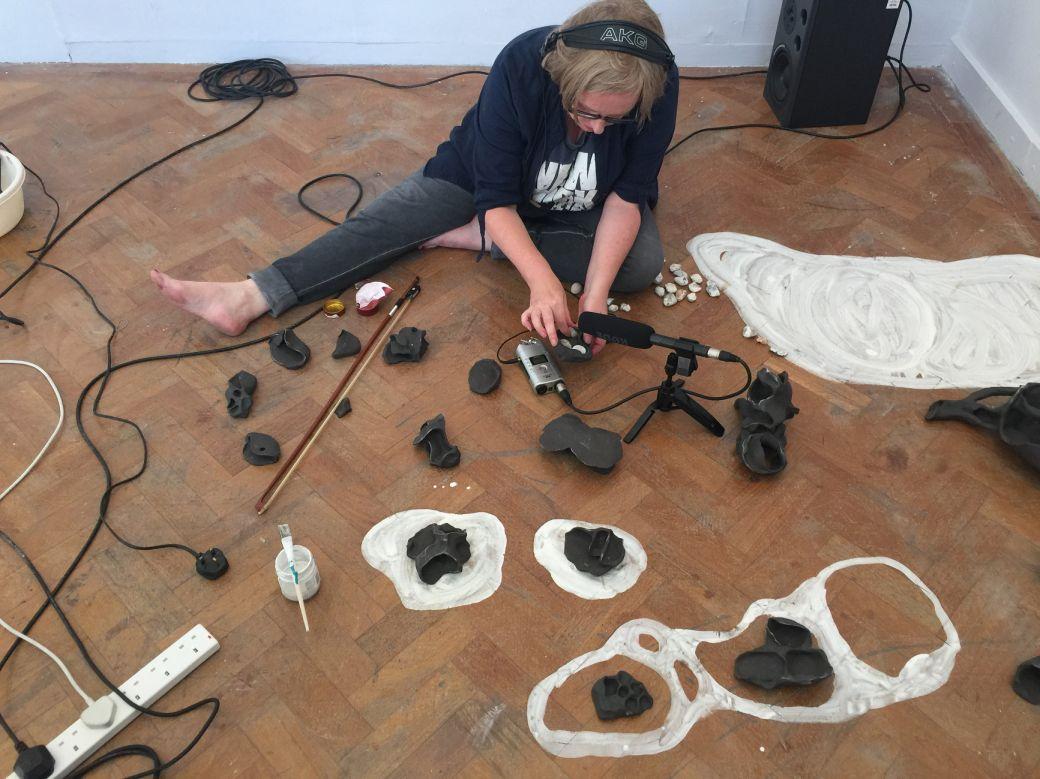
Dr. Iris Garrelfs is a Departmental Senior Tutor in the Music Department at Goldsmiths, University of London. Her work bridges music, art, and sociology through interdisciplinary projects in performance, installation, and sound art. She holds a PhD from the University of the Arts London and has conducted postdoctoral research on creative process models. Her practice explores listening as a mode of connection between humans and environments, often site-specific and incorporating digital sound processing. Key projects include the Listening Wall , an interactive installation with contributed listening scores, and collaborations like Lab of Sonic Possibilities with Tansy Spinks. She has exhibited globally at institutions such as Tate Britain, National Gallery, and the Onassis Cultural Centre Athens. Awards include the Francis Chagrin Award for her residency at the Onassis Centre (2016). Her research interests span procedural blending in sound art, active metadata development, and the sociopolitical dimensions of sound. She co-edits the Reflections on Process in Sound journal and leads initiatives like the Sound Practice Research Unit. Recent works include Embodied Dialogues (2025) and Birds , a spoken-word project interrogating avian symbolism in sonic art.
Rebecca Gates is an Affiliate Faculty and Instructor in the Department of Kinetic Imaging at Virginia Commonwealth University's School of the Arts. Her work spans music, curation, and art focused on sound, spatial dynamics, and the artist's role in communities. She co-founded The Relay Project audiozine and co-curated The Marfa Sessions, a sonic exploration of land arts. Previously, Gates led the indie rock band The Spinanes (Sub Pop) and has collaborated with notable musicians like Elliott Smith and Willie Nelson. Her research and artistic practice emphasize interdisciplinary approaches to sound and space, advocating for artists' engagement with societal issues. Though no specific grants or advising roles are detailed, her curatorial and activist contributions highlight her commitment to community-driven art. Her work has been exhibited internationally, reflecting her impact across diverse artistic and academic contexts.
Magnus Moar is an academic affiliated with the School of Film at Middlesex University, holding the position of Lecturer. His research focuses on the intersection of virtual reality (VR), theatre, and education technology. Moar explores immersive media's role in performance, narrative design, and learning environments, with notable work on VR locomotion mechanics, 360-degree storytelling, and spatial computing applications. His research interests include virtual environments for historical education, locative audio drama, and collaborative VR experiences. Moar has collaborated extensively with institutions like the University of Leuven and the BBC on projects such as the Fellow Creature 360 series and the VERTEX educational initiative. Publications span academic journals (e.g., Contemporary Theatre Review , Computers & Education ) and conferences like CHI PLAY and SciFi-It. His work bridges technical innovation with artistic expression, emphasizing user experience and pedagogical impact.
Dr. Ben Shirley is Associate Professor in Audio Technology at the University of Salford's Acoustics Research Centre. He holds an MSc from Keele University (2000) and PhD from Salford (2013). As co-founder/Director of Salsa Sound Ltd, he develops award-winning audio solutions for live sports broadcast. Research focuses on spatial audio processing, accessibility solutions for hearing-impaired audiences, and personalization of object-based audio systems. Current projects involve AI-driven automatic mixing for live broadcasts and immersive XR experiences. His doctoral thesis pioneered methods for improving television sound accessibility. Dr. Shirley supervises PhD candidates in broadcast audio, immersive sound, and accessible media. He has led projects funded by UK Department of Culture Media and Sport (5G Edge-XR) and contributes to standards for next-generation audio broadcasting.
Prof. Vassil Vassilev is a Professor of AI and Intelligent Systems and Head of the Cyber Security Research Centre at London Metropolitan University. His work spans artificial intelligence, cyber security, and data integration with a focus on applications in urban systems, malware analysis, and cyber-physical systems. He leads initiatives in secure transaction risk assessment (CyDRA) and smart city technologies. Research interests include reinforcement learning for cyber incident response, AI policy validation frameworks, and adaptive security systems. He explores hybrid AI models, IoT-based environmental monitoring, and semantic frameworks for vulnerability detection. His work bridges theoretical AI advancements with practical implementations in cyber defense, urban data spaces, and financial security. Grants and funding support his projects on cyber security analytics, threat intelligence, and low-cost data platforms. He collaborates on initiatives like the first urban data space in Bulgaria and innovative authentication techniques using audio steganography. His leadership at the Cyber Security Research Centre drives applied research in both academic and enterprise contexts.
Andrew C. Singer is a distinguished academic holding dual roles as the Dean of the College of Engineering and Applied Sciences at Stony Brook University and a Professor in the Department of Electrical and Computer Engineering. He also holds a courtesy appointment in the Institute for Advanced Computational Science and the School of Marine and Atmospheric Sciences at Stony Brook. Previously, he served as the Fox Family Professor at the University of Illinois Urbana-Champaign's Grainger College of Engineering, where he led innovation initiatives as the Associate Dean for Innovation and Entrepreneurship. His research focuses on signal processing, underwater acoustic communications, and biomedical applications of acoustics, with contributions to underwater acoustic localization, sensor networks, and machine learning for signal processing. Education and Career: While specific educational details are not provided, Singer’s extensive academic leadership roles and research output indicate a strong background in electrical engineering and signal processing. His work spans academia and industry, with notable contributions to acoustic communication systems, biomedical implants, and emergency medical devices (e.g., the emergency ventilator for pandemic response). Research Interests: Singer’s research integrates theoretical and applied aspects of signal processing, including underwater acoustic signal processing, biomedical acoustics, and the design of robust communication systems. He leads projects like Task Force Ocean (underwater acoustic signal processing) and ACOMS+X (acoustic communications in diverse environments), emphasizing practical applications in oceanography, healthcare, and emergency systems. Grants & Collaborations: His work is supported by grants from agencies such as the National Science Foundation, with collaborations extending to medical institutions, geotechnical engineering teams, and robotics researchers. Notable projects include through-soil wireless communication systems and ultrasonic biomedical implants for in vivo video transmission. Labs & Teams: The Singer Research Group at UIUC and Stony Brook focuses on advancing acoustic technologies, with projects like the Mechatronic Acoustic Research System and cooperative microphone array systems for speech enhancement. His team collaborates with engineers, physicians, and data scientists to bridge theoretical and applied challenges.
Zubin Kanga is a Senior Lecturer in Musical Performance and Digital Arts at Royal Holloway, University of London. He leads the Cyborg Soloists project, funded by a £1.4M UKRI Future Leaders Fellowship, exploring intersections of music, AI, and technology. His work spans performances at venues like the BBC Proms and collaborations with artists such as Brett Dean and Neil Luck. Education: PhD and MMus from Royal Academy of Music (London), BA (Hons I) in Music from University of Sydney. Postdoctoral research at University of Nice and IRCAM (Paris). Previous roles include Leverhulme Early Career Fellow at Royal Holloway. Research focuses on interdisciplinary music performance involving motion sensors, AI, and live electronics. Notable projects include works with MiMU gloves, TouchKeys, and EEG brain sensors. His compositions blend traditional piano with cutting-edge technologies, as seen in albums like Cyborg Pianist . Key honors include the UKRI Future Leaders Fellowship. Over 130 world premieres performed globally. Active in scholarly writing on gesture-technology interactions, published in Contemporary Music Review and Tempo . Labs/Teams: Cyborg Soloists (Royal Holloway), collaborations with industry partners MiMU, ANT Neuro, and TouchKeys. Ongoing research into hybrid instruments and digital performance extensions.






.jpg)

