Rainer Martin is a Professor of Information Technology and Communication Acoustics at Ruhr-Universität Bochum, where he has been affiliated since 2003. He served as Dean of the Faculty of Electrical Engineering and Information Sciences from 2007 to 2009. He holds a Dipl.-Ing. and Dr.-Ing. from RWTH Aachen University and an M.S.E.E. from Georgia Institute of Technology. His research focuses on signal processing, machine learning, and acoustic systems for voice communication, hearing instruments, and human-machine interfaces. Key areas include speech enhancement, noise reduction, binaural processing, cochlear implant optimization, and acoustic sensor networks. His work integrates deep learning with traditional signal processing for real-world applications. Recent publications emphasize neural networks for noise control, hearing aid algorithms, radar interference mitigation, and auditory perception modeling. Trends show strong convergence of machine learning with acoustic engineering, particularly in low-power embedded systems and healthcare applications. Awards: Fellow of the IEEE He leads projects on acoustic sensor networks, automotive radar, and hearing technology, collaborating with industry partners. His lab develops algorithms for hearing aids, cochlear implants, and robust communication systems, with patents spanning noise reduction, echo control, and speech enhancement.
Prof. Jörn Ostermann is a Full Professor and Head of the Institut für Informationsverarbeitung at Leibniz Universität Hannover since 2003, with prior roles at AT&T Bell Labs and AT&T Labs-Research. He served as Dean of the Faculty of Electrical Engineering and Computer Science (2011–2013) and member of the Senat (since 2020). His research spans video coding, computer vision, machine learning, 3D modeling, and computer-human interfaces , with applications in SAR imaging, predictive maintenance, children's speech analysis, and cochlear implants. Key projects include Next Generation Video Coding , Conditional Coding for Learned Compression , and GreenAutoML4FAS . Notable trends in his recent publications (2025–2023) include Neural network-based video compression Uncertainty estimation in speech recognition Zero-delay coding for cochlear implants Domain adaptation for aerial image segmentation 3D mesh compression standards Error concealment in VVC coding Scientific recognitions: AT&T Standards Recognition Award (1998) ISO Award (1998) IEEE Fellow (2005) Distinguished Lecturer, IEEE CAS Society (2002/2003) MPEG Convenor (2020–2023) He co-authored a graduate textbook on Video Communications , holds >30 patents, and has led >20 research projects. His work bridges academic research and industrial standardization, particularly in MPEG and IEEE committees.
Prof. Dr. Jürgen Peissig is a Full Tenure Professor at the Institute for Communications Technology within the Faculty of Electrical Engineering and Computer Science at Leibniz University Hannover since 2014. He supervises a research group with 1 post-doctoral researcher and 12 PhD students across subgroups: Data Communications Systems, Audiocommunications and Acoustics, and Statistical Signal Processing. PhD in Physics (1992) from University of Göttingen Researcher at AT&T Bell Labs (1990-1991) Research Associate at Universities of Göttingen and Oldenburg (1992-1996) Industry leadership at Sennheiser (1996-2014) His research spans audio signal processing for hearing aids, cochlear implants, and immersive audio systems; machine-to-machine communication with robust waveforms (FBMC); and hybrid VLC-RF systems . Key sub-fields include noise cancellation, psychoacoustic modeling, MIMO interference alignment, and 3D audio reproduction. Recent publications focus on deep learning for sound source localization, spatial audio measurement frameworks, and wind turbine noise analysis. Trends show integration of neural networks , higher-order ambisonics , and mobile measurement systems . Recipient of Werner v. Siemens Excellence Award 2006 for thesis supervision Awarded Best Technical Paper at AES 156th Convention (2024) Best Student Paper Award at FRUCT 2020 and AES Poster Award 2019 He has taught courses on Signals and Systems , Digital Data Transmission , and Acoustical Transducers , supervising over 30 diploma/master's theses and 15 PhD students. His lab, the Immersive Media Laboratory , develops advanced audio systems for live events and virtual environments.
Oliver Behrend is a Professor at the Department of Biology II within the Faculty of Biology at Ludwig-Maximilians-Universität München, where he serves as Managing Director of the Munich Center for Neurosciences - Brain & Mind . His research focuses on comparative neurobiology and auditory processing mechanisms across vertebrates. Behrend's work examines: 1) Amphibian lateral line systems for surface wave localization, 2) Mammalian sound localization through interaural time difference processing, and 3) Auditory feedback mechanisms in echolocating bats. His studies span neuroethology, auditory neuroscience, and sensory-motor integration. Publications reveal multidisciplinary approaches to sensory neuroscience with keywords: Neuroethology Computational neuroscience Auditory pathways Sensory integration Neural coding Comparative neuroanatomy Contact: o.behrend@lmu.de
Markus Huff serves as a Full Professor of Applied Cognitive Psychology and head of the Applied Cognitive Psychology group at the Eberhard Karls University of Tübingen since 2020. He concurrently leads the Perception and Action research group at the Leibniz Institute for Knowledge Media (IWM). His research program investigates perception and action processes within digital environments through a perception-oriented framework that examines how media-mediated content influences human cognition and behavior. Dr. Huff earned his academic foundation in psychology, mathematics, and computer science at the University of Tübingen. Following his psychology degree, he completed his doctorate (Dr. rer. nat.) at the IWM and University of Tübingen with groundbreaking research on verbal influence on visual memory, which earned him the prestigious Leibniz Young Researcher Award in 2007. His academic trajectory includes postdoctoral positions at IWM, University of Tübingen, and Washington University in St. Louis, followed by a junior professorship in general psychology at Tübingen before heading the Department of Research Infrastructures at the German Institute for Adult Education. Professor Huff's research spans four primary interconnected domains. His Multimodal Perception research investigates how humans process and mentally organize media content across various formats including texts, images, comics, and videos. The Perception and Interaction in Social Networks focus examines the complex interplay between attitudes, knowledge, and metacognition during information reception and social interaction in digital spaces. His work on Perception and Action with Digital Agents explores human-AI communication dynamics, while his research on Risk Perception of Artificial Intelligence addresses the psychological dimensions of human responses to emerging digital technologies. Additionally, he conducts significant metascientific research examining policy effectiveness in the research process, with notable findings on research data policies. Analysis of Professor Huff's recent publication record reveals a clear trajectory toward increasingly sophisticated investigations at the intersection of cognitive psychology and digital technology. His work demonstrates methodological rigor across visual perception, audio-visual integration, event comprehension, and the cognitive impacts of digital environments. A particularly noteworthy trend is his expanding focus on AI-related perception and risk assessment, reflecting the growing importance of human-AI interaction in contemporary cognitive science. His research consistently bridges theoretical cognitive frameworks with practical applications in educational technology, health communication, and digital media design. Leibniz Young Researcher Award by the Leibniz Association (2007) Professor Huff directs a multidisciplinary research group comprising members from both the Applied Cognitive Psychology group at the University's Department of Psychology and the Perception and Action group at the Leibniz Institute for Knowledge Media. His research program has secured substantial funding, evidenced by his prolific publication record in high-impact journals spanning psychology, cognitive science, human-computer interaction, and educational technology. His grant portfolio reflects strong interest in understanding human cognition in digital contexts, with particular emphasis on educational applications, health communication, and human-AI interaction. His laboratory work employs advanced experimental methodologies including eye-tracking, behavioral experiments, and computational modeling to investigate how people process information across various media formats and interact with increasingly sophisticated digital agents. The research environment fosters collaboration between cognitive psychologists, computer scientists, and educational researchers, creating a rich interdisciplinary context for advancing understanding of human perception and action in our rapidly evolving digital landscape.
Paul Hauptmeier is a researcher and sound artist affiliated with the Burg Giebichenstein University of Art and Design Halle, where he collaborates with the ZiMMT Center for Immersive Media Art, Music, and Technology in Leipzig. He holds a dual focus on spatial audio research and interdisciplinary art, co-founding the artist duo Hauptmeier | Recker. His work explores hyperobjects, environmental soundscapes, and long-term processes beyond human perception. Key projects include The Echoing Silences of Metal and Skin (Venice Biennale Special Mention 2024), DECAY (radiation-driven sound sculpture), and 237 (1 million-year sound installation). He is also a technical director for large-scale installations globally. Education: Studies in composition at Franz Liszt Music Academy Weimar, UC San Diego (Miller Puckette), and Sibelius Academy Helsinki Research: Spatial audio systems and acoustic sculpture Board member of ZiMMT Center His awards include recognition at the Venice Biennale for work addressing industrial labor and environmental soundscapes. Ongoing projects investigate material decay, infrasound, and long-term art forms requiring centuries of engagement.
Bernd Fröhlich is affiliated with the Virtual Reality and Visualization Research Group at Bauhaus-Universität Weimar, Germany. His work focuses on advancing virtual reality (VR), visualization techniques, and human-computer interaction. He leads research in multi-user VR scenarios, immersive telepresence, and collaborative systems. Key areas include group navigation strategies, spatial audio integration, and embodied conversational agents in virtual environments. Education details are not explicitly mentioned in the provided text. His research interests span VR system design, gesture-based interaction, and perception studies within immersive environments. He has collaborated extensively with institutions like Toshiba Research Europe and contributed to projects involving virtual museums, social VR interfaces, and real-time rendering techniques. Fröhlich’s publications emphasize empirical studies on user behavior in VR, such as perception of asynchrony in rhythmic stimuli and detection thresholds of gaze awareness. He has also explored technical challenges like volumetric calibration, ray casting optimization, and multi-resolution volume rendering. His work frequently addresses practical applications in collaborative learning, cultural heritage digitization, and industrial design validation. While no scientific awards or grants are listed here, his prolific publication record (164+ entries) reflects sustained contributions to the field. His research teams often investigate cutting-edge topics like binaural audio effects, immersive analytics tools, and gesture-driven interaction paradigms for large datasets.
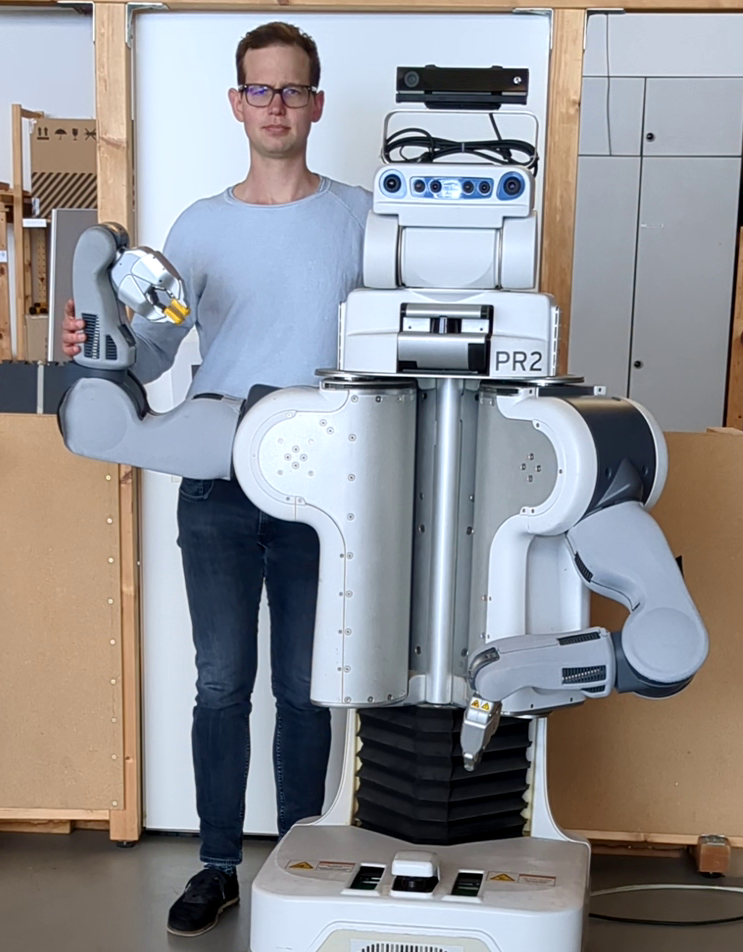
Daniel Büscher is a post-doctoral researcher at the Robot Learning Lab of the University of Freiburg. His work focuses on autonomous robot navigation , deep learning , and probabilistic state estimation . He has contributed to robotics research through projects involving mobile manipulation and audio-visual navigation . Research Interests : Autonomous navigation, deep learning, computer vision, probabilistic estimation Teaching : Lecturer and tutor for Introduction to Mobile Robotics and Robot Mapping (2017–2023) Publication Trends : Recent work emphasizes robot design optimization , language-grounded scene graphs , and uncertainty-aware perception . His research connects reinforcement learning with mobile manipulation and cross-domain navigation challenges.
Prof. Dr. Bernhard U. Seeber is a faculty member at the Technical University of Munich (TUM) in the Department of Electrical Engineering and Information Technology. He specializes in audio information processing, focusing on auditory perception, computational modeling, and hearing device technologies. Academic Rank: Professor Primary Affiliation: TUM Department of Electrical Engineering and Information Technology Research Interests: Auditory scene analysis, cochlear implants, binaural hearing, room acoustics, and signal processing for hearing aids His recent publications demonstrate expertise in auditory nerve modeling, spatial hearing optimization, and audio-visual simulation environments. While no formal awards or student advisement information are available in the provided texts, his work has significant implications for improving hearing technologies and understanding auditory perception mechanisms.
Dr.-Ing. Christiane Antweiler is a Researcher at the Institute of Communication Systems (IKS) , part of RWTH Aachen University 's Faculty of Electrical Engineering and Information Technology. Her work focuses on algorithms for digital speech/audio processing, multi-channel system identification, head-related transfer functions (HRTFs), and acoustic/echo cancellation in medical and teleconferencing applications. Research topics: Medical diagnostics signal processing , time-variant system identification , HRTF measurement , and real-time audio implementation . Current projects: Connected Visual Reality (CoVR) , Acoustic Tube Endoscopy , and Spatial Rendering with quasi-continuous HRTFs. Her 15 most recent publications (2025–2011) span adaptive filtering , acoustic system identification , and 3D audio rendering , with a strong emphasis on perfect sequence excitation and medical applications . She received the Best Paper Award at ICMCIS 2022 for her work on spectrum monitoring. Teaching roles include Information Theory and Source Coding (since 2009) and Digital Speech Processing 1 (2014–2015). Tools used: Matlab , C/C++ , and RT Proc for real-time audio processing.
René Peinl is a Professor of Business Informatics at the Institute for Information Systems (iisys) within the Faculty of Computer Science at Hof University of Applied Sciences. He serves as the Institute Director and leads the research group on Multimodal Artificial Intelligence. His academic career spans over 15 years of teaching in master's programs including 'Master Informatik' and 'Master Applied Research in Computer Science', with a focus on resource-efficient AI for text understanding since 2021. Dr. Peinl's research spans multiple cutting-edge domains in AI and information systems. His primary focus is on multimodal artificial intelligence systems that integrate various data modalities. He specializes in resource-efficient AI models that can operate without cloud resources, with particular emphasis on German language processing for speech recognition, text understanding, and speech synthesis. His work extends to practical applications in Industry 4.0 through customizable manufacturing execution systems (HiCuMES) and immersive learning applications using virtual reality technology for fields like electrical engineering and healthcare training. Analysis of his recent publications reveals a strong trend toward practical, efficient AI implementations with a focus on German language processing and multimodal systems. His work addresses critical challenges in model compression, bias mitigation in generative AI, and multimodal integration of text and image understanding. A significant portion of his research focuses on making AI more accessible and practical for small and medium enterprises through resource-efficient implementations that don't require cloud infrastructure. Professor Peinl actively participates in academic service and industry collaboration. He serves as a member of Hof University's senate and supervisory board. His research is supported through EFRE projects including 'Wirtschaft im Mittelstand 4.0' and 'Digitale Transformation des Mittelstands mit KI'. He frequently engages with industry through speaking engagements, consulting, and collaborative projects with companies across various sectors. At Hof University, Peinl leads the Institute for Information Systems and the Multimodal Artificial Intelligence research group. His team works on developing privacy-friendly speech assistance systems that function without cloud resources, highly customizable manufacturing execution systems for Industry 4.0, and immersive VR learning applications for domains that are expensive, dangerous, or difficult to replicate in physical reality.
Patrick Kwiatkowski is a researcher at the Ruhr University Bochum , affiliated with the Faculty of Electrical Engineering and Information Technology and the Integrated Systems department. His work focuses on advanced radar technologies, particularly in the development of FMCW and MIMO radar systems for automotive, biomedical, and environmental applications. Role: Researcher Institution: Ruhr University Bochum Department: Integrated Systems His research spans Radar Technology , Microwave Engineering , and Wireless Sensor Systems , with a strong emphasis on 3D target localization , frequency-steered antennas , and harmonic RFID tag integration . Recent work highlights radar-based navigation aids for visually impaired individuals and high-frequency sensor systems for biomedical monitoring. The publications demonstrate expertise in Microwave Sensors , Millimeter-Wave Technology , and Signal Processing , with applications in Automotive Safety , Medical Engineering , and Environmental Imaging . Key trends include the integration of MIMO architectures and ISM band systems for enhanced spatial resolution and functional diversity. Dr. Kwiatkowski works within the Integrated Systems team, collaborating with colleagues like Nils Pohl and Andreas Orth on cutting-edge radar solutions. His research is documented in peer-reviewed journals and conferences including IEEE transactions and European Radar Conference proceedings.
Frank Heidmann is a Research Professor for Design of Software Interfaces at the University of Applied Sciences Potsdam, where he serves as Program Director for the Master's degree program in Design. He leads the Interaction Design Lab (IDL) and holds leadership roles including membership in the Research and Transfer Commission and Ethics Committee of FH Potsdam, and serves as Ombudsperson for good scientific practice. His educational background includes: PhD in Applied Physical Geography (1999, University of Trier) Studies in Applied Physical Geography with cartography focus (1988-1994, University of Trier) Heidmann's research spans human-computer interaction, usability engineering, and interface design, with evolving focus from cartographic communication to XR interfaces and mental health applications. His work integrates eye-tracking, tangible interfaces, and user-centered design methods, particularly addressing aging society needs and social anxiety disorders. Recent projects emphasize collaborative XR learning and neurofeedback systems. His publication trends reveal consistent contributions to HCI conferences (CHI, DIS, NordiCHI) with growing emphasis on: Immersive technologies (XR/VR) Mental health applications Collaborative interaction paradigms Critical design approaches Heidmann actively supervises design education initiatives and leads significant projects including DISA (Digital Inclusion for Social Anxiety), FUX-XR@FH:P (Extended Reality), and international partnerships with National Taipei University of Technology. As project manager at IDL, he implements research on human-technology interaction, interface design for aging populations, and user-centered design integration. His leadership extends to curriculum development projects like Design '0815' for adapting design education to digital workplaces.
Oliver Gather is a full-time lecturer in the Department of Culture, Aesthetics, Media at Hochschule Düsseldorf's Faculty of Social Sciences and Cultural Studies. Born in 1963, Gather is an active artist-educator whose work bridges academic teaching and artistic practice, with recent projects extending through 2024. His institutional affiliation centers on exploring aesthetic practices within social and spatial contexts. Gather's research interests focus on examining social contexts through visual arts media. His practice spans drawing, concrete and plaster work, experimental film, public interventions, performance, installation, photography, and sound art. Central to his approach is challenging aesthetic perception of the world, with particular attention to how sense organs allow us to grasp physicality and spatiality. Rather than using art to decorate or embellish, Gather employs it to enable awareness of our own situation from perspectives complementary to scientific thinking. His recent artistic output reveals a sustained engagement with landscape, urban space, and human relationships to environments. Projects like 'Schmuckeremit*in im Edelsteingarten' demonstrate his interest in historical references within contemporary contexts, while 'Sounds for a wounded landscape' and 'Hochsitzen' explore human-animal and human-environment relationships through ethnographic observation frameworks. Gather frequently utilizes digital tools like Google Street View as artistic media, as seen in 'Home Search,' creating what he terms 'Road Movie 2.0' approaches to spatial representation. Scientific Awards: Award at Oberhausen Short Film Festival 2021 for 'Hochsitzen' DA Scholarship in Gravenhorst (2014) Gather's teaching practice emphasizes collaborative and site-specific approaches, as evidenced by courses like 'Ästhetische Praxen im Landschaftsraum' (Aesthetic Practices in Landscape Space) and 'Performance im öffentlichen Raum - Interventionen.' His artistic research projects often involve partnerships with performers, sound artists, and local communities, such as the 'Schmuckeremit*in' project which included a public casting process with neighborhood residents serving on the selection jury. While specific grant information isn't detailed in the provided texts, his DA Scholarship indicates recognition from arts funding bodies. Through projects like 'Gasthof Worringer Platz' (2013-2020) and ongoing work at Worringer Platz in Düsseldorf, Gather has established long-term engagement with specific urban sites, creating what functions as de facto research laboratories for examining social dynamics in public space. His website platforms (www.olivergather.de, www.gatherseminare.de, www.gasthofworringerplatz.de) serve as digital extensions of these physical research spaces, documenting interventions and facilitating ongoing dialogue about urban environments.
Mario Montagud Climent is a researcher at Centrum Wiskunde & Informatica (CWI) , focusing on virtual reality (VR), extended reality (XR), and multimedia systems. His work bridges network protocols, human-computer interaction, and immersive technologies. Key contributions: Multi-party holographic meetings, Edge rendering architectures, and XR quality of experience (QoE) optimization Collaborations: Sergi Fernández, Pablo César, Gianluca Cernigliaro, and other international experts in VR/XR Research spans network programmability for adaptive XR, holographic communications , and explainable AI for spatial audio analysis. Publications highlight QoE assessment and low-cost immersive solutions . Recent articles address real-time multiuser systems, neural 3D reconstruction for UAVs, and 6G federation concepts. His work integrates 5G/6G technologies with applications in cultural heritage and social VR.