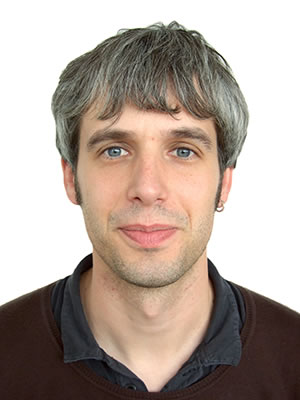
Sascha Spors is a Professor at the Chair of Signal Theory and Digital Signal Processing within the Institute of Communications Engineering at the University of Rostock. His work spans spatial audio processing, medical signal processing, and data-driven methodologies. Chair of the AES Technical Committee on Spatial Audio Ombudsperson at the University of Rostock Research focuses on spatial sound capture/synthesis, perception of synthetic sound fields, and biomedical applications like implant monitoring via electrical impedance tomography. He contributes to open science initiatives and research data management frameworks. Key collaborations include memberships in the IEEE Signal Processing Society, Deutsche Gesellschaft für Akustik (DEGA), and Audio Engineering Society (AES).
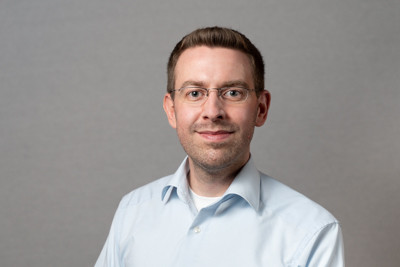
Stephan Preihs is a postdoctoral researcher and group leader at the Institute of Communications Technology of the Leibniz University Hannover , with a focus on acoustics, digital signal processing, and immersive audio systems. He received his Dipl.-Ing. in electrical engineering (communications engineering) from the same university in 2010 and his Dr.-Ing. in 2016. Education: Dipl.-Ing., Electrical Engineering (Communications Engineering), Leibniz University Hannover (2010) Dr.-Ing., Leibniz University Hannover (2016) Research Interests: Acoustics for immersive audio reproduction Digital signal processing and audio coding Signal detection/classification Psychoacoustic models Audio transmission for PMSE Recent Article Trends: Deep learning in sound source localization Wind turbine noise analysis via immersive audio Advancements in headphone technology Immersion prediction in spatial audio Low-latency communication protocols Scientific Awards: Best Paper Award at IEEE International Workshop on Networked Immersive Audio (2024) AES Show 2024 Best Technical Paper Award AES Spring 2021 Student Paper Award AES Poster Award 2019 AES Convention Student Paper Award 2019 Teaching: Lecturer for '3D Audio - Fundamentals of Spatial Reproduction Systems' Lecturer for 'Applications of Digital Audio Signal Processing' Coordinator of student laboratories in 'Audio Communication and Acoustics' and 'Transmission Technology'
Prof. Cornelia Ortlieb is a W3 Professor for Modern German Literature with a focus on Classical Modern at the Free University of Berlin. She serves as Deputy Managing Director of the Institute for German and Dutch Philology and leads PR efforts for the Cluster of Excellence Temporal Communities. Her academic journey includes professorships at FAU Erlangen-Nuremberg, LMU Munich, and TU Berlin. Education: Magister Artium in Modern German Philology, Comparative Literature, and Philosophy (TU/FU Berlin); Habilitation at TU Berlin on Friedrich Heinrich Jacobi; Doctorate on Baudelaire to Trakl at TU Berlin Research Interests: Specializing in materiality studies within literature and arts, her work spans 18th-21st century European literature with emphasis on Classical Modern (1880-1930), literary multilingualism, translation practices, and avant-garde material culture. She explores intersections between textuality and physical artifacts, focusing on Goethe's collections, Mallarmé's paper works, and 1900s cultural theories. Literary Output: Recent publications examine paper's four dimensions in Albers' art, Kafka's Berlin exile, and interwar film credits. Her 2024 monograph Gefaltete Verse, Blumenkomplimente und Stein-Gaben analyzes Mallarmé's occasional poetry, while 2023's Weiß auf Weiß investigates his ephemeral writings. She contributes to debates about digital authorship, collective writing, and postcolonial translation ethics. Academic Leadership: Currently directs research projects on Berliner Moderne and A Dialogue from Time to Time (2021-). She co-organized 13 Translation Talks audio series and leads the Temporal Communities research area on literary currencies. Previous projects include Artefakte der Avantgarden (DFG-funded 2019-2023), Die Sprache der Objekte (BMBF 2015-2018), and Mallarmés Papierarbeiten (2011-2014). Collaborative Work: Collaborated with institutions like Klassik Stiftung Weimar, Seoul National University, and Daegu University. Co-edited Grüner Apfel... (2025) with Katharina Mevissen and Felicitas Pfuhl. Maintains research teams with Sophie König (research assistant) and Vera Vogel (student assistant).
André Siegel is a Lecturer for special tasks at the Electronic Media Technology Group, Department of Electrical Engineering and Information Technology, Technical University of Ilmenau. He is actively involved in research and teaching related to audio engineering and acoustics, with a focus on spatial sound reproduction and simulation. His research interests span Audio Engineering , Room Acoustics , Binaural Sound Reproduction , Spatial Audio , Acoustic Simulation , and Audio Signal Processing . His work emphasizes practical implementations in real environments, including crosstalk cancellation, head-related transfer function measurement, and sound field analysis. The publications reflect a consistent research trajectory from 2005 to 2013, with a concentration on spatial audio technologies, room simulation methods, and perceptual aspects of sound reproduction. Key themes include the optimization of stereo and binaural systems, low-frequency acoustic behavior, and advanced measurement techniques using vector sensors and spherical arrays. André Siegel has not been awarded any scientific prizes or fellowships mentioned in the available data. He collaborates with researchers such as Hans-Peter Schade, Stephan Werner, and Julius T. Fricke. His work contributes to both academic knowledge and practical applications in room acoustical consultancy and immersive audio systems. He is based in Helmholtz Building, Room H 3529, and can be contacted at andre.siegel@tu-ilmenau.de.
Stephan Werner is a researcher at the Department of Electrical Engineering and Information Technology, Technische Universität Ilmenau, leading the Electronic Media Technology Group as acting head. His work focuses on auditory perception, spatial audio processing, and binaural synthesis for augmented/virtual reality applications. Research Interests Werner's research explores spatial audio, room acoustics, and perceptual modeling. Key areas include audiovisual coherence in AR, reverberation time estimation, and auditory adaptation in immersive environments. His projects address applications in education, intergenerational communication, and human-robot interaction. Publication Trends Recent work spans acoustic modeling for AR/VR, perceptual analysis of room divergence, and privacy-preserving mixed reality systems. Collaborative efforts with institutions like IEEE and Audio Engineering Society highlight technical and societal implications of audio technology. Laboratory As head of the Electronic Media Technology Group, he leads interdisciplinary research in auditory illusions, spatial audio quality, and immersive media production, often collaborating with international conferences and technical committees.
Dr. Marcus Handte is a Senior Researcher at the University of Duisburg-Essen, focusing on networked embedded systems, context-aware computing, and sustainable mobility. His academic journey includes a Habilitation in Computer Science (2013) and a PhD in Natural Sciences (2009) from Universität Stuttgart, alongside a Master's degree from Georgia Institute of Technology (2002). Research Interests Context-aware applications Localization and location-based systems Sustainable mobility solutions Internet of Things (IoT) Smart city infrastructure Privacy-preserving technologies His recent work involves developing platforms for multimodal mobility analysis (MOBYDEX), wireless EV charging systems (TALAKO, FAIR), and innovative approaches to indoor localization. Publications span journals like Machine Vision and Applications and conferences in pervasive computing. Scientific Recognition Best Poster Award at ACM KMIS 2023 Dr. Handte has contributed to projects such as ATMo2, INNAMORUHR, and GAMBAS, and maintains active collaborations across institutions. His expertise in adaptive middleware and distributed systems continues to shape research in smart mobility and ambient intelligence.
Prof. Timo Gerkmann is a Professor at the University of Hamburg's Department of Informatics, leading the Signal Processing Research Group. His research focuses on statistical signal processing and machine learning for speech and audio applications, including communication devices, hearing aids, audiovisual media, and human-machine interfaces. He previously held roles at Technicolor Research & Innovation, KTH Royal Institute of Technology, and Siemens Corporate Research. His work emphasizes generative models, diffusion-based approaches, and acoustic signal enhancement. He currently serves as Senior Area Editor of the IEEE/ACM Transactions on Audio, Speech, and Language Processing. Research Interests: Statistical Signal Processing for Speech and Audio Machine Learning Applications in Acoustic Environments Diffusion Models for Audio Restoration Audio-Visual Speech Enhancement Human-Machine Interaction Systems Acoustic Scene Analysis Publications Highlight Trends: Recent works focus on diffusion models for speech enhancement, generative approaches to dereverberation, and audiovisual multimodal analysis. He has pioneered frameworks like ReverbFX datasets and FlowDec codecs, emphasizing perceptual quality and unsupervised domain adaptation. Advising & Grants: While no specific students or grants are listed, his research group actively publishes in top venues, indicating sustained academic contributions. His work bridges theoretical signal processing with applied systems engineering. Labs/Teams: Leads the Signal Processing (SP) Research Group at UHH, specializing in cutting-edge audio technologies and human-centric signal processing solutions.
Prof. Christopher Habel is a Professor in the Department of Computer Science at the University of Hamburg, leading the WSV work area. His research focuses on spatial and temporal cognition, multimodal interaction, and accessibility technologies. He holds the formal title of Head of Department WSV and is affiliated with the Faculty of Mathematics, Computer Science and Natural Sciences. Habel's work bridges cognitive science, artificial intelligence, and human-computer interaction with an emphasis on assistive technologies for visually impaired individuals. Key research projects include the CINACS International Research Training Group, exploring auditory-haptic access to spatial graphics, and the development of multimodal comprehension systems integrating text, graphics, and tactile feedback. His contributions span theoretical frameworks in cognitive linguistics and practical implementations of verbal assistance systems for tactile maps and haptic graph exploration. Over 30 years of academic activity is reflected in his extensive publication record (1984–2015), with recent work emphasizing cross-linguistic studies, event recognition in virtual environments, and the design of multimodal interfaces for cognitive robotics. His research integrates computational models with empirical studies on human perception and language processing.
Manuel Burghardt is a full-time Professor of Computational Humanities at the Institute of Computer Science , Leipzig University . He coordinates the Bachelor's and Master's programs in Digital Humanities and serves as a spokesperson for the GI's Computer Science and Digital Humanities Group and the Forum for Digital Humanities Leipzig . PhD in Information Science (summa cum laude) from University of Regensburg Magisterstudium in Information Science, English Linguistics, General Linguistics, and Corpus Linguistics at University of Regensburg Burghardt's research spans multiple Computational Humanities domains: Digital Environmental Humanities : Integrating Computational Literary Studies with Biodiversity Research via NLP and Information Retrieval Immersive Humanities : Applying AR/VR/XR, Eye Tracking, and Tangible Interfaces for Digital Humanities Text Mining & NLP : Focused on text reuse detection, similarity analysis, and sentiment modeling Video Analytics : Analyzing news videos and cinematic media through Distant Viewing techniques Theory of Digital Humanities : Investigating methodological foundations and scientometric trends Computational Game Studies : Multimodal empirical analysis of games Computational Spatial Humanities : Spatial data analysis in humanities contexts His recent publications demonstrate strong focus on: Improving OCR for historical documents (2015-2020) Computational drama analysis using sentiment and text mining techniques (2016-2019) Music information retrieval applications in folk song and manuscript analysis (2015-2019) Development of specialized tools for humanities data processing
Kouei Yamaoka is an Assistant Professor in the Department of Electrical Engineering and Computer Science at Tokyo Metropolitan University's College of Engineering, specializing in advanced audio signal processing techniques. With over 24 publications from 2017-2024, Yamaoka has established a strong research presence in the international signal processing community. Yamaoka's research focuses on innovative beamforming techniques, time delay estimation methods, and speech enhancement algorithms. Their work consistently addresses challenging problems in multichannel audio processing, particularly in underdetermined scenarios where the number of sources exceeds available microphones. Key contributions include causal distortionless response beamforming, minimum-spanning-tree-based time delay estimation robust to outliers, and sound field interpolation for rotation-invariant processing. Analysis of Yamaoka's publication trends reveals a consistent focus on practical audio processing solutions with applications in source separation, speech enhancement, and acoustic scene analysis. The research demonstrates strong theoretical foundations combined with practical implementation considerations, particularly for real-time and online processing scenarios. Recent work has expanded into deep learning applications for bioacoustic analysis, as evidenced by the 2023 publication on marmoset vocalization analysis. Yamaoka maintains a productive collaboration network, with frequent co-authorship with Nobutaka Ono (20 joint publications), Shoji Makino (9 joint publications), and other researchers in the Japanese signal processing community. Publications appear consistently in top venues including IEEE/ACM Transactions on Audio Speech and Language Processing, APSIPA, EUSIPCO, and ICASSP.
Cumhur Erkut is an Associate Professor in the Sound and Music Computing group within the Department of Architecture, Design and Media Technology at Aalborg University, Copenhagen, Denmark. With a publication record spanning over two decades from 2000 to present, his research bridges computer science, audio engineering, and creative arts. His primary research interests include Sound Synthesis, Physical Modeling of musical instruments, Virtual Reality Audio, Sonic Interaction Design, and Embodied Interaction. His work demonstrates a consistent focus on the intersection of technology and human experience, particularly in how sound and movement interact in digital environments. His recent publications show a strong shift toward AI-driven audio processing, voice conversion, and differentiable digital signal processing techniques. Dr. Erkut's publication trends reveal an evolution from traditional physical modeling of musical instruments (particularly string instruments like tanbur, clavichord, and guitar) toward more contemporary applications in virtual reality, embodied interaction, and AI-powered audio processing. His work consistently emphasizes real-time performance considerations and human-centered design principles. He has served in significant academic roles, including organizing the 17th International Conference on New Interfaces for Musical Expression (NIME 2017) at Aalborg University, demonstrating his leadership within the international research community. His collaborative network is extensive, with frequent co-authorship with Stefania Serafin, Vesa Välimäki, Antti Jylhä, Rolf Nordahl, and other prominent researchers in the sound and music computing field. These collaborations span multiple institutions across Europe, reflecting the international nature of his research.
Dr.-Ing. Sebastian Nagel is a scientist at the Institute of Communication Systems and Data Processing (IKS) under the Faculty of Electrical Engineering and Information Technology at RWTH Aachen University . His research focuses on immersive binaural audio systems, spatial audio signal processing, and real-time adaptation of head-related transfer functions (HRTFs). Key research areas include: Interactive binaural reproduction for moving listeners Coherence-adaptive binaural cue algorithms Acoustic head-tracking with unconstrained movement Dereverberation and noise reduction in spatial audio His recent work (2025) extends binaural cue adaptation for hearable devices, while earlier publications (2024-2018) address multi-microphone integration, HRTF modeling, and real-time signal enhancement. Teaching activities include Laboratory Real-Time Audio Processing and Selected Topics in Communications Engineering seminars. Contact: Room 314 | Phone: +49 241 80-26961 | Email: nagel@iks.rwth-aachen.de
Dr. Benjamin Stodt is a postdoctoral researcher at the Leibniz Research Center for Working Environment and Human-Factors (IfADo) in Dortmund, Germany, where he has been working since August 2021. He is part of the Department of Ergonomics, specifically within the Networking Group focused on Aging and Experimental Ergonomics. His contact information includes email stodt@ifado.de and phone number +49 231 1084-376, with his office located at Ardeystr. 67, 44139 Dortmund. Dr. Stodt earned his Doctorate (Dr. rer. nat.) in 2018 from the Faculty of Engineering at the University of Duisburg-Essen. Prior to his current position, he worked as an analyst in market and media research from 2019 to 2021. His academic journey at the University of Duisburg-Essen began as a student assistant in 2010, progressing to research assistant and PhD student from 2013 to 2018. He completed both his Master of Science (2012-2013) and Bachelor of Science (2008-2012) in Applied Cognitive and Media Science from the same institution. Dr. Stodt's research focuses on human-computer interaction, auditory and audio-visual perception, virtual environments, and aging. His work examines how humans perceive spatial auditory information in both real and virtual settings, with particular attention to age-related differences. He combines experimental psychology with ergonomics to investigate spatial hearing, auditory localization, and the development of virtual reality technologies that accurately simulate real-world auditory experiences. His methodology frequently incorporates EEG to examine the neural correlates of auditory perception. His recent publications demonstrate a consistent research trajectory examining auditory perception in virtual versus real environments across multiple dimensions including spatial change detection, azimuth perception, and distance perception. Dr. Stodt's work has important implications for developing more realistic virtual environments, assistive technologies for aging populations, and understanding age-related changes in sensory processing. His research spans neuroscience, cognitive psychology, virtual reality, and human factors engineering. Dr. Stodt has published in reputable journals such as the European Journal of Neuroscience and Biomedicines, and presented at major acoustics conferences including DAGA (Annual Conference on Acoustics) and AUDICTIVE. His collaborative work frequently involves researchers including D. Neudek, R. Martin, E. Wascher, and S. Getzmann. At IfADo, Dr. Stodt works under the leadership of Prof. Dr. Edmund Wascher (Head of Department) and collaborates with the department's secretariat managed by Judith Geiger. His research contributes to the institute's mission of studying the working environment and human factors, with potential applications in workplace design, assistive technologies, and understanding age-related changes in sensory and cognitive processing.
Dr. Thejasvi Beleyur is a Group Leader of the Active Sensing Collectives Lab at the Centre for the Advanced Study of Collective Behaviour, University of Konstanz, and holds an affiliated position at the Max Planck Institute of Animal Behavior. She also serves as IMPRS Faculty, contributing to interdisciplinary research at the intersection of animal behavior, sensory biology, and collective systems. Current: Group Leader, Active Sensing Collectives Lab (2025-present) Previous: Postdoc at Centre for the Advanced Study of Collective Behaviour (2021-2025) PhD: Max Planck Institute for Ornithology (2015-2021) Education: BS-MS in Biological Sciences, IISER-TVM (2008-2013) Dr. Beleyur's research program investigates how active-sensing agents like echolocating bats navigate complex sensory environments when operating in groups. Her work combines field observations, computational modeling, and swarm robotics to understand the sensorimotor strategies animals employ in information-limited settings. She has pioneered the development of the Ushichka dataset—a multichannel audio-video system for recording echolocating bats in natural habitats—which provides unprecedented insights into how bats modify flight and echolocation behaviors as group sizes change. Her publication record reveals a consistent trajectory examining sensory challenges in collective animal systems, with emphasis on echolocating bats. The research spans experimental field work, computational modeling, and methodological innovations in acoustic and video tracking. Recent work has expanded into developing computational tools like the beamshapes Python package for sound source modeling and exploring robot platforms to simulate bat collective behavior. Carl-Zeiss Nexus grant for inter-disciplinary research (2025) DFG Walter Benjamin postdoc grant (2021-2023) Early Career Researcher Award at International Bioacoustics Congress Google Cloud Platform Research Credits award ($1000) DAAD-GSSP Stipend for doctoral studies (2015-2020) Dr. Beleyur actively mentors students in her lab, currently supervising PhD student Frithjof and Master's student Aditya, following the completion of Gabriele's Master's thesis on the active-sensing Ro-BAT platform. Her research program is supported by competitive grants including the Carl-Zeiss Nexus grant and previously the DFG Walter Benjamin fellowship, which funded her work on 'The How and What of Active Sensing Collectives.' The Active Sensing Collectives Lab brings together an interdisciplinary team working at the interface of sensory biology, robotics, and collective behavior. The lab develops novel computational methods for analyzing complex datasets from multi-sensor field recordings, with emphasis on creating tools for long-term community use. Current projects include characterizing echolocating groups in the field and studying sensorimotor strategies using computational modeling.
Andreas Westfeld is a Professor at the Faculty of Informatics and Mathematics , specializing in advanced research at the intersection of information security and digital media. His work addresses critical challenges in steganography , watermarking , and multilateral security systems. Current affiliation: Faculty of Informatics and Mathematics Academic rank: Professor Westfeld’s research focuses on steganography and steganalysis , with particular emphasis on vulnerabilities in audio and image-based data hiding systems, countermeasures against attacks, and cryptographic applications. His work also explores multimedia security and digital forensics , contributing to the understanding of attack models and secure protocol design. Recent publications highlight advancements in audio steganography , JPEG steganalysis , and watermarking techniques. Key themes include sensitivity analysis, regression-based restoration, and spatial analysis adapted to transformed domains. This body of work underscores his leadership in developing robust information security strategies for multimedia environments.