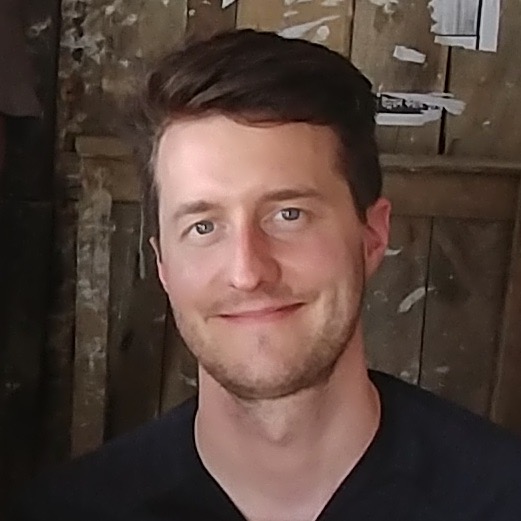
Dr. Cai Ladd is a Lecturer in Geography at Swansea University's School of Biosciences, Geography and Physics. His research focuses on coastal wetlands, integrating biogeomorphology, socio-ecological resilience, and ecosystem service sustainability. He leads the 'Coastal Wetlands and Ecosystem Services' theme at the Climate Action Research Institute. Dr. Ladd teaches modules such as Coastal Processes, GIS Applications, and Sustainable Development Goals, emphasizing practical fieldwork and spatial statistics. Current projects include the Community-Led Enhancement and Restoration of Coastal Ecosystems in the Cumbrian Solway Firth (2022–2025), funded at £175,977. He supervises PhD student Rhian Hedd Meara on cross-border coastal conservation. His research employs spatial statistics, hydrological monitoring, and citizen science to develop management tools for coastal conservation. Notable contributions include studies on saltmarsh carbon stocks, mangrove restoration in tropical deltas, and innovative Mini Buoy sensor technology. Dr. Ladd collaborates globally, with publications in Frontiers in Marine Science , Nature Communications , and Environmental Pollution . His work bridges natural and social sciences, addressing climate adaptation and community-led conservation strategies.
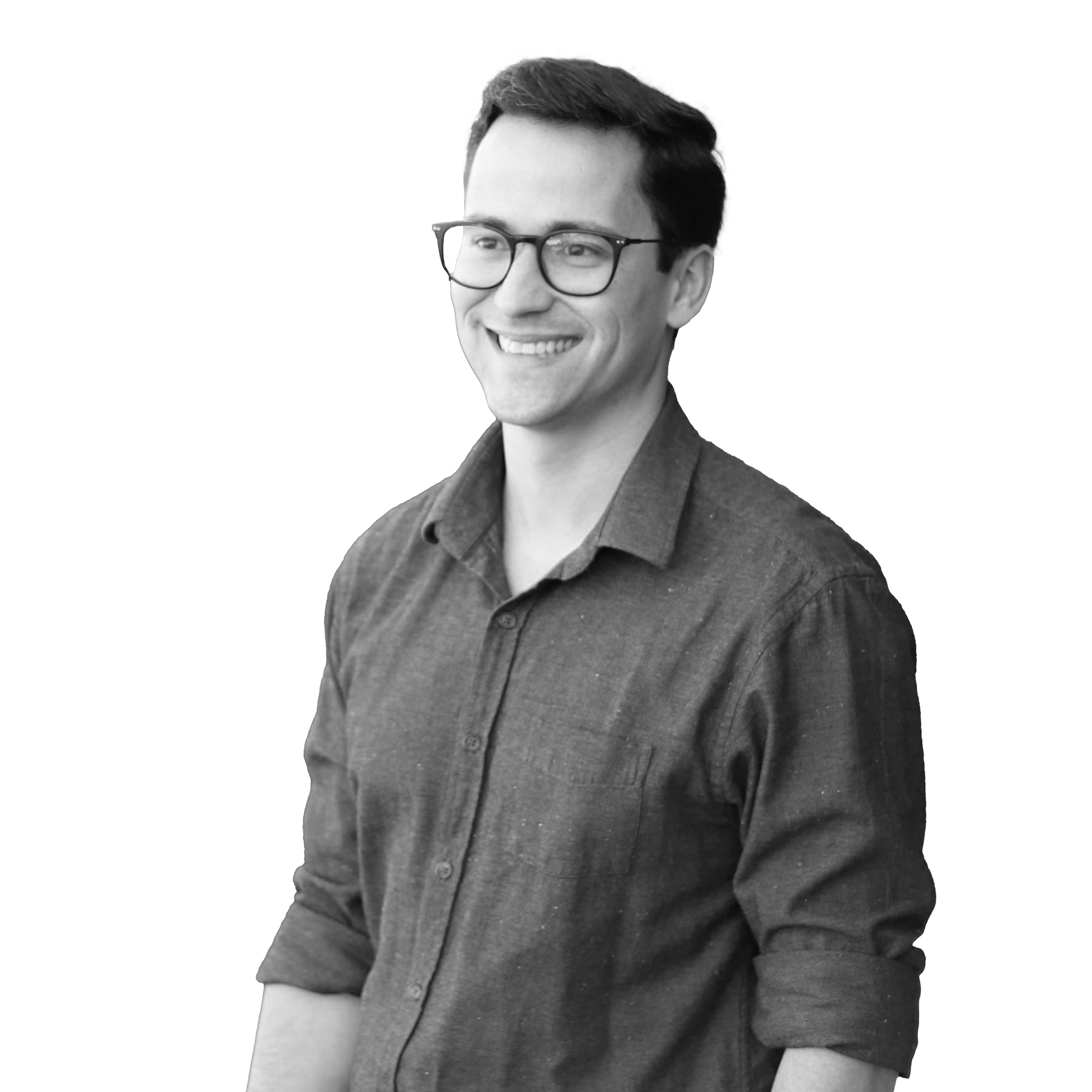
Eduardo Velloso is a Professor of Computer Science at the University of Sydney , focusing on interaction design for emerging technologies . His work explores novel user experiences through input modalities, interaction devices, and AI/ML integration in systems. Education: PhD in Computer Science (Lancaster University, UK), Bachelor in Computer Engineering (Pontifical Catholic University of Rio de Janeiro, Brazil) Research Interests: Interdisciplinary work combining Human-Computer Interaction , Augmented/Virtual Reality , Eye Tracking , Wearable Computing , and Machine Learning . Publication Trends: Recent work addresses methodology in HCI , AR/VR applications , AI integration , and sensor-based interaction . Scientific Awards: Best Paper Award at CHI Best Paper Award at UIST Best Paper Award at TOCHI Best Paper Award at TEI Supervision: Actively supervises PhD students and collaborates with companies/government on projects like VR training systems and AI mediation tools . Labs/Teams: Affiliated with institutions in Australia (University of Sydney) and Brazil (PUC-Rio), with global co-authors in projects involving mixed reality , wearables , and AI ethics .
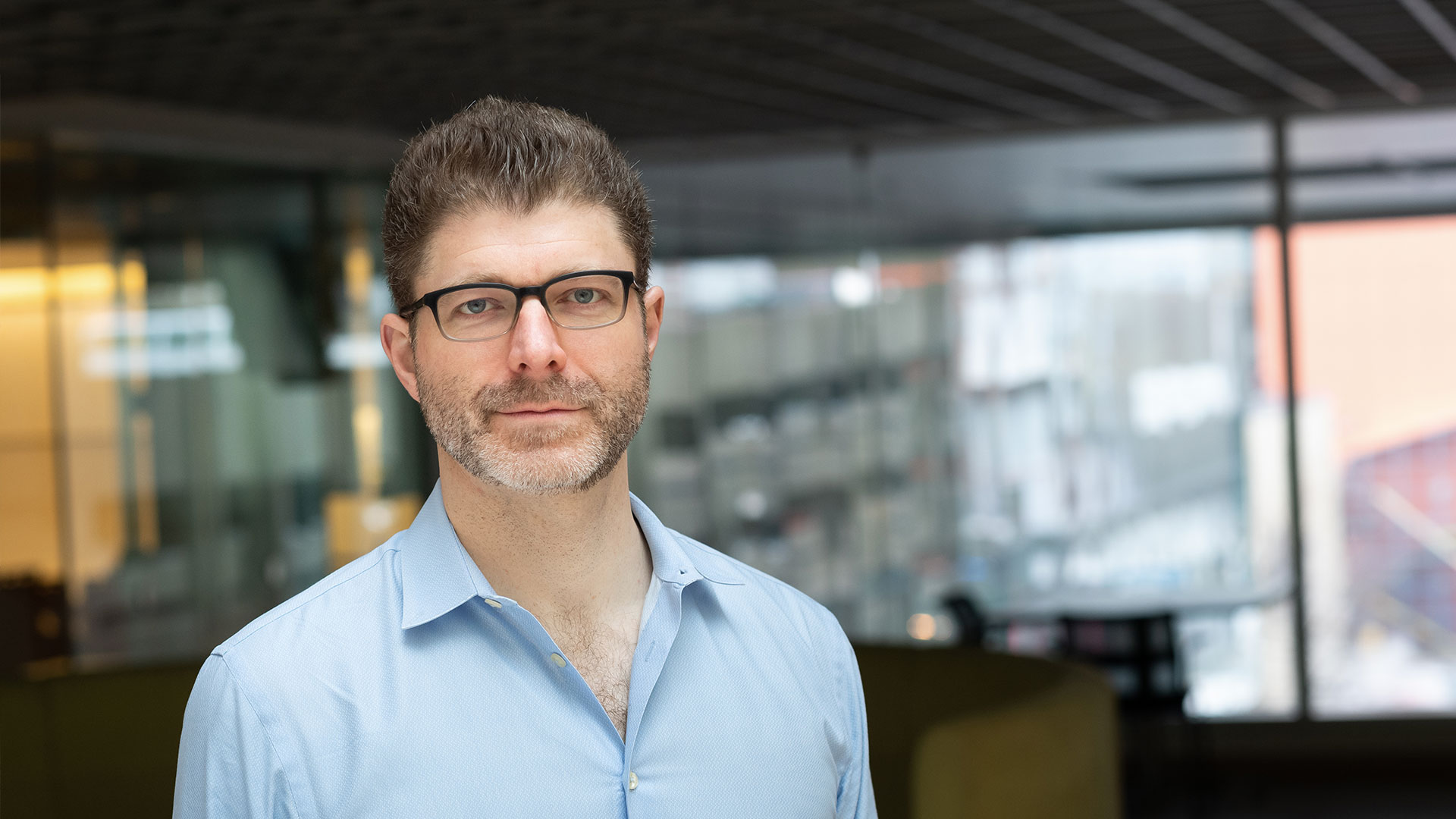
Josh McDermott is a Professor in the Department of Brain and Cognitive Sciences at MIT and an Associate Investigator at the McGovern Institute. He holds roles as Associate Department Head and Principal Investigator of the Laboratory for Computational Audition. His work bridges psychology, neuroscience, and engineering to study auditory perception, with a focus on sound interpretation, hearing impairment treatments, and machine hearing systems. Education includes a B.A. from Harvard (summa cum laude), an MPhil from University College London, and a PhD from MIT. Postdoctoral training included NYU and the University of Minnesota. Research interests encompass computational principles of sound perception, natural sound statistics, music cognition, and machine hearing. Key areas include sound localization, auditory scene analysis, and the role of generative models in perception. Recent publications highlight advancements in auditory neural networks, cross-cultural music perception, and noise schema processing. Awards include the Troland Research Award, BCS Excellence in Advising, and NSF CAREER Award. Advising includes over 20 graduate students and postdocs, with notable contributions to auditory neuroscience and machine learning. Major grants support projects on auditory models and sensory systems. The lab develops tools like cochleagram generation and headphone screening software. The Laboratory for Computational Audition operates at MIT, focusing on biological and computational approaches to hearing. Collaborations span engineering, psychology, and neuroscience to advance understanding of auditory processing.
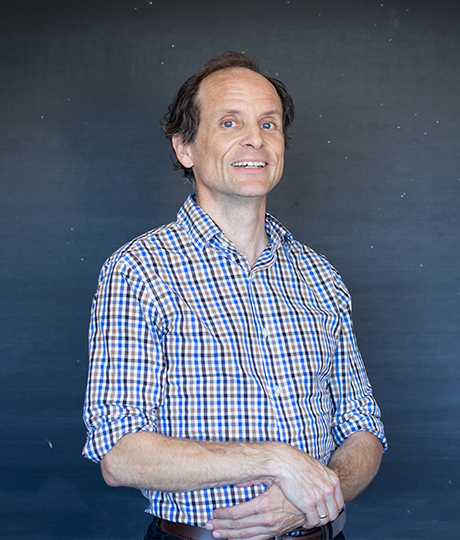
Seth Blumsack is a Professor at the Pennsylvania State University in the Department of Energy and Mineral Engineering and serves as Director of the Center for Energy Law and Policy . He holds an Adjunct Research Professor position at the Carnegie Mellon Electricity Industry Center and is affiliated with the Santa Fe Institute as an External Faculty member. His research spans energy economics , power grid reliability , and complex infrastructure networks . Key projects include: Interdependent natural gas and electricity systems analysis Governance of regional transmission organizations Smart grid consumer behavior studies Power grid reliability tools development He has secured funding from the U.S. National Science Foundation , Department of Energy , Environmental Protection Agency , and private industry. His Best paper award at Hawai’i International Conference on System Sciences (2011) and John T. Ryan, Jr. Fellowship (2011-17) highlight his scientific recognition. Publications emphasize electricity market deregulation , energy infrastructure resilience , and consumer response to smart grid technologies . His work has been cited in major media outlets like The New York Times and The Los Angeles Times , and he has consulted for National Renewable Energy Laboratory , U.S. Department of Energy , and other industry stakeholders.
Lorenzo Cavallaro is a Full Professor of Computer Science at University College London (UCL), specializing in Trustworthy AI for Systems Security. His research focuses on developing learning-based methods that are robust against adversaries by understanding the interplay between program analysis, representations, and machine learning models. His research interests span multiple critical areas in cybersecurity, including adversarial machine learning, malware detection, program analysis, and security evaluation. Cavallaro's work particularly emphasizes the challenges of concept drift in security systems and the development of robust defenses against evolving threats. His research has significant implications for Android security, binary analysis, and memory safety in embedded systems. Analysis of his recent publications (2024-2025) reveals a strong focus on addressing fundamental challenges in ML-based security systems. His work spans malware detection systems that maintain reliability under distribution shifts, adversarial attacks in the problem space, context-driven approaches using LLMs for security applications, and temporal invariance in malware detection. A recurring theme is the critical examination of whether ML-based security systems are truly robust and reliable in real-world scenarios. Cavallaro serves in significant editorial and advisory roles including the NDSS Steering Group (2023-2026), Associate Editor for Computer & Security and ACM TOPS, and Scientific Advisory Board for SERICS. He has been actively involved in program committees for top security conferences including IEEE S&P, USENIX Security, CCS, and NDSS from 2021-2025. He teaches Malware (COMP0060; 2022—ongoing), Research in Information Security (COMP0057; 2021—23), and Computer Security 2 (COMP0055; 2021—ongoing) at UCL, contributing to the next generation of security researchers and practitioners.
Patrick Brown is an Associate Professor at the University of Toronto , affiliated with the Department of Statistical Sciences and cross-appointed to the Centre for Global Health Research and St. Michael's Hospital . His research focuses on spatio-temporal data modeling , Bayesian inference , and non-parametric methods for spatial epidemiology and environmental sciences. Fields of Interest : Spatial Statistics, Cancer Statistics, Statistical Software Education : PhD from University of Lancaster His methodological work encompasses Bayesian inference for non-Gaussian spatial data, Gaussian Markov random fields, and computational techniques like INLA and MRA. Applied research themes include disease mapping, environmental risk assessment, and public health surveillance using real-world data sources such as electronic health records and wastewater monitoring . He has developed key R packages (mapmisc, geostatsp, diseasemapping) supporting spatial statistical applications. Current collaborative projects span diverse fields: Ultra-diffuse galaxy detection with astrophysical applications Multi-pollutant mortality studies in Canadian cities SARS-CoV-2 seropositivity tracking Homelessness population estimation using EHR Geospatial cancer risk tools for Nova Scotia His work bridges statistical innovation with global health challenges , emphasizing computationally efficient solutions for large-scale spatiotemporal datasets.
Ivano Cardinale is a Professor and Head of the Institute of Management Studies at Goldsmiths, University of London. He previously held a Junior Research Fellowship at Emmanuel College, Cambridge, and has been a Visiting Fellow at Clare Hall, Cambridge. He founded and directs the Structural Economic Analysis Unit and serves as Editor-in-Chief of Structural Change and Economic Dynamics . PhD, University of Cambridge 2022 Feltrinelli Giovani Prize for Social Sciences (Italy's top award for researchers under 40) 2019 Guest Faculty, Learning Innovation Laboratory, Harvard University His research in Structural Political Economy examines how material, social, and cognitive structures shape economic conflicts and policy outcomes. Key areas include institutional theory, industrial dynamics, and energy transition frameworks. He analyzes systemic interests, sectoral conflicts, and structural conditions through theoretical and empirical studies. Recent publications explore gas market vulnerabilities in EU energy policy, Pasinetti's institutional theory, and networked economic structures. His work appears in Structural Change and Economic Dynamics , Energy Economics , and Cambridge Journal of Economics . Scientific awards include: 2022: Feltrinelli Giovani Prize (Social Sciences) 2019: Political Economy Research Fellowship (ISRF) 2016: Life Membership, Clare Hall, Cambridge He contributes to academic governance through editorial roles and co-edited major handbooks including The Palgrave Handbook of Political Economy (2018) and The Political Economy of the Eurozone (2017).
Professor Tavis Potts is a Personal Chair in Sustainable Development and Environmental Governance at the University of Aberdeen, affiliated with the Department of Geography and Environment within the School of Geosciences. He is actively engaged in research on just transitions, environmental justice, marine governance, and participatory planning. His research focuses on: Understanding just transitions and the social dimensions of climate and energy Marine resource governance and planning Participatory and community-based approaches to managing natural capital The political economy of environmental policy The blue economy and net zero transitions His recent publications highlight a strong trend toward policy-relevant research on just transitions, stakeholder engagement, and environmental governance. Articles and reports examine climate assemblies, community participation in net zero planning, nuclear decommissioning, and measuring equitable outcomes in transition processes. His work integrates social science perspectives with environmental policy, emphasizing democratic participation and equity. Key scientific contributions include commissioned reports for the Just Transition Commission and the Nuclear Decommissioning Authority, as well as peer-reviewed articles in journals such as Environmental Science & Policy and Marine Policy . He has led and contributed to projects funded by Interreg EU, NERC, British Council, and the World Bank. Professor Potts advises research students and leads the Just Transition Lab at Aberdeen. He holds external advisory roles with Aberdeen City Council’s Net Zero Delivery Unit and Aberdeenshire Council’s Climate Ready Aberdeenshire Board, demonstrating active engagement with policy and practice. He is affiliated with key research centers including the Centre for Marine and Coastal Zone Management and the Just Transition Lab, where he advances interdisciplinary work on sustainable futures and equitable environmental governance.
JuHyun Lee is an Associate Professor of Architecture and Computational Design in the School of Built Environment at the Faculty of Arts, Design and Architecture (ADA), University of New South Wales (UNSW) Sydney, where they also hold the prestigious title of Scientia Academic. With a professional background in architecture and construction (1998-2002), they have held academic positions across Australia including a five-year post-doctoral fellowship at the University of Newcastle (2012-2017) and a senior research fellowship at the University of South Australia (2018), following earlier research and teaching roles in South Korea (2003-2011). Lee specializes in architectural design computing, design cognition, and urban complexity, integrating computational methods, cognitive science, and architectural theory to advance architectural intelligence and human-centered design. Their research spans architectural visualization, analysis and design methods, algorithm/protocol design, and data visualization with computational approaches. They have established a strong research program examining the intersection of language, culture, and design cognition, particularly focusing on cross-cultural design communication between Australia and Korea. Lee's recent publications demonstrate a clear trajectory toward increasingly sophisticated integration of computational methods with architectural design theory, particularly in the areas of shape grammar, space syntax, and machine learning applications. Their work shows consistent focus on practical applications of computational design methods to real-world architectural problems, with growing emphasis on cross-cultural collaboration and intelligent design systems. The research portfolio reveals a deepening engagement with AI and machine learning techniques applied to architectural design assessment and generation. Scientia Academic at UNSW Sydney Associate Fellow of the Higher Education Academy (AFHEA, 2020) As an educator, Lee develops cutting-edge courses in computational design and Building Information Modeling (BIM), integrating experiential learning and industry engagement. They have secured over $11 million in research funding, including multiple ARC Discovery Projects and an Australia-Korea Foundation grant. Lee co-directs the Advanced Architectural Analytics Laboratory (A 3 LAB), leading interdisciplinary research on design automation, spatial analysis, and machine learning applications in architecture, while also leading cross-cultural initiatives like the Australia-Korea Architects' Network (AKAN). Lee supervises multiple HDR students working on culturally sustainable urban design, socio-spatial patterns in public housing, and computational layout generation. Their research has significant implications for improving design communication across cultural boundaries and developing more coherent, clear, and accessible built environments through computational design approaches.
Maurizio Conti is a Full Professor of Economics at the Department of Economics, University of Genova . He holds a PhD from the University of Essex and an MSc from the University of Warwick, with additional affiliations as an IZA Research Fellow and board member of the Italian Association of Labor Economics (AIEL) . Educational Background : PhD in Economics (Essex, 2004); MSc Economics (Warwick, 2000); Laurea in Business and Economics (Genova, 1998). Research Focus spans labour economics , industrial economics , and transport economics . Key topics include: Impact of labour market institutions (e.g., employment protection, unions) on firm investment in physical/human capital Transport infrastructure effects on productivity, house prices, and regional development Policy evaluation in regulated industries and public procurement Recent Publications analyze high-speed rail impacts, cooperative industrial relations, and firm dynamics under regulatory frameworks, with methodologies ranging from quasi-experimental designs to cross-country comparative analyses. Scientific Recognition : IZA Research Fellow (since 2006) Organized conferences like the Genoa Labour Workshop and participated in COMPIE and NERI networks Teaching includes courses on MICROECONOMICS , Economic Policy , and Transport Economics , with a focus on applied analysis, productivity measurement, and regulatory frameworks.
Dr. rer. nat. Thomas Hermann is a faculty member at Bielefeld University's Faculty of Engineering, leading the Ambient Intelligence Group and coordinating the Computer Science program. He specializes in sonification, auditory data science, and smart environments. Head of Ambient Intelligence Working Group Computer Science Program Coordinator Member of multiple academic advisory boards His research focuses on interactive sonification for biomedical applications, quantum systems, and smart environments. Key projects include ECG sonification for cardiac diagnosis, real-time auditory feedback in swimming, and sonic interfaces for AR cooperation. Recent publications span 2025 with Python-based sonification tools ( pya AGen ), quantum system sonification, and ST-elevation myocardial infarction monitoring. He contributes to open-access supplementary materials and interdisciplinary workshops. As a researcher , Hermann develops practical sonification frameworks like Panson for facial behavior analysis, CardioScope for portable ECG monitoring, and Base Cube One for smart environments. His work bridges academic research with industry applications.
Danny Yagan is a Researcher at the University of California, Berkeley Department of Economics, with expertise in public economics, taxation, and income inequality. He contributes to the National Bureau of Economic Research (NBER) and the Conference on Research in Income and Wealth. His research focuses on fiscal policy, including deficit sustainability and the "growth dividend" concept. He has extensively studied pass-through business entities' impact on labor income share and inequality, using administrative tax data to analyze wealth distribution and taxation of top earners. Recent work examines spatial inequality trends, place-based redistribution, and the role of colleges in intergenerational mobility. Collaborations with scholars like Raj Chetty, Emmanuel Saez, and Owen Zidar highlight his interdisciplinary approach. Yagan's publications span topics including tax reform, capital taxation, and household investment behavior. He is actively involved in policy analysis and empirical economic research.
Krishna Jagannathan is a full-time Professor in the Department of Electrical Engineering at the Indian Institute of Technology Madras (IIT Madras), India. He specializes in stochastic modeling, communication networks, information theory, and queuing theory. He obtained his B.Tech from IIT Madras in 2004, followed by S.M. and Ph.D. degrees from MIT in 2006 and 2010, respectively. After post-doctoral positions at Caltech and MIT, he joined IIT Madras in 2011. Education: B.Tech in Electrical Engineering, IIT Madras (2004) S.M. in Electrical Engineering and Computer Science, MIT (2006) Ph.D. in Electrical Engineering and Computer Science, MIT (2010) Research Interests: His research focuses on stochastic modeling and analysis of communication networks , information theory , and queuing theory . He has made significant contributions to understanding network performance, resource allocation, and risk-aware decision-making in complex systems. He leads the Networks and Stochastic Systems lab at IIT Madras, mentoring a large cohort of Ph.D. and M.S. students working on cutting-edge problems in networking, optimization, and stochastic systems. Scientific Awards: Best Paper Award at WiOpt 2013, Tsukuba, Japan Young Faculty Recognition Award for Excellence in Teaching and Research, IIT Madras (2014) Teaching & Mentorship: He has taught a wide range of courses including Probability Foundations , Stochastic Modeling and Queuing Theory , Convex Optimization , and Signals & Systems , consistently receiving high teaching evaluations. He has supervised over 15 Ph.D. and M.S. students to completion and continues to guide several active researchers.
Franklin Goldsmith serves as Associate Professor of Engineering within Brown University's School of Engineering, where his research bridges fundamental chemical kinetics with practical combustion applications. His work directly impacts energy conversion technologies and emission reduction strategies through rigorous investigation of reaction mechanisms. His academic foundation includes: PhD in Chemical Engineering from Massachusetts Institute of Technology (2010) BS in Chemical Engineering from North Carolina State University (2003) BA in Chemistry from University of North Carolina at Chapel Hill (1998) Goldsmith's research program centers on radical reaction kinetics and low-temperature oxidation phenomena , employing both computational master equation modeling and experimental techniques like shock tube spectroscopy and synchrotron photoionization. His investigations into non-Boltzmann energy distributions and pressure-dependent rate coefficients have established new frameworks for understanding ignition chemistry. The Thermochemistry for Combustion Database project exemplifies his commitment to foundational data resources for the field. Analysis of his publication record reveals three dominant research thrusts: (1) detailed kinetic modeling of hydrocarbon oxidation, particularly propane systems; (2) development of computational methodologies for pressure-dependent rate estimation; and (3) fundamental studies of radical-molecule interactions. His work consistently integrates high-precision experimental validation with theoretical frameworks, as evidenced by collaborations with national laboratories. Goldsmith teaches Brown's core chemical engineering curriculum including ENGN 1120 (Reaction Kinetics and Reactor Design) and ENGN 1130 (Chemical Engineering Thermodynamics), alongside specialized graduate courses in heterogeneous catalysis (ENGN 2751) and chemically reacting flow (ENGN 2910Q). His educational approach emphasizes the connection between molecular-scale kinetics and reactor design principles. His research group maintains active collaborations with Argonne National Laboratory (Klippenstein), MIT (Green), and Sandia National Laboratories (Taatjes), focusing on multiscale informatics for complex reaction systems. Current projects investigate biomass-derived fuel combustion and catalytic partial oxidation mechanisms using spatially resolved experimental techniques.
David Zakharov is an Assistant Professor in the Department of Geological and Environmental Sciences at Western Michigan University (WMU), specializing in petrology, stable isotope geochemistry, and water-rock interaction. His research focuses on the geochemical co-evolution of Earth’s crust and hydrosphere, particularly through igneous and metamorphic processes, with projects targeting Archean subaerial magmatism, Precambrian chert geochemistry, and fluid circulation in oceanic crust. At WMU, Zakharov established a stable isotope lab in January 2023, equipped with advanced instrumentation including a Thermo EA Isolink, Renishaw Raman microscope, and CO2 laser. His lab conducts high-precision triple O-isotope (δ¹⁸O, δD, Δ¹⁷O) analyses, geochronology, and SIMS measurements, collaborating on studies such as the 2025 Chemical Geology paper on exceptionally low δ¹⁸O zircon values and the 2024 Chemical Geology paper on experimental olivine-water reactions. He has presented at major conferences like Goldschmidt 2024 and AGU Fall Meeting 2022. Zakharov’s research integrates fieldwork, laboratory experiments, and analytical techniques to reconstruct ancient environmental conditions, such as seawater chemistry and hydrological cycles. His lab has hosted distinguished lecturers and workshops, including a 2024 SIMS Workshop at UCLA. Current projects involve PhD students Israr Hussain, Afrid Abdaly Sheik, and Zack Stevens, with recent publications highlighting reactive fluid dynamics, silicification processes, and isotopic constraints on early Earth environments.