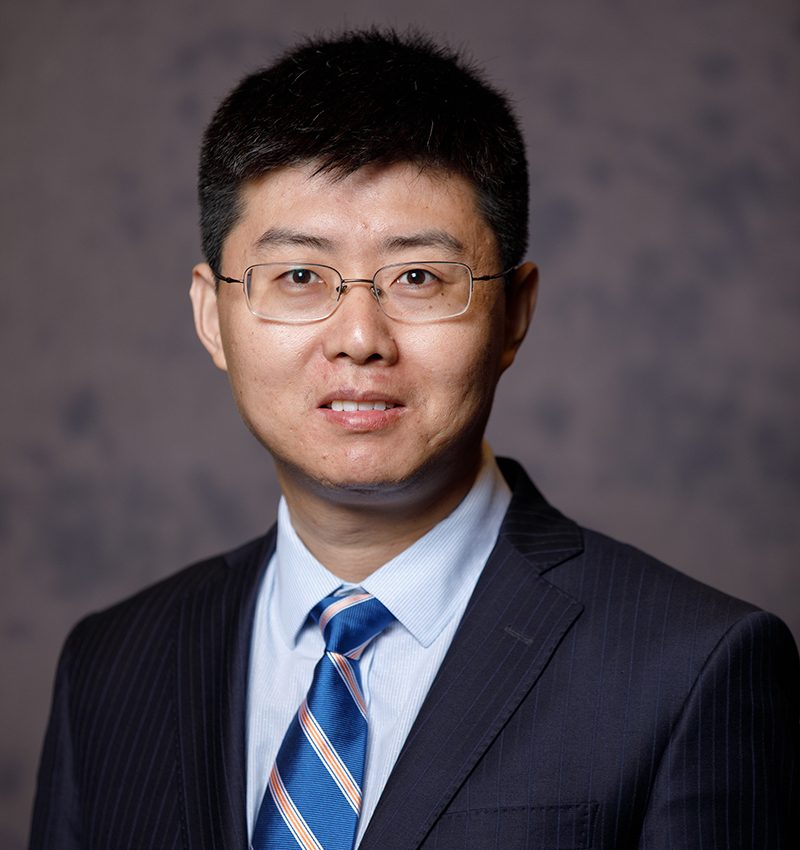
Zhiqiang Que is a Research Associate in the Department of Computing at Imperial College London, affiliated with the Faculty of Engineering and the Centre for High-Throughput Digital Electronics and Machine Learning. His research focuses on computer architecture, embedded systems, high-performance computing, and CAD tools for hardware design optimization. His research interests include FPGA-based acceleration of machine learning models, hardware-software co-design, and real-time signal processing for scientific applications such as particle physics and gravitational wave experiments. He has contributed to projects involving low-latency graph neural networks (GNNs), Bayesian neural networks, and efficient stream processing on FPGAs. Recent work includes advancements in trustworthy design flows for deep learning acceleration, reconfigurable architectures for recurrent neural networks, and optimizing FPGA-based systems for high-energy physics experiments at the HL-LHC.
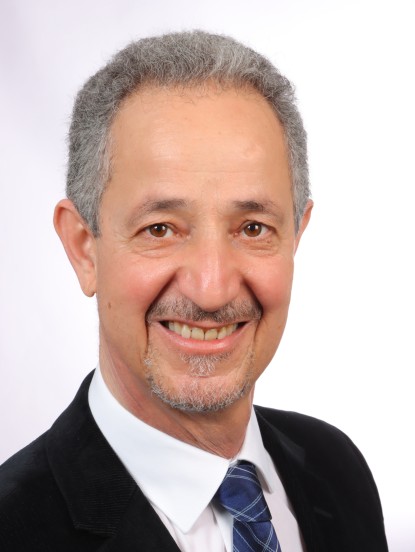
José Picheral is a Professor at CentraleSupélec, affiliated with the Laboratory of Signals and Systems (L2S). He holds a PhD (2003) and HDR (2017) in high-resolution signal processing methods and inverse problems. His research focuses on array processing, source localization, acoustic imaging, and vibration analysis, with applications in aeroacoustics, automotive systems, and industrial monitoring. He has supervised multiple PhD students and contributed to projects like Valeo’s smartphone-based car key replacement system. Education: Engineering Degree: Supélec (1999) and Politecnico di Milano (1999, Erasmus-TIME) PhD: Paris Sud University (2003) Habilitation (HDR): Université Paris Sud (2017) Research Interests: High-resolution methods for distributed sources, sparse signal processing, acoustic imaging, asynchronous measurements, and sensor array design. Current projects include spatial source covariance estimation, EEG spectrum analysis, and automotive applications using smartphone localization. Key Contributions: Over 50 publications in top journals/conferences (e.g., IEEE Transactions, ICASSP). Notable work on MUSIC algorithm robustness, DAMAS optimization, and sparse approaches for tip-timing signals. Advising & Collaboration: Supervised 7 PhD students. Collaborations with SAFRAN, Valeo, and academic teams in Bayesian inference and inverse problems. Active in L2S’s Inverse Problems Group and SYCOMORE team. Labs/Teams: Member of L2S’s Signal Processing and Statistics group, leading research in systems and control, telecommunications, and energy systems.
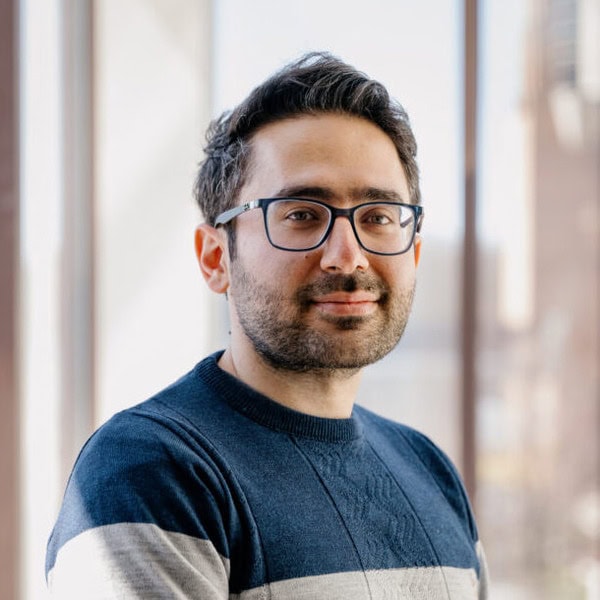
Dr. Shunqiao Sun is an Assistant Professor in the Department of Electrical and Computer Engineering at The University of Alabama, College of Engineering. He joined the faculty in August 2019 as a tenure-track professor after working at Aptiv’s radar core team in Malibu, California. His research focuses on advanced signal processing, machine learning, and optimization for automotive and MIMO radar systems in autonomous vehicles. Ph.D. : Electrical and Computer Engineering, Rutgers University, 2016 M.S. : Electrical Engineering, Fudan University, 2011 B.S. : Electrical Engineering, Southern Yangtze University, 2004 Dr. Sun's research lies at the intersection of statistical and sparse signal processing , mathematical optimization , and machine learning , with applications in automotive radar , MIMO radar , and autonomous driving . His work emphasizes sparsity-oriented frameworks, AI-powered radar perception, and high-resolution 4D sensing. He leads a dynamic research group focused on next-generation radar technologies for intelligent transportation systems. His recent publications demonstrate a strong trend in deep learning for radar signal recovery , collaborative radar imaging , direction-of-arrival estimation with sparse arrays , and integrated sensing and communication . Several of his papers are among the most downloaded and cited in IEEE journals, including top articles in IEEE Signal Processing Magazine and IEEE Journal of Selected Topics in Signal Processing. Scientific Awards and Honors: NSF CAREER Award (2024) NSF CRII Award (2022) IEEE AESS Robert T. Hill Best Dissertation Award (2016) Best Student Paper Award at IEEE SAM Workshop (2020) Rutgers ECE Academic Achievement Award (2015–2016) University of Alabama Hewson Engineering Faculty Fellow (2025) Dr. Sun is actively involved in academic service and leadership. He is an Associate Editor for IEEE Signal Processing Letters and IEEE Open Journal of Signal Processing . He serves as Vice Chair of the IEEE Signal Processing Society’s Autonomous Systems Initiative and is an elected member of the IEEE Sensor Array and Multichannel (SAM) Technical Committee and the Integrated Sensing and Communication (ISAC) Technical Working Group. He has co-organized numerous workshops and special sessions at ICASSP, EUSIPCO, and IEEE Radar Conference. His lab has secured significant research funding from the National Science Foundation , NXP Semiconductors , MathWorks , and NOAA . He mentors multiple Ph.D. students, several of whom have interned at leading industry labs such as NXP and GM Cruise. He has co-organized the Workshop on Signal Processing for Autonomous Systems (SPAS) at ICASSP and EUSIPCO and delivered invited seminars at institutions including TU Delft, UC Davis, and Lehigh University.
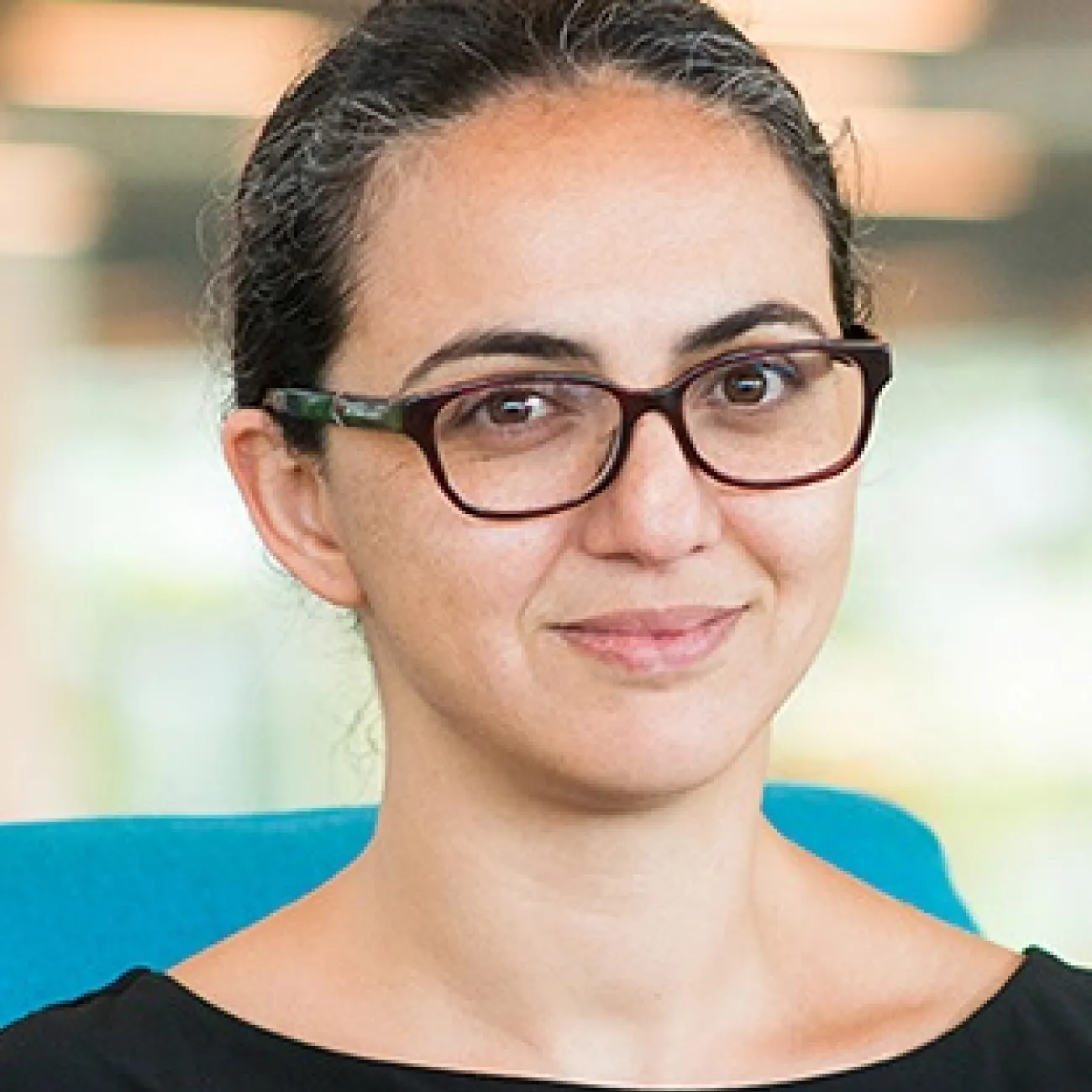
Abdelhak M. Zoubir is a Professor of Signal Processing and Head of the Signal Processing Group at Technische Universität Darmstadt, Germany. He has held leadership roles including Head of the Department of Electrical Engineering and Information Technology (2012–2014 and 2020–2022), and President of the European Association for Signal Processing (EURASIP, 2017–2018). His research focuses on statistical signal processing with applications in radar imaging, biomedical engineering, and automotive systems. Zoubir has authored over 500 publications and is a Fellow of IEEE and EURASIP. He currently leads projects on radar communication integration, robust signal processing algorithms, and radiation-hardened sensor development. Education: Dipl.-Ing. (BSc/MSc) from Fachhochschule Niederrhein and Ruhr-Universität Bochum, followed by a Dr.-Ing. (PhD) in Electrical Engineering from Ruhr-Universität Bochum (1992). Research Interests: Bootstrap techniques, robust detection/estimation, cooperative sensor networks, radar for landmine detection, and automotive safety systems. He has pioneered methods in robust statistical signal processing, including low-rank matrix completion and sparsity-aware algorithms. Recognition: Recipient of the IEEE Meritorious Service Award (2018), IEEE Signal Processing Magazine Best Paper Award (2017), and the M. Barry Carlton Award (2014). He has been a keynote speaker at major conferences such as ICASSP and EUSIPCO, and served as Editor-in-Chief of the IEEE Signal Processing Magazine (2012–2014). Current Projects: Focus on automotive radar signal processing, radiation-hardened sensors (MALTA), and distributed learning robustness. His work bridges theoretical advancements with practical applications in defense, healthcare, and automotive industries.
Maria Brbic is an Assistant Professor of Computer Science at EPFL, previously a postdoctoral researcher at Stanford University under Jure Leskovec. Her research focuses on developing machine learning methods for biological and biomedical applications, particularly representation learning of high-dimensional datasets, open-world semi-supervised learning, and single-cell genomics. Her work includes the STELLAR method for spatial cell type discovery (Nature Methods 2022), the ORCA framework for open-world learning (ICLR 2022), and contributions to the Fly Cell Atlas (Science 2022). She is involved in the Chan Zuckerberg Biohub and Neuro-omics projects. She received the University of Zagreb's best thesis award, was recognized as a MIT Rising Star in EECS, and won the Basel Computational Biology Conference best poster award. Her research bridges computer science with cutting-edge biomedical discovery.
Salar Fattahi is an Assistant Professor at the University of Michigan, affiliated with the College of Engineering’s Department of Industrial and Operations Engineering. He holds additional appointments with the Michigan Institute for Computational Discovery and Engineering (MICDE), Michigan Institute for Data Science (MIDAS), and the Michigan Center for Applied and Interdisciplinary Mathematics (MCAIM). PhD in Industrial Engineering and Operations Research from UC Berkeley M.Sc. in Electrical Engineering from Columbia University B.Sc. in Electrical Engineering from Sharif University of Technology Research Focus: Developing scalable computational methods for structured optimization and machine learning problems by exploiting sparsity, low-rankness, and benign landscape properties. Applications span gene regulatory networks, power systems, and brain connectivity modeling. 2025: Parametric algorithms for MIQPs over trees 2024: Triple Component Matrix Factorization for global/local/noise separation 2023: Robust subspace recovery and dictionary learning Scientific Recognition: NSF CAREER Award (2023) INFORMS Best Paper Awards (2023, 2024) Dean’s MLK Spirit Award (2024) MICDE Catalyst Grant (2021) Academic Service: Associate Editor for INFORMS Journal on Data Science; Area Chair for NeurIPS, ICML, and ICLR. Mentored students including Jianhao Ma (now Tsinghua University), Geyu Liang (Amazon), and Aaresh Bhathena. Research supported by NSF, ONR, MICDE, MIDAS, START, and DEI Faculty grants.
Na (Luna) Lu is a Professor of Civil and Construction Engineering at Purdue University, with a courtesy appointment in Materials Engineering. She also serves as Vice President for Industry Partnerships and holds the Indiana ACPA Professorship in Concrete Paving and Materials Science. Her research focuses on power systems, inverter-based resources, microgrid control, grid resilience, and smart grid technologies. Key areas include stability analysis, renewable energy integration, and advanced control strategies for resilient distribution systems. Dr. Lu’s work bridges academia and industry, emphasizing practical applications of power electronics and cyber-physical systems. She has contributed extensively to topics like inverter dynamics, hybrid AC/DC microgrids, and real-time charging infrastructure. Her research highlights include AI-driven black-box modeling for photovoltaic systems, region-based stability analysis using machine learning, and optimal power flow in inverter-dominated grids. She has also explored resilience-enhancing strategies for coastal communities using marine energy resources and dynamic microgrids. Dr. Lu’s interdisciplinary approach combines electrical engineering, materials science, and computational methods to address challenges in modern power systems. Publications emphasize data-driven approaches, stability augmentation, and control system optimization. Awards include her endowed professorship reflecting industry recognition. Her administrative role underscores her commitment to industry-academia collaboration, fostering innovation in energy and infrastructure sectors.
Luna Lu serves as the Indiana ACPA Professor in Concrete Paving and Materials Science at Purdue University's Lyles School of Civil Engineering, with a courtesy appointment in the School of Materials Engineering. She concurrently holds the position of Vice President for Industry Partnerships and founded the Center for Intelligent Infrastructure, driving industry-academia collaboration in smart infrastructure solutions. Her research spans novel nanomaterials for infrastructure sensing and IoT-enabled energy harvesting systems, with recent work pivoting toward power systems engineering. Current investigations focus on stability analysis, control algorithms, and resilience in inverter-dominated microgrids, particularly addressing grid-forming/grid-following inverter interactions and AI-driven modeling techniques. This evolution reflects her dual expertise in materials science and electrical engineering, manifested through both academic publications and commercial ventures. Analysis of her 15 most recent publications reveals a concentrated focus on microgrid stability (73% of articles), inverter control strategies (60%), and data-driven/AI methodologies (47%). Key trends include seamless transition protocols between grid modes, quantifiable trade-offs in voltage regulation, and resilience assurance through hydrogen integration—all critical for renewable energy adoption. Her scientific recognition includes: National Science Foundation CAREER Award (2014) Purdue Faculty Scholar (2019) ASCE Alfred Noble Prize (2022) TIME Magazine Best Invention (2023) Edison Award (2024) Fellow of the Royal Society of Arts Dr. Lu has successfully translated research into practice through Wavelogix Inc., where she serves as CEO, commercializing REBEL IoT sensors for infrastructure monitoring. Her portfolio includes over 150 peer-reviewed publications, two books, six book chapters, and 10 patents, demonstrating consistent funding success and technology transfer. The Center for Intelligent Infrastructure under her direction facilitates industry partnerships focused on real-world deployment of sensing technologies. As founding director of the Center for Intelligent Infrastructure, she leads multidisciplinary teams developing integrated solutions for infrastructure health monitoring. Current initiatives combine nanomaterials, wireless sensor networks, and power electronics to create self-powered sensing systems for bridges, roads, and energy infrastructure, with field deployments across Indiana's transportation network.
Tian Han is an Assistant Professor at the Department of Computer Science within the Charles V. Schaefer, Jr. School of Engineering and Science at Stevens Institute of Technology. His research focuses on artificial intelligence (AI) and machine learning, particularly in developing statistical learning methods for probabilistic models and building explainable, controllable AI systems. He holds a PhD in Statistics from UCLA (2019) and a degree in Computer Science from HKUST (2013). His research interests span unsupervised/semi-supervised learning, probabilistic generative modeling, explainable AI, and computer vision. Notable contributions include work on latent space energy-based models, hierarchical feature learning, and robust representation techniques. Han has served as an Area Chair/Senior Program Committee member at conferences like CVPR, NeurIPS, and AAAI. Education: PhD in Statistics, UCLA (2019) MSc/BS in Computer Science, HKUST (2013) His publications emphasize advancements in energy-based models, latent space hierarchies, and generative AI. Recent work includes enforcing sparsity in latent representations for robust AI systems (WACV 2024), molecule design via latent space modeling (UAI 2023), and context-aware health prediction (AAAI 2022). He received the NSF CAREER Award (2024) for his research. Han teaches courses on machine learning fundamentals, deep learning, and computing foundations at Stevens.
Cristian Rojas is a Professor of Automatic Control at KTH Royal Institute of Technology, specializing in system identification. His research bridges control theory, statistics, and machine learning to develop data-driven methods for analyzing and controlling dynamical systems. He holds an MS in Electronics Engineering from Universidad Técnica Federico Santa María (Chile) and a PhD in Electrical Engineering from the University of Newcastle (Australia). Research focuses on efficient utilization of data for self-learning systems, including topics like continuous-time system identification, robust control, and statistical estimation. Notable contributions include work on subspace identification, input design for sparse systems, and algorithms for H-infinity norm estimation. His methodologies emphasize practical applications in industrial automation, smart infrastructure, and autonomous systems. Recent publications highlight advancements in inverse filtering, decentralized learning systems, and the theoretical underpinnings of data-driven control. He collaborates widely on projects involving Bayesian methods, adversarial systems, and privacy-protected decision-making frameworks. Rojas' work often addresses challenges such as undersampling effects, model consistency, and computational efficiency in real-world control scenarios. His academic contributions include organizing academic ceremonies at KTH and mentoring researchers in the Department of Automatic Control. Current research explores intersections between machine learning interpretability and control theory, with applications to explainable AI in engineering systems.
Christoph Breunig is a Professor in the Department of Economics at the University of Bonn. His work bridges theoretical econometrics with empirical applications, focusing on nonparametric methods, instrumental variable modeling, and causal inference. His research addresses challenges in high-dimensional data, missingness mechanisms, and treatment effect estimation. University: University of Bonn Department: Economics Academic Rank: Professor Email: cbreunig@uni-bonn.de Research Trends: Nonparametric and semiparametric estimation techniques Applications of instrumental variables in causal inference Handling missing data and measurement error High-dimensional statistical models with economic applications Specification testing in complex regression frameworks Connections between microeconomic theory and empirical methods
Dr. Ruchit Agrawal is an Assistant Professor of Computer Science and Head of Computer Science Outreach at the University of Birmingham Dubai. Previously, he served as a Postdoctoral Researcher in AI for Healthcare at the University of Oxford’s Computational Health Informatics Lab, and as a Marie Curie AI Researcher in the transnational MIP-Frontiers project at Queen Mary University of London. His work focuses on optimizing healthcare systems using Machine Learning, alongside contributions to Natural Language Processing, Audio Signal Processing, and Multimodal Deep Learning. He holds a PhD in Computer Science from Queen Mary University of London and an MS by Research from IIIT Hyderabad. Education: PhD in Computer Science (Queen Mary University of London, 2021) MS by Research in Machine Translation (IIIT Hyderabad, 2017) Research Interests: Clinical Machine Learning for healthcare system optimization Natural Language Processing with a focus on Indian languages and context-aware models Audio Signal Processing for music performance analysis and stuttering detection Development of multimodal deep learning frameworks for diverse applications Adaptive AI systems leveraging contextual and positional encoding techniques Publications highlight trends in healthcare AI, multilingual NLP, and audio-visual alignment. Recent work includes Arabic sentiment analysis, stuttering detection via MMSD-Net, and stock price prediction using FB-GAN. Earlier contributions address structure-aware synchronization in music performance data and transformer-based post-editing for low-resource languages. His research bridges theoretical advancements with practical implementations in clinical, financial, and cross-modal domains. Scientific awards include the prestigious Marie Skłodowska-Curie scholarship (2017–2020) supporting his deep learning research in audio signal processing. Advising and grants: While no formal advisees are listed, his roles involve leading outreach initiatives and guiding collaborative projects at the Computational Health Informatics Lab during his postdoctoral tenure. Labs/Teams: Active member of the Computational Health Informatics Lab (Oxford) and Machine Translation group at FBK (Italy). His work also intersects with the MIP-Frontiers transnational research project.
Prof. Selin Damla Ahipasaoglu is a Professor in Operational Research at the University of Southampton's School of Mathematical Sciences . She serves on the management team of the UKRI CDT SustAI (Artificial Intelligence for Sustainability) as Senior Tutor and Co-Lead for the Transportation and Logistics Theme . Her work bridges mathematical optimization with practical applications in sustainability, finance, and transportation systems. Research Interests : Convex Optimization Robust Optimization Discrete Choice Theory Experimental Design Machine Learning Current Research : Focused on robust optimization and its applications in discrete choice modeling, portfolio optimization, and transportation systems. She explores theoretical frameworks alongside real-world implementations, particularly through interdisciplinary projects like the UKRI CDT SustAI. Teaching : In the 2025/2026 academic year, she teaches MATH3017: Mathematical Programming and MATH2013: Operational Research II . She supervises PhD students in Mathematical Sciences, including Kexin Lai, Samuel Jericho Ward, and others.
Stephen J. Riederer, Ph.D., is a Professor of Radiology at Mayo Clinic, holding dual appointments in the Department of Radiology and the Department of Physiology & Biomedical Engineering. He leads the Magnetic Resonance Laboratory, focusing on advancing MRI physics and clinical applications. His research emphasizes high-resolution prostate MRI, super-resolution T2SE imaging, and contrast-enhanced magnetic resonance angiography (CE-MRA). Dr. Riederer has developed fast-scanning techniques, real-time signal processing, and parallel acquisition methods, many of which are now industry standards. Education: B.A. in Mathematics, University of Wisconsin-Madison SM in Nuclear Engineering, MIT Ph.D. in Medical Physics, University of Wisconsin-Madison Research Interests: Dr. Riederer’s work bridges MRI physics and clinical implementation. Key areas include: Prostate cancer imaging via high-resolution T2SE and DCE-MRI Super-resolution MRI for improved anatomic detail Real-time MRI scanning and interactive triggering Parallel acquisition techniques and coil array optimization Publications & Impact: Over 300 peer-reviewed articles highlight his contributions to MRI innovation. Recent work focuses on AI-driven prostate MRI quality assessment and coil array improvements. His methods are widely adopted in commercial MRI systems. Awards & Leadership: Gold Medal (International Society for Magnetic Resonance in Medicine, 2002) President, Society of Magnetic Resonance Angiography (2008) George M. Eisenberg Professor I, Mayo Clinic (2024) Advising & Grants: Mentor to over two dozen doctoral students. Active in training via courses at the Mayo Clinic Graduate School. Leads grants on prostate MRI super-resolution and spatiotemporal imaging, funded by NIH and the U.S. Army. Labs & Affiliations: Part of the Center for Advanced Imaging Research, collaborating across radiology, biomedical engineering, and oncology. Facilities include state-of-the-art MRI scanners and imaging laboratories.
Dr. Ruth Misener is a Professor in the Department of Computing at Imperial College London and holds the BASF/RAEng Research Chair in Data-Driven Optimization (2022-27). Her research focuses on computational optimization, including global optimization of mixed-integer nonlinear programs, optimization under uncertainty, and integration with machine learning. She leads the Computational Optimization Group, which develops open-source tools like GALINI, and collaborates with industry partners such as Royal Mail for logistics optimization. Her research interests span optimization challenges in engineering, bioprocess design, and healthcare, including bioreactor optimization and disease trajectory modeling for leukemia. She has been awarded the Royal Academy of Engineering Research Fellowship, supporting her work on hybrid computational/experimental platforms for biomedical applications. Recent projects include scheduling optimization under uncertainty, Bayesian methods for experimental design, and robust optimization for heat recovery networks. Her work emphasizes explainable optimization and safety-critical decision-making, with applications in energy systems, pharmaceuticals, and manufacturing. Ruth’s contributions include over 50 publications, with a focus on algorithm development and industrial impact. She actively participates in conferences and chairs workshops on optimization, such as the Mixed Integer Programming Workshop and the British-French-German Conference on Optimization.