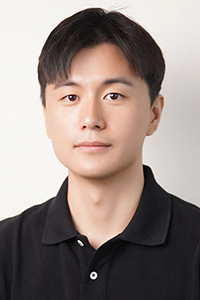
C. Krishna Mohan is a Professor in the Department of Computer Science & Engineering at the Indian Institute of Technology Hyderabad , a premier institution in India. His research focuses on cutting-edge areas within artificial intelligence and machine learning, particularly advancing methodologies for video content analysis and deep learning. Education: Ph.D. from Indian Institute of Technology Madras. His work emphasizes sparsity-based techniques and their applications in AI/ML systems. He is based in the Computer Science Building (Room CS-203) and actively contributes to academic research and teaching in the field of computer science.
Bojana Rosic is a Full Professor specializing in Applied Mechanics & Data Analysis. Her research spans Artificial Intelligence, Machine Learning, Robotics, and Uncertainty Quantification, with a focus on integrating computational methods into mechanical systems and materials science. Key Research Areas: Machine Learning, Uncertainty Quantification, Robotics, Soft and Compliant Mechanisms, Materials Simulation. Recent Work: Contributions to neural network-based constitutive modeling for anisotropic materials, real-time control systems for robotic manipulators, and uncertainty quantification techniques using Polynomial Chaos Expansion. Collaborations: Active in interdisciplinary research with applications in energy, sustainability, and biomedical engineering. Her work emphasizes practical implementations of AI in mechanical engineering, including autonomous systems and collaborative robots (cobots). While no specific awards or educational background are detailed here, her extensive research output (68 publications) highlights her leadership in computational methods and machine learning integration.
Amirreza Yousefzadeh is an Assistant Professor specializing in computer architecture design for embedded systems. His research focuses on hardware acceleration for artificial intelligence, particularly in energy-efficient neuromorphic computing and edge AI applications. Research Interests Neuromorphic computing architectures Event-driven AI hardware Sparsity exploitation in neural networks Embedded vision systems Digital circuit design for AI Research Trends Recent work (2024-2025) demonstrates expertise in spiking neural networks (SNNs), activation sparsity, and hardware-software co-design for neuromorphic processors. Key areas include object detection, energy efficiency optimization, and digital implementations of synaptic delays. Technical Contributions Developed SENMap for multi-objective data-flow mapping Created SENSIM simulator for multi-core neuromorphic systems Investigated 3D stacking for memory-dominated architectures Explored temporal sparsity in event-based processing
Kangwook Lee serves as an Associate Professor in the Electrical and Computer Engineering Department with a courtesy appointment in Computer Sciences at the University of Wisconsin-Madison, where he also holds a Discovery Fellowship. He concurrently leads deep learning research initiatives at KRAFTON, bridging academic and industry innovation in artificial intelligence. His academic foundation includes a PhD in Electrical Engineering and Computer Sciences from UC Berkeley (2016), preceded by research assistant and postdoctoral positions at KAIST's Information and Electronics Research Institute. Hailing from Seoul, South Korea, Lee maintains active research operations through his laboratory in Madison's Discovery Building. Lee's research program centers on Large Language Models and LLM agents, with rigorous theoretical and empirical investigations into their operational mechanisms and improvement pathways. His work spans in-context learning dynamics, agent-based social simulations, multi-domain reward modeling, and efficient inference techniques, emphasizing both fundamental understanding and practical enhancement of AI capabilities. Recent publications reveal a concentrated effort on overcoming length generalization barriers, enabling compositional reasoning with rare concepts, and developing robust feature selection frameworks. His 2025 publications demonstrate significant advancements across LLM architecture, evaluation methodologies, and application domains. Key trends include the emergence of task vector representations in in-context learning, development of superposition techniques for multi-task processing, and innovative approaches to speculative decoding for multimodal systems. These works collectively advance the field toward more efficient, generalizable, and interpretable language models. Lee's research excellence is recognized through prestigious accolades: NSF CAREER Award (premier early-career grant) IEEE Joint Communications Society/Information Theory Society Paper Award Amazon Research Award KSEA Young Investigator Grant Award As principal investigator of the Lee Lab, he directs a dynamic research group focused on cutting-edge AI challenges. His work integrates theoretical analysis with empirical validation to address fundamental limitations in modern language models, while industry collaborations through KRAFTON ensure real-world impact. Current projects emphasize agent-based social dynamics modeling, efficient inference architectures, and robustness frameworks for diverse deployment scenarios.
Dr. Ray R. Hashemi is a Professor in the Department of Computer Science within Georgia Southern University's College of Engineering and Computing. His academic career spans over 14 years of continuous research output from 2003-2017, with significant contributions as co-editor for four International Conferences on Information Technology and Knowledge Engineering (2005, 2010, 2014, 2017). His research focuses on innovative applications of data mining across diverse domains: Bioinformatics: DNA sequence analysis, organ toxicity prediction, and liver cancer predictive systems Medical Informatics: Bone mineral density analysis using DEXA data and dendrograms Financial Systems: Extraction of essential constituents from S&P500 index Environmental Science: Climate prediction using algae sedimentation patterns Computer Vision: Video mining for theatrical analysis and Android-based OCR for non-flat documents Methodologically, Dr. Hashemi specializes in neighborhood systems analysis, association rule mining, and grid-based approaches for sparse data. His work consistently bridges theoretical data mining concepts with practical applications, developing tools for signature-based prediction, record layout discovery, and intent analysis through web behavior. Recent publications (2015-2017) show increased focus on domain-specific applications in finance and toxicology while maintaining core data mining expertise. His collaborative work includes partnerships with international researchers across multiple continents, demonstrated through conference editorial roles and co-authored publications. Dr. Hashemi's research demonstrates sustained scholarly activity with practical implementations in medical diagnostics, financial analysis, and environmental prediction systems.
Maura John serves as a Research Associate at the Chair of Bioinformatics at Hochschule Weihenstephan-Triesdorf's Straubing Campus for Sustainable Resource Use. Her research focuses on developing advanced computational methods for biological data analysis, with particular expertise in genome-wide association studies and protein structure prediction. Her primary research interests include: Genome-wide association studies with permutation-based significance thresholds that preserve population structure Development of bioinformatics tools like permGWAS2 and easyPheno Protein thermostability prediction using machine learning approaches Genomic selection methodologies for crop breeding applications Dr. John's recent publications demonstrate a strong focus on methodological improvements in computational biology, particularly addressing limitations of traditional approaches in handling skewed phenotype distributions and population structure. Her work bridges theoretical statistical methods with practical biological applications across plant genomics and protein science. Notable contributions include: permGWAS2: An improved method that maintains population structure during permutations ProLaTherm: A protein language model-based thermophilicity predictor outperforming existing methods easyPheno: A comprehensive Python framework for phenotype prediction model comparison Her research program demonstrates strong collaborative efforts with Dominik Grimm's group and other bioinformatics researchers, focusing on developing open-source tools that address critical challenges in genomic data analysis. The work has practical applications in plant breeding, protein engineering, and understanding genotype-phenotype relationships.