Anna Vilanova is a Full Professor in Visual Analytics at the Department of Mathematics and Computer Science, Eindhoven University of Technology (TU/e), and is associated with the Electrical Engineering department's Signal Processing Systems. Previously, she served as Associate Professor at TU Delft (2013-2019) and Assistant Professor at TU/e (2002-2013). Her research focuses on Visual Analytics for high-dimensional data , explainable AI , and biomedical applications including Diffusion Weighted Imaging, 4D Flow, and Pangenomics. Education: Doctorate in Computer Graphics & Visualization (2001) Master in Computer Science (1997), Universitat Politècnica de Catalunya Research Highlights: Vilanova leads work on Visual Analytics systems for biomedical data, with recent publications in Diffusion MRI modeling , Tractography visualization , Explainable AI frameworks , and Pangenomic variant analysis . Her work bridges dimensionality reduction , uncertainty visualization , and medical imaging applications. Scientific Contributions: NWO-Veni grant (2005): "Visualization of global tensor information for diffusion tensor imaging" NWO-Aspasia grant (2013) Best Poster Award EuroVis (2025) Best Demo/Poster Awards (2022) Leadership & Service: Vilanova serves on the IEEE VIS Steering Committee , was EUROGRAPHICS President (2019-2022), and contributes to conferences like IEEE Visualization and EG-EuroVis . She co-founded the EAISI Health research initiative at TU/e.
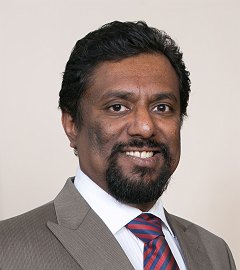
Professor Saman Amarasinghe is a full Professor in the Department of Electrical Engineering and Computer Science (EECS) at the Massachusetts Institute of Technology (MIT), and Principal Investigator at MIT's Computer Science and Artificial Intelligence Laboratory (CSAIL). He leads the Commit compiler research group, which focuses on programming languages and compilers that maximize application performance on modern computing platforms. His work spans multiple academic departments and research centers, with strong affiliations to both MIT's School of Engineering and CSAIL. Professor Amarasinghe's research interests center around high-performance domain-specific languages and compiler technology . His work combines language design with sophisticated compilation techniques to deliver unprecedented performance for targeted application domains. His research spans multiple areas including image processing (Halide), sparse tensor algebra (TACO), graph analytics (GraphIt), stream computations (StreamIt), and bioinformatics (Seq). A significant thread throughout his work is the application of machine learning for compiler optimizations, from Meta optimization in 2003 to the OpenTuner autotuner framework. Analysis of Professor Amarasinghe's recent publications reveals a strong focus on sparse computing , compiler vectorization , and domain-specific language implementation . His work consistently bridges theoretical compiler concepts with practical performance gains across diverse application domains. The progression from earlier work on StreamIt and Halide to more recent projects like GraphIt and TACO shows an evolution toward more specialized, high-performance DSLs targeting specific computational patterns. His 2020-2025 publications particularly emphasize sparse tensor operations, GPU acceleration, and machine learning integration with compiler technology. ACM Fellow (2019) Professor Amarasinghe has made significant contributions to academic entrepreneurship and student development. He founded Determina, Inc. (acquired by VMware) based on security research from his MIT lab and co-founded Lanka Internet Services, Ltd., Sri Lanka's first ISP. As faculty director of MIT Global Startup Labs, his programs across 17 countries have helped create over 20 successful startups. His teaching includes the popular Performance Engineering of Software Systems (6.172) course with Professor Charles Leiserson, as well as innovative project-based courses like the Open Source Software Project Lab and Bring Your Own Software Project Lab. His educational approach emphasizes hands-on experience with compiler and language design concepts. Professor Amarasinghe leads the Commit compiler research group at MIT CSAIL, which has produced numerous influential domain-specific languages and compilers including Halide, TACO, Simit, StreamIt, and GraphIt. The lab maintains strong industry connections through projects like OpenTuner and Determina, and collaborates with researchers worldwide on compiler technology. The group's work spans both theoretical compiler research and practical implementation, with a consistent focus on bridging the performance gap between high-level programming abstractions and hardware capabilities.
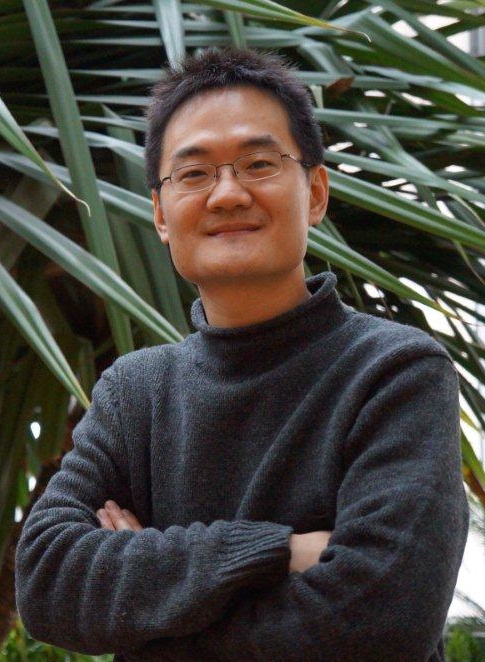
Dr. Zichun Zhong is an Associate Professor and Graduate Program Director in the Department of Computer Science at Wayne State University's James and Patricia Anderson College of Engineering. He earned his Ph.D. from the University of Texas at Dallas and completed postdoctoral training at UT Southwestern Medical Center. His research focuses on geometric modeling, computer graphics, medical image processing, and visualization technologies. Research encompasses: Geometric modeling of surfaces and volumes 3D computer vision and reconstruction Medical image segmentation and visualization Virtual/augmented reality applications GPU-accelerated algorithms Awards and honors include NSF CAREER and CRII awards, Faculty Research Excellence Award, and Excellence in Teaching recognition. He serves as Technical Paper Chair for Shape Modeling International conferences and associate editor for multiple journals. Current doctoral advisees: Shiman Zhou, Hongbo Li, Haikuan Zhu, and Sikai Zhong. Notable alumni include researchers at Samsung NEON, Skoltech, and General Motors.
Eric Hetland is an Associate Professor in the Department of Earth and Environmental Sciences at the University of Michigan. His research focuses on geophysical natural hazards, particularly earthquake dynamics from a geodetic perspective. He investigates fault loading processes during interseismic and postseismic periods, and collaborates on modeling volcanic eruption conditions with Prof. Becky Lange. His work integrates machine learning methods into geodetic data analysis, addressing climate studies and hazard vulnerability. Applied mathematics and computational science are central to his interdisciplinary approach. Education: PhD in Geophysics from MIT (2006), MA in Geology from SUNY Binghamton (2000), BS in Physics from UC Santa Cruz (1996) Research Interests: Seismology, Geodesy, Crustal Deformation, Geodynamics, Magmatism and Volcanism Lab/Teams: Active collaborations with interdisciplinary teams, leveraging geodetic and computational tools His recent publications emphasize coseismic slip distribution modeling, Bayesian stress inversion, and transient strain analysis using advanced statistical methods. He has no listed scientific awards but maintains an active research program funded through collaborative grants. Advising focuses on graduate student training in geophysical hazards and computational geophysics.
Andrew J Margenot is an Associate Professor in the Department of Crop Sciences at the University of Illinois Urbana-Champaign, with affiliations at the Institute for Sustainability, Energy, and Environment, Center for Digital Agriculture, and National Center for Supercomputing Applications (NCSA). His research focuses on soil biogeochemistry, particularly phosphorus and carbon cycling, soil health, and agroecosystem management. He explores topics such as soil enzyme activity, nutrient loss mitigation, and the impacts of agricultural practices on environmental systems. Margenot leads exploration into organic matter recycling, legacy phosphorus dynamics, and the application of advanced analytical techniques like radioisotopic labeling and spatial modeling. His work bridges field experimentation with computational methods to address global challenges in sustainable agriculture and environmental stewardship. Research Interests: Soil phosphorus and carbon biogeochemistry Soil health indicators and enzyme activity Agricultural nutrient management and loss mitigation Long-term agricultural experiment analysis (e.g., Morrow Plots) Impacts of land-use change on soil properties Integration of digital technologies in agricultural research Recent Articles Trends: Margenot’s recent work emphasizes methodological advancements in soil analysis (e.g., enzyme assays), phosphorus cycling dynamics in diverse ecosystems, and agricultural sustainability. Key themes include evaluating fertilizer forms, optimizing nutrient use efficiency, and quantifying environmental impacts of farming practices. Labs & Collaborations: He collaborates across institutions on projects involving soil biogeochemistry, computational modeling (via NCSA), and interdisciplinary sustainability initiatives. His research often involves field experiments, isotopic tracing, and multi-institutional datasets.
P. (Saday) Sadayappan is a Professor in the School of Computing at the University of Utah. He serves as a lead researcher in high-performance computing, with a focus on compiler optimization and algorithm-architecture co-design. His current projects include NIH SBIR Phase 2 funding for large-scale image analysis and NSF grants for tensor applications and cyber-infrastructure for AI. Research Interests : Compiler Optimization for High Performance Computing Optimization of Sparse/Dense Matrix/Tensor Computations Scalable Machine Learning Algorithm-Architecture Co-Design Optimization Research Trends in Publications : His work emphasizes optimizing computational workflows for emerging hardware architectures, with a focus on accelerating machine learning and scientific computing through compiler-level innovations. Recent trends include co-design for CNNs, sparse matrix optimizations, and distributed algorithms. Scientific Awards : ACM SIGPLAN Most Influential PLDI Paper Award (2018) Grants & Projects : NSF (2022–2027): Comprehensive Framework for Tensor Applications NSF AI Institute ICICLE (2021–2026): Cyber-infrastructure for environmental AI NIH SBIR (2023–2025): Next-gen machine learning for image analysis Labs & Teams : Collaborates with institutions like Ohio State University and RNET Technologies on projects involving parallel computing, sparse algorithms, and compiler design.
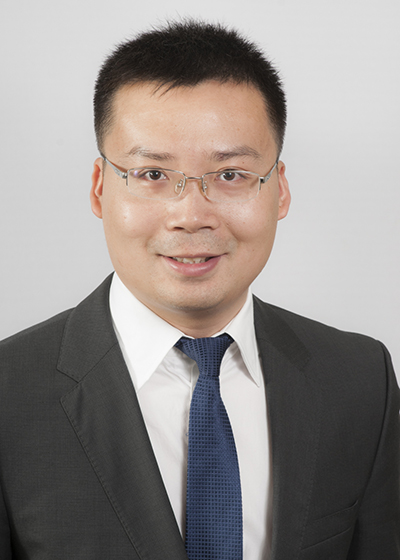
Ming Yuan is a Professor in the Department of Statistics at Columbia University and serves as Associate Director of the Data Science Institute. His research focuses on high-dimensional statistics, machine learning, and statistical methodology with applications in genomics, finance, and imaging. Yuan holds a Ph.D. in Statistics from the University of Wisconsin-Madison (2004) and a B.S. in Electrical Engineering from the University of Science and Technology of China (1997). Education: 2004 Ph.D., Statistics, University of Wisconsin-Madison 2003 M.S., Computer Science, University of Wisconsin-Madison 2000 M.S., Probability and Statistics, University of Science and Technology of China 1997 B.S., Electrical Engineering, University of Science and Technology of China Research Interests: Dr. Yuan’s work bridges theoretical and applied statistics, emphasizing scalable methods for high-dimensional data. Key areas include tensor decomposition, covariance estimation, and statistical machine learning. His contributions to methods like sparse inverse covariance estimation and matrix/tensor completion have found applications in finance, genomics, and image analysis. Publications: His recent work explores tensor-based methods for high-dimensional analysis and develops optimal algorithms for compressed sensing. Articles often address statistical theory and computational challenges in modern data science, reflecting a balance between foundational and applied research. Awards: 2025 JASA Theory & Method Invited Discussion Paper 2024 William F. Sharpe Award (JFQA) 2018 Medallion Lecturer (Institute of Mathematical Statistics) 2014 Guy Medal in Bronze (Royal Statistical Society) 2007 Leo Breiman Junior Award Professional Activities: Yuan has served as Co-Editor of The Annals of Statistics (2019–2021) and Program Secretary for the Institute of Mathematical Statistics (2018–2021). His work integrates interdisciplinary collaborations, particularly in biomedical imaging and financial econometrics.
T. N. Vijaykumar is a Professor of Electrical and Computer Engineering at Purdue University's Elmore Family School of Electrical and Computer Engineering. His research focuses on computer architecture, VLSI design, and hardware acceleration for machine learning and datacenter systems. He holds a B.E. (Hons) in Electrical and Electronics Engineering and M.Sc.(Tech) in Computer Science from Birla Institute of Technology and Science, followed by M.S. and Ph.D. in Computer Science from the University of Wisconsin. His work spans GPU architecture optimization, memory systems, network security, and energy-efficient computing. Notable contributions include sparse tensor accelerators, disaggregated datacenter architectures, and secure speculative execution techniques. He has been actively involved in developing accelerators for machine learning inference and frameworks for distributed training of neural radiance fields. His publications address challenges in parallel computing, hardware-software co-design, and real-time systems, with applications in robotics, genomics, and microfluidics. He leads research initiatives funded by NSF and industry partnerships, emphasizing cross-layer optimizations across hardware, software, and networking layers.
Jean F. Honorio Carrillo is an Adjunct Professor at Purdue University's Department of Computer Science and a Senior Lecturer at the University of Melbourne's School of Computing and Information Systems. He specializes in machine learning theory, optimization, and their applications to combinatorial and non-convex problems. His research focuses on developing algorithms with theoretical guarantees for structured prediction, robustness, fairness, and federated learning. He has advised numerous students across multiple institutions and holds adjunct roles at Purdue's Statistics Department and MIT CSAIL. Roles: Senior Lecturer (Melbourne), Adjunct Professor (Purdue), Adjunct at MIT CSAIL Research Areas: ML Theory, Non-Convex Optimization, Fairness, Federated Learning Key contributions include breakthroughs in exact inference for structured prediction, optimization frameworks for NP-hard problems, and theoretical foundations for modern ML challenges. His work has been published in top venues like NeurIPS, ICML, and JMLR. He has secured grants from NSF and industry partners, including a 2021 NSF DMS grant for deep learning research. His students have gone on to postdoctoral roles at NUS and UChicago/CMU.
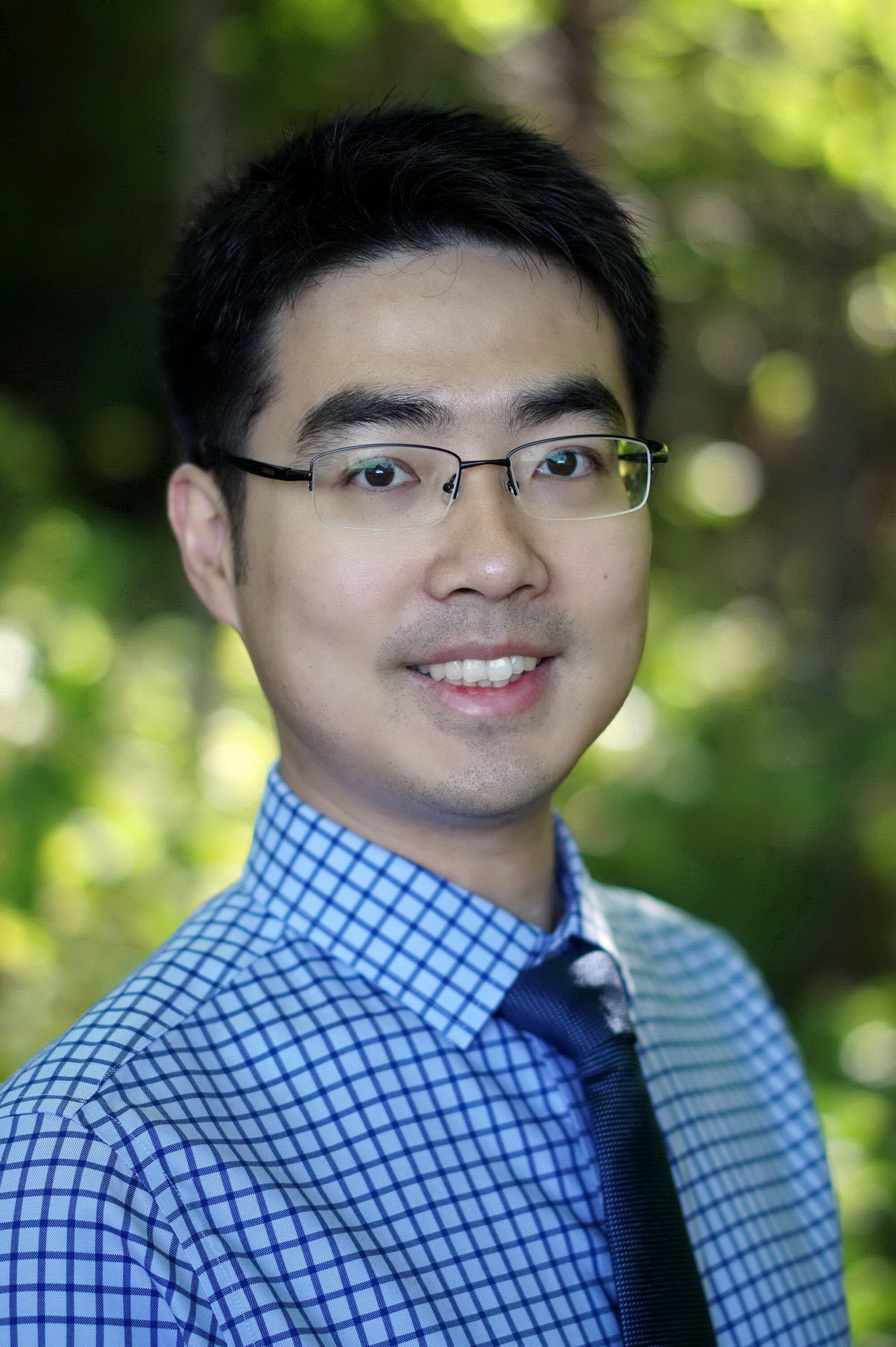
Chen Xu is an Associate Professor in the Department of Mathematics and Statistics at the University of Ottawa. He holds an M.A. from York University and a PhD from the University of British Columbia. His research focuses on sparse modeling, statistical learning, and big data processing, with an emphasis on both theoretical and computational advancements. Dr. Xu is affiliated with the Faculty of Science and contributes to editorial roles for journals such as the Journal of the American Statistical Association and Electronic Journal of Statistics. Education: M.A., York University PhD, University of British Columbia Research interests include feature selection, regularization methods, kernel methods, and high-dimensional regression. His work addresses computational challenges in big data, proposing efficient algorithms for tasks like singular value decomposition, clustering, and distributed feature screening. Recent publications highlight advancements in multiview PCA, low-tubal-rank tensor recovery, and model-free regression techniques. Publications span prestigious journals like the Journal of the American Statistical Association and IEEE Transactions series, focusing on statistical methodology, machine learning applications, and scalable computational solutions for complex data problems. Editorial Service: Associate Editor, Journal of American Statistical Association-T&M (2023–present) Associate Editor, Electronic Journal of Statistics (2023–present) Former Associate Editor, The Canadian Journal of Statistics (2019–2021) His research groups are Statistics and Biostatistics, and Data Science, Machine Learning, and Artificial Intelligence. He has no listed awards but maintains active editorial and academic collaborations in computational statistics and machine learning.
Soledad Villar is an Assistant Professor in the Department of Applied Mathematics and Statistics and a member of the Mathematical Institute for Data Science at Johns Hopkins University. She also contributes to the Data Science and AI Institute . Her research focuses on computational methods for extracting information from data, emphasizing optimization for data science, machine learning, equivariant representation learning, and graph neural networks. Dr. Villar holds a PhD in Mathematics from the University of Texas at Austin and has been a research fellow at New York University and the Simons Institute at UC Berkeley. Her work bridges theoretical foundations with practical applications in fields like scientific computing and political analysis. Awards include the National Science Foundation CAREER Award (2024). Her research has addressed topics such as gerrymandering detection, fluid dynamics modeling, and graph representation learning. She collaborates on interdisciplinary projects and organizes academic events like the One World MINDS Seminar and the Cibercoloquio Latinoamericano de Matemáticas . Her research interests span computational methods, equivariant machine learning frameworks, and graph neural networks, with applications in physics, engineering, and data-driven decision-making. She actively engages in advancing machine learning techniques for scientific and engineering challenges.
Dong Li is an Associate Professor at the University of California, Merced , where he directs the Parallel Architecture, System, and Algorithm Lab (PASA) and co-directs the High Performance Computing Systems and Architecture Group . He co-founded Yotta Labs Inc. and previously held research roles at Oak Ridge National Laboratory (2011-2014) and a PhD from Virginia Tech. Research Interests: Dong's work focuses on High performance computing (HPC) Memory heterogeneity and non-volatile memory Systems for machine learning and AI Fault tolerance in large-scale systems His innovations include heterogeneous memory optimization for recommendation models and GNNs, CXL memory integration, and persistent memory debugging tools. Recent Publications highlight advancements in CXL-based inter-node communication Memory tiering for laminography reconstruction ML-guided memory optimization for DLRM and GNN Fault tolerance benchmarks and error analysis Awards & Recognition: NSF CAREER Award (2016) Oracle Research Award (2022) ASPLOS Distinguished Artifact Award (2021) Virginia Tech Early Career Alumni Award (2023) Advising & Funding: Dong has mentored 22 students (8 PhD, 6 Master’s, 8 undergraduates) and secured grants from NSF, NVIDIA, Meta, and national labs (Argonne, Lawrence Berkeley, Lawrence Livermore). Collaborations include Microsoft (DeepSpeed, Intel PMDK), AMD, SK Hynix, and Intel/MICRON hardware donations.
Charith Mendis is an Assistant Professor in the Siebel School of Computing and Data Science at the University of Illinois at Urbana-Champaign, with joint appointments in the Department of Computer Science, Electrical and Computer Engineering, and the Coordinated Science Lab. His research focuses on the intersection of compilers, program optimization, and machine learning systems. Dr. Mendis received his educational background from prestigious institutions: Ph.D. in Computer Science from Massachusetts Institute of Technology (2020) S.M. in Computer Science from Massachusetts Institute of Technology (2015) B.Sc. in Electronics and Telecommunication Engineering from University of Moratuwa (2013) His primary research interests center around compiler technology and machine learning systems. Mendis leads the ADAPT lab at UIUC, where his team works on creating high-performance ML optimization techniques and automated compiler construction using machine learning and formal methods. His work bridges the gap between traditional compiler design and modern machine learning approaches, with applications in tensor compilers, graph neural networks, and sparse computation. He has developed novel frameworks for optimizing deep learning workloads, verification of compiler transformations, and performance modeling for emerging hardware architectures. Mendis has established himself as a leading researcher in compiler optimization for machine learning systems, with a particular focus on tensor compilers, graph neural networks, and performance modeling. His recent publications demonstrate increasing sophistication in combining formal methods with machine learning techniques to solve challenging problems in compiler optimization and verification, with multiple papers accepted at top-tier conferences including OOPSLA, PLDI, POPL, and SIGMOD. His notable scientific achievements include: Google ML and Systems Junior Faculty Award (2025) DARPA Young Faculty Award (2024) NSF CAREER Award (2024) Distinguished Paper Award at POPL (2025) William A. Martin Thesis Award for Outstanding SM thesis, MIT (2015) Multiple teaching excellence awards at UIUC (2021-2023) Dr. Mendis actively mentors students through the ADAPT lab, offering research opportunities for undergraduates, master's students, and PhD candidates interested in compiler technology and machine learning systems. His research is supported by significant funding from the ACE center (part of JUMP 2.0), National Science Foundation (NSF), DARPA, IIDAI, and industry partners including Google, Intel, Amazon, and Qualcomm. He teaches advanced courses in compiler construction and machine learning for compilers. He leads the ADAPT lab at UIUC, which focuses on developing advanced compiler technologies for modern machine learning workloads. The lab maintains active collaborations with industry partners and has established itself as a leading research group in compiler optimization for AI systems. Current projects include tensor compilers, graph neural network optimization, and automated verification of deep learning systems.
Prof. Dr.-Ing. Richard Membarth is a Research Professor for System-on-a-Chip and AI at the Edge Computing at Technische Hochschule Ingolstadt (THI). He is affiliated with the Hardware-Software Co-Design group and holds a secondary position at the German Research Center for Artificial Intelligence (DFKI) Saarbrücken. Co-creator of DSL frameworks like AnyDSL and Hipacc Key contributor to MetaDL (AI metaprogramming) and PRIME (predictive rendering) His research bridges GPU computing , domain-specific languages , and compiler technology , with recent work on Vulkan SPIR-V compilation and device-driven SpMV algorithms . Notable awards include the HiPEAC Paper Award (2018) and multiple Best Paper Awards for his compiler frameworks.
Vivienne Sze is a Professor at MIT's Department of Electrical Engineering and Computer Science (EECS), part of the School of Engineering. Her research focuses on energy-efficient computing systems for machine learning, computer vision, and video compression, with applications in autonomous systems, healthcare, and IoT. She leads projects integrating algorithmic innovations with hardware design to achieve low-power solutions for embedded and mobile devices. Her work has been recognized through prestigious awards, including the Primetime Engineering Emmy Award for co-developing the HEVC video compression standard and multiple faculty awards from tech giants like Google and Qualcomm. She co-authored the book *Efficient Processing of Deep Neural Networks*, emphasizing practical hardware-software co-design strategies. Research Interests: Energy-Efficient Machine Learning Accelerators Video Coding and Compression Standards Embedded Systems and Mobile Computing Processing-in-Memory (PIM) Architectures AI for Health Monitoring and Digital Health Sustainability in AI Infrastructure Publications highlight trends in: Optimizing DNNs for edge devices Innovations in entropy coding and CABAC Memory-efficient Gaussian-based algorithms Energy-aware design for photonic computing Awards include IEEE conference best paper awards and industry recognitions for her contributions to video coding and hardware acceleration. Her lab's collaborative efforts span academia and industry, aiming to bridge theoretical research with real-world deployable systems.