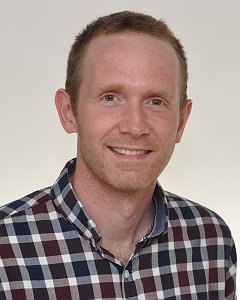
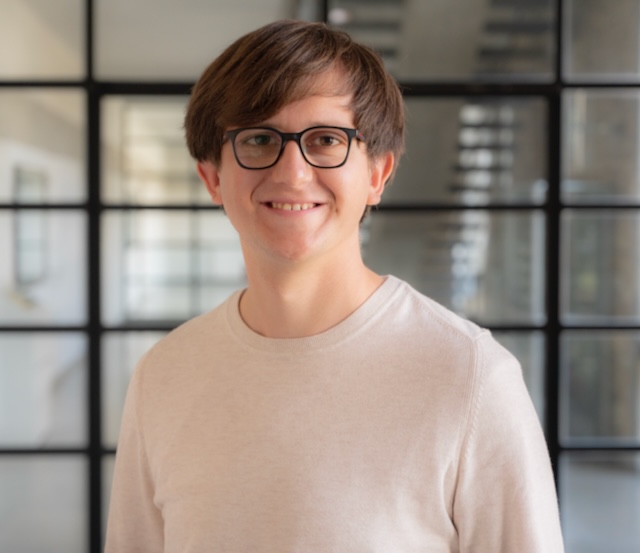
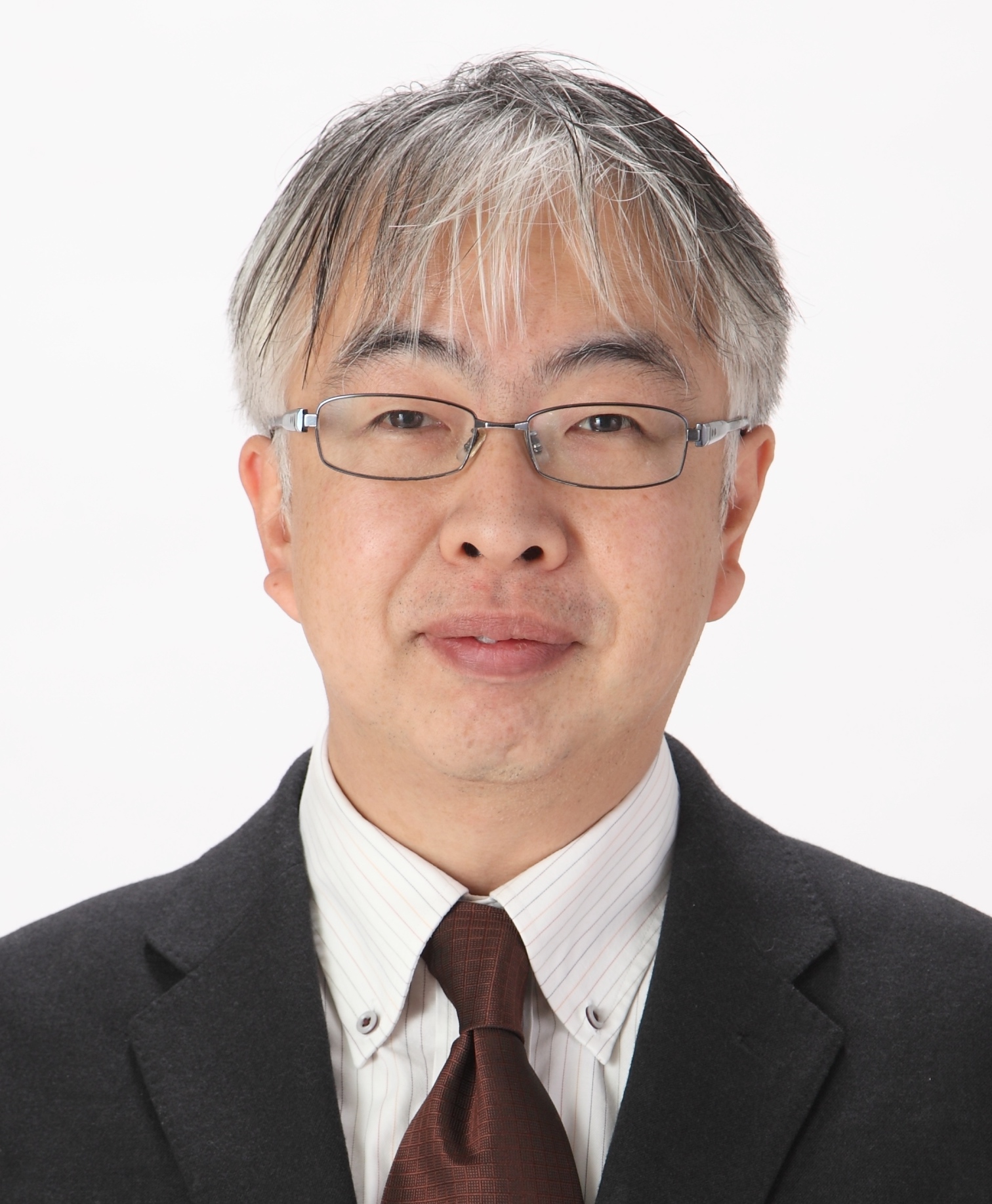
Haeran Cho is Professor of Statistical Science in the School of Mathematics at the University of Bristol, holding a BSc and PhD in Statistics. Her research focuses on developing foundational methodologies for detecting structural changes in complex high-dimensional data streams, with applications spanning finance, environmental monitoring, and biomedical engineering. Her primary research interests include changepoint detection in non-sparse regression frameworks, factor model diagnostics for tensor time series, and robust nonparametric segmentation techniques. She pioneers approaches that handle heavy-tailed distributions, temporal dependence, and high-dimensional scaling—addressing critical limitations in classical change point theory through adaptive covariance scanning and multiscale inference frameworks. Professor Cho received the Research Prize in 2013 for her contributions to statistical theory. She currently leads the £1.2M EPSRC-funded project Statistical Foundations for Detecting Anomalous Structure in Stream Settings (DASS, 2024-2029), developing real-time anomaly detection systems for industrial applications. Previous projects include quantile factor modeling for high-dimensional time series (2019). Her software implementations ( CptNonPar , mosum , fnets ) have become standard tools in statistical computing, with over 500 citations. She actively collaborates through Horizon Europe initiatives and supervises postgraduate researchers in statistical methodology development.
Fredrik Kjolstad is an Assistant Professor in the Department of Computer Science at Stanford University, specializing in compilers and programming models for sparse computing and performance engineering. His research focuses on separating algorithms from data representations to enable portable applications across diverse hardware platforms. His research interests span compilers, programming models, performance engineering, and computer architecture, with particular emphasis on sparse tensor algebra, compiler design for heterogeneous systems, and high-performance computing. He has pioneered frameworks like TACO, Simit, and Distal that enable efficient sparse computations across CPUs, GPUs, and specialized accelerators. Dr. Kjolstad's publications demonstrate expertise in compiler optimization techniques for sparse data structures, tensor algebra, and distributed systems. His work consistently addresses the challenge of bridging high-level programming abstractions with efficient hardware execution across diverse architectures. MIT EECS First Place George M. Sprowls PhD Thesis Award NSF CAREER Award Rosing Award Adobe Fellowship Google Research Scholarship Best Paper Awards at EuroMPI 2013, OOPSLA 2017, and OOPSLA 2021 ISCA Distinguished Artifact Award PLDI and OOPSLA Distinguished Paper Awards He advises multiple PhD students including James Dong, Olivia Hsu, and Rohan Yadav, while leading research on compiler technologies that have received significant grant support. His group develops practical tools like the TACO compiler and Legate Sparse that are used in both academic and industrial settings. Current projects focus on programmable accelerators for sparse tensor algebra, distributed sparse computing, and compiler support for emerging hardware architectures.
Kunle Olukotun is a Professor of Electrical Engineering and Computer Science at Stanford University's School of Engineering, where he has been faculty since 1991. He directs the Stanford Pervasive Parallelism Lab (PPL) and co-leads the Transactional Coherence and Consistency (TCC) project. His research focuses on computer architecture, parallel programming environments, and scalable parallel systems. Key areas include chip multiprocessors (CMPs), transactional memory systems, domain-specific languages (DSLs) for heterogeneous computing, and hardware-software co-design for machine learning workloads. His work bridges theoretical foundations with practical systems implementation. Notable contributions include the Stanford Hydra research project (one of the first chip multiprocessors with thread-level speculation), founding Afara Websystems (acquired by Sun Microsystems), and developing the Niagara processor architecture. His DSL frameworks like Green-Marl and Spatial enable efficient graph analysis and hardware acceleration. His publications reveal strong trends in parallel systems evolution: from foundational CMP research (2000s) to transactional memory (2004-2010), then DSLs for heterogeneous computing (2010-2015), and currently foundation model systems (2023-2025). Subfield analysis shows consistent focus on hardware-software co-design, sparse computation, and compiler techniques across decades. ACM Fellow (2006) for contributions to multiprocessors on a chip and multi-threaded processor design Best Paper Award at IEEE International Symposium on Workload Characteristics (IISWC '10) for EigenBench Olukotun actively mentors researchers through the Stanford Pervasive Parallelism Lab (PPL), which seeks to proliferate parallelism across application domains. His projects have secured significant industry partnerships, including the acquisition of his startup Afara Websystems by Sun Microsystems. Current research focuses on compiler frameworks for foundation model systems and hardware acceleration for sparse machine learning workloads, supported by collaborations with major tech companies. He leads the Stanford Pervasive Parallelism Lab (PPL), which develops compiler and runtime systems for heterogeneous architectures. The lab's work spans DSLs, hardware acceleration, and parallel programming models, with strong industry ties to companies like NVIDIA and Google. Current initiatives include the Mosaic compiler framework and Stardust architecture for sparse tensor computation.
Dominik Stöger is an Assistant Professor (tenure-track) in the Department of Mathematics at KU Eichstätt-Ingolstadt since 2021, affiliated with the Mathematical Institute for Data Science and Machine Learning (MIDS). His research bridges mathematical theory and data science applications. His educational background includes: B.Sc. in Mathematics, Technical University of Munich (2013) M.Sc. in Mathematics, Technical University of Munich (2015) Ph.D. in Mathematics, Technical University of Munich (2019) Stöger's research centers on mathematical foundations of data science, with emphasis on non-convex optimization in machine learning, theoretical analysis of overparameterized models, and low-rank matrix recovery. He combines optimization theory and high-dimensional probability to develop rigorous guarantees for modern algorithms, addressing critical challenges in deep learning theory. His recent publications (2020-2025) demonstrate consistent output in top venues including COLT, NeurIPS, and ICLR, with particular focus on implicit regularization phenomena and non-convex recovery guarantees. The 2025 pipeline shows active work extending theoretical boundaries in matrix sensing and neural network analysis. Stöger has received significant recognition: NeurIPS 2021 Spotlight Paper (top 3% of submissions) COLT 2025 paper presentation As a tenure-track faculty member, he maintains active collaborations across institutions (USC, TUM) and likely advises graduate students. His research program shows strong momentum with multiple concurrent projects advancing theoretical machine learning. He contributes to the research ecosystem through affiliation with MIDS, fostering interdisciplinary work in mathematical data science at KU Eichstätt-Ingolstadt.
Professor Tadashi Wadayama serves in the Department of Computer Science within the Faculty of Engineering at Nagoya Institute of Technology. He holds a full professorship position and leads research initiatives in coding theory, signal processing, and deep learning applications for next-generation communication systems. Professor Wadayama received his B.E., M.E., and D.E. degrees from Kyoto Institute of Technology in 1991, 1993, and 1997 respectively. He began his academic career at Okayama Prefectural University in 1995 as a research associate and spent 1999-2000 as a visiting researcher at Essen University in Germany. He joined Nagoya Institute of Technology as an associate professor in 2004 and was promoted to full professor in 2010. He maintains active memberships in IEEE and the Institute of Electronics, Information and Communication Engineers (IEICE). His research spans multiple interconnected domains with primary focus on Coding Theory , Signal Processing for Wireless Communications , and Deep Learning applications . Professor Wadayama has made significant contributions to LDPC codes, MIMO signal detection, and the emerging field of deep unfolding techniques that bridge neural networks with traditional signal processing algorithms. His work increasingly incorporates physics-aware modeling of communication channels governed by partial differential equations. Recent research demonstrates strong interdisciplinary integration between information theory, machine learning, and communication engineering principles. Analysis of his recent publications reveals a clear trajectory toward developing foundational technologies for post-Shannon communication architectures. His work emphasizes ultra-large-scale coding, goal-oriented communication, digital homeostasis mechanisms, physics-embedded signal processing, and dual-process learning systems that combine fast reactive processing with deliberative meta-learning using LLM orchestrators. Fundamentals Review Best Author Award, IEICE, 2022 SRC 2010 Paper Award, Storage Research Promotion Organization, 2011 Professor Wadayama has successfully led multiple competitive research grants including JSPS Grant-in-Aid projects. He currently serves as Principal Investigator for the JST CRONOS project "Digital Cybernetics: Towards Next-Generation Communication Architecture" (2025-2031), which aims to develop foundational technologies supporting autonomous, adaptive, and robust large-scale AI systems. As IEEE Information Theory Workshop General Co-chair (2020-2021) and former chair of IEICE's Information Theory Research Committee (2020-2022), he maintains active leadership roles in the academic community. He leads the Wadayama Group at Nagoya Institute of Technology, which focuses on digital cybernetics and communication physics. The group develops physics-aware signal processing implementations, dual-process learning systems, digital homeostasis mechanisms, and system integration for next-generation communication architectures. His team collaborates with researchers from Kyoto University, Hiroshima University, Institute of Science Tokyo, and Tokyo University of Science, creating a robust research ecosystem focused on post-Shannon communication frameworks.