Kunle Olukotun is the Cadence Design Systems Professor of Electrical Engineering and Computer Science at Stanford University, where he has been a faculty member since 1991. He is a pioneer in multicore processor design, leading the Stanford Hydra CMP project and founding Afara Websystems (acquired by Sun Microsystems), which developed the Niagara processor. Currently, he co-leads SambaNova Systems as Chief Technologist and directs the Pervasive Parallelism Lab (PPL), focusing on domain-specific languages (DSLs) and machine learning infrastructure. Education: PhD in Computer Engineering from the University of Michigan (1991). Research interests include parallel computing architectures, transactional memory, and scalable systems. Awards include ACM Fellow, IEEE Fellow, and the Harry H. Goode Memorial Award. Key projects include the Hydra chip multiprocessor, Transactional Coherence and Consistency (TCC), and modern initiatives in dataflow architectures and AI acceleration. His work spans over 100 publications, emphasizing compiler design, hardware-software co-design, and high-performance computing. Current roles: Director of PPL and DAWN Lab, advisor to multiple students, and leader in industry collaborations like SambaNova’s dataflow accelerators. His research bridges academic innovation with commercial impact, addressing challenges in parallelism and scalable systems.
Dr. Richard Veras is an Assistant Professor in the School of Computer Science at the University of Oklahoma . His research focuses on High Performance Computing (HPC), with emphasis on code synthesis, parallel algorithms, and optimizing computational workflows for modern hardware architectures. Education: Ph.D. and M.S. in Electrical and Computer Engineering from Carnegie Mellon University B.S. in Mathematics and Computer Science from The University of Texas at Austin Research Interests: High Performance Computing (HPC) Parallel algorithm design and implementation Computational linear algebra and signal processing Graph analytics and network modeling Compiler optimizations and automated code generation Performance portability across hardware architectures Professional Experience: Research Scientist at Louisiana State University Postdoctoral Researcher at Carnegie Mellon University Labs/Teams: Leads HPC research initiatives at OU, focusing on code synthesis tools and performance optimization frameworks.
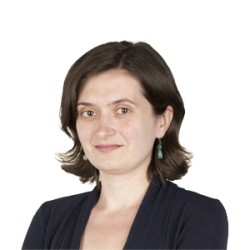
Hiba Nassar is an Associate Professor at the Department of Applied Mathematics and Computer Science at the Technical University of Denmark. Her research focuses on functional data analysis, spline-based methods, and numerical algorithms for computational mathematics. Current affiliation: Technical University of Denmark Academic rank: Associate Professor Research domains: Functional data analysis, numerical analysis, statistical modeling Research Interests Dr. Nassar specializes in developing mathematical frameworks for analyzing complex data structures. Key areas include: Orthonormalization of B-splines Functional representation on multivariate domains Band matrix diagonalization techniques Data-driven basis selection in functional analysis Academic Contributions Her recent publications (2022–2025) demonstrate expertise in tensor methods, knot optimization, and sparsity preservation. She actively supervises PhD projects in computational mathematics and applied statistics. Supervision & Projects Dr. Nassar serves as a supervisor in three PhD projects: Federated Learning for Personalized Audiology (2025–2028) Modelling with 3D elastica (2024–2027) Mathematics of Surface Stackability (2024–2027)
Anthony Nouy is a Professor at the Department of Mathematics, Computer Science, and Biology (MIB) at École Centrale de Nantes. His research spans Mathematics, Computer Science, and Computational Biology, with a focus on approximation theory, tensor networks, and stochastic optimization. His work explores nonlinear manifold approximation dimension reduction in feature spaces stochastic gradient descent optimization moment methods for optimal transport and PDEs model reduction and tensor geometry Recent publications highlight trends in machine learning, numerical analysis, and computational mathematics, particularly through compositional polynomial networks, Poincaré inequality surrogates, and tree tensor formats. Collaborations include researchers like Alexandre Pasco, Philipp Trunschke, and Mazen Ali. He is affiliated with the Jean Leray Mathematics Laboratory and maintains a personal webpage for updates. Co-authors of recent publications include Antoine Bensalah, Joel Soffo, and Alexandre Pasco (2025) Robert Gruhlke, Philipp Trunschke (2024) Clément Cardoen, Swann Marx, Nicolas Seguin (2024) Mazen Ali, Antonio Falcó, Wolfgang Hackbusch (2023)
Karl Meerbergen is a Full Professor in the Department of Computer Science at KU Leuven, Faculty of Engineering Sciences. He leads research in numerical analysis and applied mathematics with a focus on eigenvalue problems, model order reduction, and computational linear algebra. He is a member of the Numerical Analysis and Applied Mathematics (NUMA) research unit and holds affiliations with multiple KU Leuven institutes including iSi Health, Leuven.AI, Leuven.AM, and the LGI Gravitation Institute. His research spans several key areas of numerical mathematics with emphasis on algebraic eigenvalue problems, algebraic model order reduction, preconditioning techniques, computational acoustics, tensor computations, exascale computing, generic programming, and parallel computing. His work bridges theoretical numerical analysis with practical applications in engineering and scientific computing. Analysis of his recent publications shows a strong focus on advanced numerical methods for eigenvalue problems, model order reduction techniques, and parallel computing approaches. His work frequently addresses challenges in large-scale scientific computing, with applications in structural dynamics, acoustics, and optimization problems. The research demonstrates increasing sophistication in handling nonlinear and parametric systems through rational approximation methods and specialized preconditioning techniques. Dr. Meerbergen actively contributes to the academic community through his teaching responsibilities and supervision of graduate students. His work has significant implications for computational science and engineering applications requiring efficient numerical solutions to complex mathematical problems.
Nicholas F. Marshall is an Assistant Professor in the Department of Mathematics at Oregon State University's College of Science. His academic journey includes a Ph.D. in Applied Mathematics from Yale University (2019) and a B.S. in Mathematics from Clarkson University (2014), with additional research experience at Princeton University as an NSF Postdoc. Ph.D. in Applied Mathematics, Yale University, 2019 B.S. in Mathematics, Clarkson University, 2014 His research focuses on the interplay between analysis, geometry, and probability, particularly as applied to data science challenges. Current investigations include harmonic analysis on geometric domains, randomized algorithms for linear systems, and mathematical frameworks for cryo-electron microscopy. His work bridges pure mathematical theory with computational applications in imaging and machine learning. Analysis of his recent publications reveals strong trends in computational harmonic analysis, with significant contributions to fast algorithms for spherical and disk harmonics, randomized linear solvers with momentum acceleration, and geometric approaches to hyperdimensional computing. His work consistently connects abstract mathematical concepts to practical computational problems in imaging and data science. Dr. Marshall actively mentors graduate students including Wyatt Whiting, Peter Cowal, and Heather Fogarty, and has supervised notable undergraduate research projects leading to publications in SIAM journals. His current teaching portfolio includes advanced courses in probability theory, numerical linear algebra, and data science mathematics. He maintains active research collaborations with institutions including Princeton University and Yale, focusing on applications in cryo-EM imaging and computational geometry. Personal interests include skiing (learned in Vermont) and kayaking along the Oregon Coast.
Prof. Dr. Felix Krahmer is an Associate Professor for Optimization and Data Analysis at the Department of Mathematics, Technical University of Munich (TUM) . His research focuses on mathematical foundations of data science, with expertise in Compressed Sensing Unlimited Sampling Quantization of Signals and Images Neural Networks Uncertainty Quantification Low-Rank Recovery He leads the Data Science research group within TUM's School of Computation, Information and Technology, collaborating with institutions like TU Berlin, RWTH Aachen, and Technion. His recent publications span topics like Robust blind deconvolution under adversarial noise Kronecker-structured dimensionality reduction Hysteresis in unlimited sampling systems Efficient sparse FFT algorithms Notable scientific awards include two August-Wilhelm-Scheer Visiting Professorships (2016, 2019) for hosting international collaborators. Former and current students include Olga Graf Dominik Stöger Claudio Verdun Felipe Pagginelli Patricio Juana Kostin He has co-organized workshops at SAMPTA, Oberwolfach, and ISIT, serving as associate editor for journals including SIAM Journal on Matrix Analysis and Frontiers in Signal Processing.
Randal Burns is a Professor and the Bill and Lisa Stromberg Head of the Department of Computer Science in the Whiting School of Engineering at Johns Hopkins University. He is also affiliated with the Data Science and AI Institute and co-founder of NeuroData. His research focuses on scalable data systems for scientific applications, spanning storage technologies, cloud infrastructure, and graph/sparse-matrix engines for machine learning. Key themes include data-intensive science, neuroscience imaging analysis, and adaptive performance management. Recent publications highlight trends in edge-parallel graph encoders masked matrix operations for sparsity decentralized foundation model training storage optimization for evolving AI models batch-parallel data structures turbulence data analysis These reflect his work on scalable systems for machine learning and scientific computing. Scientific awards include NSF CAREER Award DOE Early Career Principal Investigator Kavli Fellowship IBM Outstanding Innovation Award Advising: Mentors PhD students in scalable data systems and machine learning. Grants: Supported by NSF, DOE, and DARPA initiatives. Labs: Core member of the Johns Hopkins Turbulence Database Group and NeuroData team, developing open platforms for neuroscience and turbulence research.
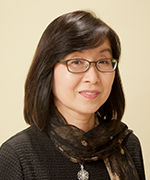
Dr. Haesun Park is a Regents' Professor and Chair in the School of Computational Science and Engineering at Georgia Institute of Technology, Atlanta, Georgia. She has held this position since August 2020, after becoming a Regents' Professor in July 2019 and a Professor since July 2005. Prior to joining Georgia Tech, she served as a Professor in the Department of Computer Science and Engineering at the University of Minnesota from 1987 to 2005 (Assistant Professor 1987-1993, Associate Professor 1993-1998, Professor 1998-2005) and as a Program Director at the National Science Foundation from 2003-2005. Education: Ph.D. in Computer Science (minor: Mathematics), Cornell University, 1987 M.S. in Computer Science, Cornell University, 1985 B.S. (Summa Cum Laude) in Mathematics, Seoul National University, 1981 (with Presidential Medal for top graduate) Dr. Park's research spans multiple domains within computational science, with particular focus on data analysis, visual analytics, numerical computing, text mining, social media mining, parallel computing, and bioinformatics. Her work integrates mathematical foundations with practical applications across various fields, developing innovative algorithms for large-scale data analysis. She has made significant contributions to nonnegative matrix factorization techniques and their applications in diverse domains including healthcare, social media analysis, and scientific computing. Her recent publication trends show a strong focus on parallel and distributed implementations of matrix factorization algorithms, applications in healthcare data analysis (particularly patient profiling and clustering), and development of scalable frameworks for handling large-scale datasets. The work demonstrates increasing interdisciplinary collaboration, especially with medical researchers, and a growing emphasis on practical implementations that can handle real-world data challenges. Scientific Awards: SIAM Fellow (2013) IEEE Fellow (2016) ACM Fellow (2020) Dr. Park has held significant leadership roles including Executive Director of the Center for Data Analytics (2013-2015) and Director of the NSF/DHS FODAVA-Lead Center (2008-2014). She has served as conference co-chair for the SIAM International Conference on Data Mining in 2008 and 2009, and as an editorial board member for leading journals including IEEE Transactions on Pattern Analysis and Machine Intelligence, SIAM Journal on Matrix Analysis and Applications, and SIAM Journal on Scientific Computing. She has been a plenary keynote speaker at major international conferences including SIAM Conference on Applied Linear Algebra in 1997 and 2015, and SIAM International Conference on Data Mining in 2011. Dr. Park is affiliated with multiple research centers at Georgia Tech including the Algorithms and Randomness Center (ARC) and the Institute for Data Engineering and Science (IDEaS). She has maintained a long-term collaboration with the Korea Institute for Advanced Study (KIAS) as a KIAS Scholar from 2008-2018, demonstrating her international research impact.
Caroline Fossati is a Full Professor at Ecole Centrale de Marseille and a member of the Institut Fresnel - GSM Signal Processing lab. Her work bridges signal processing, hyperspectral imaging, and medical diagnostics, with a focus on Alzheimer's disease detection using PET imaging and tensor-based noise reduction techniques. Current Affiliations: Ecole Centrale de Marseille, Institut Fresnel Past Affiliations: Université Paul Cézanne (1996-1997) Her research spans: Medical Imaging: Developing advanced algorithms for Alzheimer's diagnosis through 18F-FDG PET scans and multi-level feature extraction. Hyperspectral Processing: Innovating tensor-based methods for noise reduction, dimensionality reduction, and target detection in complex imaging environments. Optical Engineering: Investigating CMOS sensor design, photolithography simulations, and defect characterization in optical materials. Publications demonstrate expertise in multidimensional signal processing, array modeling, and biomedical applications. While no specific awards are documented in the provided text, her extensive co-authorship network and technical contributions across disciplines underscore her academic impact.
Professor Coralia Cartis holds a Professorship in Numerical Optimization at the University of Oxford's Mathematical Institute, where she also serves as a Tutorial Fellow at Balliol College. Additionally, she is a Turing Fellow at The Alan Turing Institute in London, focusing on advanced optimization research with applications spanning machine learning and climate science. She obtained her PhD in Mathematics from the University of Cambridge in 2005, establishing the foundation for her expertise in algorithmic optimization. Research Focus: Her work centers on designing and analyzing algorithms for linear and nonlinear optimization problems, both convex and nonconvex, with emphasis on complexity theory and dynamical systems connections. Key application areas include compressed sensing, sparse approximation, machine learning, and inverse problems in climate modeling, where she develops methods for ocean biogeochemical model optimization and data assimilation. Publication Evolution: Recent publications (2024-2025) demonstrate expansion into high-order tensor methods and quartic regularization models, while maintaining her foundational work on cubic regularization. Her research consistently bridges theoretical complexity analysis with practical climate science applications, showing increasing interdisciplinary collaboration. Honors: Leslie Fox Prize in Numerical Analysis (2005, second place) Mathematical Programming Computation Journal Best Paper Prize (2019) INFORMS Simulation Society Outstanding Paper Prize (2021) ICM Invited Speaker (2022) EUROPT Fellow (2023) SIAM Fellow (2023) Academic Leadership: She actively contributes to Oxford's Numerical Analysis and Machine Learning research groups, supervises graduate students (though specific names aren't listed), and secures research funding for projects involving climate modeling and optimization theory. Her work with the Alan Turing Institute facilitates cross-institutional collaborations in data science. Research Infrastructure: Her optimization research is conducted within Oxford's Mathematical Institute, leveraging resources from both the Numerical Analysis group and the Machine Learning and Data Science research cluster, with additional computational support through The Alan Turing Institute.
Krzysztof Podgórski is a Professor and Head of the Department of Statistics at Lund University School of Economics and Management (LUSEM). His research spans applied probability, statistics, and interdisciplinary applications in engineering, finance, and environmental sciences. Key Research Areas: Multivariate non-Gaussian stochastic models Statistical analysis of spatio-temporal random fields Distributions at random crossing events Applications: Mechanical engineering (road modeling) Ocean engineering (wave/ship reliability) Financial econometrics (market linkages, risk analysis) Actuarial sciences (non-Gaussian claims) Methodological Contributions: Include ergodic theory of stochastic processes, extreme value theory, and computational statistics. His recent work explores functional data analysis with periodic splines and matrix variate distributions. Collaborative Networks: Extensive partnerships across theoretical and applied disciplines, with projects involving road dynamics, stochastic fields, and uncertainty quantification.
Zhiru Zhang is a Professor at Cornell University in the School of Electrical and Computer Engineering , leading research at the Computer Systems Laboratory . His work focuses on algorithms, methodologies, and design automation tools for heterogeneous computing systems. Recent publications emphasize high-level synthesis (HLS), hardware specialization for machine learning, and programming models for software-defined FPGAs. Education: Ph.D. in Computer Science, UCLA B.S. in Computer Science, Peking University M.S. in Computer Science, UCLA Research Interests: Heterogeneous computing systems High-level synthesis (HLS) optimization FPGA-based hardware acceleration Sparse data format compilers Machine learning for electronic design automation Scientific Awards: IEEE Fellow Intel Outstanding Researcher Award NSF CAREER Award DARPA Young Faculty Award Multiple Best Paper Awards at ASPLOS, ISPD, FPGA, AutoML, FCCM Research Group: Mentors 12 current students including Jordan Dotzel, Jie Liu, and Grace Dinh, with 14 alumni now at institutions like AWS AI, NVIDIA, Google DeepMind, and Microsoft. His lab develops tools like UniSparse for sparse format customization, presented at OOPSLA'24 and IEEE CAL.
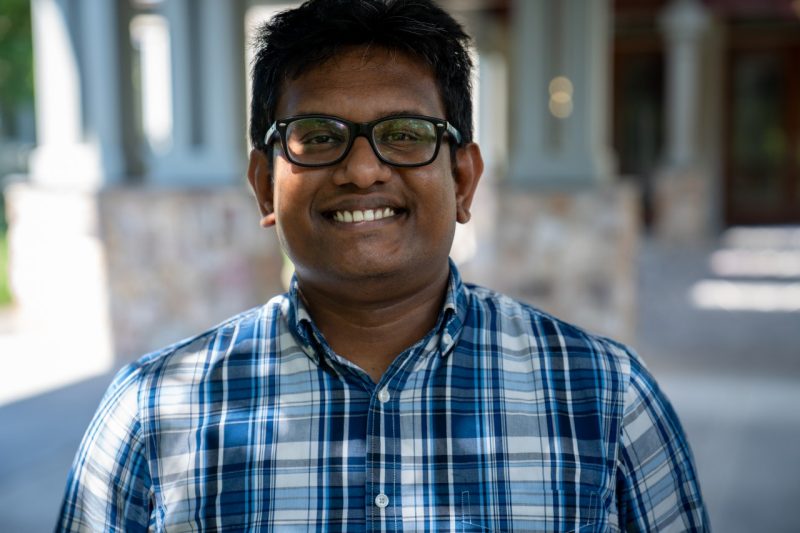
Kirshanthan Sundararajah is an Assistant Professor in the Department of Computer Science at Virginia Tech's College of Engineering. His research focuses on compilers, programming languages, and high-performance computing, with an emphasis on optimizing algorithms for complex data structures like sparse tensors and tree traversals. He holds a Ph.D. and M.S. in Electrical and Computer Engineering from Purdue University (2022) and a B.S. in Electronics and Telecommunication Engineering from the University of Moratuwa, Sri Lanka (2014). His work spans compiler optimization techniques, parallel computing strategies, and efficient execution models for heterogeneous architectures. Key contributions include frameworks like Orchard for heterogeneous parallelism, SparseAuto for sparse tensor computations, and SABLE for blocked evaluation of sparse matrices. He also explores dynamic symbolic execution and secure multi-party computation through metaprogramming (HACCLE). No scientific awards were explicitly mentioned in the provided text. His advising and grant activities are not detailed here, though his research likely involves collaborative projects in high-performance computing and compiler design. He is affiliated with the Department of Computer Science at Virginia Tech and contributes to academic initiatives in parallel algorithms and computational efficiency.
Yuchen Zhou is an Assistant Professor in the Department of Statistics at the University of Illinois. His research focuses on high-dimensional statistics, tensor methods, and optimization, with applications in data analysis and machine learning. He has contributed to advancements in areas such as heteroskedastic PCA, low-rank tensor inference, and sparse group lasso regularization. His work emphasizes statistical theory and methodology, addressing challenges in high-dimensional data structures and computational efficiency. Collaborations and research outputs highlight interests in matrix and tensor decomposition, regularization techniques, and non-asymptotic analysis. Zhou's publications span reputable journals like the Annals of Statistics and IEEE Transactions on Information Theory, reflecting his expertise in both theoretical and applied statistical problems. He has no listed academic awards or current advisees.