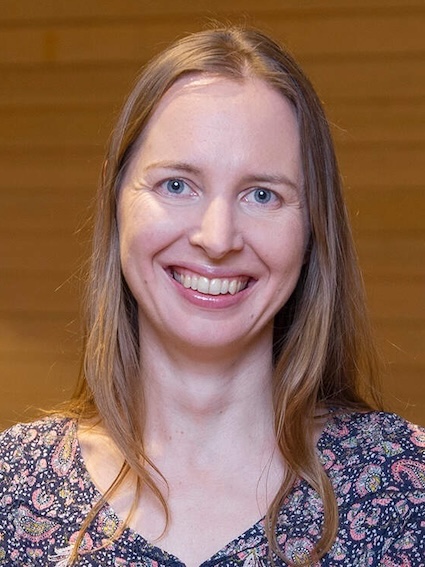
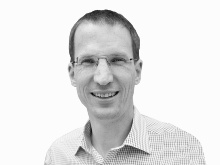
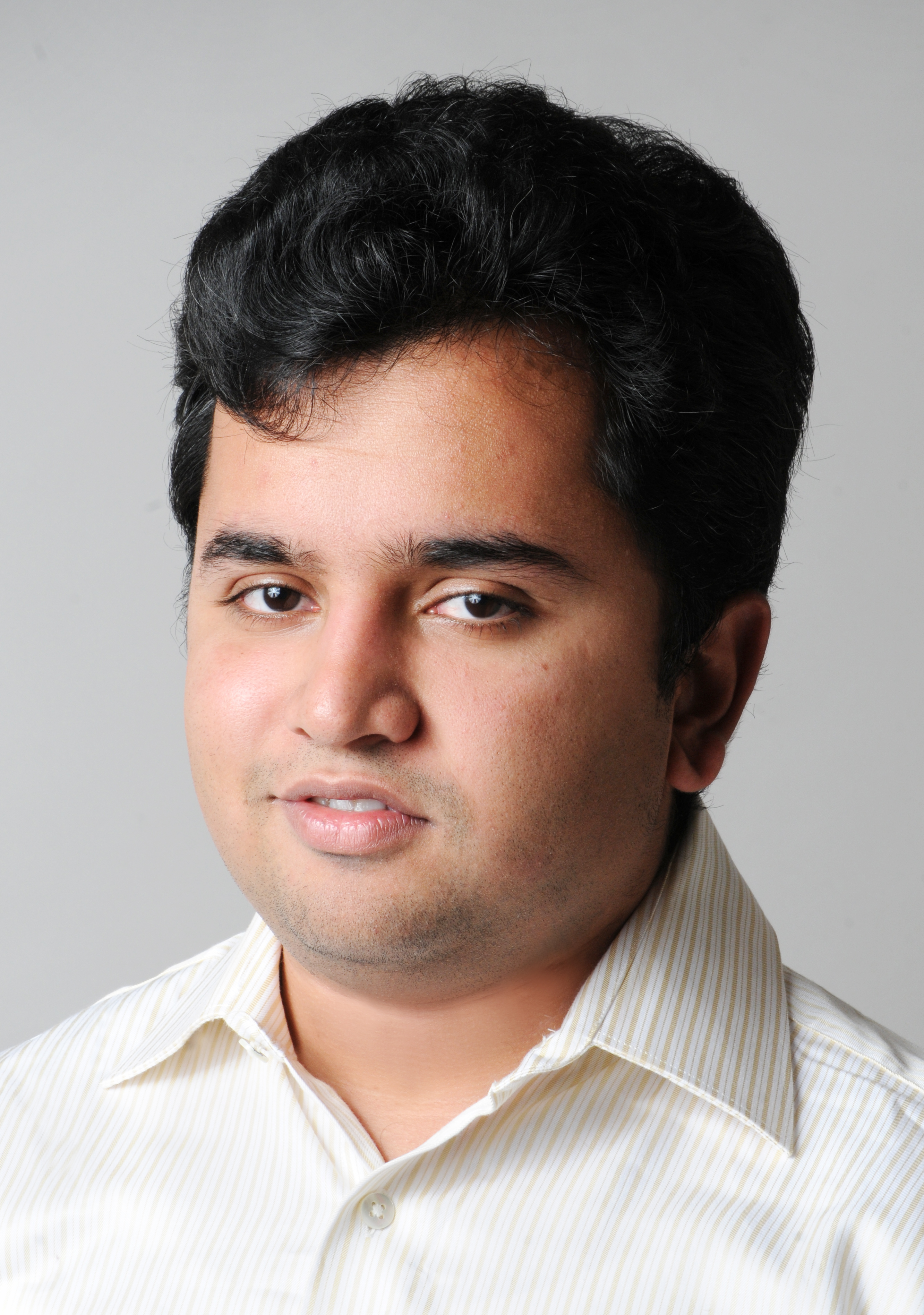
Kaie Kubjas is an Associate Professor at Aalto University in the Department of Mathematics and Systems Analysis, School of Science. Since 2024, she has held a tenured position, following a tenure-track role from 2017–2024. She earned her PhD in Mathematics at Freie Universität Berlin (2013) under Professors Christian Haase and Klaus Altmann, with postdoctoral research at institutions including the Max Planck Institute and MIT. Her research focuses on applied nonlinear algebra, algebraic statistics, and their applications in biology (e.g., phylogenetics and 3D genome reconstruction), as well as matrix/tensor decompositions. She has organized major events like the European Women in Mathematics General Meeting 2022 and the 2025 workshop on Algebraic Statistics and Multistate Models. Kubjas serves on editorial boards of journals like SIAM Journal on Applied Algebra and Geometry and Annales Fennici Mathematici . Recent work includes advances in log-concave maximum likelihood estimation, 3D genome reconstruction, and structured matrix decompositions. Her students, such as Olga Kuznetsova (Second Place MEGA 2021 Poster Award winner), have contributed to these areas. She regularly contributes to seminars like the Algebra and Discrete Mathematics at Aalto, fostering interdisciplinary collaboration.
Amir Shaikhha is an Associate Professor (Reader) in the School of Informatics at the University of Edinburgh, specializing in data-analytics systems. Previously, he served as a Departmental Lecturer at the University of Oxford (2019-2020) and Assistant Professor at Edinburgh (2020-2024), following his 2018 PhD from EPFL where he received a Google Ph.D. Fellowship and thesis distinction award. His research spans: Databases Programming Languages Compilers Machine Learning Software Engineering with emphasis on high-performance system design through techniques like tensor algebra optimization, domain-specific languages, and probabilistic programming. Recent publications (2023-2025) reveal strong trends in quantum simulation synthesis, sparse tensor processing, and compiler-driven database optimization, evidenced by top-venue acceptances at PLDI, SIGMOD, and OOPSLA. His scientific recognition includes: Dahl-Nygaard Junior Prize (2025) Google Research Scholar Award (2025) Most Influential Paper Award at GPCE (2024) Best Paper Award at GPCE (2017) He actively mentors students including PhD graduate Hesam Shahrokhi (now at Huawei Research), award-winning MSc candidates like Youning, and CGO competition winners Jingwen and Callum. His service includes PC chair roles for GPCE 2023 and DBPL 2025, alongside program committee work for SIGMOD, VLDB, and ECOOP. As leader of the Data Analytics Lab (DAL), he develops open-source systems like StructTensor and VecHT for tensor processing, contributing to Edinburgh's Institute for Computing Systems Architecture with focus on bridging theoretical foundations with practical data-engineering solutions.
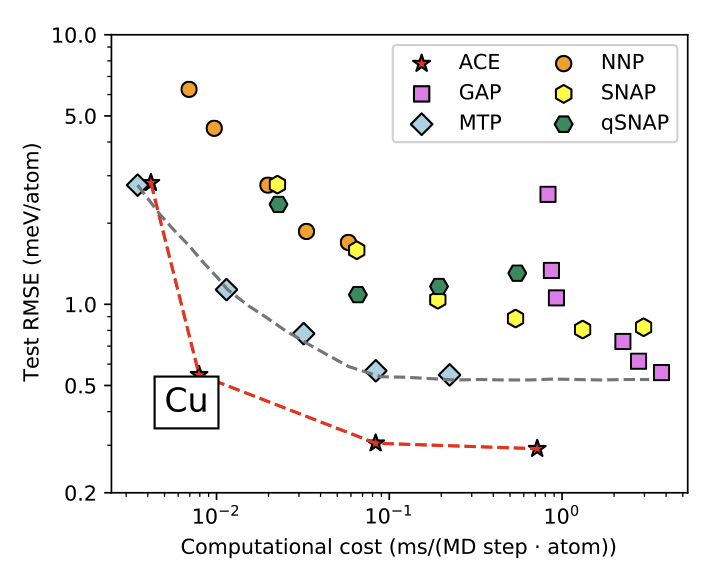
Christoph Ortner is a Professor in the Department of Mathematics at the Faculty of Science, University of British Columbia. His research bridges rigorous mathematical analysis, numerical methods, and practical applications in molecular simulation and materials science. His primary research interests include: Numerical Analysis & Scientific Computing Applied Analysis Multi-scale Modelling and Coarse-graining Molecular Simulation Scientific Machine Learning, particularly for applications in multi-scale modelling Professor Ortner's work focuses on several interconnected areas including Hybrid Mechanistic & Data-driven Modelling of atomistic systems, Material Defects analysis, QM/MM Multiscale Methods, and Atomistic/Continuum Coupling techniques. His research group develops both theoretical foundations and practical algorithms for molecular simulation, with emphasis on mathematical rigor combined with computational efficiency. Recent work increasingly integrates machine learning techniques with traditional numerical methods, particularly through the Atomic Cluster Expansion framework. His publications demonstrate consistent contributions to the field of computational mathematics and materials science, with recent focus on machine learning applications in molecular simulation and the development of mathematically sound interatomic potentials. Professor Ortner is affiliated with the Institute of Applied Mathematics at UBC and is available for collaborations, including interdisciplinary research projects and supervision of graduate students in Mathematics programs.
Jian Qiu Zhang is a Professor at Fudan University in the School of Information Science and Technology , affiliated with the Key Laboratory for Information Science of Electromagnetic Waves and Research Center of Smart Networks and Systems in Shanghai, China. Previously, he was at the University of Greenwich (1999-2002) and earned his PhD in 1996 from Harbin Institute of Technology in the Department of Electrical Engineering . His research interests span Signal Processing , Image Analysis , and Machine Learning , with a focus on applications in Biomedical Imaging , Hyperspectral Data Analysis , and Smart Network Systems . His work often integrates Wavelet Transforms , Tensor Decomposition , and Bayesian Filtering to solve complex problems in Medical Imaging and Wireless Sensor Networks . Recent publications highlight advancements in Deep Learning for 3D Ultrasound , PARAFAC Decomposition , and Graph Neural Networks for Hyperspectral Classification . His technical contributions include Adaptive Filtering Algorithms , Nonlinear Unmixing , and Wavelet-Based Sensor Analysis . Key collaborations include researchers from institutions such as Harbin Institute of Technology, University of Greenwich, and international teams in IEEE Transactions and IGARSS conferences.
Giancarlo Sangalli is a Professor in the Department of Mathematics at the University of Pavia. His research focuses on Scientific Computing, particularly Numerical Methods and Applications, with a strong emphasis on Isogeometric Analysis (IGA) for solving Partial Differential Equations (PDEs). He leads the Scientific Computing group and contributes to interdisciplinary fields such as computational mechanics, biomedical engineering, and environmental modeling. His work integrates advanced numerical techniques, including high-order finite element methods, space-time formulations, and matrix-free solvers, to address challenges in computational efficiency and accuracy. Key areas of application include cardiac electrophysiology, wave propagation, and groundwater flow modeling. Sangalli has pioneered low-rank solvers, Tucker tensor-based methods, and immersed boundary techniques to enhance computational scalability. He actively publishes in top journals and conferences, with a focus on advancing IGA theory and its applications to real-world problems. His research also explores uncertainty quantification, Bayesian calibration, and nonlinear dynamics. Despite no explicitly listed awards, his extensive publication record reflects recognition in computational mathematics and engineering. Sangalli collaborates internationally and maintains a research website at https://mate.unipv.it/sangalli . His group's work is supported by projects in computational electromagnetics, structural mechanics, and fluid-structure interaction, demonstrating a commitment to bridging theoretical advancements with practical engineering solutions.
Edgar Solomonik is an Associate Professor at the University of Illinois at Urbana-Champaign, affiliated with the Siebel School of Computing and Data Science. His research focuses on high performance computing, parallel algorithms, and tensor computations. He earned a PhD from UC Berkeley (2014) and a BS from UIUC (2010). Notable contributions include the Cyclops Tensor Framework and work on communication-avoiding algorithms. Awards include the NSF CAREER Award (2020) and the Jack Dongarra Early Career Award (2024). He teaches courses on parallel numerical algorithms, tensor computations, and numerical analysis. Current research explores quantum computing, graph algorithms, and efficient tensor operations for scientific computing. Education: PhD, UC Berkeley (2014); BS, University of Illinois (2010) Research interests span numerical linear algebra, parallel programming systems, and quantum algorithms. Key projects include optimizing tensor contractions for quantum chemistry simulations and developing scalable algorithms for distributed-memory systems. His work has been published in top venues like SISC, SIAM Review, and SC conferences.
Aydin Buluç is a Senior Scientist at Lawrence Berkeley National Laboratory (LBNL) and an Adjunct Associate Professor of EECS at UC Berkeley. His work focuses on parallel computing, high-performance graph analysis, machine learning, sparse computations, and computational biology. He leads the Sparsitute DOE center and directs the PASSION Lab, emphasizing scalable algorithms and their applications in genomics and data science. Education: PhD in Computer Science from UC Santa Barbara (2010); BS in Computer Science and Engineering from Sabanci University, Turkey (2005). Research: Develops parallel algorithms for graph analysis, sparse linear algebra, and communication-avoiding techniques. Key projects include HipMCL for metagenome analysis and GraphBLAS for combinatorial computing. Awards: DOE Early Career Award (2013), IEEE TCSC Early Career Award (2015), ACM Gordon Bell Prize Finalist (2022). Teaching: Co-teaches CS267 (Applications of Parallel Computers) at UC Berkeley, emphasizing practical high-performance computing. Professional Roles: Editor of ACM Transactions on Parallel Computing, PC member for major conferences (SPAA, IPDPS), and leader in ExaGraph and DOE initiatives.
Xuemei Chen is an Associate Professor in the Department of Mathematics and Statistics at the University of North Carolina Wilmington (UNCW), where she has been a faculty member since 2020, promoted to Associate Professor in 2023. She previously served as an Assistant Professor at New Mexico State University (2018–2020) and the University of San Francisco (2016–2018), following postdoctoral positions at the University of Missouri Columbia and the University of Maryland College Park. Ph.D. in Mathematics, Vanderbilt University Research focus: Applied harmonic analysis, compressed sensing, frame theory, and high-dimensional data solvers Active Principal Investigator on NSF grants DMS-2307827 and DMS-1908880 Mentors undergraduate and graduate students in signal and image processing projects Her research lies at the intersection of mathematical signal processing and data science, with a strong emphasis on theoretical foundations of sparse representations, frame design, and iterative algorithms like the Kaczmarz method. She investigates atomic norm minimization, matrix separation, and structured signal recovery, contributing to both theoretical understanding and practical applications in image inpainting and tensor recovery. Her work frequently appears in top journals such as SIAM Journal on Imaging Sciences and Applied and Computational Harmonic Analysis . The 15 most recent articles reflect a consistent trajectory in applied harmonic analysis and compressed sensing, with increasing focus on structured recovery, frame optimization, and algorithmic convergence. Keywords span Mathematics, Signal Processing, Numerical Analysis, Optimization, Image Processing, and Data Science , with subfields including Frame Theory, Sparse Recovery, Kaczmarz Algorithms, Atomic Norm Minimization, Low Coherence Frames, and Tensor Recovery . The trend shows deepening theoretical analysis paired with algorithmic innovation for high-dimensional problems. NSF DMS-2307827: Recovering structured signals: atoms, matrix separation, and applications (PI, 2023–2026) NSF DMS-1908880: Recovering Signals Sparse in a Frame: Theory and Applications (PI, 2019–2023) Xuemei Chen actively advises students, including undergraduates engaged in research on sparse signal recovery and image processing. She supports students through research assistantships and hourly positions, emphasizing strong analytical and coding skills. Her teaching portfolio includes courses in statistics, regression, numerical analysis, linear algebra, and data science, reflecting her interdisciplinary expertise. She maintains open educational resources on GitHub and encourages student engagement through research and professional development opportunities. She leads a research group focused on mathematical data science, with projects suitable for master’s and advanced undergraduate students. Her GitHub repositories, such as Undergraduates and Image-Processing , support student training and open collaboration. She fosters a research environment that bridges pure mathematics with real-world applications in data and image analysis.
Adria Armejach Sanosa is a Senior Lecturer in the Department of Computer Architecture at the Faculty of Computer Science of Barcelona (FIB), Universitat Politècnica de Catalunya (UPC). He is also affiliated with the Barcelona Supercomputing Center (BSC-CNS), a leading institution in high-performance computing in Europe. His research spans computer architecture, high-performance computing, memory systems, and hardware acceleration for genomics and machine learning. PhD from UPC His research interests focus on optimizing computer systems for performance and efficiency, particularly in the areas of hardware transactional memory, cache optimization, RISC-V architectures, and acceleration of bioinformatics workloads. He investigates how to improve data movement, prefetching, and parallelism in large-scale heterogeneous systems. His work combines architectural innovations with practical implementations on real-world HPC platforms. The most recent articles reflect a strong trend towards high-performance computing for genomics, sparse data handling, and efficient hardware/software co-design. Topics include genomics benchmarking on ARM processors, tensor marshaling, RTL simulation scalability, and low-precision training for deep neural networks. These works demonstrate a consistent focus on bridging architectural research with real-world applications in science and AI. HiPEAC Paper Award 2024 HiPEAC Paper Award Armejach has advised several doctoral students, including J. Pavón, G. López, and J. Osorio. He has been involved in numerous competitive R&D+i projects such as Digital Autonomy for RISC-V in Europe, Laboratorio Zettaescala de Barcelona, and Genome Analysis Acceleration on HPC Architectures. These projects are often funded by national and European programs, indicating strong recognition and support for his research. He collaborates extensively within the CAP (High-Performance Computing) research group and with key figures like Miquel Moreto, Mateo Valero, and Osman Unsal. He is a member of the CAP research group and contributes to initiatives like the Laboratory for Open Computer Architecture and systems (RISC-V Chip Development) and the Barcelona Zettascale Lab. These labs focus on open hardware, European technology sovereignty, and next-generation supercomputing. His work on Metro-MPI for RTL simulation and hardware accelerators for databases highlights his contributions to both design automation and data-intensive computing.
Joel S. Emer is a Professor of the Practice in MIT's Department of Electrical Engineering and Computer Science (EECS) and a Senior Distinguished Research Scientist at NVIDIA. His research focuses on computer architecture, processor micro-architecture, and performance modeling. He has contributed to advancements in simultaneous multithreading, cache optimization, and reliability analysis. Emer holds over 25 patents and has published over 60 papers, earning awards like the IEEE Rau Award and induction into the National Academy of Engineering. Education: Ph.D., Electrical Engineering, University of Illinois Urbana-Champaign, 1979 M.S., Electrical Engineering, Purdue University, 1975 B.S., Electrical Engineering, Purdue University, 1974 (highest honors) Research interests include accelerator architectures for sparse computation and deep learning, spatial processing, memory hierarchy design, and reliability analysis. His work on Eyeriss and other accelerators has shaped energy-efficient neural network hardware. Recent projects explore hierarchical structured sparsity (HSS) and compute-in-memory (CIM) techniques. Key awards include the ISCA Best Paper Session (2024), IEEE Micro Top Picks (2024), and the SIGMICRO Test of Time Award (2022). He co-advises students with Prof. Vivienne Sze, focusing on sparse tensor acceleration and energy-efficient designs. Awards: 2023 IEEE Rau Award 2022 IASED Lifetime Achievement Award 2020 National Academy of Engineering Membership 2009 Eckert-Mauchly Award Grants and collaborations span industry partnerships (e.g., NVIDIA) and academic initiatives. Emer leads the Emze Group, exploring hardware-software co-design for emerging architectures. Current work includes sparse tensor accelerators (e.g., HighLight, Tailors) and modeling tools like Sparseloop and Accelergy.
Malte von Scheven is a Senior Researcher and Deputy Director at the Institute of Structural Analysis and Dynamics at the University of Stuttgart. He holds a Dr.-Ing. degree (2009) and specializes in adaptive structures, fluid-structure interaction, and computational mechanics. Research Focus: Redundancy matrices for structural assessment, high-performance computing, actuator placement optimization Teaching: Finite element methods, computational mechanics, nonlinear structural analysis Leadership: Deputy Director since 2006, conference organizer for ECCOMAS and SMART symposia His work bridges structural mechanics with bio-inspired design, including studies on sea urchin skeletons as models for segmented shells. He has supervised numerous theses on SFRP composites, topology optimization, and adaptive systems. Scientific Engagement: Published 15+ papers on redundancy matrices and FSI Organized mini-symposia at international conferences (ECCOMAS 2024, SMART 2023) Active in university governance through Faculty Council and TIK committee Recent research investigates mechanical modeling of adaptive structures, with applications in civil engineering and architectural geometry. His redundancy matrix framework provides novel performance indicators for robust design and assemblability assessment.
Saiprasad Ravishankar is an Associate Professor at the Department of Computational Mathematics, Science and Engineering at Michigan State University. His research focuses on robust machine learning methods for imaging, particularly in medical imaging and computational tomography. Current Position: Associate Professor, MSU Research Areas: Machine Learning, Image Reconstruction, Medical Imaging His recent work explores the intersection of deep learning and physics-driven models, addressing challenges in sparse-view CT, dynamic X-ray tomography, and MRI reconstruction. He has made significant contributions to untrained neural network priors and diffusion-guided optimization frameworks. The CAREER grant-funded project on robust machine-learning for imaging highlights his emphasis on theoretical guarantees and practical algorithms for inverse problems in computational imaging. His publications demonstrate expertise in structured dictionary learning, sparsifying transforms, and reinforcement learning for imaging tasks. Scientific awards include the NSF CAREER Award. His research benefits from collaborations with time projection chamber projects like GADGET II and emphasizes algorithmic efficiency in imaging applications.
Francesco Silvestri is an Associate Professor in Computer Engineering at the Department of Information Engineering , University of Padova . He has held previous roles as Assistant Professor (2016-2019), Post-Doc (2015-2016 at IT University of Copenhagen; 2009-2014 at University of Padova), and Part-Time Lecturer (2013-2014 at IT University of Copenhagen). He earned a Ph.D. in Computer Engineering from the University of Padova (2009). Research Focus: Algorithms and data structures for big data processing, high-performance computing, similarity search, graph mining, I/O-efficient algorithms, mobility algorithms, and differential privacy applications. Teaching: Courses include Big Data Computing and Algorithm Design (University of Padova), Advanced Algorithms Seminar (IT University of Copenhagen). Scientific Contributions: ICDT Best Paper Award (2023) for subgraph enumeration ACM SIGMOD Research Highlights (2020) for fair similarity search Developed patented MapReduce methods for triangle enumeration Collaborations and Supervision: Current PhD students: Mariafiore Tognon (2024), Linghan Zeng (2023), Fabrizio Boninsegna (2022). Collaborators include Ninh Pham (University of Auckland), Gianfranco Bilardi, and Rasmus Pagh. Personal Interests: Active in Dottor Clown Padova for hospital clowning, family life with wife Elisa Salvagnin and three children, and cycling advocacy in Padova.
Prasad Raghavendra is a Professor in the Electrical Engineering and Computer Sciences (EECS) Department at the University of California, Berkeley. His research focuses on theoretical computer science, particularly in optimization, complexity theory, approximation algorithms, hardness of approximation, and statistics. He is affiliated with the Center for the Theoretical Foundations of Learning, Inference, Information, Intelligence, Mathematics and Microeconomics at Berkeley (CLIMB) and the Simons Institute for the Theory of Computing (SITC). PhD in Computer Science and Engineering, University of Washington, Seattle (2009) M.S. in Computer Science and Engineering, University of Washington, Seattle (2007) B.S. in Computer Science, Indian Institute of Technology, Madras, India (2005) Raghavendra's research spans theoretical computer science with a focus on optimization, complexity theory, approximation algorithms, and the hardness of approximation problems. He has made significant contributions to understanding Constraint Satisfaction Problems (CSPs), Sum-of-Squares SDP hierarchies, and their applications in high-dimensional statistics. His work bridges theoretical computer science with statistical inference, exploring computational-statistical gaps and developing efficient algorithms for problems in robust statistics, community detection, and tensor decomposition. Raghavendra's recent publications demonstrate a clear trajectory toward the intersection of theoretical computer science and high-dimensional statistics. His work increasingly focuses on Sum-of-Squares SDP hierarchies for statistical problems, robust algorithms for planted models, community detection in stochastic block models, and heavy-tailed statistics. The publications show a progression from foundational work on CSPs and approximation algorithms toward applications in machine learning and statistical inference, with particular attention to computational barriers and optimal algorithms in high-dimensional settings. Michael and Sheila Held Prize (2018) Okawa Research Grant (2015) NSF Faculty Early Career Development Award (CAREER) (2013) Sloan Research Fellow (2012) Raghavendra has advised numerous PhD students who have gone on to positions at institutions like Stanford Statistics, Google Research, and academic positions. His current and past students include David X. Wu, Sidhanth Mohanty, Tarun Kathuria, and others. His research has been supported by multiple grants including an NSF CAREER award and Okawa Research Grant, focusing on theoretical foundations of learning, inference, and computational complexity. He regularly teaches advanced courses including CS 270 (Combinatorial Algorithms and Data Structures), CS 294 (Constraint Satisfaction Problems), and CS 294 (Efficient Algorithms and Computational Complexity in Statistics). Raghavendra is affiliated with the Center for the Theoretical Foundations of Learning, Inference, Information, Intelligence, Mathematics and Microeconomics at Berkeley (CLIMB) and the Simons Institute for the Theory of Computing. His work often involves collaborations with researchers in theoretical computer science, statistics, and mathematics at Berkeley and beyond. His research group focuses on developing theoretical foundations for high-dimensional statistical problems and exploring computational barriers in inference tasks.
Michele Gallo is a Full Professor of Statistics at the Department of Human and Social Sciences , University of Naples L'Orientale, where he has taught statistical methods to master's students since 2020. His academic career includes roles as Associate Professor (2005-2011) and Researcher in Statistics. He currently serves on the Board of Directors at his university and the Steering Committee of the Italian Statistical Society. His research focuses on Multivariate Data Analysis , Tensor Analysis , Compositional Analysis , and Rasch Models , with applications in quality management and social sciences. Recent publications address robust multiway data analysis, sustainable sports metrics, and statistical software development in R. Key trends in his 15 most recent articles (2023-2025) include: Advancements in tensor decomposition methods for multidimensional data Applications of compositional data analysis in sustainability research Development of open-source statistical software packages Integration of machine learning with classical statistical techniques Evaluation frameworks for service quality and innovation