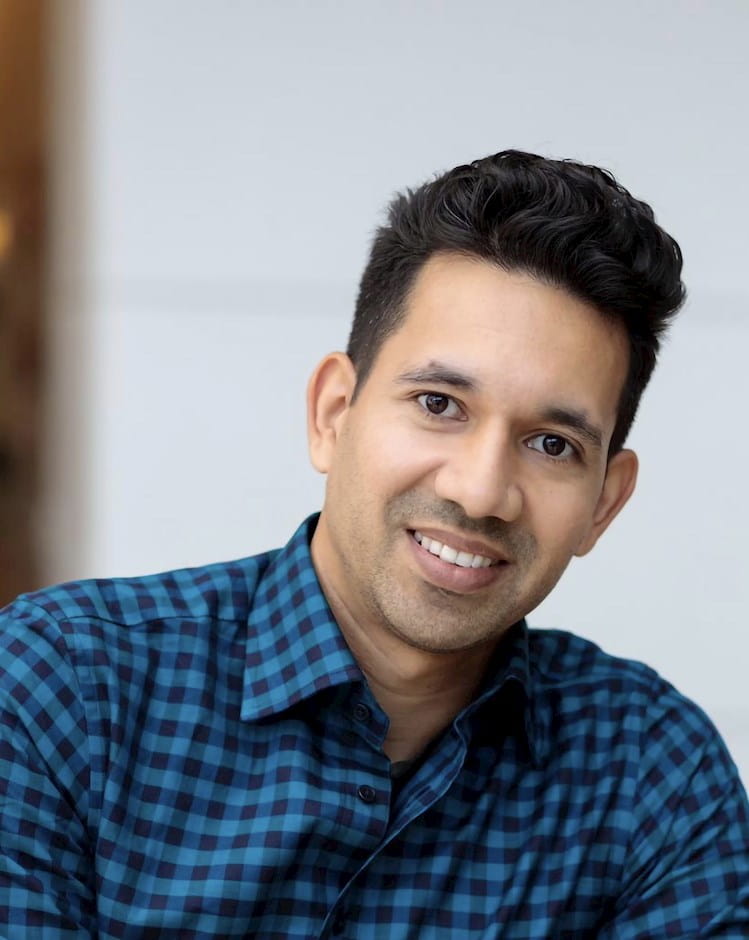
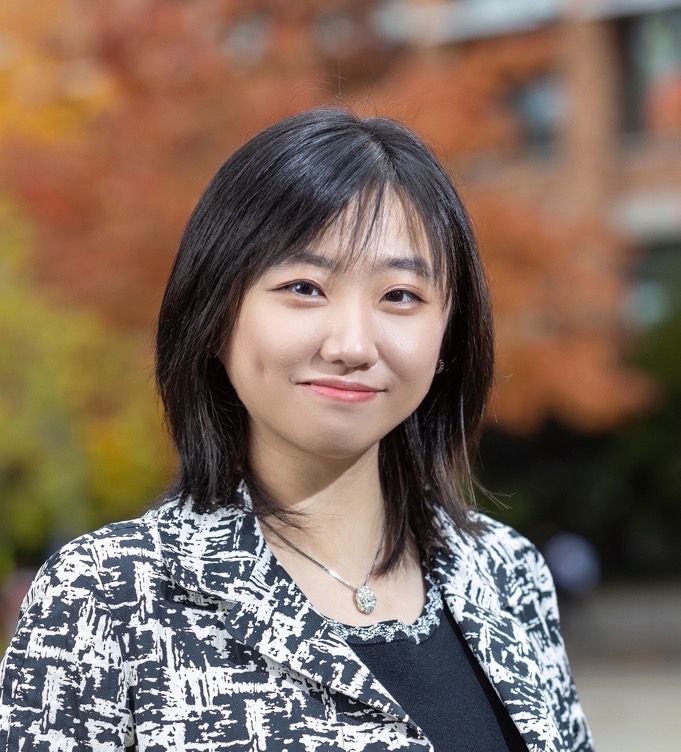
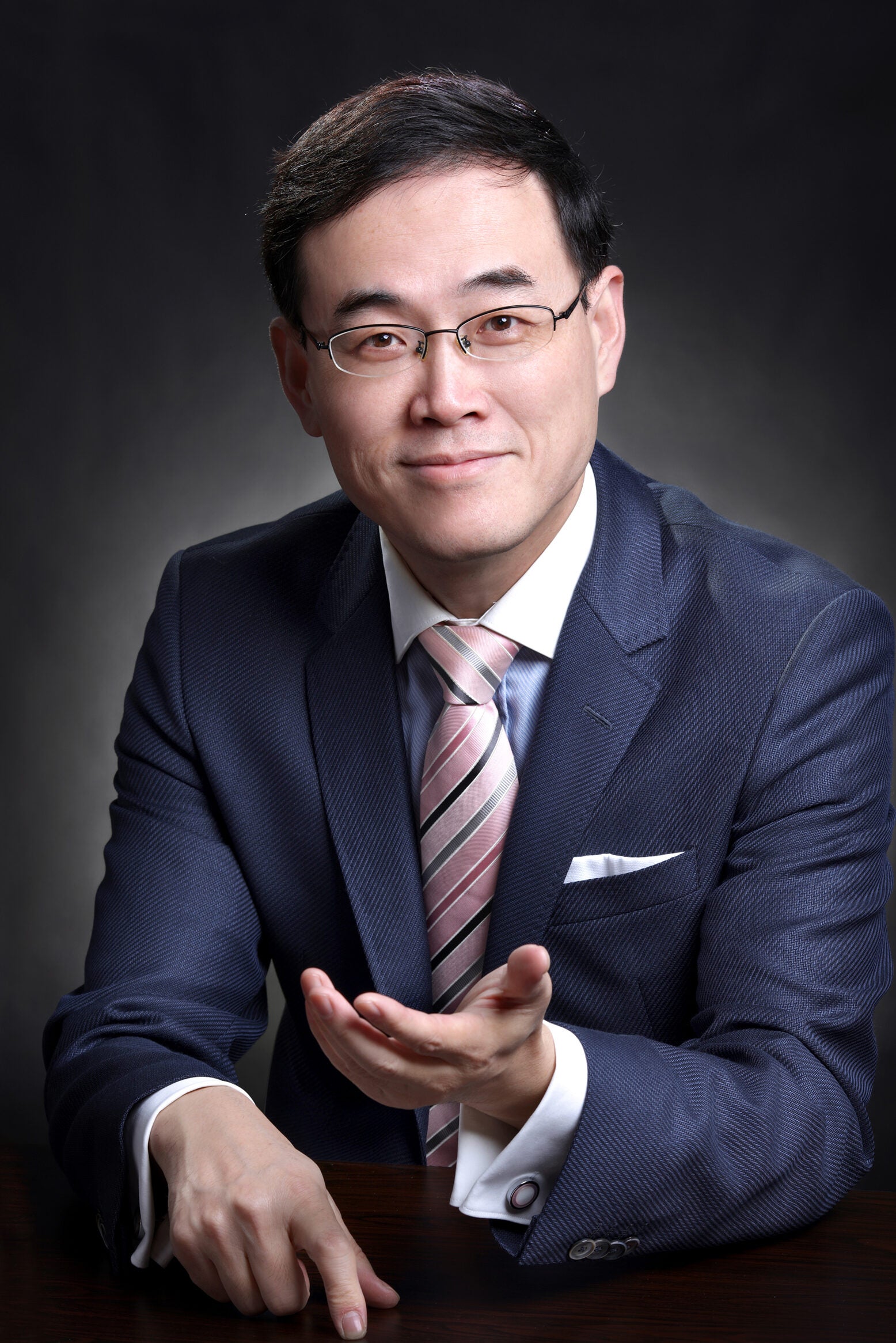
Prof. Dr.-Ing. Ahmad Osman is a Professor at the Saarland University of Applied Sciences (htw saar), specializing in Test Technologies and Test Methods within the Faculty of Engineering. He also holds an Adjunct Professor position at Laval University in Quebec, Canada, in the Department of Electrical Engineering and Computer Science. His research focuses on Artificial Intelligence applications in Signal and Image Processing for Non-destructive Testing (NDT) , with extensive work on Deep Learning , 3D Ultrasound Tomography , and Sensor Data Fusion in industrial contexts. Engineering Artificial Intelligence Signal Processing Image Processing Non-destructive Testing Quality Control Augmented Reality Osman leads the AutomaTiQ research group and serves as Head of the Algorithms/Signal and Data Processing Department at Fraunhofer IZFP . His recent publications (2017–2022) emphasize Deep Learning for defect detection in CFRP , Terahertz Imaging for artwork diagnostics, and Acoustic Sensors for agricultural quality control. He has organized international conferences on Structural Health Monitoring and contributed to Springer books on NDT technologies. His projects include ComforTex-AI (2024) and development of 3D positioners for ultrasound measurements. Collaborations span institutions in Germany, Canada, Italy, and Brazil, with advisory roles in the German Society for NDT and technical committees for conferences in Montreal and Egypt.
Zhuo Feng is Professor of Electrical and Computer Engineering at Stevens Institute of Technology, directing the HUDSON Lab and holding a Ph.D. from Texas A&M University. His research develops spectral graph methods for VLSI design, including circuit simulation, power grid verification, and machine learning applications. Funded by NSF CAREER and multiple grants, his work has produced award-winning algorithms like GRASS for graph sparsification. Recent publications focus on spectral methods for circuit stability analysis, physics-informed neural networks, and explainable AI frameworks. He teaches graduate courses in VLSI design and GPU programming while co-founding LeapLinear Solutions. NSF CAREER Award (2014) ACM/IEEE DAC Best Paper Award (2013) Multiple Best Paper Nominations (ICCAD 2008, 2006)
Bryon Aragam is an Associate Professor of Econometrics and Statistics and Robert H. Topel Faculty Scholar at the University of Chicago Booth School of Business. His research focuses on the intersection of causality, statistical machine learning, and probabilistic modeling, with particular emphasis on applications to artificial intelligence systems including large language models like ChatGPT and generative models like DALL-E. Dr. Aragam completed his PhD in Statistics and a Masters in Applied Mathematics at UCLA, where he was an NSF graduate research fellow. Prior to joining the University of Chicago, he was a project scientist and postdoctoral researcher in the Machine Learning Department at Carnegie Mellon University. Research Focus: Causal structure learning in probabilistic generative models Key Areas: Causal machine learning, deep generative models, latent variable models, statistical learning theory Applications: AI interpretability, ethics, and fairness in artificial intelligence systems Teaching: Business Statistics, Econometrics and Statistics Colloquium His recent publications demonstrate a strong theoretical foundation combined with practical applications, particularly in understanding and improving AI systems. His work spans causal discovery, graphical models, deep learning, and latent variable modeling, with particular attention to the theoretical properties of these methods and their applications to real-world AI challenges. The research shows a progression toward increasingly complex problems in causal representation learning and AI interpretability. Scientific Awards: Robert H. Topel Faculty Scholar NSF Graduate Research Fellow Dr. Aragam's work has been published in top statistics and machine learning venues including the Annals of Statistics, Neural Information Processing Systems (NeurIPS), the International Conference on Machine Learning (ICML), and the Journal of Machine Learning Research (JMLR). His research group publishes broadly across both statistical and machine learning communities, demonstrating the interdisciplinary nature of his work at the intersection of statistics, machine learning, and causal inference. As a data science consultant for technology and marketing firms, Dr. Aragam has applied his expertise to problems in survey design, customer retention, logistics, and ranking, bridging the gap between theoretical research and practical applications.
Piotr Indyk is the Thomas D. and Virginia W. Cabot Professor in the Department of Electrical Engineering and Computer Science (EECS) at MIT. He is co-director of the Foundations of Data Science Institute (FODSI) and a member of MIT's Theory of Computation Group, Computer Science and Artificial Intelligence Lab (CSAIL), and multiple research initiatives like Wireless@MIT and Big Data@CSAIL. Education: Magister (MA) in Computer Science, University of Warsaw (1995) Ph.D. in Computer Science, Stanford University (2000), advised by Rajeev Motwani Research Interests: Focuses on high-dimensional computational geometry, data stream algorithms, sparse recovery, compressive sensing, and machine learning. His work includes foundational contributions like locality-sensitive hashing (LSH), the Sparse Fourier Transform, and efficient similarity search algorithms. Key Contributions: Known for developing FALCONN (Fast Approximate Nearest Neighbor Search library), and for pioneering work in sub-linear algorithms, streaming algorithms, and geometric computing. Awards: ACM Paris Kanellakis Award (2012) ACM Fellow (2015) Simons Investigator (2013) Member, National Academy of Sciences (2024) Member, American Academy of Arts and Sciences (2023) Teaching & Mentorship: Advised numerous PhD/MSc students and postdocs, and taught courses on geometric computation, streaming algorithms, and algorithmic aspects of embeddings. Labs & Teams: Leads research in areas like FODSI, geometric algorithms, and data science at MIT's CSAIL.
Roy Dong is an Assistant Professor at the University of Illinois at Urbana-Champaign, affiliated with the Coordinated Science Laboratory. His research bridges Control Theory Economics Statistics Optimization to address challenges in cyber-physical systems and the Internet of Things, focusing on data manipulation, privacy, and strategic behavior in interconnected systems. His academic journey includes a Ph.D. in Electrical Engineering and Computer Sciences from UC Berkeley (2017) and dual B.S. degrees in Economics and Computer Engineering from Michigan State University (2010). At Illinois, he teaches courses ranging from Control Systems to Convex Optimization , with multiple teaching excellence awards. Roy's research explores Closed-loop effects of machine learning Causality in decision systems Incentive design for strategic agents Privacy-utility tradeoff optimization Human behavior modeling with applications in smart grids, transportation networks, and semi-autonomous vehicles. His work formulates privacy-preserving mechanisms as optimization problems, balancing data utility against user privacy in dynamic systems. Article trends show expertise in Game theory for strategic data sources Energy disaggregation techniques Nonlinear basis pursuit algorithms Privacy-aware control systems with a focus on cyber-physical systems and human-in-the-loop applications. Scientific recognition includes 'Teacher Ranked as Excellent' awards (ECE 120, ECE 486, ECE 515) Contributions to smartSDH building control and CPRL compressive sensing Roy leads the Privacy-aware Control Systems research group, collaborating with institutions like UC Berkeley and Michigan State University , and directs projects funded by grants including the New USDA NIFA grant for agricultural robot autonomy .
Xingwang Li is an active researcher affiliated with the School of Physics and Electronic Information Engineering at Henan Polytechnic University in Jiaozuo, China. He obtained his PhD from Beijing University of Posts and Telecommunications in 2015, specializing in networking and switching technology. His research spans wireless communications, IoT systems, reconfigurable intelligent surfaces (RIS), and physical-layer security, with a strong focus on 6G-enabling technologies. Dr. Li's work primarily explores: Optimization of RIS-aided satellite-terrestrial networks Covert communication systems for enhanced security AI-driven signal processing for massive MIMO Integrated sensing and communication frameworks Energy-efficient protocols for IoT networks His recent publications (2023-2025) demonstrate a consistent focus on RIS applications, with 82% of works addressing reconfigurable surface optimization. Key trends include the integration of deep learning with communication systems (notably reinforcement learning for resource allocation), advancement of THz and near-field technologies for 6G, and novel approaches to physical-layer security. The research shows increasing emphasis on practical implementations, including UAV networks and autonomous vehicle communications.
Dr. Saeed Gazor is a full Professor in the Department of Electrical and Computer Engineering at Queen's University. He holds a cross-appointment in the Department of Mathematics and Statistics. His research focuses on signal processing applications in electrical energy systems, communications, and medical imaging. He has supervised postdoctoral fellows Babak Ghaffari and Yaser Esmaeili Salehani. Professional affiliations include Senior Member IEEE and membership in the Institution of Engineering and Technology. Education: PhD (1994) in Signal and Image Processing from Télécom ParisTech; M.Sc. (1989) and B.Sc. (1987) from Isfahan University of Technology with highest honors. Academic roles include former Assistant Professor at Isfahan University of Technology (1995–1998) and research associate at University of Toronto (1999). Research interests span detection theory, smart energy systems, hyperspectral imaging, and medical signal processing. Notable contributions include innovations in radar signal processing, sparse signal reconstruction, and adaptive filtering. Active in academic service, including editorial roles in IEEE journals. Awards: Professional Engineer designation from Professional Engineers Ontario. Over 200 peer-reviewed publications with recent focus on AI-driven hyperspectral analysis, robust beamforming, and energy-efficient communication systems. Labs/Teams: Leads signal processing research initiatives at Queen's, collaborating on projects involving smart energy grids, distributed radar networks, and biomedical signal analysis. Current work emphasizes integrating deep learning with traditional signal processing techniques.
Venkatesan Guruswami is a Chancellor's Professor in the Department of EECS and a Senior Scientist at the Simons Institute for the Theory of Computing at UC Berkeley . He also holds a Professor position in the Department of Mathematics . His academic journey began with a B.Tech in Computer Science from the Indian Institute of Technology, Madras (1997) , followed by a Ph.D. in Computer Science from the Massachusetts Institute of Technology (2001) . After a Miller Research Fellowship at UC Berkeley (2001–02), he held faculty roles at the University of Washington and Carnegie Mellon University before returning to UC Berkeley in January 2022. Education : B.Tech, IIT Madras (1997) Ph.D., MIT (2001) Professional Affiliations : Chancellor's Professor, UC Berkeley (EECS) Senior Scientist & Interim Director, Simons Institute Professor, UC Berkeley (Mathematics) Guruswami's research spans multiple domains within Theoretical Computer Science , focusing on Error-Correcting Codes , Approximation Algorithms , Randomness in Computing , Probabilistically Checkable Proofs , and Computational Complexity . His groundbreaking work in List Decoding has enabled codes with minimal redundancy for correcting worst-case errors, while recent advancements include Polar Codes , Deletion-Correcting Codes , and Constraint Satisfaction Problems . He has also contributed to Quantum Coding Theory , Locally Recoverable Codes , and Approximation Hardness in various computational contexts. His publications reflect a deep engagement with interdisciplinary topics. Key trends include: Quantum Information Theory : Quantum LDPC codes, transversal gates, and quantum storage. Algebraic Coding : Reed-Solomon codes, AG codes, and polynomial-based constructions. Computational Complexity : Hardness of approximation, CSPs, and parameterized intractability. Data Transmission : Polar codes, deletion channels, and feedback mechanisms. Algorithmic Techniques : Spectral methods, semirandom models, and Lasserre hierarchy applications. Guruswami has received numerous accolades, including the Simons Investigator Award , Presburger Award , Packard Fellowship , Sloan Research Fellowship , ACM Doctoral Dissertation Award , and the IEEE Information Theory Society Paper Award . He is an ACM Fellow (2017) and IEEE Fellow (2019) , with recent honors like the Guggenheim Fellowship (2023) and AMS Fellow (2023) . As an advisor, he has mentored over 25 PhD and postdoctoral researchers , including Atri Rudra , Prasad Raghavendra , and Peter Manohar , whose work has won awards like the Edmund M. Clarke Doctoral Dissertation Award and CRA Outstanding Undergraduate Researcher Award . His research is supported by grants from the National Science Foundation , Packard Foundation , and Sloan Foundation . He also serves as Editor-in-Chief of the Journal of the ACM and holds leadership roles in IEEE and arXiv moderation. Guruswami is actively involved in Simons Institute programs and co-organized workshops on Coded Computation and Information Theory . His work bridges theoretical advancements with practical applications in Cloud Storage , Quantum Computing , and Group Testing , including pandemic-era contributions like AC-DC: Amplification Curve Diagnostics for SARS-CoV-2 .
Sherry Tongshuang Wu is an Assistant Professor at Carnegie Mellon University's School of Computer Science, with primary appointments in the Human-Computer Interaction Institute (HCII) and secondary affiliation with the Language Technology Institute (LTI) . Trained at the University of Washington under Jeffrey Heer and Dan Weld, she bridges HCI and NLP to study human interactions with AI systems across diverse user groups. Her educational background includes a Ph.D. (2016-22) and M.S. (2016-18) in Computer Science and Engineering from the University of Washington, and a B.Eng. (2012-16) from Hong Kong University of Science and Technology. Industry experience includes research internships at Google Brain, Microsoft Research, and Apple. Wu's research focuses on three interconnected pillars: Real-world AI Evaluation (developing frameworks like SPHERE for systematic assessment), Task-specific AI Test & Distill (optimizing general-purpose models for specific use cases), and Human-AI Task Delegation (designing optimal collaboration between humans and AI). Her work emphasizes practical deployment, user-specific net gains, and error recovery mechanisms. Analysis of her 15 most recent publications reveals a strong trend toward evaluation frameworks (35%), human-AI collaboration systems (30%), and specialized model distillation (25%), with growing emphasis on educational applications (10%). Key methodological themes include checklist-based evaluation, perspective-aware retrieval, and structural analysis of AI outputs. Google Academic Research Award (2024) Amazon Research Awards (2024) AIED 2024 Best Paper Award ACL 2020 Best Paper Award Rising Stars in EECS Workshop (2020) Wu actively mentors 19 students across PhD, Master's, and undergraduate levels, with notable projects including synthetic data generation, LLM literacy tools, and retrieval system optimization. She leads significant grant-funded work through Amazon Research Awards and Google Academic Research Awards, focusing on deployable model generation and human-AI collaboration frameworks. Her lab develops practical tools like Promp2Model and SPHERE that bridge theoretical research with industry applications.
Saurabh Bagchi is a Professor at Purdue University, West Lafayette, USA. He holds a PhD in Computer Science from the University of Illinois Urbana-Champaign (2001). His research focuses on distributed systems security, networking, and embedded systems. Key areas include IoT security, cyber-physical systems resilience, and machine learning applications in edge computing. Bagchi's work spans theoretical and applied domains, addressing challenges in distributed algorithms, fault tolerance, and secure communication protocols. His contributions to firmware analysis, serverless computing optimization, and anomaly detection in industrial IoT systems have been widely recognized. He has published over 300 papers in top-tier conferences and journals such as IEEE Transactions on Dependable and Secure Computing, ACM Transactions on Sensor Networks, and CVPR. He collaborates with researchers in academia and industry to advance resilient networked systems, including projects funded by NSF and industrial partnerships. His lab explores cutting-edge topics like federated learning security, edge computing architectures, and game-theoretic approaches to cyber defense.
Mustafa Gül is a Professor in the Department of Civil and Environmental Engineering at the University of Alberta’s Faculty of Engineering. He also serves as Director of Internationalization at the Faculty of Engineering’s Deans Office. His research focuses on smart, sustainable, and resilient cities, with an emphasis on infrastructure monitoring and energy-efficient systems. Education: PhD in Civil Engineering (University of Central Florida, 2009), MSc in Electrical Engineering (University of Central Florida, 2011), MSc in Civil Engineering (Boğaziçi University, 2004), BSc in Civil Engineering (Boğaziçi University, 2002). Dr. Gül’s research spans two primary domains: Crowdsensing-based Monitoring of Built and Natural Environments (CoMBiNE) using AI, signal processing, and data analytics for infrastructure health; and Energy-Efficient Smart Cities through solar PV integration, IoT applications, and net-zero energy homes. His work bridges structural engineering, machine learning, and sustainable urban development. Recent publications highlight advancements in smartphone-based damage detection, UAV-assisted disaster assessment, and AI-driven energy systems. His team’s work on crowdsensing bridges, solar PV optimization, and smartphone analytics has been widely recognized in journals like Structural Control and Health Monitoring and Energy and AI . Notably, his 2017 paper earned the Best Paper Award at ISARC. Students supervised include Azim, R. , Keskin, M. , and Do, N. T. , among others. Scientific Awards: Best Paper Award, 34th International Symposium on Automation and Robotics in Construction (ISARC 2017) Dr. Gül’s projects often involve interdisciplinary collaboration, leveraging sensor networks, computer vision, and optimization algorithms to address urban resilience and energy sustainability. His leadership extends to course CIV E 779 and ongoing research initiatives in Alberta, Canada.
Shen Wei is the KoGuan Distinguished Professor of Law at the Shanghai Jiao Tong University Law School, with a concurrent role as Visiting Professor (2025). His academic career spans legal practice and academia, focusing on international investment law, corporate governance, financial regulation, and international commercial arbitration. Concurrently, his research extends into computational and mathematical domains, including machine learning, deep neural networks, and approximation theory. He teaches international investment law, international financial regulation, company law, and international economic law. His interdisciplinary work bridges legal scholarship with advanced mathematical modeling and algorithmic analysis. Recent research emphasizes neural network architecture, optimization techniques, and approximation theory applied to complex systems. Notable contributions include studies on deep network expressivity, gradient methods, and wavelet-based image restoration. Awards and grants are not explicitly mentioned, but his work reflects significant contributions to both legal and computational fields.
Christina Lee Yu is an Assistant Professor at Cornell University in the School of Operations Research and Information Engineering (ORIE). She holds a PhD and MS in Electrical Engineering and Computer Science from MIT (2017, 2013) and a BS in Computer Science from Caltech (2011). Her research focuses on algorithm design, high-dimensional statistics, causal inference in networks, and reinforcement learning. She is also an Amazon Scholar and has received prestigious awards, including the NSF CAREER Award and Intel Rising Stars Award. Her work is supported by grants from the NSF and Air Force Office of Scientific Research. Education: PhD in EECS, MIT (2017) MS in EECS, MIT (2013) BS in Computer Science, Caltech (2011) Research Interests: Algorithm design and analysis Inference over networks and causal inference Sequential decision making under uncertainty Online learning and reinforcement learning High-dimensional statistics Awards and Honors: NSF CAREER Award (2024) ACM SIGMETRICS Rising Stars Award (2024) Intel® Rising Stars Award (2021) JPMorgan Faculty Research Award (2021) Simons Institute Research Fellow (2020) INFORMS Dantzig Dissertation Award Honorable Mention (2018) Grants and Funding: National Science Foundation (NSF) CAREER Grant Air Force Office of Scientific Research Grant Advising: PhD Students: Sean Sinclair, Tyler Sam, Xumei Xi Collaborators: Mayleen Cortez, Matthew Eichhorn Labs and Collaborations: Member of ORIE, Statistics, CAM, and CS graduate fields at Cornell Amazon Visiting Academic in Fulfillment Optimization (2025)
Weiyu Xu is a Professor at the University of Iowa, affiliated with both the Department of Electrical and Computer Engineering and the Department of Applied Mathematical and Computational Sciences. He joined the College of Engineering in 2012 and leads the Intelligent Information Processing Lab (IIPL). Ph.D., Electrical Engineering, California Institute of Technology, 2009 M.S., Electrical Engineering, California Institute of Technology, 2006 M.S., Electronic Engineering, Tsinghua University, 2005 B.E., Information Engineering, Beijing University of Posts and Telecommunications, 2002 His research focuses on compressive sensing, information theory, signal processing, network optimization, and deep learning applications in medical imaging and cybersecurity. He has made significant contributions to adversarial attack robustness, distributed optimization algorithms, and medical imaging techniques for OCT segmentation and brachytherapy. Recent publications highlight trends in Adversarial machine learning Medical imaging algorithms Compressed sensing for diagnostics Optimization in wireless communication He has also contributed to federated learning over tree networks and theoretical guarantees for sparse signal recovery. Weiyu Xu's lab, IIPL, integrates deep learning with classical optimization and signal processing. His work bridges foundational theories (e.g., information-theoretic robustness) with real-world applications in healthcare (e.g., cancer treatment planning) and communication systems (e.g., MIMO channel estimation).
Vinod M. Vokkarane is a Professor in the Department of Electrical and Computer Engineering at the University of Massachusetts Lowell, where he serves as Director of the Center for Smart Cyber-Physical Systems (SCyPS) and Director of Advanced Computer Network Labs. Previously, he was an Associate Professor at University of Massachusetts Dartmouth from 2004 to 2013 and a Visiting Scientist at MIT's Research Laboratory of Electronics from 2011 to 2014. His extensive research portfolio spans multiple domains of advanced networking and cyber-physical systems. Dr. Vokkarane earned his educational foundation with a B.S. from University of Mysore, India (1999), followed by an M.S. (2001) and Ph.D. (2004) in Computer Science from the University of Texas at Dallas. His dissertation focused on optical burst-switched networks, establishing the foundation for his future research trajectory. His research interests center on Cyber-Physical Systems, Network Optimization, Reliability, Smart Grids, and Cyber-Security, with particular expertise in the design, analysis, and modeling of architectures, protocols, and algorithms for ultra-high speed networks including Optical networks, Grid/Cloud networks, and Big-data networks. His work bridges theoretical foundations with practical implementations, often addressing critical challenges in network reliability, security, and efficiency. His research has received significant recognition through numerous best paper awards and substantial external funding. Analysis of his recent publications reveals a clear evolution toward increasingly sophisticated integration of cyber-physical systems with power infrastructure, particularly in the areas of grid resilience and observability. His work has expanded from fundamental optical networking research to address critical infrastructure challenges, with a growing emphasis on machine learning applications for network optimization and power system monitoring. The recent focus on PMU networks, disaster resilience, and cyber restoration demonstrates his strategic pivot toward addressing national security and critical infrastructure protection challenges. UMass Dartmouth Scholar of the Year Award (2011) UMass Dartmouth Chancellor's Innovation in Teaching Award (2010-11) University of Texas at Dallas Computer Science Dissertation of the Year Award (2003-04) Multiple Best Paper Awards including IEEE GLOBECOM 2005, IEEE ANTS 2010, ONDM 2015, ONDM 2016, and IEEE ANTS 2016 Texas Telecommunications Engineering Consortium Fellowship (2002-03) Dr. Vokkarane has successfully mentored numerous graduate students who have contributed significantly to his research projects, with several going on to successful careers in academia and industry. His research has been consistently supported by major funding agencies including NSF, DOE, and USMC, with recent projects totaling over $5 million in funding. Current projects include Unified Post-Disaster Restoration Planning for Cyber-Physical Power Distribution Systems (ONR, $550K), CyberCARE: Northeast University Cybersecurity Center (DOE, $3.5M), and Flexible Spectrum Allocation in Next-Generation Optical Networks (NSF, $350K). He leads the Center for Smart Cyber-Physical Systems (SCyPS) and Advanced Computer Network Labs at UMass Lowell, where his research teams work on cutting-edge problems in network architecture, cyber-physical security, and infrastructure resilience. His labs collaborate extensively with national laboratories and industry partners to translate theoretical advances into practical solutions for real-world infrastructure challenges.