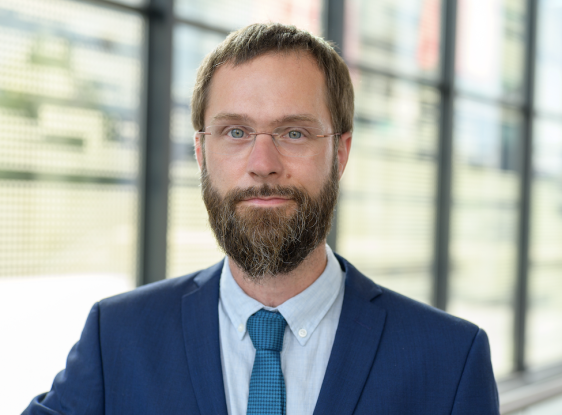
Vincent Vu is an Associate Professor of Statistics at The Ohio State University, affiliated with the Department of Statistics. He holds a PhD from the University of California, Berkeley (2009). His research focuses on high-dimensional statistics, statistical machine learning, and their applications in neuroimaging, particularly fMRI. He previously worked as a software engineer in Silicon Valley for over six years, blending computational and statistical expertise. His expertise includes statistical computing, multivariate analysis, and computational sufficiency. He has been funded by the NSF and received the 2012 AISTATS Best Paper Award. He serves as an associate editor for the Journal of the American Statistical Association and The American Statistician. His work bridges statistical theory and computation, addressing challenges in high-dimensional data analysis. Collaborations involve neuroscientific applications, combining algorithmic innovation with real-world problem-solving.
Tomas Masak is an Assistant Professor at the Department of Statistics and Mathematics, Vienna University of Economics and Business (WU). He holds a PhD in Mathematics from EPFL Lausanne (2018–2022) and an MSc in Mathematical Statistics from Charles University. His academic roles include Bernoulli Instructor at EPFL (2022–2024) and Research and Teaching Assistant at Technical University of Munich (2017–2018). Education Mathematics PhD, EPFL Lausanne (2018–2022) Mathematical Statistics MSc, Charles University (completed 2017) His research focuses on functional data analysis, covariance estimation, and statistical computing. Recent work includes the Functional Graphical Lasso and methods for sparsely observed random surfaces. Publications span journals like the Annals of Statistics , Journal of the American Statistical Association , and Biometrika , emphasizing open-access venues. Keywords across his work include functional analysis, covariance modeling, and high-dimensional statistics. He actively participates in scientific lectures and peer review, serving as a reviewer for the Annals of Statistics and Journal of Machine Learning Research in 2024. His collaborations span Europe and focus on data science applications.
Alejandro Luis Callara serves as a postdoctoral researcher at the University of Pisa's Research Center "E. Piaggio," specializing in biomedical signal and image processing methodologies for neuroscience applications. His work bridges engineering and cognitive science through advanced computational approaches to physiological data analysis. His academic foundation includes: Bachelor’s Degree in Biomedical Engineering (2012), University of Pisa Master’s Degree in Biomedical Engineering (2015), University of Pisa PhD in Information Engineering (2019), University of Pisa Callara's research centers on developing analytical pipelines for EEG and fMRI data to map brain connectivity networks, with particular expertise in autonomic nervous system interactions during emotional processing. He actively contributes to the Brain matters team's development of neuronal segmentation tools for confocal microscopy data, extending his methodological focus to multi-scale tissue imaging. His technical proficiency spans directed coherence analysis, dynamic causal modeling, and thermal response quantification. Analysis of his 15 most recent publications (2024-2025) reveals three dominant research trajectories: (1) autonomic physiology investigations examining parasympathetic-sympathetic coupling during emotional tasks using EDA and HRV metrics; (2) innovative neuroimaging techniques for brainstem fMRI analysis and sparse connectivity mapping; and (3) multimodal integration studies exploring olfactory-visual-auditory interactions in affective disorders through VR/AR paradigms. Methodologically, his work consistently employs advanced signal processing frameworks like PCA-based partial correlation and ThermICA for multivariate analysis. Within the Research Center "E. Piaggio," Callara collaborates across bioengineering and robotics initiatives, particularly through the Brain matters team where he applies computational neuroscience to neuronal morphology analysis. His current projects focus on refining contactless stress classification systems using thermal imaging and developing immersive VR scenarios for anxiety disorder research, demonstrating strong translational potential for clinical applications.
Dr. Justin Petrovich is an Assistant Professor of Statistics and Business Analytics at Saint Vincent College, where he also serves as Chair of the Marketing, Analytics, and Global Commerce Department since 2022. He holds a B.S. in Finance and Mathematics from Saint Vincent College (2014) and a Ph.D. in Statistics from Pennsylvania State University (2018). His research focuses on functional and longitudinal data analysis, multiple imputation, and statistics education, with applications in mental health, pediatrics, marketing, and economics. Education: B.S., Saint Vincent College (2014); Ph.D., Pennsylvania State University (2018) Teaching: Courses include Business Statistics, Econometrics, and Data Science. His research interests emphasize applied statistical methodologies, particularly in handling complex data structures such as longitudinal and functional datasets. He has collaborated across disciplines, including health sciences and economics, and has contributed to studies on suicide risk prediction in college students and labor market analysis. Dr. Petrovich has published in high-impact journals like the Journal of the Royal Statistical Society and Journal of Counseling Psychology. His work bridges theoretical statistical advancements with practical applications, aiming to make complex analyses accessible to applied scientists. Outside academia, he is an active member of Saint Vincent Basilica Parish and maintains ties to his alma mater through teaching and community involvement. He resides in Latrobe with his family and remains an avid runner.
Ali Shojaie is a Professor of Biostatistics & Statistics at the University of Washington , currently serving as Interim Chair of Biostatistics. His research bridges statistical learning, network analysis, and high-dimensional data modeling with applications in biological and health sciences. Research Focus: Shojaie develops advanced methodologies for causal inference, spatial statistics, and semi-supervised learning. His recent work includes network-based gene set analysis, Granger causality estimation, and regularization techniques for complex data structures. Scientific Contributions: Received the 2022 Leo Breiman Award for innovative statistical learning research Elected as Fellow of the Institute for Mathematical Statistics (IMS) and American Statistical Association (ASA) Secured major NIH grants for projects on gene-phenotype associations and explainable AI in neuroscience Advising & Leadership: His students have won multiple awards at ASA and AISTAT conferences. He co-developed the netgsa and spacejam R packages for network-based analysis and spatial modeling. Current Projects: Shojaie leads NIH-funded research on prefrontal brain stimulation and gene knockout studies, combining statistical theory with interdisciplinary applications in biology and bioengineering.
Martin Dalgaard Ulriksen is an Associate Professor at Aarhus University's Department of Mechanical and Production Engineering, specializing in system dynamics and affiliated with the Mechatronics and Dynamics section. His work focuses on vibration theory, system identification, and control theory with applications in offshore structures and wind turbines. His research encompasses fault detection, parameter estimation, and digital twin technologies. Key projects include True Digital Twin (2024-2025) for wind turbine design and CP-SENS (2023-2026) for cyber-physical sensing in structural monitoring. Publications highlight methodologies like modal expansion, basis pursuit, and eigenstructure assignment for damage localization and system identification. Martin teaches vibration theory and system identification courses at both bachelor's and master's levels while supervising thesis projects. Current collaborations with researchers like D. Bernal demonstrate his emphasis on interdisciplinary approaches. Contact: mdu@mpe.au.dk | +45 93 50 88 66.
Michael Muma is a Professor in the Department of Electrical Engineering and Information Technology at Technische Universität Darmstadt. His research focuses on robust data science theory and methods applied to signal processing and machine learning in biomedicine and engineering. He leads the ERC Starting Grant ScReeningData project, developing methods for reproducible information discovery in biomedical databases, and is a Principal Investigator in the LOEWE center emergenCITY and BMBF cluster curATime. Prior roles include Independent Junior Research Group Leader (Athene Young Investigator) and Lecturer at TU Darmstadt from 2017 to 2022, and Research Associate (Post-Doc since 2014) from 2009 to 2017. His research interests span robust statistical methods, high-dimensional data analysis, emergency response systems, and biomedical signal processing. Notable projects include FDR-controlled portfolio optimization, ECG delineation algorithms, and radar-based vital sign estimation. Muma has contributed to distributed sensor networks, robust clustering, and sparse regression techniques. His work addresses challenges in multi-source detection, financial data analysis, and genomics through interdisciplinary approaches combining signal processing, machine learning, and robust statistics. Recent publications emphasize scalable solutions for high-dimensional problems, including applications in robotics, cardiology, and financial index tracking.
Pravesh Kothari serves as an Adjunct Professor in the Computer Science Department at Carnegie Mellon University, focusing on theoretical computer science and algorithmic foundations of average-case computational problems. His research centers on designing efficient algorithms and establishing rigorous evidence for algorithmic thresholds in problems spanning theoretical computer science, statistics, and allied fields. Key contributions include the development of the sum-of-squares method which bridges proof complexity and semidefinite programming relaxations for optimization challenges, detailed in his monograph Semialgebraic Proofs and Efficient Algorithm Design with Pitassi and Fleming. Recent publications reveal consistent focus on constraint satisfaction problems, small-set expansion, and sparse statistical estimation, demonstrating strong integration of theoretical computer science with statistical learning theory through semidefinite programming frameworks. Major recognitions include: NSF CAREER Award (2021-2026) for The Nature of Average-Case Computation Sloan Fellowship (2022) Current research is primarily supported by the NSF CAREER Award, enabling investigation into computational thresholds and efficient algorithm design for average-case problems through theoretical frameworks. His Fall 2021 CMU lecture notes document practical applications of these methodologies.
Klaas Smilde serves as an Adjunct Professor in the Department of Food Science (Design and Consumer Behavior section) and holds a postdoctoral position in the Department of Plant and Environmental Sciences (Section for Environmental Chemistry and Physics) at the University of Copenhagen. His dual appointments bridge food science and environmental research, with institutional email addresses at both University of Copenhagen (smilde@plen.ku.dk) and University of Amsterdam (A.K.Smilde@uva.nl). His research centers on advanced chemometric methodologies applied to complex biological systems, particularly metabolomics and lipoprotein analysis. Key interests include multiway data modeling, sparse PCA interpretation, longitudinal study design, and integration of mechanistic models with high-dimensional datasets. This work spans food science applications, environmental chemistry, and human health investigations. Recent publications (2020-2025) reveal consistent methodological innovation in data analysis for metabolomics and environmental screening. Dominant themes include development of robust protocols for lipoprotein profiling using NMR and ultracentrifugation, application of multiway models to postprandial dynamics, and novel approaches to non-target screening in environmental samples. His work demonstrates strong interdisciplinary collaboration across food science, plant sciences, and medical research domains.
Ami Wiesel is a Professor at The Rachel and Selim Benin School of Computer Science and Engineering at The Hebrew University of Jerusalem. His research focuses on statistical signal processing, machine learning, and covariance estimation. Previously, he completed his postdoctoral studies at the University of Michigan with Professor Alfred Hero, earned his PhD in Electrical Engineering from Technion under Professors Yonina Eldar and Shlomo Shamai, and obtained his MSc and BSc in Electrical Engineering from Tel Aviv University. His research interests include robust covariance estimation , statistical learning , signal detection , and MIMO communications . Wiesel has made significant contributions to the field of structured covariance estimation, particularly in elliptical distributions and Tyler's estimator. His work bridges theoretical statistics with practical applications in radar systems, wireless communications, and hyperspectral imaging. Wiesel's publications show a clear trend toward integrating deep learning with traditional statistical signal processing methods. His recent work explores unbiased estimation using neural networks, fair principal component analysis, and deep learning applications for target detection with constant false alarm rate. His research spans theoretical foundations in covariance estimation to practical implementations in radar and communications systems. Among his notable scientific achievements are: Young Author Best Paper Award (2019) for 'Learning to Detect' Young Author Best Paper Award (2006) for 'Linear precoding via conic optimization for fixed MIMO receivers' Student Paper Award (2017) for 'Deep MIMO detection' Wiesel has advised numerous graduate students who have gone on to publish significant work in the field. His research has been supported by various grants focusing on statistical signal processing, machine learning applications, and radar systems. His monograph 'Structured Robust Covariance Estimation' (2015) has become a reference in the field. He maintains an active research group focusing on the intersection of statistical learning and signal processing, with applications in communications, radar, and medical imaging.