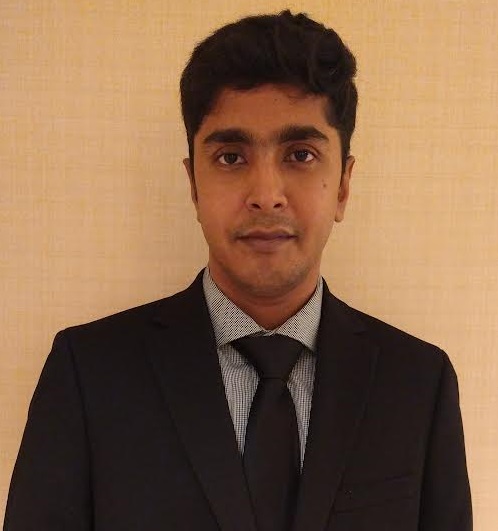
Dr. Vini Chaudhary is an Assistant Professor in the Department of Computer Science and Engineering at Mississippi State University's Bagley College of Engineering. His multidisciplinary research spans quantum communication networks, wireless systems design, machine learning applications in 5G/6G networks, and cybersecurity. He develops novel algorithms for signal processing, network optimization, and sustainable IoT systems. His publication portfolio demonstrates expertise in quantum network routing, RF signal detection, energy-efficient sensing, and reconfigurable intelligent surfaces. Recent work focuses on quantum error mitigation and ML-driven spectrum management in CBRS bands.
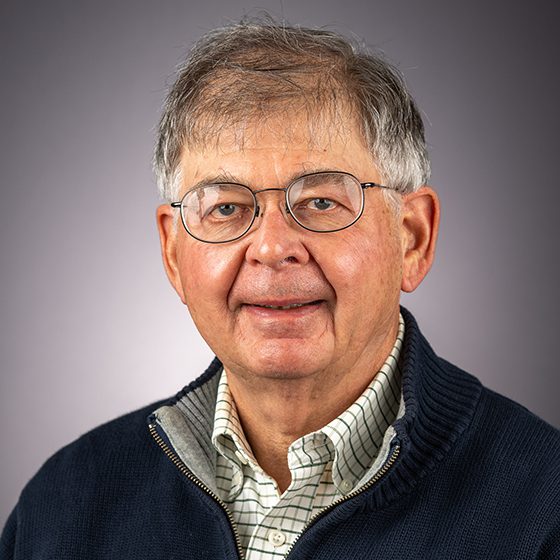
Chanaka Edirisinghe serves as the Kay and Jackson Tai '72 Chaired Professor in Quantitative Finance at Renssela Polytechnic Institute's Lally School of Management. His distinguished career focuses on advanced portfolio optimization and risk management systems with applications in financial engineering and operations research. His research integrates stochastic programming, quadratic optimization, and quantitative finance to address portfolio construction under real-world constraints including leverage control, market impact, and economic regime shifts. Recent work explores sparse portfolio selection, credit rating prediction, and index-tracking methodologies through rigorous mathematical frameworks published in premier journals like Management Science and Operations Research. Scientific awards include the Emerald Management Reviews Citation of Excellence (2009) recognizing top global management research and the University of Canterbury Erskine Fellowship. Professor Edirisinghe demonstrates leadership through roles such as General Chair of the 2016 INFORMS Annual Conference (5,000+ attendees) and international panels on Fintech development in Mauritius (2018) and financial services innovation in Milan (2019).
Dr. Ionut Florescu is a Research Professor in Financial Engineering at Stevens Institute of Technology, School of Business. He leads the Hanlon Financial Systems Lab and directs the Financial Technology and Analytics program. His expertise spans stochastic processes, high-frequency finance, reinforcement learning, and mathematical finance. Florescu holds a Ph.D. in Statistics from Purdue University (2004), and academic roles at Stevens since 2005 include Assistant Professor, Research Associate Professor, and current Research Professor. He advises numerous PhD students in Financial Engineering and Mathematical Sciences, focusing on topics like deep learning in finance and algorithmic trading. Education: Bachelor's in Mathematics, University of Bucharest (1996) Master's in Stochastic Processes, University of Bucharest (1997) Master's in Computational Finance, Purdue University (2001) Ph.D. in Statistics, Purdue University (2004) Research Interests: Stochastic processes in finance, high-frequency trading, volatility modeling, reinforcement learning applications, and interdisciplinary projects in geophysics and biomedical engineering. His work emphasizes mathematical modeling across diverse domains like cryptography and ocean studies. Recent Articles Trends: Focus on algorithmic trading, liquidity analysis, and applications of machine learning in finance. Key areas include counterfactual explanations for credit ratings, batch auction market behavior, and multidimensional risk modeling. Awards: I.W. Burr Award for Thesis Excellence (2005) Nvidia GPU Infrastructure Grant (2017) CME Foundation Grants (Totaling $185K) ERASMUS+ Mobility Award (2022) Advising & Grants: Supervised over 30 PhD/Masters students. Secured NSF, CME, and industry grants totaling over $1M, including leadership in the NSF-CRAFT Center for financial technologies. Active in organizing conferences on high-frequency data modeling. Labs & Teams: Director of the Hanlon Financial Systems Lab, a hub for fintech innovation. Collaborates with industry partners like UBS and CAPCO on projects like corporate credit rating systems and market simulation platforms (e.g., SHIFT).
Dr. Ian D. Marsland is an Associate Professor in the Department of Systems and Computer Engineering at Carleton University (Faculty of Engineering and Design). He holds a Ph.D. from the University of British Columbia and has been affiliated with Carleton since 1999. His research focuses on wireless digital communications, noncoherent receiver design, error control coding, and indoor localization using wireless networks. He has contributed to advancements in SCMA, FTN signaling, and polar codes, with a strong emphasis on iterative decoding applications. Education: B.Sc.Eng. (Honours) in Mathematics and Engineering, Queen's University (1987) M.Sc. in Electrical Engineering, University of British Columbia (1994) Ph.D. in Electrical Engineering, University of British Columbia (1999) Research Interests: Wireless communication systems (stationary/mobile) Error control coding (LDPC, turbo, polar codes) Noncoherent receiver design Faster-than-Nyquist (FTN) signaling and neural network-aided detection Multidimensional constellations for SCMA systems Indoor localization via wireless networks Recent Research Trends: Dr. Marsland’s recent work emphasizes low-complexity detection algorithms for FTN signaling, SCMA constellation design, and polar code optimization. His publications highlight advancements in throughput-based coding, sphere decoding for SCMA, and high-resolution positioning techniques using MUSIC-based methods. Grants & Advising: While specific grants or student advisees are not detailed in the provided texts, his research portfolio indicates sustained involvement in collaborative projects with industry and academic partners. His lab focuses on next-generation wireless systems and signal processing innovations. Labs & Teams: His research is conducted within Carleton’s Department of Systems and Computer Engineering, emphasizing interdisciplinary work in communications and signal processing. Collaborators include researchers from institutions like the University of Toronto and industry partners.
Aditya Bhaskara is an Associate Professor in the School of Computing at the University of Utah, where he is part of the Theory Group and the Utah Center for Data Science. His office is located in MEB 3470. Education: Ph.D. in Computer Science, Princeton University (2012) B. Tech in Computer Science and Engineering, IIT Bombay, India Post-doctoral researcher, Google NYC (2013-2015) Post-doctoral researcher, EPFL (2012-2013) Dr. Bhaskara's research spans theoretical computer science and machine learning. He has a strong focus on algorithm design, particularly approximation and online algorithms. On the machine learning side, he investigates robustness of learning models and domain shifts from a theoretical perspective. His work often blends theory and ML, exploring how to leverage ML-based predictions in classical algorithm design and other beyond worst-case models. His research has significant applications in data streaming, dimensionality reduction, and graph analysis. His recent publications demonstrate a clear trend toward bridging theoretical computer science with practical machine learning applications. Many papers focus on spectral algorithms, robustness in network models, and optimization techniques for large-scale data. There is also significant work in wireless communications and spectrum management, showing how his theoretical work translates to real-world problems in telecommunications and data science. Scientific Awards: NSF CAREER award AF Small grant Grants from NRDZ and FMiTF programs Google Faculty Research Award Dr. Bhaskara actively advises students with strong mathematical backgrounds interested in theoretical computer science and machine learning. He has received significant research funding from the National Science Foundation and Google. He is co-organizing the Data Science Lecture Series at the University of Utah and has served on prestigious program committees including SODA 2024, STOC 2023, ICALP 2023, and ITCS 2022. His teaching portfolio includes advanced courses on algorithms, machine learning theory, and probability. As part of the Theory Group and the Utah Center for Data Science, Dr. Bhaskara collaborates with researchers across disciplines to advance theoretical foundations of computing and their practical applications in data science. His work contributes to both the theoretical understanding of algorithms and their real-world implementation in various domains including wireless networks, data analysis, and machine learning systems.
Mélina Mailhot serves as an Associate Professor in the Department of Mathematics and Statistics at Concordia University, specializing in quantitative risk analysis for insurance and financial applications. Her expertise bridges actuarial science, statistics, and climate-related risk modeling. Education: Ph.D., Université Laval, Canada (2012) Research Interests: Professor Mailhot's work focuses on Actuarial Science, Risk Theory, Dependence Modeling, Risk Measures, and Optimization. She develops advanced methodologies for multivariate risk assessment, particularly for extreme events like natural catastrophes. Her research integrates copula theory, extreme value analysis, and machine learning to model complex dependencies in insurance portfolios, with growing emphasis on climate-driven risks such as wildfires and extreme precipitation. Publication Trends: Her recent publications (2021-2025) demonstrate concentrated innovation in dynamic risk measurement and spatial modeling. Key contributions include Bayesian approaches for model uncertainty quantification, multivariate tail-value-at-risk frameworks, and machine learning applications (e.g., Random Forests) for wildfire risk assessment. A significant trend involves translating climate science into actuarial practice, evidenced by spatial interpolation models for extreme rainfall and surge prediction systems using sparse data. Advising and Professional Engagement: She actively mentors graduate researchers including: C. Araiza I. (Tweedie double GLM loss triangles) N. Beck (multivariate extreme expectiles and spatial modeling) B. Kchouk (reciprocal reinsurance treaties) Professor Mailhot maintains strong academic visibility through conferences like the Statistical Society of Canada meetings and international actuarial forums, while also engaging public discourse via Radio Canada appearances on climate-insurance intersections and STEM diversity panels.
Dr. Anindya Bijoy Das is a tenure-track Assistant Professor in the Electrical and Computer Engineering department at The University of Akron's College of Engineering and Polymer Science, where he teaches courses including Wireless Communications (Spring 2025) and Digital Communication (Fall 2024). Prior to joining Akron in August 2024, he served as a Postdoctoral Researcher at Purdue University (2022-2024) following completion of his Ph.D. at Iowa State University in 2022, where he received the prestigious Karas Award for outstanding dissertation work. His educational background includes: Ph.D. in Electrical Engineering, Iowa State University (2022) M.Eng. in Electrical Engineering, Iowa State University (2018) B.Sc. in Electrical and Electronic Engineering, Bangladesh University of Engineering and Technology (2014) Dr. Das's research focuses on cutting-edge areas at the intersection of machine learning, distributed systems, and communications. His primary interests include federated learning , AI/ML applications , distributed computation , information theory , and biomedical signal processing . Recent work explores the integration of large language models with traditional signal processing techniques, particularly for healthcare applications. His research bridges theoretical foundations with practical implementations, often addressing challenges in edge computing environments where computational resources are limited. The work demonstrates strong connections between theoretical information theory and practical system design. Analysis of his publication portfolio reveals an evolving research trajectory with increasing emphasis on federated learning architectures, privacy-preserving techniques, and the application of reinforcement learning to communication optimization. His work spans wireless communications, information theory, and healthcare applications, with a consistent focus on solving computational bottlenecks in distributed environments. The interdisciplinary nature of his research is evident in publications spanning IEEE Transactions on Information Theory, IEEE Journal on Selected Areas in Communications, and IEEE Signal Processing Magazine. His notable achievements include: Karas Award for Outstanding Dissertation in Mathematical and Physical Sciences and Engineering (2022) Research Excellence Award from Iowa State University (2021) Teaching Excellence Award from Iowa State University (2020) National Champion in Bangladesh Mathematical Olympiad (2008) Multiple Best Paper Awards at international conferences Dr. Das currently leads a research group focused on three main thrusts: improving federated learning algorithms, enhancing distributed computation schemes, and developing novel AI/ML applications. He has secured a $73,000 grant from Autonomous and Connected Systems of Purdue Engineering Initiatives for research on AI tensor computations in edge networks. Actively seeking 1-2 highly motivated PhD students, he emphasizes practical implementation alongside theoretical advances, with applications spanning healthcare, wireless communications, and edge computing environments. His service as a reviewer for top-tier journals including IEEE Transactions on Pattern Analysis and Machine Intelligence and IEEE Transactions on Wireless Communications further demonstrates his standing in the research community.
David Bader is the Distinguished Professor of Data Science at New Jersey Institute of Technology (NJIT). He is a leading expert in high-performance computing, parallel algorithms, and large-scale graph analytics. His work focuses on developing scalable frameworks for big data problems, including graph processing, anomaly detection, and quantum computing methods. He has held continuous federal grants since 2000, with recent projects involving cyber-infrastructure for community detection, streaming data science frameworks, and gravitational wave research. Bader leads the development of open-source tools like Arachne and Arkouda, which are widely used for large-scale graph analytics. His research interests span parallel algorithms, graph theory, and high-performance computing applications. Notable contributions include the GraphBLAS initiative and the Einstein Toolkit. Bader was inducted into the Hall of Fame in 2025 for pioneering modern supercomputing innovations.
Markus Pelger is an Associate Professor at Stanford University's School of Engineering , affiliated with the Department of Management Science and Engineering and the National Bureau of Economic Research . His research bridges mathematical finance, machine learning, and statistical econometrics. PhD in Economics, UC Berkeley (2015) Diplom in Mathematics and Economics, University of Bonn (2012, 2009) His work focuses on: Financial Risk Modeling (high-frequency, jump, and continuous risk factors) Machine Learning Applications in asset pricing, statistical arbitrage, and portfolio optimization High-Dimensional Data Analysis (factor models, missing data imputation, and proximate factors) He has contributed to machine learning-based yield curve estimation , deep learning asset pricing , and interpretable factor models . His research has been honored with the Dennis Aigner Award , Bates-White Prize , and Crowell Memorial First Prize . He serves as Associate Editor for Management Science , Operations Research , and Digital Finance . He is a founding organizer of the Advanced Financial Technology Laboratories and AI & Big Data in Finance Research Forum , with affiliations spanning Stanford's computational, AI, and environmental research institutes.
Mykel Kochenderfer is an Associate Professor at Stanford University's Department of Aeronautics and Astronautics and holds a courtesy appointment in Computer Science. He is a Senior Fellow at the Stanford Institute for Human-Centered AI (HAI) and directs the Stanford Intelligent Systems Laboratory (SISL), focusing on advanced algorithms for robust decision-making systems in aerospace and autonomous systems. His research emphasizes safety and efficiency in uncertain environments, with applications in air traffic control, unmanned aircraft, and automated driving. Education: PhD from the University of Edinburgh (2006), M.S. and B.S. in Computer Science from Stanford (2003). Prior to Stanford, he worked at MIT Lincoln Laboratory on airspace modeling and collision avoidance, leading to the ACAS X program. He co-directs the Center for AI Safety, and is affiliated with SAIL, HAI, the Symbolic Systems Program, Bio-X, and the Wu Tsai Neurosciences Institute. Research interests span decision-making under uncertainty, optimization algorithms, AI safety, and robotics. He authored influential textbooks including Decision Making under Uncertainty (2015), Algorithms for Optimization (2019), and Algorithms for Decision Making (2022). Recognitions include the 2017 DARPA Young Faculty Award. His work bridges theoretical AI with real-world applications in aviation, healthcare, and environmental systems. Labs and collaborations include SISL, the Center for AI Safety, and interdisciplinary teams at Stanford. He advises students from multiple departments and actively participates in policy discussions on AI governance and ethics.
Olivier Scaillet is a Research Fellow at the Swiss Finance Institute, affiliated with the University of Geneva. His work spans financial econometrics, quantitative finance, and risk management, with a focus on stochastic volatility models, copulas, and high-frequency data analysis. Research Interests : Financial econometrics and nonparametric estimation Stochastic volatility and jump-diffusion models Asset pricing and factor models in large panels Systemic risk and recovery rate density estimation Machine learning applications in finance Market microstructure and high-frequency data dynamics Scientific Contributions : Developed methodologies for nonstandard error analysis in multi-analyst studies Advanced techniques for testing stochastic dominance efficiency and latent factor models Explored copula-based goodness-of-fit tests and threshold effects in time series Innovated in American option pricing under complex market conditions
Anina Gruica is a Research Fellow in the Algebra group at the Technical University of Denmark (DTU), specializing in coding theory with emphases on density questions, combinatorial structures of error-correcting codes, and DNA-based data storage systems. Her work bridges theoretical mathematics and practical applications in next-generation storage technologies. Her research program centers on Coding Theory and Combinatorics, investigating the geometric and probabilistic properties of codes in metric spaces. Key interests include rank-metric codes, MRD codes, and combinatorial optimization for DNA storage efficiency, where she develops novel approaches to random access and coverage depth challenges through algebraic and geometric frameworks. Dr. Gruica's publication portfolio reveals a strong interdisciplinary trajectory, with increasing focus on DNA storage applications since 2022. Her work combines deep theoretical insights in combinatorial geometry with practical storage system design, resulting in high-impact publications across SIAM journals, IEEE conferences, and arXiv preprints that address both classical coding problems and emerging biological storage constraints. She has received competitive recognition including: ALCOCRYPT conference travel award (February 2023) DIAMANT PhD travel grant (2000 EUR, January 2023) DIAMANT visitor grant (1900 EUR, October 2021) SIAM Travel Award (August 2021) As co-organizer of the Postgraduate International Coding theory Seminar (PICS), Dr. Gruica actively mentors junior researchers while maintaining extensive collaborations with A. Ravagnani, J. Sheekey, and E. Yaakobi. Her conference presentations at venues like ISIT and SIAM AG23 demonstrate her leadership in translating theoretical advances to storage applications. She contributes to DTU's Algebra group research ecosystem, focusing on algebraic structures for coding theory and cryptography. Her current projects, evident from 2024-2025 preprints, explore combinatorial geometry for DNA storage efficiency and advanced rank-metric code constructions, positioning her at the forefront of coding theory's application to biological data systems.
David Ruppert is the Andrew Schultz Jr. Professor of Engineering at Cornell University's School of Operations Research and Information Engineering, and Professor of Statistics and Data Science. He holds dual appointments and has been a faculty member since 1987. His education includes a B.A. in Mathematics from Cornell University (1970), M.A. in Mathematics from the University of Vermont (1973), and Ph.D. in Statistics and Probability from Michigan State University (1977). Research Interests: His work spans functional data analysis, astrostatistics, neuroimaging (fMRI/ICA), environmental statistics, and semiparametric regression. He has pioneered methods in measurement error models, splines, and Bayesian statistics. His research has been continuously funded by NSF, NIH, and EPA since 1978. Publications: Over 130 refereed articles and 5 books, including foundational texts like Measurement Error in Nonlinear Models and Statistics and Data Analysis for Financial Engineering . Recent work includes astrostatistical modeling of galaxy spectral energy distributions and neuroimaging analysis. Awards/Honors: Wilcoxon Prize (1986), ASA/IMS Fellowships, Highly Cited Researcher (ISI), and Distinguished Alumni Award (2014). Teaching: Courses include Financial Engineering, Bayesian Statistics, and Functional Data Analysis. He co-developed four graduate/undergraduate courses at Cornell. Service: Editor of Journal of the American Statistical Association , Director of the MPS Program in Data Science and Statistics (DSS). Impact: 29 PhD students trained, many now leading researchers in academia and industry.
James Henderson is a Senior Researcher at Idiap Research Institute where he heads the Natural Language Understanding group. He currently serves as Action Editor for Transactions of the Association for Computational Linguistics (TACL) and was recently awarded an ERC Advanced Grant for his project 'Interpretable Beliefs and Programmable Knowledge with Bayesian Attention in Large Language Models' (BALM). Previously, Henderson held positions as Chargé de Cours at University of Geneva's Department of Computer Science and Principal Scientist at Xerox Research Centre Europe (now Naver Labs Europe). Henderson's research focuses on machine learning methods for natural language processing, with pioneering work on recurrent neural networks for syntactic and semantic parsing. His current investigations include representation learning for language semantics, graph-to-graph deep learning models, entity induction, and variational-Bayesian attention-based representation learning. His research bridges Bayesian inference, transformer architectures, and structured prediction for NLP tasks. His publication portfolio demonstrates consistent contributions to core NLP methodologies, with recent emphasis on transformer optimization, Bayesian neural methods, efficient model architectures, and graph-based language representations. Research frequently appears in top venues including ACL, EMNLP, ICLR, and NeurIPS. Honors: ERC Advanced Grant (2023) Henderson leads the Natural Language Understanding group at Idiap, currently recruiting PhD students and postdoctoral researchers for his ERC project. He obtained his PhD and MSc from University of Pennsylvania and BSc from Massachusetts Institute of Technology, all in computer science.
Nicholas F. Marshall is an Assistant Professor in the Department of Mathematics at Oregon State University's College of Science. His academic journey includes a Ph.D. in Applied Mathematics from Yale University (2019) and a B.S. in Mathematics from Clarkson University (2014), with additional research experience at Princeton University as an NSF Postdoc. Ph.D. in Applied Mathematics, Yale University, 2019 B.S. in Mathematics, Clarkson University, 2014 His research focuses on the interplay between analysis, geometry, and probability, particularly as applied to data science challenges. Current investigations include harmonic analysis on geometric domains, randomized algorithms for linear systems, and mathematical frameworks for cryo-electron microscopy. His work bridges pure mathematical theory with computational applications in imaging and machine learning. Analysis of his recent publications reveals strong trends in computational harmonic analysis, with significant contributions to fast algorithms for spherical and disk harmonics, randomized linear solvers with momentum acceleration, and geometric approaches to hyperdimensional computing. His work consistently connects abstract mathematical concepts to practical computational problems in imaging and data science. Dr. Marshall actively mentors graduate students including Wyatt Whiting, Peter Cowal, and Heather Fogarty, and has supervised notable undergraduate research projects leading to publications in SIAM journals. His current teaching portfolio includes advanced courses in probability theory, numerical linear algebra, and data science mathematics. He maintains active research collaborations with institutions including Princeton University and Yale, focusing on applications in cryo-EM imaging and computational geometry. Personal interests include skiing (learned in Vermont) and kayaking along the Oregon Coast.