Shaoqing HuView profile
Lecturer
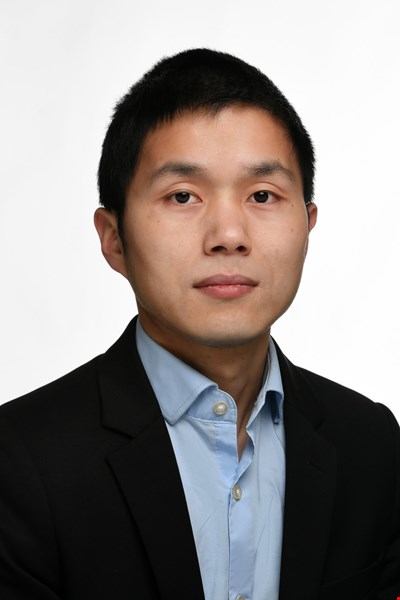
Dr. Shaoqing Hu is a Lecturer in Electronic and Electrical Engineering at Brunel University of London's College of Engineering, Design and Physical Sciences, and serves as an Adjunct Professor at Hangzhou Dianzi University. He holds a PhD from Queen Mary University of London (2020), with prior degrees from University of Electronic Science and Technology of China. His academic roles include Departmental Level 4 Coordinator, Brunel University London Pathway College liaison tutor, and external reviewer. His educational background includes: B.Eng in Vacuum Electronics (UESTC, 2013) M.Eng in Physical Electronics (UESTC, 2016) PhD in Electronic Engineering (QMUL, 2020) Dr. Hu's research centers on millimeter wave/THz security detection, sparse imaging, antennas, and wireless communication. His work bridges theoretical signal processing with practical security applications, particularly in personnel screening and target detection systems. Current projects focus on MIMO mmWave 3D imaging for future screening systems and advanced millimeter-wave imaging with sparse arrays. His group develops specialized hardware including 220 GHz imaging systems and multi-band antennas. Analysis of his recent publications reveals strong emphasis on sparse array configurations (MIMO planar/sparse arrays), algorithmic innovations (back-projection, low-rank matrix recovery), and emerging applications in security screening (2025 Signal Processing Magazine overview). The research spans THz to microwave frequencies with increasing integration of deep learning techniques since 2022. His scientific recognition includes: Fellow of the Higher Education Academy (2024) First Prize Best Student Paper Award (UCMMT 2020) Student Paper Award (IEEE AP CAP 2015) VinFuture Prize Official Nominator (2023) Dr. Hu actively supports early-career researchers through supervision of PhD students (including Shiwei Hu and Wenyi Yan) and MSc candidates. He has secured multiple research grants including Brunel Research Initiative and Enterprise Fund (BRIEF 2022-23), Brunel Research Development Fund, and NSFC collaboration grants. He serves as referee for major awards like UK Doctoral Researcher Award and supports fellowship applications including RAEng and Marie Curie schemes. His laboratory specializes in mm-wave/THz sparse imaging systems, featuring a 1.5m x 1.5m planar scanning setup and 220 GHz MIMO imaging capabilities. The team develops specialized antennas including GNSS arrays, dual-polarized horns, and quasi-Yagi structures for applications ranging from security screening to health sensing.