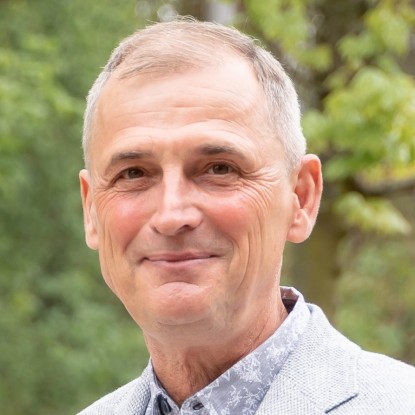
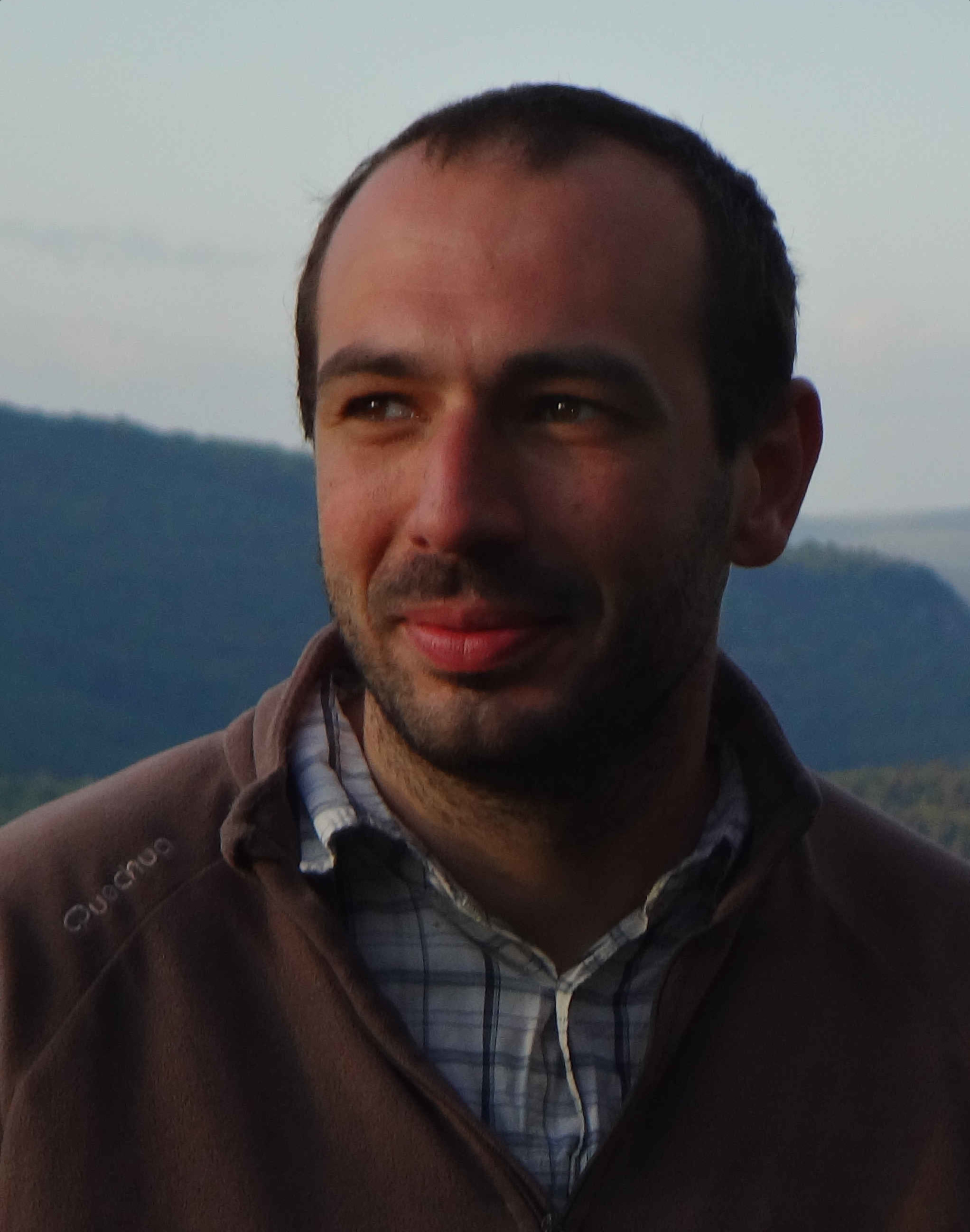
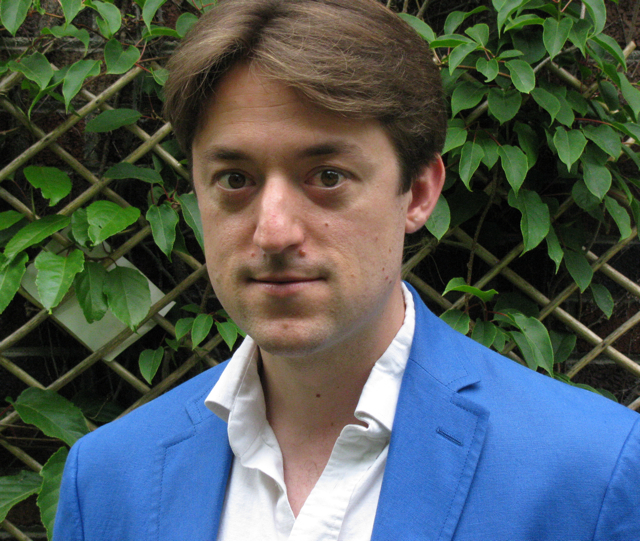
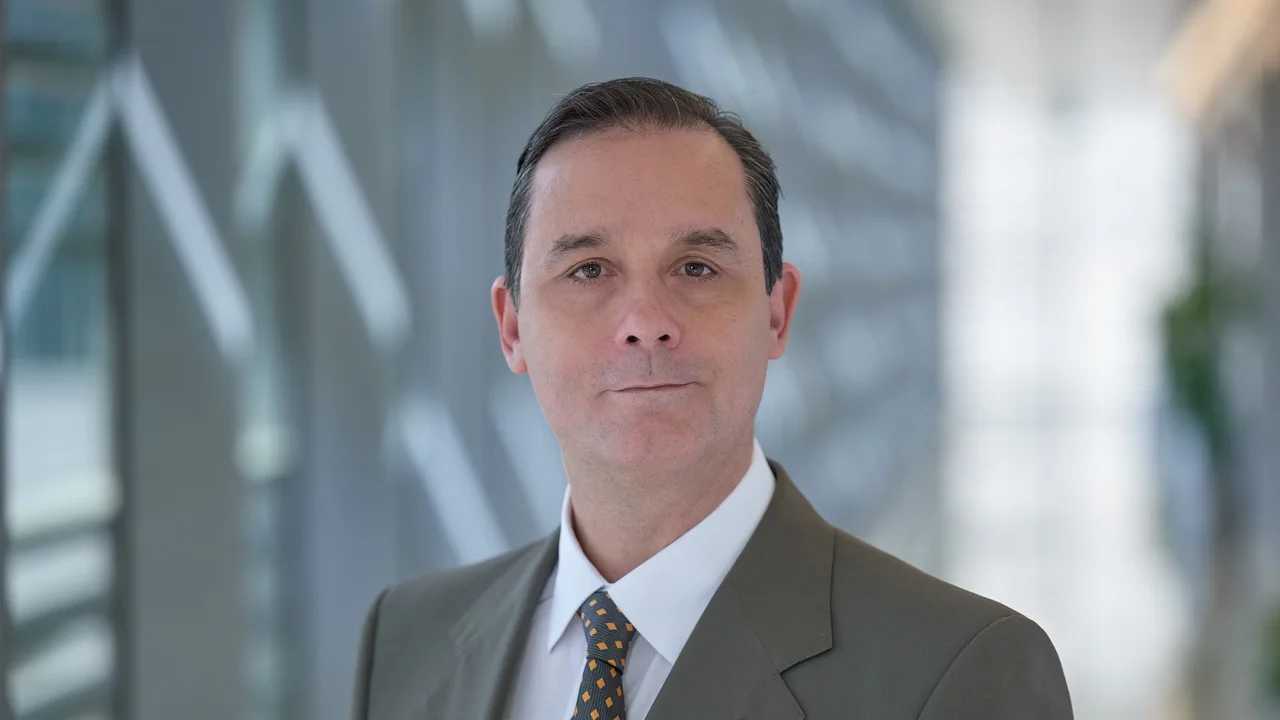
Prof. Dr. Jens Lang is a Professor at the Numerical Analysis Group within the Department of Mathematics at Technische Universität Darmstadt . His work focuses on adaptive numerical methods for partial differential equations (PDEs), particularly in computational fluid dynamics, uncertainty quantification, and optimal control.
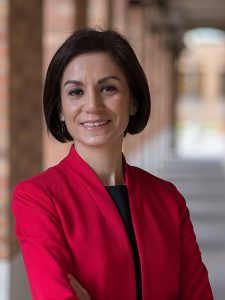
Mirjam Dür is a Full Professor (W3) at the Department of Discrete Mathematics, Optimization and Operations Research within the Faculty of Mathematics, Natural Sciences and Technology at the University of Augsburg (since 2017). Previously, she held Full Professor positions at the University of Trier (2011-2017) and other academic roles in Groningen, Darmstadt, and Vienna. Her research focuses on mathematical optimization, particularly copositive programming, quadratic optimization, matrix theory, and conic optimization. Born in Vienna, Austria M.Sc. in Mathematics (1996) and PhD in Applied Mathematics (1999) from University of Trier Positive Habilitation evaluation at TU Darmstadt (2005) Research Interests : Global optimization, quadratic and combinatorial optimization, conic optimization and matrix theory, copositive programming, and applications to graph theory and discrete problems. She has pioneered methods like factorization-based approaches for completely positive matrices and cutting plane techniques in copositive programming. Scientific Awards : 2013 Optimization Letters Best Paper Award 2010 VICI Grant (NWO) 2012 GIF Research Grant (German-Israeli Foundation) Key Contributions : Development of algorithms for copositive optimization, theoretical advances in matrix cones, and novel applications to problems like graph stability and discrete optimization. She serves as Senior Editor for Optimization Methods and Software and editorial board member for multiple optimization journals.
Maryam Fazel is the Moorthy Family Inspiration Career Development Professor and Associate Professor of Electrical Engineering at the University of Washington, with adjunct appointments in Computer Science, Mathematics, and Statistics. She earned her PhD and MS in Electrical Engineering from Stanford University and a BS from Sharif University of Technology in Iran, followed by a postdoctoral fellowship at Caltech. Research Focus: Mathematical optimization, machine learning, control theory, and data science applications. Her work bridges convex optimization, reinforcement learning, and low-rank matrix methods. Honors: NSF CAREER Award (2009), UWEE Outstanding Teaching Award (2009), UAI Best Student Paper Award (2014), ScienceWatch Fast Breaking Paper (2011), and the Moorthy Family Professorship (2020). Leadership: Director of the Institute for Foundations of Data Science (IFDS), a multi-university NSF TRIPODS Phase II institute. Former co-director of Algorithmic Foundations of Data Science Institute (ADSI), Phase I. Students: Mentored award-winning advisees including Zhihan Xiong (Meta AI Fellowship), Avinandan Bose (Meta AI Fellowship), and K. Dvijotham (UAI Best Student Paper). Former group alumni include Brian Hutchinson (Full Professor at Western Washington University) and Ting Kei Pong (Full Professor at Hong Kong Polytechnic University). Publications: Recent work spans optimization in machine learning, control theory for nonlinear systems, and submodular maximization. Key themes include policy optimization, robustness in AI, and low-rank modeling. She serves on editorial boards for the Journal of Machine Learning Research (JMLR) and the MOS-SIAM Book Series on Optimization, and co-organizes cross-campus seminars like the Distinguished Seminars in Optimization and Data. Her TRIPODS+X grants (2018) focus on neuro/geoscience applications via hack weeks, while her DARPA Lagrange grant (2018) explores control of uncertain dynamical systems.
Nicolas Verzelen is a Senior Research Scientist at the MISTEA Laboratory within INRAE , affiliated with Université de Montpellier . His work bridges Statistics and Machine Learning , focusing on agroecological applications. Roles: Associate Editor for Annals of Statistics, Bernoulli, and Electronic Journal of Statistics; Editor-in-Chief for ESAIM: P&S Supervision: Mentoring 5 PhD/post-doc researchers; alumni include current professors at ENSAI, Centrale Supélec, and Telecom-Paris Research Interests: High-dimensional minimax theory, active learning, unsupervised learning (clustering, ranking), and applications to seed exchange networks and agroecology. His work addresses computational-statistical trade-offs in modern data science. Publication Trends: Recent outputs emphasize clustering algorithms, covariance adaptation, latent space modeling, community detection, and active learning frameworks. Collaborations span institutions like Université Paris-Saclay and Telecom-Paris. Teaching: Instructs Statistical Machine Learning (M2) at Université de Montpellier.
Seth Pettie is a faculty member in the Department of Electrical Engineering and Computer Science (EECS) at the University of Michigan. His research focuses on algorithms, graph theory, distributed computing, and data structures, with significant contributions to problems like minimum spanning trees, Davenport-Schinzel sequences, and energy complexity in radio networks. Research Interests : Algorithms, graph theory, distributed systems, combinatorics, and computational complexity. Students : Mentored numerous PhD students and postdocs, including Dingyu Wang, Shang-En Huang, and Yi-Jun Chang, some of whom have won prestigious awards like the Principles of Distributed Computing Doctoral Dissertation Award. Scientific Contributions : Authored over 15 recent articles (2021–2025) on topics spanning connectivity labeling, fraud detection, extremal combinatorics, and energy-efficient distributed algorithms. His work often bridges theoretical insights with practical applications in databases and network optimization. Awards : Recipient of the Outstanding Dissertation Award (2004) and Best Student Paper Award at ICALP 2002. His students have also received recognition for their work. Professional Service : Organized workshops (e.g., Dagstuhl, Bertinoro) and served on steering/editorial/program committees for major conferences like SODA, STOC, and PODC.
Zachary DeBruine serves as an Assistant Professor in the Department of Computer Science at Grand Valley State University's College of Computing. He holds a Ph.D. in Bioinformatics and Biochemistry from Van Andel Institute (2020) and a B.S. in Biochemistry and Molecular Biology. Dr. DeBruine's research focuses on the intersection of machine learning and genomics, specializing in building multimodal machine learning models, developing foundation models for genomics data, and creating large language model (LLM) solutions that interpret complex genomic information through natural language. His work bridges computational techniques with biological applications, particularly in single-cell analysis and genomic data interpretation. His recent publications and GitHub repositories demonstrate expertise in non-negative matrix factorization (NMF), sparse matrix algorithms, and multimodal variational autoencoders. These works primarily employ C++ and Python for high-performance computing applications in bioinformatics. GVSU Distinguished Early-Career Scholar Award Graduate Student Association's Outstanding Graduate Teaching Award Dr. DeBruine leads a vibrant research lab with over ten undergraduate and graduate students working on multiple funded projects. He actively mentors students through product development, manuscript writing, and real-world problem solving. He serves on GVSU's University R&D Committee and is an active member of both the Human Cell Atlas Network and the Chan Zuckerberg Initiative Network. He founded and serves as CEO of Herd Social, a company building social networking solutions for the rare disease community, demonstrating his commitment to applying computational approaches to real-world healthcare challenges.
Semih Kurt is a researcher at KTH Royal Institute of Technology, affiliated with the School of Electrical Engineering and Computer Science (EECS) and the Department of Computer Science's Computational Science and Technology (CST) division. He is also associated with Science for Life Laboratory (SciLifeLab), contributing to Sweden's national molecular biosciences infrastructure through computational genomics research. Education: PhD in Computer Science, KTH Royal Institute of Technology, 2024. Dissertation: "Methods for rapid phylogenetic inference and copy number variation detection from transcriptomics data". Research Interests: Kurt specializes in bioinformatics and computational biology , developing machine learning frameworks for genomic data analysis. His work addresses critical challenges in copy number variation (CNV) inference , phylogenetic reconstruction , and intratumoral heterogeneity using single-cell and spatial transcriptomics. By leveraging variational autoencoders and scalable algorithms , he creates tools that decode cancer progression mechanisms and evolutionary relationships with unprecedented resolution. Publication Trends: Kurt's 2022-2024 publications reveal a strategic focus on accelerating genomic analysis through algorithmic innovation. His CopyVAE and decoST frameworks demonstrate deep learning's power in CNV detection without prior biological knowledge, while Sparse Neighbor Joining reduces phylogenetic computation from quadratic to near-linear complexity. This trajectory shows consistent advancement in computational efficiency and biological interpretability , bridging computer science with cancer genomics and evolutionary biology. Scientific Awards: No scientific awards were mentioned in the provided text. Advising and Grants: The available documentation does not specify student supervision or research funding details. His collaborative work with Jens Lagergren (supervisor) and international co-authors suggests active participation in funded research consortia, though specific grants remain unreported. Labs and Teams: Kurt operates within KTH's Computational Science and Technology (CST) division, which develops computational methods for scientific challenges. His SciLifeLab affiliation connects him to Sweden's premier molecular biosciences hub, facilitating access to high-throughput sequencing facilities and cross-institutional cancer genomics initiatives.
Karl Meerbergen is a Full Professor in the Department of Computer Science at KU Leuven, Faculty of Engineering Sciences. He leads research in numerical analysis and applied mathematics with a focus on eigenvalue problems, model order reduction, and computational linear algebra. He is a member of the Numerical Analysis and Applied Mathematics (NUMA) research unit and holds affiliations with multiple KU Leuven institutes including iSi Health, Leuven.AI, Leuven.AM, and the LGI Gravitation Institute. His research spans several key areas of numerical mathematics with emphasis on algebraic eigenvalue problems, algebraic model order reduction, preconditioning techniques, computational acoustics, tensor computations, exascale computing, generic programming, and parallel computing. His work bridges theoretical numerical analysis with practical applications in engineering and scientific computing. Analysis of his recent publications shows a strong focus on advanced numerical methods for eigenvalue problems, model order reduction techniques, and parallel computing approaches. His work frequently addresses challenges in large-scale scientific computing, with applications in structural dynamics, acoustics, and optimization problems. The research demonstrates increasing sophistication in handling nonlinear and parametric systems through rational approximation methods and specialized preconditioning techniques. Dr. Meerbergen actively contributes to the academic community through his teaching responsibilities and supervision of graduate students. His work has significant implications for computational science and engineering applications requiring efficient numerical solutions to complex mathematical problems.
Mostafa Kaveh is a Professor in the Department of Electrical and Computer Engineering at the University of Minnesota, College of Science and Engineering. His research spans statistical signal processing, wireless communications, image processing, and biomedical ultrasound imaging. He has held leadership roles including Department Head (1990-2005), Associate Dean for Research and Planning (2005-2018), and Dean of the College of Science and Engineering (2018-2022). His academic credentials include a B.S. and Ph.D. from Purdue University (1969, 1974) and an M.S. from UC Berkeley (1970). Kaveh’s research focuses on: Statistical signal processing for antenna arrays and mobile localization Wireless communication systems with multiple antennas and collaborative transmission Image restoration algorithms based on partial differential equations Medical image processing for tomography and reconstruction Signal processing applications in genomics and biotechnology Google Scholar publications highlight trends in array signal processing, direction-of-arrival estimation, wireless channel modeling, and medical imaging techniques. His work has influenced GRAPPA algorithms for MRI, space-time interference-canceling receivers, and genomic data analysis.
Professor Raul Tempone is a distinguished faculty member at King Abdullah University of Science and Technology (KAUST), holding the position of Professor in the Department of Applied Mathematics and Computational Science within the Computer, Electrical and Mathematical Sciences and Engineering division. He serves as Principal Investigator of the Stochastic Numerics Research Group and has made significant contributions to numerical analysis and uncertainty quantification, aligning with KAUST's mission and Saudi Arabia's Vision 2030 goals through advancements in computational science that drive technological innovation and sustainability. Professor Tempone's academic foundation includes: Ph.D. in Numerical Analysis from the Royal Institute of Technology (KTH), Sweden (2002) M.S. in Engineering Mathematics from Universidad de la República, Uruguay (1999) B.S. in Industrial and Mechanical Engineering from Universidad de la República, Uruguay (1995) Professor Tempone's research focuses on the mathematical foundations of computational science and engineering, with particular emphasis on uncertainty quantification, stochastic differential equations, and numerical methods. His work bridges theoretical mathematics with practical applications across multiple domains including computational mechanics, quantitative finance, biological and chemical modeling, and wireless communications. He has pioneered advancements in adaptive algorithms, Bayesian inverse problems, and scientific machine learning, driving innovation in computational efficiency and accuracy for solving complex real-world problems. His recent publications demonstrate a strong trend toward integrating uncertainty quantification with machine learning approaches and addressing complex optimization problems under uncertainty. The research spans diverse applications from wireless network performance analysis to medical imaging and sustainable energy systems, reflecting his commitment to solving real-world challenges through advanced computational methods that combine theoretical rigor with practical applicability. Professor Tempone's scientific achievements have been recognized through numerous prestigious awards: Alexander von Humboldt professorship (2018-2025) ISI Highly Cited Researcher (2016) Elected Program Director of the SIAM Uncertainty Quantification Activity Group (2013-2014) Fellow of the Deutsche Forschungsgemeinschaft Priority Program (2014) First Dahlquist Fellowship at the Royal Institute of Technology, Sweden (2007-2008) As an academic advisor, Professor Tempone has successfully supervised ten PhD students to completion. His research has attracted significant funding, including the Alexander von Humboldt professorship grant worth up to 5 million euros. He has directed the KAUST Strategic Research Initiative in Uncertainty Quantification (2012-2016) and collaborated extensively with industry partners including Saudi Aramco. His research group has placed numerous members in academic positions worldwide and in leading companies such as Bain & Company, Baker Hughes, Enel Group, G-Research, Honeywell, McKinsey & Company, and Saudi Aramco. Professor Tempone leads the Stochastic Numerics Research Group at KAUST, which focuses on developing and analyzing numerical methods for stochastic and deterministic problems. The group's work encompasses a posteriori error approximation, data assimilation, hierarchical and sparse approximation, optimal control, and optimal experimental design. Through strategic collaborations and interdisciplinary approaches, the research group continues to push the boundaries of computational science and its applications to real-world challenges across engineering, finance, biology, and energy sectors.
Nicholas F. Marshall is an Assistant Professor in the Department of Mathematics at Oregon State University's College of Science. His academic journey includes a Ph.D. in Applied Mathematics from Yale University (2019) and a B.S. in Mathematics from Clarkson University (2014), with additional research experience at Princeton University as an NSF Postdoc. Ph.D. in Applied Mathematics, Yale University, 2019 B.S. in Mathematics, Clarkson University, 2014 His research focuses on the interplay between analysis, geometry, and probability, particularly as applied to data science challenges. Current investigations include harmonic analysis on geometric domains, randomized algorithms for linear systems, and mathematical frameworks for cryo-electron microscopy. His work bridges pure mathematical theory with computational applications in imaging and machine learning. Analysis of his recent publications reveals strong trends in computational harmonic analysis, with significant contributions to fast algorithms for spherical and disk harmonics, randomized linear solvers with momentum acceleration, and geometric approaches to hyperdimensional computing. His work consistently connects abstract mathematical concepts to practical computational problems in imaging and data science. Dr. Marshall actively mentors graduate students including Wyatt Whiting, Peter Cowal, and Heather Fogarty, and has supervised notable undergraduate research projects leading to publications in SIAM journals. His current teaching portfolio includes advanced courses in probability theory, numerical linear algebra, and data science mathematics. He maintains active research collaborations with institutions including Princeton University and Yale, focusing on applications in cryo-EM imaging and computational geometry. Personal interests include skiing (learned in Vermont) and kayaking along the Oregon Coast.
Robert Krauthgamer is the Harry Weinrebe Professor of Computer Science and currently serves as Department Head in the Department of Computer Science & Applied Mathematics at the Weizmann Institute of Science , within the Faculty of Mathematics and Computer Science . He is a leading researcher in theoretical computer science, particularly in the analysis of algorithms. Research Interests: His research focuses on Analysis of Algorithms , with deep expertise in Data Analysis and Massive Data Sets , Combinatorial Optimization , Approximation Algorithms , Hardness of Approximation , Embeddings of Finite Metrics , and Routing and Peer to Peer Networks . He also maintains a broad interest in Discrete Mathematics and High-Dimensional Geometry . His recent publications highlight work in graph algorithms, parameterized complexity, streaming algorithms, and metric embeddings. Publication Trends: His most recent work, including papers from SODA 2016, demonstrates a strong trend in the design and analysis of efficient algorithms for fundamental problems in graph theory, optimization, and data streams. Key themes include kernelization and sampling techniques for dynamic graph streams, subexponential parameterized algorithms, deterministic derandomization of the polynomial method, and structural results for graph modification problems. His research often bridges theoretical insights with applications in computational biology and network science. Service and Recognition: Journal Editorial: Editor-in-Chief of SIAM Journal on Computing (2019–2025), Associate Editor (2012–2017); Managing Editor of Theory of Computing (2007–2018), and current Editorial Board Member. Conference Leadership: Program Committee Chair for SODA 2016 and HALG 2018; Steering Committee member for SODA, ESA, and HALG; and committee member for the Gödel Prize (2019–2021). Workshops: Organizer of numerous workshops on sublinear algorithms, fine-grained complexity, and high-dimensional data. Teaching and Mentorship: He regularly teaches advanced courses such as Randomized Algorithms and Sublinear Time and Space Algorithms . He advises a large group of MSc and PhD students and hosts postdoctoral researchers, demonstrating a strong commitment to training the next generation of computer scientists. His former students have gone on to successful academic and research careers. Laboratories and Research Groups: He is a key member of the Foundations of Computer Science (theory) seminar at Weizmann and has organized the TheoryLunch and Reading Group in Algorithms, fostering a vibrant research community within the department.
Vipin Kumar is a Regents Professor and William Norris Endowed Chair holder at the University of Minnesota's Department of Computer Science and Engineering , where he has been a pivotal figure since earning his PhD from the University of Maryland in 1982. His career spans leadership roles as department head (2005-2015) and director of the Army High-Performance Computing Research Center (1998-2005). Education : BE (IIT Roorkee, 1977), ME (Philips International Institute, 1979), PhD (University of Maryland, 1982) Kumar's research bridges data mining and high-performance computing , with transformative applications in climate science and biomedical domains. He pioneered the isoefficiency metric for parallel algorithm scalability and developed foundational software like METIS and PSPASES for graph partitioning and sparse matrix operations. His work includes 300+ publications and co-authorship of globally adopted textbooks ( Introduction to Parallel Computing , Introduction to Data Mining ). The NSF Expeditions in Computing program funded his $10 million, five-year project on climate change analysis, showcasing his ability to lead large-scale computational initiatives. Awards : 2025 Taylor L. Booth Education Award 2016 Sidney Fernbach Award 2005 Technical Achievement Award Kumar's contributions extend beyond research to exceptional mentoring and educational leadership , evidenced by his ACM SIGKDD 2012 Innovation Award and the widespread adoption of his textbooks across institutions. His development of scalable algorithms continues to shape computational science methodologies.
George Linderman is an Assistant Professor in the Department of Applied Mathematics at Yale University's College of Arts and Sciences. He completed his MD-PhD training at Yale, where he focused on high-dimensional data analysis. Currently, he is a General Surgery Resident at Massachusetts General Hospital, applying his computational expertise to clinical training. University: Yale University Current Role: General Surgery Resident at Massachusetts General Hospital Email: george.linderman@yale.edu, glinderman@mgh.harvard.edu His research spans computational methods for data analysis, including t-SNE acceleration, low-rank matrix approximation, and concentration inequalities. He has developed software packages like FIt-SNE and ALRA , which are widely used in scRNA-seq data visualization and imputation. The articles listed reflect his contributions to machine learning, computational biology, and clinical research. Notably, his work on t-SNE initialization and scRNA-seq dimensionality reduction has advanced data visualization techniques, while clinical studies on REBOA and laparoscopic surgery highlight his interdisciplinary impact. He has mentored students through Yale's Directed Reading Program for High Dimensional Probability and served as a Teaching Fellow for Linear Algebra. His academic journey combines rigorous theoretical work with practical applications in both computational biology and surgery.
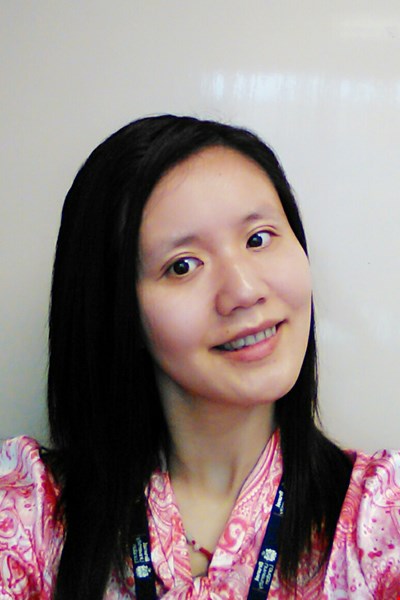
Dr. Lu Gan is a Senior Lecturer in the Department of Electronic and Computer Engineering at Brunel University London, within the College of Engineering, Design, and Physical Sciences. She earned her B.Eng and M.Eng in Electronic and Information Engineering from Southeast University, China, in 1998 and 2000, followed by a Ph.D. in Information Engineering from Nanyang Technological University, Singapore, in 2004. Before joining Brunel in 2008, she held faculty positions at the University of Newcastle, Australia (2004-2006) and the University of Liverpool, UK (2006-2007). Her research spans fundamental signal processing theories, machine learning, and applications in image/video coding, non-destructive terahertz/ultrasound imaging, wireless communications, and sparse antenna arrays. Education: B.Eng (Electronic and Information Engineering), Southeast University, China (1998) M.Eng (Electronic and Information Engineering), Southeast University, China (2000) Ph.D (Information Engineering), Nanyang Technological University, Singapore (2004) Her research focuses on structured sparse signal processing for infrared/terahertz systems, super-resolution in non-destructive imaging, deep learning for terahertz data, non-orthogonal pilot design for 5G systems, and separation of singing voice from music. She has secured funding from EPSRC, Innovate UK, BBSRC, UK Atomic Energy Authority, and TWI. She actively contributes to academic service as an Associate Editor for IEEE Signal Processing Letters, IEEE Transactions on Circuits and Systems-I, and as a Meta Reviewer for ICASSP 2025. Her work has been recognized with a Best Paper Award from the Journal of The British Blockchain Association in 2022 and a Gold Medal at the IEEE Audio and Acoustic Signal Processing Challenge (DCASE) in 2022. Dr. Gan also serves as a reviewer for top journals like IEEE Transactions on Information Theory and IEEE Transactions on Signal Processing, and participates in grant panels for the Royal Society and EPSRC. Recent publications emphasize cross-domain speech enhancement architectures, terahertz data reconstruction via spatio-temporal dictionary learning, and coprime array designs using Chinese remaindering over quadratic fields. Her work bridges compressive sensing, lattice structures, and practical applications in healthcare and communication systems. She is a Senior Member of IEEE, Fellow of the Higher Education Academy (UK), and actively contributes to departmental leadership as Course Director for MSc Wireless Communication Systems, Level 3 Coordinator, and Social Media Administrator.