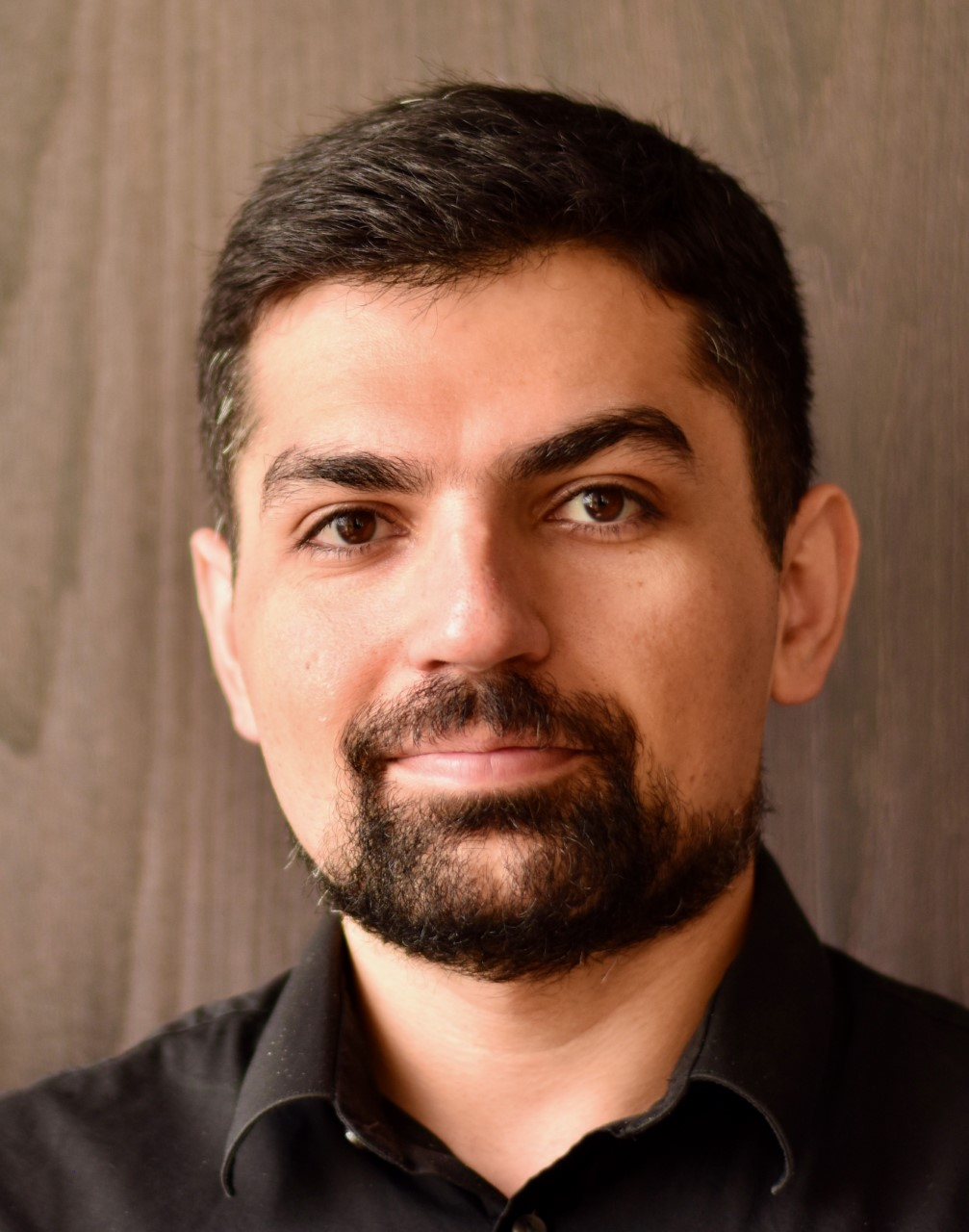
Georgios Goumas is an Associate Professor in the Division of Computer Science at the School of Electrical and Computer Engineering, National Technical University of Athens. His research focuses on high-performance computing, parallel systems, and efficient resource management for modern computing platforms. Research domains: Serverless computing scalability and memory management Quantum algorithm design for classification Virtual memory optimization Hardware acceleration for sparse computations NUMA-aware concurrent data structures Recent innovations include DaeMon for disaggregated systems, eBPF-based Linux memory management, and multi-GPU matrix multiplication optimizations. Publications demonstrate consistent advancement in low-level system efficiency across quantum, serverless, and heterogeneous computing domains. Dr. Goumas teaches undergraduate and graduate courses on Operating Systems, Parallel Processing, and Code Optimization Techniques. His lab develops open-source tools like Paralia runtime for auto-tuning linear algebra and FPGA-based accelerators for scientific computing.
Professor Dionisios Pnevmatikatos holds the position of Professor at the School of Electrical and Computer Engineering, National Technical University of Athens (NTUA), where he leads research in Computer Architecture and Reconfigurable Computing. He previously served as a Professor at the Technical University of Crete (TUC) from 2000 to 2019, directing the Microprocessor and Hardware Laboratory (MHL) and chairing the department. His academic journey includes a B.Sc. from the University of Crete (1989), M.Sc. and Ph.D. from the University of Wisconsin-Madison (1991 and 1995). Research Interests: Focuses on Computer Architecture, Reconfigurable Computing, Application Acceleration, Custom Architectures, and Hardware Acceleration of Bioinformatics Algorithms. His work spans FPGA-based systems, parallel computing, and energy-efficient designs. Key Projects: Coordinator of FASTER (EU FP7), Principal Investigator in DeSyRe, AXIOM, dRedBox, and EDRAH2020 projects. Active in EU initiatives like H2020 OPTIMA and Vitamin-V for RISC-V ecosystems. Leadership roles in conferences include SAMOS 2018 and FPL 2011 program chairs. Teaching: Courses include Computer Architecture, Digital Systems Design, and Parallel Processing Systems at NTUA. Former roles include teaching at University of Crete and TUC. Labs: Affiliated with Computing Systems Laboratory (CSLab) at NTUA and FORTH-ICS since 1997. Involved in prototyping manycore architectures and network processors.
Abdeldjalil Aissa El Bey is a Professor in the Department of Mathematical and Electrical Engineering at IMT Atlantique, Brest campus, with a focus on signal processing and wireless communications. He received his PhD from ENST Paris (2007) and has held visiting researcher positions at Fujitsu Laboratories (Japan) and University of Melbourne (Australia). PhD in Signal and Image Processing (ENST Paris, 2007) MS in Signal Processing (Supelec & Paris XI, 2004) State Engineering Degree (Ecole Nationale Polytechnique, Algiers, 2003)
Dr. Victor Y. Pan is a Distinguished Professor of Mathematics and Computer Science at Lehman College, The City University of New York (CUNY). He has been affiliated with Lehman College since 1988 and holds one of the highest academic ranks reserved for influential scholars. His research focuses on numerical and algebraic algorithms, with a particular emphasis on polynomial computations, matrix structures, and root-finding methods. Dr. Pan's work bridges numerical and symbolic computing, aiming to optimize computational efficiency while ensuring accuracy. Educational Background: Ph.D. in Mathematics from Moscow University Research experience at the Soviet Academy of Science Research Interests: His key areas include polynomial root-finding, matrix eigenproblems, structured matrices (e.g., Toeplitz, Hankel, and Cauchy), and low-rank approximation. He has pioneered methods combining numerical and algebraic techniques to enhance computational speed and precision. Recent work emphasizes algorithms for sparse polynomials, superfast root-finders, and efficient matrix computations. Publications & Impact: With over 200 peer-reviewed papers and three books, Dr. Pan’s research has influenced global computational mathematics. His articles address topics like fast root-finding, matrix eigenvalue problems, and low-rank approximation at sub-linear cost. His work is widely cited in computer science and applied mathematics. Awards & Recognition: Appointment as Distinguished Professor (CUNY, 2000) Global recognition as a leader in theoretical computer science and numerical analysis Advising & Grants: Recipient of continuous NSF funding for over 20 years. He has mentored 17 Ph.D. students through his seminar program, focusing on algebraic and numerical computing. His seminar fosters collaborative research in topics like polynomial equations, coding theory, and eigen-solving techniques. Labs & Teams: Leads the Algebraic Numerical Computing Seminar at CUNY’s Graduate Center, integrating Computer Science and Mathematics students. The seminar explores cutting-edge topics such as displacement-structured matrices, polynomial root-finding, and eigen-solving algorithms.
David Bader is the Distinguished Professor of Data Science at New Jersey Institute of Technology (NJIT). He is a leading expert in high-performance computing, parallel algorithms, and large-scale graph analytics. His work focuses on developing scalable frameworks for big data problems, including graph processing, anomaly detection, and quantum computing methods. He has held continuous federal grants since 2000, with recent projects involving cyber-infrastructure for community detection, streaming data science frameworks, and gravitational wave research. Bader leads the development of open-source tools like Arachne and Arkouda, which are widely used for large-scale graph analytics. His research interests span parallel algorithms, graph theory, and high-performance computing applications. Notable contributions include the GraphBLAS initiative and the Einstein Toolkit. Bader was inducted into the Hall of Fame in 2025 for pioneering modern supercomputing innovations.
Thomas D. Howell is a Lecturer in the Department of Computer Science at San José State University, where he has taught since 2002. He holds a Ph.D. in Computer Science from Cornell University (1976) and a BS in Mathematics from the California Institute of Technology (1973). His career spans over 30 years in academia and industry, including roles as a Research Staff Member at IBM Research (1977–1990) and Vice President of Research at Quantum Corporation (1990–2000). He specializes in magnetic recording systems, signal processing for storage media, and data detection algorithms. Educations: Ph.D. in Computer Science, Cornell University, 1976 M.Sc. in Computer Science, Cornell University, 1975 B.Sc. in Mathematics, California Institute of Technology, 1973 His research interests focus on advancing magnetic recording technologies, including error correction, channel design, and high-density storage systems. He has contributed to the development of MR and GMR heads and digital channel technologies. His work often intersects electrical engineering and applied mathematics, addressing challenges in signal integrity and data reliability. Publications span foundational topics like tensor rank analysis, sparse matrix computations, and modern storage system optimization. Recent work emphasizes statistical modeling of recording codes and error rate performance in gigabit-scale systems. Awards: IEEE Fellow (2008) Editor of IEEE Transactions on Magnetics (1997–2000) Chair of Magnetic Recording Conference (2000) He has advised no listed students but has mentored teams in industrial R&D environments. His professional service includes roles on the board of the National Storage Industry Consortium and multiple university advisory councils. Active in industry collaborations, he holds patents on coding techniques and error correction methods critical to modern storage systems. His research is conducted through affiliations with IBM Research, Quantum Corporation, and San José State’s College of Engineering laboratories.
Yafong Song is a Professor in General Education at Savannah College of Art and Design, holding a Ph.D. in Mathematics from Washington State University. Her research in applied mathematics includes wave propagation modeling and computational algorithms. She received Best Paper awards from ASME and CIE conferences for contributions to engineering mathematics.
Barbara Elizabeth Engelhardt is a Professor (Research) of Biomedical Data Science at Stanford University's School of Medicine, with courtesy appointments in Statistics and Computer Science. She is also a Senior Investigator at Gladstone Institutes since 2021. Her academic journey includes Assistant Professor at Duke University (2011-2014) and progressive faculty positions at Princeton University in Computer Science (2014-2022), culminating in a Full Professorship before joining Stanford. Dr. Engelhardt received her B.S. and M.S. in Symbolic Systems and Computer Science from Stanford University, followed by a PhD from UC Berkeley in EECS under Prof. Michael I Jordan. She completed postdoctoral training with Prof. Matthew Stephens at the University of Chicago. Her professional experience extends to industry roles at Jet Propulsion Labs, Google Research, 23andMe, and Genomics plc. Her research focuses on developing and applying models for structured biomedical data to capture patterns, predict intervention results, assist decision-making, and prioritize experiments for biological system design. Key areas include spatial genomics, Gaussian processes, single-cell RNA sequencing analysis, and computational methods for biomedical applications. Her work bridges statistics, machine learning, and biomedical research to address complex challenges in understanding biological systems. Dr. Engelhardt's publications reveal a strong emphasis on developing novel statistical and machine learning methods for biomedical data analysis, particularly in spatial genomics, single-cell sequencing, and clinical applications. Her recent work shows increasing focus on translational applications in healthcare, including critical care decision support and patient trajectory modeling. NSF GRFP Google Anita Borg Scholarship SMBE Walter M. Fitch Prize (2004) Sloan Faculty Fellowship NSF CAREER ISCB Overton Prize (2021) International Society for Computational Biology Fellow (March, 2024) As an advisor, Dr. Engelhardt mentors numerous doctoral students across multiple institutions, serving as Dissertation Reader, Advisor, and Co-Advisor. She has secured significant research funding through prestigious awards like the NSF CAREER. Her lab focuses on developing computational methods that address fundamental challenges in biomedical data science, with particular emphasis on spatially resolved genomic data and clinical applications of machine learning. Dr. Engelhardt leads research teams working at the intersection of statistics, machine learning, and biomedical applications, with ongoing projects in spatial genomics, single-cell analysis, and clinical decision support systems. Her group develops open-source software tools to make their methodologies accessible to the broader research community.
Virginia Vassilevska Williams is Professor of Computer Science and Artificial Intelligence + Decision-making at MIT EECS. Her research focuses on theoretical computer science with emphasis on algorithms, computational complexity, and graph theory. She has made significant contributions to matrix multiplication complexity and fine-grained hardness results. Recent publications explore fundamental problems in graph algorithms including cycle detection, shortest paths, and clique enumeration. Her work demonstrates consistent advancement in understanding computational limits for graph problems and matrix operations. Key research themes include: Breaking barriers in matrix multiplication exponents Establishing hardness thresholds for approximation algorithms Developing efficient graph traversal methods for sparse structures Her 2024 publications continue this trajectory with refinements to the laser method for matrix multiplication and improved clique listing techniques. The research consistently pushes boundaries in algorithm optimality proofs and computational complexity theory.
Dr. Sheehan Olver is an Associate Professor in Applied Mathematics and Mathematical Physics at the Department of Mathematics, Imperial College London. He holds affiliations in Applied Mathematics and Mathematical Physics, Applied and Numerical Analysis, and Mathematics research and teaching staff. His research focuses on numerical analysis, computational methods, and spectral methods for differential equations, singular integral equations, and Riemann–Hilbert problems, with applications in integrable systems and random matrices. Education: PhD in Applied Mathematics from the University of Cambridge (2008). Smith-Knight/Rayleigh-Knight Prize Winner (2006). Research Interests: Spectral methods, orthogonal polynomials, fractional differential equations, representation theory applications, and numerical solutions of integrable systems. His work emphasizes efficient, sparse numerical techniques for solving complex mathematical problems across domains like fluid dynamics and quantum mechanics. Labs/Teams: Active in software development for computational mathematics, including packages like ApproxFun.jl and RHPackage . Collaborates widely with institutions such as the University of Oxford, Cornell University, and the University of Sydney. Grants/Awards: While no specific awards are listed, his extensive publication record and software contributions reflect sustained recognition in computational mathematics.
Michael Kapralov is an Associate Professor in the School of Computer and Communication Sciences at École Polytechnique Fédérale de Lausanne (EPFL) , where he leads research at the Theory Group . His work spans multiple departments including the Laboratory of Theory of Computation 4 and the Doctoral Program in Computer Science and Communications . Kapralov's research focuses on theoretical computer science , particularly sublinear algorithms for big data analysis , with applications in streaming , sketching , sparse recovery , and Fourier sampling . University: EPFL School: School of Computer and Communication Sciences Department: Theory Group Academic Rank: Associate Professor Education: Kapralov earned his Ph.D. in Computer Science from Stanford iCME under the supervision of Ashish Goel . He subsequently held postdoctoral positions at the Mit CSAIL Theory of Computation Group with Piotr Indyk and as a Herman Goldstine Postdoctoral Fellow at IBM T. J. Watson Research Center . Ph.D.: Stanford iCME (2012), advisor: Ashish Goel Postdoctoral: MIT CSAIL (2012-2014), IBM Watson (2014) Research Interests: Kapralov's work addresses fundamental challenges in processing large-scale data through rigorous mathematical models. His contributions include advancements in sublinear algorithms , streaming complexity , spectral sparsification , sparse Fourier transforms , and differential privacy . He has developed techniques for dimension-independent signal processing , kernel ridge regression , and graph spanners , with theoretical guarantees and practical implications for machine learning and data analysis. Scientific Awards: Kapralov received the ERC Starting Grant SUBLINEAR (2018-2023) and the Gene H. Golub Dissertation Award (2012). Advising: He has supervised numerous Ph.D. students and postdoctoral researchers, including Ekaterina Kochetkova , Grzegorz Gluch , Kshiteej Sheth , and Amir Zandieh , many of whom have taken academic or industry positions at institutions like UC Berkeley, National University of Singapore, and Google Zurich. Collaborations and Teaching: Kapralov co-organizes the Turing Course for high school students, leads the Reading Group on Foundations of Deep Learning , and contributes to academic initiatives such as Theory Coffee and the Swiss Winter School on Theoretical Computer Science . He teaches courses like Sublinear Algorithms for Big Data Analysis and Algorithms II , focusing on advanced algorithm design and analysis.
Wei Xing is a Lecturer in the School of Mathematical and Physical Sciences at the University of Sheffield. Their research focuses on machine learning applications in electronics and energy systems, including Bayesian optimization for circuit design, quantum simulations, battery degradation prediction, and statistical modeling for yield analysis. They have contributed to advancements in multi-agent systems, surrogate modeling, and thermal analysis of 3D integrated circuits. Their work bridges theoretical innovations in machine learning with practical challenges in engineering and materials science. Key research areas include developing efficient algorithms for circuit optimization, improving predictive models for battery health, and addressing high-dimensional yield estimation in semiconductor manufacturing. Wei Xing’s publications emphasize interdisciplinary approaches, combining statistical methodologies with domain-specific expertise in nanotechnology and energy systems. While no specific awards or grants are mentioned, their extensive publication record reflects a strong focus on impactful computational methods. They are affiliated with the Hicks Building at the University of Sheffield and can be contacted at w.xing@sheffield.ac.uk.
Srinivas Aluru is a Regents' Professor and Senior Associate Dean at the Georgia Institute of Technology's College of Computing , within the School of Computational Science and Engineering . His research focuses on High Performance Computing , Bioinformatics , Systems Biology , and Applied Algorithms . He has pioneered parallel methods in computational biology, contributing to plant genome assembly and analysis. Current work includes bioinformatics for high-throughput DNA sequencing and systems biology network inference using Bayesian and mutual information approaches. Aluru holds Fellowships from AAAS and IEEE and has received awards such as the NSF Career Award (1997), IBM Faculty Award (2002), and Swarnajayanti Fellowship (2007). He serves on editorial boards for journals like IEEE Transactions on Parallel and Distributed Systems and International Journal of Data Mining and Bioinformatics . His affiliations include the Institute for Data Engineering and Science (IDEaS) and Machine Learning@GT . Research trends in his articles span genomic data processing, parallel algorithms, and network inference, emphasizing scalability and computational efficiency. He leads efforts in error correction, genome assembly, and large-scale gene regulatory network construction.
Kaave Hosseini is an Assistant Professor in the Department of Computer Science at the University of Rochester. He holds a PhD from UC San Diego and a BSc from Sharif University of Technology. His research focuses on theoretical computer science and additive combinatorics, emphasizing approximate algebraic structures and pseudorandomness. Education: PhD in Computer Science, UC San Diego (advisor: Shachar Lovett) BSc in Mathematics and Computer Science, Sharif University of Technology Research Interests: His work bridges theoretical computer science and mathematics, particularly in: Computational complexity Combinatorial structures Discrepancy theory Algebraic methods in computer science Key Publications: Recent works include advancements in communication complexity, pseudorandomness, and lower bounds. Notable achievements include a Best Paper Award at ICALP 2023. Awards: Best Paper Award at ICALP 2023. Teaching: He has taught courses such as Advanced Algorithms (CSC 484/284) and Analytic Methods in Computer Science (CSC 488/288) at the University of Rochester, and combinatorics and probability courses at Carnegie Mellon University. Professional Activities: Organized the Eastern Great Lakes (EaGL) workshop in Theory of Computation.
Prof. Yves Wiaux is a Professor at Heriot-Watt University's School of Engineering & Physical Sciences and leads the Biomedical & Astronomical Signal Processing (BASP) group. His research focuses on computational imaging, spanning inverse problems, optimization, and applications in radio astronomy and medical imaging. He holds honorary roles at the University of Edinburgh and EPFL. Wiaux earned his MSc and PhD in Physics from the Université catholique de Louvain (UCL), Belgium, in 1999 and 2002. Before joining Heriot-Watt in 2013, he was a Senior Researcher at EPFL's Signal Processing Laboratories. He was promoted to Professor in 2016. His research emphasizes algorithms for imaging precision, including R2D2 deep neural networks, SARA, and AIRI for radio interferometry. He has led projects funded by SNF and UKRI, with a focus on high-performance computing and interdisciplinary applications. His work bridges theory (e.g., sparsity, Bayesian sampling) and practice (e.g., MRI, ultrasound). Notable contributions include scalable imaging frameworks for ASKAP and VLA telescopes, uncertainty quantification via optimization (BUQO), and fast reconstruction methods in medical imaging. He chairs the BASP Frontiers Conference and edits the Royal Astronomy Society Techniques and Instruments journal.