Stephan Eckstein is a junior professor in the Department of Mathematics at the University of Tübingen and a member of the university's machine learning cluster. His research bridges probability theory and machine learning with particular focus on stochastic optimization and numerical approximation. Research interests include: Optimal transport theory and its computational aspects Regularization techniques for high-dimensional problems Causal models and probabilistic structures Graphical models in machine learning Graph neural networks Recent publications analyze dimensional stability in optimal transport, exponential convergence rates for Sinkhorn algorithms, and causal modeling in financial time series generation. Contact: stephan.eckstein@uni-tuebingen.de
Johannes Tausch is a Professor at Southern Methodist University specializing in numerical approximation and fast methods for boundary integral equations. His research spans computational electromagnetics, optics, fluid mechanics, shape optimization, and high-dimensional quadrature. Applications include heat transfer, anomalous diffusion, wave propagation, and electromagnetic analysis. Research focuses on developing efficient computational techniques for boundary integral reformulations of PDEs. Key methodologies include fast multipole methods, adaptive quadrature, Galerkin formulations, and mesh-free approaches for complex geometries. Current work emphasizes parabolic problems, moving boundaries, and high-dimensional integration. Publications demonstrate consistent focus on accelerating integral equation solvers through hybrid algorithms, matrix compression techniques, and specialized quadrature. Recent advancements target time-dependent domains and multiphysics coupling. No awards or student advising information is provided in the source materials.
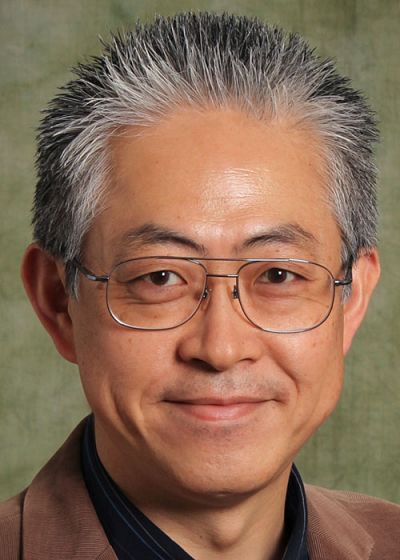
Yunkai Zhou is an Associate Professor at the Department of Mathematics , Southern Methodist University. His research spans Numerical Linear Algebra , Scientific Computing , and Electronic Structure Calculations with applications in Materials Science and Electrical Engineering . Education : Ph.D. in Computational Mathematics (2002) from Rice University , B.S./M.S. from Xi'an Jiaotong University . Research Focus : Developing polynomial filtered subspace methods for generalized eigenvalue problems, improving mixing schemes in self-consistent field calculations, and extending subspace techniques to time-dependent DFT. His work addresses challenges in dimensionality reduction , machine learning , and high-performance computing . Key Contributions include algorithms for solving large-scale eigenvalue problems in Density Functional Theory and Density Functional Tight Binding . His students include Zheng Wang (recipient of multiple SMU awards) and Iranga Nagasinghe. Contact : Office in Clements Hall 133, Southern Methodist University, Dallas, TX. Email: yzhou@smu.edu . Website: http://faculty.smu.edu/yzhou .
Xinwei Deng is a Professor of Statistics and Data Science Faculty Fellow at Virginia Tech, affiliated with the Department of Statistics in the College of Science. He also co-directs the VT Statistics and Artificial Intelligence Laboratory (VT-SAIL). He earned his Ph.D. from Georgia Institute of Technology in 2009 under Professors C.F. Jeff Wu and Ming Yuan, and joined Virginia Tech in 2011. Education: PhD in Statistics (Georgia Tech, 2009), B.S. in Mathematics (Nanjing University, China, 2003). Research Interests: Focuses on the interface between experimental design and machine learning, uncertainty quantification, covariance matrix estimation, high-dimensional data analysis, and applications in nanotechnology, manufacturing, and healthcare. His work bridges statistical theory with practical challenges in emerging technologies like tissue engineering and environmental science. Publications: Over 80 peer-reviewed articles in top journals such as Journal of the American Statistical Association , Technometrics , and Proceedings of the National Academy of Sciences . Recent work emphasizes scalable algorithms, AI resilience in manufacturing, and uncertainty quantification in complex systems. Awards/Honors: Includes Data Science Faculty Fellowships, ISI election (2017), and multiple best paper awards. Recognized for contributions to statistical methodologies in quality engineering and AI robustness. Teaching & Advising: Teaches advanced courses like Data Analytics, Experimental Design, and Multivariate Analysis. Mentors students in interdisciplinary projects spanning statistics, computer science, and engineering. Labs/Teams: Leads VT-SAIL, fostering AI-driven statistical solutions for real-world problems. Collaborates with industry partners (e.g., P&G, Deloitte) and government agencies (NSF, AFRL) on applied research.
Yinchu Zhu is an Assistant Professor of Economics at Brandeis University. His research focuses on the intersection of econometrics, statistics, and machine learning, with a particular emphasis on high-dimensional models, causal inference, and big data analysis. Applications of his work extend to economics, finance, and policy evaluation. His research interests include statistical inference in complex models, conformal prediction, and the development of robust methods for counterfactual analysis and synthetic controls. He has contributed to methodologies for comparing forecasting performance across models and addressing challenges in high-dimensional data analysis. Key contributions include exact conformal inference techniques for counterfactual scenarios, testing frameworks for high-dimensional linear models, and methodologies to ensure equity in data-driven hiring practices. His work bridges theoretical advancements with practical applications in policy and economics. His publications appear in leading journals such as the Annals of Statistics , Journal of the American Statistical Association , and Proceedings of the National Academy of Sciences .
Prof. Krishnan Suresh is a Professor in Mechanical Engineering at the University of Wisconsin-Madison, affiliated with the College of Engineering. He directs the Engineering Representations and Simulation Laboratory (ERSL) and co-leads the Wisconsin Applied Computing Center. His research focuses on topology optimization, additive manufacturing, computational mechanics, and quantum computing applications. He holds prestigious awards including the Vilas Associate (2023), Mead Witter Professorship (2022), and Woodburn Teaching Award (2018). Education: PhD 1998, Cornell University MS 1995, Cornell University MS 1992, UCLA B.Tech 1990, IIT Madras Research Interests: Dr. Suresh pioneers methods for efficient finite element analysis over tangled meshes, integrates machine learning into topology optimization, and develops quantum computing solutions for engineering problems. His work bridges computational mechanics with advanced manufacturing, emphasizing eco-friendly design and multiscale material systems. Publications: Recent work explores surrogate neural networks for topology optimization, quantum annealing for linear systems, and AI-driven detector design for physics experiments. His methods address challenges in handling inverted elements and improving additive manufacturing support structures. Awards: 2023 Vilas Associate 2022 Mead Witter Professorship 2018 Woodburn Teaching Award 2017 ASME Fellow Advising & Grants: He advises on NSF/DOE-funded projects and collaborates with Sandia National Labs/Autodesk. Courses taught include design optimization, CAD engineering, and graduate research supervision. Labs & Teams: ERSL develops simulation tools for complex systems, integrating high-performance computing and AI for next-gen engineering solutions.
Wu-chun Feng is a Professor of Computer Science and Electrical & Computer Engineering at Virginia Tech, holding the Elizabeth & James E. Turner Jr. '56 Faculty Fellowship. He directs the SyNeRGy Laboratory and is affiliated with the School of Biomedical Engineering & Sciences, CHREC, VBI, and Wireless @ VT. His research focuses on high-performance computing, energy-efficient systems, bioinformatics, and heterogeneous architectures. Education: Ph.D. in Computer Science, University of Illinois at Urbana-Champaign (1996) M.S. in Computer Engineering, Penn State University (1990) B.S. in Electrical & Computer Engineering and Music (Honors), Penn State University (1988) Research Interests: His work spans high-performance computing systems, green supercomputing (e.g., Green500 List, Green Destiny), computational biology (mpiBLAST), and parallel programming models. He emphasizes energy-efficient architectures and interdisciplinary applications in biomedicine and data science. Key Contributions: Green500 List: Ranks energy-efficient supercomputers globally mpiBLAST: Parallel implementation of NCBI BLAST Supercomputing in Small Spaces initiative Awards: Three R&D 100 Awards (Green Supercomputing, High-Speed Networking, Bioinformatics) Over 15 Best & Outstanding Paper Awards Service & Leadership: Editorial roles in journals like IEEE/ACM Transactions on Computational Biology Conference leadership (SC, ICPP, etc.) Director of SyNeRGy Lab and CUDA Research Center
Kirshanthan Sundararajah is an Assistant Professor in the Department of Computer Science at Virginia Tech's College of Engineering. His research focuses on compilers, programming languages, and high-performance computing, with an emphasis on optimizing algorithms for complex data structures like sparse tensors and tree traversals. He holds a Ph.D. and M.S. in Electrical and Computer Engineering from Purdue University (2022) and a B.S. in Electronics and Telecommunication Engineering from the University of Moratuwa, Sri Lanka (2014). His work spans compiler optimization techniques, parallel computing strategies, and efficient execution models for heterogeneous architectures. Key contributions include frameworks like Orchard for heterogeneous parallelism, SparseAuto for sparse tensor computations, and SABLE for blocked evaluation of sparse matrices. He also explores dynamic symbolic execution and secure multi-party computation through metaprogramming (HACCLE). No scientific awards were explicitly mentioned in the provided text. His advising and grant activities are not detailed here, though his research likely involves collaborative projects in high-performance computing and compiler design. He is affiliated with the Department of Computer Science at Virginia Tech and contributes to academic initiatives in parallel algorithms and computational efficiency.
Edward Valeev is a Professor in the Department of Chemistry at Virginia Polytechnic Institute and State University (Virginia Tech) , part of the College of Science . His research focuses on developing advanced electronic structure methods and high-performance computing frameworks for chemistry and materials science. Education: M.S., Higher Chemistry College of Russian Academy of Sciences, Moscow, Russia (1996) Ph.D., University of Georgia (2000) Research Interests: Dr. Valeev pioneers methods like reduced-scaling wave function approaches, real-space orbital representations, and quantum computing applications. His work emphasizes tensor compression (tensor networks) and software development (e.g., MPQC, Libint, TiledArray). Key areas include density functional theory corrections, periodic systems, and exascale computing. Key Contributions: His group develops open-source software like MPQC , enabling distributed-memory parallel computing. Their methods address challenges in predicting molecular properties and materials behavior at scale. Awards: Blavatnik National Award Finalist (2016) Dirac Medal (2015) Kavli Fellow (2013) Advising & Grants: Funded by NSF, DOE, and others, his research supports next-generation computational tools. Collaborations include developing quantum algorithms and exascale-ready software frameworks. Labs & Teams: Leads the Valeev Research Group , advancing theoretical chemistry and computational infrastructure.
Yuchen Zhou is an Assistant Professor in the Department of Statistics at the University of Illinois. His research focuses on high-dimensional statistics, tensor methods, and optimization, with applications in data analysis and machine learning. He has contributed to advancements in areas such as heteroskedastic PCA, low-rank tensor inference, and sparse group lasso regularization. His work emphasizes statistical theory and methodology, addressing challenges in high-dimensional data structures and computational efficiency. Collaborations and research outputs highlight interests in matrix and tensor decomposition, regularization techniques, and non-asymptotic analysis. Zhou's publications span reputable journals like the Annals of Statistics and IEEE Transactions on Information Theory, reflecting his expertise in both theoretical and applied statistical problems. He has no listed academic awards or current advisees.
Richard Y Zhang is an Assistant Professor in the Department of Electrical and Computer Engineering at the University of Illinois, affiliated with the Coordinated Science Lab. His research focuses on optimization theory, nonconvex optimization, semidefinite programming, and their applications in power systems, machine learning, and control systems. Key topics include low-rank matrix recovery, spurious local minima analysis, and robust optimization methods. He has received the NSF CAREER Award in 2021 for early career achievements. Research Interests: Nonconvex Optimization Semidefinite Programming Power System Analysis Low-Rank Matrix Recovery Machine Learning Algorithms Control Systems Design Recent work emphasizes certified optimization methods with global guarantees, adversarial machine learning robustness, and efficient algorithms for large-scale systems. His publications explore topics like phase synchronization in power systems, preconditioned gradient descent techniques, and sparse semidefinite program optimizations. Scientific Awards: NSF CAREER Award (2021) Advising and Grants: While specific student names aren’t listed, his research group focuses on cutting-edge optimization theory with applications to energy systems and data science. Collaborations include work on power grid stability, neural network certification, and large-scale convex/nonconvex problem solving. Labs/Teams: Active in the Coordinated Science Lab’s optimization and control research clusters.>
Veronika Pillwein is an Associate Professor at the Research Institute for Symbolic Computation (RISC) within Johannes Kepler University in Linz, Austria. Her research focuses on symbolic computation, high-order finite elements, special functions, and algorithmic combinatorics. She contributes to advancing computational methods for sequence analysis, recurrence relations, and polynomial systems, with applications in numerical analysis and engineering. Pillwein has authored/co-authored numerous publications in top-tier journals and conference proceedings, including work on C²-finite sequences, hp-FEM element matrices, and positivity proofs for rational functions. She serves as an editor for academic volumes and actively participates in computational mathematics research. Her work integrates symbolic computation techniques with numerical methods, addressing challenges in high-order finite element analysis and algorithm design. Recent research emphasizes generalizing holonomic sequences, optimizing sparse shape functions for finite elements, and developing automated tools for proving mathematical properties. Pillwein collaborates internationally, contributing to interdisciplinary projects in computational mathematics and computer algebra systems. Affiliations: RISC Faculty, Johannes Kepler University (JKU) Key Research Areas: Symbolic computation, finite element methods, combinatorial algorithms, polynomial analysis Technical Contributions: Development of C²-finite sequence theory, hp-FEM element matrix evaluation, algorithmic proofs for positivity
Maryam Mehri Dehnavi is an Associate Professor of Computer Science at the University of Toronto and a Principal Research Scientist at NVIDIA. She holds the Canada Research Chair in Parallel and Distributed Computing. Her research group, ParaMathics, focuses on scalable numerical methods, high-performance libraries, and compilers for cloud and parallel computing platforms. Her research interests span cloud computing, machine learning, numerical analysis, and compiler optimization. She has been recognized with awards including the Ontario Early Researcher Award (2021) and an NSF CRII grant. She has advised numerous students, many of whom have achieved notable academic and industry roles. Teaching: Applied Parallel Computing, Parallel Computing, Cloud Computing Leadership Roles: General Chair of PPOPP 2023, Keynote Speaker at SIAM PP 2024 Labs/Teams: ParaMathics Research Group Her work bridges theoretical advances in numerical methods with practical applications in high-performance computing, emphasizing efficiency and scalability across diverse architectures.
Hiroki Sayama is a SUNY Distinguished Professor and Executive Assistant Dean for Graduate Studies at Binghamton University’s Thomas J. Watson College of Engineering and Applied Science, where he leads the School of Systems Science and Industrial Engineering. He also directs the Center for Collective Dynamics of Complex Systems (CoCo). His research focuses on complex systems science, network science, computational social science, and mathematical modeling, with applications in artificial life/chemistry, healthcare informatics, and socio-technical systems. Dr. Sayama holds a BS, MS, and DSc from the University of Tokyo. His work bridges theoretical frameworks and real-world applications, including agent-based modeling of pandemic response, analysis of social network dynamics, and open-ended evolutionary systems. Recent research highlights include investigations into opinion dynamics, adaptive networks, and the interplay between military/healthcare expenditures and GDP growth. His awards include the SUNY Distinguished Professor title, reflecting his contributions to interdisciplinary systems science. Sayama’s research is supported by collaborative projects with industry and government, and he actively engages in science education initiatives like NetSci High to promote network science literacy among students.
Ahmad Mousavi serves as an Industrial Associate at the University of Florida's Informatics Institute and a part-time lecturer in American University's Data Science Program within the College of Arts and Sciences, teaching graduate courses including Advanced Machine Learning and Statistical Machine Learning through Fall 2025. His academic foundation spans applied mathematics with specialized expertise in computational optimization. His educational background includes: Ph.D. in Applied Mathematics, University of Maryland, Baltimore County (2013-2019) M.S. in Applied Mathematics, Sharif University of Technology (2008-2011) B.S. in Applied Mathematics, University of Guilan (2004-2008) Dr. Mousavi's research centers on machine learning and optimization theory, with significant contributions to sparse recovery algorithms, portfolio optimization, and support vector machine development. His work bridges theoretical mathematics with practical financial and data science applications, particularly in developing constrained optimization frameworks for real-world problems requiring sparsity and volatility control. Analysis of his publication record reveals a consistent focus on optimization techniques applied to machine learning, with recurring themes in sparse modeling for financial portfolios, kernel methods for classification, and theoretical foundations of compressive sensing. His 2020 survey paper demonstrates expertise in synthesizing complex technical domains. His professional development includes postdoctoral research at the University of Florida's Informatics Institute and the University of Minnesota's Institute for Mathematics and its Applications, where he collaborated on interdisciplinary projects connecting mathematical theory with data-intensive applications.