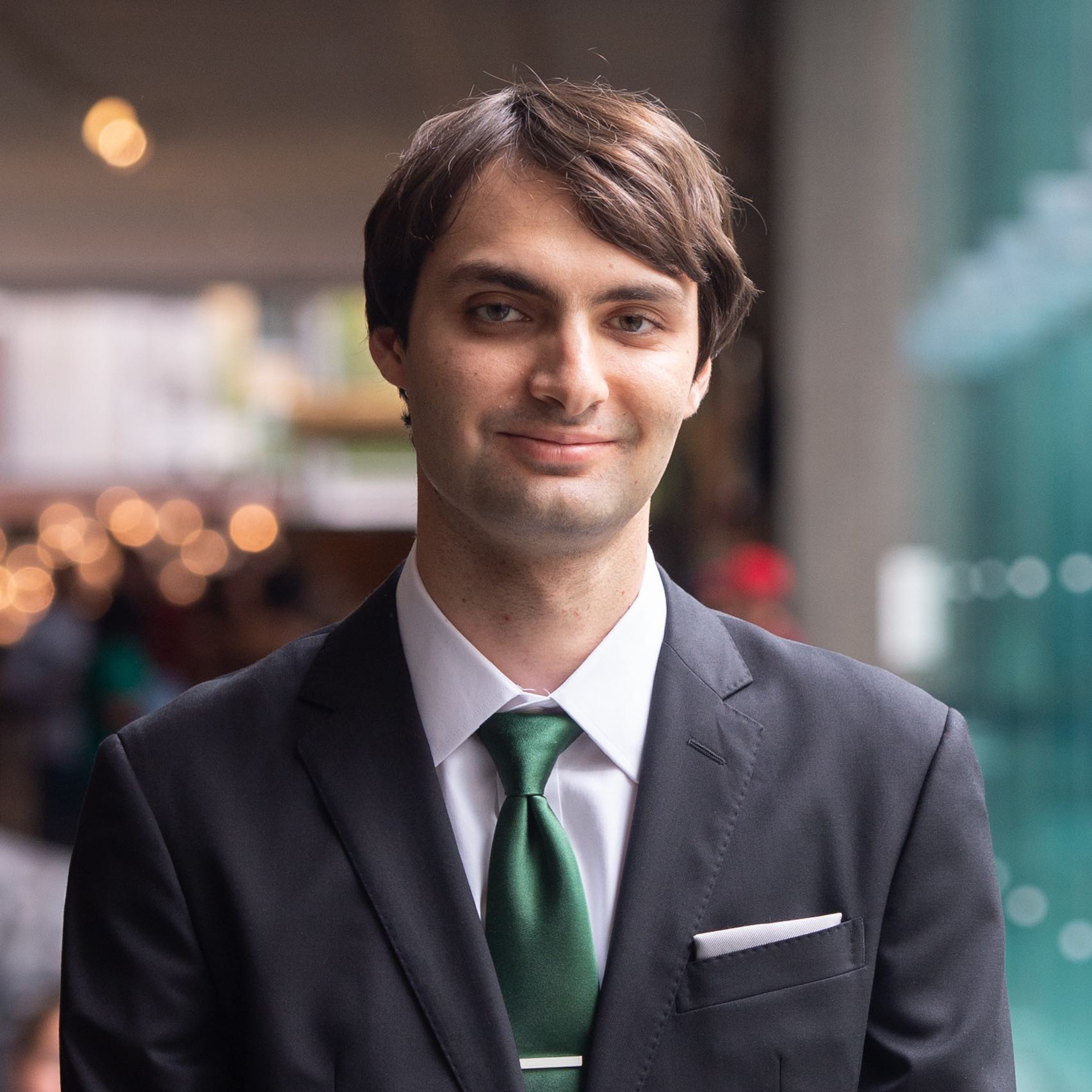
Balint KoczorView profile
Associate Professor
Dr. Balint Koczor is an Associate Professor in the Mathematical Institute at the University of Oxford, leading the Quantum Information, Computation and Cryptography Group. He holds a Future Leaders Fellowship, serves as Associate Editor for npj Quantum Information , and organizes the SEEQA conference series. His work bridges theoretical quantum computing with industry applications through AppliedQC.org. His academic credentials include an MSc and Dr rer. nat. from Technical University of Munich (2019). Dr. Koczor's research centers on making quantum computers practical for real-world use, specializing in quantum error mitigation techniques for near-term devices. He develops hybrid quantum-classical algorithms to maximize hardware performance, with emphasis on error correction, efficient circuit design, and quantum simulation. His work directly addresses hardware limitations through close collaboration with experimental teams and quantum technology companies. Analysis of his 15 most recent publications reveals a cohesive research trajectory focused on practical quantum computing solutions. Key themes include classical shadows for efficient state estimation, virtual distillation for error suppression, and CoVaR-based optimization methods. His work consistently targets near-term device constraints while advancing foundational quantum algorithms across simulation, spectroscopy, and cryptography applications. His scientific recognition includes: Future Leaders Fellowship As a Future Leaders Fellow, Dr. Koczor directs significant research funding toward quantum error mitigation and algorithm development. He actively collaborates with quantum hardware companies to optimize application-hardware integration, with research supported through his fellowship and industry partnerships. His group develops tailored solutions for current quantum platforms while mentoring junior researchers. He leads the Quantum Information, Computation and Cryptography Group at Oxford's Mathematical Institute, which operates in close coordination with AppliedQC.org. This team focuses on translating theoretical advances into practical quantum computing frameworks, emphasizing error-resilient algorithms and hardware-aware implementations for near-term quantum devices.