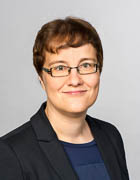
Ümit V. Çatalyürek is a Professor in the School of Computational Science and Engineering at Georgia Institute of Technology's College of Computing. Previously, he held positions as a Professor and Vice Chair in Biomedical Informatics at Ohio State University. He earned his Ph.D., M.S., and B.S. in Computer Engineering from Bilkent University, Turkey. His research focuses on High-Performance Computing, Combinatorial Scientific Computing, and Biomedical Informatics. Education: Ph.D. (2000), M.S. (1994), B.S. (1992) in Computer Engineering from Bilkent University Research interests include parallel computing, graph algorithms, and genomic data analysis. He has authored over 200 peer-reviewed articles and leads the TDA research group at Georgia Tech. Notable contributions include scalable graph partitioning methods and genome assembly tools like BOA. Awards include IEEE and SIAM Fellowships and an NSF CAREER Award. He serves as Editor-in-Chief of Parallel Computing and has held leadership roles in ACM SIGBio and IEEE TCPP. His grants include funding from DOE, NIH, and NSF for projects in computational science and biomedical informatics. Advising involves mentoring students in computational methods and large-scale data analysis. He leads the TDA lab and collaborates on interdisciplinary initiatives in bioinformatics and quantum computing.
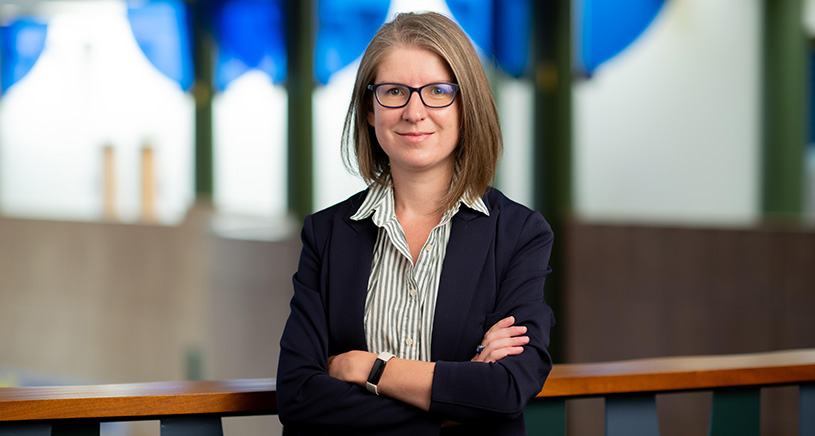
Dr. Alexander Shestopaloff is a Senior Lecturer in Statistics at the School of Mathematical Sciences, Queen Mary University of London, and a Fellow of the Alan Turing Institute. He holds a PhD in Statistics from the University of Toronto (2016). His research focuses on Bayesian statistics, network science, quantitative finance, and empirical market microstructure, with a particular emphasis on cryptocurrency exchanges like Binance and Bybit. He develops computational methods for Bayesian inference, including online learning algorithms, and explores statistical procedures to detect network structures. Education: PhD in Statistics, University of Toronto (2016) Research Interests: Bayesian computational methods and modeling Network science and statistical graph analysis Quantitative finance, market microstructure, and high-frequency trading Online learning and high-dimensional time series analysis Grants and Funding: Research Fellowship: Cross-sectional forecasting of high-dimensional time series (£112,358), Delphia Technologies Inc (2023–2026) Innovate UK KTP: Wise (£219,928), Innovate UK (2022–2025) Key Contributions: Advances in robust Kalman filtering and Bayesian online learning Statistical analysis of network structures and graph algorithms Analysis of cryptocurrency market dynamics using high-frequency data Affiliations: Centre for Probability, Statistics and Data Science at Queen Mary University of London.
Thorsten Raasch is a Professor of Numerical Mathematics at the Institute of Mathematics, Johannes Gutenberg University Mainz, Germany. He is affiliated with the Department of Physics, Mathematics, and Computer Science, and leads research in numerical analysis, particularly adaptive methods for PDEs and inverse problems. Research Interests: His work focuses on adaptive discretization methods for partial differential equations and inverse problems, non-smooth numerical optimization , wavelet systems , multilevel frames , and GPGPU computing . These interests are deeply rooted in applied and computational mathematics, with applications in scientific computing and engineering. The most recent articles show a strong trend in developing adaptive wavelet-based numerical schemes for solving inverse and stochastic PDEs, with a particular emphasis on sparsity, convergence analysis, and preconditioning. His publications span high-impact journals in numerical analysis and inverse problems, indicating sustained scholarly activity. Teaching: He has taught a variety of courses including Fundamentals of Numerics, Convex Optimization, Numerical PDEs, Spectral Methods, and advanced seminars on topics like semi-smooth Newton methods and reduced basis methods. Thorsten Raasch earned his doctorate in 2007 from Philipps University of Marburg and has held academic positions at JGU Mainz, the University of Siegen, and the University of Rostock. He was appointed W2 Professor at JGU Mainz in 2015 and previously held a junior professorship there. No scientific awards are mentioned in the provided texts. Advising and Grants: While no students or grants are explicitly listed, his role as a professor and active researcher suggests involvement in supervising graduate students and participating in research projects, possibly within the 'Mathematics of Computation' research network. Labs and Teams: He is part of the Numerical Mathematics Working Group at JGU Mainz and contributes to the 'Mathematics of Computation' research network, indicating collaboration within a structured research environment.
Georgios Exarchakis is a Lecturer at the University of Bath, specializing in Machine Learning, Theoretical Neuroscience, and Data Science. His research emphasizes transparent and interpretable modeling, with applications in Neuromorphic Engineering, Health Science, and Quantum Chemistry. He has held research positions at IHU Strasbourg, Institut de la Vision, and École Normale Supérieure, and earned his PhD from the University of Oldenburg. Education: Dr. rer. nat. in Machine Learning, 2016, Carl von Ossietzky University of Oldenburg M.Sc. in Computational Science, 2012, Goethe University Frankfurt Diploma in Mathematics, 2008, Aristotle University of Thessaloniki His research interests span Interpretable Machine Learning, Invariant Representations, Sparse Coding, Wavelet Scattering, Probabilistic Models, and Deep Learning . He investigates how models can extract meaningful, stable features from complex data, drawing inspiration from biological systems and theoretical neuroscience. His work often bridges theory and application, particularly in quantum chemistry and neurotechnology. His recent publications highlight a strong focus on efficient and interpretable models , including wavelet scattering for molecular property prediction, discrete sparse coding, and clustering algorithms for event-based vision. The articles show a consistent theme of developing mathematically grounded, invariant, and scalable methods for data analysis. He is the developer or a key contributor to open-source libraries such as Kymatio (Scattering Transforms in Python) and ProSper (Probabilistic Sparse Coding), which facilitate the use of advanced signal processing and learning techniques in the research community. Georgios has taught Machine Learning courses at the University of Strasbourg, École Polytechnique, and Oldenburg. He has collaborated with leading researchers like Stéphane Mallat and Jörg Lücke. His work is published in top-tier venues including CVPR, NIPS, JMLR, and JCP.
Eftychios Sifakis is a Professor of Computer Sciences at the University of Wisconsin-Madison. He joined the department in January 2011 after a postdoctoral appointment at UCLA (2007-2010) and holds a PhD in Computer Science from Stanford University (2007). His research focuses on physics-based modeling, computer graphics, and scientific computing, with applications in biomechanics and virtual surgery. Key projects include surgical simulators, material point methods, and real-time deformable body simulation. Education: PhD in Computer Science, Stanford University, 2007 BS in Computer Science & Mathematics, University of Crete, Greece, 2000-2002 Research Interests: His work bridges computational physics and visual computing, emphasizing algorithms for fluid dynamics, topology optimization, and medical simulation. He develops scalable numerical methods for large-scale simulations on heterogeneous hardware. Teaching: Courses include CS559 (Computer Graphics), CS839 (Physics-Based Modeling), and CS412 (Numerical Methods). He has taught at both UW-Madison and UCLA. Labs/Teams: Leads research on computational biomechanics and fluid-structure interaction within the UW-Madison Computer Sciences Department. Collaborates on projects like the Chrono physics engine and surgical simulation frameworks.
Oliver Junge is an Associate Professor of Numerics of Complex Systems at the TUM School of Computation, Information and Technology, Technische Universität München. His research focuses on developing novel numerical methods for dynamical systems, with applications in molecular dynamics, astrodynamics, systems theory, and image processing. He holds a doctorate from the University of Paderborn (1999) and has conducted research at institutions like Georgia Tech and Caltech. Notable awards include the TopMath Supervisory Award (2020) and the Research Prize from the University of Paderborn (2004). Educational Background: He studied mathematics and computer science at the Universities of Darmstadt, Bordeaux, Hamburg, and Bayreuth before completing his PhD in Paderborn. His academic career includes roles as a junior professor in Paderborn and associate professor at TUM since 2005. Research Interests: Junge specializes in numerical mathematics and scientific computing, emphasizing the analysis and implementation of numerical methods for complex systems. His work bridges theoretical rigor and practical applications, particularly in computational fluid dynamics, optimal control, and topological data analysis. Awards: His accolades include the Dilthey Prize (1998) and recognition for his contributions to computational methods in dynamical systems. Grants & Advising: While specific grants or advisee names are not listed, his publications indicate extensive collaborative research and mentorship in computational mathematics and systems theory. Labs/Teams: Collaborates with interdisciplinary teams at TUM and internationally, focusing on numerical methods and their applications in engineering and natural sciences.
Prof. Elisabeth Ullmann is an Associate Professor for Scientific Computing and Uncertainty Quantification at the Technical University of Munich (TUM), affiliated with the TUM School of Computation, Information, and Technology and the Department of Mathematics. She holds a PhD from TU Bergakademie Freiberg (2008) and has held academic roles including postdoctoral positions at the University of Bath, University of Hamburg, and University of Maryland. Her research focuses on developing efficient algorithms for uncertainty quantification in partial differential equations with random coefficients, Bayesian inverse problems, and rare event simulation. She is an Associate Editor for the SIAM Journal on Scientific Computing and SIAM/ASA Journal on Uncertainty Quantification , and teaches courses on numerical methods for uncertainty quantification and partial differential equations. Her work emphasizes multilevel Monte Carlo methods, stochastic Galerkin discretizations, and probabilistic numerical methods. Notable contributions include error analysis for rare event probabilities and multilevel estimators for high-dimensional problems. She collaborates internationally and maintains an active research group in Scientific Computing & Uncertainty Quantification at TUM.
Prof. Matthias Eiber holds the position of Professor in Nuclear Medicine at the TUM School of Medicine and Health, Technical University of Munich. He is distinguished as a Humboldt Professor and Heisenberg Professor, reflecting his esteemed academic standing. His research focuses on sparse representation models, analysis operator learning, and applications in signal processing and machine learning. Key contributions include advancements in dictionary learning theory, sample complexity analysis, and optimization techniques on Riemannian manifolds. Eiber’s work bridges mathematical foundations with practical applications in medical imaging and high-dimensional data analysis. Education and Career: While specific educational details are not provided here, his academic trajectory includes prominent roles such as Humboldt and Heisenberg Professorships, indicating a trajectory of exceptional scholarly achievement. He is affiliated with the Department of Nuclear Medicine, integrating computational methods into medical diagnostic technologies. Research Interests: Eiber’s research emphasizes sparse representation theory, co-sparse analysis operators, and the theoretical underpinnings of dictionary learning. His work explores sample complexity bounds in machine learning, optimization algorithms for structured data, and applications in medical imaging. Recent publications address separable models, operator learning, and geometric optimization methods. Awards: Humboldt Professor Heisenberg Professor Advising & Grants: While specific student names or grant details are not listed here, his research output suggests active involvement in supervising PhD students and securing grants related to computational medicine and signal processing. His collaborations likely span interdisciplinary teams within TUM’s medical and engineering divisions. Labs & Teams: Affiliated with the Nuclear Medicine department’s research groups focused on computational diagnostics and medical imaging algorithm development. His work contributes to TUM’s broader initiatives in precision medicine and data-driven healthcare solutions.
David Ruppert is the Andrew Schultz Jr. Professor of Engineering at Cornell University's School of Operations Research and Information Engineering, and Professor of Statistics and Data Science. He holds dual appointments and has been a faculty member since 1987. His education includes a B.A. in Mathematics from Cornell University (1970), M.A. in Mathematics from the University of Vermont (1973), and Ph.D. in Statistics and Probability from Michigan State University (1977). Research Interests: His work spans functional data analysis, astrostatistics, neuroimaging (fMRI/ICA), environmental statistics, and semiparametric regression. He has pioneered methods in measurement error models, splines, and Bayesian statistics. His research has been continuously funded by NSF, NIH, and EPA since 1978. Publications: Over 130 refereed articles and 5 books, including foundational texts like Measurement Error in Nonlinear Models and Statistics and Data Analysis for Financial Engineering . Recent work includes astrostatistical modeling of galaxy spectral energy distributions and neuroimaging analysis. Awards/Honors: Wilcoxon Prize (1986), ASA/IMS Fellowships, Highly Cited Researcher (ISI), and Distinguished Alumni Award (2014). Teaching: Courses include Financial Engineering, Bayesian Statistics, and Functional Data Analysis. He co-developed four graduate/undergraduate courses at Cornell. Service: Editor of Journal of the American Statistical Association , Director of the MPS Program in Data Science and Statistics (DSS). Impact: 29 PhD students trained, many now leading researchers in academia and industry.
Professor Ian Manchester is a faculty member in the Department of Mechatronic Engineering at the University of Sydney. He holds a B.Eng (Electrical) Honours and a PhD from the University of New South Wales. His academic roles include Director of the Australian Centre for Robotics and Director of the Australian Robotic Inspection & Asset Management Hub (ARIAM). He has held leadership positions such as Director of Research at the Australian Centre for Field Robotics and co-Director of the Sydney Institute for Robotics and Intelligent Systems. His research focuses on robotics, nonlinear control, system identification, and machine learning, with applications in biomedical engineering, forestry, mining automation, and aviation. He has supervised numerous PhD students working on projects like acrobatic legged robots, surgical robotics, and robotic asset management. Recent publications emphasize robust control methodologies, nonlinear observer design, and stable machine learning models. His work often bridges theoretical advances with practical applications, such as SLAM algorithms and dynamics of walking robots. Prof Manchester has received the Sydney Research Accelerator Fellowship (SOAR) in 2019. He serves on editorial boards for IEEE journals and international conferences. His labs and collaborations include the Australian Centre for Robotics and the ARIAM Hub, focusing on robotic inspection and asset management solutions.
Irina Gaynanova is an Associate Professor in the Department of Biostatistics at the University of Michigan School of Public Health. She also holds a courtesy appointment in the Department of Statistics. Her research focuses on developing statistical methods for analyzing high-dimensional biomedical data, particularly in multi-omics and wearable device data (e.g., CGMs). Her work has been funded by the NSF and recognized with awards like the NSF CAREER Award and COPSS Emerging Leader Award. Education: PhD in Statistics from Cornell University (2015), MS from Cornell (2013), and a Diploma in Applied Math/Computer Science from Lomonosov Moscow State University (2009). Research Interests: High-dimensional data analysis, machine learning, data integration, multi-omics data, and wearable device data such as continuous glucose monitors. She leads a research group with active students and postdocs, emphasizing reproducible research and collaboration with domain scientists. Awards: Includes the David P. Byar Young Investigator Award, IMS Zelen Award (2025), and COPSS Emerging Leader Award (2025). She is an elected member of the International Statistical Institute (2024). Teaching & Mentoring: Focuses on computational skills and reproducible research. Received the Dr. Judith Edmiston Mentoring Award for undergraduate mentoring at Texas A&M. Labs/Teams: Leads the Gaynanova Lab, which develops tools like the iglu R package for CGM data analysis and collaborates on projects involving microbial networks, sleep apnea, and precision health.
Dr. Richard Veras is an Assistant Professor in the School of Computer Science at the University of Oklahoma . His research focuses on High Performance Computing (HPC), with emphasis on code synthesis, parallel algorithms, and optimizing computational workflows for modern hardware architectures. Education: Ph.D. and M.S. in Electrical and Computer Engineering from Carnegie Mellon University B.S. in Mathematics and Computer Science from The University of Texas at Austin Research Interests: High Performance Computing (HPC) Parallel algorithm design and implementation Computational linear algebra and signal processing Graph analytics and network modeling Compiler optimizations and automated code generation Performance portability across hardware architectures Professional Experience: Research Scientist at Louisiana State University Postdoctoral Researcher at Carnegie Mellon University Labs/Teams: Leads HPC research initiatives at OU, focusing on code synthesis tools and performance optimization frameworks.
Professor Celso Grebogi is the Sixth Century Chair in Nonlinear & Complex Systems at the School of Natural and Computing Sciences, University of Aberdeen, UK. He is the Founding Director of the Institute for Complex Systems and Mathematical Biology and Co-founder of the Aberdeen-Lanzhou-Tempe Research Centre, advancing interdisciplinary research in relativistic quantum chaos. He has been an External Scientific Member of the Max-Planck-Society since 1998 and maintains extensive international collaborations. BSc, Chemical Engineering, Federal University of Parana, 1970 MS, Physics, University of Maryland, 1975 PhD, Physics, University of Maryland, 1978 Post-doctoral Research Fellow, University of California at Berkeley, 1978–1981 Professor Grebogi is a leading expert in nonlinear and complex dynamics, with research spanning chaotic dynamics, fractal geometry, systems biology, neurodynamics, fluid advection, relativistic quantum chaos, and nanosystems. His work has profoundly influenced the understanding and control of chaotic systems, most notably through the OGY method for chaos control. He has pioneered research in strange nonchaotic attractors, multistability, and dynamical transitions in complex systems. The recent publications highlight a strong trend toward interdisciplinary applications, integrating nonlinear dynamics with machine learning, neuroscience, biomedical engineering, and quantum systems. His team applies advanced mathematical frameworks to real-world problems such as motor imagery recognition, brain dynamics in mental disorders, fatigue detection, and quantum scarring. The integration of data-driven methods with classical dynamical systems theory underscores a modern, hybrid approach to complexity science. Fulbright Fellowship Award, 1974 Senior Humboldt Prize, 1996 Doctor Honoris Causa, University of Potsdam, 1997 Controlling Chaos paper selected as milestone by Physical Review Letters, 2008 Citation Laureate - Researcher of Nobel Class, 2016 Lagrange Award for Lifetime Achievement, 2023 James Yorke Award, 2024 Professor Grebogi has delivered over 500 invited talks and authored more than 500 publications. He has supervised numerous PhD students and postdoctoral researchers, though specific names are not listed in the provided texts. His research has been supported by major international grants and collaborations, including partnerships with institutions in China, Brazil, and the US. He serves on multiple editorial boards and has held visiting professorships worldwide. He leads the Institute for Complex Systems and Mathematical Biology at Aberdeen, fostering interdisciplinary research in nonlinear science. The institute collaborates with global partners, including Lanzhou University and Arizona State University, and supports research in relativistic quantum chaos, systems biology, and complex network dynamics. His group integrates theoretical modeling, computational simulations, and data analysis to explore emergent behaviors in complex systems.
Hiba Nassar is an Associate Professor at the Department of Applied Mathematics and Computer Science at the Technical University of Denmark. Her research focuses on functional data analysis, spline-based methods, and numerical algorithms for computational mathematics. Current affiliation: Technical University of Denmark Academic rank: Associate Professor Research domains: Functional data analysis, numerical analysis, statistical modeling Research Interests Dr. Nassar specializes in developing mathematical frameworks for analyzing complex data structures. Key areas include: Orthonormalization of B-splines Functional representation on multivariate domains Band matrix diagonalization techniques Data-driven basis selection in functional analysis Academic Contributions Her recent publications (2022–2025) demonstrate expertise in tensor methods, knot optimization, and sparsity preservation. She actively supervises PhD projects in computational mathematics and applied statistics. Supervision & Projects Dr. Nassar serves as a supervisor in three PhD projects: Federated Learning for Personalized Audiology (2025–2028) Modelling with 3D elastica (2024–2027) Mathematics of Surface Stackability (2024–2027)
Prof. Taiji Suzuki is an Associate Professor at the University of Tokyo in the Department of Mathematical Informatics . He also serves as Team Leader of the "Deep Learning Theory" team at AIP-RIKEN , Japan. With a PhD in Information Science and Technology from the University of Tokyo (2009), he has held academic positions at the University of Tokyo (2009-2013) and Tokyo Institute of Technology (2013-2017) before returning to the University of Tokyo in 2017. University of Tokyo (2004: BEng in Mathematical Engineering) University of Tokyo (2006: MSc in Information Science and Technology) University of Tokyo (2009: PhD in Information Science and Technology) His research interests span statistical learning theory , deep learning , kernel methods , sparse estimation , and stochastic optimization . He investigates how neural networks adapt to function smoothness, avoid the curse of dimensionality, and achieve global optimization through mean-field dynamics. His work bridges theoretical guarantees (minimax optimality, convergence analysis) with practical implementations (transformers, graph neural networks, diffusion models). The 15 most recent articles focus on transformers' representation power, graph neural networks' limitations, diffusion models' convergence, and optimization theories for deep learning. Key themes include information-theoretic bounds , feature learning dynamics , and mean-field analysis . He explores applications in AI for medicine, federated learning, and biomedical modeling. Awards & Recognition: Outstanding Paper Award, ICLR 2021 MEXT Young Scientists’ Prize Outstanding Achievement Award, Japan Statistical Society 2017 Outstanding Achievement Award, Japan Society for Industrial and Applied Mathematics 2016 Best Paper Award, IBISML 2012 Best Paper Candidate, ICDM 2019 He has served as Area Chair for NeurIPS, ICML, ICLR, AISTATS, and as Program Chair for ACML. His scientific contributions include convergence theories for stochastic gradient methods, minimax analysis of deep learning vs kernel methods, and novel frameworks for distributional optimization in diffusion models.