Michał Pilipczuk is an Associate Professor at the Institute of Informatics, Faculty of Mathematics, Informatics and Mechanics, University of Warsaw. His research focuses on parameterized algorithms , structural graph theory , and logic in computer science , with significant contributions to algorithm design for sparse and planar graphs. Current affiliation: University of Warsaw Research areas: Parameterized Complexity, Graph Structure, Algorithmic Logic Grant leadership: ERC Starting Grant (CUTACOMBS), NCN SONATA BIS (PI) Recent work explores quasi-polynomial algorithms for induced subgraphs in H-free graphs, geometric independent set approximation , and kernelization techniques for nowhere dense graph classes. He co-authored the definitive textbook Parameterized Algorithms (Springer 2015). Contact: michal.pilipczuk@mimuw.edu.pl
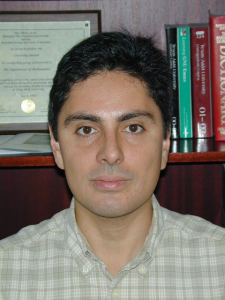
J. Maurice Rojas is a Professor and Associate Head of Graduate Programs at Texas A&M University's Department of Mathematics. His research focuses on computational algebraic geometry, discrete geometry, and polynomial equation solving with applications in complexity theory and number theory. He holds a Ph.D. from the University of California, Berkeley (1995), alongside earlier degrees from Berkeley and UCLA. Rojas' work bridges theoretical and algorithmic approaches to problems in algebraic geometry, including fewnomial theory, real and p-adic root counting, and tropical geometry. His contributions address the computational complexity of polynomial systems, with recent emphasis on sparse polynomials and circuit-based algorithms. He has authored over 50 papers and contributed to NSF-funded projects on arithmetic geometry and algorithmic methods. His research has explored applications in statistical modeling of petascale data, topological data analysis, and interdisciplinary collaborations between mathematics and computer science. Notable achievements include foundational work on A-discriminants, Viro's patchworking, and the development of sub-linear algorithms for algebraic structures.
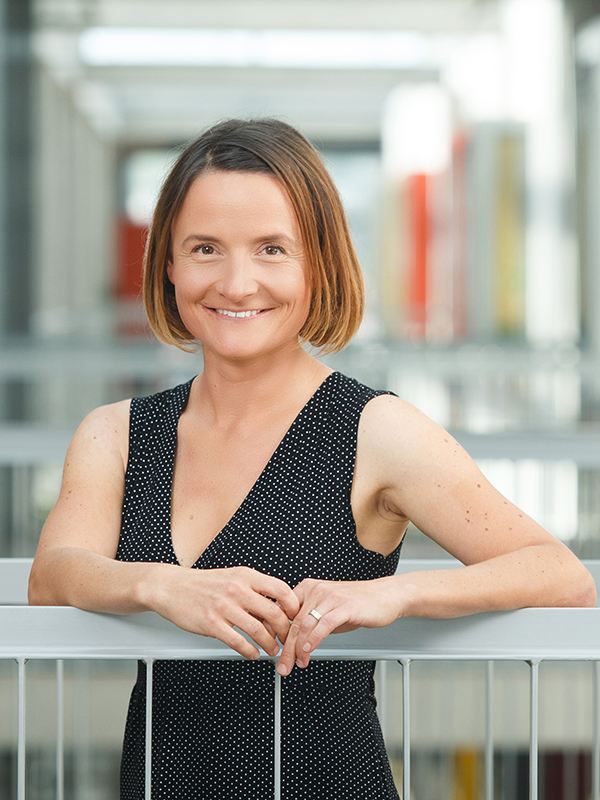
Karen Gunderson is an Associate Professor in the Department of Mathematics at the University of Manitoba's Faculty of Science. Her research spans graph theory, combinatorics, random graphs, percolation, hypergraphs, and extremal combinatorics. Research Focus : Graph theory, combinatorics, random graphs, percolation, hypergraphs, extremal combinatorics Academic Role : Associate Professor, Acting Associate Head Graduate Contact : Karen.Gunderson@umanitoba.ca , karen.gunderson@umanitoba.ca Her work includes bootstrap percolation , random geometric graphs , and extremal hypergraph problems , with applications in network modeling and probabilistic combinatorics. Recent publications focus on adversarial burning densities, Erdos-Ko-Rado robustness, and Turán numbers in switching contexts. Academic Leadership : Co-organizer of the University of Manitoba Combinatorics Seminar and key organizer for the 2023 CanaDAM conference and Movement & Symmetry in Graphs retreat.
Michael J. Lindsey is an Assistant Professor in the Department of Mathematics at the University of California, Berkeley, and a Faculty Scientist at Lawrence Berkeley National Laboratory. His research focuses on computational methods driven by Numerical Linear Algebra , Optimization , and Randomization , particularly for High-Dimensional Scientific Computing in quantum many-body problems and applied probability. University : UC Berkeley (Assistant Professor since 2022) Lab Affiliation : Mathematics Group at Lawrence Berkeley National Laboratory Email : lindsey@berkeley.edu His work includes Semidefinite Relaxation for quantum and classical problems, Monte Carlo Sampling techniques, and Tensor Networks for high-dimensional functions. He has pioneered Variational Embedding theory with guaranteed energy bounds and scalable solvers for quantum systems. Recent publications span Quantum Chemistry , Machine Learning , and High-Dimensional Probability , with applications to Electronic Structure , Molecular Dynamics , and Optimal Transport . He received the 2024 Hellman Fellowship and the 2019 SIAM Student Paper Prize . Teaching includes graduate and undergraduate courses in numerical analysis and applied mathematics at UC Berkeley and New York University. He also organizes the HDSC Seminar on high-dimensional scientific computing.
Polona Oblak serves as a Full Professor at the Faculty of Computer and Information Science, University of Ljubljana, where she is an integral member of the Laboratory for Mathematical Methods in Computer and Information Science. Her teaching responsibilities span foundational courses including Linear Algebra, Mathematical Modelling, and multiple levels of Mathematics instruction, reflecting her dual expertise in theoretical mathematics and computational applications. Her research centers on advanced Matrix Theory and Graph Theory, with pioneering contributions to Spectral Graph Theory and Inverse Eigenvalue Problems. She investigates structural properties of commuting matrices, nilpotent matrix centralizers, and tropical semiring algebra, extending theoretical frameworks to practical applications in computer vision and statistical analysis. Recent interdisciplinary projects like "DeepBeauty" demonstrate her ability to bridge pure mathematics with industry-relevant solutions in fashion technology. Analysis of her 15 most recent publications (2021-2025) reveals a dominant focus on spectral graph phenomena, particularly the inverse eigenvalue problem across diverse graph structures including trees, block graphs, and unicyclic graphs. Her work on tropical matrix factorization (e.g., Faststmf algorithm) provides efficient computational tools for sparse data, while theoretical breakthroughs like the "liberation set" concept redefine boundaries in spectral graph theory. This research trajectory shows increasing integration of algebraic methods with machine learning applications. Professor Oblak has secured substantial research funding through the Slovenian Research Agency (ARRS) and international collaborations, including the ongoing "Computer Vision" program (2019-2024) and bilateral projects with Bosnia and Herzegovina on nilpotent orbits. Her leadership in computationally intensive statistical methods (2016-2019) and deep generative models for the beauty industry (2020-2023) demonstrates consistent ability to translate theoretical advances into funded research initiatives, though specific student supervision details remain unlisted in available sources. Within the Laboratory for Mathematical Methods in Computer and Information Science, she contributes to a synergistic research environment where algebraic techniques directly inform computational solutions. Her work on Laplacian-integral graphs and tropical factorization algorithms exemplifies the laboratory's mission to develop mathematical foundations for next-generation information systems, with recent outputs showing heightened emphasis on algorithmic efficiency for real-world data challenges.
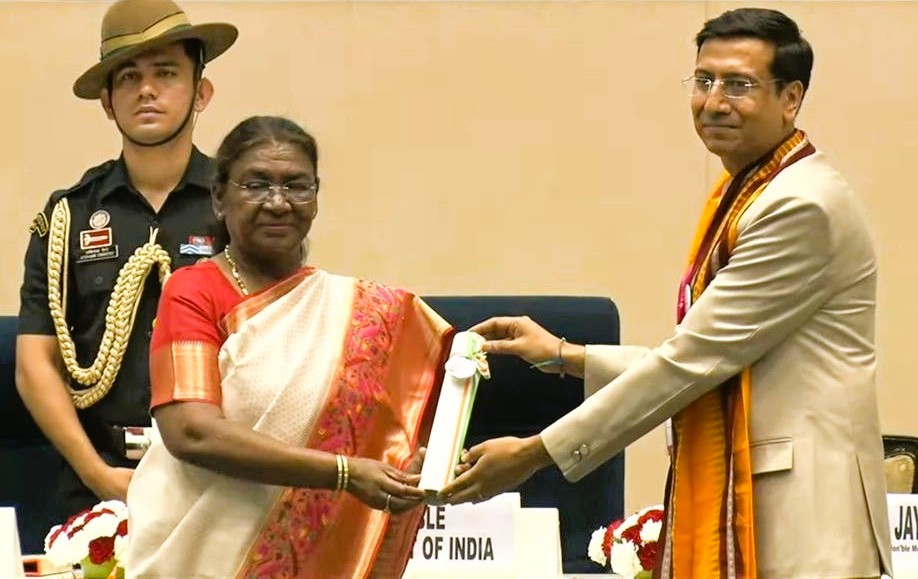
Prof. Kapil Ahuja is a Full Professor in the Department of Computer Science & Engineering at the Indian Institute of Technology Indore (IIT Indore), where he heads the Mathematics of Data Science and Simulation (MODSS) research lab. After completing dual Master's degrees and a Ph.D. from Virginia Tech (USA) followed by postdoctoral work at the Max Planck Institute in Germany, he has held visiting positions at UT Austin, IMT Atlantique, Sandia National Labs, TU Dresden, and TU Braunschweig. His administrative roles include founding Dean of International Affairs and former Head of Computer Science & Engineering at IIT Indore. Education: Ph.D. in Mathematics, Virginia Tech (2011) M.S. in Mathematics, Virginia Tech (2009) M.S. in Computer Science, Virginia Tech (2007) B.Tech. in Mechanical Engineering, IIT (BHU) Varanasi (2001) Research Focus: Prof. Ahuja's work bridges theoretical advances with real-world applications, emphasizing machine learning algorithms for plant/cancer studies, game-theoretic poverty reduction models, exascale climate modeling solvers, and drone trajectory optimization. His interdisciplinary approach integrates numerical linear algebra with network science to solve complex systems problems across healthcare, agriculture, and climate science, supported by 4.85 Crores INR in external funding. Publication Trends: Recent work demonstrates growing emphasis on AI-driven optimization for physical systems (drones, climate models) and biomedical applications (cancer classification). His publications increasingly feature cross-disciplinary collaborations between computer science, biology, and economics, with notable contributions in explainable AI for healthcare and resource allocation algorithms for social networks. Scientific Recognition: National Teacher's Award (2024) from the President of India Five-time recipient of IIT Indore's Best Teacher Award (2013-2023) Best Poster Award at International Workshop on Game Theory & Networks (2019) Steeneck Graduate Research Fellowship (Virginia Tech, 2011) Multiple SIAM travel awards for international conferences Mentorship & Service: Prof. Ahuja has graduated 5 Ph.D. and 4 M.S. (Research) students while mentoring 75 B.Tech. projects. He serves as Associate Editor for Applied Intelligence Journal (Springer Nature) and Knowledge and Information Systems, organizes international conferences, and reviews for 35+ academic sources. His administrative leadership significantly expanded IIT Indore's global partnerships through the Research Park initiative. Research Infrastructure: The MODSS lab maintains active collaborations with Oak Ridge National Lab, Sandia National Labs, and European institutions. Current projects include AI-optimized drone swarms for agricultural monitoring and game-theoretic models for poverty intervention, utilizing high-performance computing resources for large-scale simulations.
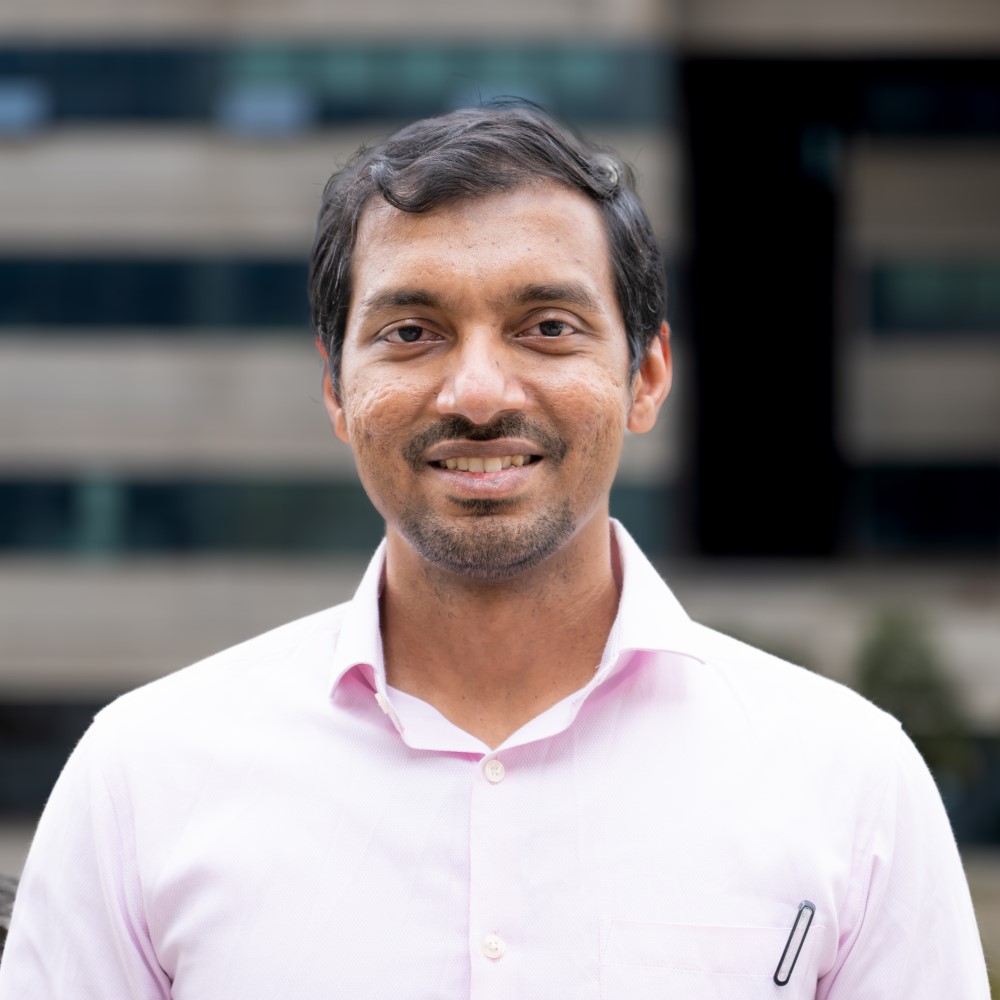
Rakesh Venkat is an Assistant Professor in the Department of Computer Science and Engineering at the Indian Institute of Technology Hyderabad. His research focuses on Theoretical Computer Science, including approximation algorithms, hardness of approximation, and communication complexity. Education : Ph.D., Tata Institute of Fundamental Research (TIFR), Mumbai. Research Trends : His work addresses fundamental challenges in algorithm design, such as optimizing cache misses, improving clustering algorithms, analyzing graph expansion, and exploring embedding techniques. Publications span top-tier conferences like APPROX, FSTTCS, ICALP, and ITCS, with collaborations at institutions including HUJI, TIFR, and IIT-Bombay. Teaching : Courses taught include Approximation Algorithms, Advanced Data Structures, Discrete Mathematics, and Spectral Graph Theory.
Bertrand JOUVE is a CNRS Research Director affiliated with the Interdisciplinary Laboratory for Solidarity, Societies, Territories (LISST) at the University of Toulouse. With a career spanning over two decades in academic research, he has held positions as Professor of Mathematics at University Lyon 2 (2011-2013) and Lecturer at University Toulouse 2 (1999-2011). His academic leadership includes serving as Deputy Scientific Director at InSHS CNRS (2011-2016) and President of the GIS National Network of Human Sciences Houses (2016-2018). Professor Jouve's research expertise centers on graph theory and network analysis, with significant contributions to mathematical models for network analysis, complex networks, and social networks. His work demonstrates strong interdisciplinary connections between pure mathematics and practical applications in urban mobility systems, pandemic modeling, and digital media impacts. Recent publications highlight his focus on bicycle mobility during the pandemic, theoretical advances in matrix operations, and the societal implications of digital technologies. His research output shows consistent productivity with publications spanning mathematics, computer science, transportation science, and social sciences. The interdisciplinary nature of his work is evident in co-authorship patterns spanning institutions in France, Australia, and Israel. His 2024 publications in Linear Algebra and its Applications and Transportation journals demonstrate continued theoretical and applied contributions. As a CNRS Research Director, Professor Jouve supervises research projects and likely mentors junior researchers, though specific student information isn't detailed in available sources. His leadership roles in national research infrastructure suggest significant administrative responsibilities alongside his research activities. Professor Jouve's laboratory affiliation with LISST provides a rich interdisciplinary environment for studying societal structures through mathematical lenses. The laboratory's focus on solidarity, societies, and territories aligns with his research interests in social networks and urban systems, creating opportunities for collaborative research across disciplinary boundaries.
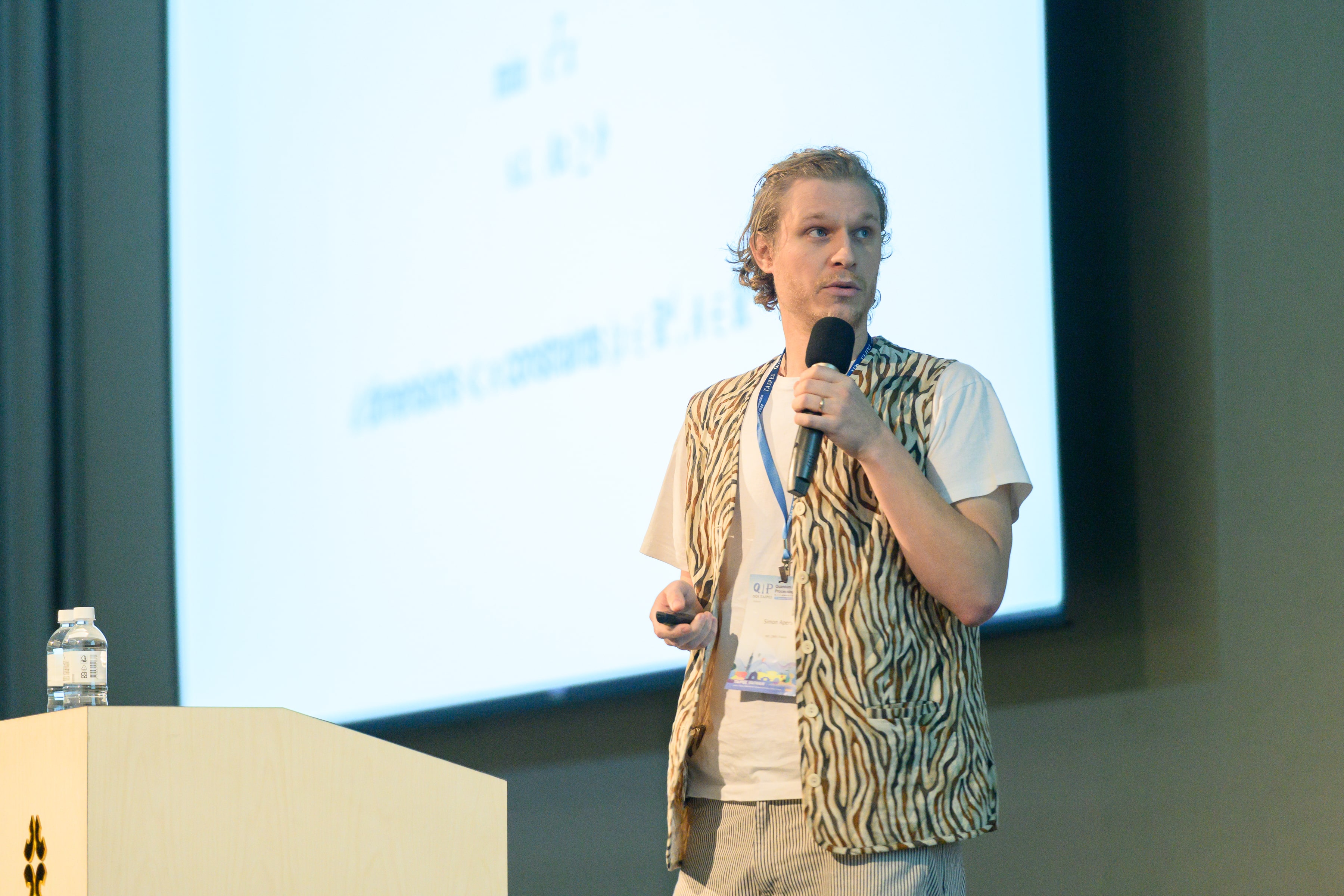
Simon Apers is a CNRS researcher at IRIF (Institut de Recherche en Informatique Fondamentale) at Université Paris Cité. He focuses on quantum algorithms with broader interests in theoretical computer science, including random walks, graph theory, and combinatorial optimization. His primary research interests span quantum computing, theoretical computer science, and algorithms. Apers has made significant contributions to quantum walks, quantum property testing, graph algorithms, and computational complexity. His work often bridges quantum information with classical theoretical computer science, exploring how quantum techniques can improve classical algorithms and solve problems more efficiently. He has developed quantum speedups for various computational tasks including sampling, optimization, and graph problems. Simon Apers serves as a program committee member for prestigious conferences including TQC'25, QIP'25, TQC'23, SODA'23, and ESA '21. He also serves as an editor for the journal Quantum. His teaching activities include courses at Sorbonne University (2022-present) on Advanced Quantum Algorithms, MPRI (2021-present) on Quantum Algorithms and Complexity, and Bad Honnef (2022). His publication record shows a strong trend toward quantum algorithms for graph problems, quantum walks, and connections between quantum computing and classical theoretical computer science. He frequently collaborates with researchers from various institutions across Europe and has published in top venues including FOCS, STACS, ESA, PRL, and JMLR. Simon Apers actively mentors students and has open positions for PhD students and postdocs in quantum algorithms at IRIF. His research group is involved in cutting-edge work at the intersection of quantum computing and theoretical computer science, with significant contributions to quantum walks, property testing, and computational complexity.