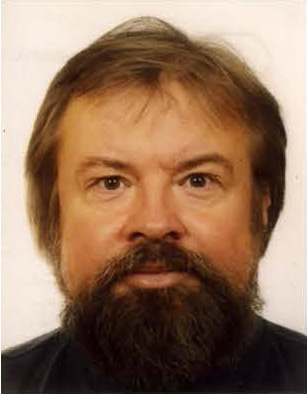
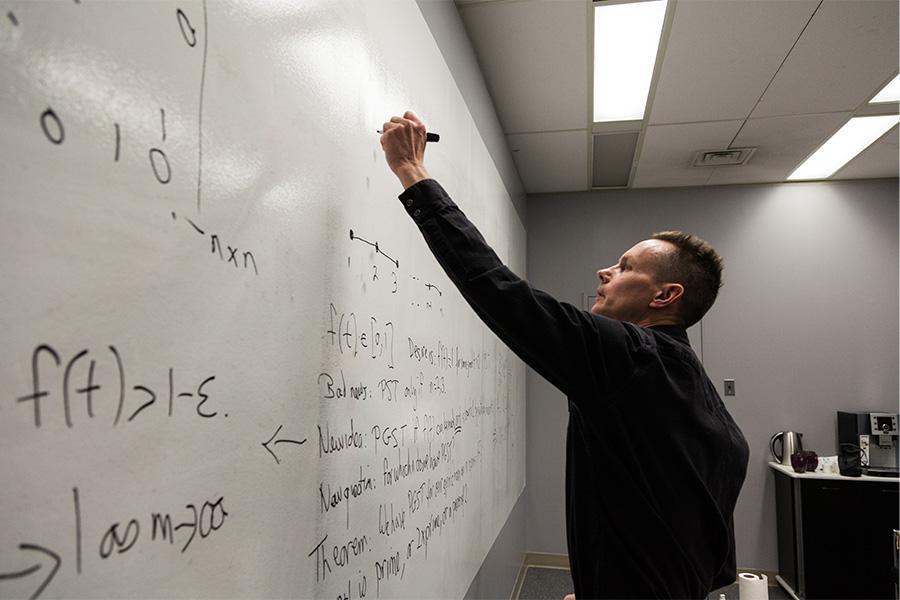
Micha Wasem is an Associate Professor at the Fribourg School of Engineering and Architecture (HES-SO), affiliated with the Institute for Intelligent and Secure Systems. His research spans mathematical modeling, geometric analysis, and statistical methods with applications in engineering contexts. Current projects include FRISAM-Swisslos (statistical game analysis) and metamodeling techniques for geotechnical applications. His publications demonstrate expertise in computational mathematics, algebraic structures, and geometric equilibria. Teaching responsibilities include mathematics courses across engineering programs including civil, electrical, and mechanical engineering disciplines.
Marek M. Karpinski is a Chair Professor of Computer Science at the University of Bonn and a founding member of the Hausdorff Center for Mathematics . He has held visiting or professorial positions at institutions such as Princeton University, Carnegie-Mellon University, and the University of Edinburgh. His affiliations also include the B-IT Research School on Applied Informatics and the Lab for Foundations of Computing . His research spans efficient algorithms , combinatorial optimization , computational complexity , randomized approximation techniques , and applications in network design , quantum computation , and molecular biology . Recent work focuses on approximation hardness for NP-hard problems, graph algorithms , and algebraic computational complexity . His scientific contributions include polynomial time approximation schemes for dense NP-hard problems and key publications in randomized algorithms , VC dimension , and network optimization . He has advised numerous researchers and received honors such as the Humboldt Research Award and the Max Planck Research Prize .
Stephen Kirkland is Professor of Mathematics and Associate Dean in the Faculty of Graduate Studies at the University of Manitoba. His research focuses on matrix theory, combinatorial mathematics, and spectral graph theory with applications to Markov chains and network science. Current investigations include Kemeny's constant analysis, quantum state transfer in graphs, and spectral properties of stochastic matrices. His work connects abstract matrix theory with practical applications in epidemiology, network analysis, and quantum computing. Kirkland serves as Editor-in-Chief of Linear and Multilinear Algebra and Senior Editor of Linear Algebra and its Applications. He previously served as President of the International Linear Algebra Society and on scientific advisory boards internationally. He currently supervises graduate students Hermie Monterde, Homer Franz De Vera, Aaron Rossi, and Max Wiebe. His research group investigates mathematical structures underlying complex systems and networks.
Prof Kai Qin is a Professor of AI and Data Science at Swinburne University, affiliated with the School of Science, Computing and Emerging Technologies. He holds roles including Director of the Intelligent Data Analytics Lab, Deputy Director of the Swinburne Space Technology and Industry Institute, and Vice President for Education at IEEE Computational Intelligence Society (CIS). Qin earned his B.Eng. from Southeast University (2001) and PhD from Nanyang Technological University (2007). His research focuses on Computational Intelligence (CI), encompassing Neural Networks, Evolutionary Computation, and Fuzzy Systems, with applications in Machine Learning, Remote Sensing, and Pervasive Computing. His work has garnered over 20k Google citations and recognition such as IEEE Fellow (2025). Key achievements include the 2012 IEEE Transactions on Evolutionary Computation Outstanding Paper Award and leadership in conferences like IJCNN 2022. He pioneered the Master of Data Science program at Swinburne (2018–2020) and leads initiatives in federated learning, onboard AI for satellite missions, and AI-driven medical diagnostics. Qin’s professional contributions span editorial roles in journals like Swarm and Evolutionary Computation and leadership in IEEE technical committees. His grants include SmartSat CRC projects for satellite AI and ARC-funded research on gravitational lensing and traffic analytics.
Yannic Maus is a Professor at Graz University of Technology, affiliated with the Institute of Algorithms and Theory and the Institute of Software Engineering and Artificial Intelligence. His research focuses on distributed computing, graph algorithms, and theoretical computer science. He holds a PhD and multiple bachelor’s and master’s degrees in Computer Science. His work emphasizes distributed graph coloring, locality in algorithms, and massively parallel computing. He has contributed to foundational results in distributed algorithms, including optimal edge coloring and coloring hyperbolic random graphs. His research bridges theoretical insights with practical distributed systems challenges. Education: PhD in Natural Sciences (Dr.rer.nat.), B.Sc. and M.Sc. in Computer Science Key research interests include distributed algorithms for graphs, Lovász Local Lemma applications, and algorithmic efficiency in dynamic networks. His publications explore topics like ruling sets in trees, exponential speedups in MPC models, and adaptive coloring techniques for sparse graphs. He has also investigated the algorithmic small-world phenomenon and connectivity in forests using deterministic approaches. Yannic Maus’s work often addresses theoretical lower bounds and upper limits in distributed computing, with applications to real-world networked systems. His contributions span conferences like DISC and SoCG, focusing on both foundational problems and their algorithmic solutions.
Prof. Dr. Ulrich Bauer is a Professor at the Technische Universität München (TUM) , leading the Applied and Computational Topology research group within the TUM School of Computation, Information and Technology . His academic career includes positions at Freie Universität Berlin, Georg-August-Universität Göttingen (where he earned a doctoral degree in Mathematics), and the Institute of Science and Technology Austria. Bauer specializes in applied and computational topology, focusing on multi-scale data connectivity and developing computational methods for large datasets. He is a key member of the Collaborative Research Center Discretization in Geometry and Dynamics and the Centre for Topological Data Analysis . Research Interests: Bauer’s work bridges theoretical foundations and practical applications in topology. He explores methods like persistent homology and discrete Morse theory to uncover global data structures. His contributions include advancing algorithms for topological data analysis, with applications in medical imaging, computational biology, and geometric modeling. Bauer’s software tool Ripser is widely recognized for efficient computation of persistence barcodes. Awards: ATMCS Best New Software Award (2016) Best Paper Award TopoInVis (2013) Apple Design Award (2003) O’Reilly Mac OS X Innovators Award (2003) Grants & Leadership: Bauer’s leadership roles include the executive board of the CRC Discretization in Geometry and Dynamics. His research has been supported by grants focusing on topological methods in data science and geometry. He actively contributes to advancing interdisciplinary collaborations between mathematics, computer science, and applied fields. Labs & Teams: As founder of the Applied and Computational Topology group at TUM, Bauer fosters innovation in computational topology, mentoring researchers and students in developing cutting-edge methodologies. His work intersects with the TUM School’s broader mission in computational and data-driven science.
Frank Stephan is a Professor at the National University of Singapore , jointly affiliated with the Department of Mathematics and the School of Computing . His primary office is located in Block S17 (Mathematics), and he maintains a secondary office in Block COM2 (Computing). He teaches advanced courses including Computational Complexity , Logic and Foundations of Mathematics , and Advanced Automata Theory . Stephan co-organizes the departmental Logic Seminar and maintains an extensive publication record in theoretical computer science. His research spans: Recursion Theory & Kolmogorov Complexity : Foundational computability and information theory. Learning Theory : Inductive inference and algorithmic learning models. Computational Complexity : Hardness, parameterization, and structural graph algorithms. Automata & Formal Languages : Automatic structures and language recognition complexity. Recent publications focus on combinatorial optimization in graphs, including dominating sets, geodetic monitoring, identifying codes, and parameterized complexity. His work frequently appears in top venues (e.g., STACS, ICALP, ISAAC) and journals (e.g., Discrete Mathematics , Theoretical Computer Science ). Stephan holds memberships in the European Association for Theoretical Computer Science , Deutsche Mathematiker-Vereinigung , and other academic societies. No awards or student advisees are documented.
Oscar Defrain is an Associate Professor at Aix-Marseille University, affiliated with the Laboratoire d’Informatique et Systèmes (LIS UMR CNRS 7020) and the ACRO team. He holds a Ph.D. from Université Clermont Auvergne (2020) and completed a postdoc at the University of Warsaw. His research focuses on algorithms and combinatorics in graphs, hypergraphs, and lattice structures, with expertise in minimal dominating sets, maximal independent sets, and Boolean function dualization. Education : Ph.D. in Computer Science, Université Clermont Auvergne (2020) Research Interests : Defrain specializes in structural graph theory, hypergraph dualization, and algorithmic enumeration. His work spans combinatorial optimization, parameterized complexity, and lattice theory, with recent contributions to geometric graph certification, metric graph problems, and XOR-CNF signature enumeration. He coordinates the ANR JCJC PARADUAL project and participates in ERC Cutacombs and ANR DISTANCIA. Recent Publications (2024-2025) examine quasi-optimal bounds for induced paths, polynomial-delay isomorphism generation, hypergraph dualization with FPT-delay, and geometric graph certification. These works intersect graph algorithms, combinatorics, and theoretical computer science. Teaching : Defrain teaches graph theory, algorithmic enumeration, and programming (Java/Python) at Aix-Marseille University (M1, L1, L2) and Université Clermont Auvergne (M1, L3). He uses platforms like Moodle and AMeTICE for course materials.
Máté L. Telek is a postdoctoral researcher at the Max Planck Institute for Mathematics in the Sciences (MPI-MiS) in Leipzig, Germany, working in the Nonlinear Algebra research group under Bernd Sturmfels. He completed his PhD in 2024 at the University of Copenhagen under Elisenda Feliu and will move to Leipzig University in January 2026 with a prestigious Marie Curie Fellowship to work on the project 'Positive Solutions in the Sciences'. His educational background includes a PhD from the University of Copenhagen (2024), an M.Sc. from Heidelberg University (2020), and a B.Sc. from Heidelberg University (2018). His doctoral thesis was titled 'Signed Support of Multivariate Polynomials and Applications'. Telek's research centers on real algebraic geometry and tropical geometry, with significant applications in particle physics and chemical reaction networks. His work bridges abstract mathematical theory with practical scientific problems, particularly in understanding the geometric structures underlying polynomial systems and their positive solutions. He has made notable contributions to generalizing Descartes' rule of signs to multivariate settings and analyzing connectivity in parameter regions of biochemical networks. His publication record shows a strong focus on computational aspects of algebraic geometry, with recent papers exploring connections between tropical geometry, Feynman integrals in physics, and multistationarity in reaction networks. His work demonstrates interdisciplinary reach spanning pure mathematics, theoretical physics, and systems biology. Scientific Awards: Best Talk Award at the Conference on Geometry: Theory and Applications Telek has been actively involved in the academic community through conference presentations, seminar organization (including a minisymposium at SIAM-AG25), and participation in numerous workshops. His teaching experience includes leading exercises for graduate courses at both MPI-MiS Leipzig and the University of Copenhagen, focusing on applied algebra and geometry. As a member of the Nonlinear Algebra group at MPI-MiS, Telek collaborates with an international team of researchers exploring the frontiers of algebraic methods in science. His upcoming move to Leipzig University with a Marie Curie Fellowship indicates significant recognition of his research potential and promise for future contributions to the field.
Renjie Liao is an Assistant Professor (tenure-track) in the Department of Electrical and Computer Engineering (ECE) at the University of British Columbia (UBC), with an associated appointment in the Department of Computer Science. He is also a Faculty Member at the Vector Institute and a Canada CIFAR AI Chair. Prior to UBC, Dr. Liao was a Visiting Faculty Researcher at Google Brain and held a Senior Research Scientist position at Uber Advanced Technologies Group during his PhD. He earned his B.Eng. (Automation) from Beihang University, M.Phil. (CS) from the Chinese University of Hong Kong, and PhD (CS) from the University of Toronto. His research focuses on probabilistic and geometric deep learning , with key contributions in deep generative models, geometric deep learning, neural algorithmic reasoning, and generalization bounds. Notable areas include 3D point cloud analysis, self-driving systems, and healthcare applications using graph neural networks. His work bridges theoretical foundations (e.g., PAC-Bayes bounds) with practical applications like motion forecasting and medical imaging. Education: B.Eng. in Automation, Beihang University (2011) M.Phil. in Computer Science, CUHK (2015) PhD in Computer Science, UofT (2021) Dr. Liao has received awards such as the RBC Graduate Fellowship and Connaught International Scholarship. His lab (Deep Structured Learning Lab) emphasizes principled mathematical approaches to solving complex problems. He advises students in machine learning, computer vision, and robotics, encouraging applications from those with strong coding/mathematical backgrounds. Labs/Teams: Deep Structured Learning Lab (UBC) Vector Institute Collaboration
Ryan Williams is a Professor of Electrical Engineering and Computer Science at MIT's Computer Science and Artificial Intelligence Laboratory (CSAIL) and the Department of Electrical Engineering and Computer Science. Previously, he held a faculty position at Stanford University from 2011 to 2016. He obtained his PhD in Computer Science from Carnegie Mellon University under Manuel Blum and completed his undergraduate studies at Cornell University. His research focuses on computational complexity theory, exploring the boundaries of efficient computation and connections between algorithm design and complexity lower bounds. He teaches advanced courses such as Automata, Computability, and Complexity Theory at MIT. Education: PhD in Computer Science, Carnegie Mellon University (Advisor: Manuel Blum) Bachelor's Degree in Computer Science, Cornell University Research Interests: His work addresses fundamental questions in theoretical computer science, including the P vs. PSPACE problem, circuit lower bounds, and the development of algorithms with provable efficiency. He investigates connections between algorithmic techniques and complexity-theoretic limitations, aiming to establish barriers to solving computational problems efficiently. Publications and Trends: Ryan Williams' recent work spans topics like space-bounded computation, probabilistic polynomial sparsity, circuit lower bounds, and algorithms for compression and graph problems. His research often bridges theoretical insights with practical algorithm design, emphasizing the interplay between computational models and their limitations. Advising and Grants: Current advisees include Rahul Ilango, Ce Jin, and Ted Pyne. He has mentored numerous PhD students who have contributed to areas like fine-grained complexity and circuit analysis. While specific grants are not detailed, his research aligns with foundational studies in theoretical computer science. Labs and Teams: Williams is affiliated with MIT CSAIL, where he collaborates on projects exploring computational complexity and algorithmic foundations.
Atri Rudra is the Katherine Johnson Chair in Artificial Intelligence and Professor in the Department of Computer Science and Engineering at the University at Buffalo, State University of New York. He received his B.Tech from IIT Kharagpur in 2000 and his PhD from the University of Washington in 2007. Education: PhD, Computer Science and Engineering, University of Washington, 2007 MS, Computer Science and Engineering, University of Washington, 2005 B Tech, Computer Science and Engineering, Indian Institute of Technology, India, 2000 Rudra's research spans Theoretical Computer Science with specific interests in structured linear algebra (with applications in machine learning), database algorithms, theory of error-correcting codes, and algorithms and society. He is a member of both the Algorithms and Theory group and the Computing for Social Good group at UB. His work bridges fundamental theoretical questions with practical societal implications, particularly in how computing affects society. His publications reflect a strong focus on coding theory, as evidenced by his ongoing work on the book Essential Coding Theory with Venkatesan Guruswami and Madhu Sudan. His recent work shows an increasing interest in the intersection of machine learning and society, with courses like ML and Society reflecting this evolving research direction. His publications span theoretical foundations of coding theory to practical applications in database algorithms and societal implications of computing. Awards and Recognition: SUNY Chancellor's Award for Excellence in Teaching (2022) NSF CAREER Award (2009) Best Paper awards at PODS (2012) and ESA (2010) William Chan Memorial Dissertation Award (2007) IBM Faculty Award (2013) Rudra has advised numerous PhD students who have gone on to careers in academia and industry. His current research is supported by NSF grants IIS-1956149 and CCF-2247014. He has been actively involved in service to the community as an editor for IEEE Transactions on Information Theory and Theory of Computing Systems, and as program committee member for major conferences including PODS, SODA, and ITCS. He leads the EaGL Theory Computation Workshop series and co-organizes workshops on Multiple Approaches for Teaching Responsible Computing and Algorithmic Opportunities in the Modern LLM Revolution, reflecting his commitment to both theoretical foundations and societal impact of computing.
Tom Kelly is an Assistant Professor at the School of Mathematics, Georgia Institute of Technology, specializing in Combinatorics and Graph Theory. His research intersects with Theoretical Computer Science, particularly in algorithms and randomness. He co-organizes the Atlanta Combinatorics Colloquium and the Georgia Tech Combinatorics Seminar . His current PhD students include Sarah Frederickson , Xuanang Li , and Tantan Dai , and he is funded by NSF Grant DMS-2247078. Dr. Kelly's research focuses on graph decompositions, hypergraph coloring, and probabilistic combinatorics. He has made significant contributions to problems like the Erdős-Faber-Lovász conjecture and threshold phenomena in Latin squares. His work often employs advanced techniques such as absorption methods and nibble algorithms. His recent publications explore entropy bounds, Steiner systems, and Hamilton transversals, reflecting his interest in extremal combinatorics and random structures. He teaches graduate and undergraduate courses in combinatorics and graph theory, including Math 3012 (Applied Combinatorics) and Math 7016 (Combinatorics) . He also led research initiatives like the Georgia Tech Summer 2023 REU project on Latin squares.
Chung Piaw Teo is the Stephen Riady Professor and Executive Director of the Institute of Operations Research and Analytics (IORA) at the National University of Singapore (NUS) Business School. He has held significant academic roles including Head of Department, Acting Deputy Dean, Vice-Dean of Research and Ph.D. Programs, and Chair of the Ph.D. Committee at NUS. PhD in Operations Research from MIT (1996) Bachelor of Science (Honors) in Mathematics from NUS (1990) Research Interests: Optimisation Under Uncertainty Discrete Choice Modeling Social Choice Theory Inventory Theory Supply Chain Management Combinatorial Optimisation Operations Research Publications focus on stochastic optimization, supply chain resilience, and network design, with recent works spanning 2020–2015 in journals like Management Science , Operations Research , and Mathematical Programming . Key themes include urban logistics, risk mitigation, and decision analytics. Scientific Awards: Stephen Riady Professor (2024) Provost’s Chair (2014) Faculty Outstanding Researcher Awards (2014, 2006, 2003) Nominee for University Outstanding Researcher Award (2006) Grants & Leadership: Served on international committees (INFORMS, LANCHESTER Prize, Fudan Prize) and held visiting/fellow positions at MIT, Northwestern, and Sungkyunkwan University. Currently a department editor for Management Science and associate editor for multiple journals.
Petr Hliněný is a Professor at the Faculty of Informatics, Masaryk University in Brno, Czech Republic, where he also serves as the Vice-dean for research, development, and doctoral studies. He is affiliated with the Department of Computer Science and leads the Discrete Methods and Algorithms (DIMEA) research group. His research interests span Graph Theory , Discrete Mathematics , Theoretical Computer Science , with a focus on structural and topological graph theory, parameterized complexity, logic in computer science, twin-width, crossing numbers, and discrete geometry. His recent work includes structural results on planar graphs, visibility graphs, and logical aspects of graph classes. His recent publications exhibit a strong trend in analyzing structural width parameters such as twin-width and clique-width, their logical transductions, and algorithmic implications. He has published extensively on planar graphs, crossing numbers, and geometric graphs, often in top venues like European Journal of Combinatorics , Journal of Combinatorial Theory , and LIPIcs conference proceedings. Professor, Faculty of Informatics, Masaryk University Vice-dean for Research, Development and Doctoral Studies Head of DIMEA Research Group Guarantor of Doctoral Study Programme in Computer Science He actively supervises PhD and master’s students, including current doctoral candidates Filip Pokrývka, Shubhang Mittal, Jakub Balabán, and Jan Jedelský. He has led multiple research grants funded by the Czech Science Foundation (GAČR), including project 20-04567S on tractable instances of hard graph algorithmic problems. He also organizes seminars such as IV119 and IV131, and offers thesis topics in discrete mathematical methods.