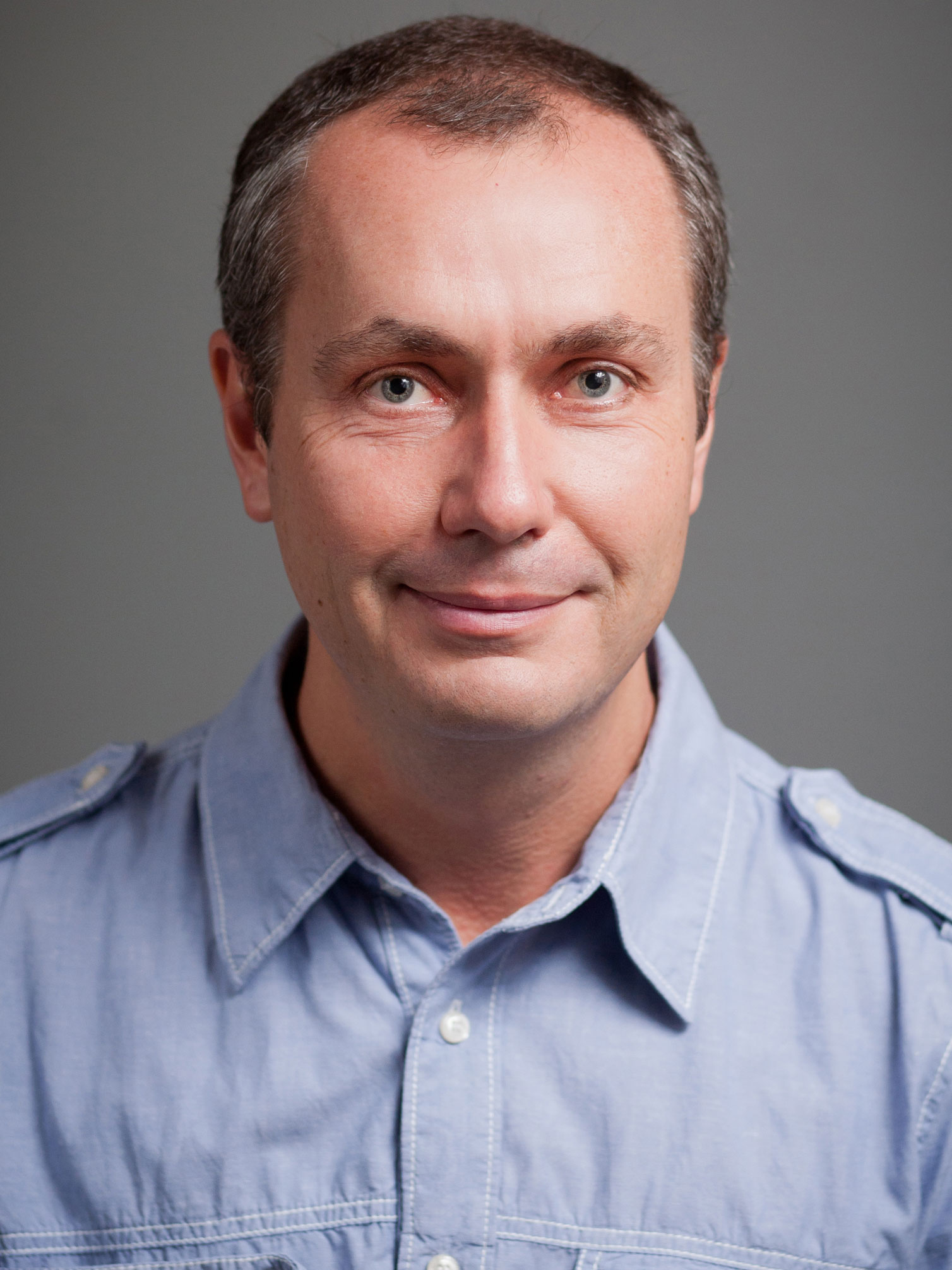
Prof. Dmitri Krioukov is an Associate Professor in the Department of Physics at Northeastern University and holds an affiliated faculty position in Electrical and Computer Engineering. He directs the DK-Lab at the Network Science Institute, focusing on theoretical aspects of complex networks, including latent network geometry, random geometric graphs, and navigation in networks. His work bridges mathematical physics and applied network science, with applications to real-world data such as the Internet's structure. Research interests revolve around the interplay between network topology and geometry, including studies of causal sets, graph curvature, and dynamics in complex systems. He has pioneered frameworks linking network growth to hyperbolic geometry, enabling efficient routing algorithms. Notable contributions include the discovery of latent geometric structures underlying real-world networks and their implications for navigation and scalability. He has been recognized for high-impact publications, including multiple Stanford University Annual Assessments placing him among the top 2% most-cited scientists in his field (2024, 2023, 2022). His lab's interdisciplinary approach integrates principles from physics, mathematics, and computer science to address fundamental questions in network science.
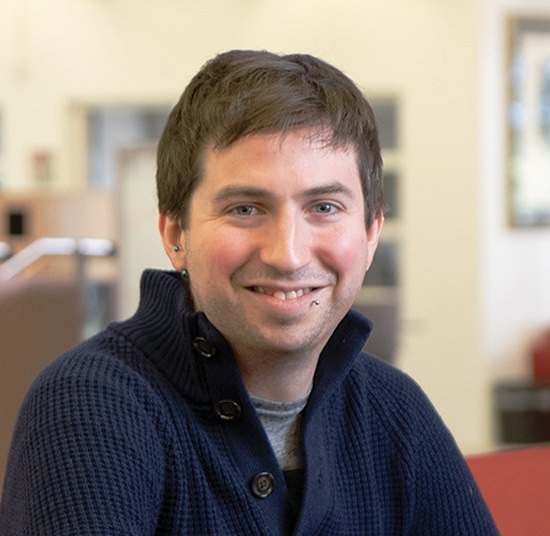
Dr. George Cantwell is an Assistant Professor in the Department of Engineering at the University of Cambridge, affiliated with Cambridge Infectious Diseases. He specializes in computational methods for inference problems, particularly in disease spreading across networks. Education: PhD in Physics from the University of Michigan; postdoctoral fellowship at the Santa Fe Institute His research focuses on network science , complex systems , and statistical inference , with an emphasis on computational approaches. His work spans theoretical and applied domains, including: Message passing algorithms for heterogeneous networks Bias correction in social network analysis (friendship paradox) Statistical inference of network structure from noisy data Modeling judicial voting behavior through network interactions Computational cognitive neuroscience of category learning Recent publications highlight interdisciplinary applications in epidemiology, physics, and cognitive science. He actively mentors students in networks, complex systems, and statistical inference.
Prof. Tobias Müller is a Professor at the Bernoulli Institute for Mathematics, Computer Science and Artificial Intelligence at the University of Groningen. His academic journey includes previous positions at Utrecht University, CWI (Centrum Wiskunde & Informatica), Tel Aviv University, and Eindhoven University of Technology, with a doctorate from the University of Oxford under Colin McDiarmid. His research focuses on combinatorics, probability theory, random graphs, percolation, discrete and stochastic geometry, and combinatorial game theory. He has contributed extensively to understanding complex networks, hyperbolic models, and geometric random structures. Research Interests: Random Graphs and Percolation Theory Discrete and Stochastic Geometry Hyperbolic Network Models Probabilistic Combinatorics Geometric Probability Graph Algorithms and Connectivity Notable Contributions: Analysis of Voronoi and Poisson-Voronoi percolation in hyperbolic planes. Studies on Mallows random permutations and their cycle structures. Research on component games and logical limit laws in graph theory. Investigations into the geometry and properties of random geometric graphs. Grants & Collaborations: Active in organizing workshops and conferences on random graphs and geometric networks, including the BIRS Workshop on Random Geometric Graphs and the STAR Workshops series. Labs/Teams: Member of the Bernoulli Institute’s research groups, focusing on stochastic studies, combinatorics, and algorithmic methods.
Aditya T Siripuram is an Associate Professor at the Indian Institute of Technology Hyderabad (IITH), holding joint appointments in the Department of Electrical Engineering and the Department of Artificial Intelligence. He completed his PhD at Stanford University and holds B.Tech and M.Tech degrees from IIT Bombay. Education: PhD in Electrical Engineering, Stanford University (2017) - GPA: 4.17/4 M.Tech in Electrical Engineering, IIT Bombay (2009) - GPA: 9.79/10 B.Tech in Electrical Engineering, IIT Bombay (2009) - GPA: 9.79/10 Research Interests: His research spans Fourier analysis, signal processing, machine learning, convex and combinatorial optimization, with applications in AI/ML and applied mathematics. His work particularly focuses on computational aspects of Fourier analysis, including fast DFT computation for structured signals, convolution idempotents, and graph-based signal processing techniques. His recent research directions involve developing efficient algorithms for computing Discrete Fourier Transforms for signals with structured frequency support, investigating relationships between additive structures in frequency domains and computational complexity, and exploring graph learning techniques under spectral constraints. Awards and Recognition: Excellence in Teaching Award, IIT Hyderabad (2019, 2022) Stanford Graduate Fellowship Qualcomm Innovation Fellowship (awarded to his PhD student Charantej Reddy P in 2021) Teaching and Service: He has taught courses including AI1110 Probability and Stochastic Processes, EE5609 Matrix Theory, EE5606 Convex Optimization, and EE5328 Introduction to Submodular Functions. He serves as Departmental Undergraduate Committee Chair for the Department of AI at IITH (2020-present) and was MTech Admissions Coordinator for the same department (2019-2022). Research Group: He currently advises three PhD students working on signal processing based graph learning techniques, DFT computation for structured signals, and coded computing problems.
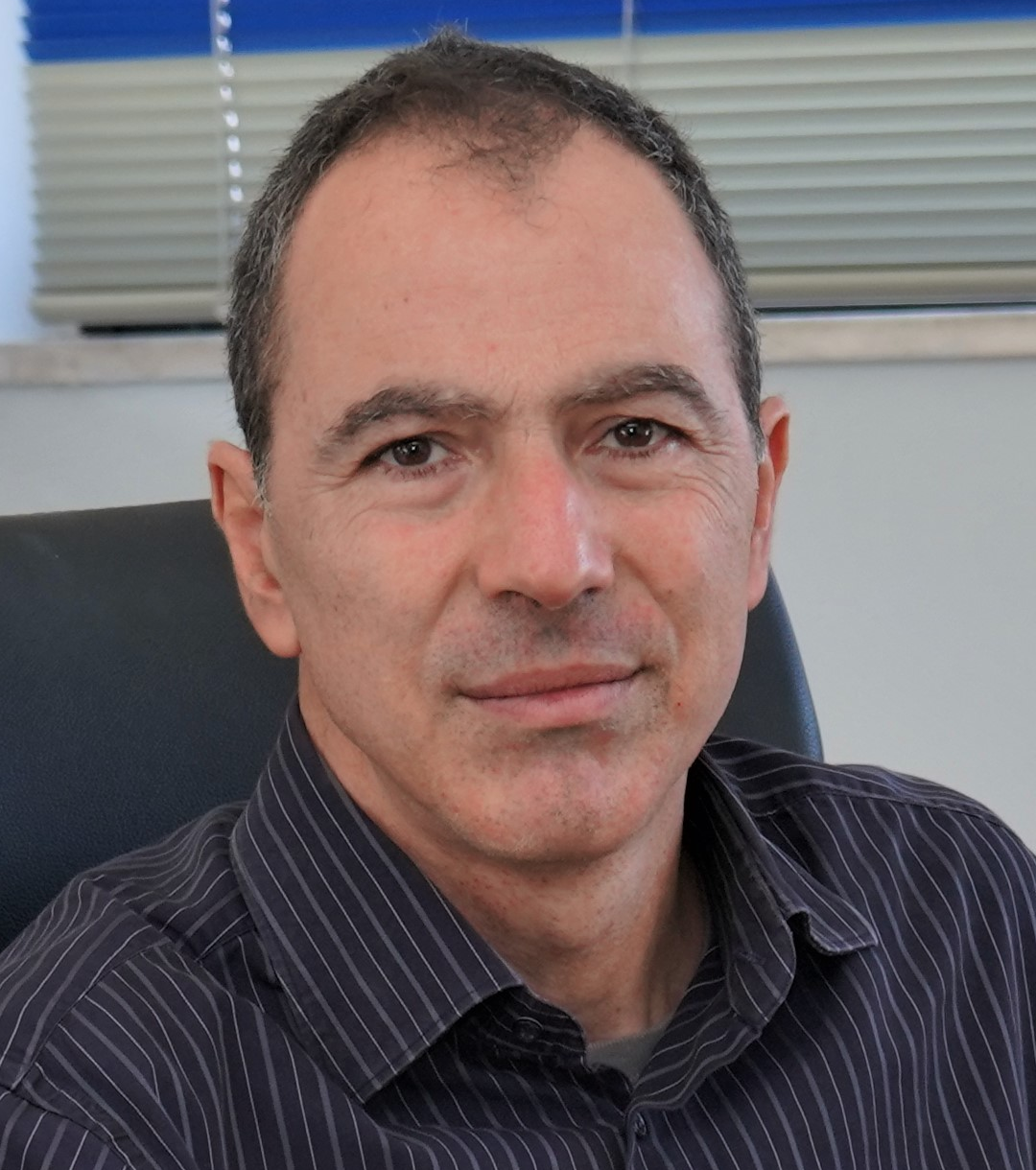
Ioannis Z. Emiris is a Professor in the Department of Informatics & Telecoms at the National & Kapodistrian University of Athens and concurrently serves as President and General Director of the ATHENA Research Center in Greece. He holds a BSc in Computer Science from Princeton University (1989) and a PhD in Computer Science from UC Berkeley (1994). His research spans computational geometry, algebraic algorithms, robotics, structural bioinformatics, and optimization. He is a leading expert in sparse elimination theory, geometric modeling, and algorithmic algebra. Affiliations: ATHENA Research Center, National & Kapodistrian University of Athens, INRIA Sophia Antipolis (France via joint AROMATH team). Education: BSc (Princeton), PhD (UC Berkeley). Research Interests Emiris's work focuses on geometric algorithms, algebraic systems, and their applications. His contributions include advancements in sparse elimination theory, computational geometry for high-dimensional data, and robotics. He has developed algorithms for polynomial system solving, Voronoi diagrams, and geometric predicates for ellipses. Articles Overview His recent work bridges theoretical advances with practical applications, such as deep learning for protein structure prediction (HydraProt) and geometric algorithms for high-dimensional data analysis. He explores intersections between algebraic geometry and computational methods, with applications ranging from robotics to bioinformatics. Scientific Awards Best Paper Award at ISSAC 2003 and 2010 MSCA Network GRAPES (2019-2023) Advising & Grants Emiris has supervised numerous students and researchers, contributing to interdisciplinary projects. He has secured grants for initiatives like the GRAPES network and has led teams in algorithm design and geometric software development. His work on MARS (Maple/Matlab/C Resultant-Based Solver) exemplifies his focus on practical algorithm implementation. Labs & Teams He directs the Lab of Geometric & Algebraic Algorithms and collaborates with the AROMATH team at INRIA. His research group develops open-source tools for computational geometry and algebraic computations.
Sebastian Pokutta is a Professor at Technische Universität Berlin, Vice President at the Zuse Institute Berlin (ZIB), and Chair of the Cluster of Excellence MATH+ and MODAL. His research lies at the intersection of Artificial Intelligence, Optimization, and Machine Learning, with applications in sustainability, quantum computing, and mathematical discovery. Research Interests: Development of novel optimization algorithms, particularly Frank-Wolfe and Conditional Gradient methods. Integration of machine learning with decision-making and combinatorial optimization. AI for Science (AI4Science), including applications in quantum mechanics and ecology. AI and creativity, human-AI co-creativity, and social science modeling using multi-agent LLMs. His recent publications (2025) demonstrate a strong focus on scalable optimization, interpretability, and algorithmic foundations. The work spans theoretical advances in convergence analysis, practical implementations in Julia (FrankWolfe.jl), and real-world deployments in biomass estimation and quantum certification. Scientific Awards: Gödel Prize (2023) STOC Test of Time Award (2022) Science Prize of the Association for Pediatric Orthopedics (2025) Google Research Awards (2021, 2020) NSF CAREER Award (2015) He advises a vibrant research group, with former students and postdocs securing faculty positions at institutions like Inria, Carlos III University, and James Madison University. His group has received funding from Google, DFG, and Math+, and he leads major collaborative efforts such as the Thematic Einstein Semester on Mathematical Optimization for Machine Learning. Labs and Teams: Interactive Optimization and Learning Lab at TU Berlin and ZIB. Leadership in MODAL and MATH+ research clusters, fostering interdisciplinary collaboration in mathematical optimization and AI.
Nicole Wein is an Assistant Professor in the Department of Electrical Engineering and Computer Science at the University of Michigan, where she is a member of the Theory of Computation Lab within the Computer Science and Engineering Division. Her research focuses on theoretical computer science, particularly graph algorithms and lower bounds across various domains including distance-estimation, dynamic, parameterized, distributed, and online algorithms. Education: PhD in Computer Science from MIT, advised by Virginia Vassilevska Williams Master's in Computer Science from Stanford University B.S. in Computer Science/Mathematics from Harvey Mudd College Nicole's research centers on theoretical aspects of graph algorithms and computational complexity. She investigates fundamental questions about how algorithms can efficiently handle changing data, extract information from graphs in linear time, and understand the structure of shortest paths, especially in directed graphs. Her work spans multiple algorithmic paradigms including dynamic algorithms that adapt to changing inputs, parameterized approaches for hard problems, and fine-grained complexity that establishes precise relationships between problem difficulty. Analysis of Nicole's recent publications reveals a strong focus on graph algorithms, particularly shortest path problems, spanners, and hardness results. Her work often bridges theoretical insights with practical implications, developing novel techniques for distance estimation, dynamic graph processing, and approximation algorithms. A significant portion of her research examines the structural properties of graphs that enable or constrain efficient computation, with applications across computer science. Nicole actively mentors students at various levels. She currently advises PhD student Jubayer Nirjhor and has worked with undergraduate researchers including Sam Hiken (now a pre-doc at MIT), Michael Wang, and Tony Zhang. Her teaching includes foundational courses like EECS 376: Foundations of Computer Science and specialized courses such as EECS 598: Graph Algorithms. Nicole contributes to the academic community through service as a program committee member for major conferences including SOSA 2025, FOCS 2025, SODA 2025, and others. She co-organized the June 2023 DIMACS workshop on Modern Techniques in Graph Algorithms and previously organized Algorithms Office Hours at MIT to improve communication between theory and applications of algorithms.
Igor Kortchemski is a CNRS researcher at the Department of Mathematics and Applications (DMA) at École Normale Supérieure, Paris, and a lecturer in the Department of Applied Mathematics at École Polytechnique. His primary research focuses on the continuous limits of random discrete models, particularly examining how discrete combinatorial structures converge to continuous objects under appropriate scaling. His educational background includes a PhD in Mathematics (2012) under Jean-François Le Gall at École Normale Supérieure and a Habilitation à diriger des recherches (HDR) in Mathematics (2016). Kortchemski's research spans several interconnected areas: Random trees and Galton-Watson processes with heavy-tailed distributions Random planar maps and their geometric properties Growth-fragmentation processes and their connections to Lévy processes Scaling limits of combinatorial structures and their continuous counterparts His publication record shows a consistent focus on the geometric properties of random discrete structures, with recent work (2023-2025) exploring uniform attachment processes with freezing, critical tree phenomena, and the mesoscopic geometry of sparse random maps. His research often involves sophisticated probabilistic analysis combined with combinatorial insights. Scientific recognition includes: prix de thèse solennel Perrissin-Pirasset / Schneider de la chancellerie des Universités de Paris (2012) Kortchemski actively contributes to academic service: Examiner for the minor math exam at École Polytechnique (FUF) since 2023 Member of the mathematics jury for ENS International Selection (2023) Member of the jury for the external mathematics competitive examination (Agrégation) since 2021 Member of the jury for the Arts and Economic and Social Sciences Bank (B/L) mathematics exams (2015-2018) He mentors the next generation of researchers as co-director of Antoine Aurillard's and Vanessa Dan's theses (both since 2023), and previously directed Etienne Bellin's (2020-2023) and Paul Thevenin's (2017-2020) theses.
Sean Andersson is a Professor in Mechanical Engineering and Systems Engineering at the College of Engineering, Boston University, and serves as Director of the BU Robotics Lab. His research bridges systems and control theory with applications in nanotechnology , atomic force microscopy , and robotics . His work in nanobioscience focuses on single molecule tracking and high-speed imaging in atomic force and fluorescence microscopy, leveraging control theory to enhance imaging capabilities. In robotics, he develops stochastic control methods for autonomous systems operating in complex environments, emphasizing multi-agent systems , sparsely sampled data , and symbolic control frameworks . Recent publications highlight trends in receding horizon control , persistent monitoring , neural style transfer for imaging , and stochastic policy optimization . The Andersson Lab also explores compressive sensing and optimal control for sensor networks and nanoscale fluid dynamics.
Anne J. Shiu is a Professor in the Department of Mathematics at Texas A&M University. She holds a Ph.D. in Mathematics (2010) from the University of California Berkeley with advisors Bernd Sturmfels and Lior Pachter. Her career includes postdoctoral positions at Duke University (2010-2011) and the University of Chicago (2011-2014), followed by a faculty role at Texas A&M since 2014. Research Focus: Algebraic, geometric, and combinatorial approaches to mathematical biology, specializing in biochemical dynamical systems, neural coding, parameter identifiability, algebraic statistics, and genomics. Academic Contributions: Over 15 recent publications spanning identifiability in compartmental models, multistationarity in reaction networks, convexity analysis of neural codes, and algebraic robustness in biochemical systems. Scientific Recognition: Association of Former Students Distinguished Achievement College-Level Award in Teaching (2019) Invited speaker for Ethel Ashworth-Tsutsui Memorial Lecture (2018-2019) Current Research: Investigates structural identifiability in biological models, focusing on compartmental systems, reaction networks, and neural codes through algebraic methods and computational tools. Her work bridges abstract algebra with practical biological applications, including parameter estimation and robustness analysis. Grant Support: Recipient of NSF CAREER award (2018-2023), prior NSF grants (2010-2017), and Simons Foundation Collaboration Grant (#521874, 2017-2018). Academic Leadership: Organized multiple international workshops/conferences including SIAM conferences and Banff workshop. Currently an Associate Editor for SIAM Journal on Applied Mathematics and serves on the AIM Scientific Research Board.
Professor Asaf Shapira is a faculty member in the Department of Theoretical Mathematics at Tel Aviv University's School of Mathematical Sciences. He has been actively contributing to combinatorics and graph theory research for over a decade, with numerous publications in top journals including Journal of the ACM, Advances in Mathematics, and Geometric and Functional Analysis. Professor Shapira's research focuses on extremal combinatorics, graph theory, and property testing. His work explores fundamental questions in Ramsey theory, hypergraph theory, and probabilistic methods in combinatorics. He has made significant contributions to the study of graph regularity, removal lemmas, and extremal problems in dense and sparse graphs. His recent publications demonstrate a consistent focus on theoretical aspects of combinatorics with connections to theoretical computer science. A notable trend is his work on developing polynomial bounds for various combinatorial theorems and exploring connections between combinatorial structures and computational complexity. His research often bridges pure mathematics with theoretical computer science applications. Professor Shapira teaches advanced courses at Tel Aviv University including Extremal Graph Theory, Basic Combinatorics, and seminars on specialized topics in combinatorics. His teaching spans undergraduate and graduate levels, reflecting his commitment to educating the next generation of mathematicians.
Garvesh Raskutti is an Associate Professor in the Department of Statistics at the University of Wisconsin–Madison, affiliated with the School of Computer, Data & Information Sciences. He holds joint affiliations with the Departments of Computer Science, Electrical and Computer Engineering, and the Wisconsin Institute of Discovery Optimization Group. His research focuses on statistical machine learning, optimization, graphical/network modeling, and information theory, with applications to systems biology and neuroscience. Education: MEng from the University of Melbourne (2008), PhD from UC Berkeley (2012, advised by Martin Wainwright and Bin Yu), and postdoctoral work at SAMSI. Teaching awards include Honored Instructor (2014, 2017) and Madison Teaching and Learning Excellence Fellow (2015). He advises multiple PhD and undergraduate students, including Yuan Li, Hyebin Song, and Lili Zheng. His grants include NGA HM0476-17-1-2003 (Co-PI), ARO W911NF-17-1-0357 (Co-PI), and NSF-DMS 1407028 (Sole PI). Research interests span large-scale statistical inference, computational-statistical trade-offs, and applications in systems biology and neuroscience. His work bridges optimization (e.g., gradient descent, convex regularization), high-dimensional regression, and network analysis. Recent trends in publications emphasize methods for non-convex optimization, sparse models, and network structure learning. Awards include teaching recognition and grants in statistical methodology. Advising spans theoretical and applied projects, with former students like Gunwoong Park (now at University of Korea). Collaborations include interdisciplinary teams in machine learning and signal processing.
Dr. Lijun Chang is an Associate Professor in the School of Computer Science at the University of Sydney. He holds an ARC Future Fellowship (2019–2022) and an ARC DECRA Fellowship (2015–2017). Previously, he was at the University of New South Wales. His research focuses on graph analytics, mining, algorithms, and network science. He teaches courses like INFO5011 (Competitive Programming), COMP5313 (Large Scale Networks), and COMP9120 (Database Management Systems), and coaches the USYD Programming Competition Teams. Education: B.Eng. in Computer Science & Technology from Renmin University of China; PhD from the Chinese University of Hong Kong. Research highlights include scalable graph processing systems (e.g., ScaleG), densest subgraph detection, and graph similarity search. He leads projects funded by ARC grants such as 'Advanced Search of Cohesive Subgraphs in Big Graphs' (2018) and 'Directionality-Aware Cohesive Subgraph Search' (2022). His work emphasizes efficient algorithms for large-scale networks and graph databases. Awards : ARC Future Fellow, ARC DECRA Fellow Students : Yu KONG, Rashmika MATHTHAKA GAMAGE, Mouyi XU Labs/Teams : Focuses on graph algorithms and systems research, contributing to open-source tools and large-scale network analysis.
Cynthia D. Rudin is the Gilbert, Louis, and Edward Lehrman Distinguished Professor of Computer Science at Duke University, with joint appointments in the Departments of Electrical and Computer Engineering, Statistical Science, Mathematics, and Biostatistics & Bioinformatics. She directs the Interpretable Machine Learning Lab and has held previous positions at MIT, Columbia, and NYU. Her educational background includes: Undergraduate degree from the University at Buffalo PhD from Princeton University (2004) Research Interests: Dr. Rudin's research focuses on interpretable machine learning and its applications across multiple domains. Her work emphasizes creating machine learning models whose reasoning processes people can understand, which includes algorithms for extremely sparse models, interpretable neural networks, interpretable matching methods for causal inference, and dimension reduction for data visualization. She applies these techniques to critical societal problems in healthcare, criminal justice, materials science, and other domains. Her lab has developed practical code for sparse models such as decision lists, decision trees, and additive models that provably optimize accuracy and sparsity. Dr. Rudin's recent publications (2024-2025) demonstrate a strong focus on interpretable AI applications across diverse fields including healthcare (mortality risk scores, breast cancer prediction), materials science (metamaterials design), and environmental justice (location-based health analysis). Her work consistently emphasizes practical implementations with real-world impact, particularly in high-stakes decision-making domains where model transparency is critical. Scientific Awards: Squirrel AI Award for Artificial Intelligence for the Benefit of Humanity (2022) - often described as the "Nobel Prize of AI" INFORMS Society on Data Mining Prize (2024) Guggenheim Fellowship (2022) Three-time winner of the INFORMS Innovative Applications in Analytics Award (2013, 2016, 2019) Winner of the 2023 John M. Chambers Statistical Software Award for PaCMAP Winner of the 2024 Award for Innovation in Statistical Programming and Analytics Dr. Rudin has advised numerous PhD students and postdocs who have co-authored significant publications with her. Her lab has received substantial funding for projects applying interpretable machine learning to healthcare (seizure prediction in ICU patients), criminal justice (crime series analysis), and energy infrastructure (underground electrical distribution networks). Her work on the Series Finder algorithm has been adapted by the NYPD and has been running live in NYC since 2016. She directs the Interpretable Machine Learning Lab at Duke, which includes the Almost-Matching-Exactly Lab focused on interpretable causal inference. Her team develops practical code implementations for all their research, emphasizing usability and real-world application in critical domains.
Lutz Warnke is a Professor of Mathematics at the University of California, San Diego, with prior affiliations at Georgia Institute of Technology (where he received tenure in 2021) and Peterhouse, Cambridge University (Junior Research Fellow until 2016). His research focuses on probabilistic combinatorics, random graphs, phase transitions, and combinatorial probability, with applications to extremal combinatorics and Ramsey theory. Education : Ph.D. in Mathematics from the University of Oxford (2012), supervised by Oliver Riordan. Dr. Warnke's research explores the structure and evolution of random graphs and processes, including Achlioptas processes, Ramsey numbers, and extremal problems. His work often bridges probabilistic methods with algorithmic applications and theoretical computer science. His publications from 2022–2025 reveal trends in random graph isomorphisms, clique coloring thresholds, extremal subgraph counts, and hardness of online algorithms. Key subfields include percolation, phase transitions, and probabilistic methods applied to combinatorial structures. Scientific Awards : Dénes König Prize (2016), Alfred P. Sloan Research Fellowship (2018), NSF CAREER Award (2020), Richard Rado Prize (2014). Dr. Warnke actively supervises PhD students and postdocs, including Matthew Cho (PhD ongoing), Erlang Surya (PhD 2025), Emily Zhu (PhD 2025), and He Guo (PhD 2021). He has received teaching accolades at Georgia Tech and contributes to graduate courses in probabilistic combinatorics, random graph theory, and stochastic processes.