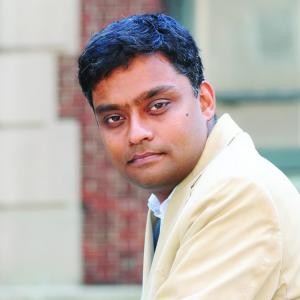
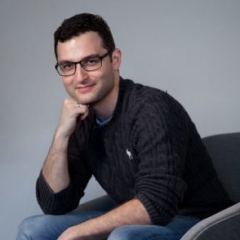
Prof. Dr. Andreas Wiese is an Associate Professor at the Technical University of Munich (TUM), affiliated with the TUM School of Computation, Information and Technology and the Department of Mathematics. He previously held academic positions at the Vrije Universiteit Amsterdam (2021-2022), Universidad de Chile (2016-2021), and the Max-Planck-Institut für Informatik (2012-2016). Andreas Wiese earned his PhD in Mathematics from TU Berlin (2008-2011) and studied Mathematics and Computer Science at TU Berlin (2002-2008). His research focuses on combinatorial optimization , approximation algorithms , and geometric problem-solving , particularly for NP-hard problems in packing, scheduling, and network flow. His recent work includes A 2024 SODA publication on outlier-aware minimum sum of radii approximation A 2023 STOC paper improving weighted flow time minimization Foundational contributions to unsplittable flow and geometric knapsack problems with consistent appearances at top-tier conferences like STOC, FOCS, and SODA. Andreas Wiese leads the Discrete Optimization research group at TUM, supervising PhD students Alexander Armbruster, Elisa Dell'Arriva, and Sandy Heydrich. He has organized major conferences including LATIN 2024 and ADFOCS 2015 , and served on program committees for STOC, FOCS, and SODA.
Louis A. Deaett is a Professor of Mathematics at Quinnipiac University , affiliated with the College of Arts & Sciences and the Department of Mathematics and Statistics . He holds a PhD in Mathematics from the University of Wisconsin-Madison (2009), preceded by dual bachelor's degrees (BS and BA) from the University of Rochester. His career spans postdoctoral work at the University of Victoria and teaching at Quinnipiac since 2011. Education BS, University of Rochester BA, University of Rochester PhD, University of Wisconsin-Madison Deaett's research focuses on the interplay between matrix theory , combinatorics , and graph theory . His work addresses problems like the minimum rank of graphs , spectrally arbitrary patterns , and the application of matroid theory to matrix pattern analysis. He emphasizes pedagogical innovation, seeking to make mathematical truths accessible through discovery-based learning. Recent publications highlight his exploration of computational challenges in graph theory, algebraic conditions for sparse matrices, and connections between matroids and matrix patterns. His academic contributions are documented in journals such as the INFORMS Journal on Computing , Special Matrices , and The American Mathematical Monthly .
Garud Iyengar serves as the Tang Family Professor and Director of the Data Science Institute at Columbia University's Fu Foundation School of Engineering and Applied Science, within the Department of Industrial Engineering and Operations Research. His office is located at 305 Mudd Building, and he can be reached at 212 854-4594 or garud@ieor.columbia.edu. Dr. Iyengar received his B Tech in electrical engineering from the Indian Institute of Technology in 1993 and completed his PhD in electrical engineering from Stanford University in 1998. He maintains an active research profile as a member of Columbia's Data Science Institute. Professor Iyengar's research focuses on understanding uncertain systems and exploiting available information through data-driven control and optimization algorithms. His work spans diverse fields including machine learning, systemic risk, asset management, operations management, sports analytics, and biology. Current projects include thermodynamics of sensing and memory in cells, automatic defensive assignment and event detection in NBA games, deep neural-network frameworks for interpretable robust decision making, attribution schemes for multi-channel advertising, systemic risk associated with extreme weather, and NLP-based stock performance prediction models. Analysis of his recent publications reveals a strong interdisciplinary focus bridging theoretical optimization with practical applications. His work demonstrates consistent contributions across machine learning theory (particularly bandit algorithms and reinforcement learning), financial engineering, operations research, and computational biology. The publications show increasing integration of game-theoretic approaches with traditional optimization methods, particularly in supply chain security, resource allocation, and competitive systems. Professor Iyengar's research group actively supervises students working on cutting-edge problems at the intersection of data science and domain-specific applications. While specific grant information isn't provided in the source material, his extensive publication record across multiple domains suggests significant research funding support. As Director of the Data Science Institute, Iyengar leads interdisciplinary research initiatives connecting faculty and students across Columbia University. His research group appears to maintain strong connections with both academic and industry partners, particularly in finance, healthcare, and technology sectors, based on the applied nature of his research projects.
Milana Grbić is an Assistant Professor at the Department of Computer and Information Sciences within the Faculty of Science and Mathematics at the University of Banja Luka, Bosnia and Herzegovina. Her academic career spans over a decade, having progressed from Assistant (2013-2017) to Senior Assistant (2017-2020) before becoming Associate Professor in 2020. She teaches diverse courses including Programming Basics, Object-Oriented Programming, Compiler Construction, Bioinformatics, and Introduction to Data Exploration. Dr. Grbić earned her Doctor of Science in Computer Science from the University of Belgrade in 2020, following a Master's degree in Mathematics from the same institution in 2016 and her undergraduate studies in Mathematics and Computer Science from the University of Banja Luka in 2012. Her educational background provides a strong foundation for her interdisciplinary research. Her research focuses on the intersection of computer science, mathematics, and biology, with particular emphasis on bioinformatics, computational biology, and graph theory applications. She develops algorithms for analyzing protein-protein interaction networks, solves complex optimization problems including Roman domination in graphs, and applies machine learning techniques to biological data. Her work bridges theoretical computer science with practical biological applications, creating computational tools that advance our understanding of complex biological systems. Her publication record demonstrates consistent productivity with significant contributions across multiple domains. Her recent work shows a clear trend toward increasingly sophisticated applications of computational methods in biological contexts, particularly in the analysis of protein interaction networks and intrinsically disordered proteins. She has published in high-impact journals across computer science, mathematics, and bioinformatics domains, with several papers appearing in journals with impact factors above 4.0. Mathematical Institute of the Serbian Academy of Sciences and Arts (SASA) Belgrade award for best doctoral thesis in computer science (2020) Active reviewer for Journal of Big Data (2022) and Engineering Applications of Artificial Intelligence (2023) Member of International Society for Biocuration (since 2016) and Serbian Society for Bioinformatics and Computational Biology (since 2018) Dr. Grbić has successfully mentored numerous students through diploma thesis projects and actively participates in international research collaborations. She serves as principal investigator for multiple national research projects including "Analysis of Biological Networks Using Machine Learning Methods" (2024-2025) and has coordinated support for COST Action CA21160 "Non-globular proteins in the era of Machine Learning" in Bosnia and Herzegovina. Her research team collaborates extensively with international partners through various COST Actions focusing on non-globular proteins and computational biology. Her laboratory work centers on developing computational methods for biological network analysis, with particular focus on protein-protein interaction networks and intrinsically disordered proteins. She leads a research team that combines expertise in computer science, mathematics, and biology to tackle complex problems in bioinformatics, participating regularly in international workshops and training schools across Europe.
Ambrus Gergely is a Research Fellow affiliated with the Geometry Department at the Hungarian Academy of Sciences. His work bridges discrete mathematics, convex geometry, and probability theory, focusing on geometric configurations, optimization, and combinatorial problems. Research Interests: Discrete Mathematics, Convex Geometry, Probability Theory, Discrete Analysis Grants: Combinatorics in Geometry and Number Theory (2020-2025), Limits of discrete structures (ERC, 2014-2019) His recent publications address vector balancing, Helly-type theorems, and geometric optimization, with a focus on convex bodies, planar sets avoiding unit distances, and extremal problems in discrete geometry. He has made significant contributions to understanding the interplay between convex geometry and probabilistic methods. Scientific Awards: János Bolyai Research Fellowship (Hungarian Academy of Sciences, 2015) Grünwald Géza Memorial Medal (Bolyai János Matematikai Társulat, 2009) Rényi Kató Award (Bolyai János Matematikai Társulat, 2006) Ambrus is part of the GeoScape Research group at the Rényi Institute, collaborating on problems related to convex sets, tight frames, and geometric algorithms.
Vladimir Filipović is a Full Professor at the Department for Computer Science, Faculty of Mathematics, University of Belgrade. He is also a member of the Modelling and optimization group within the Department for Computer Science. His academic career spans over 30 years at the University of Belgrade, where he has held various positions including teaching assistant, assistant professor, associate professor, and since December 2019, Full Professor. He has also served in administrative roles such as Head of the Software Examination and Certification Laboratory (2007-2016), Vice Dean for Academic Affairs (2008-2011), and Head of the Department for Computer Science (2017). Additionally, he was a Visiting Fellow at University Milano-Bicocca (2017-2018) and a visiting professor at University of Banja Luka (2007-2020). Dr. Filipović earned his BSc in Computer Science (1993), MSc degree (1998), and PhD in Computer Science (2006), all from the Faculty of Mathematics, University of Belgrade. His doctoral thesis was titled 'Selection and Migration Operators and Web Services in Evolutionary Applications'. His research interests span across Operational research, Computational intelligence, Big data, Soft-computing, Metaheuristics, Evolutionary algorithms, Bioinformatics, and Graph theory. His work demonstrates a strong interdisciplinary approach, bridging theoretical computer science with practical applications in bioinformatics, network optimization, and biomedical data analysis. His research has resulted in numerous publications in high-impact journals and conferences, with a recent focus on topological variable neighborhood search methods and cancer evolution inference. Analysis of his recent publications (2020-2024) reveals a strong trend toward applying advanced metaheuristics to complex problems in bioinformatics and graph theory. His work increasingly focuses on topological approaches to variable neighborhood search, cancer phylogeny inference, and complex network analysis in biological systems. This represents a maturation of his research from foundational work in evolutionary algorithms to sophisticated applications in computational biology and network science. Best Practice in the area of the 'Introduction of the IT in Service Provision Process' awarded by Union of Municipalities of Montenegro (December 2010) Best Paper Prize award for 'Two Hybrid Genetic Algorithms for Solving the Super-Peer Selection Problem' presented at Online World Conference on Soft Computing in Industrial Applications, WSC 2008 Dr. Filipović has supervised numerous Master's students at both University of Belgrade and University of Banja Luka, with over 25 successful thesis completions. His professional activities extend beyond academia to include leadership in significant IT projects such as the 'eMunicipality' system for city administration, the 'Polyclinic' information system, and digitalization projects for cultural heritage institutions like the Bar County Museum. He has also been involved in educational initiatives including developing new study programs and translating computer science textbooks. He is actively involved with several professional organizations including IEEE Systems, Men and Cybernetics Society - Technical Committee for Soft Computing, IEEE Computational Intelligence Society, IEEE Big Data Community, Mathematical Society of Serbia, and The Heritage Forum of Serbia. His work with the Modelling and optimization group at University of Belgrade represents a significant research hub for computational optimization methods.
Dr. Maksim Zhukovskii is a Senior Lecturer in the School of Computer Science at the University of Sheffield. His research spans combinatorics, probability, and model theory, with a focus on random graphs and algorithmic complexity. Email: M.Zhukovskii@sheffield.ac.uk Location: Regent Court (DCS), 211 Portobello, Sheffield S1 4DP Research Group: Foundations of Computation Research Interests: He investigates structural and probabilistic properties of random graphs, including saturation phenomena, Ramsey-type problems, and logical zero-one laws. His work bridges discrete mathematics with theoretical computer science, particularly in descriptive complexity and graph isomorphism. Notable Trends: Recent publications emphasize extremal graph theory, adjacency labeling schemes, and the interplay between logic and random graph properties. Collaborations include institutions like Tel Aviv University and the Weizmann Institute. Grants: Principal Investigator for the Royal Society-funded project Bootstrap percolation in random graphs (2024-2026, £12,000). Education: PhD in Mathematics from Moscow State University (2012). Previously held positions at Moscow Institute of Physics and Technology and research institutions in Israel.
Daniel Lokshtanov is a Professor and Vice Chair at the Department of Computer Science at the University of California, Santa Barbara (UCSB) , with a visiting professor affiliation at the University of Bergen . He is renowned for his work in Theoretical Computer Science and Discrete Mathematics , particularly focusing on Algorithmic Graph Theory and Parameterized Complexity . Key roles: Professor (UCSB, since 2020), Vice Chair (UCSB), Visiting Professor (University of Bergen) Research focus: Kernelization, Graph Minors, Exact Algorithms, Treewidth, Subexponential Algorithms Research Trends : His recent publications (2022-2020) demonstrate expertise in applying Parameterized Complexity to Graph Algorithms , including work on Unit Disk Graphs , Graph Reconfiguration , and Subexponential Time Algorithms . Topics span Graph Contraction , Obstacle Removal , and Kemeny Rank Aggregation . Scientific Awards : Outstanding Young Researcher Meltzer Award Best ESA Paper Award (2015) Advising : While not actively seeking new PhD students, he supervises MS students at UCSB and has mentored numerous advisees through Parameterized Algorithms research. He co-organizes the Inter-Collegiate Programming Contest at UCSB and the Norwegian Informatics Olympiad for high school students.
Robert Krauthgamer holds The Harry Weinrebe Professorial Chair of Computer Science at The Weizmann Institute of Science, where he also serves as Department Head of the Department of Computer Science & Applied Mathematics within the Faculty of Mathematics and Computer Science. His distinguished career includes editorial leadership as Editor-in-Chief of SIAM Journal on Computing (2019-2025) and significant service on numerous program committees for major theoretical computer science conferences. Dr. Krauthgamer's primary research focuses on Analysis of Algorithms , with particular expertise in Data Analysis and Massive Data Sets, Combinatorial Optimization, Approximation Algorithms and Hardness of Approximation, Average-case Analysis and Heuristics, Embeddings of Finite Metrics, and Routing and Peer to Peer networks. His work also spans broader areas of Discrete Mathematics and High-Dimensional Geometry, reflecting his deep mathematical approach to algorithmic problems. His recent publications reveal a strong emphasis on sparsification techniques, high-dimensional computational geometry, streaming algorithms, and graph-theoretic problems. Throughout his career, Krauthgamer has supervised numerous graduate students at both MSc and PhD levels, with recent theses addressing cutting-edge topics in algorithm design and analysis. His service contributions include steering committee roles for major conferences like SODA, ESA, and HALG, as well as committee membership for the prestigious Gödel Prize (2019-2021). As an educator, he regularly teaches advanced courses including Randomized Algorithms and Sublinear Time and Space Algorithms, often in collaboration with other leading researchers. He also organizes Weizmann's TheoryLunch and has coordinated the Foundations of Computer Science seminar for many years, demonstrating his commitment to fostering academic community and intellectual exchange.
Fedor Fomin is a Professor at the Department of Informatics, Faculty of Mathematics and Natural Sciences, University of Bergen. He is renowned for his contributions to theoretical computer science, particularly in parameterized complexity and exact exponential algorithms, earning him the ACM Fellow 2023 distinction. University: University of Bergen School: Faculty of Mathematics and Natural Sciences Department: Department of Informatics Academic Rank: Professor Research Interests: Fomin's work focuses on designing efficient algorithms for computationally hard problems, with a specialization in parameterized and exact exponential algorithms. His research spans graph theory, combinatorial optimization, and computational complexity, addressing foundational challenges in sparse graphs, planar graphs, and treewidth-based techniques. Key Contributions: His research includes kernelization methods, subexponential algorithms for planar graphs, and novel approaches to edge domination and satisfiability problems. He has published extensively in top venues like STOC, FOCS, and SODA. Awards: ACM Fellow 2023 EATCS Award 2019 ERC Advanced Grant 2016 Nordic Researcher Award in Theoretical Computer Science 2010 Publications: His work covers parameterized algorithms for cluster editing, feedback vertex sets, and induced subgraph problems, with applications in computational biology and network science. Collaborations: Fomin collaborates with leading researchers in theoretical computer science, including Petr Golovach and Saket Saurabh, mentoring numerous PhD students and shaping the field's future.
Jacek Gondzio is a Professor in the School of Mathematics at the University of Edinburgh. He received his M.Eng. in Electronics (1983) and PhD in Automatic Control and Robotics (1989) from Warsaw University of Technology. His career includes positions at the Polish Academy of Sciences (1989–1993), University of Geneva (1993–1998), and the University of Edinburgh since 1998, where he progressed from Lecturer to Professor. Research Interests: Gondzio's work spans large-scale optimization techniques, including interior point methods, sparse matrix computations, parallel algorithms, and applications in finance and engineering. Key focus areas include: Development of efficient solvers (HOPDM, OOPS) for linear/quadratic/nonlinear programming Matrix-free methods and preconditioning for massive-scale problems Applications in quantum information, tomography, structural design, and financial planning Publication Trends: His recent articles emphasize scalable algorithms for optimization, including proximal methods for semidefinite programming, interior-point innovations, and applications in medical imaging and transport. Work frequently integrates regularization, decomposition techniques, and structure-exploiting linear algebra. Awards: EUROPT Fellow (2019) for contributions to continuous optimization Grants & Advising: Current projects include EPSRC-funded work on building structure optimization (EP/N019652/1), Google-funded LP solvers, and risk modeling with Standard Life Investments. He has supervised 16+ PhD students on topics ranging from interior point methods to machine learning optimization. Software includes HOPDM, PDCGM, and the parallel solver OOPS. Leadership: Organizes workshops on optimization (e.g., COA, Advances in Preconditioners series) and serves on editorial boards for Mathematical Programming Computation , Computational Optimization and Applications , and other leading journals.
Veronika Pillwein is an Associate Professor at the Research Institute for Symbolic Computation (RISC) within Johannes Kepler University in Linz, Austria. Her research focuses on symbolic computation, high-order finite elements, special functions, and algorithmic combinatorics. She contributes to advancing computational methods for sequence analysis, recurrence relations, and polynomial systems, with applications in numerical analysis and engineering. Pillwein has authored/co-authored numerous publications in top-tier journals and conference proceedings, including work on C²-finite sequences, hp-FEM element matrices, and positivity proofs for rational functions. She serves as an editor for academic volumes and actively participates in computational mathematics research. Her work integrates symbolic computation techniques with numerical methods, addressing challenges in high-order finite element analysis and algorithm design. Recent research emphasizes generalizing holonomic sequences, optimizing sparse shape functions for finite elements, and developing automated tools for proving mathematical properties. Pillwein collaborates internationally, contributing to interdisciplinary projects in computational mathematics and computer algebra systems. Affiliations: RISC Faculty, Johannes Kepler University (JKU) Key Research Areas: Symbolic computation, finite element methods, combinatorial algorithms, polynomial analysis Technical Contributions: Development of C²-finite sequence theory, hp-FEM element matrix evaluation, algorithmic proofs for positivity
Silvia Villa is an Associate Professor in the Department of Mathematics (DIMA) at the University of Genoa (UniGe). Her teaching responsibilities include courses such as Game Theory, Machine Learning, Optimization and Operations Research, and Operations Research at both undergraduate and master's levels. Her research focuses on optimization theory and its applications in machine learning, inverse problems, and regularization methods. She has contributed to advancements in iterative regularization techniques, stochastic optimization algorithms, and convex optimization frameworks. Her work often bridges theoretical foundations with practical applications in signal processing and data science. Her research interests emphasize structured optimization problems, including low-complexity regularizers, bilevel optimization, and sparse recovery. Key methodologies in her studies include primal-dual dynamics, proximal algorithms, and variance reduction techniques. Recent trends in her publications highlight advancements in unrolled deep networks for sparse signal restoration, adaptive optimization strategies, and convergence analysis of stochastic methods. Villa's collaborative efforts span interdisciplinary projects involving applied mathematics, computer science, and engineering. While no specific awards are listed, her prolific publication record reflects her active role in the optimization and machine learning communities. She has advised multiple research projects but no formal student names are provided in the available data.
Bala Krishnamoorthy is a Professor of Mathematics and Statistics at Washington State University (WSU) Vancouver, where he has been since 2014. Previously, he held positions at WSU Pullman (2004–2014). He earned his B.Tech from IIT Madras (1995) and a PhD in Operations Research from UNC Chapel Hill (2004). His research spans applied algebraic topology, geometric measure theory, optimization, and computational biology, with applications in 3D printing, biomedical analysis, and data science. He has secured grants from the NSF, Department of Energy, and WA State Attorney General’s Office, among others. Key research interests include topological data analysis (TDA), algorithmic optimization, and interdisciplinary collaborations with fields like surgery, chemistry, and criminology. Notable awards include the 2019 WSUV Chancellor’s Research Excellence Award, 2022 Yang Liu Teaching Award, and 2023 College of Arts and Sciences Excellence in Teaching Award. His work emphasizes practical applications, such as toolpath optimization in 3D printing, robust feasibility in optimization, and analyzing complex datasets like cancer gene expression. He advises numerous PhD students, many of whom have secured roles in academia, industry, and government. Current projects include steering committees for NSF-funded initiatives like DELTA and collaborations with institutions like Tohoku University and UC Davis. Teaching responsibilities include advanced courses on algebraic topology, optimization, and computational methods. His seminars and workshops foster interdisciplinary dialogue, such as the WSU Vancouver Math/Stats Seminar series and topological data analysis workshops at ACM-BCB and PSB conferences.
Mohit Kumbhat is a Teaching Assistant Professor in the Department of Mathematics and Statistics at the University of Nevada, Reno. His academic affiliation includes the College of Science, where he contributes to teaching and research in theoretical mathematics. His research focuses on advanced topics within graph theory, combinatorics, and discrete mathematics. Key areas include graph coloring, hypergraph theory, algorithmic design, and structural analysis of graphs and hypergraphs. His work often explores theoretical foundations with applications in computer science and computational tools. Recent research publications (2008–2022) emphasize graph visualization applications, coloring algorithms for planar and sparse graphs, and hypergraph structure analysis. Notable contributions include the Graph-It toolbox for graph theory visualization and studies on degree sequences and forbidden subgraphs. No academic awards or grants are explicitly listed in the provided information.