Paul Marriott is a Professor in the Department of Statistics and Actuarial Science at the University of Waterloo. His research focuses on integrating geometric principles, particularly differential and convex geometry, into statistical methodologies, with a recent emphasis on mixture models and information geometry. He has published extensively across diverse journals such as Biometrika, Annals of Statistics, and Psychological Medicine, bridging theoretical and applied statistics. Education: PhD, University of Warwick (1989) MA, University of Oxford (1984) Research Trends: His work explores geometric frameworks for statistical inference, mixture model parameterization, and robustness analysis. Recent publications highlight causal modeling, neural spike train analysis, and high-dimensional data applications. Contact: Office: Mathematics & Computer Building (M3) 4204, Phone: 519-888-4911 x35545, Email: pmarriot@math.uwaterloo.ca
Philip Brown is an Associate Professor in the Department of Computer Science at the University of Colorado at Colorado Springs. He received his PhD in Electrical and Computer Engineering from the University of California, Santa Barbara in 2018 under the supervision of Jason R. Marden. His research focuses on the intersection of technology and society, utilizing game theory, optimization, and multiagent systems to study incentive mechanisms, cybersecurity, and smart infrastructure. Current Projects: CAREER: Endogenous Information Design for smart transportation networks AFOSR YIP: Robust multiagent coordination with randomized algorithms Deriving satellite maneuver intent via game theory Past Projects: Socially Networked Autonomy: Autonomous vehicle routing COVID-19 Policy Optimization: Localized decision frameworks Value-Based Access Control: Path security mechanisms Dynamic Aviation Routing: Weather-aware path selection Research Areas: Dr. Brown's work spans game theory applications in cyber-social systems, robust network games, and strategic security modeling. He explores how financial/informational incentives shape crowd behavior in smart cities, cybersecurity vulnerabilities from mis-modeled attackers, and the paradoxes of altruism in transportation networks. Publication Trends: His recent articles focus on endogenous Bayesian games for information design, altruism dynamics in congestion games, security modeling for autonomous systems, and pandemic policy analysis. Key subfields include network robustness, incentive mechanisms, and human-machine interaction in infrastructure systems. Scientific Awards: NSF CAREER award (2025) UCCS Outstanding Teacher Award (2024) AFOSR Young Investigator Award (2022) CCDC Best PhD Thesis Award (2018) Best Paper awards at EAI GameNets, IEEE conferences Advising: Dr. Brown has advised 2 PhD graduates (Joshua Seaton & Brandon Collins) and multiple Master's/undergraduate researchers. His lab (DeSCon) investigates decision-making mathematics in infrastructure, epidemiology, and multiagent systems.
HONTANI Hidekata is a Professor at Nagoya Institute of Technology's Department of Information Engineering, Media Informatics Field, and Graduate School of Engineering, Media Informatics Program. He is also affiliated with the Advanced Medical Physics and IT Research Center and the Center for Research and Development in Higher Engineering-Education. His career includes academic roles at institutions like Yamagata University and The University of Tokyo. Doctorate in Engineering from The University of Tokyo (2000) Professional memberships in IEEE, SICE, IEICE, and IPSJ Research focuses on Medical Image Processing and Computational Anatomy , with recent advancements in deep learning applications for pathology image analysis, TMS electromagnetic modeling, and spatiotemporal cancer dynamics. He pioneered techniques for counterfactual image generation in lymphoma pathology and adaptive sparse regularization for signal processing. Notable trends in his publications (2017-2024) include AI-driven histopathology , generative models for medical imaging, and tumor microenvironment analysis using multi-scale MRI-pathology fusion. His work bridges machine learning , computational anatomy , and clinical applications . Scientific Awards : Multiple Japan Society of Medical Imaging and Information Sciences awards (2017-2024), Cum Laude Poster Award at SPIE Medical Imaging (2018) Grants : Principal Investigator for JSPS KAKENHI projects on lymphoma subtyping (2022-2025), 3D tumor modeling (2018-2021), and computational anatomy (2014-2019) He leads the Advanced Medical Physics and IT Research Center and contributes to academic societies as a committee member in organizations including IEICE and Japan Society of Medical Imaging and Information Sciences.
Wenying Ji is an Assistant Professor in the Sid and Reva Dewberry Department of Civil, Environmental, and Infrastructure Engineering at George Mason University's Volgenau School of Engineering. His research focuses on the integration of advanced data analytics, complex system simulation, and construction management to enhance decision-support processes in the Architecture, Engineering, and Construction (AEC) industry. Dr. Ji received his PhD in construction engineering and management from the University of Alberta, a master's degree from Texas A&M University, and a bachelor's degree from Southeast University. His research interests span several interconnected domains including construction engineering, infrastructure systems, disaster management, data analytics, and complex system simulation. Dr. Ji has developed innovative approaches that apply Bayesian methods and machine learning to solve critical problems in infrastructure resilience, particularly during and after natural disasters. His work emphasizes the integration of real-time data from social media and other sources to improve infrastructure restoration processes following extreme events. A significant portion of his research focuses on highway systems, flood management, and emergency response planning, with particular attention to equity considerations in infrastructure restoration. Analysis of Dr. Ji's recent publications reveals a clear progression toward increasingly sophisticated integration of data analytics with infrastructure engineering problems. His work shows a strong emphasis on Bayesian methods, machine learning applications, and spatiotemporal analysis for disaster management and infrastructure restoration. The research demonstrates practical applications for improving decision-making in construction management, particularly in contexts of uncertainty and emergency response. Dr. Ji's notable awards include: 2017 Outstanding Reviewer Award from ASCE's Journal of Computing in Civil Engineering 2018 ASCE outstanding reviewer award for ASCE Journal of Construction Engineering and Management Jeffress Trust Awards Program in Interdisciplinary Research (2019) WSC Outstanding Reviewer Award (2019, 16 out of 746 reviewers) Dr. Ji actively mentors PhD students including Yitong Li, Yudi Chen, Minjie Xia, and Yuzheng Xie, with several receiving awards for their research. His research group has secured significant funding, including an NSF grant in 2022 on 'Strengthening American Electricity Infrastructure for an Electric Vehicle Future.' He serves as Assistant Specialty Editor for the ASCE Journal of Construction Engineering and Management and regularly reviews for top journals in his field. Dr. Ji's research team collaborates with multiple institutions and participates in conferences such as the Winter Simulation Conference and ASCE International Conference on Computing in Civil Engineering.
Dr. Eric Hall is a Baxter Fellow and Lecturer in Applied Mathematics at the University of Dundee's School of Science and Engineering. He holds a PhD in Mathematics from the University of Edinburgh (2013) and a B.A. in Mathematics from the University of Pennsylvania. Prior to joining Dundee in 2020, he held postdoctoral positions at KTH Royal Institute of Technology, University of Massachusetts Amherst, and RWTH Aachen University. His research focuses on the mathematical foundations of data science, specializing in uncertainty quantification , stochastic simulation , and predictive modeling for complex systems. Current work develops domain-aware surrogate models and sensitivity analysis techniques for scientific machine learning, with applications spanning materials science, finance, geophysics, and solar physics. Publications demonstrate a strong focus on multi-scale systems and scientific machine learning , with recent work expanding into astrophysical applications. Research consistently integrates mathematical rigor with practical applications across physics and engineering domains. Awards and Honors Dundee Difference Awards 2025 - Innovation of the Year Fellow of the Institute of Mathematics and its Applications (2022) Science and Engineering Staff Awards - Innovation in Teaching (2022) Dr. Hall actively supervises PhD students in uncertainty quantification and scientific machine learning, and serves as second supervisor for doctoral projects on chaotic differential equations. He has secured research grants including STFC PhD funding for Solar Physics applications and Heilbronn Focused Research Group funding. He maintains memberships in the Edinburgh Mathematical Society (Trustee), Institute of Mathematics and its Applications, Society for Industrial and Applied Mathematics, and American Mathematical Society. Dr. Hall leads research in uncertainty quantification within the Mathematics division and collaborates internationally on multi-scale modeling projects.
Furkan Kıraç is an Assistant Professor in the Computer Science Department at Özyeğin University, specializing in Computer Vision and Machine Learning . He previously served as a Part-Time Instructor at the same university (2012-2013) and as a Research Assistant at Boğaziçi University (2009-2013). Education: PhD in Computer Engineering, Boğaziçi University (2013) MS in Systems and Control Engineering, Boğaziçi University (2002) BS in Mechanical Engineering, Boğaziçi University (2000) His research focuses on real-time hand pose estimation , deep learning , and computer vision applications in industrial automation. Recent publications highlight his work on pedestrian tracking, spatio-temporal mapping, and image processing pipelines for test oracle automation. Notable achievements include founding two computer vision companies ( Proksima and Fortibase ) and receiving awards at SIU conferences (2004, 2005, 2012). He has contributed to projects funded by TÜBİTAK and the Scientific and Technical Research Council of Turkey. Scientific Awards: 3rd place in best demo award (SIU 2012) Best application paper award (SIU 2012) 3rd degree in Turkish National Science Competition (1994, 1995) Gold/Silver/Bronze medals in National Computer Science Olympiads
Jiang Xuejun is an Associate Professor in the Department of Statistics and Data Science at Southern University of Science and Technology (SUSTech). He has been with SUSTech since 2013, initially as a Tenure-Track Assistant Professor and promoted to Associate Professor in 2019. Prior to joining SUSTech, he served at Zhongnan University of Economics and Law. His educational background includes: Ph.D. in Statistics from The Chinese University of Hong Kong (2009) M.Sc. from Yunnan University B.Sc. from National University of Defense Technology Jiang Xuejun's research focuses on advanced statistical methodologies with applications in various domains. His work spans statistical theory development and practical applications in finance, economics, and risk assessment. He has made significant contributions to quantile regression, variable selection, survival analysis, and nonparametric regression methods. His research publications demonstrate a strong trend toward developing innovative statistical methods for high-dimensional data analysis, Bayesian modeling approaches, and applications in financial econometrics and disaster risk assessment. Many of his recent papers focus on quantile regression techniques, dimension reduction methods, and robust statistical testing procedures. Jiang Xuejun has received several prestigious awards: Shenzhen Outstanding Teacher (2018) Southern University of Science and Technology "Outstanding Teaching Award" (2018) "Excellent Mentor Award" from Southern University of Science and Technology (2016) Selected for Shenzhen's "Peacock Plan" for overseas high-level talents He has successfully secured multiple research grants as Principal Investigator, including projects funded by the National Natural Science Foundation of China (both General and Youth programs), Guangdong Provincial Natural Science Foundation, and Shenzhen Science and Technology Innovation Commission. His research portfolio includes work on likelihood inference for high-dimensional models, statistical methods for epidemic disease control, and quantitative trading systems using machine learning. Jiang maintains an active research group focusing on statistical methodology development and applications, with particular emphasis on financial statistics and econometrics. His team collaborates with researchers across multiple disciplines to address complex data analysis challenges in economics, finance, and public health.
Demba Ba is an Associate Professor of Electrical Engineering and Bioengineering at Harvard University's School of Engineering and Applied Sciences (SEAS). He serves as the Dean of Undergraduate Studies for Bioengineering since 2020 and joined SEAS in 2015 after a postdoctoral fellowship at MIT (2007-2014). His research bridges computational neuroscience and artificial intelligence, focusing on sparse signal representations, interpretable AI, and neural network theory. Fluent in Wolof, Fulani, French, Spanish, English, and Arabic, he also contributes to signal processing, statistical learning, and dynamic systems. PhD in EECS from MIT (2011) MS in EECS from MIT (2006) BS in Electrical Engineering from University of Maryland (2004) His work explores connections between sparse coding and neural networks through publications in top venues like NeurIPS, ICML, and IEEE Transactions. Articles emphasize convolutional dictionary learning, Bayesian frameworks, and applications to neural data analysis. He has received the 2016 Sloan Fellowship in Neuroscience and 2021 Roslyn Abramson Award for undergraduate teaching excellence. 2021: Gaussian process convolutional dictionary learning (Submitted) 2020: Deep residual auto-encoders for dictionary learning 2018: Multitaper time-frequency analysis for neuroscience Demba Ba leads the CRISP research group and holds advisory roles at Harvard. His awards include: 2021 Roslyn Abramson Award 2016 Alfred P. Sloan Foundation Fellow 2010 ICME Best Student Paper Award He teaches courses like ES 201 (Decision Theory) and ES 157 (Biomedical Signal Processing), while maintaining interdisciplinary collaborations in neuroscience, machine learning, and signal processing.
Boris Kramer is an Associate Professor in the Department of Mechanical and Aerospace Engineering at the University of California San Diego , affiliated with the Jacobs School of Engineering . He leads research in computational methods for control , optimization , and uncertainty quantification of complex systems, with applications in space weather modeling , systems biology , and soft robotics . Center for Extreme Events Research (CEER) Center for Computational Mathematics (CCoM) Air Force Center of Excellence Multi-Fidelity Modeling His work focuses on reduced-order modeling (ROM) and data-driven methods that preserve physical structures (e.g., energy conservation in Hamiltonian systems). Recent projects include collaborations with Samsung Electronics for semiconductor manufacturing optimization and leadership in DOE's PSAAP IV program for radiation resilience modeling. Kramer's research has been featured in Nature Computational Science and Science News , with grants from NSF , DoD , and AFOSR . His group has advised students like Opal Issan (published in Journal of Computational Physics) and Nate Linden (Nature Communications). Scientific awards include: NSF CAREER Award (2022) DoD Newton Award for Transformative Ideas (2020) Outstanding PhD Student Award (2024-2025, UCSD MAE) MURI funding for Digital Twins (2023) Outreach efforts include participation in the Barrio Logan Science & Art Expo and the Southeast San Diego STEM Ecosystem , emphasizing science communication for K-12 audiences.
Jean-François Giovannelli is a Professor at IMS Bordeaux , affiliated with the Université de Bordeaux . His work focuses on Signal and Image Processing within the SPECTRAL team. Collaborations span institutions like CEA , CNRS , and industry partners ( STMicroelectronics , Stellantis ), emphasizing Bayesian methods and MCMC algorithms for diverse applications. Current Affiliation : Professor, IMS Bordeaux, Université de Bordeaux Research Group : Signal and Image Processing Team : SPECTRAL Collaborations : CEA, CNRS, CESTA, Thales, NXP Research Interests include: Bayesian inference for inverse problems MCMC sampling techniques Signal/image reconstruction Mass spectrometry data analysis Adaptive optics in astronomy Medical imaging algorithms Article Trends show a focus on Bayesian modeling across disciplines: biomedical data, astronomical imaging, and microwave mapping. Key methods include MCMC samplers , regularized inversion , and statistical validation . Professional Contributions involve developing tools like NiftyRec for tomography and advancing Adaptive Optics restoration algorithms. His work bridges theoretical statistics and practical applications in healthcare, space, and defense.
Cédric HERZET is a Permanent Member of CREST at INRIA Rennes, focusing on statistical learning theory, optimization, and inverse problems. His work bridges theoretical analysis with practical algorithm development. Primary affiliation: INRIA Rennes (French National Institute for Research in Digital Science) Research Interests: Statistical Learning Theory, Optimization algorithms, Operational Research, Inverse Problems. His work particularly addresses sparse approximation, compressed sensing, and iterative thresholding methods. Key Contributions: Development of Bayesian pursuit algorithms, geometric analysis of subspace clustering with outliers, and analysis of state evolution in dense graph message passing. His theoretical work has direct applications in signal/image processing and machine learning. Software: Created MATLAB implementations of sparse approximation algorithms and Bernoulli-Gaussian Lab toolbox for Bayesian pursuit simulation.
Jeffrey Douglas is a Professor in the Department of Educational Psychology at the University of Illinois at Urbana-Champaign, with joint appointments in Statistics and Psychology. He serves as Director of the MS Program in Statistics and Co-director of the Educational and Psychological Measurement Lab. Douglas earned his BS in Mathematics and PhD in Statistics from the University of Illinois. His research focuses on Psychometrics , Latent Variable Models , and Multivariate Categorical Data Analysis , developing advanced statistical methods for cognitive diagnosis and educational assessment. His work integrates mathematical modeling with practical applications in educational testing and psychological measurement. Douglas's publications demonstrate consistent focus on cognitive diagnosis modeling, with recent innovations in: Latent class models incorporating response times (2024) Polytomous attribute analysis (2023) IRT learning models (2023) Bayesian estimation techniques (2018) Hidden Markov models for skill acquisition (2018) His methodological contributions span both theoretical statistics and applied educational measurement. Professional recognition includes: Associate Editor for Statistics and Its Interface (since 2007) Associate Editor for Psychometrika (since 2003) Co-directorship of the Educational and Psychological Measurement Lab Douglas leads the Educational and Psychological Measurement Lab, which develops innovative assessment methodologies and statistical models for educational and psychological research. The lab focuses on advancing cognitive diagnosis models and their applications in real-world educational settings.
Miriam Schulte is a Professor at the Institute for Parallel and Distributed Systems (IPVS) at the University of Stuttgart . As Dean of Studies SimTech , she leads academic programs in simulation technology. Her research focuses on high-performance computing , multi-physics simulations , and scientific software development , with significant contributions to coupling libraries like preCICE and biophysical frameworks like OpenDiHu . Key Research Areas: High-Performance Computing (HPC) Multi-physics and Fluid-Structure Interaction (FSI) Sparse Grids and Hierarchical Numerical Methods Machine Learning in Simulation Software Parallel and GPU-Accelerated Algorithms Advising: Guided student projects on quantum neural networks , GPU-optimized sparse grids , and SYCL-based HPC frameworks . Coordinated SimTech Research Modules and IPVS/SGS team initiatives. Software Leadership: Maintains preCICE (coupling library for multi-physics) Develops OpenDiHu (neuromuscular simulations) Advances PLSSVM (parallel SVM library) and SG++ (sparse grids) Her recent publications (2022–2025) emphasize machine learning integration with multi-physics simulations , including groundwater heat pumps , brain tumor modeling , and neuromuscular EMG prediction . She actively promotes open-source software sustainability and collaborative research infrastructure at the University of Stuttgart.
Behtash Babadi is an Associate Professor in the Department of Electrical & Computer Engineering and a faculty member at the Institute for Systems Research and the Brain and Behavior Institute at the University of Maryland, College Park. He also holds affiliate appointments in the Program in Neuroscience & Cognitive Science and the Applied Mathematics & Statistics program. Education: Ph.D. in Engineering Sciences, Harvard University (2011) M.Sc. in Engineering Sciences, Harvard University (2008) B.Sc. in Electrical Engineering, Sharif University of Technology (2006) Research Interests: Dr. Babadi’s work focuses on statistical and adaptive signal processing frameworks for understanding neural systems. Key areas include: Neural signal processing and systems neuroscience Granger causality and functional connectivity analysis Dynamic modeling of neuronal assemblies Applications to auditory processing and cognitive recovery Scientific Contributions: His recent publications address cortical network dynamics, MEG source analysis, and robust causal inference. Notable methods include Network Localized Granger Causality (NLGC) for direct connectivity estimation and multitaper spectral analysis for neuronal spiking data. Awards: NSF CAREER Award (2016) E. Robert Kent Teaching Award (2019) GSAS Merit Fellowship (Harvard, 2010) Collaborations: Dr. Babadi collaborates with institutions like MIT, Harvard, and Massachusetts General Hospital, and participates in interdisciplinary initiatives such as the Brain and Behavior Initiative (BBI) and NIH BRAIN grants.
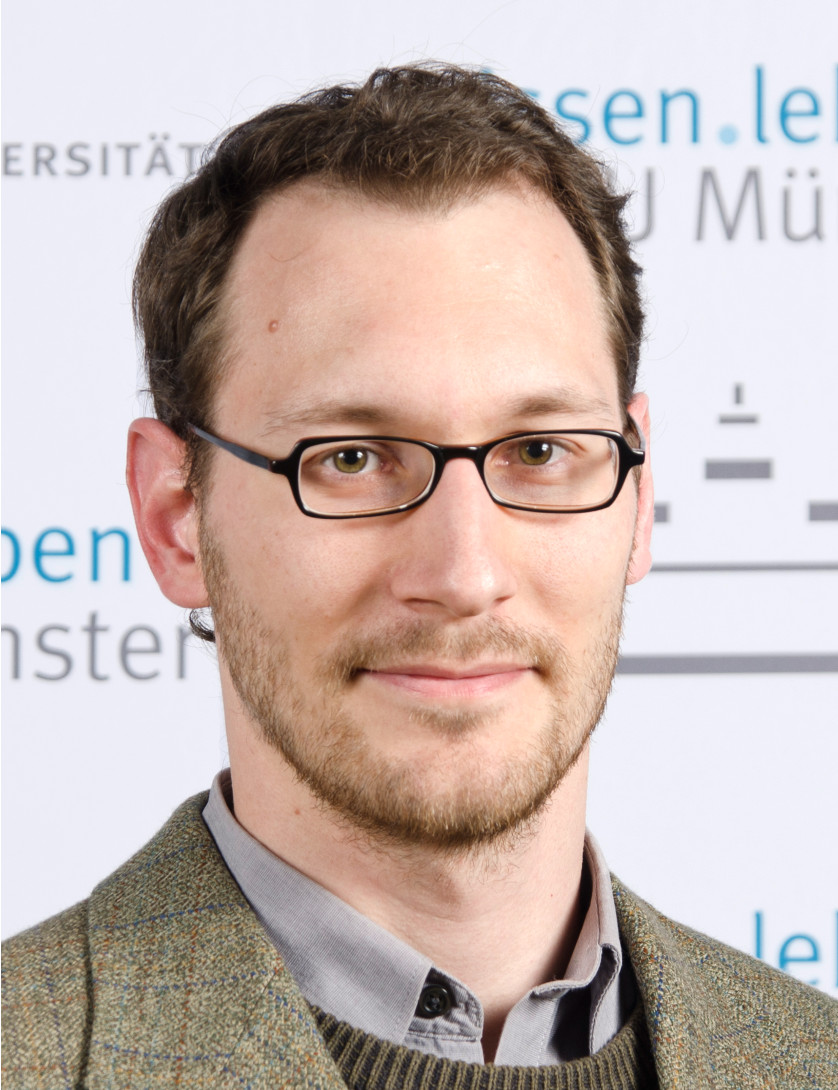
Prof. Dr. Benedikt Wirth is a Professor of Mathematics at the University of Münster, Germany, affiliated with the Institute for Analysis and Numerics within the Department of Mathematics and Computer Science. He is an active researcher and educator specializing in optimization and calculus of variations, with significant contributions to mathematical imaging and shape analysis. His research interests include image processing, scientific computing, numerical analysis, optimization, shape spaces, geodesics in shape space, variational methods, elastic deformation, and optimal transport. Wirth has developed innovative mathematical frameworks for shape analysis, particularly focusing on Riemannian metrics for shape spaces and variational approaches to shape comparison and optimization. His recent publications (2023-2025) demonstrate continued leadership in mathematical optimization, with particular focus on PET reconstruction, dimension reduction techniques, manifold embeddings, and branched transport theory. His work bridges theoretical mathematics with practical applications in medical imaging and computer vision, showing particular strength in connecting geometric analysis with computational methods. CRC 1450 - A05: Targeting immune cell dynamics by longitudinal whole-body imaging and mathematical modelling CRC 1450 - A06: Improving intravital microscopy of inflammatory cell response by active motion compensation EXC 2044 - C1: Evolution and asymptotics EXC 2044 - C2: Multi-scale phenomena and macroscopic structures EXC 2044 - C3: Interacting particle systems and phase transitions EXC 2044 - C4: Geometry-based modelling, approximation, and reduction Prof. Wirth actively supervises numerous bachelor's and master's students, with over 40 theses completed under his guidance since 2015. His teaching portfolio includes courses on inverse problems, numerical methods for partial differential equations, shape spaces, optimization, and optimal transport. He has consistently maintained an active research program while contributing significantly to the education of the next generation of mathematicians.