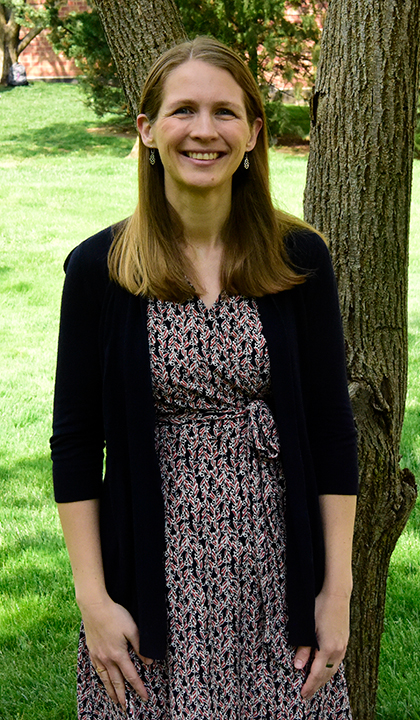
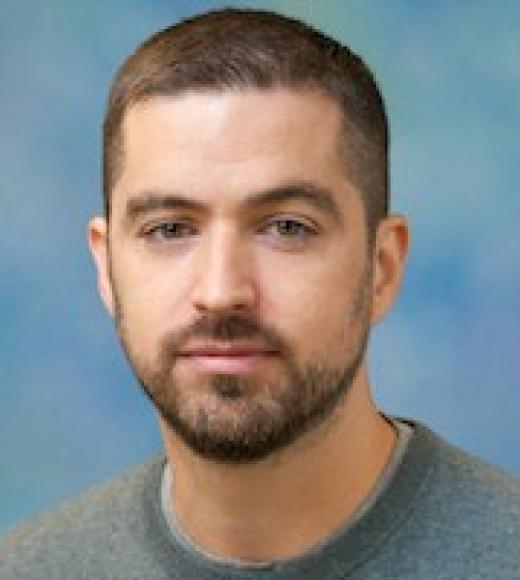
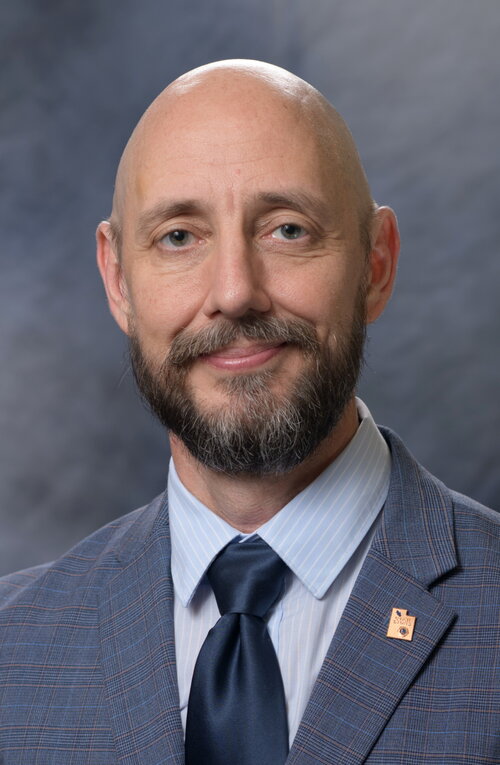
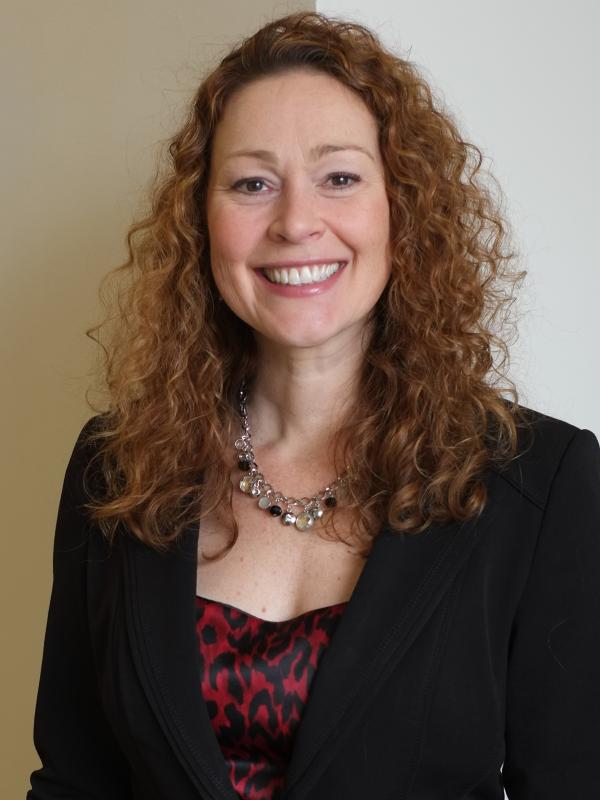
Christina García, Ph.D., is an Associate Professor of Spanish at Saint Louis University's Department of Languages, Literatures, and Cultures, within the College of Arts and Sciences. She specializes in Phonetics, Phonology, Sociolinguistics, and Second Language Acquisition, with a focus on Ecuadorian Spanish. Dr. García teaches courses such as Spanish Phonetics & Phonology, Spanish for the Health Professions, and Spanish in the World. Education: Ph.D., The Ohio State University, 2015 M.A., The Ohio State University, 2011 B.A., The Ohio State University, 2009 Her research interests emphasize the application of phonological principles to language teaching and the sociolinguistic variation of Spanish. She is a member of the Professional Latino Action Network (PLAN), reflecting her community engagement. Awards: 2017 Saint Louis University Faculty Commitment to Experiential Learning Award No advising or grant details are explicitly mentioned. She is affiliated with Morrissey Hall, Saint Louis, MO.
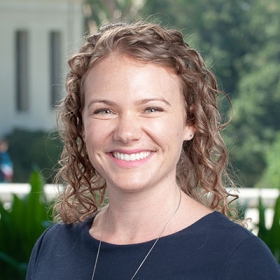
Mariška Bolyanatz Brown is an Assistant Professor in the Department of Spanish and French Studies at Occidental College (Oxy), appointed in 2017. She holds a B.A. from Gordon College, an M.A. from the University of Illinois at Chicago, and a Ph.D. from UCLA. Her research focuses on socially conditioned variation in speech production and perception in Spanish, particularly examining the sociolinguistic implications of phonetic features in Chilean and Salvadoran Spanish. She teaches courses such as Introduction to Linguistics, Spanish in the United States, and Spanish Sociolinguistics, emphasizing inclusive pedagogy and data analysis skills. Education: B.A., Gordon College, Massachusetts M.A., University of Illinois, Chicago Ph.D., University of California, Los Angeles (UCLA) Research Interests: Sociolinguistics, Phonetics, Spanish Language Variation, Linguistic Discrimination, Heritage Language Maintenance, and the social meanings of phonetic variation in Spanish. Her work analyzes acoustic and morpho-phonological patterns to explore how speech features correlate with socioeconomic identity and intergroup perception. Publications: Dr. Bolyanatz Brown has published widely on topics such as coda /s/ weakening in Chilean Spanish, cross-dialectal acoustic differences in /s/, and sociophonetic perception of intervocalic /k/ voicing. Her research bridges laboratory-based phonetic analysis with sociolinguistic theory, contributing to debates on sound change and language variation. Teaching Philosophy: Her courses foster critical engagement with language use, encouraging students to connect linguistic patterns to broader societal issues such as racism and education policy. She emphasizes fieldwork and data collection, as seen in her Spanish in the United States course, where students conduct community-based research in Los Angeles. Labs/Teams: No specific lab is mentioned, though her research involves collaborative fieldwork and acoustic analysis projects with colleagues like Brandon Rogers and Franny Brogan.
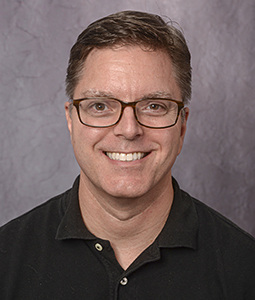
Shannon Barrios is an Associate Professor in the Department of Linguistics at the University of Utah, where she has served since 2022. She co-directs the Speech Acquisition Lab and specializes in second language acquisition, phonetics/phonology, and psycholinguistics. Her research explores how adult learners develop perceptual and lexical representations of novel phonological contrasts, with a focus on cross-language speech perception, orthographic effects, and social factors in input processing. BA, Spanish (SUNY Geneseo, 2004) MA, Linguistics (Syracuse University, 2007) PhD, Linguistics (University of Maryland, 2013) Her research interests span adult second language acquisition , phonolexical development , and accent bias . She investigates how learners process phonological contrasts, the role of orthography in speech perception, and the influence of social roles (e.g., teachers vs. peers) on language learning. Her work combines behavioral experiments, ERP/MEG neuroimaging, and computational modeling. Barrios’ recent publications (2024–2020) focus on representational fuzziness , talker variability , and lexical contrast mechanisms . Her 2024 Languages paper proposes a factorial typology for evaluating auditory word recognition scenarios, while her 2024 JASA Express study highlights individual listener variation in cross-language speech perception. Earlier works examine allophone acquisition, orthographic input effects, and neural correlates of phonological mapping. She has received two teaching awards from the University of Maryland (2013). Her teaching portfolio includes undergraduate and graduate courses in phonetics , psycholinguistics , and second language acquisition theory . She also leads workshops on research ethics, mentee development, and academic literacies.
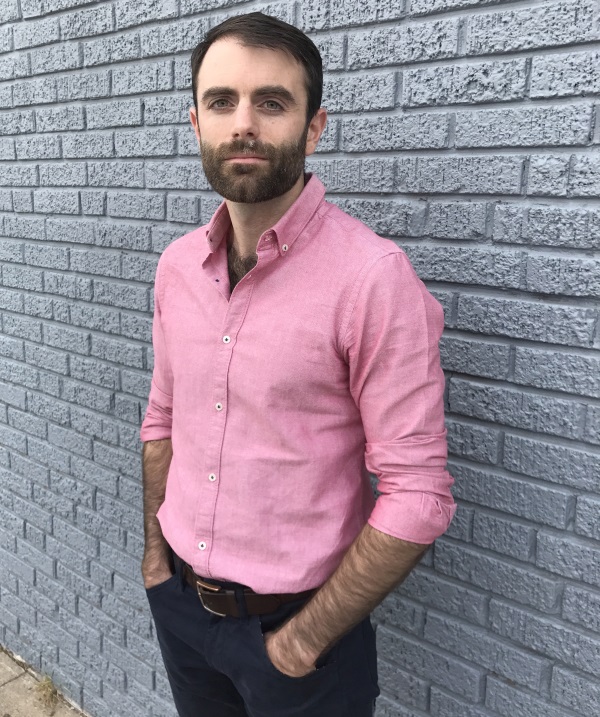
D. Eric Holt is an Associate Professor of Spanish and Linguistics at the University of South Carolina, affiliated with the Department of Languages, Literatures, and Cultures and the College of Arts and Sciences. He has held academic appointments since 1994, including visiting roles at Georgetown University and lecturing positions in Ecuador and Spain. His expertise spans Hispanic linguistics, historical linguistics, second language acquisition, and phonological theory, with a focus on Optimality Theory and its applications to Spanish and Portuguese. Educated at Occidental College (BA), Georgetown University (MS, PhD), and with extensive summer programs in linguistics, Holt's research explores sound change, dialectology, and L2 pronunciation acquisition. He has supervised numerous graduate theses and dissertations, including notable works on connected speech perception and language contact phenomena. His teaching portfolio includes advanced courses on Spanish linguistics, phonetics, and historical language evolution. Holt has led international study programs in Spain, Costa Rica, and Ecuador, and contributes to academic service as an associate editor of Studies in Hispanic and Lusophone Linguistics and through professional organizations like Phi Beta Kappa. Holt's grants include funding for research on L2 speech perception and技术创新 in pronunciation teaching. He has presented globally at conferences such as NWAV and LSA, and his work appears in top journals like Probus and Georgetown University Round Table . His current projects include books on Optimality Theory in Spanish linguistics and debunking language myths.
Brendan Regan is an Associate Professor of Spanish & Linguistics at Texas Tech University, directing the Sociolinguistics & Bilingualism Research Lab. He coordinates Hispanic Linguistics programs at both undergraduate and graduate levels. His research focuses on sociolinguistics, sociophonetics, and language variation, employing mixed-methods approaches including experimental design, corpus analysis, and discourse analysis. Education: Ph.D., The University of Texas at Austin (2017) M.A., Temple University B.A., University of Richmond Research Interests: His work addresses sociolinguistic variation, bilingualism, SLA, dialect contact, and language attitudes. Recent studies explore phonetic variation in Andalusian Spanish, language ideologies in heritage speakers, and place-name variation in Texas. Lab & Collaborations: The lab focuses on language variation in West Texas, offering research opportunities for students. Collaborative projects include corpus-based analyses of Spanish dialects and experimental studies on listener perception.
Nicholas Henriksen is an Arthur F. Thurnau Professor and Professor of Spanish & Linguistics at the University of Michigan, where he has held faculty positions since 2012. His research focuses on laboratory phonology, experimental phonetics, sociophonetics, and intonational grammar in Spanish and other Romance languages. Notable projects include studies on sound change in Andalusian and Patagonian Spanish, bilingualism (Afrikaans-Spanish), and second language speech learning. He directs the Michigan Speech Production Lab and co-leads initiatives integrating gender-diverse language into Romance curricula. Henriksen earned a PhD in Linguistics from Indiana University (2010), MA in Hispanic Linguistics (2006), and BA in Spanish/Mathematics from Rutgers (2003). His teaching spans undergraduate and graduate courses in Spanish linguistics, sociolinguistics, and phonetics, emphasizing applied research and pedagogical innovation. He has received prestigious awards, including the LSA Early Career Award (2021) and the Class of 1923 Teaching Award (2018). His research has been funded by grants from the University of Michigan ADVANCE Program and the Humanities Collaboratory, supporting projects like From Africa to Patagonia: Voices of Displacement . Collaborations include work with scholars in Argentina, South Africa, and Spain, examining language contact, heritage language maintenance, and sociolinguistic identity. Publications span over 30 peer-reviewed articles and book chapters, with a focus on phonetic variation, intonation, and bilingualism. He mentors graduate students in experimental phonetics and sociolinguistics, with advisees contributing to studies on Andalusian Spanish, heritage language acquisition, and voice quality.
Santiago Barreda is an Associate Professor in the Department of Linguistics at the University of California, Davis, specializing in speech perception and phonetic analysis. His research examines how acoustic properties of speech convey speaker characteristics including age, gender, and physical attributes. Education: Ph.D. in Linguistics (Phonetics), University of Alberta, 2013 M.A. in Hispanic Studies (Language and Linguistics), University of Western Ontario, 2008 B.A. in Linguistics and Spanish Language and Literature, University of Western Ontario, 2006 Research Focus: Dr. Barreda employs behavioral experiments and statistical modeling to investigate perceptual mechanisms in speech recognition. His work bridges theoretical phonetics with practical applications, particularly in vowel normalization techniques and formant tracking algorithms. Key questions address how listeners extract speaker identity from acoustic cues and interpret social characteristics through vocal signals. Publication Trends: Recent publications (2020-2025) reveal three dominant themes: computational phonetic tools (FastTrack, phonTools), perception of social/physical speaker characteristics from children's voices, and interdisciplinary public health research on speech-related aerosol transmission. His work demonstrates strong methodological consistency in combining acoustic analysis with perceptual validation. Scientific Awards: No scientific awards were mentioned in the source material. Advising and Grants: The provided documentation does not specify graduate student advising roles or external grant funding. Technical Contributions: Dr. Barreda develops open-source phonetic analysis software including FastTrack (Praat-based formant tracking) and the phonTools R package, which have become standard resources in acoustic phonetic research.
Paola Dussias is a Professor of Spanish, Linguistics, and Psychology at Pennsylvania State University, with affiliate appointments in the Department of Psychology and Linguistics. She holds a Ph.D. from the University of Arizona and has held positions at the University of Illinois and the University of Mississippi. Her research focuses on bilingual language processing, psycholinguistics, and code-switching, utilizing eye-tracking, EEG, and neuroimaging techniques. She leads the Dussias Brain Tracking Lab, equipped with advanced tools for language processing studies. Notable awards include the 2019 Faculty Scholar Medal and the 2012 Outstanding Faculty Adviser Award. She has mentored numerous graduate and undergraduate students, overseeing over 100 international research collaborations through NSF-funded PIRE grants. Her work bridges theoretical and applied language science, emphasizing linguistic diversity and cognitive consequences of bilingualism. Education: Ph.D. in Second Language Acquisition and Teaching, University of Arizona Affiliations: Center for Language Science, Bilingualism Matters Her research examines how bilinguals negotiate two languages in their minds, with a focus on sentence processing, code-switching, and cognitive effects. Collaborative projects include the NSF-funded PIRE grants, promoting international research on bilingualism. She has published over 80 peer-reviewed articles and mentored students in grants totaling millions of dollars. Grants: Includes $5M NSF PIRE grants and multiple Dissertation Improvement Awards Labs/Teams: Dussias Brain Tracking Lab, Center for Language Science
Erik W. Willis is an Associate Professor in the Department of Spanish and Portuguese at Indiana University Bloomington, where he also serves as Director of Graduate Studies and Director of the Hispanic Linguistics Program. His work focuses on Spanish phonetics, phonology, and dialectal variation, particularly in Caribbean and Mexican Spanish varieties. He employs acoustic analysis and laboratory methods to study rhotic contrasts, intonational patterns, and sociolinguistic phenomena. Ph.D., University of Illinois at Urbana-Champaign (2003) M.A., Brigham Young University (1997) B.A., Brigham Young University (1994) His research spans multiple subfields including: Acoustic characterization of Spanish rhotics Intonational system analysis using Sp_ToBI Second language phonology acquisition Web-based language assessment tools Vowel system variations in Spanish dialects Contextual phonetic realizations in Caribbean Spanish Recent publications demonstrate systematic variation in coda liquids, tap-trill contrasts, and intonational patterns across Dominican, Puerto Rican, and Mexican Spanish. His work combines empirical acoustic analysis with sociolinguistic frameworks to document both phonetic realizations and their pragmatic functions in spoken language.
University of Illinois Urbana-ChampaignUnited States
Prof. Ryan Keith Shosted is a full-time tenured Professor at the University of Illinois at Urbana-Champaign , affiliated with the Department of Linguistics , Spanish and Portuguese , American Indian Studies Program , Beckman Institute , Lemann Center for Brazilian Studies , Center for Latin American and Caribbean Studies , and Center for African Studies . He serves as Director of the Program in Translation and Interpreting Studies and leads the Chin-Woo Kim Phonetics Laboratory . Education: Ph.D. , Linguistics, University of California, Berkeley (2006) M.A. , Linguistics, University of California, Berkeley (2003) B.A. , Linguistics, Brigham Young University (2000) Shosted's research focuses on the intersection of phonetics , phonology , and historical linguistics . He pioneered the application of ultrafast dynamic MRI to study the vocal tract's physiological-acoustic mapping in diverse languages, including Hittite cuneiform , Deseret Alphabet , and endangered languages like Q'anjob'al. His work spans speech production modeling , nasalization mechanisms , and cross-linguistic articulatory analysis . The 15 most recent publications demonstrate his leadership in dynamic speech imaging , phonetic-aerodynamic modeling , and historical sound change analysis . Key trends include advanced MRI techniques for speech study, phonetic universals , and historical writing systems as tools for linguistic reconstruction. Scientific Awards: Campus Award for Excellence in Undergraduate Teaching (2021) Dean's Award for Excellence in Undergraduate Teaching (2021) Arnold O. Beckman Award (2009, 2010) Jacob K. Javits Fellowship (2001-2005) Shosted's grant portfolio includes NSF funding for nasalization research (BCS-1651197, BCS-1121780) and NIH collaboration (1R01DE027989-01A1) on cleft palate speech. He has directed 12 graduate students and taught courses ranging from Hittite language to quantitative phonetic methods . The Chin-Woo Kim Phonetics Laboratory , under his directorship since 2007, expanded in 2010 to include articulatory phonetics facilities with EPG, ultrasound, and MRI analysis capabilities. He continues to lead Beckman Institute collaborations in speech imaging technology.
University of Illinois Urbana-ChampaignUnited States
Jose Ignacio Hualde is a Professor at the University of Illinois, holding joint appointments in Spanish and Portuguese, Linguistics, French and Italian, the European Union Center, and the Center for Latin American and Caribbean Studies. His research focuses on synchronic and diachronic phonology, sound change, prosody, and Romance and Basque linguistics. He is affiliated with the Department of Spanish, Italian, and Portuguese and maintains an office in the Foreign Languages Building. Research Interests: Phonological structure and historical evolution Basque linguistic typology and dialectology Prosodic systems in Romance languages Phonetic-phonological interfaces Recent Research Trends: His 2023-2025 publications emphasize Basque dialect analysis, Romance allophonic processes, and prosodic salience. Works combine experimental methods with diachronic reconstruction to address core questions in phonological theory. Professional Activities: Has delivered over 30 invited lectures (e.g., 1992-1996) and served on editorial boards like Folia Linguistica. Active in international scholarly networks with collaboration evidence across multiple countries. Labs/Teams: Engaged in interdisciplinary linguistic research through the Department's language programs and affiliated centers.
Eduardo Viana da Silva is an Associate Teaching Professor and Portuguese Program Coordinator at the University of Washington, affiliated with the Henry M. Jackson School of International Studies and Department of Spanish & Portuguese Studies. He received his Ph.D. (2014) and M.A. (2006) from University of California, Santa Barbara (UCSB) and Brigham Young University respectively, with additional certifications in language teaching and ACTFL OPI testing. His research focuses on Environmental Activism in Arts Open Educational Resources (OER) Critical Pedagogy Luso-Brazilian literature and culture Global Citizenship education Language curriculum development . The Bate-Papo OER textbook project, supported by UW Libraries and the Center for Global Studies, demonstrates his commitment to accessible education. Recent collaborations with Brazilian institutions highlight his environmental research in the Amazon and Pantanal regions. His work spans virtual exchanges, cybersecurity language training, and heritage language pedagogy. Scientific Awards 2020 Language Teacher of the Year (WAFLT) As a certified OPI examiner and active member of MLA, ACTFL, and AATSP, he bridges language instruction with broader educational initiatives. His courses range from elementary Portuguese (PORT 103, 105) to advanced cultural studies (PORT 365), reflecting his interdisciplinary approach.
Massachusetts Institute of TechnologyUnited States
Adam Albright is a Professor of Linguistics at the Massachusetts Institute of Technology (MIT). His research focuses on phonology, morphology, language acquisition, and computational linguistics. Education Ph.D. in Linguistics, UCLA, 2002. Dissertation: "The identification of bases in morphological paradigms" M.A. in Linguistics, UCLA, 1998. Thesis: "Phonological subregularities in productive and unproductive inflectional classes: Evidence from Italian" B.A. in Linguistics and Religious Studies, Cornell University, 1996. Senior Thesis: "The history of stress in Welsh, and the analysis of historical change in OT" Research Interests Albright's main research projects include: Experimental testing and computational modeling of gradient phonotactic well-formedness Investigating the organization of paradigms (base selection and learning) Testing the psychological reality of morphological processes via Wug tests Understanding paradigm gaps Computational modeling of historical change Collaboration with Bruce Hayes on learning algorithms He also has interests in Yiddish and Lakhota phonology and morphology, and the history of stress in Welsh. Teaching He has taught courses at MIT and UC Santa Cruz, including: Advanced Phonology Language Acquisition Sound Change and Phonological Theory Modeling Phonological Learning Language Change Computational Morphology & Phonology Collaborations Albright collaborates with Bruce Hayes (UCLA) on computational modeling of phonological and morphological learning. Contact Email: albright@mit.edu Office: 32-D830, MIT Mailing Address: MIT Linguistics and Philosophy, 77 Massachusetts Avenue, 32-D808, Cambridge, MA 02139, USA
Holly J. Nibert is an Associate Professor of Hispanic Linguistics and Director of the Spanish Language Program in the Department of Spanish and Portuguese at The Ohio State University. Her research focuses on second language acquisition (SLA) of Spanish phonology and phonetics within the revised Speech Learning Model (SLM-r). She also emphasizes principles of teaching Spanish as a second language, instructor training, and language program administration. Education: Ph.D. in Spanish Linguistics, University of Illinois at Urbana-Champaign (2000) M.A. in Spanish Linguistics, University of Illinois at Urbana-Champaign (1991) B.A. in Spanish, University of Illinois at Urbana-Champaign (1989) Research interests span Spanish phonetics/phonology SLA, pedagogical techniques, and leadership in language program administration. Her recent work examines applying leadership studies to program direction. She co-authored two Spanish textbooks: ¡Arriba! and Día a día . Key awards include the 2013 WMU Distinguished Teaching Award and multiple teaching accolades as a graduate TA. Her work bridges theoretical SLA research with practical classroom applications, including curriculum design and international teaching assistant training. Her contributions to the field include advancing techniques for SLA of segmental and prosodic features, as well as leadership strategies for language programs. She previously directed Western Michigan University's First-Year Spanish Program for 15 years before joining OSU in 2014.
Reynaldo Romero serves as Associate Professor in the Department of History, Humanities and Languages at the University of Houston-Downtown, where he has maintained active teaching and research since at least 2012. His academic foundation spans linguistics, public health, and translation studies across multiple institutions. His educational background includes: Ph.D. in Spanish Linguistics from Georgetown University (Dissertation: Structural Consequences of Language Shift: Judeo-Spanish in Istanbul) M.P.H. in Community Health Practice from UTHealth (Dissertation: Beliefs on COVID-19 vaccination among Hispanic day laborers) M.A. in Translation from Kent State University Multiple B.A. degrees in French, General Linguistics, and Spanish Language/Linguistics from Rice University Romero's research creates critical intersections between linguistic theory and real-world applications. His work on Spanish for the Professions establishes frameworks for medical and legal interpreting while addressing systemic language access barriers. The scholarship on endangered languages—particularly Judeo-Spanish and Afro-Hispanic varieties—combines rigorous documentation with urgent revitalization efforts. His healthcare access research directly engages Houston's linguistic minorities through community-based projects like the Medical Translation Project with HISD. Recent publications reveal three dominant trajectories: (1) advancing methodologies in Afro-Hispanic linguistics through collaborative edited volumes; (2) developing social justice frameworks for marginalized language communities; and (3) documenting endangered linguistic varieties with innovative digital approaches. These threads converge in his community-engaged scholarship that bridges academic research and practical language access solutions. Professional recognition includes: Certified Translator status from the American Translators Association Advanced Professional Analytic Linguist certification Specialized medical and legal interpreter credentials Online teaching certification with digital tools specialization Romero's grant activity demonstrates sustained commitment to practical applications of linguistic research. Current projects include 'Promoting the Critical and Responsible Use of Digital Tools and AI in Written Tasks' (2024-2025), while past work developed medical interpreter training during disaster relief and language access protocols for healthcare settings. His service learning initiatives—like the Medical Translation Project with Houston ISD—create tangible community impact while advancing pedagogical innovation. Through the Medical Translation Project and language access advocacy, Romero cultivates collaborative spaces where academic research directly serves Houston's linguistic minorities. His work with heritage speakers and endangered language communities establishes frameworks for linguistic empowerment beyond traditional academic boundaries.